Best Overall
Seestar S30 Pro
Key details
- Camera
- 4K dual camera
- Weight
- 3.6 lb
- Aperture
- 30 mm
- Focal Length
- 160 mm
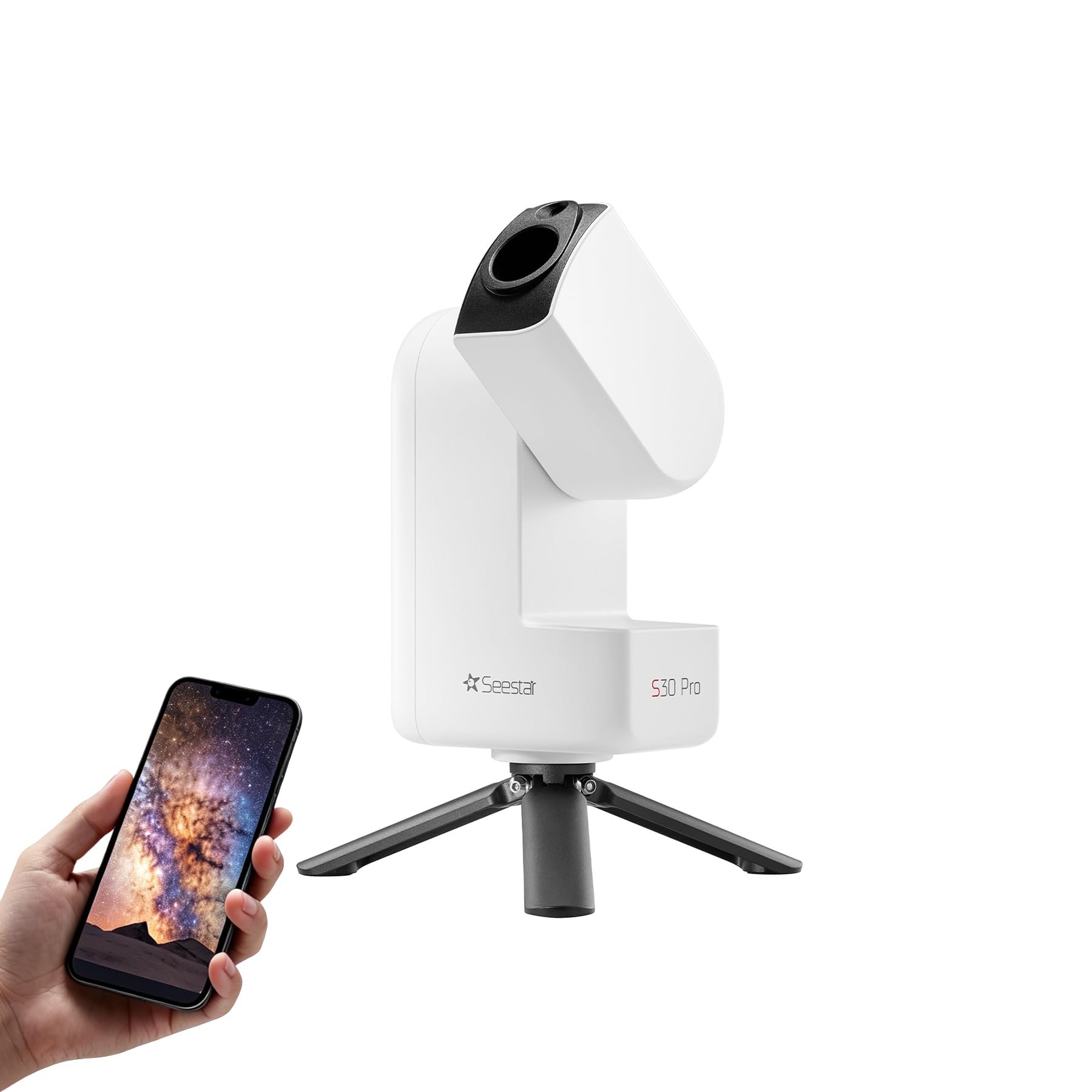
The Seestar S30 Pro's pitch is simple: set it down, let the app find a target, and watch a finished deep-sky image build on your phone. The dual 4K cameras cover both a tight view of a nebula and a wide field for the Milky Way, and the built-in light-pollution filter is there for suburban skies.
We were impressed by how much of the workflow lives in the app. There's no separate mount, camera, laptop, or stacking session to manage; the scope handles GoTo, tracking, and one-tap processing, and the results look surprisingly complete on a tablet. EQ mode is the part that matters for longer deep-sky work, and it's easy enough to set up that switching modes doesn't feel like a project.
The wide-field camera gives you room for star trails and the Milky Way, while the deep-sky camera pulls in nebulae and clusters. Compass calibration is the one step that can trip up a first night; redo it away from metal and the pointing settles. At 3.6 pounds, it's the one we leave set up by the door for a clear evening.
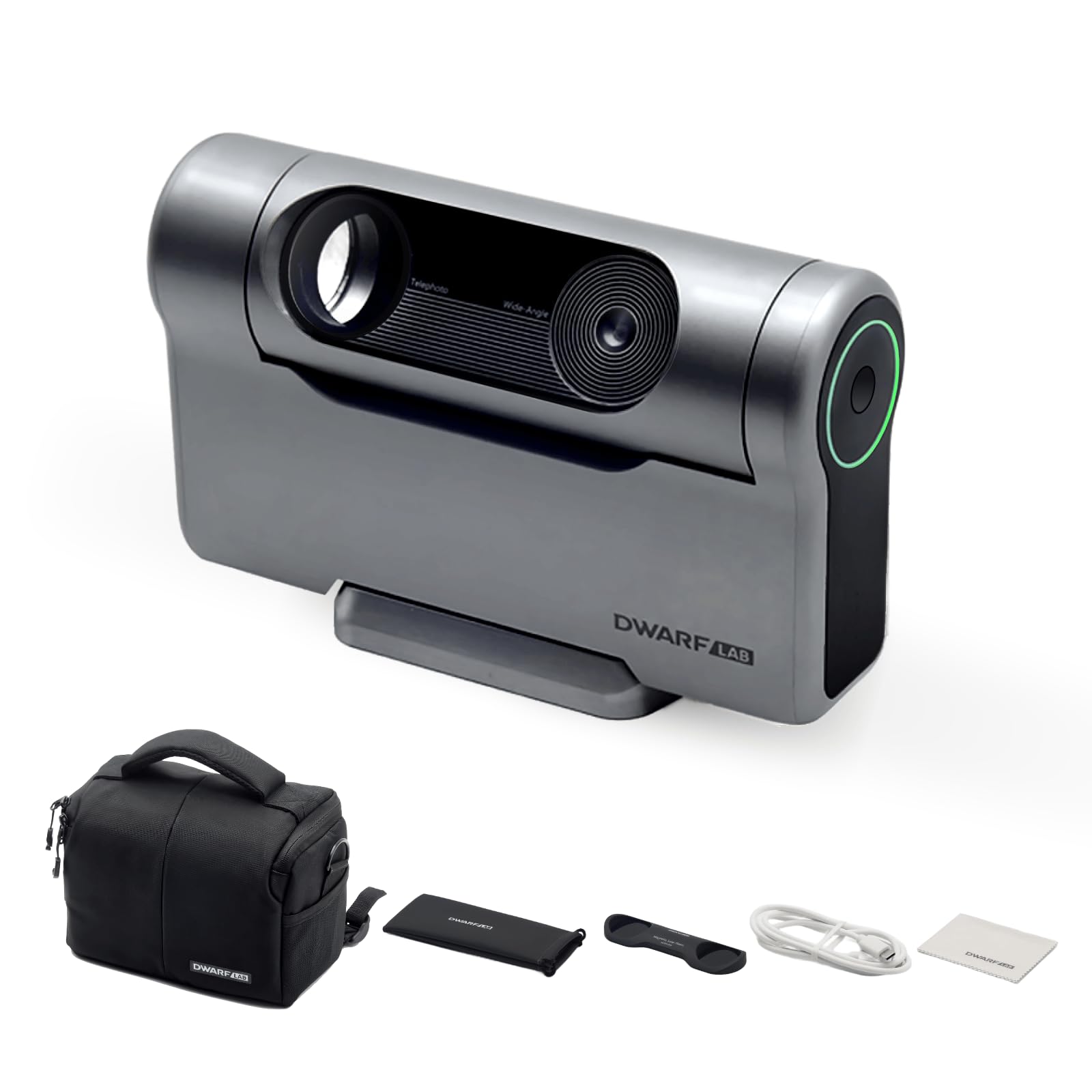
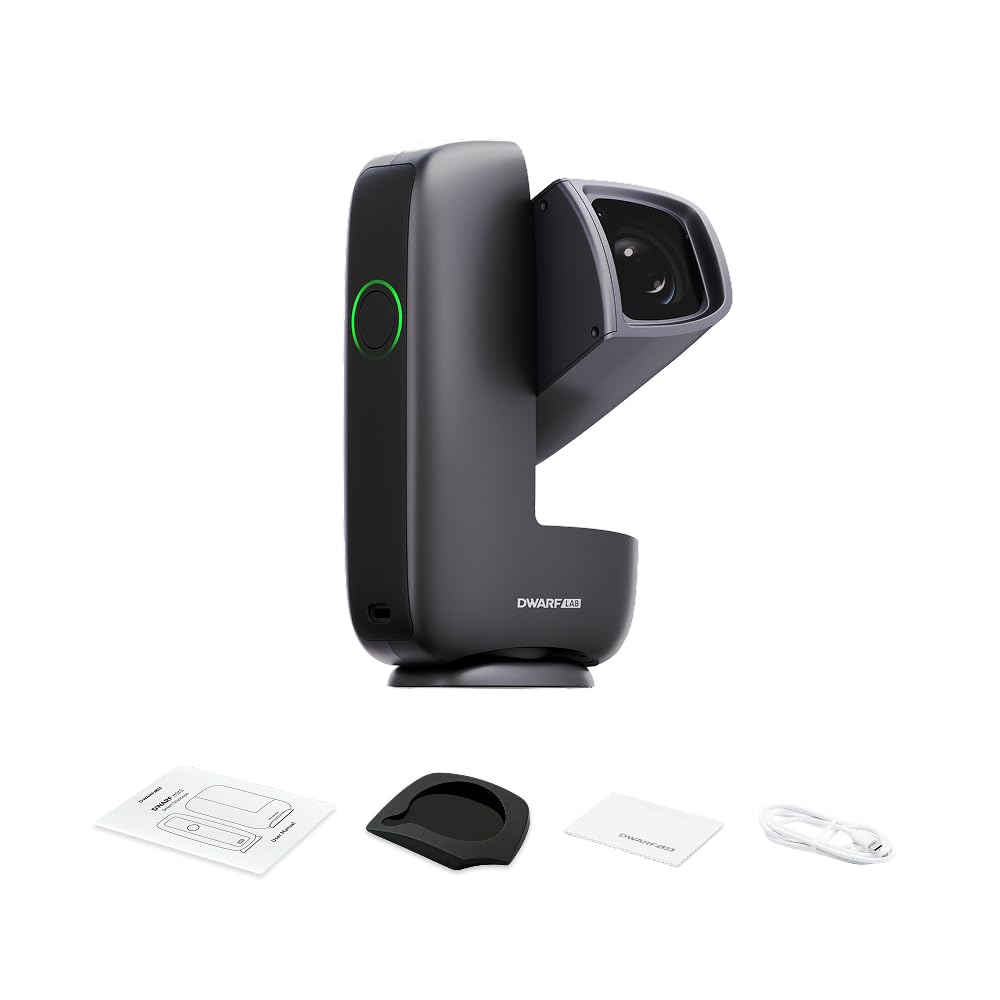
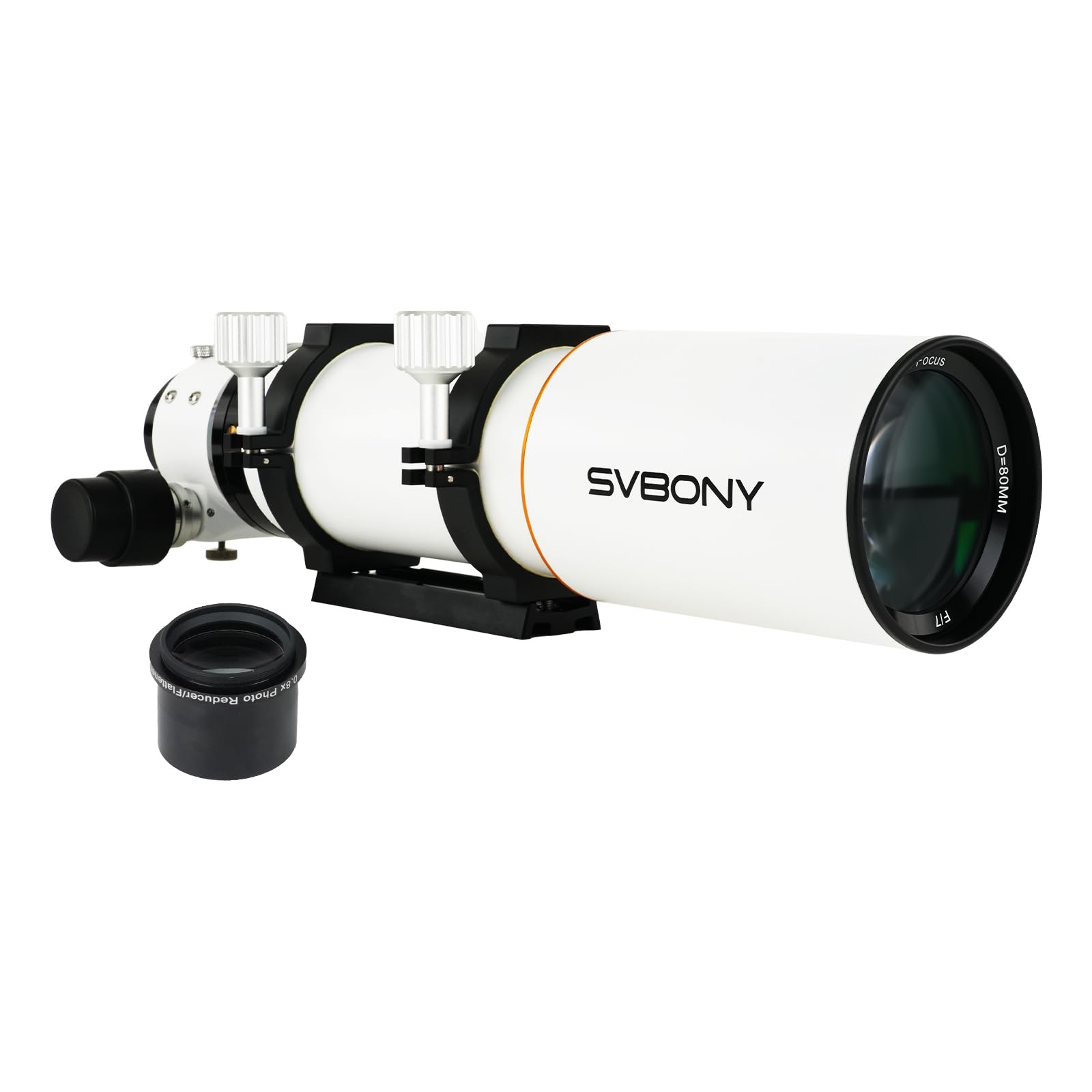
Against the Dwarf 3, the Seestar feels more like a complete imaging appliance: the dual cameras and processing are tuned for sharing, not tinkering. If you already own an equatorial mount and camera, the SVBONY SV503 is the more flexible optical tube; for most first-time imagers, this is the easiest way into deep-sky pictures.
Pros
- One-tap GoTo and stacking simplify deep-sky imaging
- Dual 4K cameras cover deep sky and wide fields
- EQ mode and light-pollution filter help in suburbs
- Only 3.6 pounds and fully app-controlled
Cons
- 30mm aperture is small for faint, tiny targets
The Seestar S30 Pro is our top pick for most first-time astrophotographers because its one-tap GoTo, dual 4K cameras, and EQ mode turn a clear night into shareable deep-sky images.