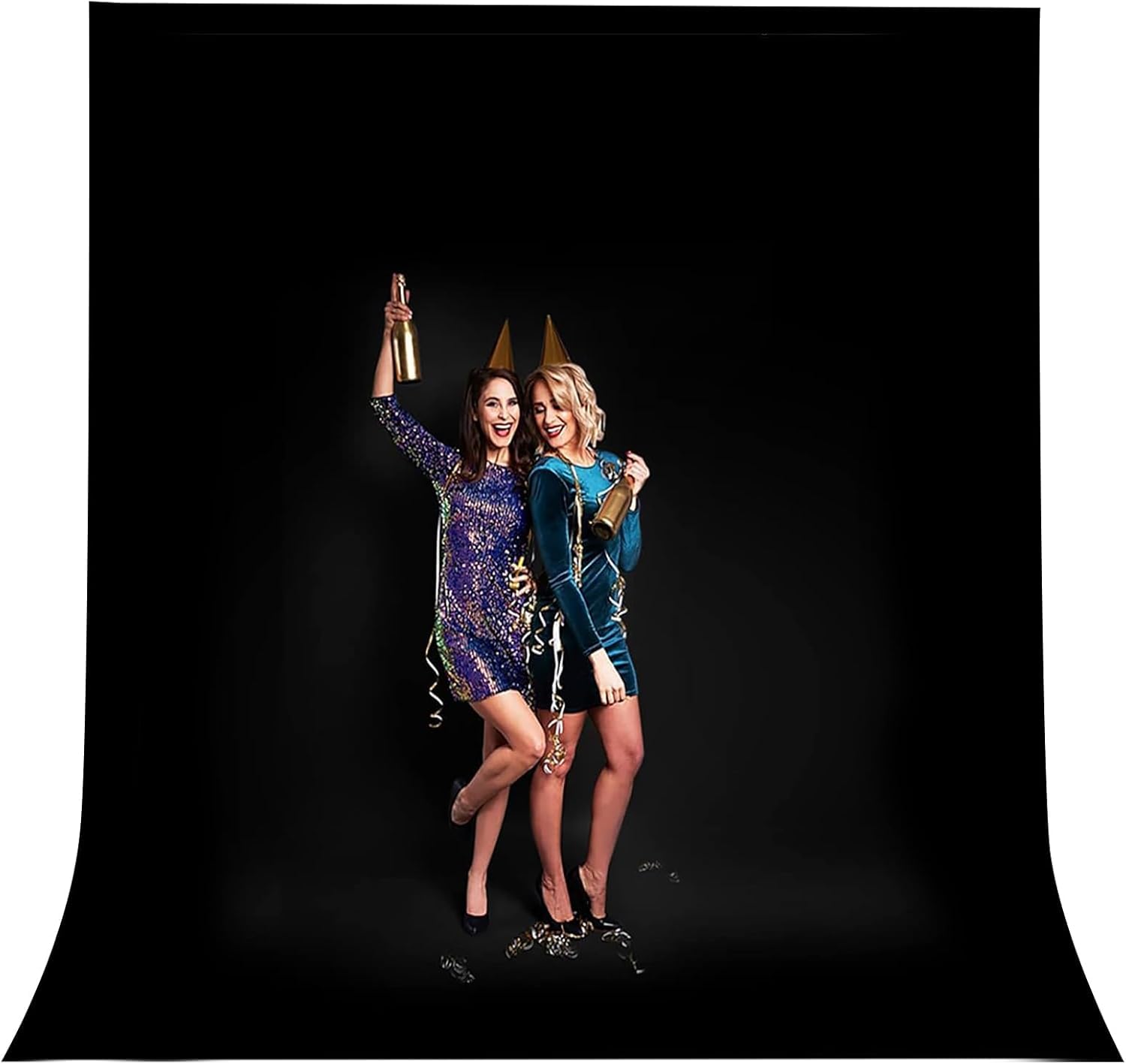
Best Photography Backdrops of 2026

A backdrop has one job: disappear behind your subject. That's harder than it sounds. Fabric arrives folded into a tight square with creases pressed in like a road map, and the moment a flash fires, plenty of them bounce glare straight back at the lens. What you're buying is an even, quiet surface that leaves the frame to the person in it.

I've shot portraits in a living room with a bookshelf two feet behind the model, so I know how much a backdrop can rescue a space. My team and I spent the past six months hanging, taping, and clamping 14 of them — fabric, paper, vinyl, and one pop-up panel with its own frame — under flash and window light.

The mistake first-time buyers make is size: 5x7 sounds generous until a standing adult is in front of it. The other is trusting a wrinkle-free label, since nearly all of these arrived folded, so what mattered was how easily the creases came out and whether they stayed out. These are the few I'd hang again without thinking twice.

Keeper Score summarizes customer ratings and review volume. Read it alongside the product details and trade-offs. How the score works.

1

Best Overall

Kate 5x7 Abstract

92 /100
Keeper Score Outstanding

Key details

Care
Machine wash
Size
5 x 7 ft (1.5 x 2.2 m)
Hanging
Top rod pocket
Material
Microfiber
Check Price on Amazon

A soft grey microfiber with a subtle abstract wash is the reason this Kate backdrop is the first one we reach for when the shoot is headshots or a seated portrait. The 5x7-foot size covers a subject and a little floor without swallowing a small room, and the matte surface keeps studio lights from bouncing back into the lens. The top pocket slides onto a standard stand, and machine washing is listed as safe, which matters for a backdrop that gets handled.

What we appreciate most is the finish: it reads like a painted canvas rather than a flat sheet of fabric, so the background has some depth without competing with the face. The neutral grey is the useful part; it sits between warm and cool enough for most skin tones, though it can lean cool under daylight-balanced LEDs. Test it under your own lights before a paid session.

The limitation is coverage. A 5x7 is a portrait size, not a full-body or group size; if you need a standing subject with floor to spare, move up to an 8x10. For headshots, tight family groups, and video framing, the smaller panel is easier to light and easier to store. That trade-off is why it earns the top spot: it does the most common portrait job without asking for a studio.

Pros

  • Soft, non-reflective microfiber
  • Neutral abstract grey flatters portraits
  • Top pocket fits a standard stand
  • Machine washable and compact

Cons

  • Fold creases need steaming
Our verdict

We recommend the Kate first for headshots and seated portraits: the soft microfiber and neutral abstract pattern flatter skin tones without a fussy setup.

Check Latest Price
2

Best for Quick Setup

RAUBAY Collapsible White

93 /100
Keeper Score Outstanding

Key details

Size
59.8 x 82.7 in
Setup
Pneumatic x-frame with stand
Weight
18.1 lb
Material
PVC fabric
Check Price on Amazon

A white panel that rolls up into its own hard case is the whole idea behind the RAUBAY, and it's the reason this one stays set up in a spare room rather than living in a closet. The 59.8 x 82.7-inch PVC surface is attached to a pneumatic x-frame, so there's no separate stand to assemble or align. Pull the legs flat, lift the handle, and the panel rises with the frame.

We're willing to pay the premium for that daily convenience. The surface is wipe-clean and wrinkle-free, which solves the two chores that make fabric backdrops annoying: steaming and laundering. It also stands on its own, though the footprint wants level ground; in a busy room, keep it against a wall so a bump doesn't send it over.

The 59.8-inch width is generous for a seated subject or a video call but tight for a full-body stance, so treat it as a portrait and streaming panel rather than a group backdrop. The hard case stores upright and the whole thing rolls away when the room needs to be a room again. For a room that has to switch between office and studio, that self-contained roll-up is worth more than another yard of fabric.

Pros

  • Integrated frame sets up in seconds
  • Wrinkle-free wipe-clean surface
  • Rolls into a hard storage case
  • Good size for video and portraits

Cons

  • Heavy to move at 8.23 kg
  • White panel can show glare
Our verdict

For a home studio that has to disappear between calls, the RAUBAY is the one we choose: it rolls up, stands on its own, and stays wrinkle-free.

Check Latest Price
3

Best Budget Large White

GFCC 8x10 White

88 /100
Keeper Score Excellent

Key details

Size
8 x 10 ft
Weight
2.23 lb
Hanging
3.2 in rod pocket
Material
100% polyester
Check Price on Amazon

An 8x10-foot white polyester sheet is the straightforward value play here, and the GFCC is the one we keep for full-body and group shots. The 8x10-foot panel gives you enough width to stand a subject with margin on both sides, and the 3.2-inch rod pocket takes a standard backdrop stand.

The fabric is 100% polyester, washable, ironable, and light enough to carry at just over a kilogram. It's a curtain, not a self-supporting screen, so you need a stand, clamps, or a rod. That simplicity is the point: there are no moving parts to break and no special case to lose.

We think it's the best white backdrop here for a first studio because it covers a full body without the expense of a paper roll or a roll-up frame. The trade-off is that it's a plain white sheet, not a textured or abstract surface; it depends on your lighting to look polished. For clean high-key portraits and group photos, that's a fair exchange.

Pros

  • Large 8x10 coverage
  • Washable, ironable polyester
  • Rod pocket fits standard stands
  • Light enough to carry at 1.01 kg

Cons

  • Folded creases need steaming
Our verdict

When you need a full 8x10 white sweep without a studio budget, the GFCC is the straightforward choice.

Check Latest Price
4

Best for Large Groups

CPLIRIS 10x20 Black

92 /100
Keeper Score Outstanding

Key details

Size
10 x 20 ft
Color
Black
Hanging
Dual 10 ft and 20 ft rod pockets
Material
Thick polyester
Check Price on Amazon

Two rod pockets are the clever part of the CPLIRIS: one runs along the 10-foot edge and one along the 20-foot edge, so the same black panel can hang narrow on a standard stand or wide across a room. The 10x20-foot polyester is thick and matte, and the dual-size design solves a real problem for event shooters who never know what space they'll get.

We like that flexibility more than we expected. A 20-foot width is overkill for a headshot, but for a group, a product setup, or a video background with room to move, it gives you a clean black wall. The fabric is thick and matte, which is what you want for a black background that doesn't flare.

The catch is scale: a 10x20 panel needs a wide stand and a room that can take it, and the creases from packing can take serious steaming. Neither is a dealbreaker for event work, where you have setup time and space. For a home studio, the smaller Kate or a 5x7 black is easier to live with. The dual pockets are what make this one worth choosing over a single-size black.

Pros

  • Dual 10- and 20-foot rod pockets
  • Thick matte black polyester
  • Huge coverage for groups
  • Machine washable

Cons

  • Can show light through in bright conditions
  • Needs separate subject lighting
Our verdict

If your shoot needs a wall of black, the CPLIRIS is the one we trust: thick polyester, dual pockets, and enough width for groups.

Check Latest Price
5

Best Event Curtain

ESGOTBME Ivory Curtains

93 /100
Keeper Score Outstanding

Key details

Care
Machine wash cold
Size
10 x 10 ft (2 panels, 5 x 10 ft each)
Hanging
6.2 in circumference rod pocket
Material
Nylon tulle with polyester lining
Check Price on Amazon

Two 5x10-foot ivory panels make a 10x10 wall, and that's the right way to think about the ESGOTBME: it's event dressing that also works as a soft portrait backdrop. The nylon tulle with a polyester lining hangs in a fluid drape, and the 6.2-inch circumference rod pocket slides over a standard rod without hardware.

The finish is the reason we recommend it for showers and weddings. The ivory is warm without going yellow, and the fabric is opaque enough to cover a wall or a fence without turning the room into a cave. It's light, so one person can hang it, and the panels pack down small between events.

We recommend it for event portraits and soft, airy sets where the background should feel like fabric rather than a flat cyclorama. The two-panel set gives you flexibility to use one panel for a narrow corner or both for a wide backdrop. That drape is the detail that separates it from a flat polyester sheet.

Pros

  • Two 5x10 panels cover 10x10
  • Wrinkle-free drape
  • Opaque enough for events
  • Rod pocket fits standard rods

Cons

  • Not a blackout backdrop
Our verdict

For showers, weddings, and soft portrait backdrops, the ESGOTBME panels are the pick: they drape beautifully and arrive virtually wrinkle-free.

Check Latest Price
6

Best Paper Studio Backdrop

Kate Seamless Paper

88 /100
Keeper Score Excellent

Key details

Size
106.8 in x 32.8 ft
Format
Roll on cardboard tube
Weight
13 lb
Material
Seamless paper
Check Price on Amazon

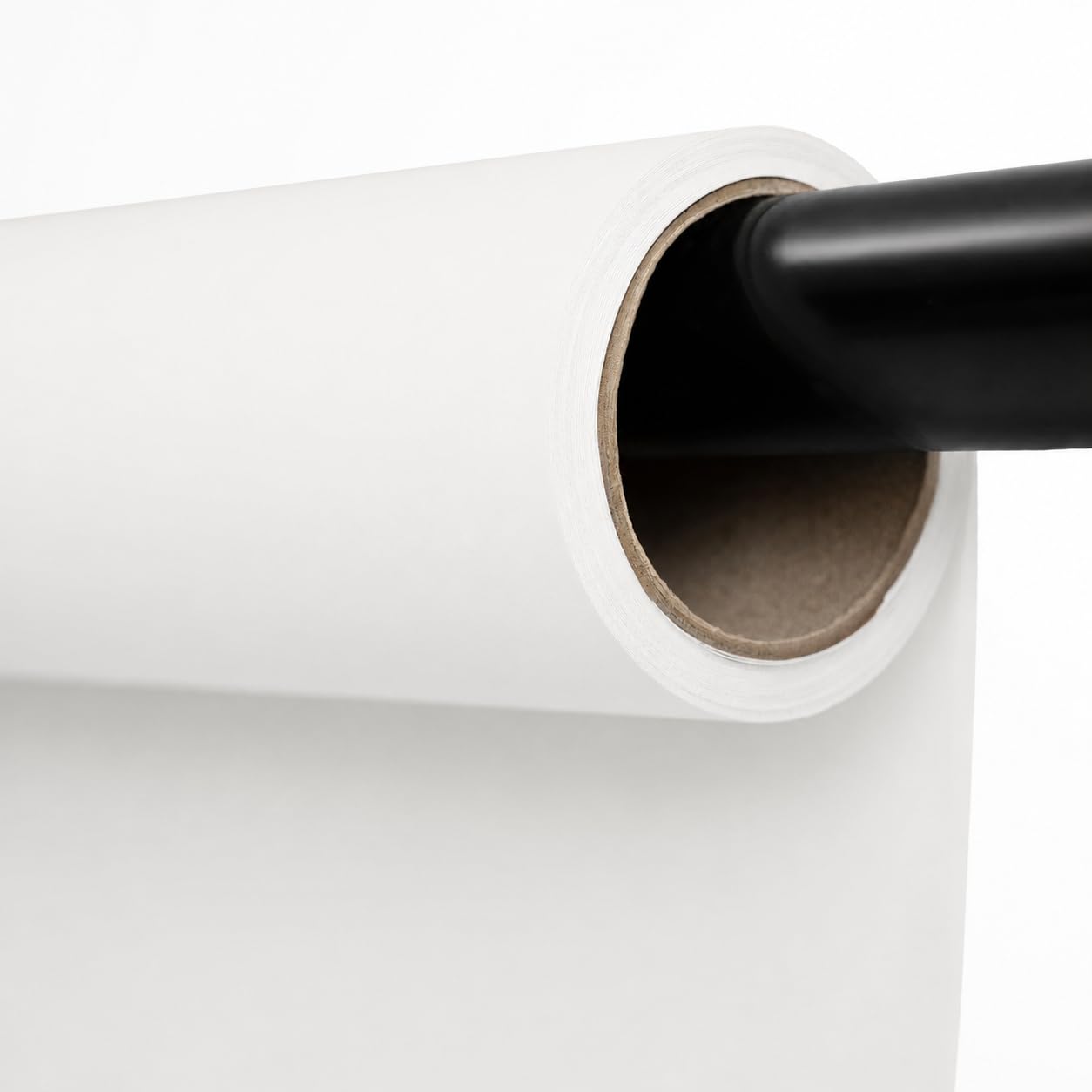
A 106.8-inch-wide roll of seamless paper is a different tool from a fabric backdrop, and the Kate paper is the one we choose for a permanent studio sweep. Unroll it from the cardboard tube, run it down the wall and across the floor, and you get a clean floor-to-wall transition with no seam to retouch.

The matte surface is non-reflective, which keeps strobes from throwing a hotspot, and the 32.8-foot length gives you several setups before the roll gets short. The width is generous enough for a full-body subject with room to move.

Arctic White is bright but not a cold blue-white; under warm bulbs it can read softer than it does on screen. Test it with your own lighting before a client shoot, especially if you're matching a white wall or a product's packaging.

We recommend it when the studio is permanent and the look needs to be seamless. It rewards a dedicated studio and dry storage, and it is the premium choice for a reason. If your backdrop goes up and down in a shared room, a fabric or roll-up panel is easier to live with.

Pros

  • Seamless 106.8-inch width
  • Long 32.8-foot roll
  • Non-reflective matte paper
  • Rolls onto a cardboard tube

Cons

  • Paper tears and creases if handled roughly
  • 13-lb roll is not portable
Our verdict

Choose the Kate paper roll for a permanent studio sweep when you can live with a fragile surface.

Check Latest Price
7

Tight Budgets

HMTFOTO 5x7 Black

91 /100
Keeper Score Outstanding

Key details

Care
Machine wash
Size
5 x 7 ft
Weight
4.23 oz
Material
Wrinkle-resistant fabric
Check Price on Amazon

At 120 grams, the HMTFOTO is the backdrop that disappears into a kit bag until you need it. The 5x7-foot black fabric folds down small, and it's light enough to tape to a wall or clip to a frame when a stand isn't part of the plan. That portability is the whole reason we keep one around.

The fabric is thin, and that's the trade-off. In a controlled indoor setup, it reads as a solid black; in front of a bright window, light can come through and soften the black. Hang it against a wall or double it up if the room has strong backlight. For a one-person portrait or a quick video, that's an easy workaround.

The 5x7 size is another limit: it covers a headshot or a seated subject, not a full-body stance or a group. The matte surface is non-reflective, and machine washing is listed as safe. We reach for it when the job is small, the bag is already full, and the background needs to be black without much fuss.

Pros

  • Feather-light at 120 g
  • Folds small for a kit bag
  • Matte black surface
  • Machine washable

Cons

  • Folding creases need ironing
Our verdict

The HMTFOTO is the cheap black backdrop we keep for one-person shots and quick videos, as long as you can control the light behind it.

Check Latest Price
8

Large Abstract Portraits

HABOKE 8x10 Abstract

90 /100
Keeper Score Outstanding

Key details

Size
8 x 10 ft
Weight
1.76 lb
Hanging
Rod pocket up to 3.1 in
Material
Microfiber
Check Price on Amazon

The HABOKE is the larger answer to the Kate abstract: an 8x10-foot microfiber in a soft grey pattern that covers a full-body subject instead of stopping at the shoulders. The rod pocket fits a standard stand up to 3.1 inches in diameter, and the whole thing weighs under a kilogram.

The larger canvas is the point. An 8x10 gives you room to frame a standing subject with floor and wall in the shot, and the abstract pattern keeps the background from looking like a flat painted wall. It's still light enough to carry and hang without help.

The grey is less predictable than a solid. Under warm light it can read lighter or almost white, and under cool light it pulls back toward grey. That's not a flaw in the pattern so much as a reason to test it under your own lamps before a session. The microfiber is soft and matte, which helps with reflections.

We recommend it when you need the bigger abstract canvas and the shot is worth a little prep. It's not the most robust fabric here, but the size is what earns it a place. For full-body portraits on a budget, that's the trade-off we accept.

Pros

  • Large 8x10 abstract grey
  • Soft microfiber with rod pocket
  • Light at 0.8 kg
  • Works for full-body portraits

Cons

  • Thin fabric can show light behind it
  • Wrinkles need steam before shooting
Our verdict

The HABOKE gives you a larger abstract grey than the Kate, and it's a good step up for full-body portraits if you don't mind steaming it.

Check Latest Price

What Six Months and 14 Backdrops Taught Us

We started with a wide sweep of what's actually sold as a photography backdrop — seamless paper rolls, polyester curtains, vinyl sheets, and one collapsible panel that stands on its own frame — then narrowed by how each one hangs (rod pocket, grommets, clamps, or no stand at all), whether the finish was matte, and what size it measured once unrolled rather than on the listing. Fourteen made the cut, and we lived with them for six months.

Most of that time they were hung in a corner of a living room turned into a small studio. We shot each one under flash and again with window light, looking for glare, hot spots, and how evenly the surface read behind a subject. We held every fabric up against a bright window to see whether a lamp or doorframe ghosted through, and pinched a corner to judge whether it would hang flat or ripple.

Wrinkles took the most work. We unpacked each backdrop, photographed the fold lines, then followed whatever the maker suggested — steamer, low dryer, or hanging overnight — and clocked how long the creases took to drop and whether they returned after a few days rolled up in the car. We set each one up and tore it down repeatedly too, checking hems, pockets, and grommets for the kind of wear that shows up by the fifth shoot.

Color was checked under neutral light against the listing photo, since several whites read warm and a couple of grays went cool. At the end we weighed all of it against price and against how many different setups each one could realistically handle. We'll keep using these and update as they age.

How to Choose a Photography Backdrop

Match the Size to the Shot

A 5x7-foot backdrop is a portrait size: it covers a seated subject, a head-and-shoulders crop, or a tight video frame. For full-body work, step up to 8x10; for groups or a floor-to-wall sweep, 10x20 gives you room to move. Measure the width of your stand and the height of your ceiling before ordering, because a backdrop cannot hang higher than the frame allows. The Kate 5x7 is a good example of a portrait-first size, while the GFCC 8x10 is the better starting point for full-body shots.

Choose Fabric, Paper, or Curtain by Workflow

Fabric is the practical choice if you shoot in different places: it folds, washes, and survives repeated setup. Paper gives the cleanest seamless sweep for a permanent studio, but it tears and dislikes moisture. Curtain panels are for events and soft portrait sets, where drape matters more than blackout. Think about the shoot, not the material name. The Kate paper roll is a studio tool; the ESGOTBME curtains are event dressing; the GFCC polyester is the one to fold into a bag.

Plan for Wrinkles Before You Shoot

Nearly every fabric backdrop arrives folded or rolled, so creases are the first thing you'll deal with. Microfiber and polyester usually respond to steam or a low tumble in the dryer; paper needs to stay on its tube and may still show a bend. If you want the least fuss, a wrinkle-free curtain or a PVC roll-up panel saves time. Otherwise, budget for a steamer and hang the backdrop for a while before the session. That extra step is the difference between a polished background and a visible fold line.

Check Opacity and Surface Finish

A thin fabric can look fine to the eye and still show a window or a lamp behind it on camera. For video and high-key portraits, choose an opaque fabric or place the backdrop in front of a wall. Matte surfaces are easier to light than shiny ones, which can throw glare. Black absorbs light, so it needs separate lighting on the subject; white reflects it and can brighten the whole set. The CPLIRIS black is the opaque option here; the HMTFOTO black is the lightweight one to use only with controlled backlight.

Check Hanging and Storage Before You Buy

Rod pockets are the simplest hanging method, but the pocket size has to match your stand or rod. Clamps give more flexibility on a temporary frame, while an integrated roll-up stand removes the need for a separate support. Also think about storage: a 13-pound paper roll takes up a corner, a four-panel curtain set needs shelf space, and a pop-up panel needs a closet. If you shoot in a shared room, the RAUBAY's self-contained case is the difference between a quick setup and a project.

Frequently Asked Questions

Final Verdict

For most portrait work, the Kate 5x7 abstract is the one we reach for first: the soft grey microfiber flatters skin tones, the matte finish controls reflections, and the small panel is easy to light and store. It is a portrait tool, not a full-body wall.

When you need more coverage, the GFCC 8x10 white is the straightforward step up, and the RAUBAY is worth the premium if setup time is the thing you hate. Choose the one that matches the shot, not the biggest sheet you can fit in the room.