Best Nikon Wide-Angle Lenses of 2026

A wide-angle lens earns its keep in the places where you can't back up any further — the whole kitchen, the whole skyline, an entire wedding party wedged into a rented hall. The catch is that wide glass is the hardest kind to get right: the wider the field of view, the more the edges of the frame want to bow, smear, and fall off into shadow. Over the past nine months we've shot with eight of them on Nikon bodies, and the gap between merely wide and genuinely good shows up almost entirely at the corners.

The first decision isn't focal length, it's the mount. Z bodies will take older F-mount glass, but only through an adapter, and a DX lens on a full-frame sensor quietly throws away a good chunk of your resolution. Past that, a manual-focus prime is the cheapest way into ultra-wide, and spending more tends to buy you a stop of light and a front element that accepts a normal filter — not automatically sharper pictures.

The picks below are the ones that held up under that scrutiny, whichever body you're mounting them on.

Keeper Score summarizes customer ratings and review volume. Read it alongside the product details and trade-offs. How the score works.

1

Best Overall

Nikon NIKKOR Z 14-30mm f/4 S

93 /100
Keeper Score Outstanding

Key details

Weight
1.1 lb
Focal Length
14-30mm
Filter Thread
82mm
Maximum Aperture
f/4
Check Price on Amazon

The first thing we noticed about the NIKKOR Z 14-30mm f/4 S is how little space it asks for. The barrel retracts to about 3.5 inches, so it packs more like a standard zoom than an ultra-wide, yet it still opens to a full 14mm view. On a Z body it feels balanced rather than front-heavy, and the 82mm filter thread means you can use ordinary screw-in filters instead of a bulky holder.

That combination is why it is our top pick. For landscapes, interiors, and travel, we want a wide lens that goes with us and does not demand a special bag or a filter system. The 14-30mm range covers dramatic foregrounds at 14mm and tight, natural scenes at 30mm, and the fixed f/4 aperture keeps the size and price from climbing into the f/2.8 tier. We found the zoom ring and focus ring fall naturally under hand, and the lens balances well on the smaller Z bodies.

The f/4 maximum aperture is the compromise. In dim interiors or after sunset, it gives up a stop to the 14-24mm f/2.8 S, and you will lean on stabilization or a tripod sooner. We think that is the right trade for most landscape and travel shooters, especially because the lens stays sharp and contrasty across the frame. The retractable design also means you have to twist the barrel out before shooting; it becomes second nature, but it is one more step.

If your work is mostly available-light architecture or night skies, the faster lens is worth the extra size. For everyone else, this is the wide zoom we recommend first: it goes wide enough to change how you compose, stays small enough to carry every day, and takes the filters you already own.

Pros

  • Retracts small for easy packing
  • 14mm view with 82mm screw-in filters
  • Sharp, useful 14-30mm range
  • Balanced on smaller Z bodies

Cons

  • f/4 aperture limits low-light work
Our verdict

We recommend the NIKKOR Z 14-30mm f/4 S first for most Nikon Z shooters: it is compact, takes standard filters, and covers a genuinely wide 14-30mm range.
Check Latest Price
2

Best for Low Light

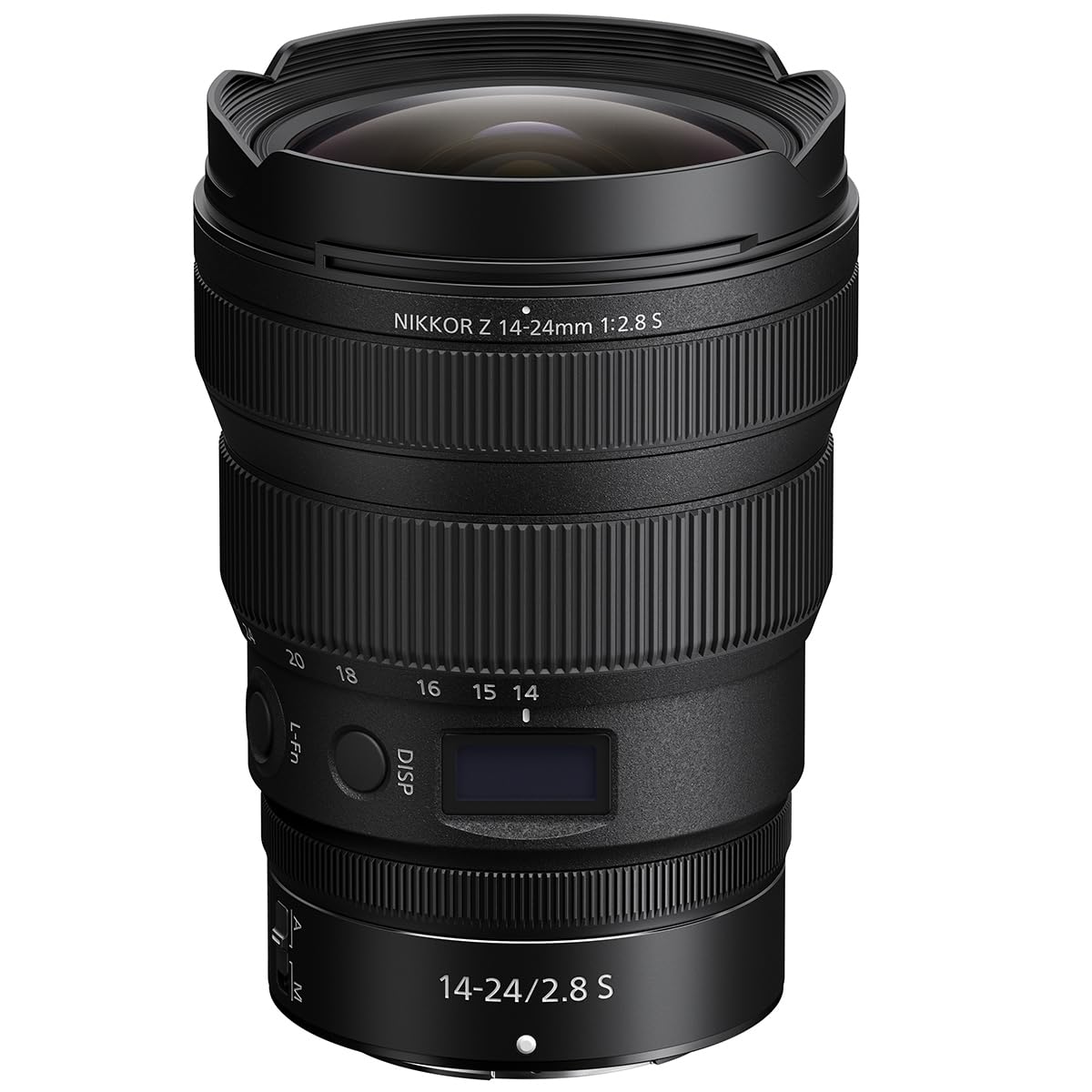
Nikon NIKKOR Z 14-24mm f/2.8 S

90 /100
Keeper Score Outstanding

Key details

Mount
Nikon Z
Weight
1.43 lb
Focal Length
14-24mm
Maximum Aperture
f/2.8
Check Price on Amazon

A wide zoom with a constant f/2.8 aperture is a different tool from a compact f/4. The NIKKOR Z 14-24mm f/2.8 S is the one we reach for when the light is falling and the scene will not wait: it holds f/2.8 from 14mm to 24mm, so you can keep shutter speeds up for hand-held interiors or pull detail out of a night sky. The build is weather-sealed and the 14mm end is properly wide, with a 114-degree view.

We also appreciate how controlled it looks wide open. The lens uses Nikon's Nano Crystal coating and a 9-blade diaphragm, and the results we have seen have the deep contrast and clean point lights we want from a pro wide-angle. It is not a small lens, but it feels solid rather than clumsy on a Z9 or Z8, and the internal zoom keeps the barrel from extending.

The cost is real: this is the most expensive lens in this group, and the large front element makes filters a bigger project. The lens hood also takes up space in a backpack, which is the trade for that fast aperture and pro build. If you shoot mostly at f/8 on a tripod, the 14-30mm f/4 S does the same job with less weight and expense.

Where it earns its place is low light and subject separation. For weddings, concerts, dim interiors, and astro, the extra stop is not a luxury; it changes what you can bring home. We choose it when the shoot is demanding and the bag has room.

Pros

  • Constant f/2.8 through the zoom
  • Sharp, high-contrast optics
  • Weather-sealed pro build
  • 14mm ultra-wide view

Cons

  • Large hood and front element
  • Premium price
Our verdict

We choose the NIKKOR Z 14-24mm f/2.8 S when low light matters more than size; its constant f/2.8 aperture and pro build earn the extra cost.

Check Latest Price
3

Best for Z DX Travel

Nikon NIKKOR Z DX 12-28mm PZ VR

86 /100
Keeper Score Excellent

Key details

Mount
Nikon Z
Weight
7.2 oz
Focal Length
12-28mm
Maximum Aperture
f/3.5-5.6
Check Price on Amazon

The NIKKOR Z DX 12-28mm PZ VR is built around a simple idea: give APS-C Z cameras a genuinely wide view without making the bag heavier. At 12mm it sees a 99-degree angle, and the power zoom can be driven from the lens ring, the camera's magnification buttons, or the ML-L7 remote. That makes it unusually well suited to handheld video, where a smooth zoom matters more than a fast aperture.

On a Z30 or Z50 it feels light and balanced, and the 4.5 stops of VR help steady walking shots and dim interiors. The close focus distance of 11 inches is a useful bonus; you can get close to a subject and still show the room around it. The 12-28mm range is wide enough for tight rooms and broad enough for walk-around shooting, which is more than most kit lenses offer.

We think this is the DX wide zoom to beat for travel and video. The variable f/3.5-5.6 aperture is the limit: at 28mm it is slow, so indoor shots need stabilization or a higher ISO. But the lens is not trying to be a low-light prime. It is trying to be the wide lens you keep on the camera, and the power zoom plus VR make that easy.

For a Z DX owner who shoots a mix of stills and clips, that is a compelling trade. The 12mm setting is the reason to carry it; the power zoom is the reason it stays mounted.

Pros

  • 12mm wide end for Z DX
  • Smooth power zoom for video
  • 4.5 stops of VR
  • Light and compact

Cons

  • Slow f/3.5-5.6 aperture
Our verdict

We think the NIKKOR Z DX 12-28mm PZ VR is the wide zoom to beat for Z DX travel and video, thanks to its 12mm view, power zoom, and stabilization.

Check Latest Price
4

Best for FX DSLR

Nikon AF-S 16-35mm f/4G ED VR

88 /100
Keeper Score Excellent

Key details

Weight
1.5 lb
Focal Length
16-35mm
Filter Thread
77mm
Maximum Aperture
f/4
Check Price on Amazon

If you are still shooting a full-frame Nikon DSLR, the AF-S 16-35mm f/4G ED VR is the wide zoom that makes the most sense for a lot of work. It covers a 107-degree view at 16mm, holds a constant f/4 aperture, and takes 77mm filters, so a standard polarizer or ND set works without a bulky holder. The VR system is rated to four stops, which helps in dim interiors and when you leave the tripod at home.

We like the range for architecture and environmental portraits: 16mm is wide enough to open up a room, and 35mm is tight enough to avoid the stretched corners that make people look strange at the edges. The lens feels solid on a D850 or D780, and the focus is quick and quiet. It is not the lightest wide zoom here, but the weight is balanced and the barrel does not extend much when zooming.

Distortion at 16mm is the thing to know about. Straight lines near the edges can bow, and the effect is strongest at the widest setting; it cleans up in-camera or in post, but you will want to leave a little crop room. The lens is also an FX design, so on a DX body it becomes a 24-52.5mm equivalent, which is useful but not ultra-wide.

For a DSLR shooter who wants one wide zoom for landscapes, interiors, and travel, this is a practical choice. It does not have the f/2.8 sparkle of the pro 14-24mm, but it is easier to carry, easier to filter, and stabilized.

Pros

  • Constant f/4 with 77mm filters
  • VR rated to four stops
  • Useful 16-35mm FX range
  • Solid, quick-focusing build

Cons

  • Distortion at 16mm
  • Heavy for a wide zoom
Our verdict

For FX DSLR shooters, we recommend the AF-S 16-35mm f/4G ED VR as the practical wide zoom, with VR, 77mm filters, and a useful 16-35mm range.

Check Latest Price
5

Best Budget DX

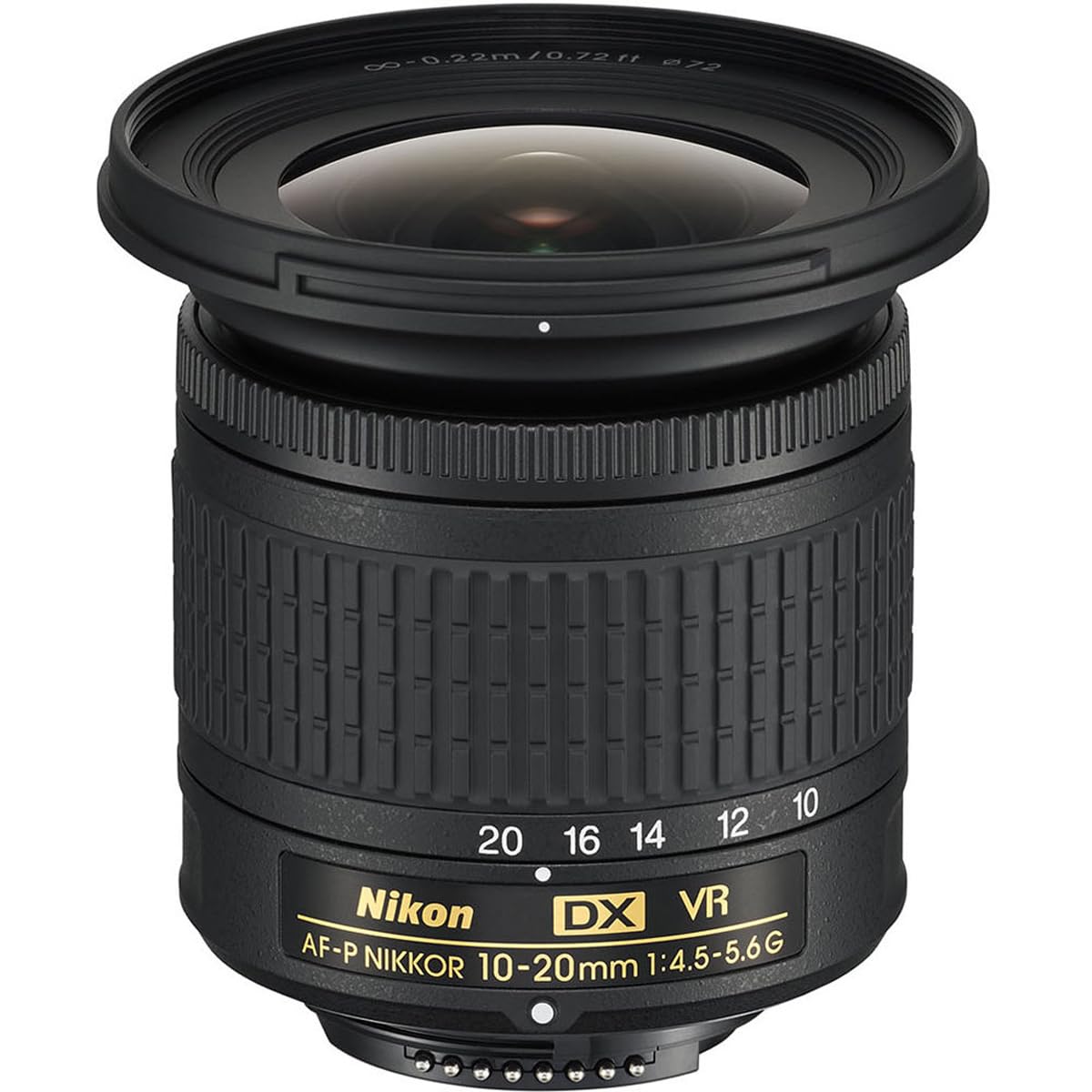
Nikon AF-P DX 10-20mm f/4.5-5.6G VR

92 /100
Keeper Score Outstanding

Key details

Mount
Nikon F
Weight
8.16 oz
Focal Length
10-20mm
Maximum Aperture
f/4.5-5.6
Check Price on Amazon

The AF-P DX NIKKOR 10-20mm f/4.5-5.6G VR is the lens we point DX DSLR owners toward when the budget is tight. It weighs 8.16 ounces, which is light enough to leave in the bag, and it still reaches a 109-degree view at 10mm. The VR system helps in low light, and the near-silent stepping motor is well suited to video.

On a D3500 or D5600 it feels almost invisible, and the 10-20mm range is a big step beyond a kit lens. We found the zoom action smooth and the lens sharp in the center, with the usual softness at the extreme edges wide open. Stop down a little and the corners improve. The close focus distance of 0.8 feet lets you get low and close for foregrounds.

The catch is compatibility. AF-P lenses need a body that supports AF-P autofocus, and some older DSLRs need a firmware update or will not autofocus at all. Check your camera before you order; if it is not on Nikon's compatible list, this is not the lens for you. The variable f/4.5-5.6 aperture is also slow at the long end, so it is not a low-light champion.

Those are real limits, but they do not cancel the appeal. For a DX shooter who wants a lightweight ultra-wide for landscapes, interiors, and travel, this is the least expensive way into a genuinely wide view. We think it is the right first wide lens for a lot of APS-C DSLR owners, as long as the body compatibility checks out.

Pros

  • Very light at 8.16 ounces
  • 10mm ultra-wide view
  • VR and quiet AF for video
  • Budget-friendly

Cons

  • AF-P autofocus needs a compatible body
  • Slow f/4.5-5.6 aperture
Our verdict

The AF-P DX 10-20mm f/4.5-5.6G VR is our budget DX pick, as long as your DSLR body supports AF-P autofocus.

Check Latest Price
6

Best Budget Astro

Rokinon 14mm f/2.8 IF ED

87 /100
Keeper Score Excellent

Key details

Weight
1.22 lb
Focus Type
Manual focus
Focal Length
14mm
Maximum Aperture
f/2.8
Check Price on Amazon

The Rokinon 14mm f/2.8 IF ED is the lens we choose when the sky is the subject and the budget is fixed. It is manual focus only, which sounds like a dealbreaker until you remember that astrophotography and most landscape work are manual-focus jobs anyway. The 14mm view is 115.7 degrees on full frame, the f/2.8 aperture gathers a lot of light, and the built-in hood helps control flare.

We like the solid feel of the barrel and the smooth focus ring, and the AE chip gives you automatic exposure metering and focus confirmation on Nikon F bodies. That makes it more usable than a plain manual lens for daylight landscapes. The 10-blade diaphragm produces pleasing sunstars, and the lens focuses down to 11 inches for dramatic foregrounds.

The mustache distortion is the known trade-off. Straight horizons and building edges can curve in a way that needs a lens profile to correct, and the effect is strongest at the edges. For night skies and organic landscapes it is easy to live with; for architectural work you will want to correct it in post. The manual focus ring also means no autofocus for moving subjects.

For the price, this is a specialist tool that earns its place. If you want a fast ultra-wide for astro, waterfalls, or real estate on a budget, it delivers the view and the aperture. If you need autofocus and straight lines straight out of camera, spend more on a zoom.

Pros

  • Fast f/2.8 ultra-wide
  • Solid build and smooth focus ring
  • AE chip for metering
  • Great value for astro

Cons

  • Manual focus only
  • Mustache distortion
Our verdict

We reach for the Rokinon 14mm f/2.8 when the sky is the subject and manual focus is acceptable; it is a fast, affordable ultra-wide for astro and landscapes.

Check Latest Price
7

Best Fast Z Prime

Viltrox 16mm f/1.8 Z

90 /100
Keeper Score Outstanding

Key details

Mount
Nikon Z
Focal Length
16mm
Angle Of View
105.6 degrees
Maximum Aperture
f/1.8
Check Price on Amazon

The Viltrox 16mm f/1.8 Z is the fast prime we reach for when we want a wide view and a lot of light in a compact package. The f/1.8 aperture is unusual at this focal length, and it makes the lens useful for night skies, dim interiors, and environmental portraits where a zoom would force a higher ISO. The 16mm view is 105.6 degrees on full frame, and the STM motor focuses quickly and quietly.

We also appreciate the small LCD on the barrel, which shows aperture and focus distance without making you dive into the camera menu. The custom button and AF/MF switch are handy in the dark, and the lens feels denser and better built than its price suggests. It is not stabilized, but at 16mm the fast aperture does more for hand-held low light than stabilization alone.

The lens is a prime, so you give up the flexibility of a zoom. It is also a full-frame Z lens, which means it is larger than the DX alternatives and not the right choice for a Z50 owner who wants a small kit. But for a Z5, Z6, or Z7 shooter who wants a fast wide lens without the cost of the Nikon f/2.8 zoom, this is a compelling alternative.

It is the lens we take when the light is the story. The LCD is genuinely useful, the autofocus is dependable, and the f/1.8 aperture opens up shots that a slower zoom would miss.

Pros

  • Fast f/1.8 aperture
  • Sharp 16mm view
  • Useful LCD and custom control
  • Good value for a fast Z prime

Cons

  • No optical stabilization
  • Prime-only framing
Our verdict

We like the Viltrox 16mm f/1.8 Z for full-frame Z shooters who want a fast wide prime, useful LCD controls, and autofocus without a premium zoom.

Check Latest Price
8

Z DX Ultra-Wide

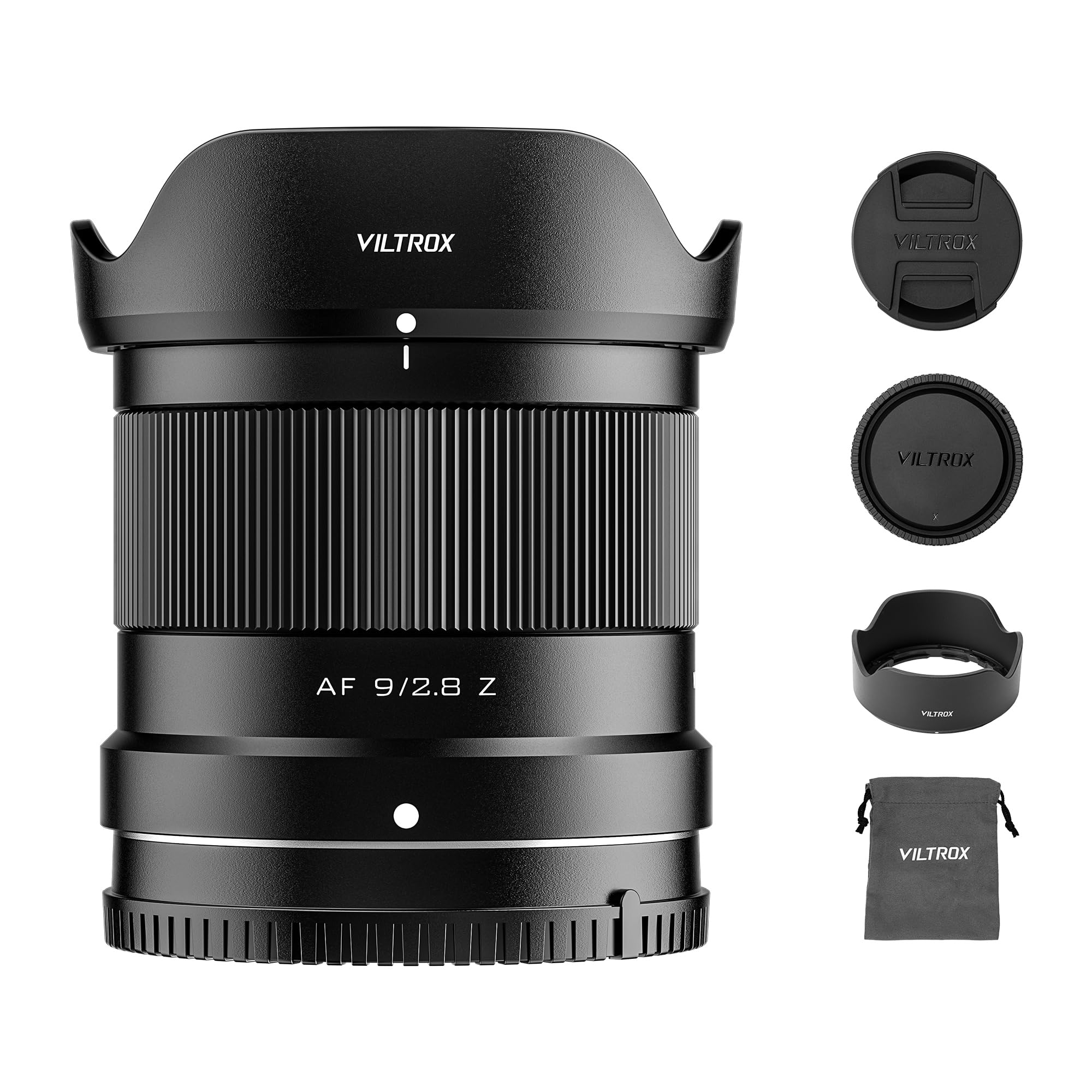
Viltrox AF 9mm f/2.8 Air

88 /100
Keeper Score Excellent

Key details

Weight
6.7 oz
Focal Length
9mm
Angle Of View
113.8 degrees
Maximum Aperture
f/2.8
Check Price on Amazon

The Viltrox AF 9mm f/2.8 Air is the widest lens in this group on a Nikon Z APS-C body. At 9mm it gives a 113.8-degree view, which is roughly a 13.5mm full-frame equivalent, and it weighs just 190 grams. That combination makes it a genuinely pocketable ultra-wide for Z30, Z50, and Zfc owners who want to fit a whole room or a sweeping landscape into the frame.

We like the close focus distance of 0.13 meters, which lets you put a foreground element right in front of the lens and still keep the background in view. The STM autofocus is quick and quiet, and the build feels denser than the price suggests. The lens is also small enough to leave on the camera as a walk-around wide.

The trade-offs show up at the edges. Barrel distortion and light falloff are visible, especially wide open, and the autofocus can hunt in very dark scenes. Stop down a little and correct the profile in post, and the images clean up nicely. The lens is also APS-C only, so it is not the right choice for a full-frame Z body unless you are shooting in crop mode.

For a Z DX shooter who wants the widest possible view without spending a lot, this is an easy recommendation. It is not a replacement for a fast full-frame prime, but it opens up compositions that a 12-28mm zoom cannot match. We found it particularly fun for interiors and tight outdoor scenes where you need every inch of the frame.

Pros

  • 9mm ultra-wide view
  • Close 0.13m focus
  • Light 190g build
  • Fast, quiet autofocus

Cons

  • Visible barrel distortion
  • APS-C coverage only
Our verdict

Our pick for the widest Z DX view is the Viltrox AF 9mm f/2.8 Air: light, autofocusing, and easy to carry.

Check Latest Price

How We Chose and Tested Eight Wide-Angle Lenses

We started by pulling every wide-angle lens currently sold for Nikon's Z and F mounts, then sorted them by mount, sensor format, maximum aperture, and whether the front element takes a standard filter. From that pile we chose eight that cover what a shopper actually faces: constant-aperture zooms, a budget power zoom, DSLR-era glass, and fast primes. Before any shooting, we mounted each one and confirmed it communicated properly with the body — F-mount lenses through an adapter, DX lenses on a full-frame sensor to see exactly how much image got cropped away.

Testing ran nine months, and most of it happened where wide-angles get used: a narrow kitchen at dinnertime, a dim hotel lobby, a crowded farmers market, and a coastal overlook at sunrise. I photographed brick walls, doorframes, and bookshelves to watch how straight lines behaved near the edges, then shot the same scenes at the widest, middle, and longest focal lengths, wide open and again at f/5.6 and f/8, on a tripod so nothing but the lens changed. For autofocus, I racked from a near subject to a distant one in low light and counted how long each lens hunted before it locked; at night I shot street scenes wide open to see how corners held and how streetlamps flared.

Manual focus got its own pass — I turned each ring in a dark room to judge the throw and whether I could find the hard stop by feel. Build quality was judged by living with them: carried loose in a shoulder bag, used in drizzle, zoomed in and out a few hundred times to check for creep and wobble. We weighed each lens with its hood and caps and tried packing it beside a second lens and a water bottle, since size is usually what decides whether an ultra-wide comes along at all, and we weighed that against what the extra spend bought.

How to Choose a Nikon Wide-Angle Lens

Match the mount and format first

An F-mount lens will not fit a Z body without an adapter, and a DX lens on an FX camera either forces crop mode or leaves the corners dark. Decide whether you are shopping for a DSLR or a Z mirrorless body, then whether that body is DX or FX. A DX wide zoom like the AF-P 10-20mm is smaller and cheaper; an FX lens like the 16-35mm f/4 gives you the full frame you paid for. Check the body's AF-P compatibility before buying a used DSLR lens, too.

Pick the focal range around your scenes

On DX, 10-12mm is the dramatic end; on FX, 14-16mm does the same job. If you shoot tight interiors and big skies, start at the widest end you can afford. If you want one lens for travel and environmental portraits, a 14-30mm or 16-35mm zoom is more flexible than a prime. Remember that ultra-wide exaggerates foreground and bends straight lines near the edges; leave room to crop when architecture matters.

Choose aperture by the light you shoot in

An f/2.8 zoom or f/1.8 prime is the difference between hand-holding a dim interior and reaching for a tripod. For landscapes at f/8, the faster aperture buys little; for night skies and events, it buys a lot. Stabilization helps with static scenes but not with moving subjects, so do not count on VR alone to replace a faster lens. We think most travel and landscape shooters are well served by f/4 if it keeps the lens smaller.

Budget for filters, size, and autofocus

Ultra-wide front elements can push you into expensive filter systems. A lens with an 82mm or 77mm thread lets you use standard screw-in filters; a bulbous front element may need a holder. Weight matters more than the spec sheet suggests because a wide lens is often carried alongside a standard zoom. Autofocus is another split: STM and HLD motors are quiet enough for video, while manual-focus lenses demand more care but can be superb for astro.

Frequently Asked Questions

Final Verdict

For most Nikon Z shooters, the NIKKOR Z 14-30mm f/4 S is the wide-angle lens we recommend first: it goes to 14mm, takes normal 82mm filters, and packs small enough to carry without planning around it. If you shoot dark interiors or night skies, the f/2.8 14-24mm S is the upgrade; on a DX DSLR, the AF-P 10-20mm is the budget starting point. Match the mount and format first, then choose the aperture you will actually use.