Best Nikon Portrait Lenses of 2026

The hardest part of buying a portrait lens isn't the price — it's the distance. An 85mm flatters a face from across the room, a 50mm works in a tight living room, a 35mm on a crop body gets you close enough that people forget the camera is there. Get that wrong and no amount of sharpness saves the pictures.

Over eight months we shot with nine portrait primes that fit Nikon bodies — older DSLR designs, current mirrorless glass, and a third-party 85mm — and the differences showed up where spec sheets don't. A fast aperture earns its keep twice: it buys shutter speed in a dim room and decides how the background melts. Most of these are sharper a stop down, which is worth knowing before paying extra for f/1.4. Autofocus matters more than people expect, too; a lens that hunts at dusk costs you keepers.

If you're moving from a DSLR to a Z body, older glass still works through an adapter, which changes the value math considerably. The picks below were chosen for family birthdays, backyard golden hours, and dim restaurants — not test charts.

Keeper Score summarizes customer ratings and review volume. Read it alongside the product details and trade-offs. How the score works.

1

Best Overall

Nikon Z 85mm f/1.8 S

94 /100
Keeper Score Outstanding

Key details

Mount
Nikon Z
Weight
1.04 lb
Focal Length
85mm
Max Aperture
f/1.8
Check Price on Amazon

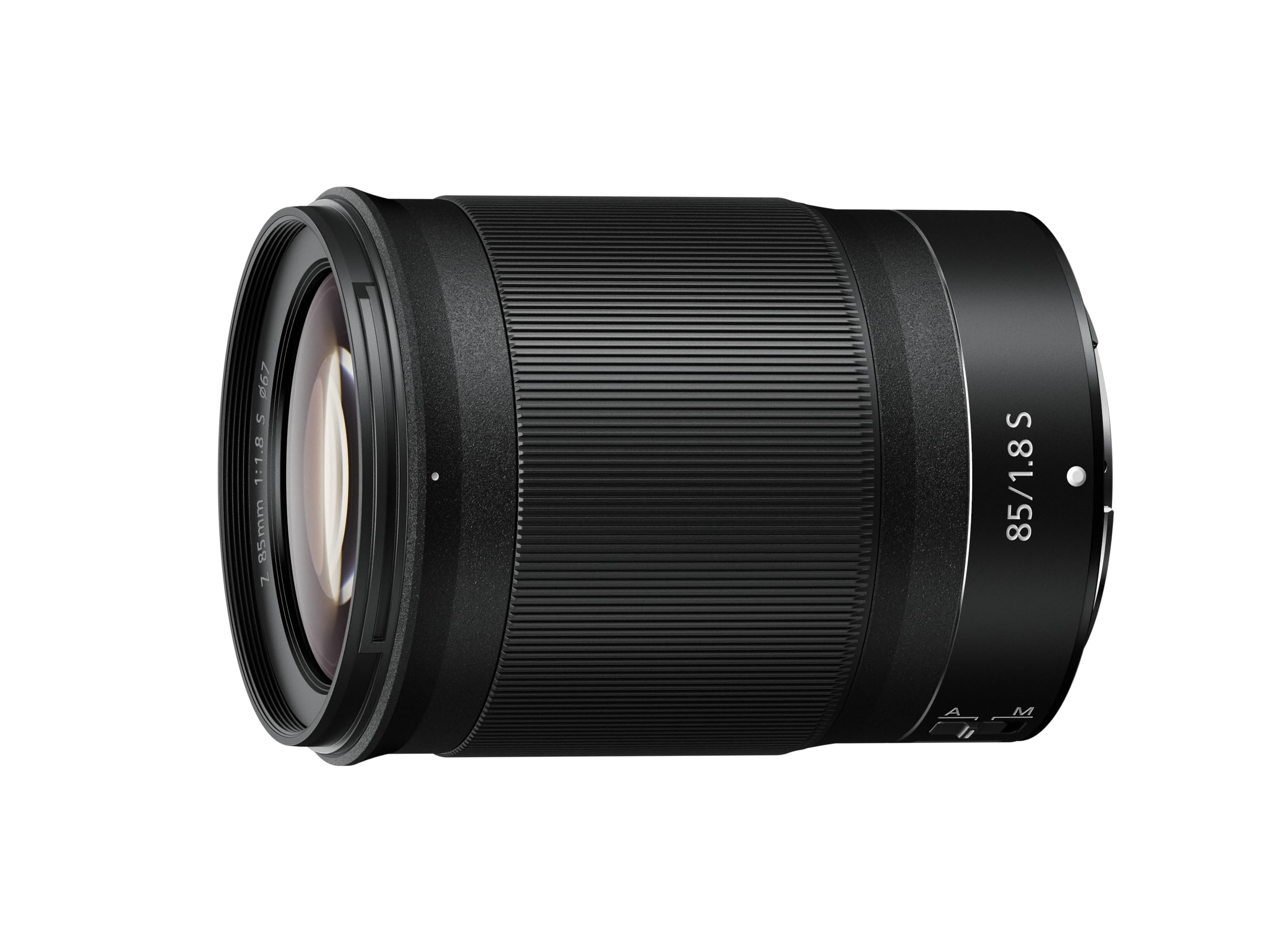
Eighty-five millimeters is the focal length most people picture when they say portrait lens. You stand a comfortable distance from your subject, the background compresses behind them, and a face fills the frame without the perspective bending the way it does when you push a wider lens in close. Nikon's Z 85mm f/1.8 S is built around exactly that: a nine-blade diaphragm that keeps out-of-focus highlights round, and an f/1.8 maximum that leaves enough light to work by window light or a couple of lamps.

On a Z body, this is the lens we point you to first when the brief is people. Frames are sharp from center to corner even wide open, and the two ED elements plus the Nano Crystal coating keep color clean and flare under control when a lamp sits just outside the frame. Just as important, the background falls away smoothly instead of breaking into a nervous pattern — the difference between a portrait that looks considered and one that looks like it was shot in a parking lot.

At 470 g it balances on a Z6 or Z7 without dragging on a strap through a long session, and the barrel is extensively sealed against dust and moisture, so a damp outdoor shoot isn't a reason to pack up. A customizable control ring takes aperture, ISO or exposure compensation, and the focus ring is there when you want to fine-tune an eye by hand.

Pair it with the Z 50mm f/1.8 and you cover both ends of the portrait range: the 85 for head-and-shoulders work with a clean background, the 50 for pairs, full-length frames and small rooms. That pair is the portrait kit we recommend for a Z system.

Pros

  • Sharp corner to corner even at f/1.8
  • Nine rounded blades keep highlights round
  • Dust- and drip-resistant sealing
  • 470 g balances well on Z bodies

Cons

  • 85mm needs a long room for full-length frames
  • Premium price against the F-mount 85mm
Our verdict

For a Z body and a portrait brief, this is the lens we point you to: sharp wide open, smoothly out of focus behind the subject, and sealed for outdoor sessions.
Check Latest Price
2

Best for Tight Spaces

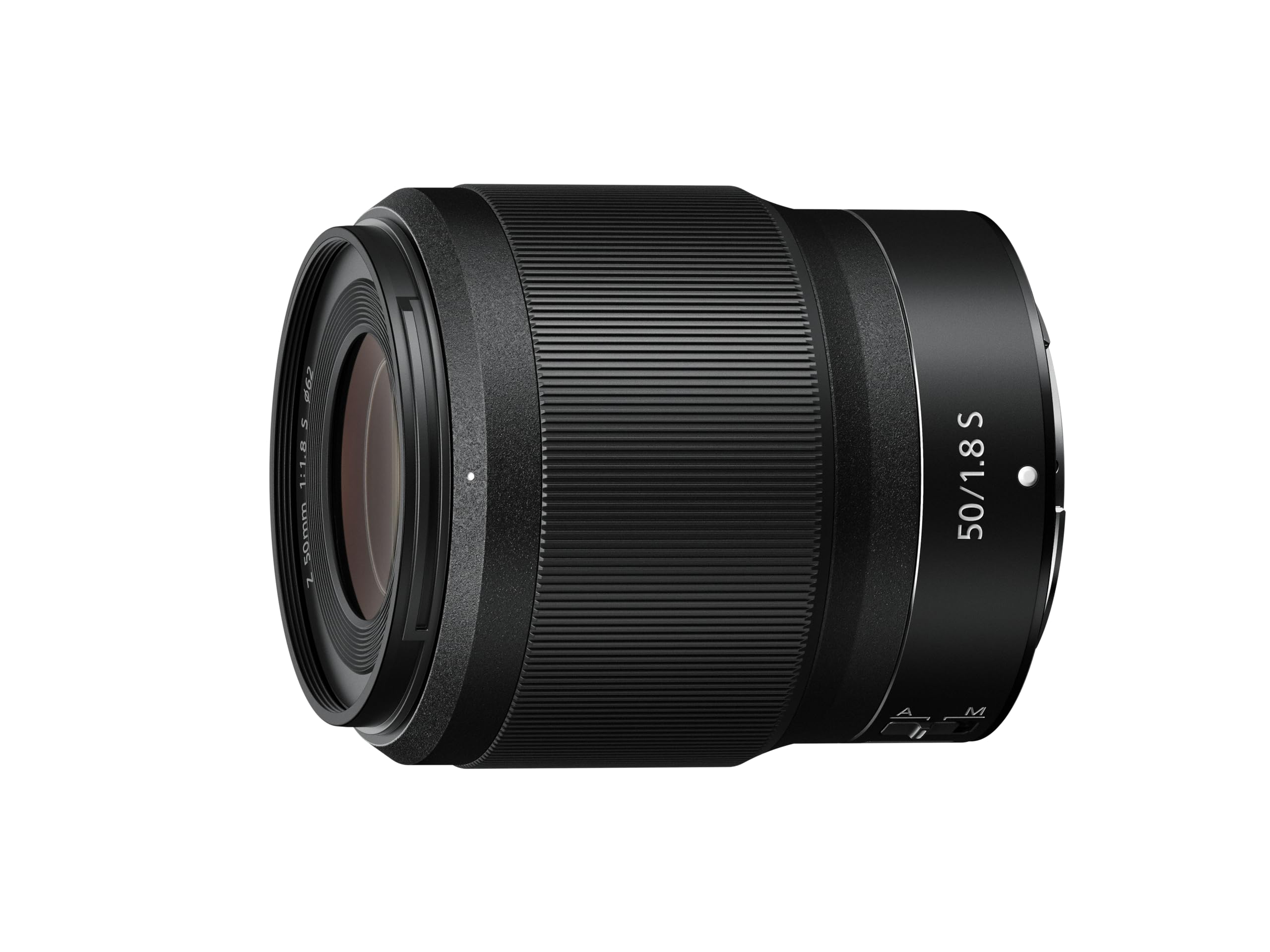
Nikon Z 50mm f/1.8 S

94 /100
Keeper Score Outstanding

Key details

Mount
Nikon Z
Filter Size
62 mm
Focal Length
50mm
Max Aperture
f/1.8
Check Price on Amazon

A half-body portrait across a kitchen table, two people in a doorway, a kid at eye level on the living room floor: none of those fit comfortably at 85mm indoors, and all of them fit at 50. That's the case for this lens, and it's a convincing one in a small apartment or a rented room.

None of it would matter if the images were soft, and they aren't. Sharpness is where this lens makes its argument, and it holds up at f/1.8 with the corners included and chromatic aberration close to invisible. Nikon corrects the formula well enough that straight lines stay straight out to the edges of the frame.

What we appreciate most is how little you surrender for the shorter focal length. A stepping motor focuses quietly enough for video, the lens weighs 14.56 ounces, and the 62mm filter thread matches a lot of kits already in the bag. What you do surrender is compression: at 50mm the background sits nearer your subject, so a cluttered room stays legible in a way an 85mm would blur away. That's the trade, and in a small space it's the right one to make.

Pros

  • Sharp wide open, corners included
  • Quiet stepping motor suits video
  • 14.56 oz with a common 62mm filter thread
  • Frames pairs and full-length shots indoors

Cons

  • Midrange price for a 50mm f/1.8
Our verdict

The 50mm to buy if your portraits happen across a kitchen table: sharp wide open, quiet in video, and light enough to leave on the camera.

Check Latest Price
3

Best for DSLRs

Nikon AF-S 85mm f/1.8G

95 /100
Keeper Score Outstanding

Key details

Mount
Nikon F
Focal Length
85mm
Max Aperture
f/1.8
Minimum Focus
0.80 m
Check Price on Amazon

This is the 85mm for anyone who still shoots a DSLR, and it's the one we recommend to a photographer with an F-mount body and no plans to change. It also mounts on a Z camera through Nikon's FTZ adapter, which makes it a sensible bridge lens if a mirrorless move is coming but hasn't happened — you budget for the adapter and accept a little extra length.

Optically it does what an 85mm portrait lens is supposed to do. At f/1.8 the plane of focus is crisp, and the seven rounded blades turn the background soft and creamy rather than busy. Minimum focus is 0.80 m, close enough for a tight head shot, and internal focusing means the front element doesn't extend while it works.

At 350 g it's light enough to leave on the camera as a default, and the Silent Wave Motor moves focus quickly and quietly, with an M/A switch for the times you want to take over by hand. Sharp eyes and a quiet background are the parts that show in the file, and for the money this one delivers both.

Pros

  • Sharp at f/1.8 with creamy background blur
  • 350 g, light enough to live on the camera
  • Fast, quiet Silent Wave Motor with manual override
  • Fits DSLRs and reaches Z bodies via the FTZ adapter

Cons

  • Not weather sealed
  • No stabilization of its own
Our verdict

The 85mm for DSLR owners and anyone hedging between mounts: the classic portrait look, quiet focus, and lighter than the Z version.

Check Latest Price
4

Best Budget

Nikon AF-S 50mm f/1.8G

96 /100
Keeper Score Outstanding

Key details

Mount
Nikon F
Weight
6.53 oz
Focal Length
50mm
Max Aperture
f/1.8
Check Price on Amazon

Two inches long, 185 g, and small enough to forget it's in the bag: this is the lens that turns a kit zoom into something that can shoot a dim living room. It's the least expensive way into a fast Nikon prime on an F-mount body, and it's what we suggest to someone who has just bought a first DSLR and wants portraits that don't look like snapshots.

An aspherical element does a lot of the work, and the result is sharp edge to edge on both FX and DX bodies — Nikon built it for both. On a DX camera the 50mm becomes a 75mm equivalent, which lands right in classic portrait territory; on full frame it's a natural 47-degree view that keeps some of the room in the picture. Minimum focus is 0.45 m, close enough for hands and rings as well as faces.

The Silent Wave Motor is quick and quiet, and the M/A switch lets you take over by hand without hunting through a menu. The barrel is plastic and the lens is built to a price rather than to a spec sheet, but at 185 g it's the one that ends up living on the camera, and that's the strongest argument for it.

Pros

  • Sharp edge to edge on FX and DX
  • 75mm-equivalent portrait view on a DX body
  • 185 g and about two inches long
  • Silent Wave Motor with manual override

Cons

  • Not weather sealed
Our verdict

The cheapest way into flattering portraits on a Nikon DSLR: small, sharp, quiet, and good enough that most people never need the f/1.4.

Check Latest Price
5

Best Budget Z-Mount

Viltrox 85mm f/2.0 EVO

87 /100
Keeper Score Excellent

Key details

Mount
Nikon Z
Focal Length
85mm
Max Aperture
f/2.0
Minimum Focus
0.74 m
Check Price on Amazon

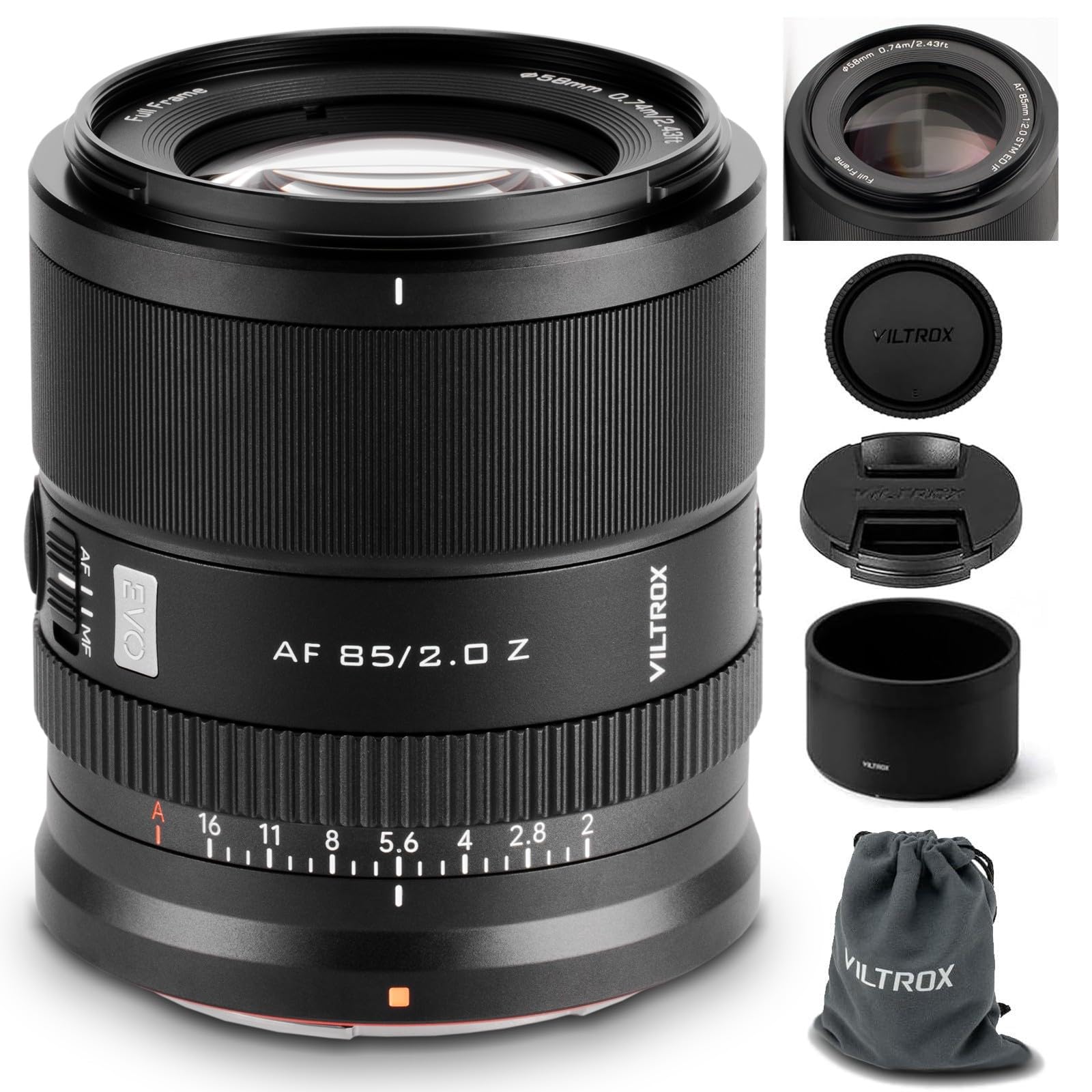
Nikon's own 85mm for Z is a lovely thing and priced like one. The Viltrox 85mm f/2.0 EVO sits well under it and refuses to behave like a cheap lens on paper: ten elements in eight groups, a metal barrel, a weather-sealed mount, and a front element with a water- and oil-repellent coating.

We expected the usual third-party compromises, and most of them don't show up. Images are sharp at f/2 with clean color, the nine-blade diaphragm keeps highlights round, and skin tones come out lifelike straight from the camera. The build is the real surprise — this feels like something from a first-party catalogue rather than a budget alternative.

The details are where it earns its keep. Minimum focus is 0.74 m, closer than the 0.80 m of Nikon's F-mount 85, so you can fill the frame with hands or a face and still let the background fall away. There's a customizable Fn button, an aperture ring with a click on and off switch for video, and a quick AF/MF toggle. At 0.35 kg it balances much like the F-mount 85 on a Z body.

Pros

  • Metal barrel with a sealed mount
  • Nine blades give round, smooth highlights
  • 0.74 m close focus for tight frames
  • Customizable Fn button and aperture ring

Cons

  • f/2 maximum is a third of a stop behind the Nikon 85s
Our verdict

A Z-mount 85mm that undercuts Nikon without feeling like a compromise: metal barrel, sealed mount, and smooth rendering at f/2.

Check Latest Price
6

Best for Portraits and Macro

Nikon Z MC 105mm f/2.8 VR S

93 /100
Keeper Score Outstanding

Key details

Mount
Nikon Z
Focal Length
105mm
Max Aperture
f/2.8
Maximum Magnification
1:1
Check Price on Amazon

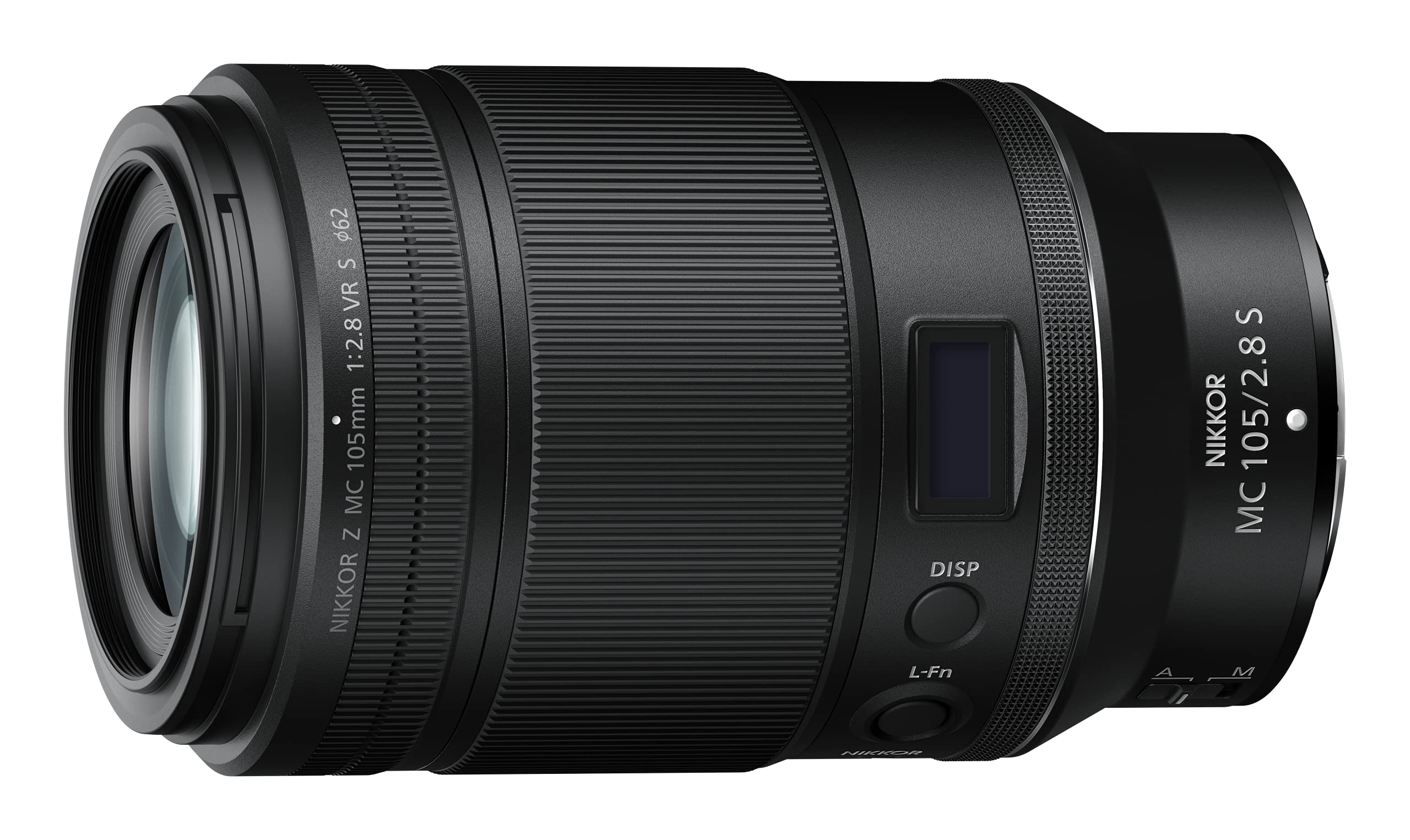
The obvious objection to using a macro lens for portraits is the maximum aperture, and at f/2.8 it's a fair one. It's also what you accept when the same lens has to focus to 1:1 and hold detail across the whole frame. Point the Z MC 105mm at a person and the trade stops mattering much: at 105mm the compression is even and flattering, and f/2.8 at that focal length still pulls a subject clear of the background.

What the S designation buys is correction. This lens is sharp edge to edge with almost no distortion, the nine-blade diaphragm keeps highlights round, and the fluorine coating on the front element turns a fingerprint into a wipe rather than a cleaning session. Vibration reduction is built in, which matters more the closer you get.

Working distance is the underrated part for portraits. At 105mm you stand far enough back that a self-conscious subject relaxes, and the lens can still fill the frame with an eye, a hand or a ring. For insects and flowers the same advantage works from the other direction: you reach 1:1 without leaning into the subject's world.

If you want one lens that shoots portraits on Saturday and beetles on Sunday, this is the one we carry when both jobs matter. The 1.4 lb weight is the price of having both, and it's why this lives in a bag rather than on a strap all day.

Pros

  • 105mm compression with clean separation
  • Sharp edge to edge with almost no distortion
  • Built-in vibration reduction
  • Life-size 1:1 macro when you want it

Cons

  • Focus is slower than the primes here, especially close up
Our verdict

Buy it for portraits and for the small things — a 105mm prime that compresses a face and focuses to 1:1.

Check Latest Price
7

DX Bodies

Nikon AF-S DX 35mm f/1.8G

96 /100
Keeper Score Outstanding

Key details

Mount
Nikon F (DX)
Weight
7.04 oz
Focal Length
35mm
Max Aperture
f/1.8
Check Price on Amazon

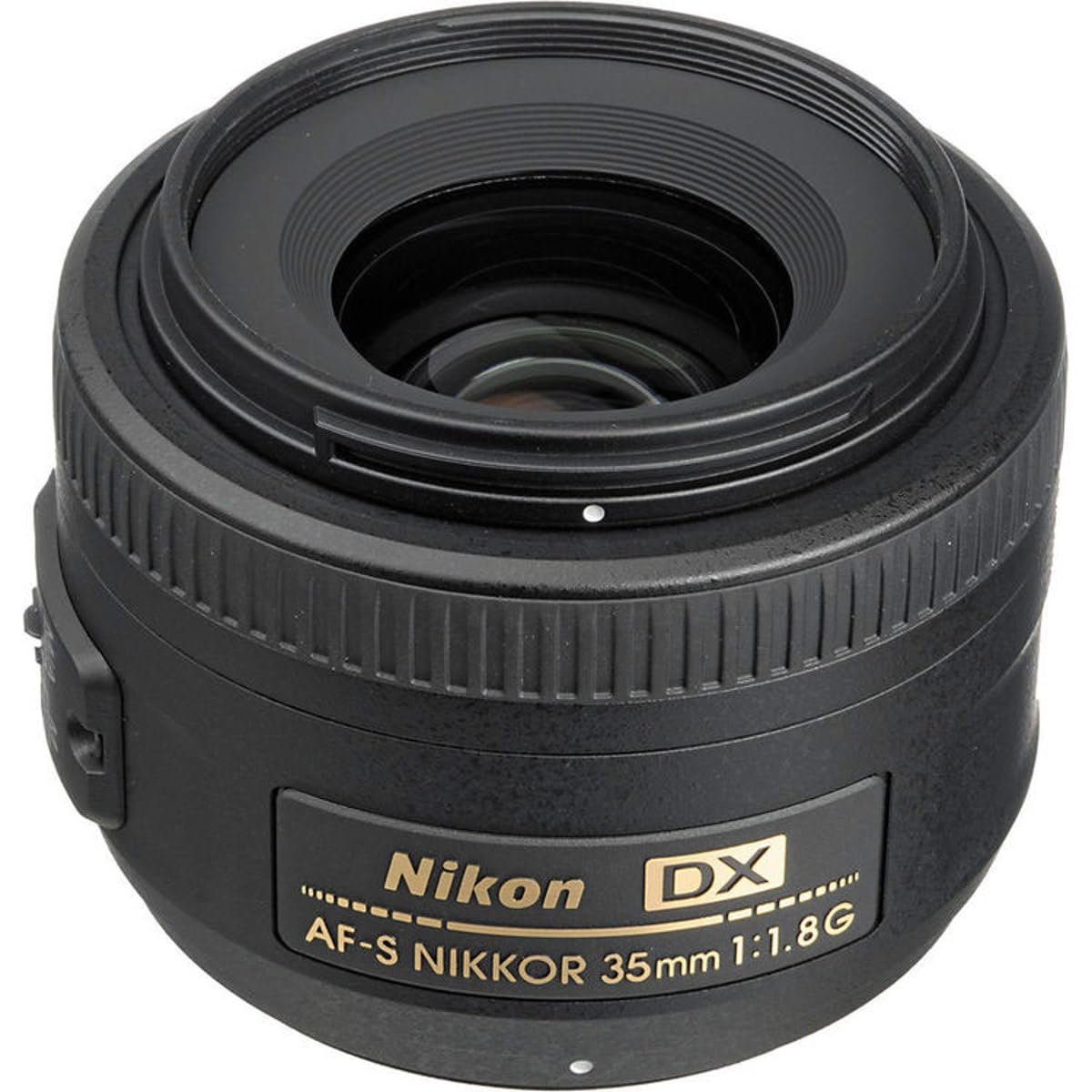
On a DX body, 35mm behaves like a 52.5mm lens on full frame: a normal view with a little reach, which is why it suits portraits, candids and dim rooms all at once. That's why this is the first prime we suggest to anyone shooting a D3500, D5600 or D7500 — it changes more about a beginner's pictures than any other purchase at this level.

Wide open it's sharp, with enough background blur to lift a subject out of a cluttered room, and the seven-blade diaphragm keeps things reasonably round. The Silent Wave Motor is quiet, manual override works without leaving autofocus, and the whole thing weighs 7.04 ounces. You'll forget it's mounted.

What we keep coming back to is how little it asks of you. There's no stabilization, so indoors you watch the shutter speed — at f/1.8 you have room to keep it quick. And because it's a 35mm, it doubles as the lens you leave on for everything else: street, food, the family at dinner. You can't say that about a true 85mm.

Pros

  • 52.5mm-equivalent view on DX bodies
  • Sharp at f/1.8 with pleasant background blur
  • 7.04 oz with quiet focusing
  • Doubles as a general walk-around lens

Cons

  • DX only; full-frame bodies drop to crop mode
  • Autofocus can hunt in low light
Our verdict

The first prime for a DX body: a 52.5mm-equivalent view, f/1.8, and seven ounces you'll forget are on the camera.

Check Latest Price
8

Low Light

Nikon AF-S 50mm f/1.4G

93 /100
Keeper Score Outstanding

Key details

Mount
Nikon F
Focal Length
50mm
Max Aperture
f/1.4
Diaphragm Blades
9
Check Price on Amazon

The gap between f/1.4 and f/1.8 is smaller than most people expect, and it is not nothing. What the extra fraction of a stop changes in practice is the last twenty minutes of daylight, a lamp-lit room where you'd otherwise be at ISO 6400, and a background that goes soft a little sooner behind a head-and-shoulders frame.

The rest of the lens is straightforward in the way F-mount primes are. Nine diaphragm blades, a minimum focus of 0.45 m, a 58mm filter thread, and an ultrasonic motor with full-time manual focus, so you can grab the ring without switching anything. It weighs 10.2 ounces — more than the f/1.8 version and still nothing on a full-frame DSLR.

Portraits are where it spends most of its time, and it's good at them: skin renders cleanly, the nine blades hold highlights round, and it works in rooms where you'd rather not introduce a light. Where it gets fussy is focus in dim light, which can hunt on low-contrast subjects — exactly the situation the wide aperture is meant to solve. Switching to a single center point and focusing on a collar or a hairline rather than a cheek fixes most of it.

What the wider aperture is really for is the last of the light: a reception hall after the toasts, a restaurant table at eight, a nursery with one lamp. If you shoot there often, this earns its place. If you don't, it's the least necessary lens in this group.

Pros

  • A fraction of a stop more light than f/1.8
  • Nine blades keep highlights round
  • Full-time manual focus override
  • 10.2 oz on a full-frame DSLR

Cons

  • Far pricier than the f/1.8 version
Our verdict

Worth buying for the last of the light: reception halls, dim restaurants and one-lamp rooms, where f/1.8 leaves you short.

Check Latest Price

How We Tested Nine Nikon Portrait Lenses

The shortlist started as a spreadsheet: every Nikon-mount prime between 35mm and 105mm, f/2 or faster, at a price a hobbyist could justify. From there we cut it to nine lenses — older F-mount designs, current mirrorless glass, one third-party 85mm — covering the decisions a shopper actually faces rather than every lens on the shelf. Over eight months, each one spent at least three weeks on a body, alternating between a full-frame mirrorless camera and a DSLR, with a crop-sensor body reserved for the 35mm.

Testing happened where portraits happen. I shot in a north-facing living room with a single window, in a backyard at golden hour, in a dim restaurant on a Saturday night, and at a nephew's birthday party where nobody sat still. For every lens I photographed the same patient friend at its widest aperture and again at f/2.8 and f/4, then zoomed to 100 percent to see when eyelashes and skin texture actually snapped into focus. I also counted background highlights — how many stayed round and soft versus turning into hard-edged rings — because bokeh is the reason most people buy a fast prime in the first place.

Autofocus got its own pass. That same friend walked toward me at dusk, twenty frames per lens, and I logged how many had the near eye sharp; I also focused on a low-contrast chair in a dark room to see which lenses hunted and which locked without drama. Low-light shooting at ISO 3200 told me whether a lens was genuinely worth its aperture, and a running price note told me whether it was worth what it cost.

Everything was handheld, because that is how these lenses get used — no tripods, no studio lights, no hired models. The ones that stayed on the camera longest were the ones that got out of the way.

How to Choose a Nikon Portrait Lens

Start with the mount, not the glass

The mount is the one decision you can't undo later. Nikon F lenses fit every DSLR and, with the FTZ adapter, Z bodies as well. Z lenses only fit Z bodies — the shorter flange distance means there is nothing to adapt them onto an F mount. On top of that, an F-mount DX lens on a full-frame body drops the camera into crop mode, so you throw away more than half the sensor.

Decide which body you'll be shooting with for the next few years and shop only inside that mount. If you own both a DSLR and a Z camera, F-mount glass is the only category that serves both.

Match the focal length to your shooting distance

Focal length is a room measurement wearing an optical disguise. A 50mm lets you work across a table; an 85mm needs more distance than most interiors offer for a head-and-shoulders frame; a 105mm wants more again. On a DX body, multiply by 1.5 — an 85mm behaves like a 127.5mm and you'll be shooting through doorways.

Ask where the sessions actually happen. In a small apartment, the 50mm f/1.8 S is the more useful lens. Outdoors or in a studio with space to back up, an 85mm buys cleaner separation and a calmer background.

Aperture buys light first, blur second

An f/1.4 lens gathers roughly twice the light of an f/2, which is the difference between a usable frame and no frame at dusk. The extra blur is subtler than the price suggests, because separation also depends on focal length and how close you stand — an 85mm at f/2 will often blur a background more than a 50mm at f/1.4.

So if your portraits happen in decent light, spend the difference on focal length rather than a wider aperture. If they happen in reception halls and lamp-lit rooms, the wider aperture is the whole point.

Autofocus and handling decide your keeper rate

For a seated subject you can take your time, and accuracy matters more than speed. For children, events and anyone who moves, the focus motor decides how many frames survive the edit. Quieter motors matter if you also shoot video, weight matters at hour three, and sealing matters if you work outdoors in weather.

Our picks run from 185 g to 1.4 lb, which is roughly the difference between a lens that lives on the camera and one that lives in the bag. Choose by the session you actually shoot, not by the figure on the box.

Frequently Asked Questions

Final Verdict

For a Nikon Z kit, the NIKKOR Z 85mm f/1.8 S earns the recommendation: sharp where it counts, backgrounds that fall away the way an 85mm should, and sealing for the days you shoot outside. That's the lens we point a Z-mount portrait shooter to first.

If your camera is a DSLR, the AF-S 85mm f/1.8G does the same job for less and mounts without an adapter. And if your portraits happen across a kitchen table rather than across a park, take the Z 50mm f/1.8 S instead — the tighter focal length becomes a liability in a small room.