Best Micro Four Thirds Lenses of 2026

A Micro Four Thirds body gets you a small, light kit; the lens decides whether that kit goes with you. A fast prime can make a dim restaurant or a backyard portrait look intentional, while a compact zoom saves you from swapping glass on a windy overlook. I’ve carried both kinds on walks, trips, and family dinners, and the trade-offs rarely come down to specs alone—they show up in how quickly the camera locks focus, how the lens feels in your hand, and whether the background melts the way you hoped. Over six months, our team shot with 12 lenses, from tiny wide-angles to short telephotos, including one manual-focus prime.

Build and mount fit matter more than the spec sheet suggests: a lens that wobbles or feels hollow is one I stop reaching for. And for portraits, the difference between pleasant blur and distracting bokeh is a stop and a half, not a chart. The picks below run from wide to short telephoto, and every one earned its place on image quality and value, not just a fast aperture.

Keeper Score summarizes customer ratings and review volume. Read it alongside the product details and trade-offs. How the score works.

1

Best Overall

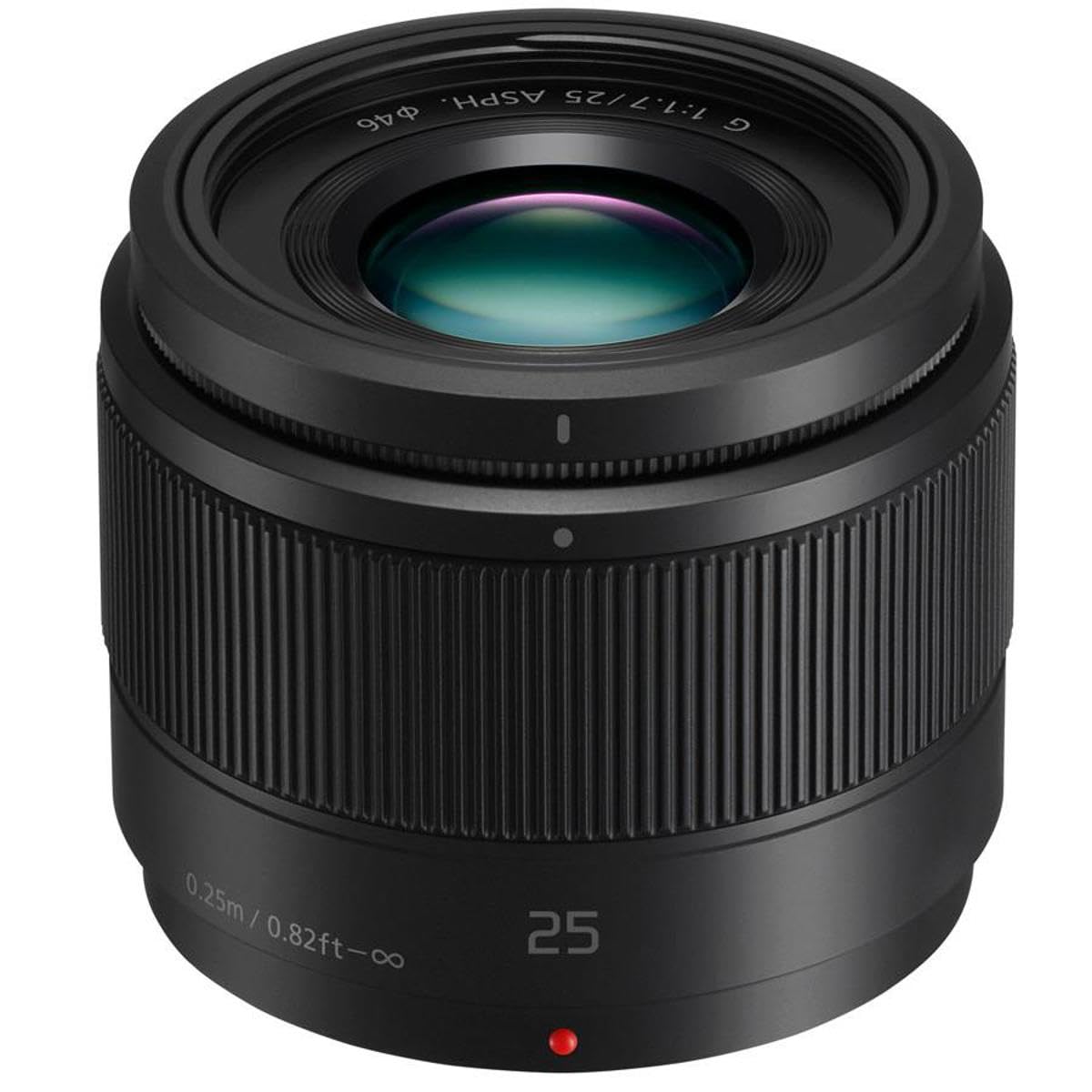
Panasonic Lumix G 25mm f/1.7

95 /100
Keeper Score Outstanding

Key details

Weight
4.41 oz
Focus Motor
Stepping motor
Focal Length
25mm (50mm equivalent)
Maximum Aperture
f/1.7
Check Price on Amazon

Two numbers do most of the arguing: 25mm and 125 grams. On Micro Four Thirds that focal length frames like a 50mm on full frame, which is the view most of us see the world in, and the barrel is short enough that a camera with it mounted stops being something you plan around. Ours has spent more time in a jacket pocket than in the camera bag.

The f/1.7 aperture is what makes it more than merely convenient. Indoors, at dusk, in the sort of dim restaurant where a phone gives up, it keeps the ISO down, and at portrait distance it turns a busy background into soft, even blur. It stays sharp wide open in the center; stop down to f/2.8 and the corners arrive.

Autofocus is quick and, thanks to the stepping motor, quiet enough to pull focus mid-take without the motor turning up on the audio. It's less sure of itself when contrast drops, and in a dim room it will hunt before it locks, so if you lean on continuous autofocus for handheld video in poor light, know that going in.

Against the 45mm, this is the lens that stays on the camera; the 45mm comes out when there are people to photograph. That division of labor is the reason a 25mm earns its place in the bag before anything else does.

Pros

  • Fast f/1.7 aperture in a 125 g barrel
  • Natural 50mm-equivalent framing
  • Quiet stepping motor suits video
  • Sharp wide open in the center

Cons

  • Not weather sealed
Our verdict

The first lens we recommend to nearly every Micro Four Thirds owner: small, fast, sharp enough, and inexpensive enough to leave on the camera.

Check Latest Price
2

Best Budget Telephoto

OM System 40-150mm f/4.0-5.6 R

88 /100
Keeper Score Excellent

Key details

Weight
6.72 oz
Focal Length
40-150mm (80-300mm equivalent)
Stabilization
None
Maximum Aperture
f/4.0-5.6
Check Price on Amazon

Reach is where Micro Four Thirds usually gets expensive, and this zoom is the exception. It covers 80-300mm equivalent, weighs 6.72 ounces, and costs less than any other long lens here. That combination makes it the easy first long lens for birds, sideline sports, or a compressed landscape.

Optically it does more than the price suggests. Frames come out crisp with decent contrast, and at the long end it will pull a wading bird out of the reeds from the far bank. Autofocus is near-silent, so it works for video, and in daylight it locks quickly.

The limit is light. At 150mm the aperture is f/5.6, so outdoors it's happy and indoors it isn't; plan on daylight, or on a body that holds up at high ISO. Around a garden, a field, or a shoreline, that isn't a constraint at all — which is exactly where a lens this long gets used.

Pros

  • 80-300mm equivalent at 6.72 oz
  • Sharp, contrasty images for the money
  • Near-silent autofocus for video

Cons

  • No optical stabilization in the barrel
  • All-plastic construction
Our verdict

The budget ticket to 300mm: sharp enough for daylight wildlife and sport, and light enough to carry all afternoon.

Check Latest Price
3

Best Ultra-Wide

Panasonic Leica DG 9mm f/1.7

90 /100
Keeper Score Outstanding

Key details

Focal Length
9mm (18mm equivalent)
Minimum Focus
0.095 m
Weather Sealing
Dust, splash, freeze resistant
Maximum Aperture
f/1.7
Check Price on Amazon

Ultra-wides are usually the slowest lenses in the bag. This one is f/1.7 at 9mm — an 18mm-equivalent view with more than a stop of light over the f/2.8 wide zooms, which is the difference between handholding a dim interior and putting the camera away.

The other surprise is how close it gets. At 0.095 m you can put a subject almost against the front element and let the background fall away, which wide lenses are normally bad at, and the out-of-focus areas stay smooth rather than busy. For video, focus breathing is minimal and aperture changes are smooth enough to ride during a take.

This is the lens we take when the shot is a room, a street, or a sky. It's also the only lens in this guide with dust, splash, and freeze resistance, and at 7.36 ounces it disappears on a small body — which matters when weather is the reason you're out in the first place.

The trade is specialization. Nine millimeters is not a walk-around view, and this is a considered purchase rather than an impulse one. Buy it because ultra-wide is the look you want, not because you need a single lens to cover everything.

Pros

  • f/1.7 aperture at 18mm equivalent
  • Focuses down to 0.095 m
  • Dust, splash, and freeze resistant
  • Minimal focus breathing for video

Cons

  • Specialist focal length, not an everyday lens
Our verdict

Our pick for ultra-wide: fast enough for night streets, sealed for bad weather, and sharp enough to crop.

Check Latest Price
4

Best Portrait Lens

Olympus M.Zuiko 45mm f/1.8

92 /100
Keeper Score Outstanding

Key details

Weight
4.09 oz
Focal Length
45mm (90mm equivalent)
Minimum Focus
0.20 m
Maximum Aperture
f/1.8
Check Price on Amazon

Portrait lenses on Micro Four Thirds have one job: separate a person from what's behind them. At 45mm and f/1.8 this one does it with a 90mm-equivalent view, a rounded seven-blade diaphragm, and a background that dissolves into cream — from a barrel that weighs 116 g.

Faces come out sharp where it counts, eyes and lashes and the edge of a jaw, with the falloff starting exactly where you want it. We were struck by how little effort the lens asks for: half-press, and the picture is there, wide open, in light where a slower lens needs a flash.

Focus is quick and near-silent, so it works as well on a video interview as on a still portrait, and the 0.20 m minimum distance lets you fill the frame with a face or a pair of hands. On a small body the balance is close to that of a kit lens, which is the point of carrying Micro Four Thirds at all.

What you're buying is one focal length, and a tight one — in a small room you'll be backing into the far wall for a group. Outdoors and across a table, though, it's the lens that makes ordinary snapshots look considered.

Pros

  • Creamy, natural background blur
  • Sharp where it counts at f/1.8
  • 116 g and pocketable on any body
  • Quick, quiet autofocus for video

Cons

  • Lens hood sold separately
  • Plastic barrel, not weather sealed
Our verdict

Our favorite portrait lens here: creamy backgrounds, quick quiet focus, and a footprint you forget about.

Check Latest Price
5

Cheap Manual Prime

TTArtisan 25mm f/2

86 /100
Keeper Score Excellent

Key details

Focal Length
25mm (50mm equivalent)
Filter Thread
43 mm
Minimum Focus
0.25 m
Maximum Aperture
f/2
Check Price on Amazon

This is the least expensive way into a fast prime on Micro Four Thirds, and nothing about the barrel gives that away: machined metal, an aperture ring that clicks through its stops, and a focus ring smooth enough to rack by hand.

Focusing by hand changes the rhythm of a shoot. With peaking switched on, the ring lands on a subject quickly at f/2 — the center is sharp wide open, and the corners firm up by f/5.6 — and the 0.25 m close focus turns it into a surprisingly good lens for food, flowers, and small objects on a table.

What you give up is everything electronic. Nothing moves unless you move it, so a walking subject or a toddler is a genuine challenge, and nailing focus wide open takes a deliberate turn of the ring rather than a half-press. Stop down for depth, shoot things that hold still, and it earns its place in the bag.

Pros

  • All-metal body with a clicky aperture ring
  • Sharp in the center wide open
  • Focuses down to 0.25 m

Cons

  • Manual focus only
  • Mount can bind on some bodies
Our verdict

Buy it as a second lens or a cheap way to learn manual focus; skip it if your subjects won't sit still.

Check Latest Price
6

Shallow-Focus Portraits

Rokinon 85mm f/1.4

80 /100
Keeper Score Excellent

Key details

Weight
1.19 lb
Focal Length
85mm
Minimum Focus
3.3 ft
Maximum Aperture
f/1.4
Check Price on Amazon

Micro Four Thirds has never been the obvious format for paper-thin depth of field. An 85mm f/1.4 gets you there anyway: eight aperture blades, a long working distance, and enough separation at f/1.4 to lift a face cleanly out of a cluttered room.

The build is the part that surprised us — metal, a weighted focus ring, an aperture ring you can set by feel — and the bokeh is the reason to own it: creamy, round, and smoother than the price suggests. Wide open it's the softest lens in this guide, with visible color fringing against bright edges; stop down to f/2.8 and it sharpens up considerably, which is where we ended up shooting.

Three and a third feet is as close as it focuses, so this is a lens for head-and-shoulders portraits, stage light, and detail across a room rather than anything intimate. Used that way, with the light behind you and time to focus, it produces a look the format usually can't.

Pros

  • f/1.4 aperture with creamy, round bokeh
  • Solid metal build and clicky aperture ring
  • Strong for stage and event portraits

Cons

  • Manual focus only
  • 539 g front-weights a small body
Our verdict

The cheapest route to really shallow portraits on Micro Four Thirds — provided you focus by hand and stop down for sharpness.

Check Latest Price

How We Tested Micro Four Thirds Lenses

I started by pulling every Micro Four Thirds lens I could find under a sensible street price, then filtered by mount compatibility, focal length, maximum aperture, and whether the lens was actually small enough to carry. That left 12 lenses, including fast primes, a compact zoom, a wide-angle, short telephotos, and one manual-focus prime. We shot with them for six months on the same two bodies, swapping lenses in the same bag so fit and balance were easy to compare.

Sharpness and image quality came first: I photographed the same brick wall and a backlit tree at every aperture, then looked at 100 percent crops for corner softness, color fringing, and contrast. For bokeh and portrait performance, I placed a subject against busy foliage and string lights, shooting wide open and stopped down to see whether highlights stayed round and edges stayed clean. Autofocus got its own pass—I timed focus from near to far in daylight and in a dim room, and noted when the camera hunted or the motor sounded strained. The manual lens was focused by peaking, which made the gap between smooth and notchy focus rings obvious.

Build quality and mount fit were checked by hand: I looked for wobble at the mount, checked whether barrel sections felt metal or hollow plastic, and listened for creaks when zooming. I also noted whether focus and aperture rings moved smoothly or felt gritty. Value was the last filter—I compared what each lens delivered wide open against what it cost, and a lens that needed two stops down to get sharp did not get a pass just because it was cheap. The lenses that stayed on my camera were the ones that made me want to take the next picture.

How to Choose a Micro Four Thirds Lens

Start with the view, not the number

Double the focal length printed on the barrel and you have the full-frame equivalent: 25mm frames like 50mm, 45mm like 90mm, 9mm like 18mm. That catches people out with the standard prime — a 25mm here is a normal lens, not a wide one, and shoppers expecting wide-angle framing from that number end up disappointed.

For a first lens, 25mm is the safest view in the system: wide enough for a street, tight enough for a face across a table. Add a second lens only when you can name the shot you keep missing — reach for the 40-150mm, a room for the 9mm, people for the 45mm.

Aperture buys light first, blur second

A fast prime pays for itself indoors, where f/1.7 lets you keep the ISO low in light that would push an f/5.6 zoom into noise. Treat the blur as a bonus rather than a guarantee: the smaller sensor gives deeper depth of field at the same aperture, so f/1.7 here separates a subject about like f/3.5 on full frame.

If a soft background is the whole point, focal length does more than aperture. The 45mm f/1.8 and the 85mm f/1.4 blur a background more convincingly than the 25mm from the same distance, because the longer lens magnifies whatever is behind your subject.

Autofocus, manual focus, and video

Stepping motors are why the autofocus lenses here stay quiet enough for video, and the practical difference shows when contrast drops, where cheaper focusing hunts and keeps hunting. If you shoot handheld video of people who move, that reliability is worth more than a faster aperture.

Manual lenses are the other half of the trade: no motor, no electronics, a fraction of the price, and focus that only moves when you move it. Peaking and magnification make it workable, and landscapes and locked-off shots don't care. Anything that walks, runs, or crawls is a different story.

Stabilization, sealing, and where you'll shoot

Only one lens here is sealed against dust and weather, and it happens to be the ultra-wide — worth knowing if your camera goes out in the rain. The rest want shelter, a bag, and a wipe-down when you get home.

Stabilization is the other half of that decision. The 40-150mm has none in the barrel, which is fine on a body that stabilizes the sensor and a real problem on one that doesn't. Check your camera before you buy a long lens without it.

Weight, balance, and handling

The spread here runs from a 125 g prime to a 539 g portrait lens, and the number matters less than where the weight sits. A light lens on a small body disappears into a pocket; a heavy one tips the camera forward and wants two hands and a strap.

The controls matter as much as the glass. A clicky aperture ring is a pleasure for stills and a nuisance for video, where you want stepless changes, and a smooth focus ring is worth more than a fast one if you focus by hand. Handle the lens if you can, or buy somewhere with a return window.

Frequently Asked Questions

Final Verdict

The Panasonic 25mm f/1.7 is the lens we point people toward first, because it's the one that turns a Micro Four Thirds body into a camera you carry without thinking about it.

If your shooting happens at a distance, the 40-150mm adds 300mm of reach for very little money and very little weight; if it happens at arm's length, the 45mm f/1.8 handles the people. And when the shot is a room, a street, or a shoreline in bad weather, the sealed 9mm Leica is the one worth paying for.