Best Portrait Lenses of 2026

The fastest way to make a portrait look expensive isn't a new camera body — it's a wide aperture. A 50mm opened up to f/1.8 turns a cluttered backyard into soft color and lifts your subject off the background, which is why it's usually the second lens anyone buys and the one they keep longest. What that lens really fixes is the thing you can't Photoshop back: a background that competes with the face.

I've spent the past six months photographing couples, families, and a great many fidgeting toddlers with eight of these lenses, from budget 50s to heavier f/1.4 glass, and the differences rarely showed up where the spec sheet says they will. Focal length is the decision to make first: an 85mm flatters a face and gives you room to work, while a 50mm is far easier in a small living room and behaves like a short telephoto on a crop body. Autofocus is the close second — a lens that hunts in low light costs you the shot no matter how good its glass is.

The picks below are sorted by who they suit, from first-timer to working shooter.

Keeper Score summarizes customer ratings and review volume. Read it alongside the product details and trade-offs. How the score works.

1

Best Overall

Canon EF 85mm f/1.8 USM

91 /100
Keeper Score Outstanding

Key details

Mount
Canon EF
Weight
15 oz
Focal Length
85mm
Max Aperture
f/1.8
Check Price on Amazon

An 85mm lens earns its keep by the way it compresses a face: the background comes closer, the shoulders soften, and the subject fills the frame without the distortion you can get at 50mm. The Canon EF 85mm f/1.8 USM is the lens we reach for first in this group because it delivers that look without the bulk of the f/1.4 alternatives. The nine-blade aperture keeps out-of-focus highlights rounded, and the f/1.8 maximum aperture gives you room to work in dim rooms.

The USM motor is the practical reason it stays on the camera. Focus is smooth enough for stills and quiet enough for most video, and the front element does not rotate, so a polarizer stays where you set it. At 15.04 ounces, it is light enough to carry for a long session; the Sigma 85mm f/1.4 Art is more than twice the weight. The 58mm filter thread is also a common size, which makes filters easier to share.

The lens is at its best when you have a little time to compose: posed portraits, available-light sessions, and tighter head-and-shoulders work. If you need the strongest background separation in this group, the Sigma 85mm f/1.4 Art is the step up. For a lighter, less expensive Canon portrait kit, the 50mm f/1.8 STM is the natural companion.

Pros

  • Flattering 85mm compression
  • Smooth USM autofocus
  • Nine-blade aperture
  • Light 15.04-ounce body

Cons

  • No image stabilization
Our verdict

We recommend this 85mm first to Canon EF portrait shooters: it pairs flattering compression and a fast f/1.8 aperture with smooth USM focus and easy handling.

Check Latest Price
2

Best Budget

Canon EF 50mm f/1.8 STM

96 /100
Keeper Score Outstanding

Key details

Mount
Canon EF
Weight
5.6 oz
Focal Length
50mm
Max Aperture
f/1.8
Check Price on Amazon

On a crop-sensor Canon body, the 50mm focal length becomes an 80mm-equivalent portrait lens. That is the happy accident that makes this small prime so useful for head-and-shoulders work. It is small, it is fast at f/1.8, and it does not ask you to learn a new workflow. The 49mm filter thread and 5.6-ounce body make it the lens that stays in the bag even when you brought something else.

The STM motor is quiet and smooth, which matters if you shoot both stills and video; it is predictable for posed portraits. For a first portrait prime, it is our budget pick for a reason: you get the portrait look without the weight or complication of an 85mm. The seven-blade aperture gives a decent round highlight, and the lens is at its best around f/2.2 to f/2.8 when you want both eyes crisp.

On full frame, the 50mm view is wider and more environmental, so you need to step in or crop for a tight headshot. That makes it a different tool from an 85mm rather than a lesser one. It is the lens we hand to someone who is learning portraits and does not want to miss the moment while changing lenses.

Pros

  • 80mm-equivalent view on APS-C
  • Quiet STM autofocus
  • Fast f/1.8 aperture
  • Light 5.6-ounce body

Cons

  • Autofocus can hunt in low light
  • Manual focus ring can be noisy
Our verdict

We recommend this 50mm as the budget Canon portrait lens: on APS-C it behaves like an 80mm, and the f/1.8 aperture and quiet STM focus are easy to live with.

Check Latest Price
3

Best for Background Blur

Sigma 85mm f/1.4 DG HSM Art

90 /100
Keeper Score Outstanding

Key details

Mount
Canon EF
Weight
2.5 lb
Focal Length
85mm
Max Aperture
f/1.4
Check Price on Amazon

The Sigma 85mm f/1.4 Art is the lens that makes the case for carrying a heavy prime. At 2.5 pounds and with an 86mm filter thread, it is the biggest lens here; what that buys is f/1.4 and a rendering that makes the background fall away. If you have ever wanted a portrait to look cut out from the scene, this is the lens in this group that goes furthest.

The HSM motor is quick enough for posed work, and the lens is built to stay sharp wide open. The 85mm focal length still gives you the classic compression, and the f/1.4 aperture is the main event. It also works with the MC-11 adapter for Sony E-mount users, which makes it more flexible than its Canon EF mount suggests.

That extra stop is why we keep it in the bag for low-light portraits and tightly controlled backgrounds. The weight is the trade: after a long handheld session, the body makes itself known. For a lighter carry, the Canon EF 85mm f/1.8 USM is the easier choice; for the softest background here, this is the one.

Pros

  • f/1.4 aperture for strong separation
  • Sharp wide-open rendering
  • Quick, quiet HSM focus
  • Works with MC-11 adapter for Sony E

Cons

  • 2.5-pound body
  • 86mm filters add cost
  • Autofocus can be inconsistent with movement
Our verdict

We recommend the Sigma 85mm f/1.4 Art when background separation matters more than weight: it delivers the strongest blur in this group, but you pay for it in bulk.

Check Latest Price
4

Best Fast Standard

Sigma 50mm f/1.4 DG HSM Art

92 /100
Keeper Score Outstanding

Key details

Mount
Canon EF
Weight
1.3 lb
Focal Length
50mm
Max Aperture
f/1.4
Check Price on Amazon

The 77mm front element and 1.3-pound body tell you this is not a plastic nifty-fifty. The Sigma 50mm f/1.4 Art is a fast standard prime built for environmental portraits, low light, and the kind of frame where the subject sits inside the scene rather than against a blurred wall. The nine-blade aperture keeps highlights round, and the f/1.4 aperture gives you a stop more light than the f/1.8 options here.

The ring-type ultrasonic motor supports full-time manual focus, and the lens is at its most impressive wide open, where sharpness holds up. Autofocus is the caveat: it can miss in some situations, and the lens is heavy enough that you notice it on a long day. For a Canon EF shooter who wants one fast 50 to do the work of two, it is our pick.

The 50mm view is more forgiving in small rooms than an 85mm, and the extra stop helps when the light is falling. It is not a subtle lens in the bag, but it is the one we choose when the frame needs context as much as separation. If you want a lighter 50, the Canon EF 50mm f/1.8 STM is the obvious alternative.

Pros

  • f/1.4 aperture with nine blades
  • Sharp wide open
  • Full-time manual focus
  • Solid build

Cons

  • No image stabilization
  • 77mm filters add cost
Our verdict

We recommend the Sigma 50mm f/1.4 Art for Canon EF shooters who want a fast standard prime with sharp wide-open rendering, provided they can live with the weight.

Check Latest Price
5

Best for Sony E-Mount

Sony FE 50mm f/1.8

91 /100
Keeper Score Outstanding

Key details

Mount
Sony E
Weight
6.6 oz
Focal Length
50mm
Max Aperture
f/1.8
Check Price on Amazon

At 6.6 ounces, the Sony FE 50mm f/1.8 is the lens we slip into a bag when the camera is coming along anyway. It is a full-frame E-mount standard prime, so it works as an environmental portrait lens on full frame and as a roughly 75mm-equivalent short portrait lens on APS-C. The seven-blade aperture and f/1.8 maximum aperture give you separation without a heavy kit. For Sony shooters who want to travel light, it is the easy first portrait prime.

The double-gauss design and aspherical element are there to keep the center sharp and control field curvature, and the lens is at its best when you stop down slightly. The 50mm view is more forgiving in tight rooms than an 85mm, and the 6.6-ounce body makes it easy to hold one-handed. It is the one most likely to be with you.

Against the Sigma 50mm f/1.4 Art, it gives up the extra stop and the heft; against a larger zoom, it gives up flexibility but gains discretion and speed. That is the right trade for travel, family sessions, and the kind of portrait where the setting matters as much as the face. It is not the most serious lens here, but it is one of the easiest to live with.

Pros

  • Very light 6.6-ounce body
  • Seven-blade f/1.8 aperture
  • Full-frame Sony E-mount
  • Compact for travel

Cons

  • Autofocus is slow and audible
  • No image stabilization
Our verdict

We recommend the Sony FE 50mm f/1.8 to E-mount shooters who want a light, affordable portrait prime and can work around its slow, audible focus.

Check Latest Price
6

Budget 85mm

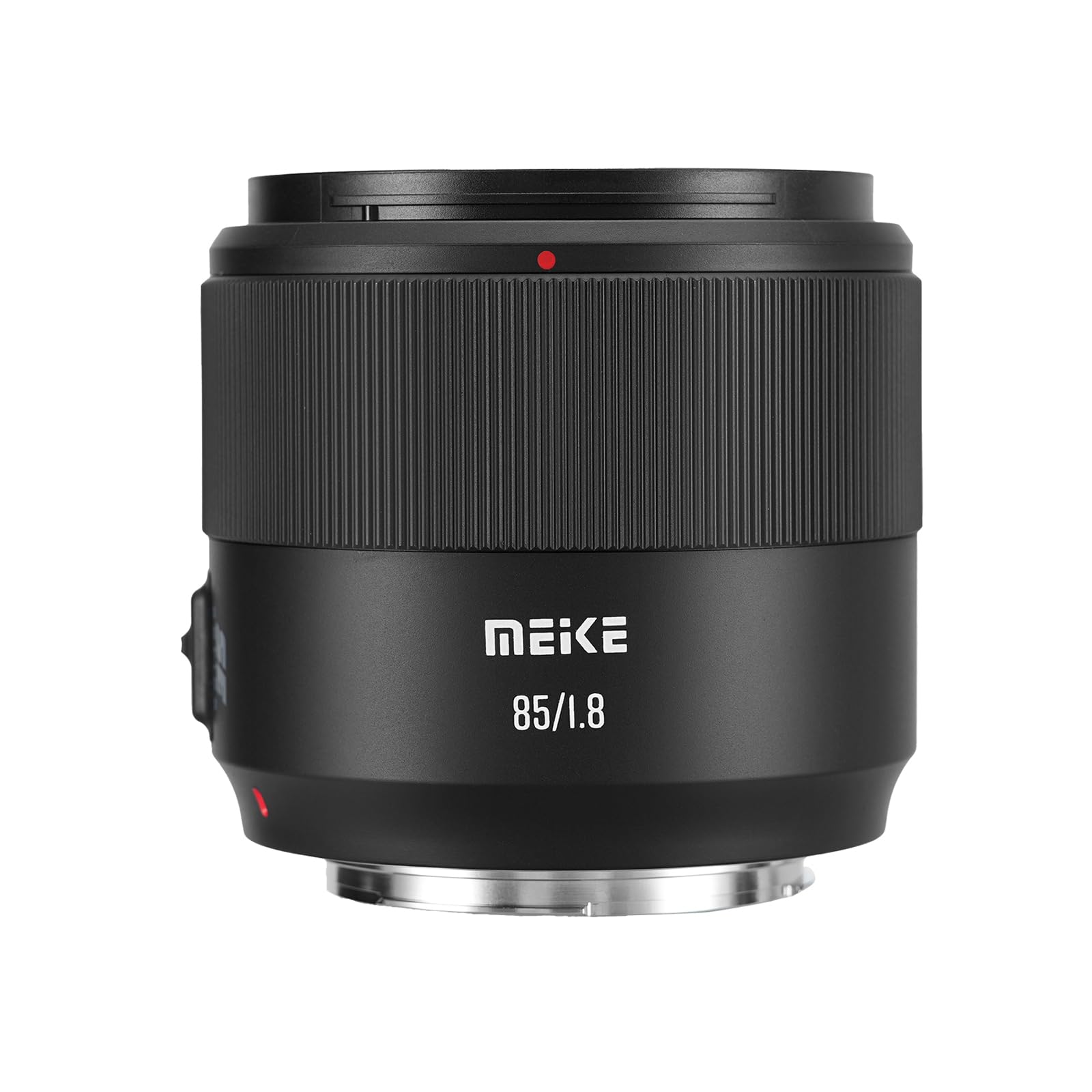
Meike 85mm f/1.8 SE Mark II STM

80 /100
Keeper Score Excellent

Key details

Mount
Canon EF
Focal Length
85mm
Max Aperture
f/1.8
Aperture Blades
11
Check Price on Amazon

Eleven aperture blades on an 85mm lens is the kind of detail that gets our attention. The Meike 85mm f/1.8 SE Mark II STM is a budget 85 with a feature set that looks more expensive than it is: 11 blades, a 369g body, and a 0.65m minimum focus distance. On paper, it is a lot of portrait lens for the money.

The STM motor supports autofocus, electronic aperture control, and EXIF transmission, so it behaves like a modern lens rather than a manual novelty. The 85mm focal length and f/1.8 aperture give you the classic compression, and the 11-blade diaphragm is designed to keep highlights round when you stop down. It is easy to carry alongside a second body.

The catch is confidence. The lens does not have the long track record of the Canon or Sigma options here. For posed portraits, a budget price, and a look that punches above its class, it earns a place; for paid work where every frame counts, we still point to the Canon EF 85mm f/1.8 USM.

Pros

  • 11-blade aperture
  • STM autofocus and EXIF support
  • Light 369g body
  • 0.65m close focus

Cons

  • Autofocus can lag fast action
  • No image stabilization
Our verdict

We recommend the Meike 85mm f/1.8 SE Mark II STM as a budget 85mm for posed portraits, with the caveat that its focus is less proven for fast action.

Check Latest Price
7

Manual-Focus Portraits

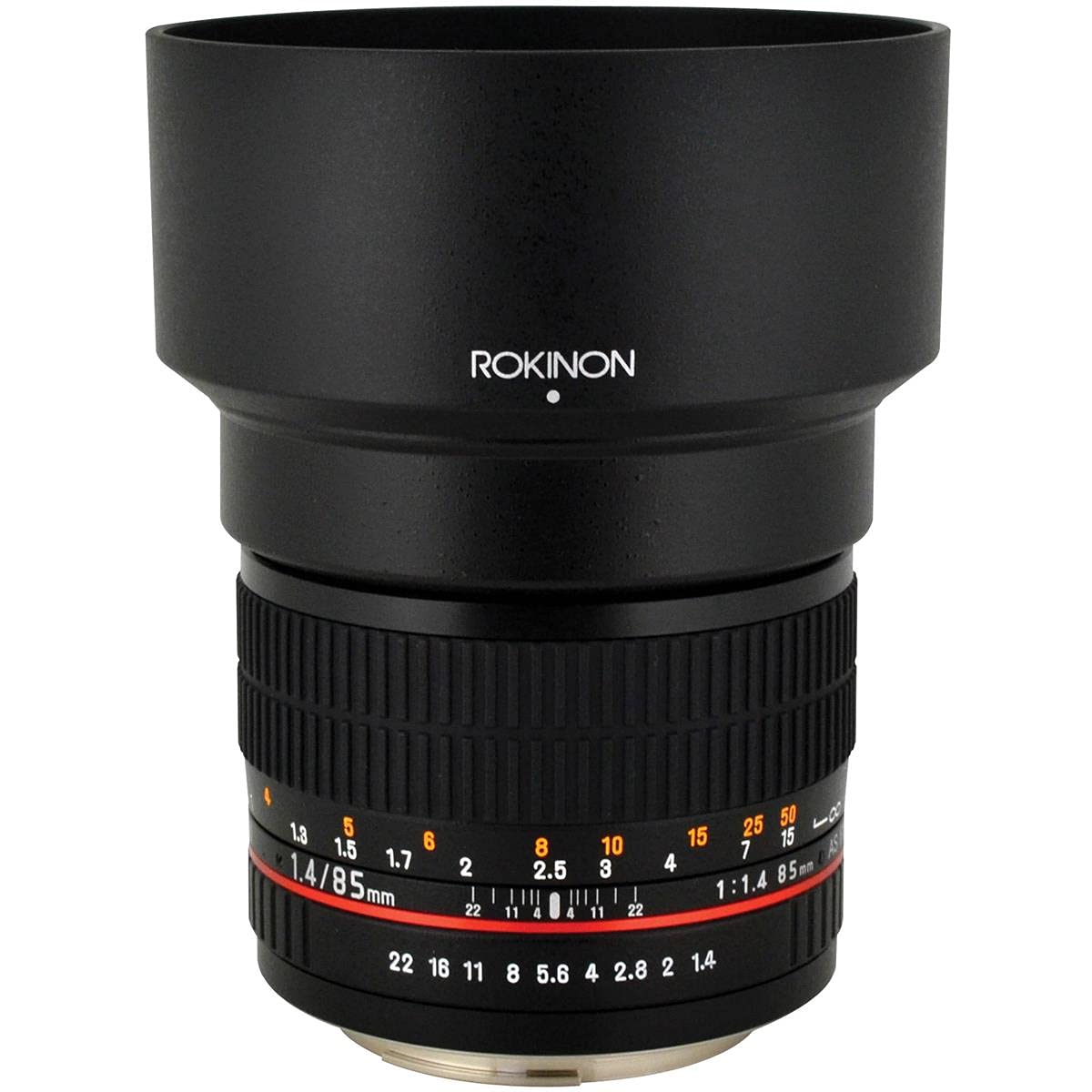
Rokinon 85mm f/1.4

83 /100
Keeper Score Excellent

Key details

Mount
Canon EF
Min Focus
3.3 feet
Focal Length
85mm
Max Aperture
f/1.4
Check Price on Amazon

Manual focus is the first thing to accept with the Rokinon 85mm f/1.4. There is no autofocus, and that changes how you shoot: you focus by eye, you check the eyes again, and you take fewer frames. That sounds like a limitation, and it is, but it also explains why the lens can offer f/1.4 at a budget price.

The f/1.4 aperture and eight-blade diaphragm give you a soft, creamy background and a lot of light for dim rooms. The lens is solidly built, and the focus ring is smooth enough to make manual focusing feel deliberate rather than fiddly. At f/1.4, backgrounds go almost liquid, which is the reason to put up with the manual workflow.

Chromatic aberration can show up at wide apertures, especially around high-contrast edges. That is a real trade at this price, and it is easier to manage at f/2 or in softer light. The lens rewards a slower, more deliberate portrait session.

We recommend it for the photographer who is happy to focus manually and wants a fast 85mm without paying for autofocus. For children, events, or any subject who moves between frames, the Canon EF 85mm f/1.8 USM is the more practical tool. For a patient portrait session, the Rokinon has a look that is worth the effort.

Pros

  • f/1.4 aperture for low light
  • Creamy bokeh
  • Solid build and smooth focus ring

Cons

  • 3.3-foot minimum focus
Our verdict

We recommend the Rokinon 85mm f/1.4 for patient portrait shooters who want creamy bokeh and strong low-light performance at a budget price.

Check Latest Price
8

Starter Portraits

Yongnuo YN50mm f/1.8

89 /100
Keeper Score Excellent

Key details

Mount
Canon EF
Weight
4.2 oz
Focal Length
50mm
Max Aperture
f/1.8
Check Price on Amazon

The Yongnuo YN50mm f/1.8 is the least expensive way into a fast 50 for Canon EF, and at 4.2 ounces it barely registers in the bag. It is a full-frame and APS-C compatible standard prime, so it can be an environmental portrait lens on full frame or a short portrait lens on crop. That versatility is the reason to look at it at all.

The f/1.8 aperture and six-blade diaphragm give you a soft background and enough light for indoor portraits. The lens has a focus distance indicator at 0.45 meters, which is handy when you are working close, and the gold-plated contacts are there to keep the electronic communication stable. Image quality is better than the price suggests.

The focus ring is usable for manual focus, and the distance indicator gives you a reference when you are working close. The lens is light enough to leave on the camera, and the 50mm view is easy to work with in small rooms. It is a simple lens, and that simplicity is part of the appeal.

We recommend it as a starter 50, not as the last portrait lens you buy. The optics are good enough for posed portraits, and the price leaves room for a better lens later. If you are shooting a quiet studio session or a still-life detail, it can hold its own; for a first fast prime, it is an easy experiment.

Pros

  • Very light 4.2-ounce body
  • Fast f/1.8 aperture
  • Pleasing bokeh for portraits
  • Focus distance indicator

Cons

  • Slow, loud autofocus
  • Build feels less durable
Our verdict

We recommend the Yongnuo YN50mm f/1.8 as a starter 50 for Canon EF shooters on the tightest budget, with the understanding that it is a posed-portrait tool.

Check Latest Price

How We Tested These Portrait Lenses

We started with a long list pulled from spec sheets and customer reviews, then narrowed it to the two focal lengths people actually buy for portraits, 50mm and 85mm, and dropped anything that couldn't cover a full-frame sensor or wouldn't mount cleanly on the body we were shooting. That left eight lenses, which we shot with for six months across a mix of paid sessions and family favors.

Every lens went to the same three places: a dim reception hall lit by string lights, a park at golden hour, and a living room with a single window. At each, we shot wide open and again at f/2.8 so we could compare how the background fell apart, whether eyelashes came out crisp at the widest aperture, and how many frames from a burst were actually sharp when a two-year-old broke into a run. Because these are all fixed focal lengths, we also noted how often we had to back into a wall or switch position to frame a subject indoors — that's the real cost of giving up a zoom.

We listened for autofocus motors during a quiet ceremony and marked whether the sound carried, timed how quickly each lens locked on a face turned away from us, and carried every one on a strap through a two-hour session to see which weight started to tell by the end. Reliability got its own test almost by accident: each lens rode in a bag, got rained on once, and came back out for the next shoot.

How to Choose a Portrait Lens

Start With Mount and Focal Length

We start with the mount on your camera because it decides which lenses are even in play. The Canon EF lenses here fit EF and EF-S bodies, and Canon RF shooters need an adapter for them; the Sony 50mm is native E-mount. Focal length is the next fork: 50mm is an environmental portrait lens on full frame and becomes an 80mm-equivalent portrait lens on APS-C, while 85mm is the classic head-and-shoulders length on full frame. If your indoor space is tight, the 50mm is the safer first buy; if you shoot outdoors or have room, the 85mm gives you more compression.

Aperture and Bokeh: Buy the Stop You Need

An f/1.4 lens buys you low-light headroom and stronger background separation, but it also adds size, weight, and cost. The Sigma 85mm f/1.4 Art is the clearest example: it has the strongest separation here and the most bulk. We treat f/1.8 or f/2 as the practical sweet spot for most portrait work, and stopping down to f/2.8 or f/4 often gives you a sharper result across the face. Aperture blades matter too: the Canon 85mm's nine blades and the Meike's 11 blades are there to keep out-of-focus highlights round when you stop down.

Autofocus and Handling for Real Sessions

Autofocus speed matters most with children, events, and any subject who moves between frames; for posed portraits, a slower motor is easier to forgive. USM, STM, and HSM motors all aim for smooth, quiet focus, but the Rokinon 85mm f/1.4 is manual-only. We think handling is the other half: the Sigma 85mm f/1.4 Art weighs 2.5 pounds, while the Canon 50mm f/1.8 STM is 5.6 ounces. If you handhold for long sessions, the lighter lens is the one you will actually carry. If you shoot from a tripod, the extra glass is easier to justify.

Working Distance, Close Focus, and Stability

We recommend measuring your longest indoor shooting distance before you buy. An 85mm lens needs more room than a 50mm. The Rokinon 85mm f/1.4 stops at 3.3 feet, which is fine for head-and-shoulders work and frustrating for details. None of the DSLR primes here are stabilized, so handheld low-light portraits depend on aperture and shutter speed; stabilization helps with static subjects but does not freeze a moving child. If you shoot in tight rooms or want close-up flexibility, start with a 50mm.

Frequently Asked Questions

Final Verdict

Start with the Canon EF 85mm f/1.8 USM if you shoot Canon EF and want the classic portrait look without the Sigma's weight. The 85mm compression, f/1.8 aperture, and smooth USM focus make it the most dependable all-around choice here. On a tighter budget, the Canon EF 50mm f/1.8 STM is the smarter first lens, especially on APS-C. If background separation is the priority, the Sigma 85mm f/1.4 Art earns its bulk; Sony shooters have the light FE 50mm f/1.8.