Best Overall

Kodak Slide N Scan
Key details
- Display
- 5-inch LCD
- Storage
- SD/SDHC up to 32GB
- Resolution
- 22 megapixels
- Film Formats
- 135, 110, 126, 50mm slides
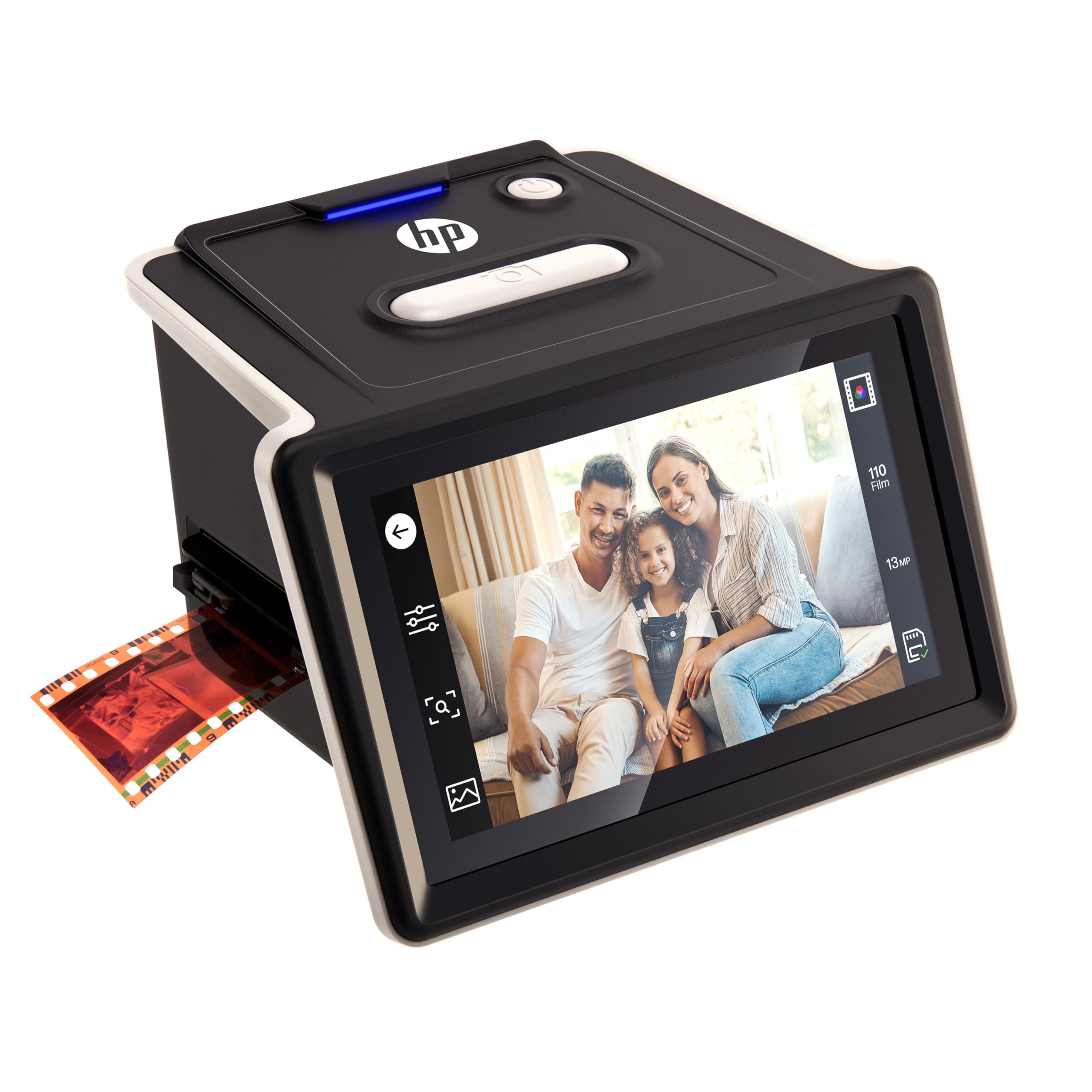
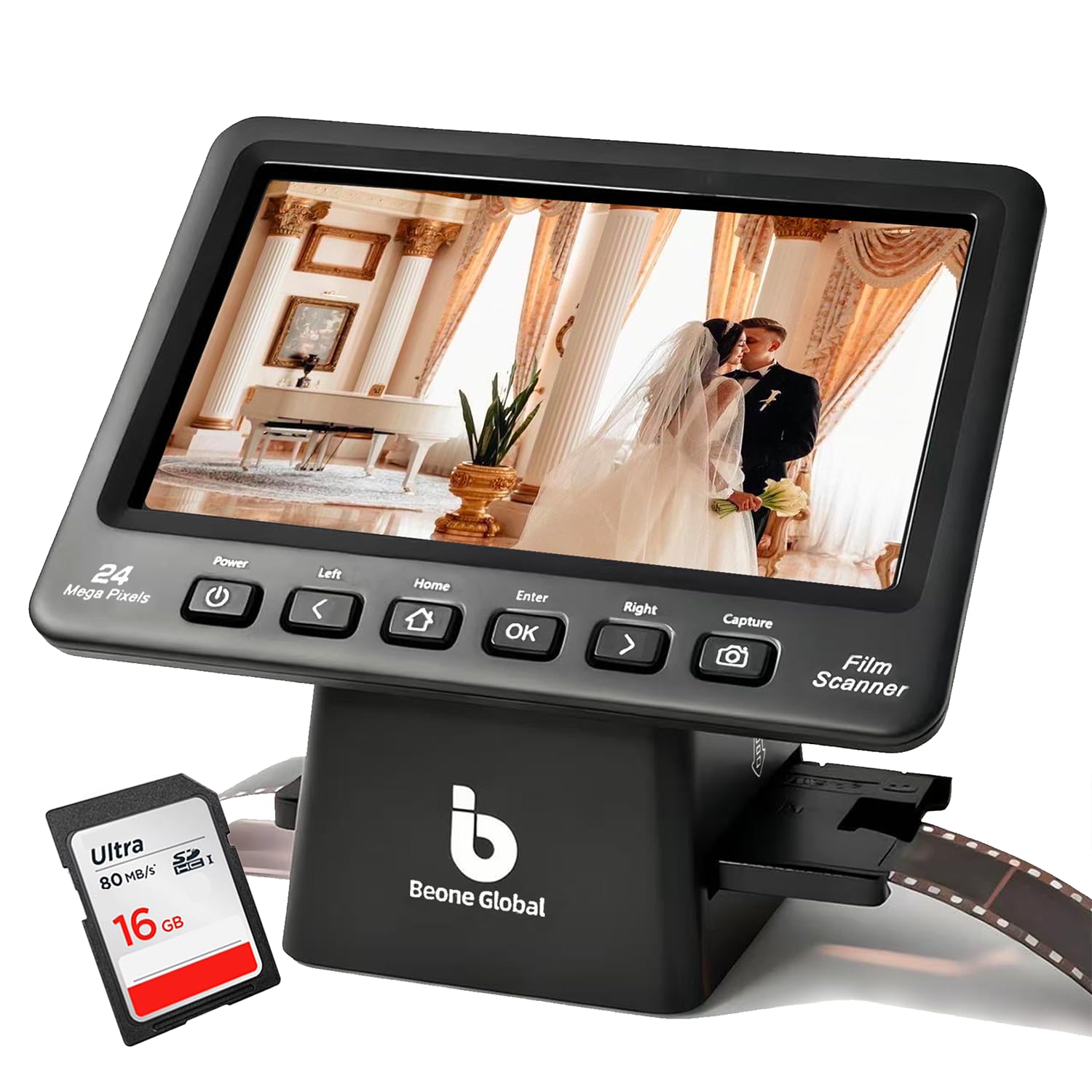
The Slide N Scan is the scanner we point to when the box contains a little of everything: 35mm strips, 126 Instamatic negatives, 110 cartridges, and mounted slides. Its quick-load trays are the reason. Each format has its own insert, so you are not rebuilding the carrier between batches, and the 5-inch screen is large enough to check framing and exposure before you save. It runs from an SD card, so no computer is needed at the scanning stage.
During our testing, the one-touch capture and gallery mode gave the process a steady rhythm. We could move from slide to slide without diving into menus, and the tray design made a long session feel less like a technical exercise. That is the real argument for this model over a dedicated 35mm scanner: it is built for volume and variety rather than the last increment of detail.
The 22MP files are good for sharing, reprints, and family albums; they are not the equal of a dedicated 35mm scanner when you want every grain and shadow. Color can need a nudge, especially with older slides, so treat the scan as a starting point rather than a finished restoration.
The practical caveat is that this is still a one-frame-at-a-time machine. That is easy to live with if you are working through a family collection rather than a museum archive. For the shoebox that started in the attic, this is the one we start with.
Pros
- Handles 35mm, 126, 110, and 50mm slides
- Bright 5-inch screen with gallery mode
- Quick-load trays speed up mixed batches
- Standalone SD-card operation
Cons
- SD card sold separately
- Some 35mm slides crop at the edges
The Slide N Scan is the default we recommend for a mixed family archive because it handles 35mm, 126, 110, and mounted slides on a bright 5-inch screen without a computer.