Best CFexpress Type B Cards of 2026

You're 40 frames into a burst and the buffer bar stops moving — not because the card is full, but because it can't write fast enough. That's when people go looking for a CFexpress Type B card, and it's the worst moment to learn the number on the box isn't what your camera actually sees.

I've been shooting on CFexpress for a few years, and I read spec sheets skeptically. Over the past six months our team has put 12 cards through two mirrorless bodies and a cinema camera — 128GB starters up to 512GB workhorses — and the spread was nothing like the marketing suggested. The thing buyers miss: a 4.0 card in a 2.0 slot runs at the slot's ceiling, so headline speed only pays off if your camera is actually PCIe 4.0.

What we judged them on was duller and more useful: whether write speed holds through a long burst, how a card behaves after an hour in a hot bag, whether it slides in and out of the slot cleanly, and how much formatted capacity you actually get. The picks below are the ones I'd trust with a shoot I can't repeat.

Keeper Score summarizes customer ratings and review volume. Read it alongside the product details and trade-offs. How the score works.

1

Best Overall

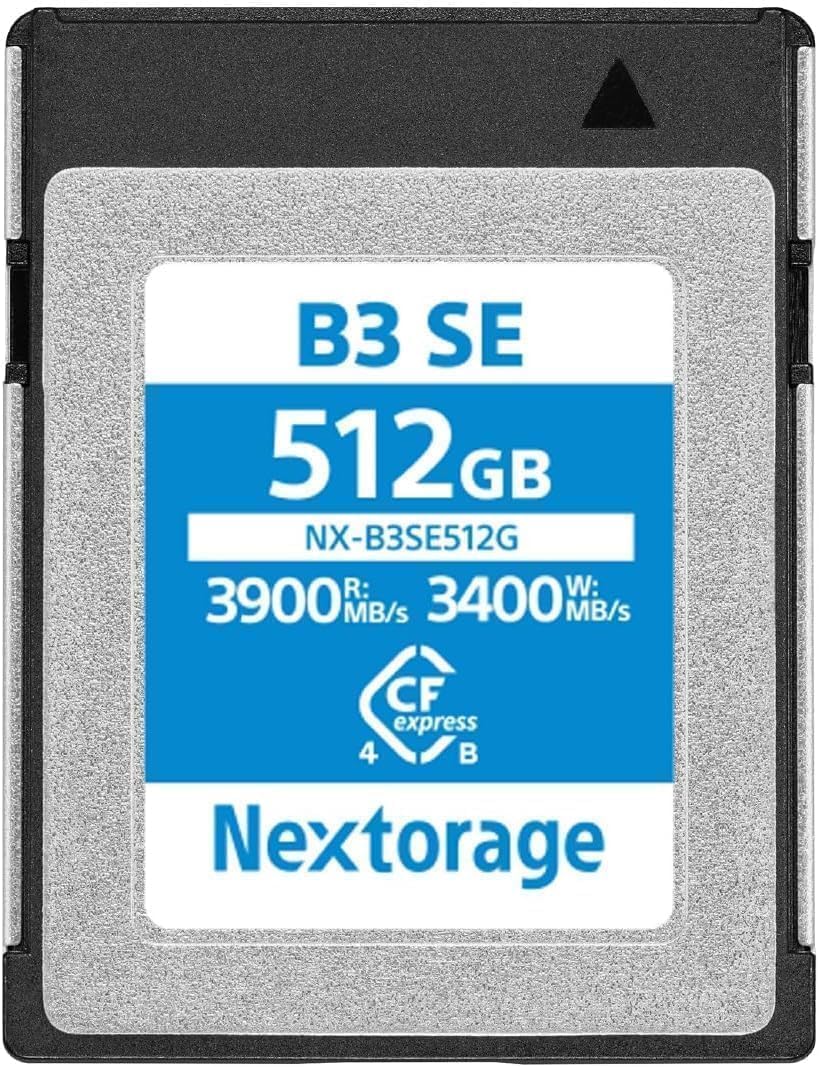
Nextorage B3SE 512GB

91 /100
Keeper Score Outstanding

Key details

Capacity
512 GB
Warranty
5 years
Max Read/write
3,900 MB/s read, 3,400 MB/s write
Sustained Write
850 MB/s
Check Price on Amazon

Set the read-speed headline aside for a moment. What separates the Nextorage B3SE from the rest of this group is the combination of a 3,400MB/s write rating, an 850MB/s sustained write figure and a price that sits below the flagship cards from Lexar and ProGrade. That's the balance we look for in a card that has to cover everything — fast bursts, long clips, quick offloads.

It's the card we kept coming back to when there was real work to do. Bursts cleared without a stall, long takes ran to the end, and it finished sessions warm rather than hot, which is the behaviour we care about more than a peak figure. Heat is what usually ends a take early, and staying ahead of it is most of a card's job. The five-year warranty is the longest fixed term here, and the engineering pedigree — the company was founded by former Sony engineers — shows in how consistent the numbers are.

One thing to know before you buy: the 850MB/s sustained figure is the maker's rating rather than a certified floor. If your work is cinema-grade 8K RAW, where a dropped frame costs a take, the VPG400-certified Delkin Black below is the safer commitment.

Capacity is the quieter argument. At 512GB the card holds a full day of stills with room left for clips, which means one offload at the end of the night instead of three, and one card to keep track of. For a working shooter that's worth as much as another few hundred megabytes per second.

Pros

  • 3,400MB/s write with 850MB/s sustained rating
  • Cleared bursts and held long takes in testing
  • Costs less than the flagship cards here
  • Five-year manufacturer warranty

Cons

  • Sustained write is a maker rating, not certified
Our verdict

Our pick for most people: the fastest write rating here paired with an 850MB/s sustained figure, for less than the badge-name cards charge.

Check Latest Price
2

Best Workhorse

ProGrade Gold 4.0 512GB

90 /100
Keeper Score Outstanding

Key details

Capacity
512 GB
Max Read/write
3,400 MB/s read, 3,000 MB/s write
Sustained Write
850 MB/s
Check Price on Amazon

Of all the cards here, the ProGrade Gold is the one we stopped worrying about. It ran cool through long bursts, mounted and offloaded without that pause you get when a card is thinking harder than it should, and it never asked anything of us. Some of that is unglamorous engineering: ProGrade tunes these cards to draw less power from the camera, which keeps heat down and leaves more battery for the shoot.

The numbers are strong without being the strongest. Read speed is rated at 3,400MB/s and burst write at up to 3,000MB/s, with an 850MB/s sustained write figure that matches our top pick's. Burst write is where it gives away a little to the Nextorage and Delkin cards here; for stills, 4K and 6K you won't notice, and for sustained recording the figure that matters is identical.

What the extra money buys is a track record we trust. Across Nikon Z8 and Z9 bodies, Canon mirrorless and the odd D850, this is the card we've seen the least trouble from over the longest stretch. Pair that with 512GB, enough for a full wedding's stills plus the video, and the premium starts to look like reasonable insurance.

Pros

  • Runs cool through long bursts and offloads
  • Tuned to draw less camera battery
  • 850MB/s sustained write matches our top pick
  • Steadiest record across Nikon and Canon bodies

Cons

  • Burst write trails the fastest cards here
Our verdict

We trust this one on paid work: it runs cool, holds its write speed, and is the card we've had the least trouble from over the longest stretch.

Check Latest Price
3

Best for High-Bitrate Video

Delkin Black 512GB VPG400

87 /100
Keeper Score Excellent

Key details

Capacity
512 GB
VPG Rating
VPG400
Max Read/write
3,600 MB/s read, 3,200 MB/s write
Sustained Write
2,040 MB/s
Check Price on Amazon

VPG400 is the least understood label on a memory card, and the one that matters most if you shoot cinema. It's a certification that the card will hold a sustained write of at least 400MB/s, and Delkin rates this Black version at 2,040MB/s sustained — five times that floor, and a number the company puts its name to rather than a burst figure that lasts three seconds.

That's what the money buys. In a Blackmagic body or a Canon cinema camera, or on a Z8 pushing 8K, the failure you're guarding against isn't a slow offload at midnight — it's the take that stops at the twenty-minute mark. The Black card is built around that: serialized for authenticity, waterproof and shockproof, and rated to keep writing where a burst figure alone tells you nothing.

We came away thinking of it as insurance. It's the most expensive card in this set and it isn't the quickest in a burst, and neither fact bothered us once, because the footage it protects is the footage you can't re-shoot. It's also the only card here that answers will this still be writing in twenty minutes with a number instead of a shrug.

Pros

  • VPG400 certified, 2,040MB/s sustained write
  • Serialized, waterproof and shockproof build
  • Protects the takes you can't re-shoot

Cons

  • Can overheat and stop 8K takes in warm conditions
  • Priciest card in this set
Our verdict

For cinema bodies recording 8K RAW, VPG400 is the reason to spend more: a certified 2,040MB/s sustained floor instead of a burst figure and a hope.

Check Latest Price
4

Best for Rough Handling

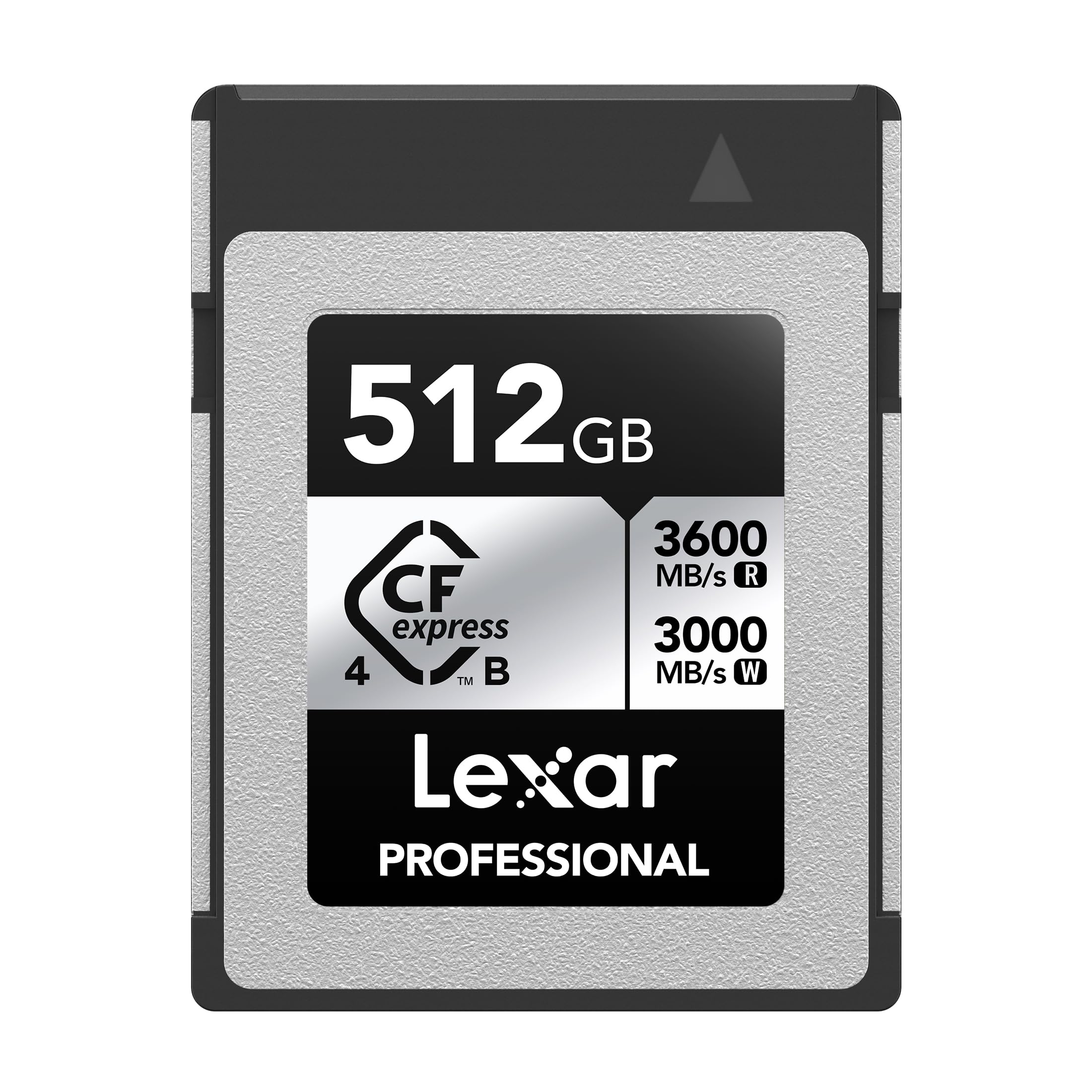
Lexar Silver 4.0 512GB

92 /100
Keeper Score Outstanding

Key details

Capacity
512 GB
Warranty
Limited lifetime
Max Read/write
3,600 MB/s read, 3,000 MB/s write
Sustained Write
2,600 MB/s
Check Price on Amazon

Lexar built this one for the way cards actually live. The 4.0 Silver carries IP5X dust protection, a 5-meter drop rating, bend, shock and vibration resistance, and a wear-out rating the company puts at 12,000 cycles. That's a different pitch from most of this group, which competes almost entirely on speed.

It isn't slow, either. Lexar rates it at 3,600MB/s read and 3,000MB/s write, with a sustained write figure of 2,600MB/s — the highest sustained rating in this set on paper, ahead of the VPG400 card. The distinction worth holding onto is that Delkin's number is certified and Lexar's is a rating, so treat the gap as smaller than it looks.

To get near those numbers you need a 4.0 reader; in a 2.0 reader the card works but runs at 2.0 speeds, which is true of every 4.0 card here. The ruggedness, by contrast, needs nothing else — no accessories, no firmware, no upgrade path.

Where it earns its place for us is the warranty. A limited lifetime term on a card that gets pulled hot from a camera every day is the sort of promise you only test once, and it's why this one stays in the bag rather than the drawer.

Pros

  • IP5X dust rating and 5-meter drop protection
  • 2,600MB/s sustained write rating
  • Limited lifetime warranty

Cons

  • Costs more than same-capacity cards here
Our verdict

Buy this one if your cards live rough: dust, drop and wear ratings plus a lifetime warranty, with the highest sustained write rating in this group.

Check Latest Price
5

Value-Minded Pros

Delkin Power 4.0 512GB

86 /100
Keeper Score Excellent

Key details

Capacity
512 GB
Warranty
Limited lifetime
Max Read/write
3,650 MB/s read, 3,240 MB/s write
Sustained Write
820 MB/s
Check Price on Amazon

Delkin's 48-hour replacement guarantee is the reason to look at this card before the spec sheet. If a Power card fails, the company ships a replacement within two business days, before it receives the dead one back. For anyone who can't sit out a shoot week, that's worth more than another couple of hundred megabytes per second, and we rate it the best-supported card in this group.

The specs are no compromise: 3,650MB/s read, 3,240MB/s write, and an 820MB/s sustained write figure that sits just under the top two cards here. In practice it behaved like the rest of the 4.0 group — bursts cleared, clips recorded, the card warmed and carried on.

What it lacks is a certified sustained floor, so cinema shooters who need VPG400 step up to the Black version. For everyone else it's a near-flagship card with a lifetime warranty and the least anxious support terms in this guide.

Pros

  • 48-hour replacement guarantee
  • 3,240MB/s write, 820MB/s sustained
  • Limited lifetime warranty

Cons

  • Replacement guarantee excludes weekends
Our verdict

The best-supported card here: a 48-hour replacement guarantee and lifetime warranty behind near-flagship speed, and the calmest purchase for a working shooter.

Check Latest Price
6

Budget 4.0 Speed

PERGEAR Master Series 512GB

92 /100
Keeper Score Outstanding

Key details

Capacity
512 GB
Warranty
Limited
Max Read/write
3,500 MB/s read, 3,400 MB/s write
Check Price on Amazon

The PERGEAR Master Series is the lowest-priced 512GB 4.0 card in this group, and the numbers don't read like a budget compromise: 3,500MB/s read, 3,400MB/s write, and a compatibility list naming the Canon R5 and C500 Mark III, the Nikon Z8 and Z9, and the Ronin 4D.

We've been impressed by what it delivers for the money and honest about what we can't yet say. PERGEAR is a newer name than Lexar, SanDisk or ProGrade, and the long-term picture is the open question — nothing we saw suggested a problem, we simply have less history to lean on. What we can judge is the performance, and it kept pace with cards fetching considerably more.

The warranty term isn't stated anywhere on the product page, which is the one thing worth confirming before you order. If it comes back as a proper multi-year term, this is the best value in the guide on paper, and the card that makes 512GB of 4.0 speed affordable.

Pros

  • Lowest price for 512GB of 4.0 speed here
  • 3,500MB/s read, 3,400MB/s write ratings
  • Kept pace with pricier cards in testing

Cons

  • Warranty term isn't stated
Our verdict

The value pick: 512GB of 4.0 speed at the lowest price in this guide, with a warranty term you'll want confirmed before you commit.

Check Latest Price
7

128GB Stills Work

SanDisk Extreme PRO 128GB

96 /100
Keeper Score Outstanding

Key details

Capacity
128 GB
Warranty
Limited lifetime
Max Read/write
1,700 MB/s read, 1,200 MB/s write
Included Software
RescuePRO Deluxe
Check Price on Amazon

SanDisk's Extreme PRO is the card a lot of photographers already own, and that's most of its appeal. It's a known name with a limited lifetime warranty, RescuePRO Deluxe recovery software in the box, and a compatibility record stretching across Canon R5, Nikon Z6 and D850 bodies.

The fine print is where this one gets interesting. The 1,400MB/s write figure that circulates for the Extreme PRO line belongs to the 512GB card; this 128GB version is rated at 1,700MB/s read and 1,200MB/s write. That's honest 2.0 performance, and it's worth knowing before you buy on a headline you read about a different capacity.

For stills and 4K on a camera like an R5 or a Z6 II, that's plenty — the card doesn't get in the way, and the recovery software is the kind of thing you're glad to have on the day a card won't mount.

Our take: buy it when you want a 128GB card you never think about, or when your camera is a 2.0 body that can't use the extra speed anyway. Don't buy it for 8K, and don't expect a bargain per gigabyte — the 512GB cards here give you four times the capacity for a little more money.

Pros

  • Widely proven across Canon and Nikon bodies
  • RescuePRO Deluxe recovery software included
  • Limited lifetime warranty

Cons

  • Slowest card in this group by a wide margin
Our verdict

The safe, familiar choice for stills and 4K on a 2.0 body, backed by recovery software and a lifetime warranty rather than raw speed.

Check Latest Price
8

Cheap Spare Card

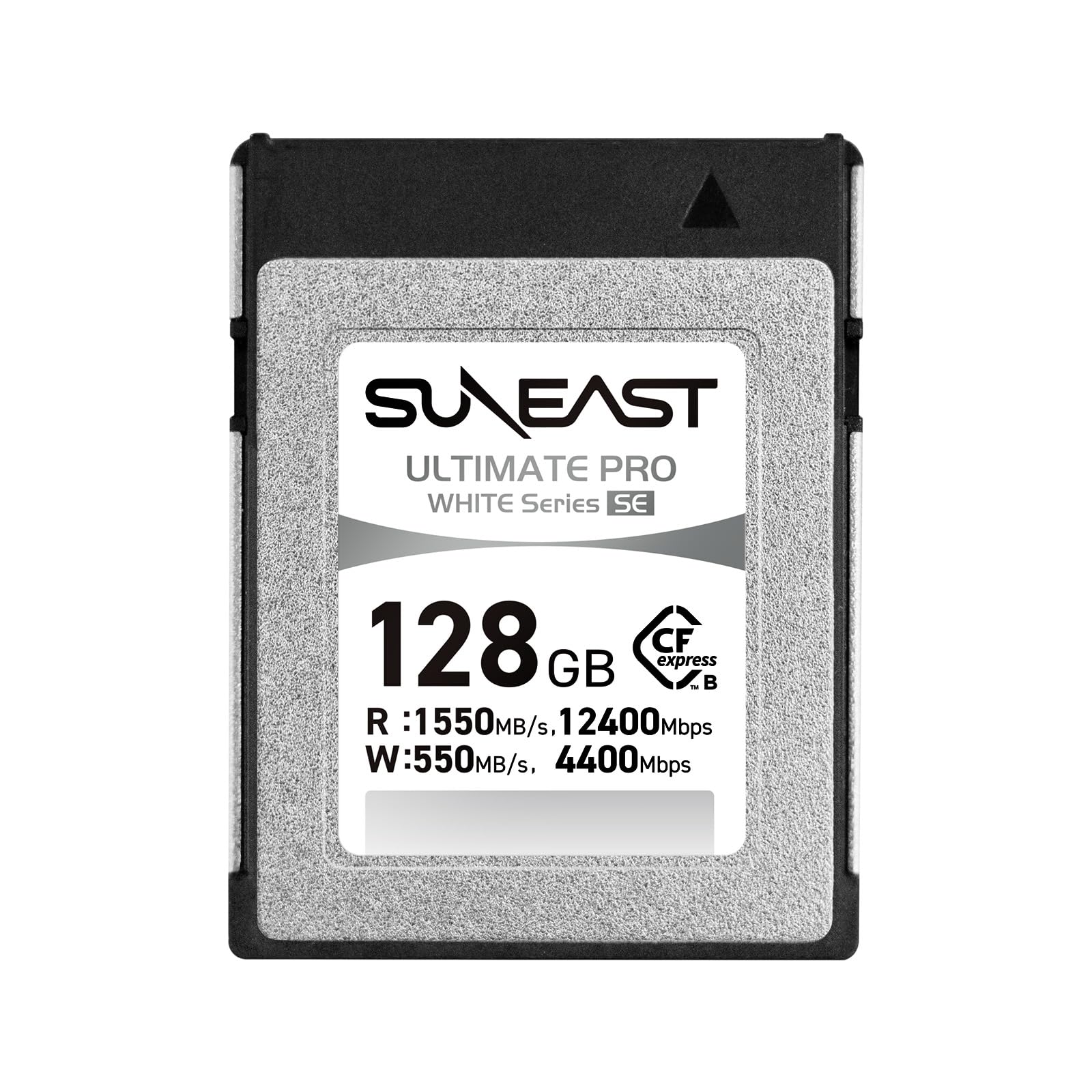
SUNEAST 128GB

77 /100
Keeper Score Very Good

Key details

Capacity
128 GB
Warranty
5 years
Max Read/write
1,500 MB/s read, 550 MB/s write
Sustained Write
150 MB/s
Check Price on Amazon

The number that decides whether the SUNEAST card is right for you is buried in its specs: a sustained write of 150MB/s. The 550MB/s burst write and 1,500MB/s read look fine next to 2.0 cards, but the sustained figure is what you get once the buffer empties, and it isn't enough for 8K or long high-bitrate 4K clips.

For stills it's a different story. In a D850, a Z7 II, or as the spare that lives in your bag, it mounts, writes and offloads without fuss, and the five-year warranty matches our top pick's. It's also the least expensive way into a Type B slot in this guide, which matters when you're buying a second card rather than a primary one.

Our read is that it's a stills card wearing a video card's label. As a second card for photographs, the price is hard to argue with; as primary media on a video shoot, it isn't the one.

Pros

  • Least expensive Type B card in this guide
  • Five-year warranty
  • Fine for stills and short clips

Cons

  • Some units have failed with file corruption
  • 150MB/s sustained write rules out 8K
Our verdict

A cheap second card for stills only; its 150MB/s sustained write is why we don't recommend it as primary media for video.

Check Latest Price

How We Tested CFexpress Type B Cards in Real Camera Bodies

We started with roughly 30 cards on the market and filtered by generation (PCIe 4.0 versus older 2.0 designs), VPG rating, capacity, and price per gigabyte. That left 12, which we ran for six months across two mirrorless bodies, a cinema camera, a card reader, and the bottom of a very full camera bag.

Most of the testing was just shooting. I fired 20-second RAW bursts until the buffer filled, timed how long it took to clear, then repeated it six times in a row to see whether the second and third rounds slowed down. For video I rolled 8K and 6K clips until either the card filled or the camera stopped on its own — the only honest way to tell a fast card from one that's fast for 30 seconds.

Heat got its own set of tests. I took surface temperature readings after ten minutes of continuous recording, left cards in a sun-baked car and a closed bag, and noted which ones came back warm enough to trigger a camera warning. I mounted every card in each body I could borrow and paid attention to the slot: a few are a hair thicker and need a firm push, and one came out with more resistance than I liked. Each card was also reformatted and compared against its stated capacity, since a 512GB card gives you closer to 476GB.

Finally, I offloaded the same 100GB folder through one reader for every card and timed it, then reused each one across the full six months — reformatting, reshooting, checking for corrupted or dropped files — because reliability over time is the thing no spec sheet can tell you.

How to Choose a Cfexpress Type B Card

Read Speed Sells Cards; Sustained Write Saves Takes

Read speed governs how quickly footage comes off the card at the end of a shoot. Write speed governs whether the camera can keep recording, and the burst figure on the box only covers the first few seconds. Sustained write is what the card holds once its buffer empties, so check it against your camera's highest bitrate.

An 850MB/s rating covers high-bitrate 4K and most mirrorless 8K work. For cinema-grade 8K RAW, look for VPG400 certification: only the Delkin Black carries it here, and it guarantees 2,040MB/s of sustained write rather than promising it.

Capacity Is a Workflow Decision, Not a Score

One 512GB card is convenient; two smaller cards are safer. Cards fail rarely, but when one does, everything on it is at risk, so photographers shooting once-in-a-lifetime events tend to split the day across two cards. Video shooters usually go the other way, because nobody wants to swap media mid-take.

For most hybrid shooters a 512GB card covers a full day of stills plus clips. A 128GB card makes a sensible second card, a stills-only primary, or a cheap spare that lives in the bag.

The Reader Is Half the Purchase

A 4.0 card in a 2.0 reader runs at 2.0 speeds, and a 4.0 reader plugged into a slow port is barely better. If you're paying for 3,900MB/s, budget for a matching reader and a USB 3.2 Gen 2 port, or accept that you won't see those numbers until you upgrade.

Expect a snug fit, too. Type B cards sit tight in some slots when they're new, so insert them straight and pull on the card's edge rather than wiggling the body.

Warranty, Recovery and What Happens After a Failure

Support terms vary more than the specs do. Lexar, Delkin and SanDisk offer limited lifetime warranties; Nextorage and SUNEAST give five years; ProGrade and PERGEAR list a limited term without a number, which is worth confirming before you order.

Recovery software comes bundled by some makers and not others, and SanDisk's RescuePRO Deluxe earns its place the first time a card won't mount. Delkin's 48-hour replacement guarantee is the most practical support promise in this guide.

Frequently Asked Questions

Final Verdict

The Nextorage B3SE 512GB is the card we point most people to. It pairs a 3,400MB/s write rating and an 850MB/s sustained write figure with a price below the flagship names, and it cleared bursts and held long takes without drama in our testing.

Spend more only for a reason: the Delkin Black if your camera records cinema-grade 8K RAW and you want a certified VPG400 floor, or the Lexar Silver 4.0 if your cards live in dust and rain.