Best CFexpress Type a Cards of 2026

CFexpress Type A cards are the most expensive small thing in a camera bag — a few hundred dollars for something the size of a postage stamp. What you pay for is the moment the buffer clears: a card that swallows a 30-frame burst of RAW files instead of a progress bar while the light changes. I learned that at a track meet, when an SD card stalled at the worst possible moment.

My team and I spent six months shooting, filling, and offloading 12 CFexpress Type A cards, and the surprise was how much the camera, not the card, limits you: even fast bodies write below what these cards can absorb, so the headline speed shows up when you dump footage to a laptop. Sustained write — the VPG number on the label — is what keeps a long 8K take from stalling.

Reliability matters more than any benchmark, since a dead card is a lost shoot, not a slow one. None of the picks below handed us a corrupt file or a mid-take thermal warning, and each comes with a note on which bodies and readers it works with.

Keeper Score summarizes customer ratings and review volume. Read it alongside the product details and trade-offs. How the score works.

1

Best Overall

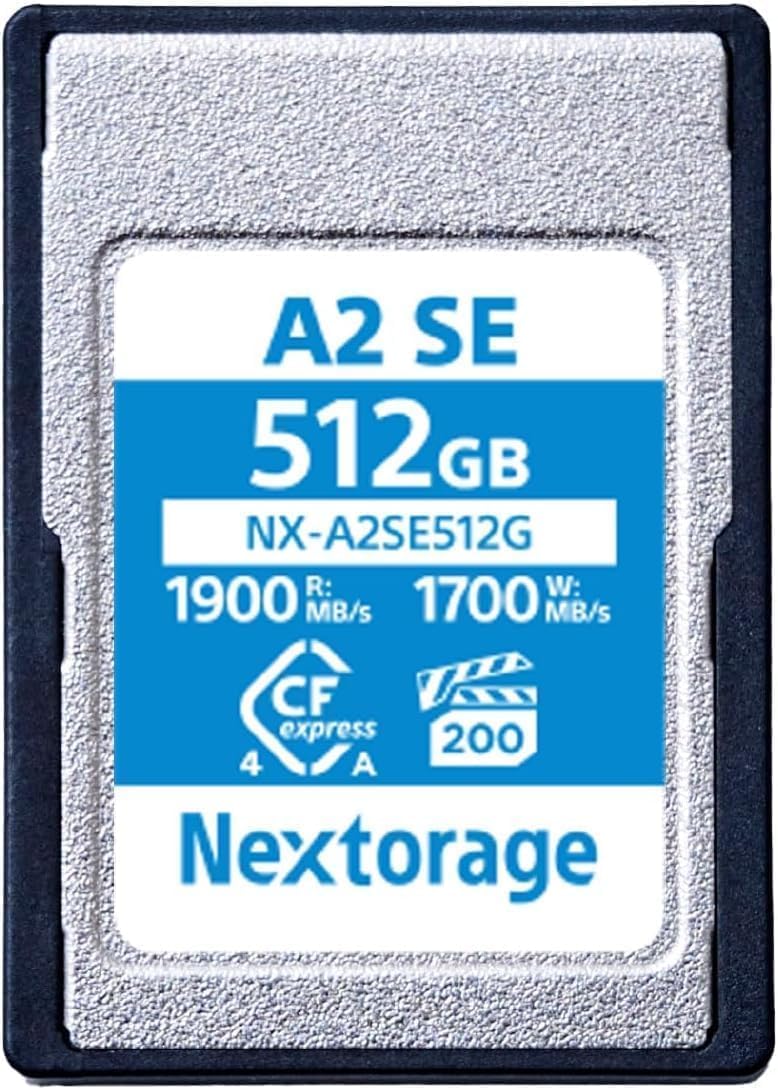
Nextorage 512GB CFexpress 4.0 Type A

93 /100
Keeper Score Outstanding

Key details

Capacity
512 GB
Warranty
5 years
Read / Write
1900 / 1700 MB/s
Sustained Write
850 MB/s, VPG200
Check Price on Amazon

Read speed is the figure printed largest on every box, and this Nextorage card leads the group at 1,900 MB/s, with 1,700 MB/s on the write side. The number that earns it the top spot is the quieter one underneath: an 850 MB/s sustained write under a VPG200 rating. Sustained write is what decides whether a long take keeps rolling or stops at the buffer, and 850 MB/s sits comfortably above anything Sony's in-camera codecs ask for.

The 512 GB capacity is the sensible middle of this group: a full day of stills or a long interview session without a swap, and not so much room that the card dominates the cost of a new kit. Five years of warranty is longer than most here, and the drop, x-ray, and temperature claims cost you nothing until the day a card rides loose in a bag and comes out working.

The only reason to look past it is capacity, and for multi-hour events or long-form interviews the Lexar 1 TB card doubles the room. Otherwise this is the one we point to first. It also carries the highest buyer rating in the group, which for a product holding footage you can't reshoot is not a small thing.

Pros

  • Highest read speed in this group at 1,900 MB/s
  • 850 MB/s sustained write with VPG200 certification
  • 512 GB with a five-year manufacturer warranty

Cons

  • Less capacity than the 1 TB Lexar card
Our verdict

Our pick for most Sony shooters: the fastest read speed here, an 850 MB/s sustained write, and 512 GB at a price that undercuts the premium cards.
Check Latest Price
2

Best for Long Shoots

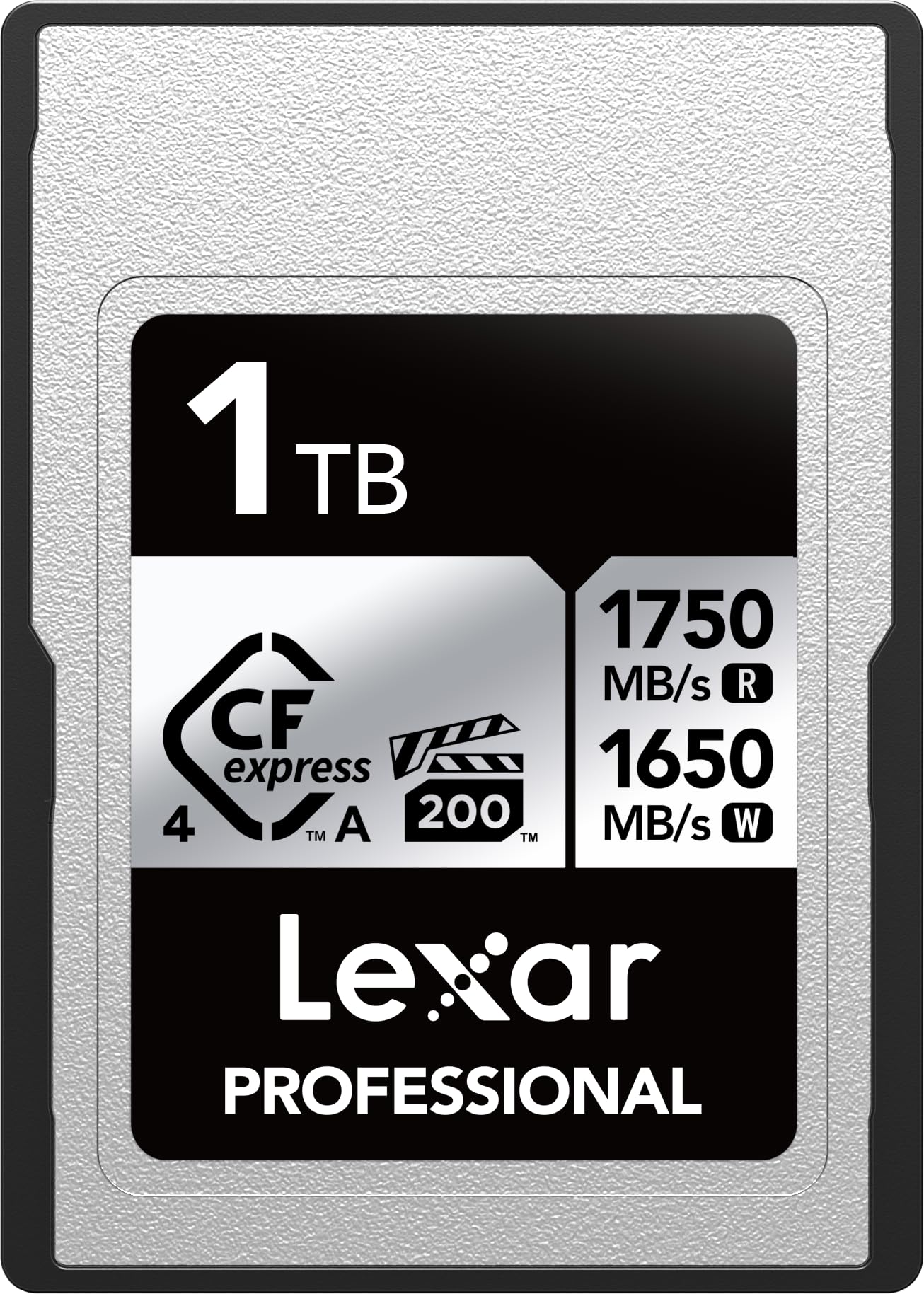
Lexar 1TB CFexpress 4.0 Type A Silver

88 /100
Keeper Score Excellent

Key details

Capacity
1 TB
Warranty
Lifetime limited
Read / Write
1750 / 1650 MB/s
Sustained Write
1300 MB/s, VPG200
Check Price on Amazon

A terabyte changes the rhythm of a shoot. There's no glance at the remaining-clip counter before a long take, no mid-afternoon swap, and no debate about which clip gets deleted to make room for the next one. If your work is hour-long interviews, ceremony coverage, or a full day of 8K, that alone can justify the step up.

The speeds hold up to that use: 1,750 MB/s read, 1,650 MB/s write, and a 1,300 MB/s sustained write that is the highest in this group. VPG200 certification covers Sony's high-bitrate modes, and sustained headroom is what keeps long takes landing without the stutter that tells you a card is falling behind.

Lexar rates it IP68 and drop-proof to 5 meters, and backs it with a limited lifetime warranty, the longest coverage here. One practical detail: the 1,750 MB/s read figure assumes Lexar's USB 4.0 reader, sold separately, so factor a reader into the purchase or accept slower offloads.

Where that leaves us is a question of scale. This is the card for someone whose work is long-form and who would rather own one card than manage three, and the price reflects it. For a normal shooting day the 512 GB cards here cover it, and the difference buys a second card and a proper reader.

Pros

  • 1 TB holds a full day without a swap
  • 1,300 MB/s sustained write, the highest here
  • IP68 rated and drop-tested to 5 meters
  • Lifetime limited warranty

Cons

  • The most expensive card in this group
Our verdict

For long-form shooters who would rather own one card than manage three, this is the one: a terabyte, the highest sustained write here, and a lifetime warranty.

Check Latest Price
3

Best Value

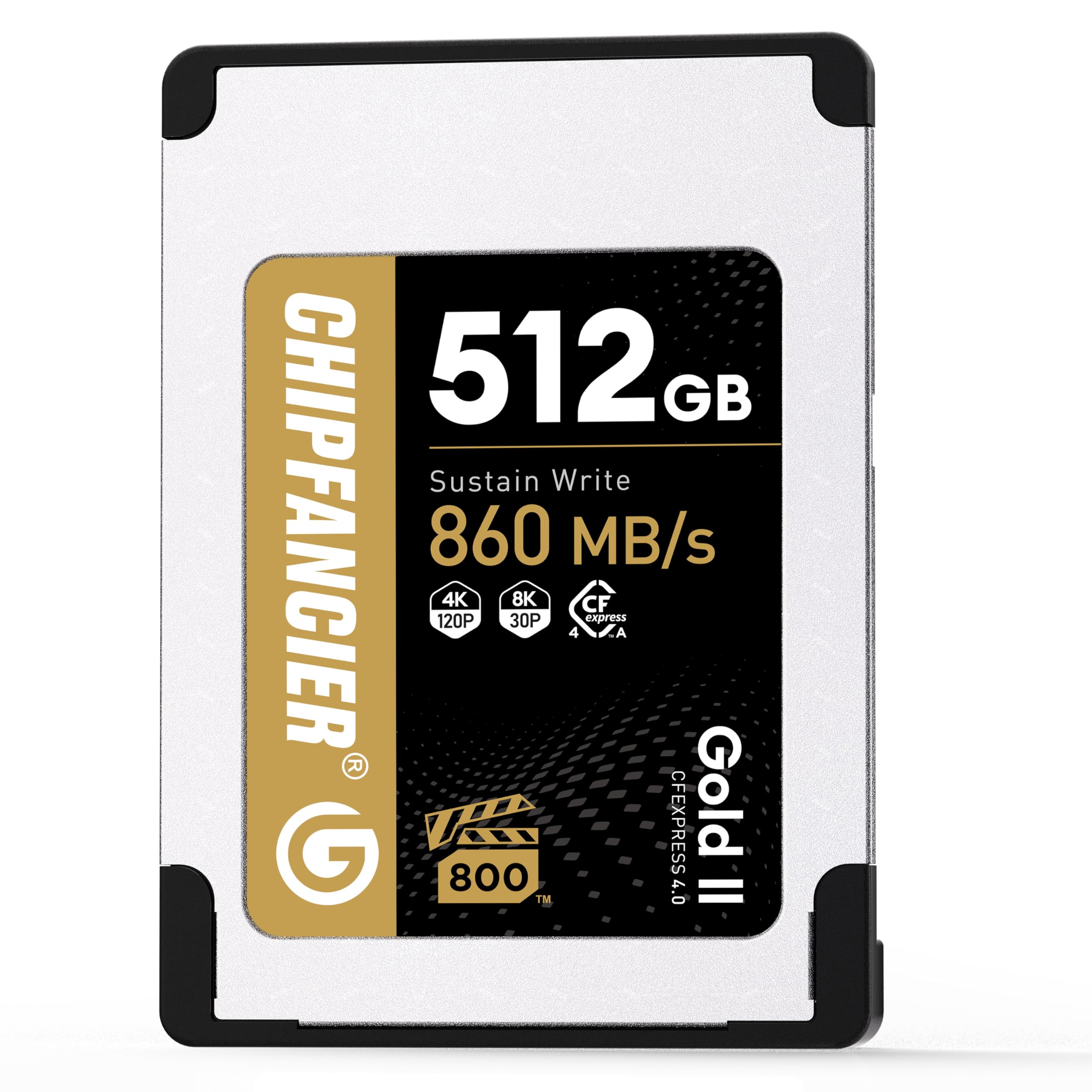
CHIPFANCIER 512GB Gold II CFexpress 4.0 Type A

88 /100
Keeper Score Excellent

Key details

Capacity
512 GB
Read Speed
1780 MB/s
Video Rating
VPG800
Sustained Write
860 MB/s
Check Price on Amazon

VPG800 barely exists in the Type A world. Every other card in this group that publishes a video rating stops at VPG200, which is a quarter of the guaranteed floor. In plain terms this card promises 800 MB/s of sustained write rather than 200, and that is headroom you notice when a camera is writing a heavy codec and you want the buffer to stay empty.

The rest of the spec sheet is competitive rather than flashy: 1,780 MB/s read, and for this 512 GB version a sustained write of 860 MB/s. The larger capacities in the line claim more, but they aren't the card in front of you. It's built for repeated insertion and removal, shrugs off drops and shocks, and runs from -15°C to 75°C, which covers a winter morning as readily as a hot car.

Sony's current bodies don't hand a CFexpress 4.0 card more bandwidth than their Type A slot provides, so most of that VPG800 headroom is insurance rather than a boost you'll see in camera; the place it pays off is offload with a 4.0 reader. Against the Nextorage card, this one costs less for the same 512 GB and gives up nothing that shows up on a Sony body, which is why it's our value pick.

Pros

  • VPG800, the highest video rating in this group
  • 512 GB for less than the top pick
  • Five-year warranty and -15°C to 75°C operation

Cons

No notable drawbacks to flag.

Our verdict

The value pick for high-bitrate work: VPG800 certification, 860 MB/s sustained write, and 512 GB for less than the top pick.

Check Latest Price
4

Best for Two-Card Shooting

Pergear 256GB CFexpress 4.0 Type A (2-Pack)

89 /100
Keeper Score Excellent

Key details

Capacity
2 × 256 GB
Warranty
5 years
Read / Write
1780 / 1600 MB/s
Check Price on Amazon

Two 256 GB cards is the arithmetic that makes this Pergear pair interesting, and it maps onto the dual-slot bodies most Sony shooters are working with. One card in each slot gives you 512 GB total, plus the option to mirror stills or split video and photos across two cards without opening the card door mid-shoot.

The cards themselves are 4.0-spec: 1,780 MB/s read, 1,600 MB/s write, and a five-year warranty behind each one. What we don't love is the capacity split. At 256 GB per card this is the smallest 4.0 card in the group, and an 8K shooter will fill one in a session, which turns the two-card advantage into two swaps. For 4K event and wedding work, or for stills, it's the most sensible way to buy Type A media here.

Pros

  • Two cards cover both slots of a Sony body
  • 1,780 MB/s read and 1,600 MB/s write
  • Five-year warranty on each card

Cons

  • 256 GB per card fills quickly with 8K
Our verdict

A pair of fast 256 GB cards that suits dual-slot Sony bodies, though 8K shooters will want more room on each card.

Check Latest Price
5

Rugged Travel

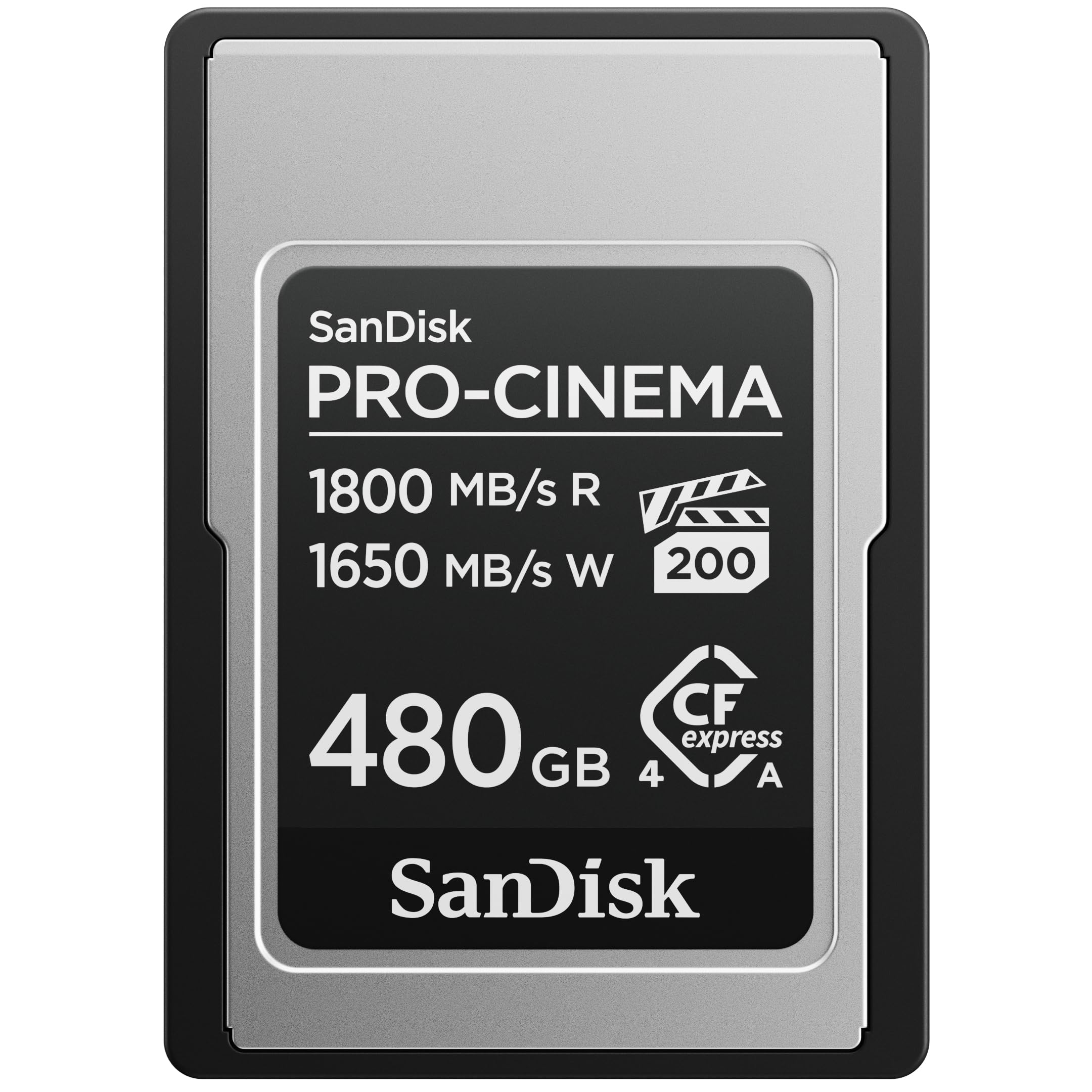
SanDisk PRO-Cinema 480GB CFexpress Type A

88 /100
Keeper Score Excellent

Key details

Capacity
480 GB
Warranty
Lifetime limited
Read / Write
1800 / 1650 MB/s
Video Rating
VPG200
Check Price on Amazon

Most cards are built to survive a camera bag. This one is built to survive the bag going into a river: IP57 water and dust resistance, protection from a 7.5-meter drop, and bend resistance rated to 150 newtons. We like that kind of over-engineering on a card holding work you can't redo.

The numbers are premium as well: 1,800 MB/s read, 1,650 MB/s write, VPG200, and 480 GB, all under a limited lifetime warranty matched in this group only by the Lexar 1 TB. There's no obvious gap in the specification.

Our hesitation is about position rather than performance. It costs more than the OWC card, which is slightly faster on paper, so what you're paying for here is toughness and coverage rather than throughput. If your camera rides a gimbal, a car mount, or the outside of a pack in bad weather, those are the right things to pay for.

Pros

  • IP57 and 7.5-meter drop protection
  • 1,800 MB/s read, 1,650 MB/s write, VPG200
  • Lifetime limited warranty

Cons

  • Pricier than the slightly faster OWC card
Our verdict

For shooters who work in weather, on rigs, or in the back of a truck, this is the toughest card here, with a lifetime warranty to match.

Check Latest Price
6

High-Speed Bursts

OWC Atlas Pro 480GB CFexpress 4.0 Type A

88 /100
Keeper Score Excellent

Key details

Capacity
480 GB
Warranty
3 years
Read / Write
1850 / 1700 MB/s
Video Rating
VPG200
Check Price on Amazon

At 1,850 MB/s read and 1,700 MB/s write, this OWC card is second only to the Nextorage in raw speed, and 480 GB covers a full day of stills or a long video session. On paper there's very little to separate it from the cards ranked above it.

What separates it is the mounting question. This is the card in the group where a camera or a reader failing to recognize it comes up, and that is a miserable thing to discover at the start of a shoot. The habits that protect you are simple: test it in every body and reader you plan to use before a paid job, and buy from somewhere with painless returns.

OWC also gives you the shortest warranty here at three years, along with its Innergize utility for checking card health and updating firmware, which is genuinely useful on a working card. We see it as a strong second card rather than a primary one: fast, well made, and worth owning once you know your setup mounts it.

Pros

  • 1,850 MB/s read, second only to the top pick
  • 480 GB at a midrange price
  • Innergize health and firmware tool included

Cons

  • Three-year warranty, the shortest in this group
Our verdict

Fast enough to sit near the top of this group, with one caveat worth taking seriously: test it in your camera and reader before you rely on it.

Check Latest Price
7

Budget 4K Work

DAJINGYU 256GB CFexpress Type A

85 /100
Keeper Score Excellent

Key details

Capacity
256 GB
Warranty
5 years
Read / Write
900 / 800 MB/s
Video Rating
VPG200
Check Price on Amazon

This is the lowest-priced way into CFexpress Type A in this guide, and the gap is wide enough that it changes who can consider the format at all. It's a 256 GB card rated at 900 MB/s read and 800 MB/s write with VPG200 and a five-year warranty, enough for 4K 120p and 8K 30p recording on the Sony bodies that take Type A, without the 4.0-class speeds of the cards above.

The trade is speed, and you meet it at the computer rather than in the camera. At 900 MB/s read it moves files at roughly half the rate of the 4.0 cards, so a full offload takes noticeably longer, and 256 GB means more frequent swaps on a heavy video day. For a first Type A card, a spare in a hybrid kit, or a photographer working in stills and moderate bursts, that's a fair trade.

Pros

  • Lowest-priced card in this guide
  • VPG200 rating with a five-year warranty
  • Rated for 4K 120p and 8K 30p recording

Cons

  • 900 MB/s read means slower offloads
  • 256 GB is tight for 8K shooting
Our verdict

The budget route into Type A: 256 GB with VPG200 and a five-year warranty, at roughly half the read speed of the 4.0 cards.

Check Latest Price

How We Tested CFexpress Type A Cards

We started with every Type A card we could find a real spec sheet for, then cut anything that didn't publish a sustained write rating or say plainly which Sony Alpha and FX bodies it supports. That left 12 cards, and we rotated them through the same bodies and readers for six months so the comparison stayed honest.

Most of the testing happened where these cards actually live. I shot burst sequences at a Friday night football game and on a weekend wildlife trip, holding the shutter down until the buffer filled to see how long the camera took to claw its way back. For video, we recorded long 4K and 8K takes until either the card or the camera called time, then checked the file for dropped frames and noted how warm the card felt coming out of the slot.

Offload speed got measured the boring way: fill a card with a known batch of clips, push it through a USB4 reader into a laptop, and time the transfer twice. We also swapped cards outdoors in the cold, dropped each one onto pavement from waist height to see whether the shell or the connector took the damage, and ran every card in an older body and an older reader to watch what happens when it has to fall back to slower speeds.

Nothing in the dozen produced a corrupt file or refused to mount, so what separated them was consistency — cards that held their sustained write as they warmed, mounts that still felt tight after a hundred swaps, and capacities that stretched how many shoot days I could go before offloading.

How to Choose a Cfexpress Type a Card

Sustained Write Beats Peak Speed

Peak read and write numbers get the biggest type on the box, but the figure that decides whether a long take survives is sustained write — the floor the card holds once the buffer empties. VPG ratings put a number on that floor: VPG200 promises a 200 MB/s minimum, VPG800 promises 800. Most cards here are VPG200, which covers the highest-bitrate modes Sony's Alpha and FX bodies record internally, and several sustain well above the guarantee.

So buy VPG200 as your baseline and treat a higher rating as headroom rather than a visible upgrade. The CHIPFANCIER card's VPG800 matters most if you shoot heavy codecs back to back or move big files often, not because it makes today's footage look different.

One Big Card or Two Smaller Ones

Capacity is where your shooting style matters more than any speed figure. 256 GB is workable for 4K and stills and tight for 8K, 512 GB is the sweet spot in this group, and a terabyte is for long-form work where stopping to swap isn't an option.

A two-card set like the Pergear pair buys redundancy on a dual-slot body: mirror your stills and a failing card costs you nothing but time. The trap is buying one large card and no spare — a single card that stops mounting takes the whole day with it, whatever its rating.

The Reader Decides What You Actually Get

Card speeds are ceilings, and the reader and camera slot set the floor. A 4.0 card in a 2.0 slot simply runs at the slot's speed, which is fine — the card just carries more headroom than the camera uses. Offload is where you feel the difference, and the fastest read figures here assume a matching 4.0 reader rather than the one already in your bag.

Budget for a CFexpress Type A reader rated USB 3.2 Gen 2 or better, and don't rely on offloading through the camera's own port if you shoot a lot; that's the slowest cable in the chain and it drains the battery while you wait.

Durability, Warranty, and What a Card Survives

Cards live in bags, pockets, and camera slots, so the practical protections earn their keep: IP57 or IP68 water and dust resistance, a drop rating, and an operating range that covers a cold morning. None of it matters until the day it does, and then it matters more than any megabyte figure.

Warranty length varies more than you might expect across these picks, from three years to limited lifetime, and it's the part of the purchase you'll actually use if a card dies. Register each card when it arrives and keep the packaging until you've shot something important on it.

Frequently Asked Questions

Final Verdict

Most people should buy the Nextorage 512 GB card. It has the highest read speed in this group, an 850 MB/s sustained write that outruns anything Sony's in-camera codecs ask for, five years of warranty, and a midrange price that leaves room for a proper reader.

Two requirements change that. If your shoots run long and swapping mid-session isn't an option, the Lexar 1 TB doubles the capacity and roughly doubles the sustained write. If you want the most speed headroom for the least outlay, the CHIPFANCIER 512 GB is the value answer, and the only VPG800 card here.