Best Carbon Fiber Monopods of 2026

Carbon fiber is what lets a monopod weigh less than a filled water bottle and still hold a 70–200mm steady, and it's also why a bad one stings. Thin legs and skinny lock collars are where stability goes to die; I've watched a monopod creep downward through an entire ceremony because a twist lock never really grabbed. What you're paying for is a stick that stays at the height you set, holds the camera without shivering in a breeze, and folds small enough to disappear into a daypack. Over the past seven months, my team and I have shot with 12 of them, from bare travel sticks to footed models with ball heads.

The piece most buyers overlook is the base: folding feet and a bottom ball joint turn a monopod into a panning tool and let it stand on its own while you swap lenses, at the cost of a few ounces and a couple of seconds of setup. Lock style matters as much as the carbon itself — twist collars are quieter and more compact, one-click handles faster when the play is already underway. The picks below are the ones that held up.

Keeper Score summarizes customer ratings and review volume. Read it alongside the product details and trade-offs. How the score works.

1

Best Overall

Sirui P-326

91 /100
Keeper Score Outstanding

Key details

Weight
14.1 oz
Folded Length
15 in
Load Capacity
22 lb
Maximum Height
60.6 in
Check Price on Amazon

At 15 inches folded and 400 grams, the P-326 is the monopod that disappears into a daypack. It still opens to 60.6 inches on a six-section carbon leg, and the reversible 1/4-inch and 3/8-inch stud mounts a camera or a head without an adapter.

That combination is why it is our top pick. The P-326 is light enough to carry all day, short enough for a small bag, and stiff enough for a full-frame camera with a midrange zoom. We noticed the leg sections take a quarter turn to lock and stay put once seated, and the foam grip gives you something warm to hold when the temperature drops.

On a day of walking and shooting, the low weight matters more than the last inch of height. The six sections collapse small enough to stash in a daypack, and the wrist strap keeps the stick close when you need both hands. It is not the tallest monopod here, but 60.6 inches is enough for most standing shooters.

The carry bag is plain, but the stick is the one that lives by the door because it is easy to grab on the way out.

Pros

  • Folds to 15 inches for a daypack
  • Weighs just 400 grams
  • Carries a 22-pound camera rig
  • Six-section leg reaches 60.6 inches

Cons

  • No head included
  • Top plate can work loose between setups
Our verdict

For most photographers, this is the carbon monopod to buy: it folds to 15 inches, weighs 400 grams, and still carries a 22-pound rig without weighing down your bag.
Check Latest Price
2

Best All-In-One

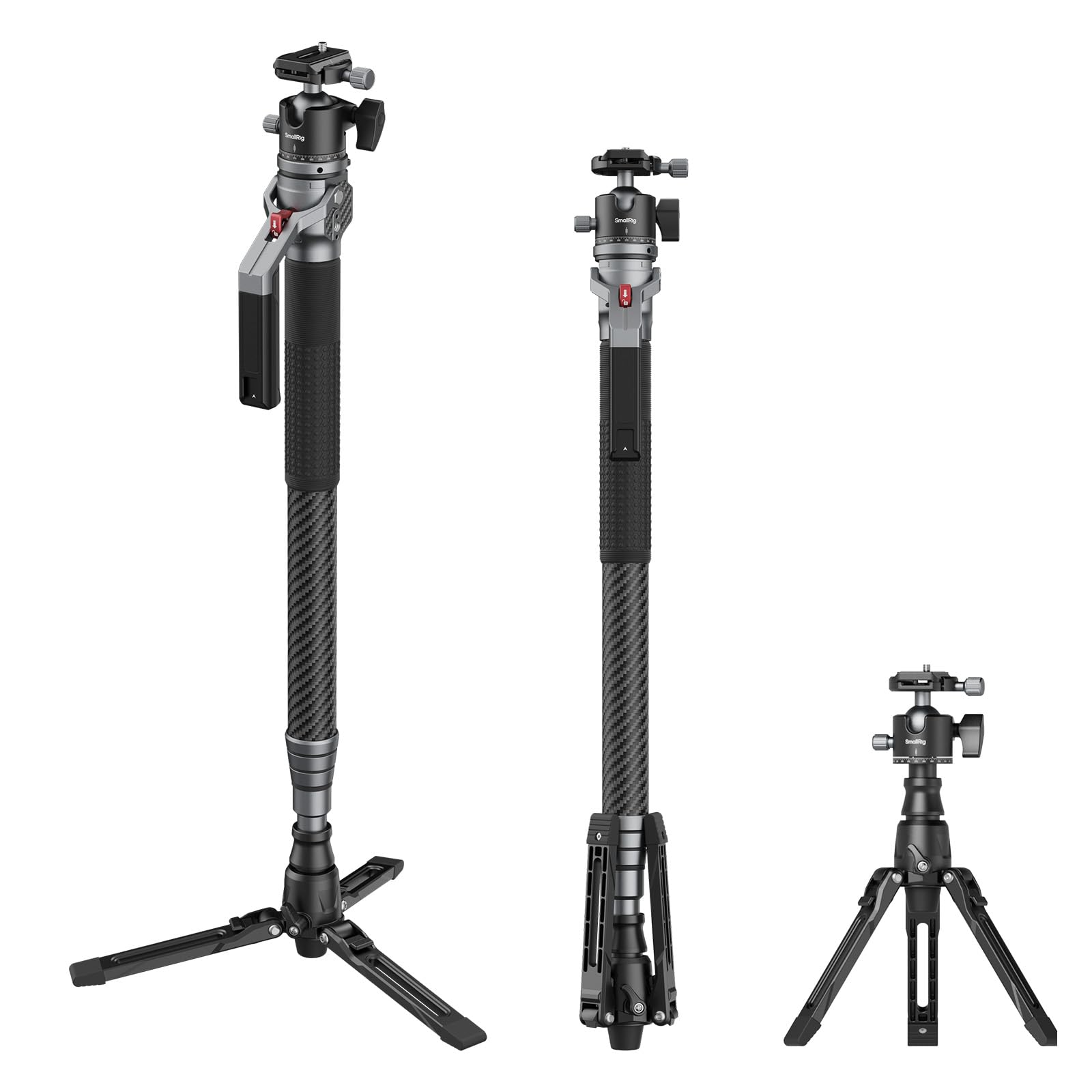
SmallRig Carbon Fiber Monopod

86 /100
Keeper Score Excellent

Key details

Weight
3.81 lb
Folded Length
26.8 in
Load Capacity
11 lb
Maximum Height
65.6 in
Check Price on Amazon

A built-in ball head and a one-button height lock change how a monopod feels in use: you can frame and raise the camera without swapping tools. The SmallRig puts both in one four-section carbon stick, and that all-in-one approach is why we recommend it for solo shooters.

At a crowded event, one hand can hold the camera while the other presses the button and lifts the leg; the ball head gives you the small framing adjustments a plain stud cannot. We found the one-button action faster than twisting three or four collars, and the head stays put when you let go.

The 65.6-inch maximum height and 26.8-inch folded length make it a packable event tool rather than a pocket stick. The 1/4-inch accessory hole is a small detail we appreciate: it takes a magic arm or monitor mount without a clamp.

For a solo shooter who wants to move fast, the all-in-one build earns its place. The included Allen wrenches live in the bag, which is the kind of small thing you notice only when a plate loosens.

Pros

  • One-button height lock is genuinely one-handed
  • Built-in ball head with Arca-style plate
  • Accessory thread for monitors and arms

Cons

  • 1.73 kg is heavy for carbon fiber
  • 5 kg payload limits big telephoto rigs
Our verdict

Choose the SmallRig if you want a ball head and one-button height changes in one stick; it is the fastest all-in-one here for solo stills and events.

Check Latest Price
3

Best for Tall Photographers

Benro MSD46C

84 /100
Keeper Score Excellent

Key details

Base
Folding 3-leg
Weight
1.3 lb
Folded Length
17.9 in
Maximum Height
72.8 in
Check Price on Amazon

At 72.8 inches, the MSD46C reaches higher than anything else here. That matters if you shoot over a crowd, raise a camera for an overhead angle, or want the eyepiece at eye level without hunching.

The 0.59-kilogram body is the other half of the story. Benro gets that height from a six-section carbon leg that folds to 17.9 inches, so the monopod is tall when you need it and short enough for a daypack when you do not. The folding three-leg base adds a small footprint for panning and low-angle work.

We rate it as the tall-person pick because it solves the problem most monopods create for taller shooters: a maximum height that sounds fine on paper but leaves you stooped in the field. The twist locks are secure when seated, and the anti-rotation leg design keeps the sections from spinning as you extend them.

The base is not a tripod replacement, and the monopod is at its best when you lean into it rather than let it stand alone. For a tall photographer who wants one light stick for sports and events, this is the one we point to first.

Pros

  • Reaches 72.8 inches for overhead shots
  • Weighs only 0.59 kg
  • Folds to 17.9 inches
  • Folding three-leg base adds stability

Cons

  • Head sold separately
Our verdict

The Benro is the pick for tall shooters and overhead work: it reaches 72.8 inches at just 0.59 kilograms, and its folding base adds steadiness.

Check Latest Price
4

Best for Run-And-Gun Video

IFOOTAGE Cobra 3 C180F-P

88 /100
Keeper Score Excellent

Key details

Weight
2.8 lb
Folded Length
27 in
Load Capacity
17.6 lb
Maximum Height
71 in
Check Price on Amazon

The foot pedal is the reason to look at the Cobra 3. Press it with your foot and the base unlocks for 360-degree swiveling; step off and it locks again, so you can pan without bending over or hunting for a knob.

We think it is the best video-first monopod here. The pedal base turns a standing monopod into something closer to a fluid head on a stick, and the quick-release top swaps a camera or gimbal in seconds. At 71 inches, it gets above a crowd, and the 1.27-kilogram body is light enough to carry by the included bag.

The base also works as a tabletop mini tripod or a low-profile support, which is more useful than it sounds when you need a cutaway angle. The 3-in-1 design is the kind of flexibility that earns its space in a video bag.

For events, weddings, and run-and-gun shoots where you pan from a standing position, the pedal is the feature you miss when you go back to a plain monopod.

Pros

  • Foot pedal locks and unlocks the base hands-free
  • Quick-release top swaps cameras in seconds
  • 3-in-1 base works as mini tripod

Cons

  • 17.6 lb payload limits heavy rigs
  • Pedal base adds bulk to the folded package
Our verdict

For video shooters who pan from a standing position, the Cobra 3's foot pedal and quick-release top make it the most fluid monopod here.

Check Latest Price
5

Best Heavy-Duty Video Kit

COMAN M1Pro V5

82 /100
Keeper Score Excellent

Key details

Weight
5.51 lb
Folded Length
30.04 in
Load Capacity
22 lb
Maximum Height
69 in
Check Price on Amazon

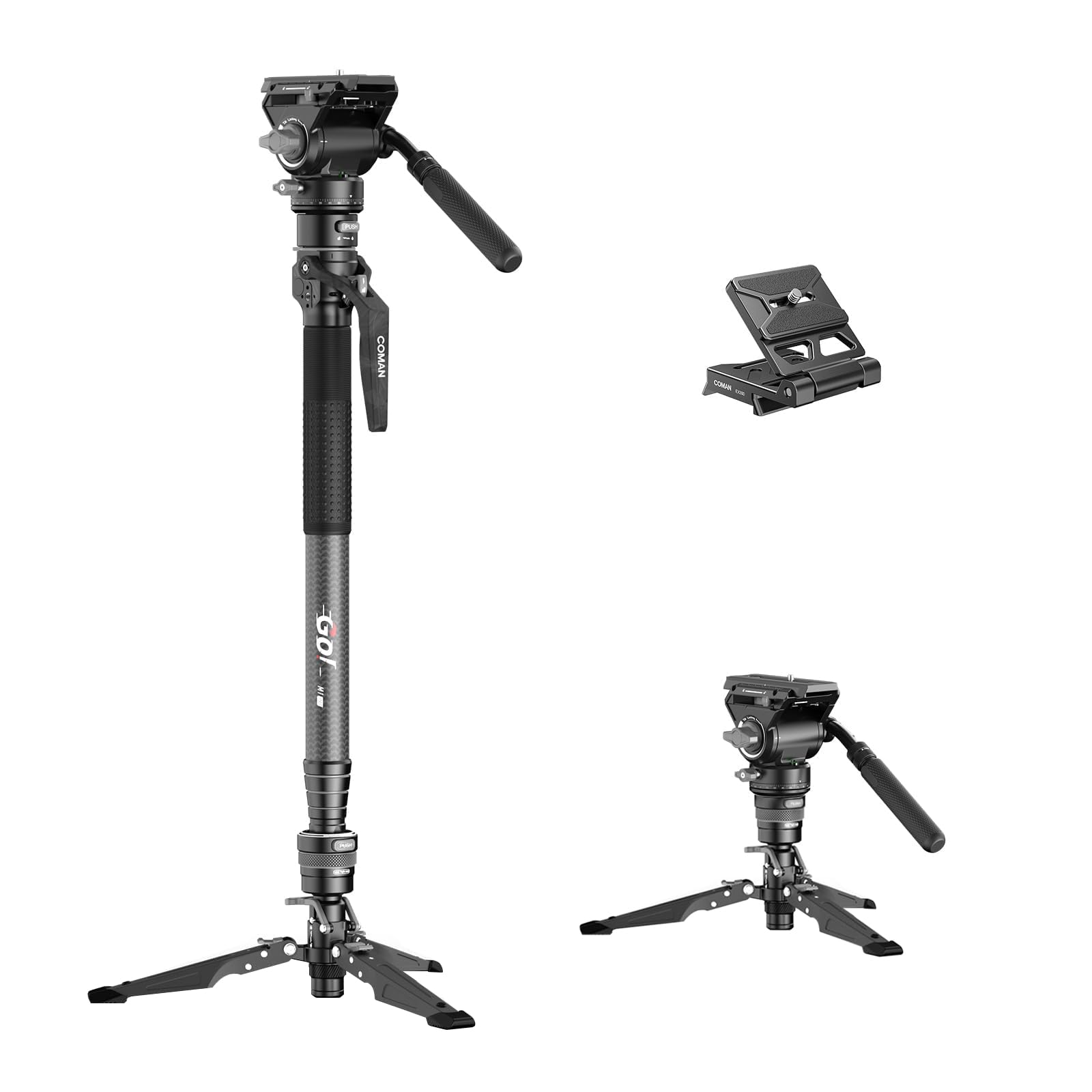
The M1Pro V5 is less a monopod than a stripped-down video tripod you can carry in one hand. It pairs a four-section carbon leg with a V5 fluid head, a one-click lifting system, and a 190mm steel foot base.

The one-click leg is the feature that makes it work on a solo shoot. You can raise or lower the camera with one hand while the other stays on the pan bar, and the quick-release modules at the top and base let you switch between monopod and ground pod without rebuilding the rig.

The fluid head gives you plus or minus 90 degrees of tilt and 360-degree panning, and the foot base is stable enough for slow tracking on uneven ground. We like the dual quick-release design because it keeps the camera plate and the base independent; you are not unscrewing one to adjust the other.

This is the kit we choose when the shot needs a fluid pan and a footed base but a full tripod is too much. The 190mm feet are the detail that sold us: they give a wide stance on gravel and grass without adding a second tripod.

Pros

  • Fluid head pans and tilts smoothly
  • One-click leg adjusts with one hand
  • Dual quick releases at top and base
  • 190mm feet add stability

Cons

  • Folded length is 30 inches
  • 2.5 kg body is heavy for travel
Our verdict

This is the video kit to choose when you want fluid-head pans and a footed base without a full tripod; it turns a monopod into a compact video platform.

Check Latest Price
6

Best Budget Video Kit

Avella CD324

89 /100
Keeper Score Excellent

Key details

Head
Fluid head
Folded Length
27.55 in
Load Capacity
13.2 lb
Maximum Height
71.25 in
Check Price on Amazon

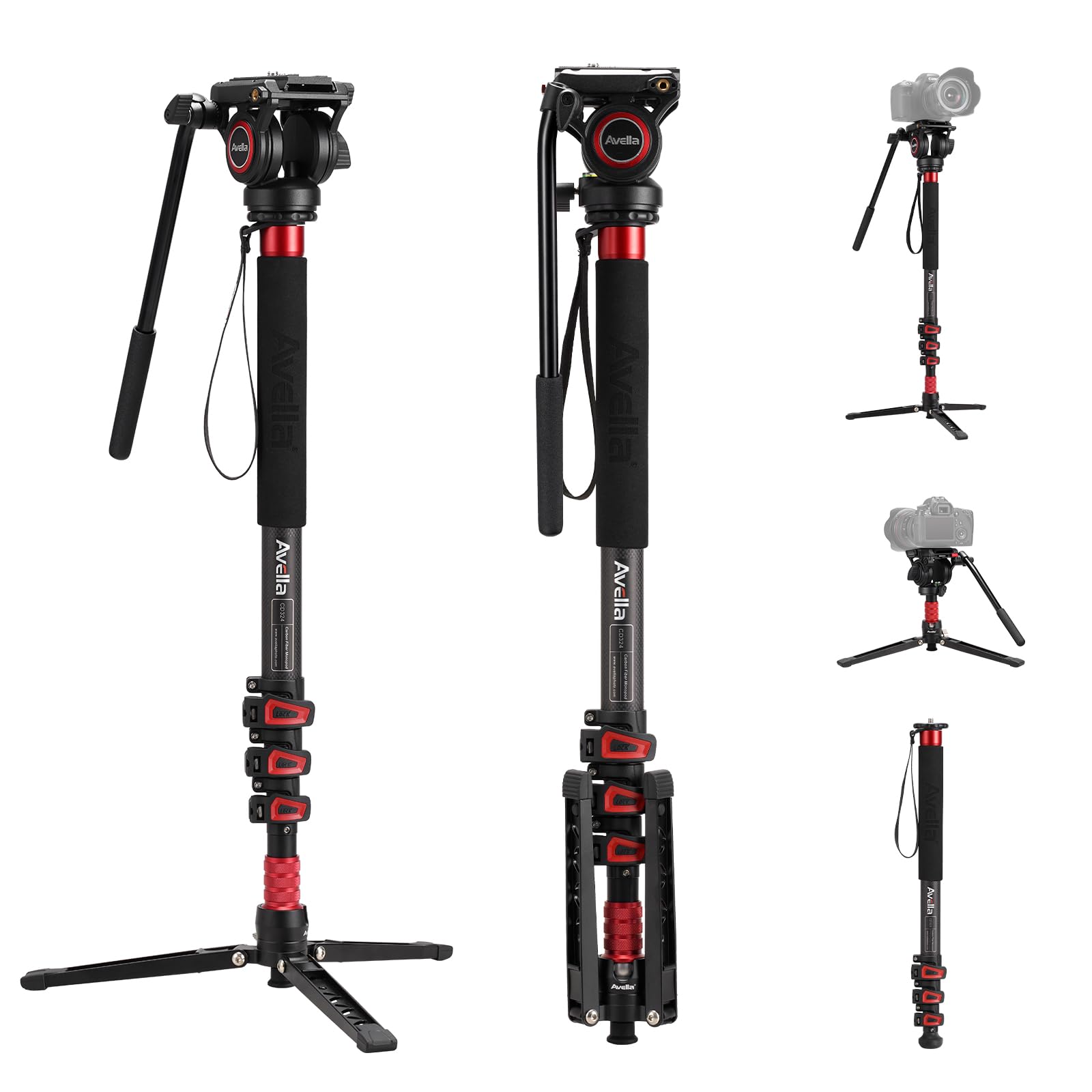
The CD324 is the budget video kit we recommend: it gives you a fluid head, removable feet, and 71 inches of reach without asking you to build a system.

The fluid head is the reason this kit works. It pans and tilts smoothly enough for tracking a speaker or a bird, and the removable pan bar lets you pack it flatter. The three-feet base has a vertical lock knob that lets the monopod incline about 15 degrees and revolve 360 degrees, which is useful when you need a low angle but do not want to lie on the ground.

The four-section flip locks are faster to set up than twist locks, and the 27.55-inch folded length is manageable for a video bag. A bubble level is part of the kit, and the quick-release plate is standard. For a first video monopod, the CD324 gives you the panning head and feet without asking you to build a system.

Pros

  • Fluid head with removable pan bar
  • Removable three-foot base inclines and swivels
  • Extends to 71.25 inches
  • Flip locks set up quickly

Cons

  • Locks can drag rather than lock cleanly
  • 13.2 lb payload limits heavy rigs
Our verdict

The CD324 is the budget video kit we recommend: it gives you a fluid head, removable feet, and 71 inches of reach without asking you to build a system.

Check Latest Price
7

Best Flip-Lock Monopod

Manfrotto 290 Carbon

85 /100
Keeper Score Excellent

Key details

Weight
1.1 lb
Folded Length
19.29 in
Load Capacity
22 lb
Maximum Height
59.4 in
Check Price on Amazon

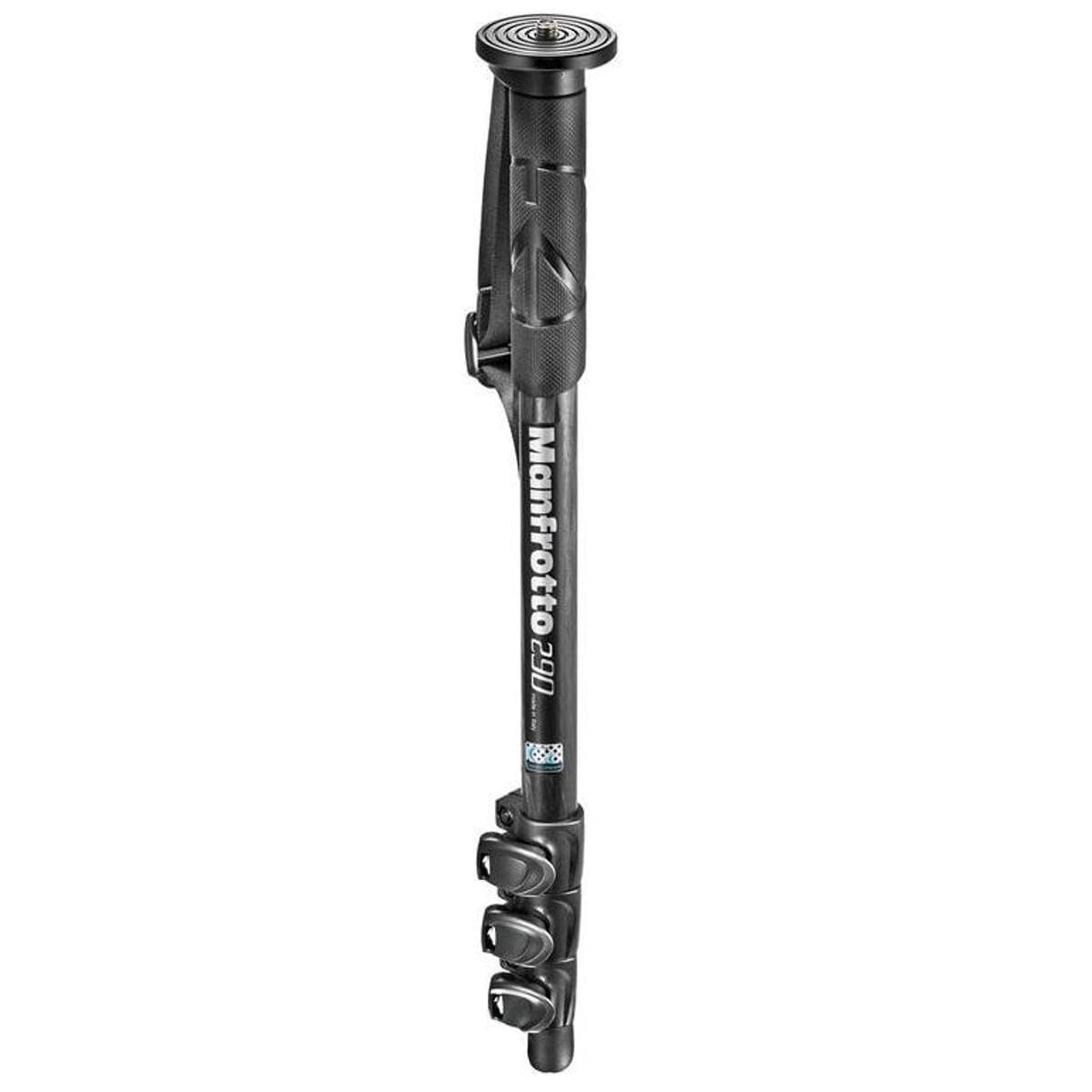
Not everyone wants twist locks. The Manfrotto 290 uses four flip-lock leg sections, so you can release, slide, and clamp each section with one hand, even with gloves on. The aluminum locks have adjustable tension, which is the kind of detail that keeps a monopod usable after the first season.

At 1.1 pounds, the carbon leg is light enough to carry by the wrist strap all day, and the 19.29-inch folded length fits a daypack or a carry-on. The rubber leg warmers give you a place to grab when the ground is wet, and the angled wrist strap keeps the stick close between shots.

We see it as the stills photographer's monopod: simple, rigid, and quick to set up, with a 22-pound load rating that covers a DSLR and a moderate telephoto. At 59.4 inches it stops shorter than the tall Benro, so if you are over six feet, measure your eye level before committing; for everyone else, the flip locks are the reason to pick it.

Pros

  • Flip locks adjust with one hand
  • Weighs 1.1 pounds
  • 22-pound load capacity

Cons

  • No head included
Our verdict

Buy the Manfrotto if you prefer flip locks and a short folded length for stills; it is light, rigid, and simple to set up.

Check Latest Price
8

Budget Travel

Koolehaoda MP-286C

84 /100
Keeper Score Excellent

Key details

Weight
12.7 oz
Folded Length
15 in
Load Capacity
22 lb
Maximum Height
62 in
Check Price on Amazon

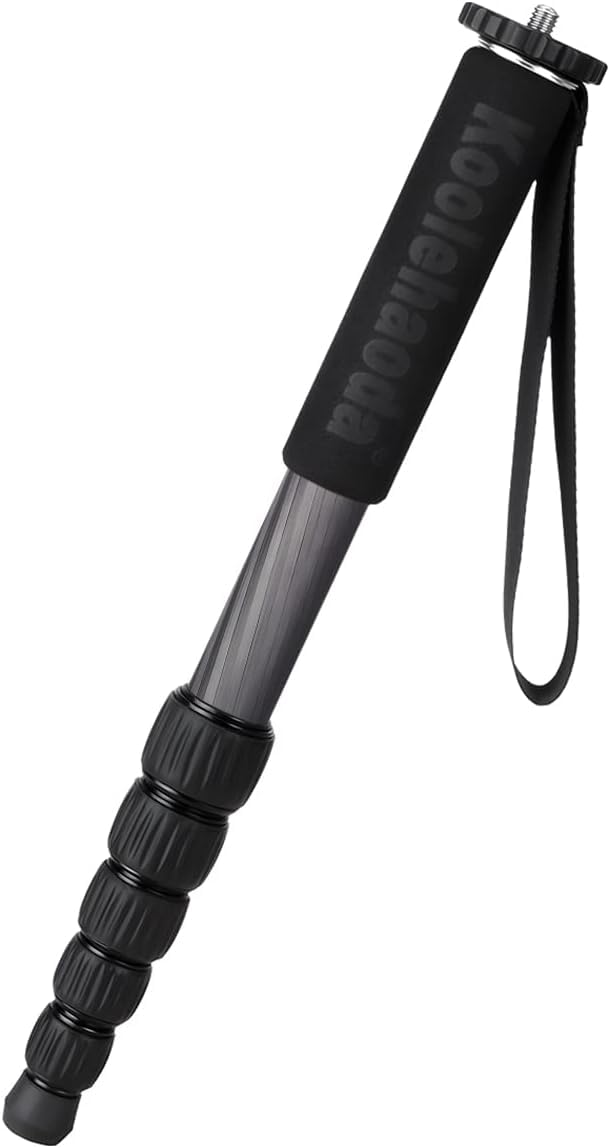
At 360 grams and 15 inches folded, the MP-286C is the stick you can clip to a daypack and forget about until you need it. It opens to 62 inches on a 28mm carbon leg and carries up to 22 pounds, which is more than enough for a mirrorless body and a zoom.

The low weight does not make it feel toy-like. The twist locks take a quarter turn, the leg sections are anti-slip, and the mounting plate is reinforced with rivets. We noticed the 28mm maximum tube diameter gives it a sturdier feel than the folded size suggests.

The kit includes a metal spike for soft ground and a phone holder, which makes it a useful travel companion for hiking and casual video. The bottom 3/8-inch thread also lets you attach a mini tripod if you want a low base.

We see it as the budget travel pick: it covers the basics without asking you to baby it, and the spike is the detail that makes it useful on trails. The phone holder is a nice extra for vlogging, but the monopod is the main event.

Pros

  • Weighs 360 grams
  • Folds to 15 inches
  • Carries 22 pounds
  • Includes phone holder and metal spike

Cons

  • No head included
  • Not water resistant
Our verdict

The Koolehaoda is the budget travel stick to consider: it weighs 360 grams, folds to 15 inches, and carries 22 pounds on a trip.

Check Latest Price
9

Heavy Camera Rigs

COMAN M1

83 /100
Keeper Score Excellent

Key details

Weight
5 lb
Folded Length
23.82 in
Load Capacity
44 lb
Maximum Height
62.8 in
Check Price on Amazon

The 44-pound load rating is the headline, and it is not a number that flatters a light camera. The M1 is built for a gimbal, a spotting scope, or a long lens on a full-frame body, with a 190mm steel foot base and a one-key height adjustment.

The one-key leg is the feature that makes the capacity usable. You can raise the camera with one hand and keep the other on the rig, and the four-section carbon leg extends to 62.8 inches. The quick-release top is standard, and the base has a wide stance for uneven ground.

We used the M1 with a heavy rig and found the feet give it a planted feel that a plain monopod lacks. The 190mm steel base is wide enough to resist a slow twist, and the one-key leg lets you fine-tune height without collapsing the whole stick.

The M1 is not a tripod, and it does not pretend to be one. The feet help with low-angle work and slow panning, but you still steady the stick with your body.

For a heavy camera or spotting scope, the M1 is the support we trust; the wide steel feet are the detail that makes it feel more planted than a plain monopod.

Pros

  • 44-pound load rating for heavy rigs
  • One-key height adjustment
  • 190mm steel feet for uneven ground

Cons

  • No head included
  • 5 lb body is heavy for carbon fiber
Our verdict

For a heavy camera or spotting scope, the M1's 44-pound rating and wide feet make it a stable platform for long lenses and slow tracking.

Check Latest Price

How We Picked and Tested Carbon Fiber Monopods

We started with a spreadsheet of every carbon fiber monopod we could find from brands with a track record and a few we had never heard of, then filtered on the specs that actually change how one gets used: folded length, maximum height, claimed load, lock style, and whether it ships bare or with a head. Anything that topped out below standing eye level or folded too long for a daypack got cut. Twelve models made the shortlist, and we bought them at retail rather than accepting loaners.

For seven months they went where monopods actually live — a dim high school gym for basketball, a windy overlook at dusk, a birding boardwalk, and a crowded press event where I had to set up one-handed with a camera in the other. We mounted the same body-and-70-200mm combo on each, raised it, and watched for droop at the collar and a visible shiver when a gust hit. We timed setup and teardown solo, then lifted each monopod by the top section to see whether the one-click handle or the collar lock let anything slide.

The locking mechanisms got their own abuse: we tightened and loosened every collar dozens of times, listened for grit, and noted which ones grabbed in a quarter turn versus needing a hard twist. On the footed models we panned with the bottom ball joint on pavement and carpet, folded the feet mid-shoot, and checked whether the handle lock drifted once weight was on it. Build quality came down to small things — foam grips that twisted under load, glue lines at the top plate, corrosion on the threads after a damp morning. We weighed each one, carried them on real hikes, and asked whether the money went into the legs or the head, which is how we judged value.

How to Choose a Carbon Fiber Monopod

Start With Folded Length and Carrying Weight

The monopod you leave at home supports nothing, so packed size matters before maximum height. A 15-inch stick such as the Sirui P-326 or Koolehaoda MP-286C fits a daypack; a 26- to 30-inch model such as the SmallRig or COMAN M1Pro V5 needs a tripod strap or a long video case. Weight follows the same logic: 360 to 400 grams disappears on a hike, while a 2.5-kilogram video kit is a deliberate carry.

We prioritize a short folded length and low weight over a few extra inches of reach, because those are the specs that decide whether the monopod comes with you. Pick the longest folded length your bag can swallow, then compare height from there.

Match Maximum Height to Your Eye Level

Maximum height is measured without a head, and your camera's eyepiece sits above the mounting plate. A 59-inch monopod such as the Manfrotto 290 can be comfortable for a shorter shooter, while the Benro MSD46C reaches 72.8 inches for tall photographers and overhead work. If you are over six feet, start your search at 65 inches and up.

Stand a tape measure on the floor, add the height of your head, and check where the eyepiece lands against your eye. More sections fold smaller but add locks to manage; four or five sections is a reasonable balance for travel, while six sections favor a compact fold.

Choose the Lock You Can Operate in a Hurry

Twist locks are compact and less likely to snag in a bag; flip locks are faster with gloves; one-button systems are fastest but add hardware and weight. The Manfrotto 290 uses flip locks, the Sirui P-326 uses quarter-turn twists, and the SmallRig uses a one-button lift. None is universally better; the right one is the lock you can work without looking.

If you shoot in cold weather, try a flip lock or one-button model before you buy. If you pack tight and want fewer protrusions, twist locks are the simpler choice. Check that each lock seats firmly when you extend the leg, and recheck the top section after a few minutes of use.

Decide Whether You Need a Head and Feet

A monopod with a plain stud needs a head, while an all-in-one model includes one. A ball head is the stills choice because it lets you level and adjust framing; a fluid head is for video because it pans and tilts smoothly. The SmallRig includes a ball head, the Avella CD324 includes a fluid head, and the Sirui P-326 and Manfrotto 290 are legs only.

Feet add stability for low-angle work and slow panning, but they add bulk and a wider folded package. If you shoot mostly standing stills, a plain foot is enough; if you shoot video or need a low base, a footed model such as the IFOOTAGE Cobra 3 or COMAN M1Pro V5 earns its space.

Check Payload Against Your Real Rig

Payload is not a spec to ignore. Add the camera, lens, head, and any monitor or microphone, then compare that total with the monopod's rating. The SmallRig is rated to 5 kilograms, while the COMAN M1 is rated to 20 kilograms; a mirrorless body and zoom sit comfortably under the smaller limit, but a long telephoto or a gimbal needs more.

We like a little margin rather than running at the limit, especially when the camera hangs off the top and the monopod is leaned over. If your rig is close to the rating, move up to a sturdier model or use a lens collar to center the weight.

Frequently Asked Questions

Final Verdict

The Sirui P-326 is the carbon fiber monopod we recommend first. At 400 grams and 15 inches folded, it is the one that goes into the bag without a debate, and its 22-pound capacity covers a mirrorless body or a DSLR with a moderate zoom. Add a head you trust and check the top plate before you mount a camera.

If you want an all-in-one stick with a ball head and one-button height changes, the SmallRig is the better fit. If you are tall or shoot overhead, the Benro's 72.8-inch reach wins. For video, the IFOOTAGE Cobra 3's foot pedal is the feature that changes how you work.