Best Action Cameras for Skiing of 2026

The best run of your season is a terrible thing to surrender to a dead battery. Cold is the quiet enemy of action cameras: the same cell that runs two hours in a warm living room can quit twenty minutes into a morning cold enough that your phone shuts itself off in your pocket, and no spec sheet has a line for that. So that's the first thing I check now, before resolution or frame rates.

Over one full ski season, from November's thin white ribbons to the last slushy weekend in April, I skied with 12 cameras, budget boxes and flagships alike. We shot groomers, powder, tree runs, and park laps in flat light and bluebird, then watched everything back that night. Stabilization separates a great ski camera from a merely waterproof one, but battery life in the cold, glove-friendly controls, mounts, and getting clips onto your phone got equal weight. The picks below are ranked by what survived a winter strapped to a helmet.

Keeper Score summarizes customer ratings and review volume. Read it alongside the product details and trade-offs. How the score works.

1

Best Overall

DJI Osmo Action 4

94 /100
Keeper Score Outstanding

Key details

Video
4K 120fps
Battery
1770mAh, 160 min
Stabilization
RockSteady, HorizonBalancing
Water Resistance
Waterproof body
Check Price on Amazon

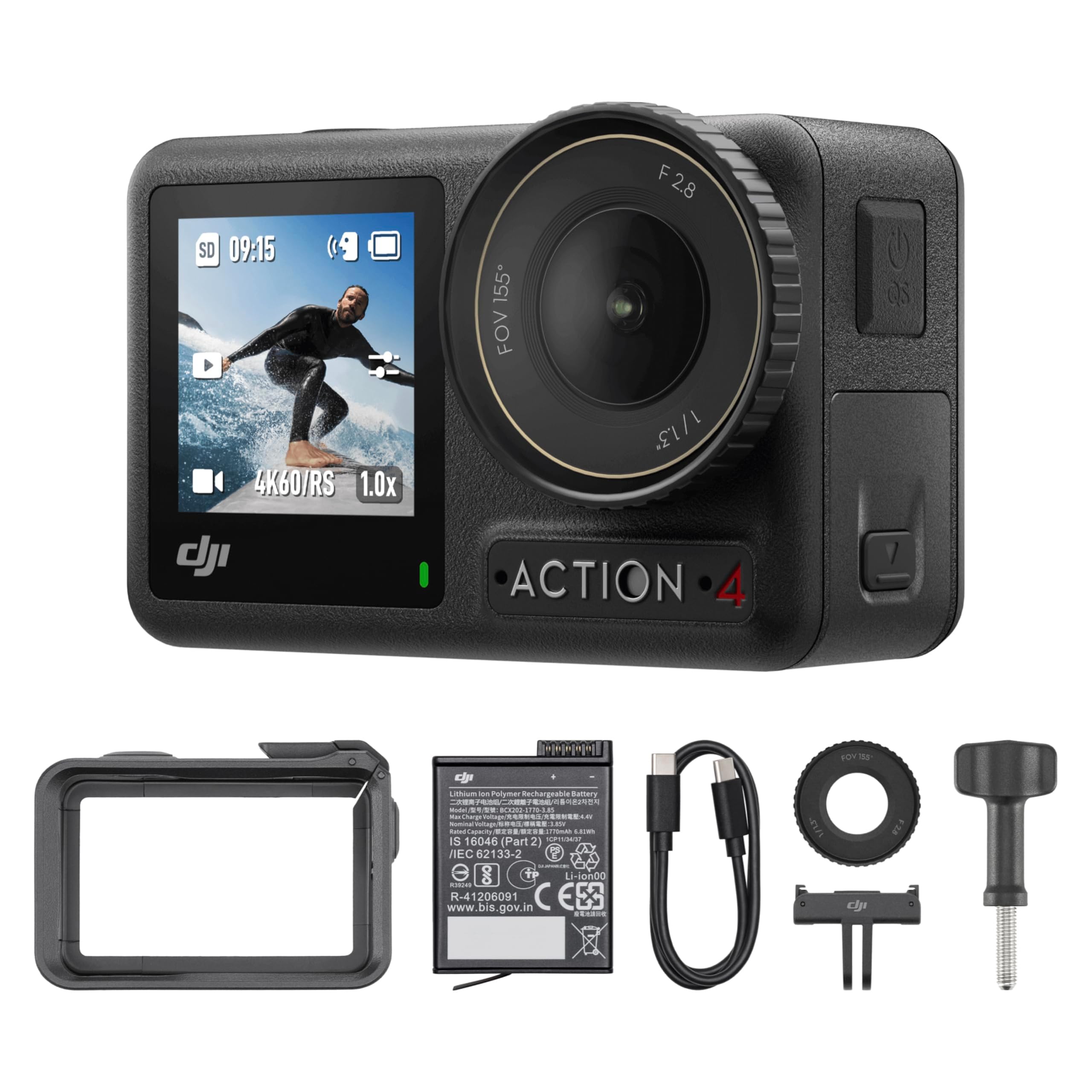
The first thing we check on a ski camera is whether it will still be recording at the bottom of a cold run. The Action 4 is the one in this group that answers that question most convincingly: DJI rates its 1770mAh battery for temperatures down to -4°F and lists up to 160 minutes of recording. We still pack the spare for a full day, because 4K120 and cold air both shorten that number, but the camera is not starting from a disadvantage.

The 1/1.3-inch sensor and 155° lens give you a wide, bright canvas for snow, and 4K120 leaves room to slow a jump or a mogul line. We like RockSteady and HorizonBalancing for the way they keep the horizon from tipping when you traverse a slope; that matters more on skis than a resolution bump.

Mounting is where it quietly wins. The magnetic quick-release lets you move from a helmet to a chest rig to a pole without hunting for a thumbscrew in the cold. At 145 grams, it is light enough to forget on a helmet, and the body is sealed for wet snow without a housing.

It is not the newest or the most feature-packed camera here; the Action 6 has the edge in low light and 8K. But for most skiers, the Action 4 hits the useful middle: strong stabilization, a cold-ready battery, and a mount system that makes it easy to actually bring. That is why it is our default.

Pros

  • Cold-rated battery works to -4°F
  • RockSteady and HorizonBalancing steady downhill shots
  • Magnetic quick-release swaps mounts quickly
  • 1/1.3-inch sensor and 4K120 give cropping room

Cons

  • App pairing can be inconsistent
Our verdict

We recommend the Osmo Action 4 as the best all-around ski camera because its cold-rated battery, strong stabilization, and magnetic mount make it easy to live with on the mountain.
Check Latest Price
2

Best Premium

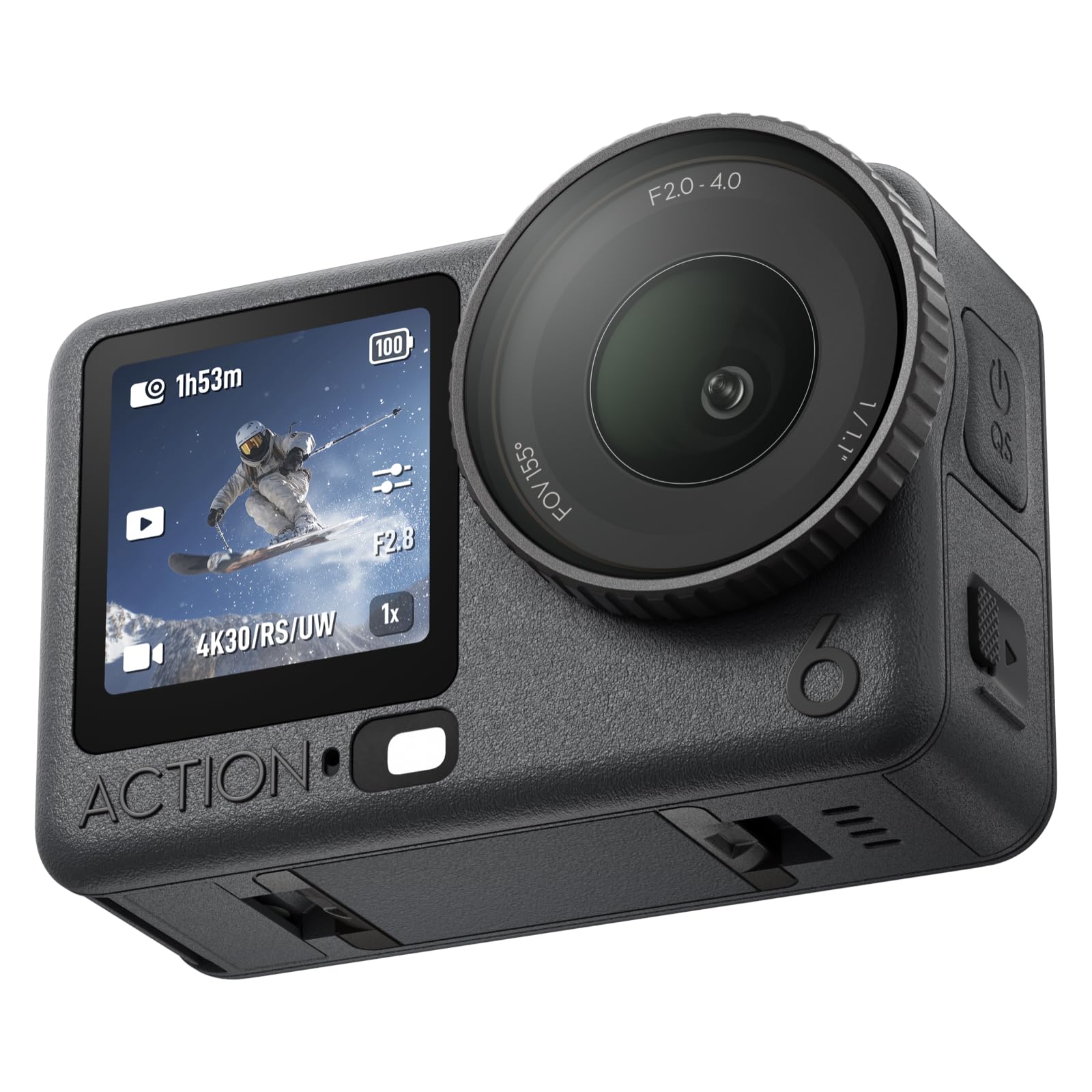
DJI Osmo Action 6

90 /100
Keeper Score Outstanding

Key details

Video
8K video
Battery
1950mAh, 4 hours
Aperture
f/2.0–f/4.0
Stabilization
RockSteady 3.0, HorizonSteady
Check Price on Amazon

The Action 6 is what happens when you ask for the strongest low-light action camera in this group and accept the premium. Its 1/1.1-inch square sensor and variable f/2.0–f/4.0 aperture are built for flat winter light, and 8K recording gives you room to crop a run without losing detail. The four-hour battery rating and cold-resistant design are the other reasons it belongs on a ski hill.

We found the 360° HorizonSteady especially useful for skiing: it keeps the horizon level through rolls and traverses, which is exactly the kind of motion a helmet or chest mount picks up. RockSteady 3.0 smooths the chatter, and the 2.5-inch screen is easy to frame with even in gloves. The 50GB of built-in storage is a useful safety net if you forget a card.

The trade-off is file volume. 8K footage fills cards quickly, and the built-in storage will not last a full day at that setting. If you shoot a lot of low-light or want the longest battery here, the Action 6 earns the step up; if you mostly post short clips, the Action 4 is the smarter spend.

Pros

  • Variable aperture and 1/1.1-inch sensor for low light
  • Four-hour cold-resistant battery
  • 360° HorizonSteady keeps the horizon level

Cons

  • 8K files fill storage quickly
Our verdict

We recommend the Osmo Action 6 for skiers who want the longest cold-weather battery and the strongest low-light hardware here, and who will use 8K.

Check Latest Price
3

Best HDR

GoPro HERO12 Black

89 /100
Keeper Score Excellent

Key details

Video
5.3K 60fps
Photos
27MP
Stabilization
HyperSmooth 6.0
Water Resistance
33 ft waterproof
Check Price on Amazon

Snow is a contrast test: bright highlights, dark trees, and a rider in between. The HERO12 Black's HDR video and photo mode is the most useful feature for that situation in this group, holding detail in both the sunlit surface and the shadows instead of blowing out one end. The 5.3K60 footage gives you cropping room, and HyperSmooth 6.0 keeps a helmet shot from feeling like a paint shaker.

We also appreciate the GoPro mount ecosystem. The camera is waterproof to 33 feet without a housing, and the folding mount fingers mean it fits the clips, chest rigs, and pole mounts many skiers already own. The Enduro battery is the right choice for cold days, though we still carry a second one for a full day.

Reliability is the caveat. The camera can stop working or fail to power on, which is a real risk on a cold mountain. On a ski hill, the cold also helps manage heat, and the HDR advantage is real. If you already own GoPro mounts and want the most forgiving exposure, it is the pick; if you want the simplest cold-weather battery story, the Action 4 is safer.

Pros

  • HDR holds bright snow and shadows together
  • HyperSmooth 6.0 stabilizes helmet footage
  • Waterproof to 33 feet without a housing
  • Fits the existing GoPro mount ecosystem

Cons

  • Overheating can cut long 5.3K takes
Our verdict

We recommend the HERO12 Black for skiers who want HDR footage that holds bright snow and shadows together, plus the widest mount ecosystem here.

Check Latest Price
4

Best 360

Insta360 X4 Ski Bundle

93 /100
Keeper Score Outstanding

Key details

Video
8K 360, 5.7K 60fps
Battery
135 min
Included
Ski pole mount, selfie stick
Stabilization
FlowState, Horizon Lock
Check Price on Amazon

The X4 Ski Bundle is the only camera here that arrives with a ski pole mount and an invisible selfie stick in the box, and that changes how you shoot a run. You can hold the stick out and get a third-person view without a drone or a second skier, then choose the framing later from the 360 footage.

We like that freedom on a mountain where you only get one pass at a line. The 8K 360 capture and 5.7K60 mode give you detail to work with, FlowState stabilization and 360° Horizon Lock keep the footage level, and the 4K 170° MaxView mode is there when you want a conventional wide shot. The lens guards are a sensible inclusion for ski poles and chairlifts.

The cost is workflow. 360 footage needs reframing, and the 135-minute battery is not the longest in this group, so a spare battery is part of the kit. If you want a set-and-forget helmet cam, this is more work than the Action 4. If you want the most creative ski footage and do not mind editing, it is the most distinctive pick here.

Pros

  • Ski pole mount and invisible selfie stick included
  • 8K 360 and 5.7K60 capture
  • FlowState and 360° Horizon Lock

Cons

  • No microSD card included
Our verdict

We recommend the X4 Ski Bundle for skiers who want creative third-person and 360 footage and are happy to reframe and edit after the run.

Check Latest Price
5

Best Budget

AKASO EK7000

89 /100
Keeper Score Excellent

Key details

Video
4K 30fps
Battery
2 batteries, 90 min
Stabilization
EIS
Water Resistance
131 ft with case
Check Price on Amazon

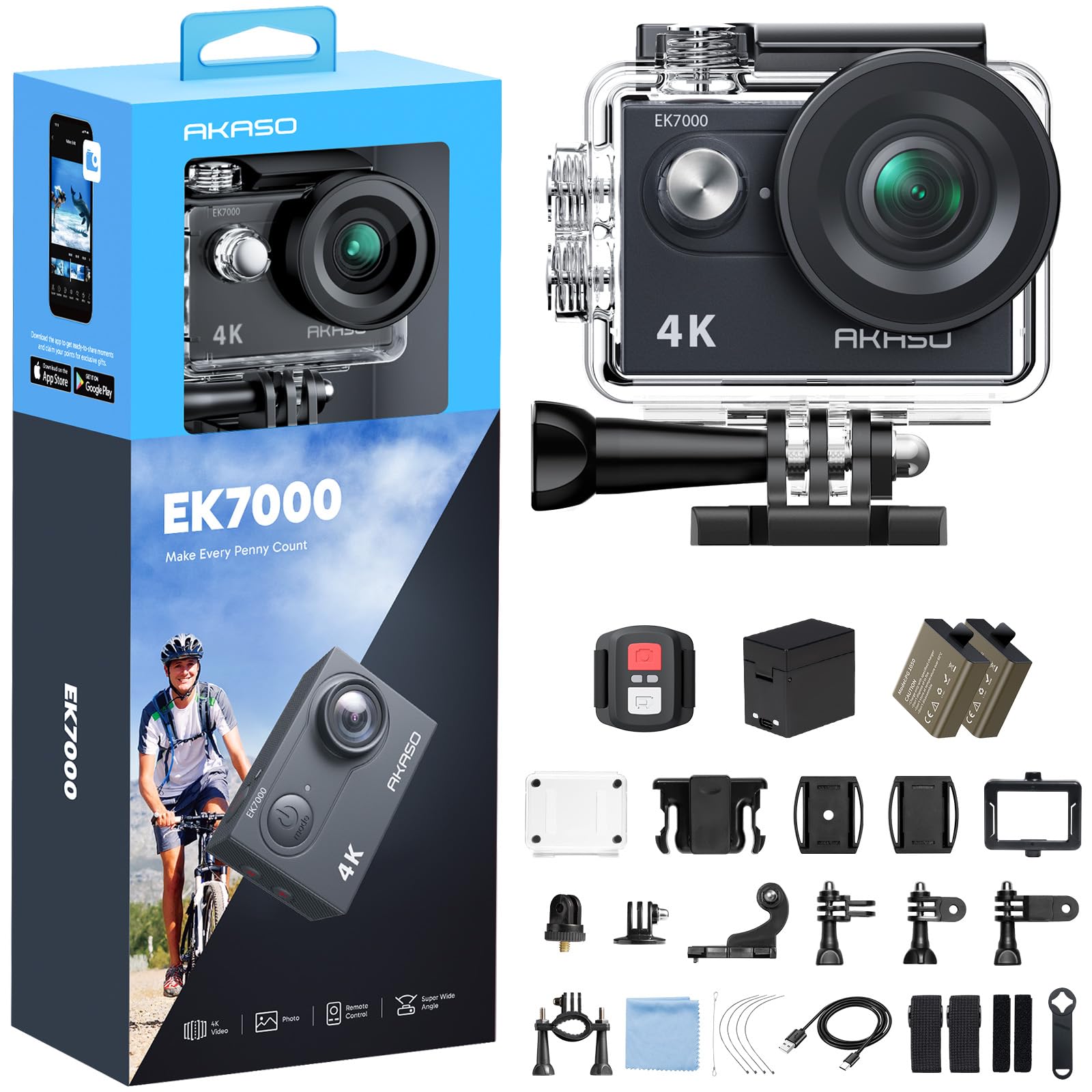
The EK7000 is the budget pick because it gets the ski basics right: 4K30 video, electronic stabilization, a wrist remote, and a waterproof case that also keeps snow out. At 2 ounces, it is light enough to sit on a helmet without dragging it sideways.

We appreciate the accessory bundle more than the spec sheet suggests. Two batteries, a dual charger, and a pile of mounts mean you can hand the camera to a friend or move it between a pole and a chest rig without buying a starter kit. The 131-foot case is the trade-off: you have to keep the seal clean and the lens clear, and the camera is not sealed on its own.

The stabilization is electronic, so it smooths small chatter rather than turning a bumpy run into a gimbal shot, and the 90-minute battery rating will not cover a full day at 4K. But for a first ski camera, a second angle, or a trip where you prefer not to risk a premium body, it does the job. Just add a microSD card and a spare battery.

Pros

  • Budget entry to 4K ski footage
  • Two batteries, charger, and mounts included
  • Waterproof case protects from snow

Cons

  • Low-light image quality trails premium picks
Our verdict

We recommend the EK7000 as the budget ski camera for occasional clips, as long as you accept a housing, short battery life, and a step down in low-light image quality.

Check Latest Price
6

Dual-Screen Budget

AKASO Brave 7 LE

89 /100
Keeper Score Excellent

Key details

Video
4K 30fps
Battery
2 x 1350mAh
Stabilization
6-axis EIS 2.0
Water Resistance
IPX7
Check Price on Amazon

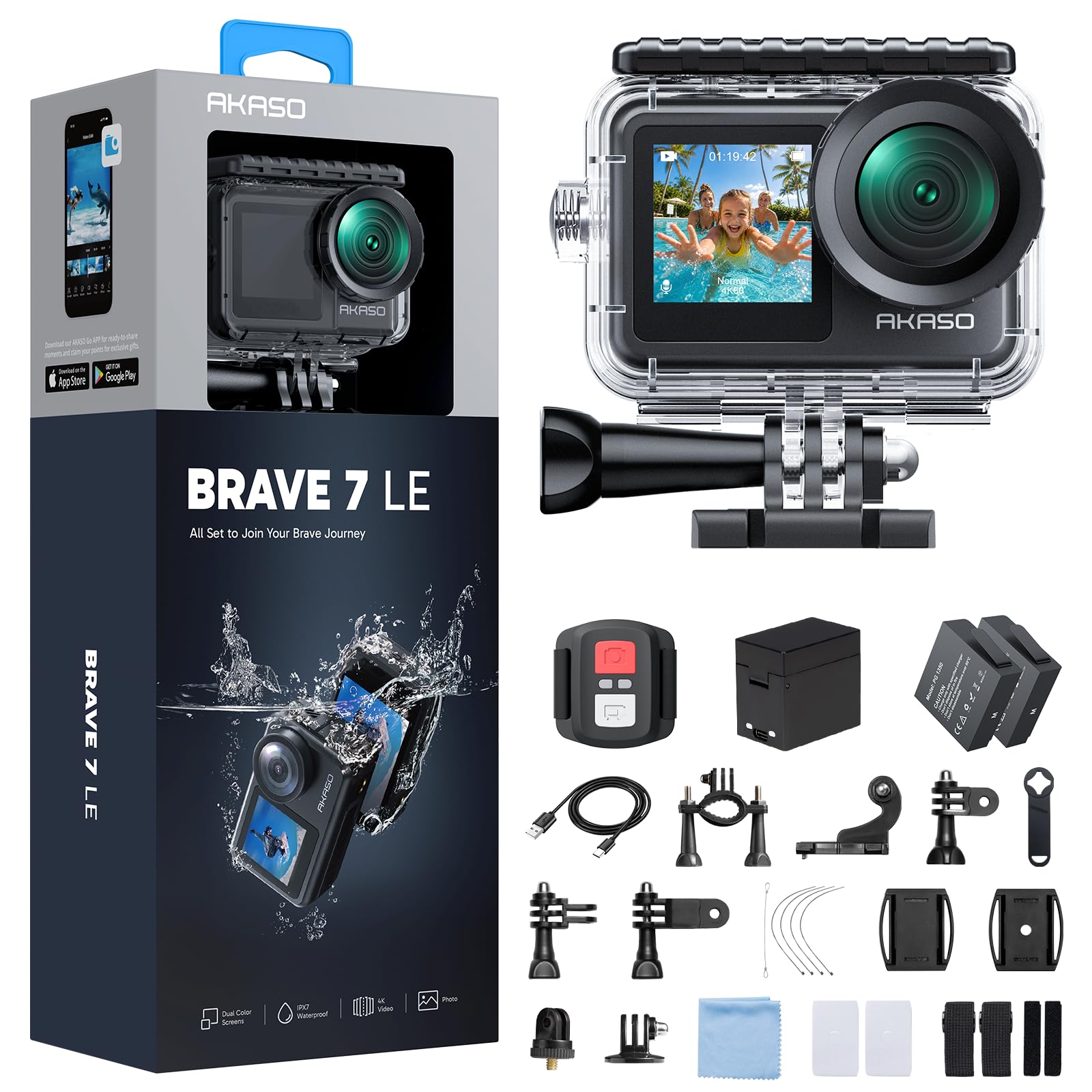
The Brave 7 LE's front screen is the detail that makes it interesting for skiing. You can frame yourself for a pole-cam or a helmet shot without guessing, and the rear touchscreen handles settings when your gloves are off. The IPX7 water-resistant body is a useful buffer against wet snow.

The rest of the kit is sensible: 4K30 video, 20MP photos, 6-axis EIS 2.0, and two 1350mAh batteries. The stabilization is electronic, so it helps with hand-held and pole-mounted chatter rather than matching the horizon-lock systems on the DJI cameras. The external microphone support is a nice bonus if you want to narrate a run.

We see this as a budget step-up for a skier who wants a front screen and a weather-resistant body without paying for a premium camera. The image does not match the top picks, but the dual-screen design is genuinely useful when you are filming alone. For short clips, it earns a look.

Pros

  • Front screen simplifies solo framing
  • IPX7 water-resistant body
  • Two 1350mAh batteries included

Cons

  • Stabilization trails the top picks
Our verdict

We recommend the Brave 7 LE as a budget step-up for skiers who want a front screen and IPX7 water resistance, with the understanding that stabilization trails our top picks.

Check Latest Price
7

Ultra-Budget Kit

Camlance 4K60 Action Camera

83 /100
Keeper Score Excellent

Key details

Video
4K 60fps
Photos
48MP
Included Storage
64GB card
Water Resistance
40M with housing
Check Price on Amazon

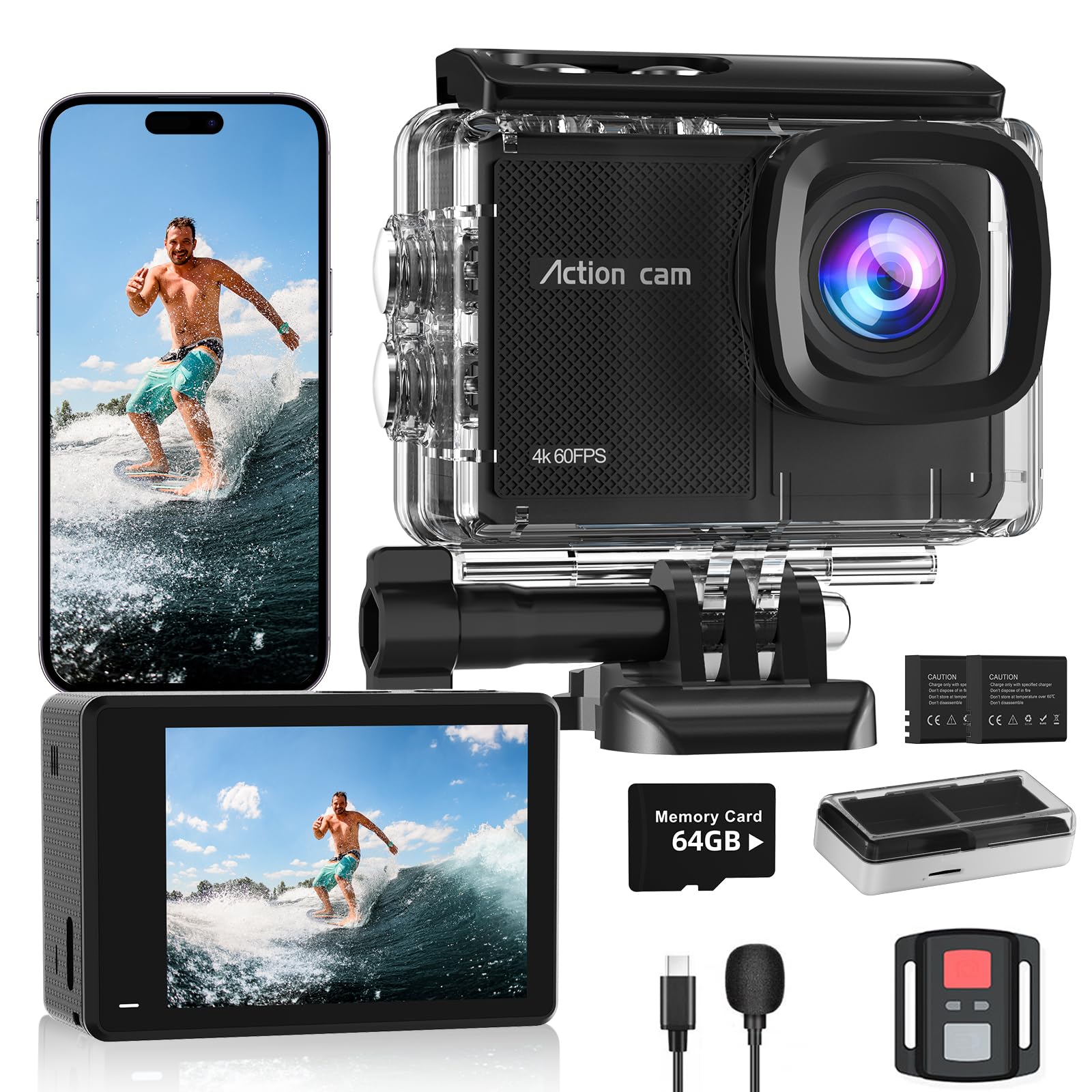
The Camlance kit includes a 64GB card, two batteries, a remote, and a 40-meter housing, which is the most complete starter bundle in this group. For a skier who wants to clip a few runs without building a kit from scratch, that is the appeal.

The headline specs are strong for the money: 4K60 video, 48MP photos, 8x zoom, and EIS stabilization. We like the vertical framing mode for social clips, and the 60-gram body is light enough to mount on a helmet without much fuss. The 40-meter housing is the protection that matters in snow.

The numbers do not tell the whole story. The sensor and lens are not in the same class as the DJI or GoPro picks, so do not expect the same low-light detail or horizon lock. The EIS helps with small bumps, but it is not a substitute for the best in-camera stabilization here.

We see the Camlance as an ultra-budget kit for occasional skiing, travel, or a second angle you do not want to baby. It gets you recording with fewer extras to buy, and the 4K60 mode is genuinely useful in good light. Just keep both batteries warm and accept that the image will not match the premium cameras.

Pros

  • 64GB card and two batteries included
  • 4K60 video and 48MP photos
  • 40-meter housing for snow and water

Cons

  • Low-light detail trails premium cameras
  • Stabilization is basic
Our verdict

We recommend the Camlance kit for skiers who want a complete ultra-budget setup with a card and housing, as long as they accept basic stabilization and limited low-light detail.

Check Latest Price

How We Tested These Cameras on the Mountain

We built the shortlist from manufacturer spec sheets, retail listings, and the mount systems each camera supports, starting with roughly two dozen models that ranged from no-frills budget boxes to flagships. We filtered for waterproofing without a housing, built-in stabilization, a stated operating temperature, and whether the box actually included helmet or chest-mount hardware. Twelve cameras made the cut.

Each one spent the season on a helmet or chest harness, skiing groomers, powder, tree runs, and park laps. We pressed every button with gloves on and timed how long it took to start recording from a jacket pocket on a lift. On cold mornings we recorded continuously until the battery died and counted the runs that bought us, and we noted what happened when a camera spent an hour inside a warm jacket, which is where overheating shows up in winter.

That night we watched footage on a laptop, checking whether stabilization held on choppy snow and whether shadow detail in flat light held up or turned to gray mush. We moved clips to a phone the way you would, in a lodge, sometimes on resort Wi-Fi and sometimes with none, and logged when an app fought us. Mounts took a full day of vibration plus a few drops in the snow, cameras were left overnight in a cold car, and we weighed what came in the box against what each one asks for it.

How to Choose a Ski Action Camera

Start With Cold-Weather Battery Life

Cold is the first spec that matters on a ski hill, because a battery that runs for hours in a warm room can fade fast in a jacket pocket. We look for an explicit cold-weather rating or a large battery, then plan for a spare. The Osmo Action 4 is rated down to -4°F, and the Action 6 is rated for up to four hours in normal conditions; both are stronger cold-weather starting points than the budget cameras here. Keep the spare in an inside pocket, lower the frame rate when you do not need slow motion, and swap batteries at lunch rather than waiting for a shutdown.

Prioritize Stabilization and Horizon Lock

On skis, the camera is rarely still: a helmet mount picks up every turn, and a chest mount adds breathing and pole plants. Electronic stabilization smooths that chatter, but horizon lock is the feature that keeps a traverse from looking like a sideways camera. The Action 4 uses RockSteady and HorizonBalancing, the HERO12 uses HyperSmooth 6.0, and the X4 uses FlowState with 360° Horizon Lock. If you shoot from a helmet or chest, put horizon lock near the top of your list; if you mostly shoot handheld, basic stabilization is enough.

Match the Mount to Your Ski Setup

A camera you cannot mount quickly is a camera that stays in the pack. The Action 4's magnetic quick-release is the easiest system here for moving between a helmet, chest rig, and pole, while the HERO12 fits the GoPro-style fingers and accessories many skiers already own. The X4 Ski Bundle includes a ski pole mount and an invisible selfie stick, which is the most ski-specific mounting kit in this group. Check what you already own before buying adapters, and make sure any helmet mount is approved for the helmet and does not interfere with its fit.

Decide Between Native Sealing and a Housing

Snow is less demanding than diving, but wet gloves, melting flakes, and a fall into powder still find weak points. A natively sealed body like the Action 4 or HERO12 is simpler because there is no housing to fog or forget, while the EK7000 and Camlance rely on a case for their waterproof rating. Housings work, but the seal and lens need checking before every trip, and you should never open one in falling snow. If you want the least fuss, pay for native sealing; if you are buying on a tight budget, a clean, well-fitting housing is acceptable.

Choose Resolution, Low Light, or 360

A 4K clip is plenty for most social posts, so do not pay for 8K unless you plan to crop or reframe. The bigger difference on a ski hill is low-light performance: the Action 6's 1/1.1-inch sensor and variable aperture, the Action 4's 1/1.3-inch sensor, and the HERO12's HDR mode all help with flat winter light. A 360 camera like the X4 is a different workflow: you shoot everything and choose the angle later, which is creative but adds an editing step. Pick the format that matches how you will actually share the footage.

Frequently Asked Questions

Final Verdict

For most skiers, the DJI Osmo Action 4 is the camera we recommend. It has the best balance here of cold-ready battery, stabilization, mounting speed, and image quality, and it does not make you carry a housing for a normal snow day.

If you shoot in flat light or want the longest battery, the Osmo Action 6 is the premium step. If you already own GoPro mounts and want HDR, choose the HERO12 Black; if you want 360 footage, the X4 Ski Bundle is the creative pick. The EK7000 remains the budget entry when occasional clips are enough.