Best Action Cameras of 2026

The wave looked perfect from the board and came back as forty seconds of shudder, then a dead battery. Action cameras exist to catch the parts of the day your phone can't survive — the drop-in, the gravel descent, the dog launching itself off the dock — and what separates a good one from a frustrating one usually stays invisible until you're home reviewing the footage.

My team and I have spent the past eight months with 14 action cameras, and the pattern was clear: a larger sensor and honest stabilization beat any headline number on the box. So did the boring stuff — whether the battery outlasted the activity, whether the app connected on the first try, and whether the body overheated sitting in the sun recording at top resolution.

Value matters too, since price is not a perfect predictor of reliability. Below are the ones we'd hand over without a caveat, whether it's your first camera or a long-overdue upgrade.

Keeper Score summarizes customer ratings and review volume. Read it alongside the product details and trade-offs. How the score works.

1

Best Overall

DJI Osmo Action 5 Pro

92 /100
Keeper Score Outstanding

Key details

Video
4K/120fps
Sensor
1/1.3-inch
Battery Life
240 minutes
Built-in Storage
47GB
Check Price on Amazon

The detail that made the Action 5 Pro our top pick is the combination of 47GB of built-in storage and a battery rated for four hours. On a day hike or a family trip, that means fewer card swaps and fewer spare batteries in your pocket—small hassles that add up. The 1/1.3-inch sensor and 4K/120fps recording give you clean detail and slow-motion room, while RockSteady and HorizonSteady keep the frame usable when you are moving.

We also appreciated the dual OLED touchscreens. The front screen makes it easy to frame yourself, and the rear screen is bright enough for quick setting changes without squinting. The magnetic quick-release mount is another detail we came back to: switching from a chest rig to a handlebar or a selfie stick takes seconds, and going vertical is just as quick. The body is waterproof, though check the stated depth before you dive.

The main trade-off is that the Action 5 Pro costs more than the Action 4, and if you mostly shoot daylight clips for social media, the cheaper DJI will do most of what you need. But for a camera that has to work across travel, trails, and family footage without a bag of accessories, the built-in storage and longer battery make the 5 Pro the safer default. That is why it is the one we recommend first.

Pros

  • 47GB built-in storage
  • Up to 4 hours of recording
  • Dual OLED touchscreens
  • RockSteady and HorizonSteady stabilization

Cons

No notable drawbacks to flag.

Our verdict

Our pick for most people: the Action 5 Pro pairs a big sensor and dual OLED screens with four-hour battery life and built-in storage, so it is ready for travel, trails, and family footage without a bag of extras.

Check Latest Price
2

Best Value

DJI Osmo Action 4

93 /100
Keeper Score Outstanding

Key details

Video
4K/120fps
Sensor
1/1.3-inch
Weight
5.11 oz
Battery Life
160 minutes
Check Price on Amazon

The Action 4 is the DJI we point to when the Action 5 Pro’s extras push past your budget. You still get a 1/1.3-inch sensor, 4K/120fps, 10-bit color, and D-Log M, which is a serious toolkit for a camera this size. The 155-degree field of view gives wide action footage without cropping away too much, and the magnetic mount makes it easy to move between helmet, bars, and tripod.

Low light is where this camera earns its keep. The larger sensor and 2.4μm pixels help keep detail in shade, dusk, and indoor scenes, and the stabilization smooths out trail chatter without making the footage look artificial. We also like that the battery is rated for 160 minutes and works in cold temperatures, which matters on winter rides and ski days. It is predictable in the cold, which is not true of every action camera here.

The Action 4 is the value pick if you mostly pull the card and edit on a computer: it gives you the image quality and stabilization that make action footage worth keeping, without the top pick’s extras. The magnetic mount makes it a practical second camera for a trip where you do not want to baby a flagship.

Pros

  • 1/1.3-inch sensor for low light
  • 4K/120fps and 10-bit color
  • 160-minute cold-resistant battery
  • Magnetic quick-release mounting

Cons

  • App pairing and account setup add friction
  • Battery life is shorter than the top pick
Our verdict

The Action 4 is our value pick for low-light action and 4K120, with the same sensor size as our top pick and DJI’s dependable stabilization.

Check Latest Price
3

Best 360 Camera

Insta360 X5

92 /100
Keeper Score Outstanding

Key details

Lens
Replaceable
Video
8K/30fps 360
Sensor
Dual 1/1.28-inch
Battery Life
208 minutes
Check Price on Amazon

The X5 is built around two 1/1.28-inch sensors, 8K/30fps 360 capture, and the invisible selfie-stick effect. Set it on a tripod, ride past it, and the camera records everything around you; later, you choose the angle in the app. That flexibility is the point of a 360 camera, and the X5 has the hardware to make it useful.

The dual sensors and triple AI chip also help in low light, where earlier 360 cameras tended to fall apart. FlowState stabilization keeps the horizon steady while walking or riding, the battery is rated for three hours, and the replaceable lens is a practical touch for clumsy hands. Reframing still takes practice; the app assists, but it does not remove the editing step.

We came away convinced that the X5 is the 360 camera to choose if you want to decide the shot after the fact. It is not the simplest action camera here—the Action 5 Pro and Ace Pro 2 are easier for flat footage—but for travel, motorcycle rides, and solo adventures, the flexibility is worth the extra editing. That is the trade we make when the shot matters more than the shortcut.

Pros

  • 8K/30fps 360 capture
  • Invisible selfie-stick effect
  • Dual 1/1.28-inch sensors for low light
  • 3-hour battery and replaceable lens

Cons

  • Premium price for a 360 workflow
Our verdict

For 360-degree footage that lets you reframe after the fact, the X5 is the strongest 360 pick here, with 8K capture, good low-light handling, and an invisible selfie-stick effect that is genuinely useful.

Check Latest Price
4

Best for Vlogging

Insta360 Ace Pro 2

86 /100
Keeper Score Excellent

Key details

Lens
Leica Summarit
Video
8K
Screen
2.5-inch flip touchscreen
Batteries
2 included
Check Price on Amazon

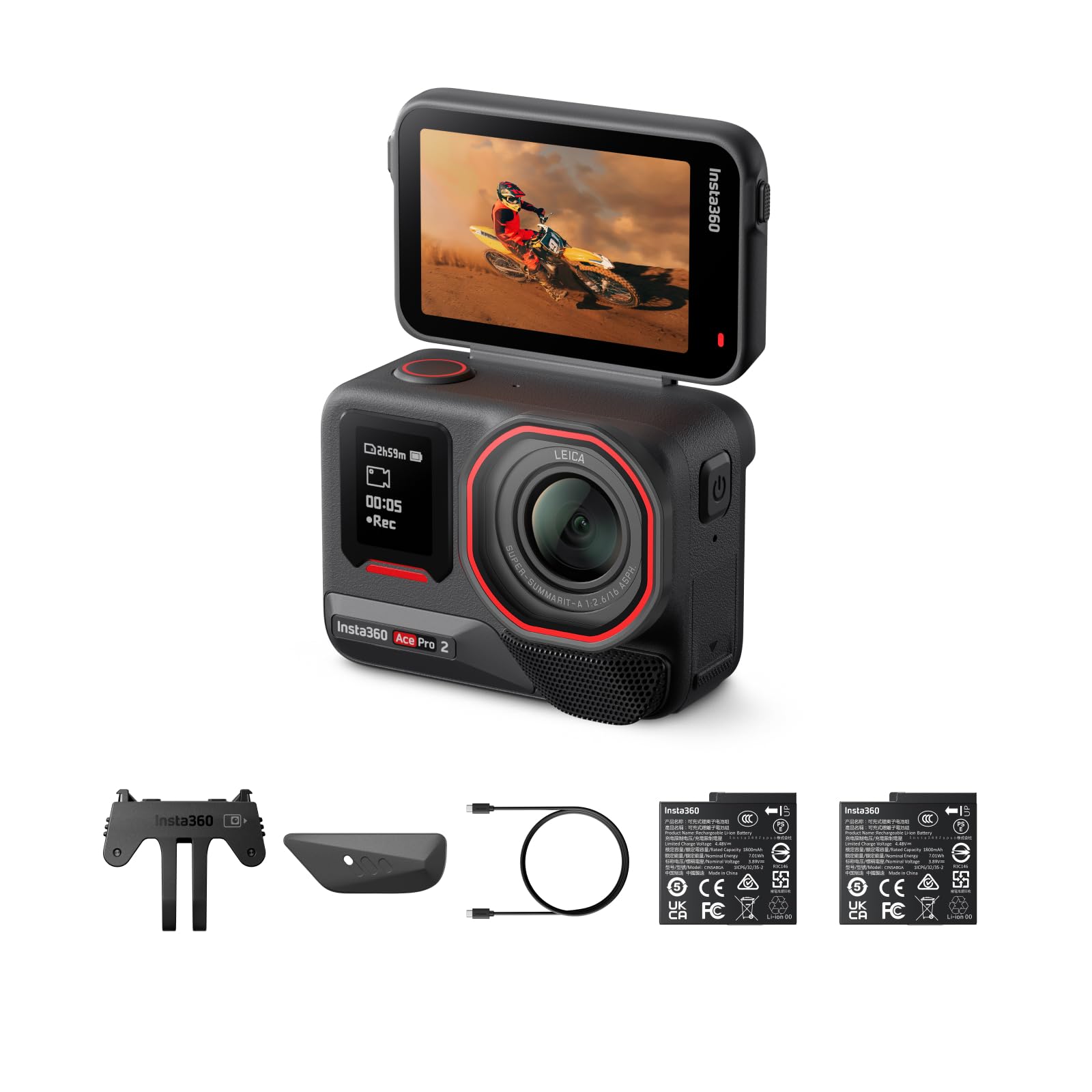
The Ace Pro 2’s flip-up screen is the feature that changes how you shoot. Instead of guessing whether you are in frame, you can flip the 2.5-inch display forward and compose yourself for vlogs, tutorials, or action clips where you are the subject. Around that screen, Insta360 packs an 8K sensor, a Leica Summarit lens, 4K/60 Active HDR, and a wind guard that helps keep audio usable outdoors.

We liked the flexibility of the dual-battery bundle. Having a second battery in the bag makes an 8K camera feel less fragile on a long day, and the magnetic mount is quick to move between setups. Low-light footage is a strong point, too: PureVideo mode and the dual AI chips keep noise under control better than most action cameras this size. The camera still asks you to slow down for setup and editing, so it suits someone who wants to make a clip, not just capture one.

Against the Action 5 Pro, the Ace Pro 2 trades built-in storage and a simpler body for the flip screen and 8K cropping room. If you frame yourself often, that is a fair trade. If you mostly mount a camera and let it run, the DJI is the easier recommendation.

Pros

  • Flip-up 2.5-inch screen
  • 8K capture with Leica Summarit lens
  • Dual-battery bundle included
  • PureVideo low-light mode

Cons

  • Premium price for 8K capture
Our verdict

The Ace Pro 2 is our pick for vlog-style action footage: the flip screen makes framing easy, 8K capture gives you room to crop, and the dual-battery bundle keeps a spare in the bag.

Check Latest Price
5

Best GoPro

GoPro HERO12 Black

89 /100
Keeper Score Excellent

Key details

Photo
27MP
Video
5.3K/60fps
Waterproof
33 ft
Stabilization
HyperSmooth 6.0
Check Price on Amazon

The HERO12 Black is still the GoPro we reach for when we want the familiar mount system and a high-resolution file. It shoots 5.3K at 60fps, captures 27MP photos, and adds HDR to both video and stills, which helps in bright skies and shadowed trails. The 1/1.9-inch sensor is not the largest here, but the image is crisp and the color is easy to work with.

HyperSmooth 6.0 is the other reason it stays in the bag. On a helmet or handlebar, the stabilization smooths out rough ground without the footage looking like it is floating. The camera is waterproof to 33ft without a housing, and the included Enduro battery is a sensible starting point. The familiar GoPro mount system is still the easiest to find parts for, which matters if you already own a kit.

For short action clips and travel snippets, the HERO12 is a strong package. It is the GoPro that makes the most sense for someone who wants high-resolution footage without moving to a 360 workflow, and the HDR file gives you more room to grade highlights and shadows later.

Pros

  • 5.3K60 HDR video
  • 27MP photos
  • 33ft waterproof without housing
  • HyperSmooth 6.0 stabilization

Cons

  • Can overheat during long high-res takes
  • Battery life varies with resolution and frame rate
Our verdict

The GoPro HERO12 Black is our high-resolution GoPro pick for helmet, handlebar, and travel footage, with 5.3K HDR video and HyperSmooth stabilization that make the familiar GoPro format easy to recommend.

Check Latest Price
6

Best Budget

AKASO EK7000

89 /100
Keeper Score Excellent

Key details

Photo
20MP
Video
4K/30fps
Waterproof
131 ft with case
Battery Life
90 minutes
Check Price on Amazon

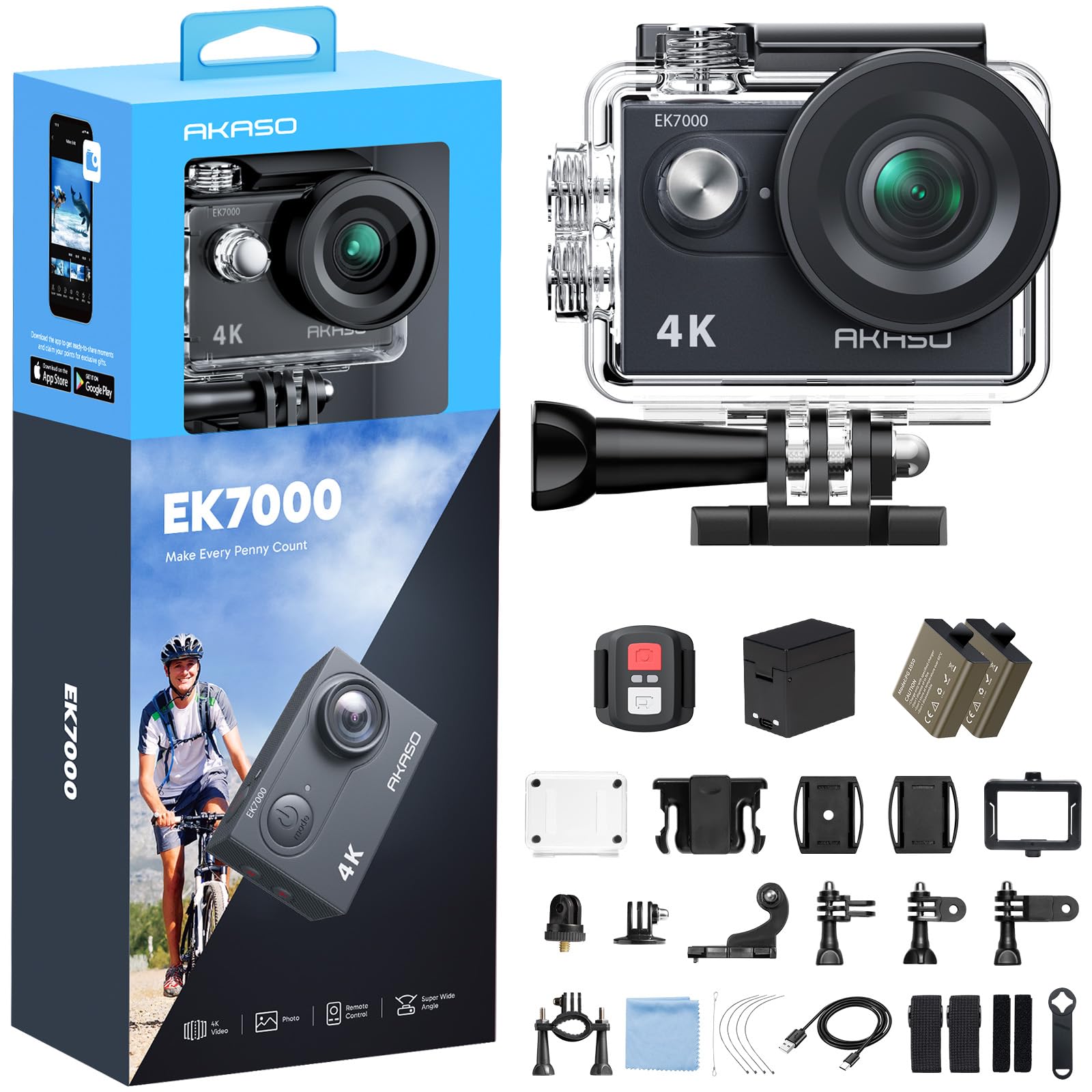
The EK7000 makes its case with the box, not the spec sheet. You get the camera, a waterproof case rated to 131ft, a wrist remote, mounts, and two batteries, which is enough to start shooting without another shopping trip. For a first action camera, a kid’s first camera, or a backup for a beach trip, that completeness is the real value.

The camera shoots 4K/30fps and 20MP photos, with electronic stabilization and a 170-degree lens. In good light, that is enough for social clips and vacation footage, and the remote is genuinely handy when the camera is strapped to a helmet or handlebar. We found the interface simple enough to learn quickly, and the waterproof case is a practical design for snorkeling and pool use.

The compromises show up in low light and in stabilization. Footage is best in daylight, and the electronic stabilization smooths small bumps rather than transforming rough footage. Those are fair trade-offs at the budget end, as long as you are not expecting DJI or GoPro polish.

We think the EK7000 earns its place as the budget pick because it removes the usual startup costs. The case and remote are the parts that make it useful on a snorkel trip or a kid’s bike ride; the image quality is the part you accept. If you already know you will shoot often, spend more. If you are testing the idea, this is the low-risk way in.

Pros

  • Complete starter accessory kit
  • Waterproof case rated to 131 ft
  • Wrist remote for helmet mounting
  • Simple controls for beginners

Cons

  • Short battery life
Our verdict

The EK7000 is the budget action camera we recommend for a first trip or a kid’s first camera: it comes with the case, remote, mounts, and two batteries you need to start shooting for very little.

Check Latest Price
7

Simple Low-Light

GoPro LIT Hero

82 /100
Keeper Score Excellent

Key details

Photo
12MP
Video
4K/60fps
Weight
3.28 oz
Waterproof
16 ft
Check Price on Amazon

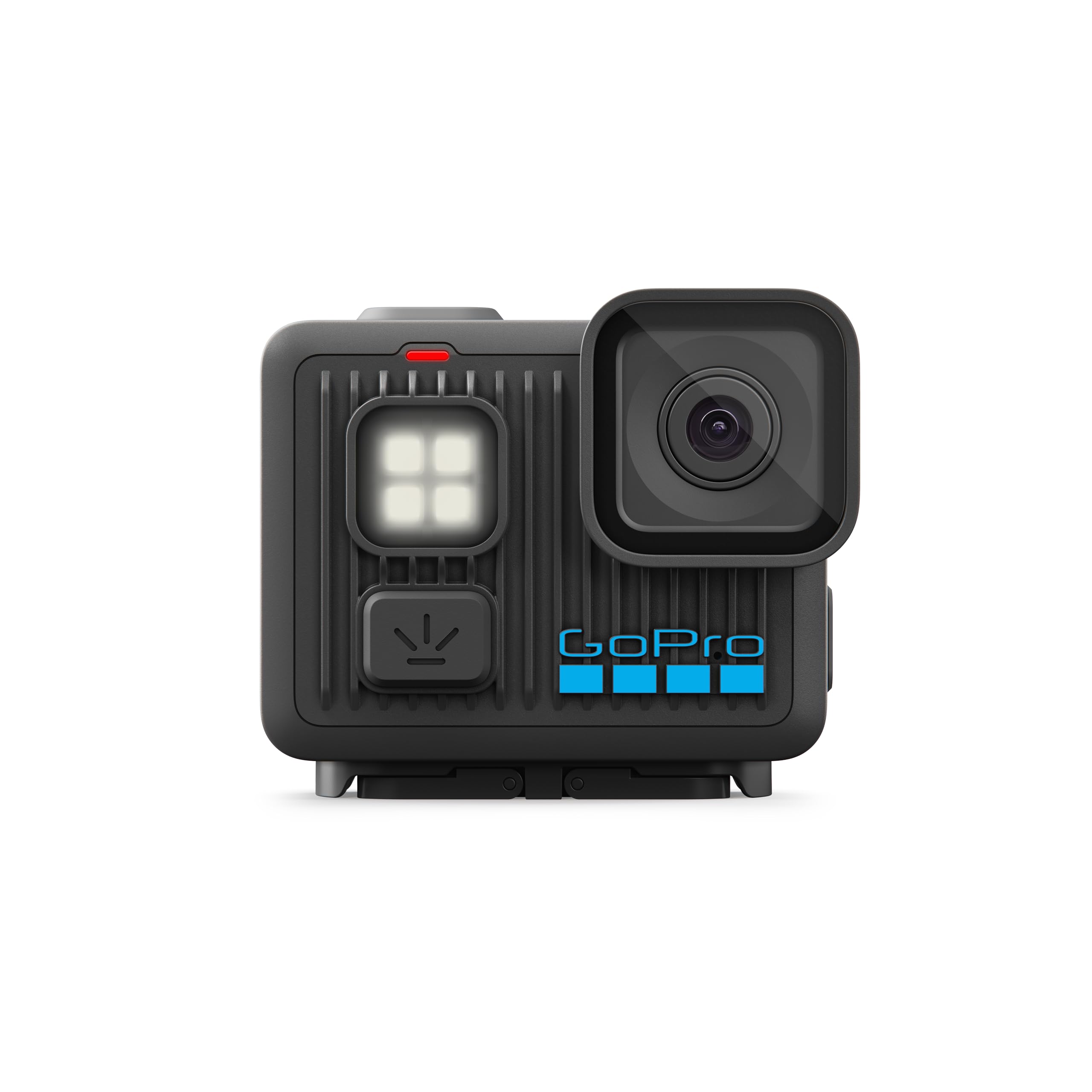
The LIT Hero’s built-in light is the reason to look at it. Most action cameras are useless in true darkness unless you add a light, and this one has three brightness settings and a diffuser in the box. At 93g, it is light enough to clip to a jacket or drop in a pocket, and the simplified tap-and-swipe controls make it easy to hand to someone who does not want a manual.

It shoots 4K/60fps and 12MP photos, with HyperSmooth stabilization and a 1.76-inch touchscreen. For close-up clips, pet shots, and low-light scenes where the light can reach, that is a useful package. The trade-off is that the smaller screen and simplified controls leave less room for manual tuning, and the 16ft waterproofing is for splashes and shallow dips, not diving.

We liked it as a second camera or a first GoPro for short clips. It is the one we reach for when the light matters more than the spec sheet, and the built-in light is genuinely useful at close range. Just do not expect it to replace a full-size action camera for long recording sessions or deep water.

Pros

  • Built-in light with three brightness settings
  • Lightweight 93 g body
  • 4K60 and HyperSmooth stabilization
  • Simple tap-and-swipe controls

Cons

No notable drawbacks to flag.

Our verdict

The LIT Hero is our simple, lightweight GoPro pick for close-up clips and low-light shots, with a built-in light that gives it a real low-light job.

Check Latest Price
8

Tiny POV

acgiewo Mini Body Camera

87 /100
Keeper Score Excellent

Key details

Video
4K/30fps
Screen
1.5-inch
Weight
1.23 oz
Battery Life
150 minutes
Check Price on Amazon

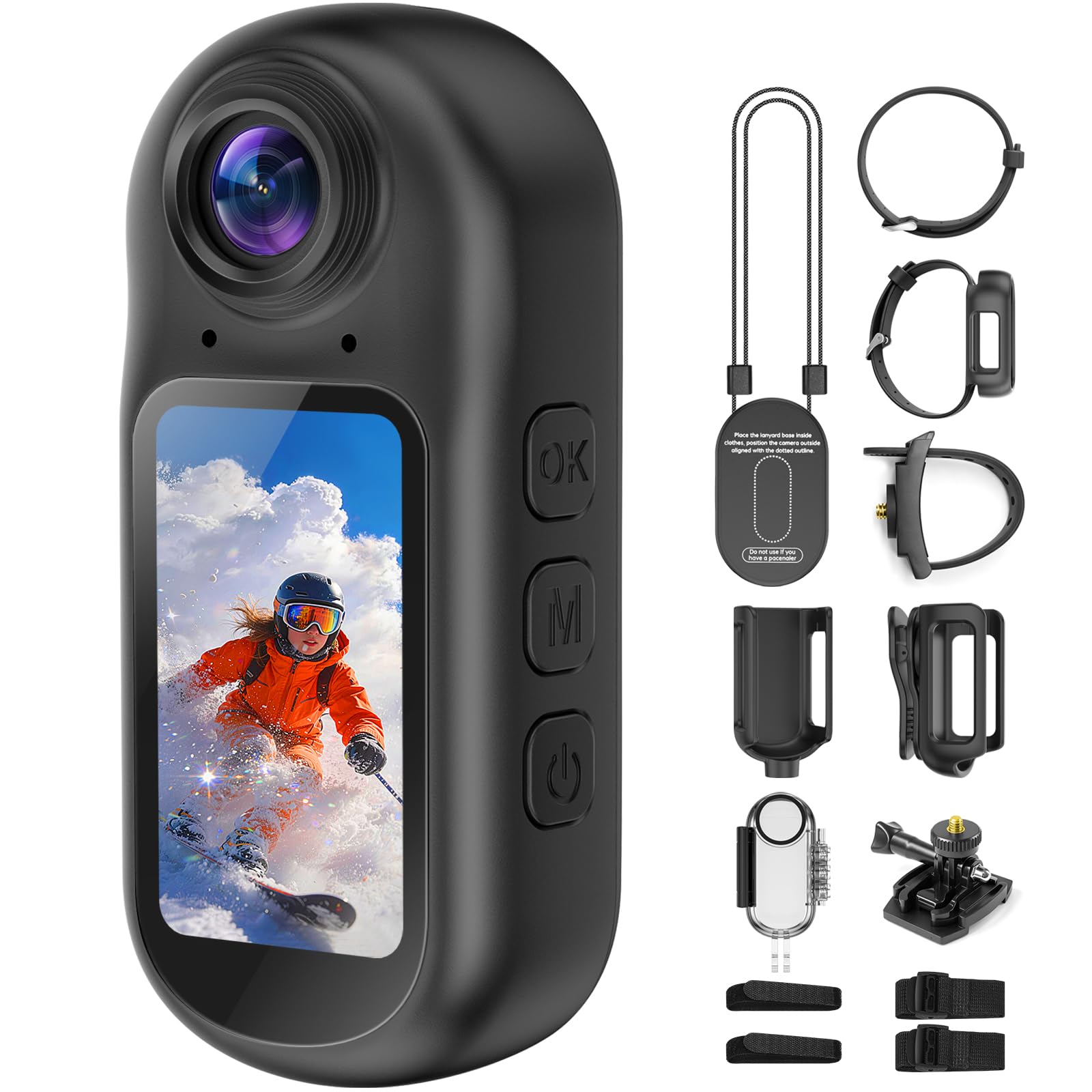
At 35g, the acgiewo mini body camera is the one you can forget you are wearing. A magnetic mount clips it to a jacket or shirt, and the 1.5-inch screen lets you check framing before you hit record—something many tiny cameras skip. It shoots 4K/30fps with EIS 3.0 stabilization, and the 150-minute battery is enough for a ride or a walk.

The 1.5-inch screen is more useful than it sounds. You can frame a chest-mounted shot without guessing, and the Wi-Fi and Bluetooth pairing let you preview on a phone when the camera is clipped somewhere awkward. The 35g body disappears on a jacket, which makes it easier to wear for a whole ride than a full-size action camera.

The limits are real. It is not built for snorkeling or heavy rain, and the fixed 4K/30fps mode will not give you the slow-motion options of a full action camera. The small sensor also means low-light footage is a compromise. This is a dry-weather POV tool, not a rugged do-everything camera.

We liked it most as a hands-free POV camera for cycling, motorcycle errands, and quick outdoor clips. The clip-and-go design is less fuss than a full helmet mount, and the screen makes the footage easier to frame. For rugged all-around action, spend the extra on a sealed camera like the Action 5 Pro or HERO12; for a tiny, wearable angle, the acgiewo is a practical niche pick.

Pros

  • 35 g magnetic body
  • 1.5-inch preview screen
  • 4K30 POV video with EIS
  • Up to 150 minutes battery

Cons

No notable drawbacks to flag.

Our verdict

The acgiewo mini body camera is a niche pick for hands-free POV clips: at 35 g with a magnetic mount and a small screen, it goes where a full-size action camera feels clumsy.

Check Latest Price

How We Chose and Tested These Action Cameras

We started with every current action camera we could buy outright, then narrowed the field to 14 across three price brackets, filtering on sensor size, frame rates, mount compatibility, waterproof ratings, and what actually ships in the box versus what you'll end up buying separately. Testing ran eight months, from spring gravel rides through a genuinely cold December, so nothing got judged on one good day.

Most of that time the cameras were mounted where they'd really live: on a helmet and handlebar for a long descent, clipped to a chest rig on trail runs, suction-cupped to a car hood, and dunked in a pool to check the waterproof claims past the marketing. To judge stabilization we recorded the same washboard descent on every unit and watched for the horizon hunting; for low light we shot the same dim garage and dusk trail and looked at how much color survived before the grain took over. We also noted how warm each body got during a top-resolution session and whether it warned us or simply shut off.

Battery life was timed from full charge until each camera turned itself off, and every app was paired to both an iPhone and an Android phone, with the connection count and time-to-offload for a five-minute clip written down. We handed each camera to someone who'd never touched that model to see whether the menus made sense cold, and mounted every unit with only its included accessories first before adding anything else. Eight months in, we went back through the clips and the hardware to see what had held up — batteries, mounts, lens glass, and whether the app still worked after the updates.

How to Choose an Action Camera

Match the camera to the mount

A standard action camera is still the most flexible shape. It works with helmet, chest, handlebar, and suction mounts, and it is the easiest to hand to someone else. A 360 camera like the Insta360 X5 is better when you want to choose the angle after the fact, but it adds an editing step. A mini body camera like the acgiewo is for hands-free POV clips, not for heavy surf or deep water. Decide where the camera will live before you compare specs.

Resolution is not the whole image

4K is the practical baseline now, and 4K/120 gives you slow-motion room. Higher numbers like 5.3K or 8K buy cropping space and detail, but they also produce larger files and demand more from your computer. Sensor size and processing matter more in low light: a 1/1.3-inch sensor in the Action 5 Pro or Action 4 will hold detail better at dusk than a small budget sensor. If most of your footage ends up on a phone, prioritize a clean 4K image and good stabilization over an 8K badge.

Stabilization earns its keep

Stabilization is the difference between footage you keep and footage you delete. HyperSmooth, RockSteady, and FlowState all work by moving the image inside a crop, so the smoothest modes can trim the edges of the frame. Horizon lock goes further by keeping the horizon level even when the camera rolls. If you shoot biking, skiing, or motorcycle footage, spend more on stabilization before you spend more on resolution. For handheld vlogging, a flip screen and good electronic stabilization matter more than a gimbal.

Plan for power, storage, and heat

Battery ratings are best-case numbers. High frame rates, cold weather, and Wi-Fi preview all shorten real runtime, so spare batteries are part of the kit for a full day. Built-in storage, like the Action 5 Pro’s 47GB, saves you from swapping cards but does not replace a memory card for big trips. Heat is the other limit: long 5.3K or 8K takes can make a small camera shut down, so plan shorter clips and breaks. If you need continuous recording, choose a camera with a proven track record and keep it ventilated.

Waterproofing and workflow

Native waterproofing is convenient for rain and splashes, but depth ratings vary widely. A camera rated to 16ft is fine for shallow water; one with a 131ft case is better for snorkeling and diving. Check the seal before every wet outing, and rinse the camera after saltwater. Editing is the other half of the decision: 360 footage needs reframing, while standard action footage is quicker to share. If you do not want to spend time in an app, choose a standard camera and pull the card.

Frequently Asked Questions

Final Verdict

For most people, the DJI Osmo Action 5 Pro is the action camera to buy. It has the sensor, stabilization, dual screens, long battery, and built-in storage to handle travel, trails, and family footage without a bag of accessories. If you shoot 360, the Insta360 X5 is the better tool; if you want the GoPro mount system and 5.3K HDR, choose the HERO12 Black. And if you are buying a first camera on a tight budget, the AKASO EK7000 gets you shooting for very little.