Best 3-Channel Dash Cams of 2026

The worst part of a fender bender usually isn't the crunch — it's the conversation afterward, when two people remember the same five seconds differently. A three-channel dash cam settles that, recording the road ahead, the cabin, and the rear window at once, which is why rideshare and taxi drivers took to them first.

I ran a single-lens camera for years, and adding the other two views taught me how much the small details decide whether you keep using one: a cable barely long enough to reach the back glass, an app that drops its connection in a garage, a card that fills up midweek. We've spent six months with 12 three-channel setups finding the ones that survive that friction.

Resolution is the least reliable number on the box, by the way — two well-tuned 1440p channels with a good sensor beat a 4K cabin camera that turns to mush in a dim garage, and value is as much about what's included as the sticker price. The picks below are the ones still recording, without fuss, when testing ended.

Keeper Score summarizes customer ratings and review volume. Read it alongside the product details and trade-offs. How the score works.

1

Best Overall

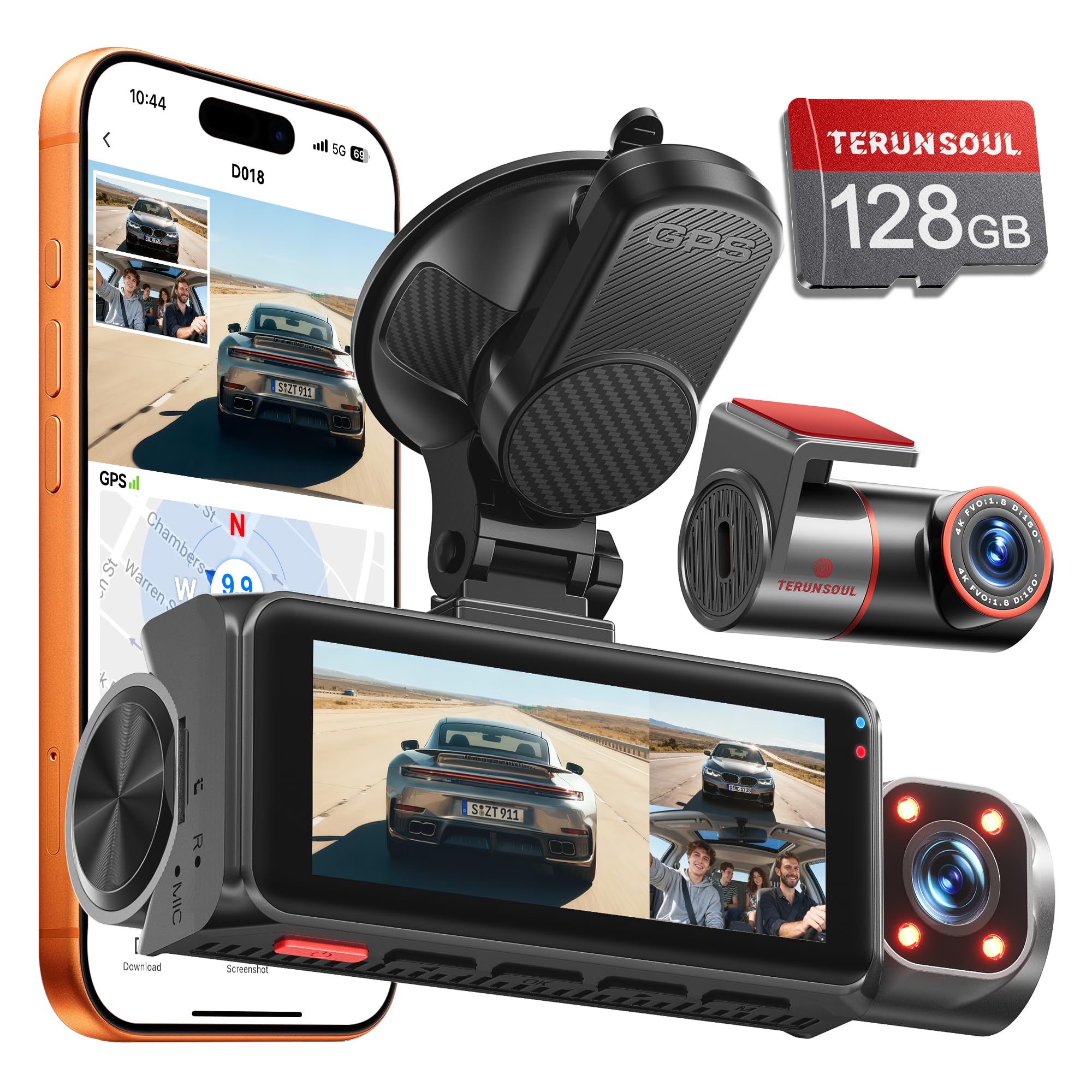
TERUNSOUl D018D

89 /100
Keeper Score Excellent

Key details

Warranty
3 years
Connectivity
Wi-Fi 6, 5.8GHz + 2.4GHz
Included Card
128GB (512GB max)
Front / Rear / Cabin
4K + 4K + 1080P
Check Price on Amazon

Three-channel cameras usually spend their money on the front lens and leave the rear with a 1080p sensor, so this one stood out: the front and the rear both record in 4K, with a 1080p cabin camera between them. The rear is what decided our top pick. The car behind you is where a disputed claim tends to start, and a 4K sensor has far more room than a 1080p one to resolve a plate at distance. Add the included 128GB card, Wi-Fi 6, GPS and a three-year warranty, and it's the most complete three-way package here.

The cabin camera is the lowest-resolution of the three, and that's a trade we're happy with: 1080p is plenty to identify who's in the car and what's in their hands, and the four IR lights do the work once the interior goes dark. The rest of the hardware is sensible rather than flashy — a 3.18-inch screen for setting it up without your phone, GPS built into the mount, and both 5.8GHz and 2.4GHz Wi-Fi for pulling a clip.

Installation is where it quietly wins. The box holds the 11.5 ft power cable, a 21 ft rear cable, clips, a trim tool, static films and the GPS mount, so there's nothing else to order before you start. The slot takes up to 512GB on top of the included card, which means a long day of three-channel recording without pruning anything.

Nothing here is exotic: no rotating rear lens, no buffered parking mode, no voice commands. What you get instead is coverage, accessories and warranty balanced better than any other pick in this group — which is what most drivers actually want from a camera they'll forget about until the day they need it.

Pros

  • 4K on both front and rear cameras
  • 128GB card included, 512GB supported
  • Three-year warranty, the longest here
  • Full install kit in the box

Cons

  • Front camera listed at 25 fps in three-channel mode
Our verdict

Our default pick: 4K on both the front and rear cameras, a 128GB card in the box, and nothing else to buy before it goes on the glass.
Check Latest Price
2

Best for Low-Light Detail

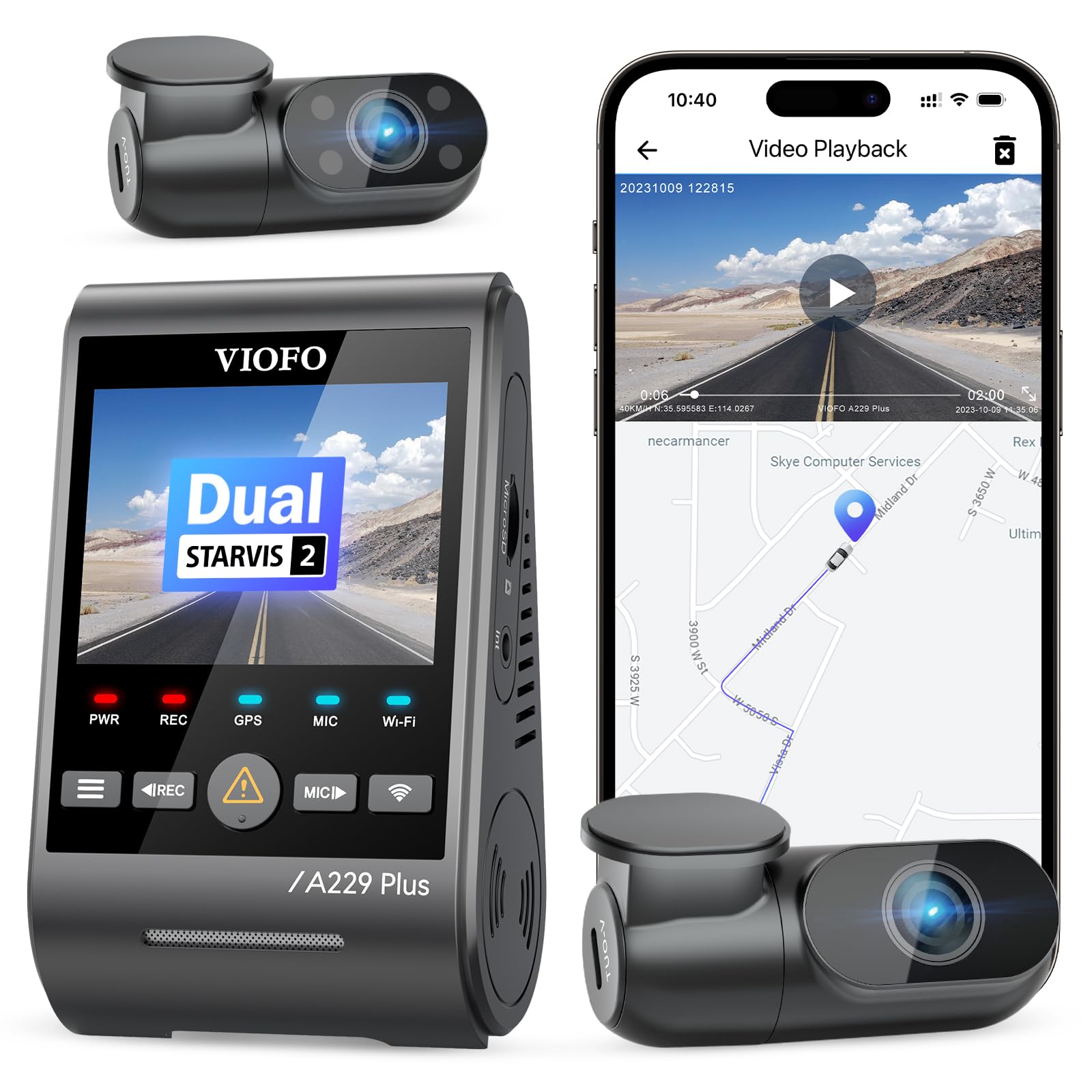
VIOFO A229 Plus 3CH

89 /100
Keeper Score Excellent

Key details

HDR
All three channels
Sensors
Dual Sony STARVIS 2
Card Support
Up to 512GB
Front / Rear / Cabin
1440P + 1440P + 1080P
Check Price on Amazon

VIOFO takes the opposite route to our top pick. Rather than chase resolution, it puts Sony's STARVIS 2 IMX675 sensor in the front and rear cameras, runs HDR on all three channels, and settles for 1440p at each end with a 1080p cabin camera. On a spec sheet that reads as the weaker camera. After dark it's the footage we trust most in this group.

That's the trade — fewer pixels, better pixels. HDR across every channel is the part we appreciate most, because an interior that's half sunlit and half shadow is where cheaper cameras fall apart, and the infrared cabin lens keeps faces readable when the car is dark. If your commute happens at night, or the car lives in a garage and you want plates at the edge of the headlights, this is the pick over the top one.

The kit is VIOFO's usual: a GPS module on a static sticker, a 20 ft rear cable, a 1 m interior cable, a trim tool, and 12 voice commands so you can lock a clip or turn the Wi-Fi off without reaching for the screen. The slot takes up to 512GB and the 5GHz radio moves files quickly enough that pulling a clip at the roadside is realistic.

Where it gives ground is daylight distance: 1440p resolves less than 4K when a plate is far away and closing. That's a compromise we accept for the night footage, and it's the reason this sits one place below the top pick rather than above it.

Pros

  • STARVIS 2 sensors front and rear
  • HDR on all three channels
  • 12 hands-free voice commands
  • Card support up to 512GB

Cons

  • No memory card in the box
  • 2.4-inch screen is small for playback
Our verdict

If most of your miles happen after dark, this is the one we'd point you to — buy it for the night footage, not the numbers on the box.

Check Latest Price
3

Best Premium

Vantrue N4 Pro S

87 /100
Keeper Score Excellent

Key details

Sensors
Triple STARVIS 2
Card Support
Up to 1TB
Parking Mode
Buffered motion and impact
Front / Rear / Cabin
4K + 2.5K + 1080P
Check Price on Amazon

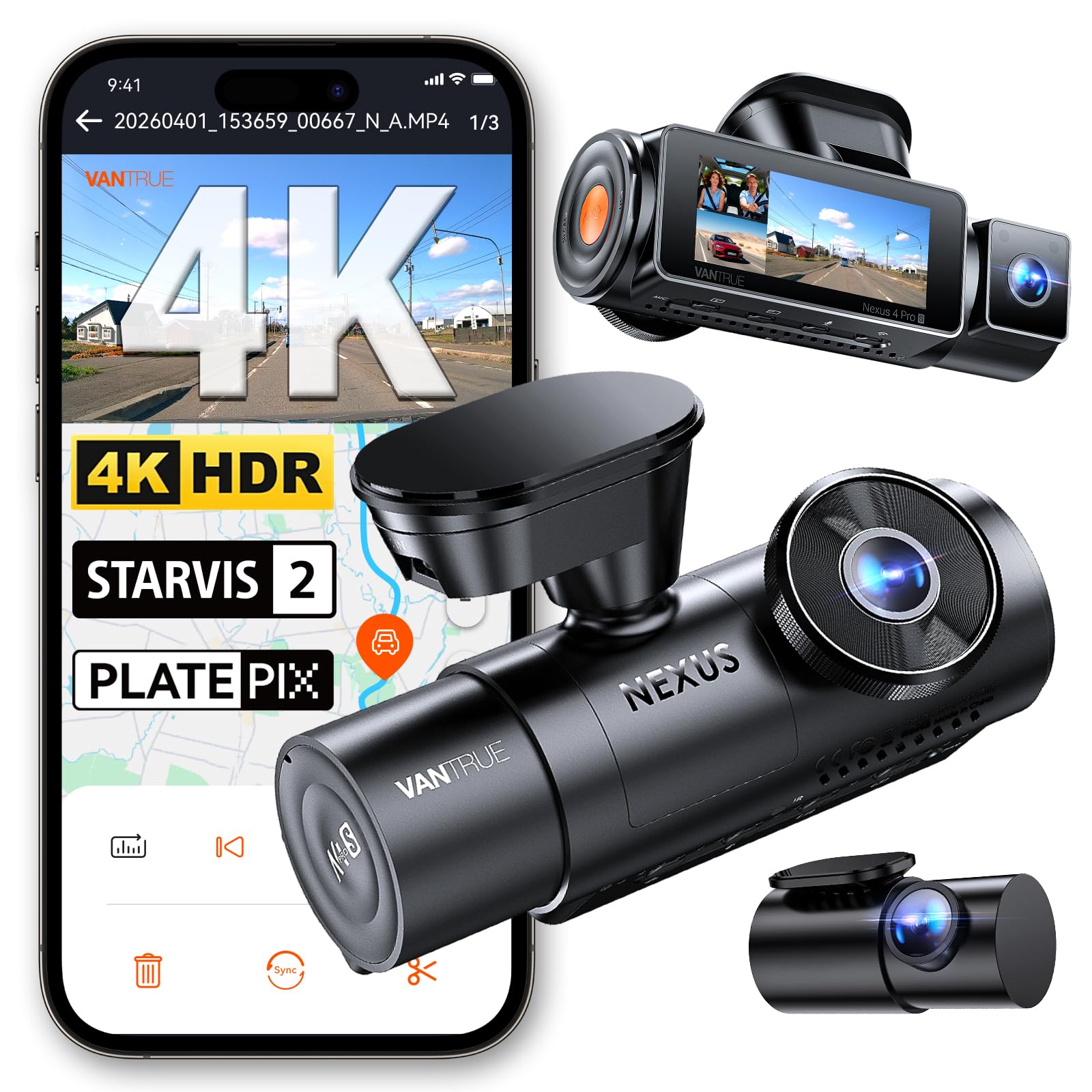
Vantrue spends this camera's budget on sensors: STARVIS 2 in all three, including the IMX678 up front, an infrared cabin lens, and a 2.5K rear camera on a mount that rotates a full 360 degrees so it can watch the trunk or the traffic behind. The front records 4K, the cabin 1080p, and the whole set runs at 30 fps.

The feature that justifies the premium for us is buffered parking mode. Ordinary parking recording starts when something hits the car; buffered recording keeps the seconds from before the trigger, which is the difference between footage of a fresh dent and footage of the car that made it. Four separate parking modes let you decide what wakes the camera, and the slot takes a 1TB card, so a heavy recording habit doesn't force you to delete the clip you need.

You're paying for protection and sensor quality rather than more pixels than everyone else — the rear is 2.5K, not 4K, and the interior is 1080p like the rest. What you get for the money is the most complete package here. If the car sits in a lot or on a street overnight, that's worth it; if it sleeps in a garage, the top pick covers the same three angles and leaves you better off.

Pros

  • Buffered parking mode keeps pre-impact footage
  • Triple STARVIS 2 sensors, IMX678 up front
  • Rear camera rotates a full 360 degrees
  • Card support up to 1TB

Cons

  • Highest price in this set
  • No memory card in the box
Our verdict

Spend here if the car sleeps on a street: buffered parking mode and a rotating 2.5K rear camera are what the extra money actually buys.

Check Latest Price
4

Best for App and Voice Control

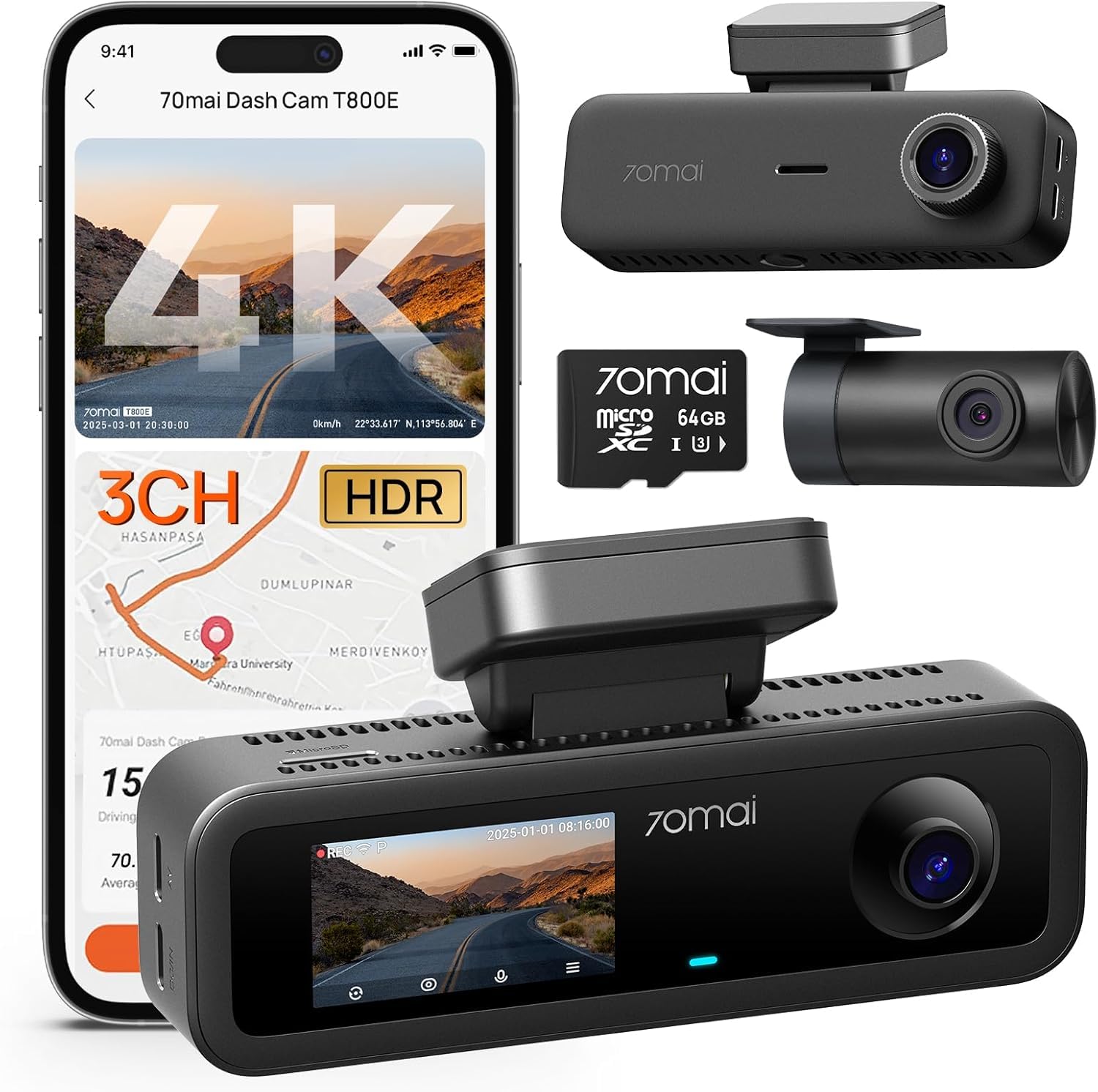
70mai T800E

88 /100
Keeper Score Excellent

Key details

Connectivity
Wi-Fi 6
Included Card
64GB (512GB max)
Operating Range
14°F–140°F, supercapacitor
Front / Rear / Cabin
4K + 1080P + 1080P
Check Price on Amazon

70mai is the name most people have already heard of, and the T800E is the polished version of the idea: 4K in front, 1080p in the cabin and at the rear, a 64GB card already in the slot, Wi-Fi 6 for getting clips off quickly, and voice control for locking a clip without taking a hand off the wheel. The cabin lens has switchable infrared, which helps when the LEDs wash out a daylight shot.

We got more use out of the voice commands than we expected — saying the word beats stabbing at a small screen at a red light — but the phone side is where this one tests your patience. The camera broadcasts its own Wi-Fi with no internet behind it, and it fights CarPlay for the radio, so reviewing footage usually means sitting in the car with CarPlay switched off. If you pull the card and read it on a laptop, the complaint disappears.

The hardware is built for heat: a supercapacitor instead of a battery, rated from 14°F to 140°F, which matters if the car bakes in the sun all afternoon. Card support runs to 512GB, so the included 64GB is a starting point rather than a ceiling.

Set against the top pick, this one gives up the 4K rear camera and gains voice control, Wi-Fi 6 transfers and a card in the box at about the same money. In a hot state, the supercapacitor is the quiet argument for it.

Pros

  • Voice control and Wi-Fi 6 transfers
  • 64GB card included, 512GB supported
  • Supercapacitor rated 14°F to 140°F
  • Switchable infrared cabin lighting

Cons

  • Rear and cabin cameras stay at 1080p
Our verdict

The most polished app-and-voice experience here — buy it if you review clips on your phone and don't mind turning CarPlay off to do it.

Check Latest Price
5

Best Budget

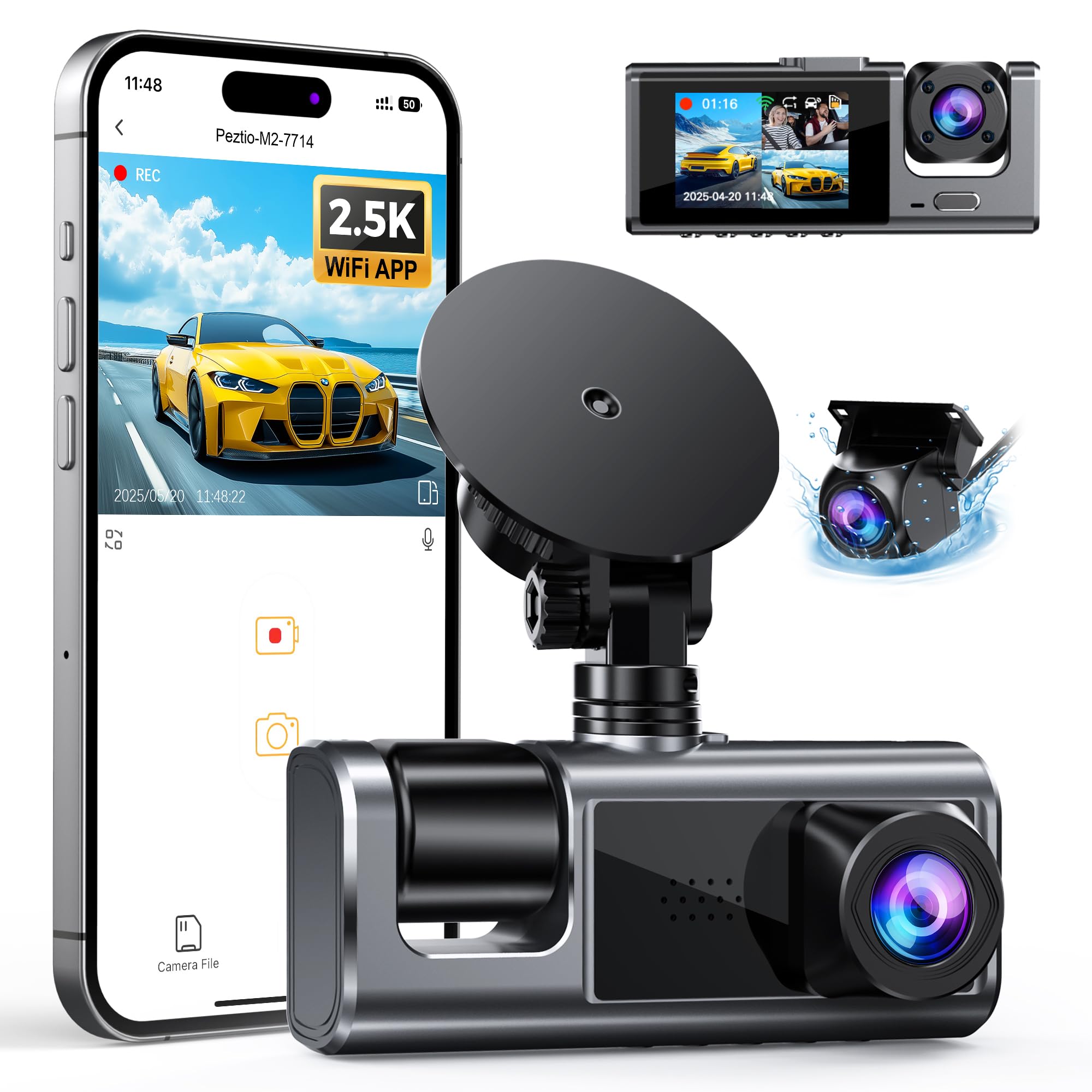
galphi M2

87 /100
Keeper Score Excellent

Key details

Screen
3-inch IPS
Card Support
Up to 512GB (none included)
Parking Mode
Type-C hardwire kit, sold separately
Front / Rear / Cabin
2.5K + 1080P + 1080P
Check Price on Amazon

Cheapest here doesn't usually mean best value, but the M2 makes the case. It records 2.5K up front and 1080p in the cabin and at the rear, the app connects without a fight, and the body is small enough to disappear behind the mirror. For a second car, a first-time driver or anyone who wants three angles without spending much, it's the pick we reach for first.

The compromise sits in the box rather than in the footage. Parking monitoring needs a Type-C hardwire kit that's sold separately, so the 24-hour protection advertised on the packaging is an extra purchase rather than something you unwrap. Plan for that if the car parks on a street.

Fitting it is about as simple as three cameras get: stick the front unit, run the rear cable, pair the phone. The 2.5K front is the honest limit — a plate two car lengths ahead in poor light reads softer than it does on the top pick — but the shape of the coverage matches cameras that cost twice as much, and the slot takes a 512GB card if you want a long memory.

Pros

  • Three channels for the least money here
  • 2.5K front camera with IR cabin lights
  • Compact body that clears the windshield view
  • Card slot takes up to 512GB

Cons

  • No memory card included
Our verdict

For a second car, a new driver or a first dash cam, this is the one we point to before anything more expensive — just add a card and know what parking mode costs.

Check Latest Price
6

Cabin Night Video

REDTIGER F17

89 /100
Keeper Score Excellent

Key details

Front Sensor
STARVIS 2 IMX675
Included Card
64GB
Cabin Lighting
4 IR lights
Front / Rear / Cabin
4K + 1080P + 1080P
Check Price on Amazon

Mounting is where this one asked for the most patience. The adhesive pad and its backing are the weak point on an otherwise well-equipped camera, and glass that isn't spotless is enough to let the whole unit droop after a hot week. Use the static film, clean the glass properly, and give the pad a day before you hang the camera on it — do that and it holds.

Underneath, the hardware is genuinely good: a STARVIS 2 IMX675 up front, four infrared LEDs in the cabin, 5.8GHz Wi-Fi that REDTIGER rates at four times the speed of the older 2.4GHz radios, GPS, a G-sensor, a 64GB card in the box and an 18-month warranty. Three-way coverage is complete, and the cabin lights do real work once it's dark.

It's a well-specified camera with two loose ends, and both of them are the parts you touch rather than the parts that record. Buy it if you like the sound of the app and don't mind re-pairing; skip it if you want to install once and never think about the mount again, which is the case the top pick makes better.

Pros

  • STARVIS 2 IMX675 front sensor
  • Four IR lights for the cabin
  • 64GB card and 18-month warranty included
  • 5.8GHz Wi-Fi transfers

Cons

  • App connection often needs re-pairing
  • Clips sometimes stop short of the set length
Our verdict

A strong camera with a mount that needs babysitting — worth it if you're happy to re-stick a pad once a season and re-pair the app when you need a clip.

Check Latest Price
7

First Dash Cam

TOOXYZ J13

87 /100
Keeper Score Excellent

Key details

Screen
3.16-inch IPS
Connectivity
5GHz Wi-Fi
Included Card
64GB (256GB max)
Front / Rear / Cabin
4K + 1080P + 1080P
Check Price on Amazon

Open the box and the J13 looks more like a kit than a camera: a 64GB card already in the slot, a suction mount, the 11.5 ft charger, four cable clips and a crowbar for tucking wire under trim. At this end of the market that completeness is the feature — the cheapest dash cam is the one you don't have to order parts for.

The recording split is 4K up front and 1080p in the cabin and at the rear, with a 170-degree front lens, 5GHz Wi-Fi and WDR to hold exposure together under trees and in tunnels. The 3.16-inch screen is bigger than most here, which we appreciated when changing settings on the unit itself rather than on a phone.

The mount is the old-fashioned kind: a suction cup and a lever, no static film, no adhesive pad. That makes it the easiest camera here to move between cars, and one that will want re-pressing after a cold snap or a heat wave.

For a first dash cam, a work van or a second car, it's easy to recommend. It records all three angles, it comes with what you need to fit it, and nothing about it is precious.

Pros

  • 64GB card included in the box
  • 4K front camera with 170-degree lens
  • Suction mount moves between cars easily
  • 3.16-inch IPS screen

Cons

  • Card ceiling of 256GB
  • 12-month warranty
Our verdict

A sensible first dash cam or work-van camera: three channels, a card already in the slot, and everything you need to fit it in one box.

Check Latest Price
8

Resolution per Dollar

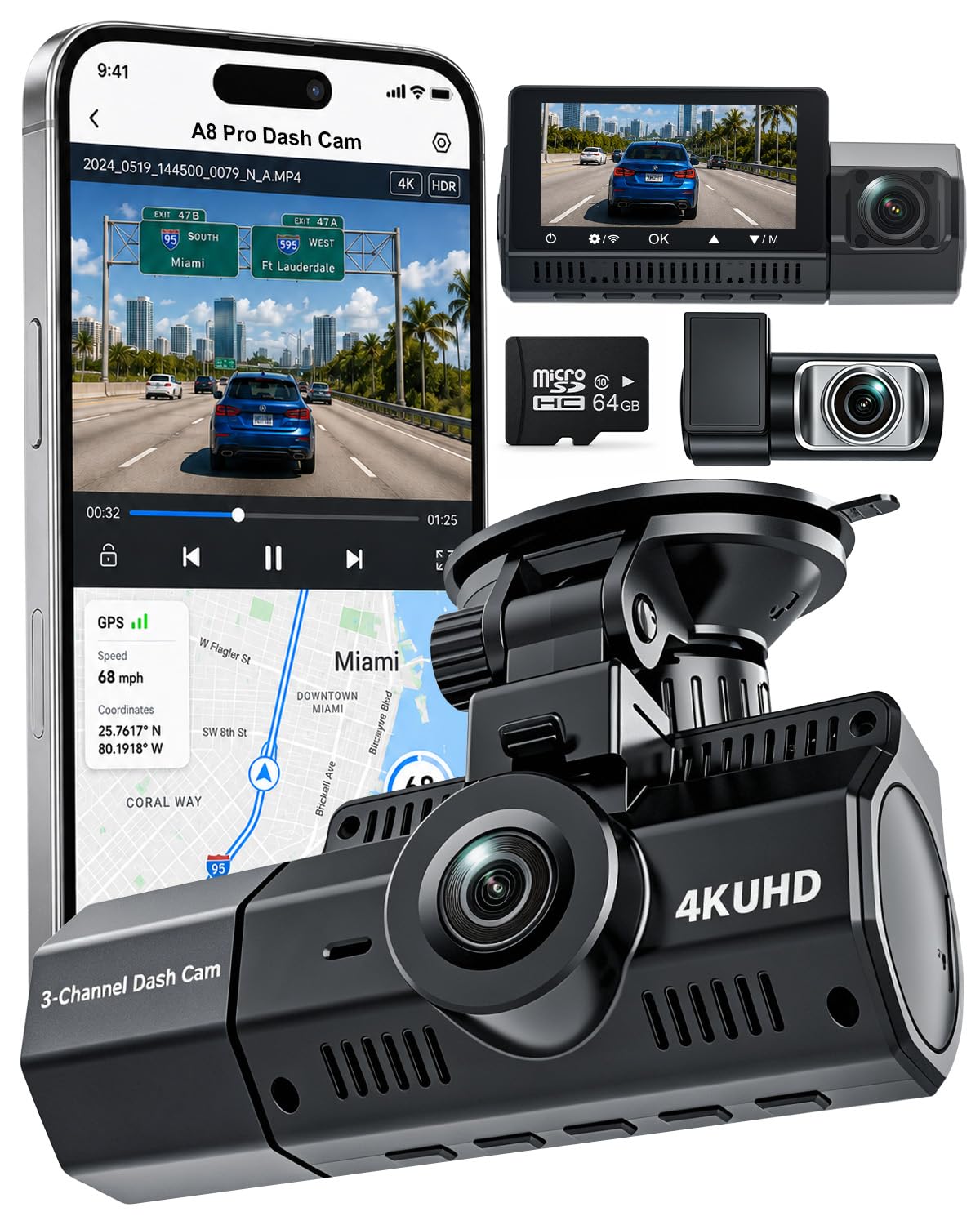
Eivikga A8 Pro

84 /100
Keeper Score Excellent

Key details

Warranty
12 months
Front Sensor
STARVIS 2 IMX675, f/1.6
Included Card
64GB (256GB max)
Front / Rear / Cabin
4K + 2.5K + 2.5K
Check Price on Amazon

On paper this is the most interesting camera in the group. The A8 Pro promises a 4K front camera, a 2.5K cabin camera and a 2.5K rear camera, all on the STARVIS 2 IMX675 sensor with an f/1.6 lens, plus GPS, 5GHz Wi-Fi, a 64GB card and 24-hour parking with time-lapse.

The cabin camera is the compelling part. Almost every other three-channel kit here treats the interior as an afterthought with a 1080p sensor; 2.5K in the cabin is enough to read a phone screen or a face in the back seat in poor light, which is exactly what a rideshare driver ends up needing. A 2.5K rear camera is unusual too, where most of this group runs 1080p at the back.

The caveats are in the fine print rather than the hardware. This is an ambitious camera from a name with less behind it than VIOFO or Vantrue, and a three-channel dash cam is a bad place to be an early adopter — the failure you learn about is the one that happens on the day you need the footage. The 2.45-inch screen also makes the on-camera menu a two-handed job.

As a second camera, a rideshare experiment or the cheap third unit in a multi-car family, the resolution-per-dollar math is hard to argue with. As the only camera in your car, we want a longer warranty behind it before we'd rely on it alone.

Pros

  • 2.5K cabin and rear cameras
  • STARVIS 2 IMX675 with f/1.6 lens
  • 64GB card included

Cons

  • 12-month warranty
  • Card ceiling of 256GB
Our verdict

The most resolution per dollar in this group and the one we're least able to vouch for over years of use — take it as a second or rideshare camera.

Check Latest Price

What Six Months of Dash Cam Footage Taught Us

We started with a spreadsheet: every three-channel kit we could find, with front, cabin, and rear specs side by side, along with card capacity, sensor type, mount style, and what actually came in the box. Anything that topped out at a small card or couldn't be hardwired got cut. That left 12 systems, which we fitted to commuter cars, an SUV, a hatchback, and a rideshare sedan that ran short passenger-heavy loops all day.

Each one was installed by one person, solo, with a stopwatch running — windshield mount, cable tucked behind the trim, rear lens fixed to the back glass — and we measured the slack left over, since a cable two feet short turns a twenty-minute job into a lost afternoon. Then we left the mounts alone through a week of heat and cold before checking whether the adhesive had crept.

The verdicts came from driving: a dusk highway commute, unlit back roads after dark, a dim garage where we compared the cabin lens with its infrared lights on and off, and repeated runs at reading a plate roughly 20 feet behind the car. We also opened each app mid-drive, timed how long it took to find and save a one-minute clip, and noted where the connection dropped. Cards got filled to the brim so we could watch how cleanly the oldest footage was overwritten.

Six months in, the differences that mattered weren't the headline numbers. They were whether footage stayed legible at night, whether the app opened without a fight, and whether the box included a card and the hardwire kit parking mode depends on.

How to Choose a 3-Channel Dash Cam

Decide which camera gets the good sensor

A camera billed as 4K three-channel is usually one 4K lens and two 1080p ones, and that split matters more than the headline. If your worry is the car behind you, the rear camera deserves the better sensor, which is why our top pick puts 4K at both ends. If you drive for a living, the cabin camera is the one that settles arguments, and a clean 1080p interior with infrared beats a sharper rear view there. Read the three resolutions separately before you compare prices.

Night footage is a sensor question, not a resolution one

After dark, pixels stop helping. A 1440p camera with a STARVIS 2 sensor and HDR on every channel holds detail better than a 4K camera with a small sensor and no HDR, because the sensor's job is to balance headlights against shadow. This is also where the cabin camera earns its place: infrared LEDs make an interior readable at night, and HDR keeps a sunlit passenger from turning into a silhouette. If most of your driving happens after work, we put money here before resolution.

Cards, loop recording, and heat

Every camera here loops, so card size decides how far back you can look, not whether you can record at all. What ships in the box varies: several picks include 64GB or 128GB, the galphi M2 includes none, and ceilings run from 256GB to 1TB. Buy the largest card the camera supports and format it in the camera rather than on a laptop. Check what holds the charge, too — a supercapacitor, like the one in the 70mai T800E rated to 140°F, copes with a hot windshield better than the small lithium battery inside some budget units.

Mounting and cable runs

You need around 20 feet of cable to reach from the windshield to a hatch or trunk lid, and the kits here run 19 to 21 feet, so check before you buy: a short run means wire strung across the glass. An adhesive pad on a static film holds better and comes off cleaner than bare tape, while a suction cup moves between cars but wants re-pressing. Route the rear cable along the headliner and down a pillar rather than across the windshield, and give any adhesive a day before you hang the camera.

Parking mode is an accessory, not a feature

A camera advertised with 24-hour parking monitoring usually needs a hardwire kit, and the kit is often not in the box — the galphi M2 says so plainly and several others leave it out. Hardwiring lets the camera watch the car with the ignition off, and a buffered mode, like the one on the Vantrue N4 Pro S, keeps the seconds before an impact instead of starting at it. Decide whether the car really parks on a street before you pay for this; in a garage, put the money into the card instead.

Frequently Asked Questions

Final Verdict

Our pick is the TERUNSOUl D018D. It's unglamorous, and that's the point: 4K at both ends, a 128GB card and a three-year warranty in one box, with nothing to buy before you can install it.

If most of your driving is dark, take the VIOFO A229 Plus instead — the sensor and HDR choices make it the better night camera, at the cost of 4K distance. If you're spending as little as possible, the galphi M2 covers all three angles for less, provided you add a card and accept 2.5K up front.