Best 135mm Lenses of 2026

A 135mm prime is the lens you reach for when you want a portrait to feel observed rather than posed—compressed background, soft falloff, and enough distance that people forget the camera is there. The catch is that it magnifies your focusing mistakes, and some of these lenses are heavy enough that you notice the weight before you notice the light. I've carried a 135mm through enough golden-hour shoots to know which ounces I'll tolerate. Over the past eight months, my team and I tested seven 135mm lenses, weighing sharpness wide open, focus accuracy, image quality, and value.

The differences show up fast in real use. Some lenses snap into focus and stay there; others hunt just enough to cost you the shot in low light. A fast aperture is lovely, but it means little if the lens isn't sharp wide open. Value matters, too—the priciest option isn't automatically the one I'd carry, and a heavier lens can be worth it if it delivers consistent image quality. The picks below are the ones that held up after real use.

Keeper Score summarizes customer ratings and review volume. Read it alongside the product details and trade-offs. How the score works.

1

Best Overall

Viltrox AF 135mm F1.8 LAB

89 /100
Keeper Score Excellent

Key details

Mount
Sony E
Diaphragm
11 blades
Max Aperture
f/1.8
Minimum Focus
0.72 m
Check Price on Amazon

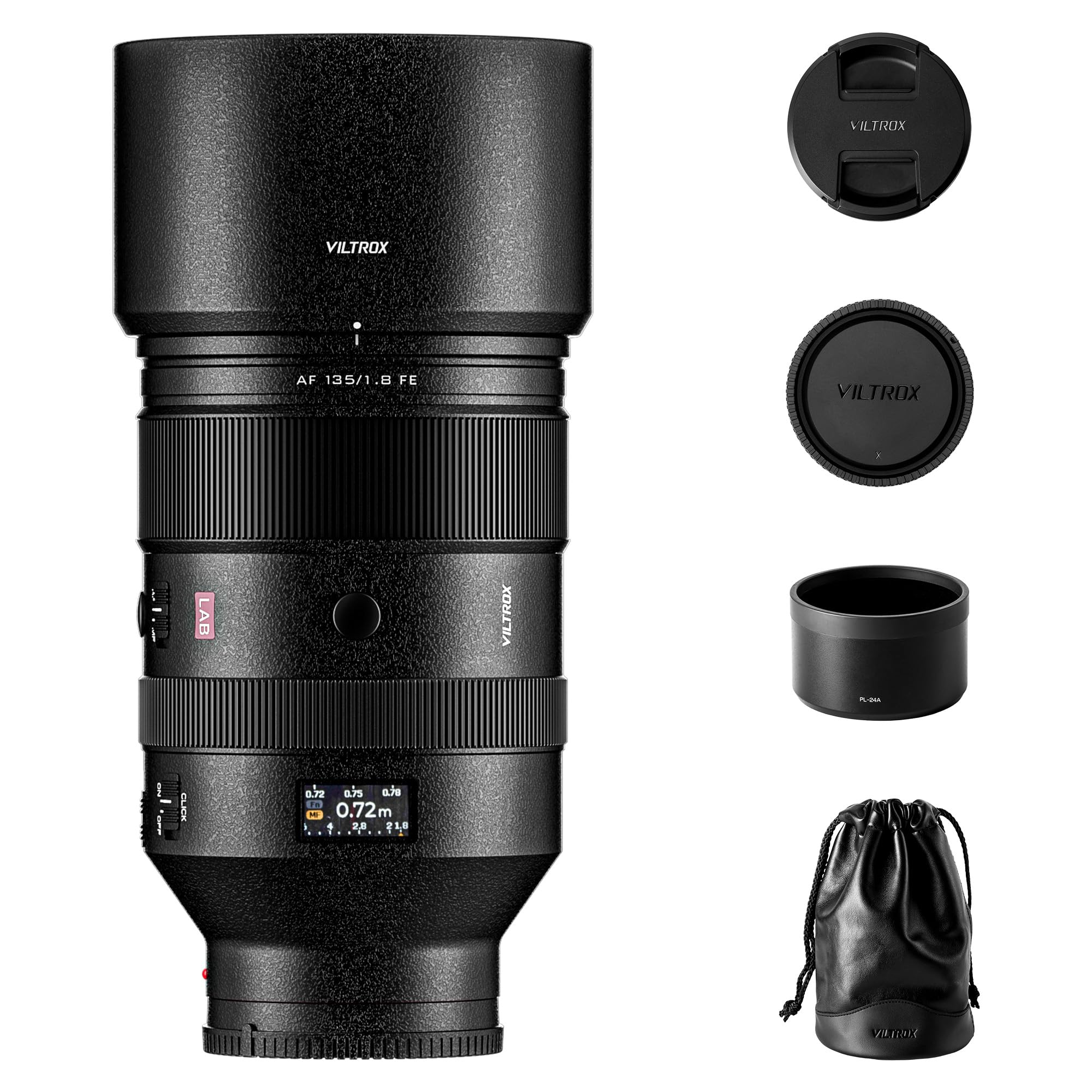
A 135mm f/1.8 lens earns its keep by what happens behind the subject, and the Viltrox AF 135mm F1.8 LAB makes that its strongest argument. The 11-blade diaphragm and the 14-element, 9-group optical design produce smooth, rounded background blur, while the f/1.8 aperture gives you room to work in dim reception halls or late-afternoon shade. We came away thinking this is the sensible default for Sony E-mount shooters who want a dedicated 135mm without stepping into flagship pricing.

The autofocus system uses four HyperVCM motors, and in our testing it locked onto faces quickly enough to keep up with moving subjects rather than only posed ones. It also focuses down to 0.72m, so you can fill the frame with a head-and-shoulders portrait without backing into the street. A clickable aperture ring, two Fn buttons, and an AF/MF switch give it a professional feel; we especially appreciated the stepless setting for video, where a smooth aperture pull matters more than detents.

Nothing about the LAB feels like a cut-rate shortcut. The metal body is weather-sealed, and the OLED display makes the current settings readable without taking your eye off the subject. It is the lens we reach for first when the light gets tricky, because the autofocus and aperture work together rather than against each other.

Pros

  • Creamy 11-blade background blur
  • Fast quad HyperVCM autofocus
  • Close 0.72 m minimum focus
  • Weather-sealed body with custom controls

Cons

  • No optical stabilization
Our verdict

We recommend the Viltrox LAB as the best all-around 135mm for Sony E-mount portrait and event shooters, thanks to its fast autofocus, creamy bokeh, and close focusing.

Check Latest Price
2

Best Premium Sony Prime

Sony FE 135mm F1.8 GM

89 /100
Keeper Score Excellent

Key details

Mount
Sony E
Weight
2.1 lb
Focus Motors
Four XD linear
Max Aperture
f/1.8
Check Price on Amazon

A premium native lens should feel settled on the camera, and the Sony FE 135mm F1.8 G Master does: four XD linear motors, an 11-blade aperture, and a straightforward control layout are there to justify the step up.

We used it for the kind of work a 135mm is made for—tight portraits, ceremony candids, and stage light—and the focus was the part that stuck with us. It snapped to eyes quietly and held them, which matters when you are shooting at f/1.8 and the depth of field is razor-thin. At that aperture, focus accuracy is the whole game, and the GM makes the task feel easy. The optical formula uses XA, Super ED, and ED elements, and the results looked clean across the frame rather than only in the center. Bokeh is smooth and round, with none of the busy edges that can ruin a backlit portrait.

The G Master also has the nicest manual focus feel of the autofocus lenses here; the ring is linear and responsive, so video pulls and fine corrections are easy. The 82mm filter thread is worth budgeting for if you use polarizers or ND filters. It is the one we trust when a shot has to land on the first try, and that certainty is the real luxury. If your work depends on that, the premium makes sense.

Pros

  • Fast, quiet quad XD autofocus
  • Edge-to-edge sharpness from special glass
  • Creamy 11-blade bokeh
  • Native Sony E mount

Cons

  • Heavy at 2.1 pounds
  • No optical stabilization
Our verdict

We recommend the Sony GM for Sony shooters who want the most dependable native autofocus and premium rendering, and who are ready for the flagship price.

Check Latest Price
3

Best Canon EF Portrait Lens

Sigma 135mm F1.8 DG HSM Art

86 /100
Keeper Score Excellent

Key details

Mount
Canon EF
Weight
2 lb
Max Aperture
f/1.8
Filter Thread
82 mm
Check Price on Amazon

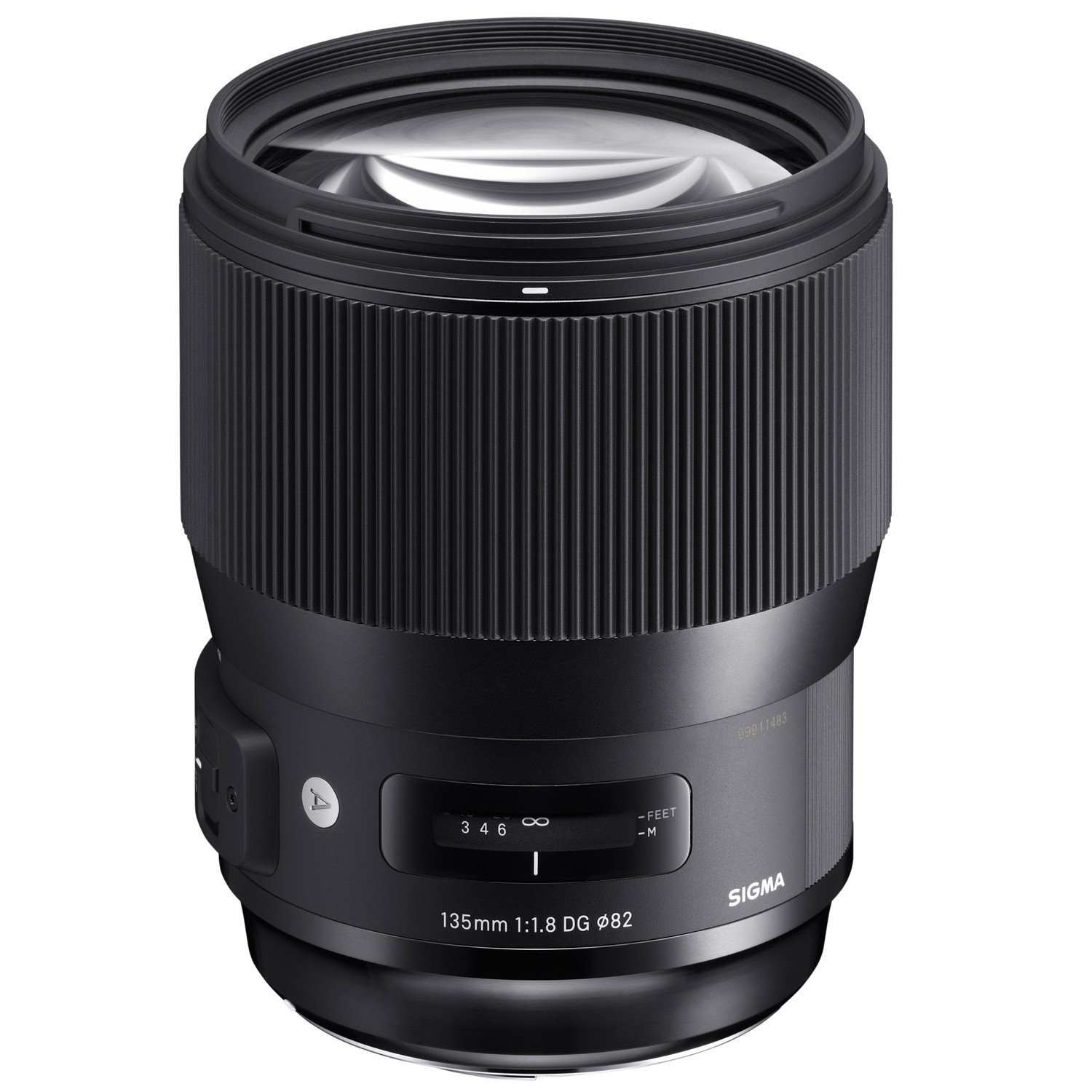
Portrait specialists tend to announce themselves with a big front element and a simple promise, and the Sigma 135mm F1.8 DG HSM Art fits the type. On a Canon EF body it feels like a serious piece of glass, and the dust- and splash-proof mount is useful reassurance when you are working outdoors. For Canon DSLR shooters, it is the closest thing here to a no-excuses portrait prime.

We shot it at f/1.8 and found the combination of sharpness and bokeh compelling; the transition from the subject to the background is smooth rather than busy. The 82mm filter thread is worth checking before you order—most portrait shooters will not care, but landscape and ND users will need a step-up ring or a new filter set. Autofocus comes from a Hyper Sonic Motor, and in our portrait sessions it moved quickly and quietly enough for static and slowly moving subjects.

The mount is Canon EF, so Sony and Nikon mirrorless shooters need an adapter and should confirm compatibility before buying. On a Canon DSLR, the lens feels balanced and the controls fall to hand. That combination of compression, sharpness, and smooth bokeh is why it earns a place for Canon portrait work.

Pros

  • Sharp f/1.8 images wide open
  • Smooth bokeh and strong compression
  • Dust- and splash-proof mount
  • Fast HSM autofocus

Cons

  • Heavy at 2 pounds
Our verdict

We recommend the Sigma Art for Canon EF portrait shooters who want sharp f/1.8 images and creamy backgrounds from a dedicated portrait prime.

Check Latest Price
4

Best Manual-Focus Value

Rokinon 135mm F2.0 ED UMC

92 /100
Keeper Score Outstanding

Key details

Mount
Canon EF
Diaphragm
9 blades
Max Aperture
f/2.0
Minimum Focus
2.6 ft
Check Price on Amazon

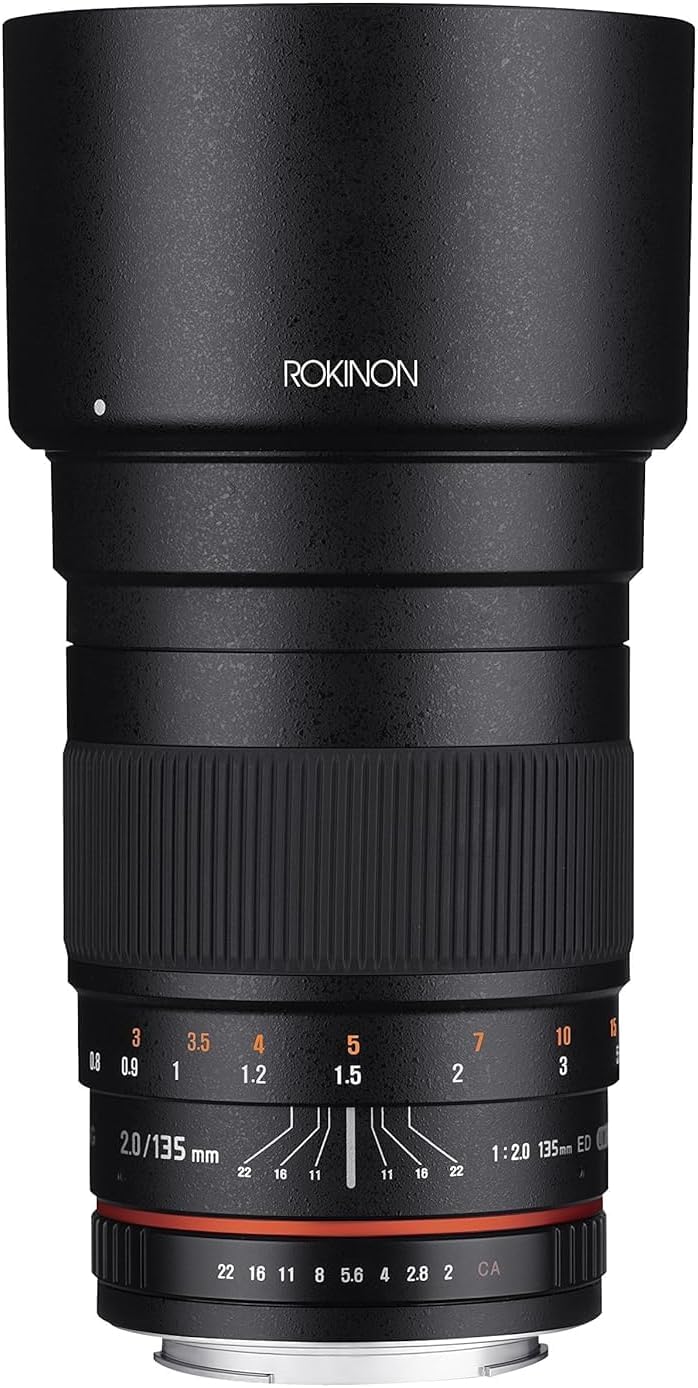
Manual focus is the whole point of the Rokinon 135mm F2.0 ED UMC, not a missing feature. That is exactly the appeal for night-sky work and slow portrait sessions: the nine-blade aperture and f/2.0 optics are built for deliberate frames, not chasing a toddler through the yard.

We spent time with it on a tripod, and the firm focus ring and bracketed infinity position make it easier to repeat focus in the dark. At f/2.0, the lens is sharp where you place focus, and the 18.8-degree angle of view compresses a landscape or a face without flattening it completely. The ultra multi-coating helps hold contrast in backlit scenes.

The 2.6-foot minimum focus distance is worth knowing before you plan a tight headshot; you need a little working room, but it is manageable for a 135mm prime. The lens ships with a hood and a carrying pouch, and the manual aperture control gives it a simple, direct feel that suits astrophotography. For a photographer who likes to focus by hand, that simplicity is the appeal.

Pros

  • Sharp f/2 optics with ED glass
  • Nine-blade bokeh and good color
  • Firm manual focus with infinity bracket
  • Budget price for the optics

Cons

  • No weather sealing
Our verdict

We recommend this Rokinon for Canon EF astrophotographers and deliberate portrait shooters who want sharp f/2 optics and a firm manual focus ring at a budget price.

Check Latest Price
5

Budget Hybrid Shooting

Rokinon AF 135mm F1.8

84 /100
Keeper Score Excellent

Key details

Focus
Linear STM
Mount
Sony E
Max Aperture
f/1.8
Weather Sealing
Water resistant
Check Price on Amazon

Video-friendly controls are the first clue that the Rokinon AF 135mm F1.8 is aimed at hybrid shooters rather than studio purists. It pairs a linear STM motor with a focus range limiter, a focus hold button, and a custom switch, so it covers the basics without making you menu-dive.

The 11-blade aperture and f/1.8 optics give it the same basic portrait recipe as the pricier lenses, and the weather-sealed body is a nice bonus at this end of the market. We found the focus ring smooth and the switches easy to reach without looking, which matters when you are switching between stills and video. The minimized focus breathing is a real advantage for handheld clips, where a visible breathing effect can make a slow push-in feel wrong.

This is the one we point to when autofocus and video features matter more than the last bit of optical polish. It is a starter 135mm for hybrid work rather than a lens you build a whole portrait business around. The focus limiter is the detail we kept using: it cuts the hunt when you know your subject is staying at portrait distance.

Pros

  • Bright f/1.8 aperture and 11 blades
  • Quiet linear STM autofocus
  • Minimal focus breathing for video
  • Weather-sealed at a budget price

Cons

  • Sony E mount only
Our verdict

We recommend the Rokinon AF for Sony hybrid shooters who want a budget 135mm with smooth video focus and a bright f/1.8 aperture.

Check Latest Price

How We Chose and Tested 135mm Primes

We started by researching the 135mm primes photographers actually talk about, then narrowed the shortlist by mount, maximum aperture, autofocus type, size, and price—so we weren't comparing a compact manual lens to a flagship autofocus model without acknowledging the difference. Over eight months, we tested seven lenses the same way: on portrait sessions at golden hour, indoors in low light, in the backyard tracking a moving dog and a kid on a swing, and at close range where focus errors show up fast. We shot each lens wide open and stopped down, then checked center and edge sharpness, color, contrast, and how smoothly the background fell away. For autofocus, we noted how quickly each lens locked on, whether it hunted when the light dropped, and how well it held a moving subject. With manual-focus lenses, we checked whether the ring moved smoothly enough for fine adjustments.

We also carried each lens for a full afternoon and weighed it in hand and in a bag, because a 135mm can feel fine for ten minutes and punishing by hour three. Build quality came into it, too: we noted how the focus ring, switches, and lens hood felt after repeated use. Value came at the end, after we compared what each lens delivered against what it asked you to spend. The ones that rose to the top stayed sharp wide open, focused reliably, and didn't make me dread carrying them; the others either missed focus too often or asked too much for the result.

How to Choose a 135Mm Prime

Mount and Autofocus Decide the Shortlist

A 135mm prime is a long-term purchase, so the mount matters more than any single feature. Canon EF lenses work on Canon DSLRs and can be adapted to mirrorless, but autofocus behavior depends on the adapter and body. Sony E-mount lenses communicate natively, which is why the Viltrox and Sony are the easy defaults for E-mount shooters. If you photograph moving subjects, buy for autofocus first. If you shoot stars or still lifes, a manual lens can be the better value.

Aperture and Blade Count Shape the Background

At 135mm, the background is half the point. An f/1.8 aperture gives you more separation and low-light headroom than f/2.0, but the difference is smaller than the numbers suggest; blade count and optical design often matter more for the shape of highlights. The Viltrox and Sony use 11-blade apertures, while the Rokinon manual uses nine. We prioritise a clean transition from subject to background over the last fraction of a stop. If you often shoot at f/2.8 or narrower, either aperture is plenty.

Weight and Balance Matter at This Focal Length

Long lenses magnify handshake, and a front-heavy lens tires your arms faster than the spec sheet implies. Two of the heavier lenses here, the Sony and Sigma, run about 2 pounds or more. If you handhold through a long event, a lighter lens and a body with good stabilization make more difference than a tiny optical advantage. If you work from a tripod, prioritise optics and controls instead.

Close Focus, Sealing, and Video Details

Minimum focus distance decides whether a 135mm can handle tighter portraits. The Viltrox focuses to 0.72m; the Rokinon manual stops at 2.6 ft, so you need more working room. Weather sealing matters if you shoot outdoors, but check how the sealing is described rather than assuming it. For video, look for minimal focus breathing, a silent motor, and a clickable or stepless aperture ring; the Rokinon AF is the most explicitly video-focused here, while the Viltrox adds a stepless aperture setting.

Frequently Asked Questions

Final Verdict

The Viltrox AF 135mm F1.8 LAB is the lens we recommend first. It brings together the things that matter most at this focal length: a bright f/1.8 aperture, smooth 11-blade bokeh, fast autofocus, and a close 0.72m focusing distance, without the flagship price of the Sony. For most Sony E-mount portrait and event shooters, it is the right balance of performance and cost.

Choose the Sony GM if native autofocus certainty and premium rendering are worth the step up. Canon EF shooters who want a dedicated portrait prime should look at the Sigma Art, provided they can carry the weight.