Best Zoom Binoculars of 2026

Zoom binoculars look like a free lunch — one pair that picks a warbler out of a treetop, then pulls back to take in the whole ridge. The catch is that every step up the magnification dial costs brightness and edge sharpness. I've squinted through enough murky glass to know the number on the box tells you almost nothing about what you'll actually see.

So we spent six months with nine pairs, from compact zooms that ride in a jacket pocket to 70mm giants that want a tripod underneath. They came on dawn bird walks, went to a concert, and got hauled out after dark for the moon. What separated them was clarity at full power, a focus wheel that stayed where you put it, and how much adjusting the eyecups and diopter actually allowed.

Worth knowing before you buy: magnification and front-lens size are a trade-off, and a big zoom range on a small objective goes dark fast at the top end. The picks below cover the whole spread, and none of them make you pay for magnification you won't use.

Keeper Score summarizes customer ratings and review volume. Read it alongside the product details and trade-offs. How the score works.

1

Best Overall

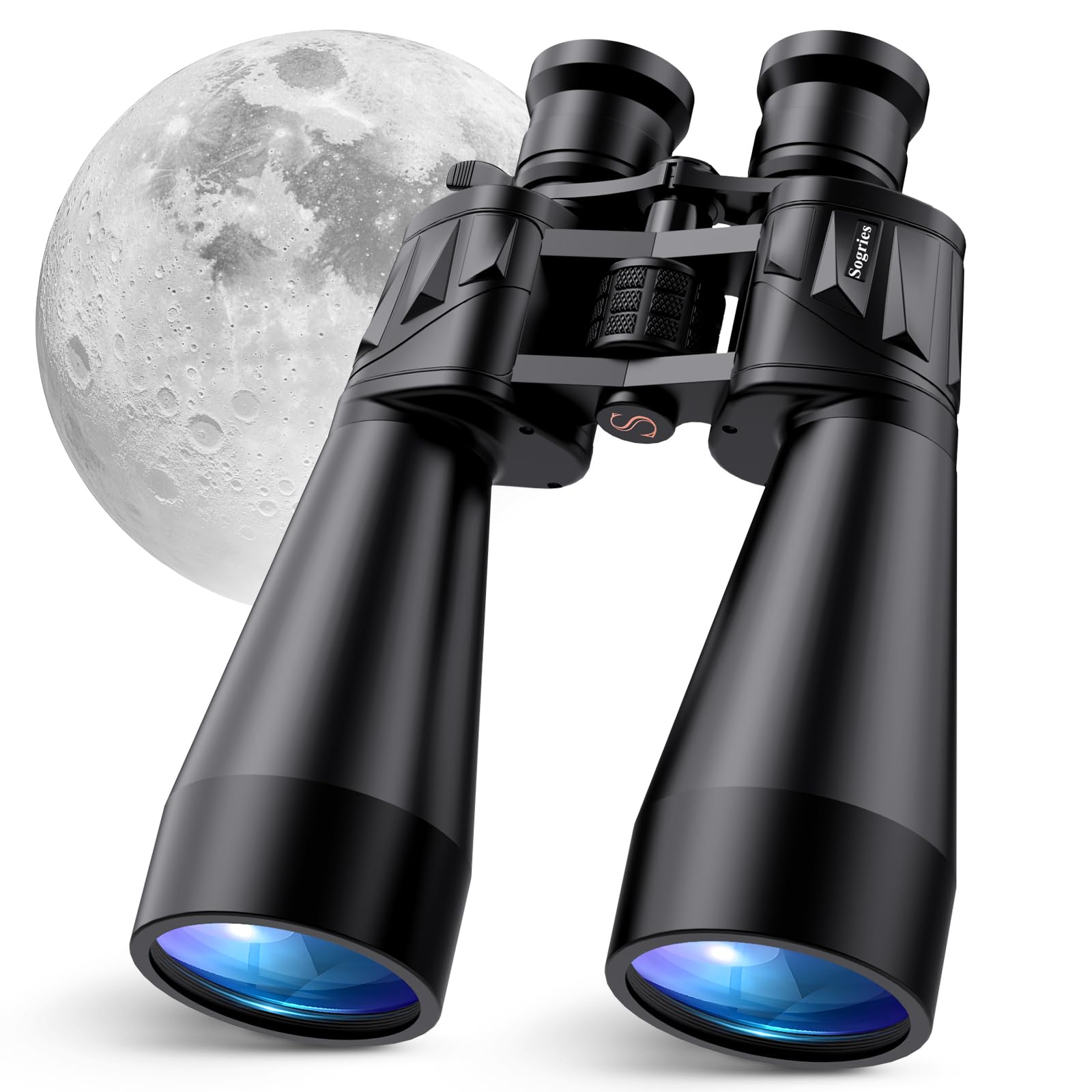
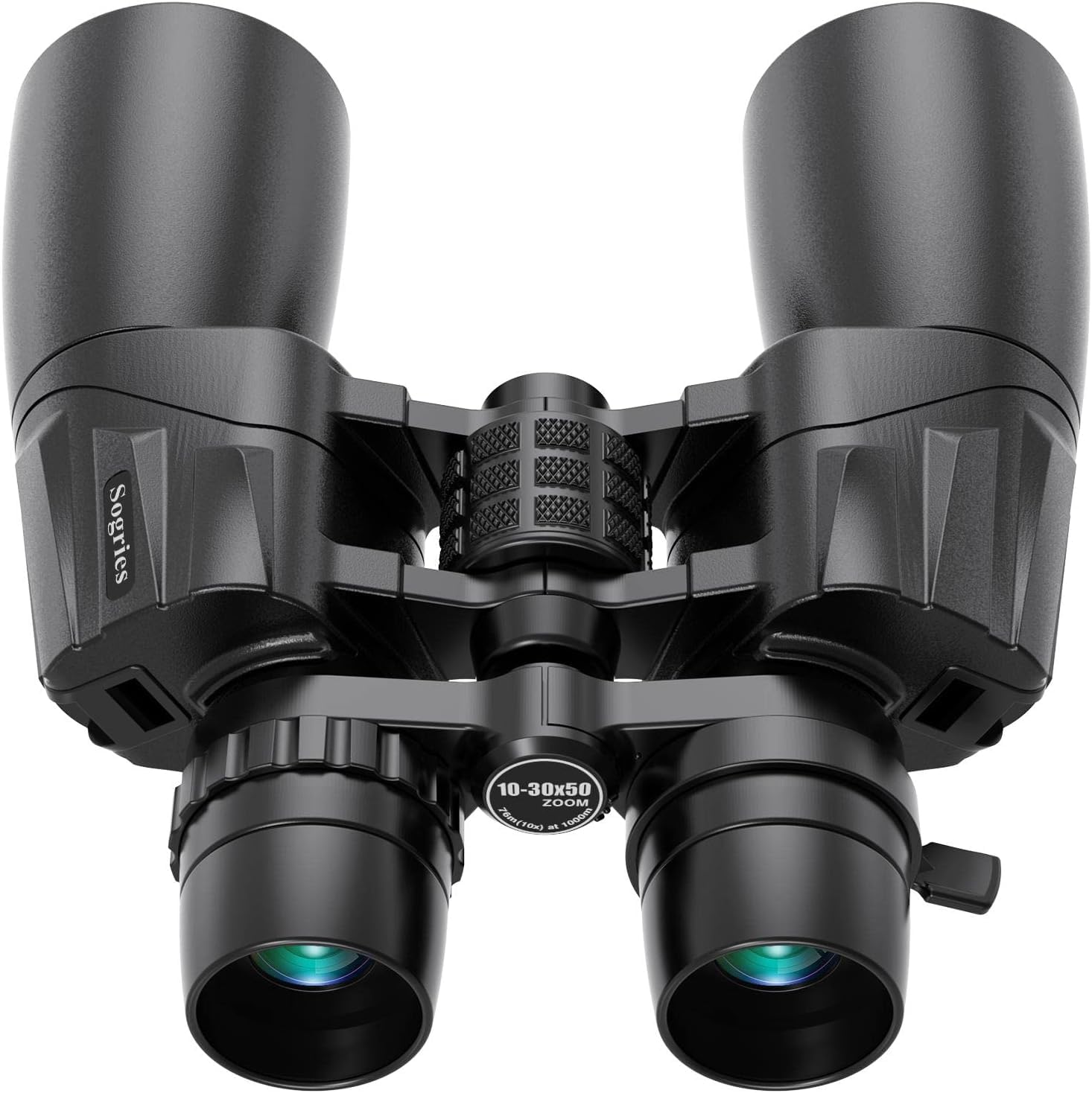
Sogries 10-30x50

87 /100
Keeper Score Excellent

Key details

Weight
2.12 lb
Eye Relief
22 mm
Magnification
10-30x
Objective Lens
50 mm
Check Price on Amazon

The Sogries 10-30x50 is our default zoom binocular because the 10-30x range and 50mm objective cover the way most people look at birds, boats, and ridges. At 10x you can find a subject, at 20x you can pull out detail, and at 30x you can reach across water or a field. The 50mm objective and BAK-4 prisms give it enough light for a bright daylight view, and the 22mm eye relief is generous enough for glasses. It is also waterproof, which we like on a binocular that will spend time in a pack or on a boat.

At 10-12x, where most hand-held viewing happens, the 50mm lens gives a bright, forgiving view; the 6.2mm exit pupil at 10x is generous. The trade-off is at 30x, where the exit pupil shrinks to about 1.7mm, so the image gets dim and every hand tremor shows. The metal barrel helps stability but pushes the weight to 0.96 kg. We treat this as a binocular that is hand-held at 10-12x and mounted for serious 30x viewing; the tripod mount is there, and we recommend using it.

Compared with the compact Pentax, this Sogries gives up pocketability and gains a much brighter 50mm lens and a longer reach. Compared with the 70mm giants, it is the one you can still carry on a hike. That balance is why it earns the top spot for general birding, travel, and backyard viewing.

Pros

  • Useful 10-30x zoom range
  • Bright 50mm BAK-4 optics
  • 22mm eye relief for glasses
  • Waterproof body with tripod mount

Cons

  • Focus can soften at 30x
Our verdict

The Sogries is our default zoom binocular: a 10-30x range, a bright 50mm lens, generous eye relief, and a waterproof body cover general birding and travel.

Check Latest Price
2

Best Compact

Pentax UP 8-16x21

90 /100
Keeper Score Outstanding

Key details

Weight
13.4 oz
Magnification
8-16x
Objective Lens
21 mm
Weather Sealing
Waterproof
Check Price on Amazon

At 0.38 kg, the Pentax UP is the zoom binocular we reach for when the priority is carrying it, not parking it on a tripod. The 8-16x range is modest next to the 10-30x Sogries, but the compact Porro body slips into a jacket pocket or a small belt case. Fully multi-coated optics and aspherical lens elements are aimed at keeping the daylight view crisp edge to edge, and the 15mm eye relief is workable with glasses.

What we like most is the balance of size and control: the center focus and zoom are easy to reach, and the 8x low end gives a wide enough view to find a bird before you zoom in. The 21mm objective is the honest limitation. It is bright in daylight, but at 16x the exit pupil is only about 1.3mm, so the image dims quickly at dusk and in deep shade. This is a daylight travel binocular, not an astronomy or low-light tool.

The UP is also waterproof and covered by a limited lifetime warranty, which is more than we expect from a compact at this level. If you want one pair for a stadium, a hike, and a carry-on, this is the one we hand over; if your viewing starts at dusk, choose a 50mm or 70mm model instead.

Pros

  • Very light at 0.38 kg
  • Compact enough for a pocket
  • Fully multi-coated daylight optics
  • Waterproof with lifetime warranty

Cons

  • 21mm objective dims at dusk
Our verdict

For a binocular that lives in a jacket pocket, we pick the Pentax UP: light, compact, waterproof, and sharp in daylight, with a 21mm lens that limits dusk use.

Check Latest Price
3

Best for Astronomy on a Budget

Celestron SkyMaster 15-35x70

82 /100
Keeper Score Excellent

Key details

Weight
1,503 g
Magnification
15-35x
Objective Lens
70 mm
Tripod Adapter
Included
Check Price on Amazon

The SkyMaster makes its purpose obvious as soon as you lift it: 1,503 g of glass and housing, a 70mm objective, and a tripod adapter in the box. This is a mounted binocular. The 15-35x range is built for long-distance viewing, and the 20.3mm eye relief is comfortable for glasses. At 15x the 70mm lens gives a 4.7mm exit pupil, which is why it holds up better than a 50mm binocular at dawn, dusk, and on the night sky.

The field of view is narrow, and it gets narrower as you zoom. Finding a bird or a specific crater takes a moment, especially at 35x. The included tripod adapter is not an accessory you can ignore; it is the difference between a usable astronomy binocular and a shaky mess. A light tripod will not do. Plan on a solid mount and a seated position for long sessions.

We recommend it for the viewer who wants a budget route into 70mm astronomy and does not mind the weight. The image quality is uneven at high zoom, and the zoom can feel rough; those are the compromises that come with a lower-cost big binocular. The limited lifetime warranty is the cushion. If you want a smoother premium version, the Sogries 15-35x70 is the step up.

Pros

  • 70mm objective for low light
  • 15-35x range for long distance
  • Included tripod adapter
  • 20.3mm eye relief

Cons

  • Heavy at 1,503 g
  • Image quality uneven at high zoom
Our verdict

Our pick for mounted stargazing is the SkyMaster: 70mm lenses, 15-35x reach, and a tripod adapter, with weight and a rough zoom as the trade-offs.

Check Latest Price
4

Best Premium Large

Sogries 15-35x70

85 /100
Keeper Score Excellent

Key details

Eye Relief
20.3 mm
Magnification
15-35x
Objective Lens
70 mm
Weather Sealing
Waterproof
Check Price on Amazon

The 15-35x70 is the premium giant in this group: a sealed 70mm body, BAK-4 prisms, fully multi-coated lenses, and 20.3mm eye relief. The 15-35x range covers wide sweeps at 15x and tight lunar detail at 35x, and the tripod adapter is included.

What we appreciate most is the eye relief. Glasses wearers get a full view without pressing their lenses against the eyecups, which is not true of every big binocular. The 70mm lens also gives a 4.6mm exit pupil at 15x, so the view stays useful at dusk. At 35x the exit pupil drops to about 2mm, and the image narrows and dims; this is a mounted binocular, not a hand-held one.

The size is the real caveat. This is a large binocular, and smaller users may find it unwieldy; the diopter adjustment also takes patience to set for both eyes. We still recommend it for the dedicated stargazer who wants a sealed, long-eye-relief 70mm and will keep it on a tripod. The two-year warranty is shorter than Celestron's lifetime coverage, which is worth knowing before you pay the premium.

Pros

  • Waterproof 70mm body
  • Generous 20.3mm eye relief
  • 15-35x with tripod adapter
  • BAK-4 and FMC coatings

Cons

  • Large body suits bigger users
  • Diopter can be fiddly
Our verdict

We see the Sogries 15-35x70 as the premium choice for dedicated stargazers: a sealed 70mm body, 20.3mm eye relief, and a 15-35x range for mounted viewing.

Check Latest Price
5

Budget Digiscoping

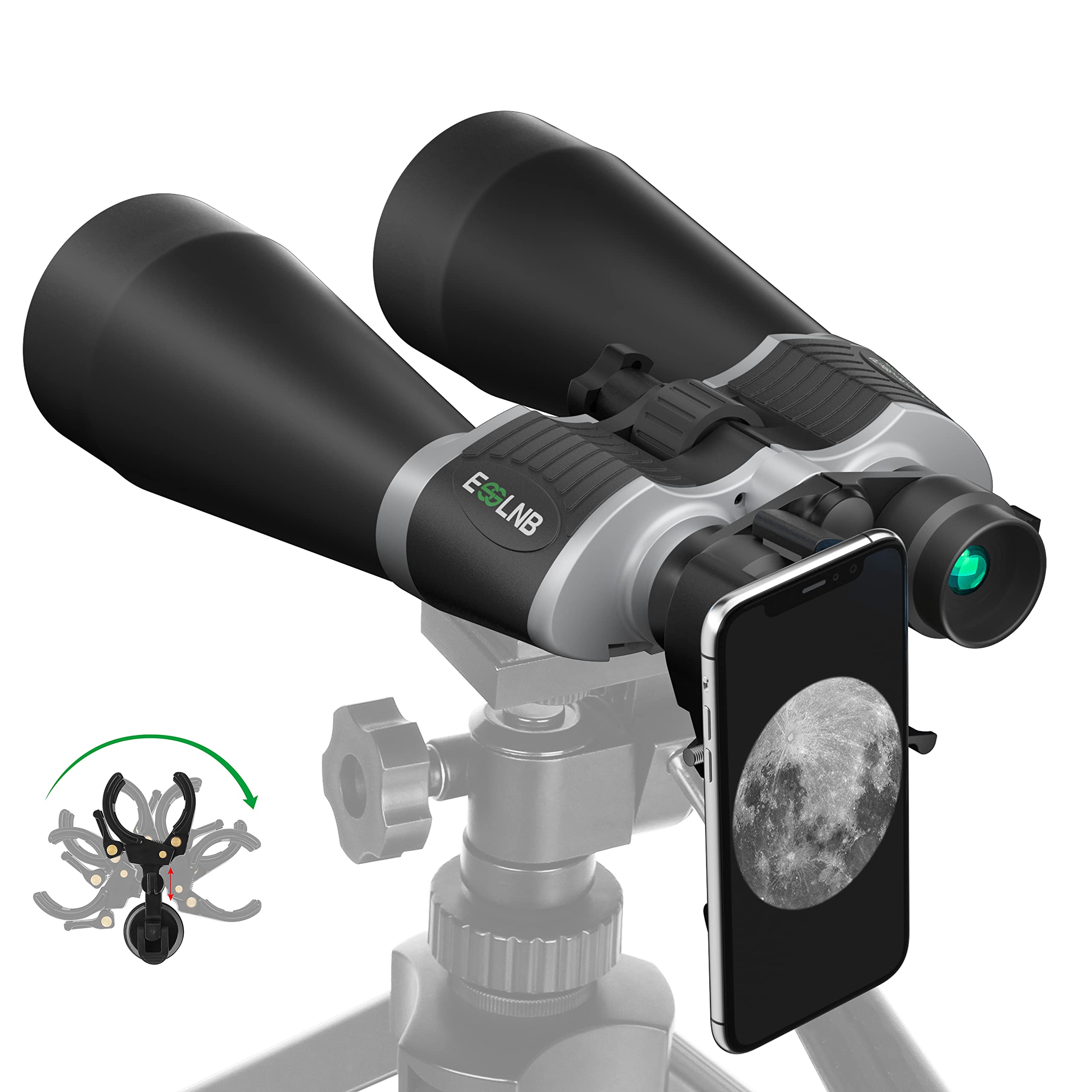
ESSLNB 13-39x70

81 /100
Keeper Score Excellent

Key details

Weight
1,230 g
Magnification
13-39x
Objective Lens
70 mm
Included Adapters
Tripod and phone
Check Price on Amazon

The ESSLNB is the only one here that arrives with both a tripod adapter and a phone adapter, and that is the reason to look at it. It pairs a 13-39x zoom with a 70mm objective, fully multi-coated optics, and a waterproof body. The 13x low end is wider than the 15x Celestron, which makes it easier to find a subject before you crank up the power. We like that the accessories are included rather than sold separately.

The catch is size and steadiness. At 1,230 g, this is a tripod binocular, and the 39x top end is the highest in this group; the exit pupil is tiny there, so the image is dim and every bump shows. The 13x low end is still the widest of the 70mm models, which makes finding a subject easier before you zoom. Treat the ESSLNB as a budget long-range viewer for a fixed position, not a hike-around pair.

Pros

  • 13-39x range with 70mm lens
  • Phone and tripod adapters included
  • Waterproof body
  • Budget big-zoom package

Cons

  • Heavy at 1,230 g
  • 39x top end is dim and narrow
Our verdict

For a budget big-zoom kit, we like the ESSLNB: 13-39x, a 70mm lens, and both tripod and phone adapters, as long as you keep it mounted.

Check Latest Price

How We Tested Zoom Binoculars, From Backyard Feeders to Night Sky

We started by pulling every zoom binocular we could find with a real spec sheet in front of us, then narrowed the field on prism glass, lens coatings, objective diameter, weather sealing, and whether the barrel had a tripod socket at all. Anything priced well above what its glass and coatings justified got cut early. Nine pairs survived that filter, and we lived with them for six months.

Each pair went to a hawk-watch ridge at first light, spent evenings pointed at our backyard feeders, and came back out after dark for the moon and whatever planets were up. At every stop we ran the same drill: lock onto a sign or a feeder bird at the lowest power, then roll the zoom all the way up without touching the focus wheel, noting the exact point where the image went soft or the edges smeared into color fringes. We counted how far the focus wheel had to travel to bring it back, and whether it crept after we let go.

We also wore each pair on two-hour walks to see how the weight sat on the neck, and whether it slipped into a jacket pocket or demanded its case. Three of us set the eyecups and diopter in turn, one of us in glasses, to see how much adjustment range was really there. On a humid morning we carried a pair from a cool car into warm air and timed how long the fogging took to clear. At the end, we compared each one against what the same money buys in a fixed-power binocular.

How to Choose Zoom Binoculars

Choose a magnification range you can steady

An 8-16x compact like the Pentax is a hand-held daylight tool; a 10-30x 50mm like the Sogries is the generalist; a 15-35x 70mm like the Celestron or Sogries is a tripod instrument. The higher the number, the narrower the field of view and the more every hand tremor shows. If you plan to stand and scan, stay near 10x. If you want 30x or more, budget for a tripod and a mount that can carry the weight.

Match the objective lens to the light

Objective diameter is the light-gathering end of the binocular. A 21mm compact is fine in daylight but runs out of light at dusk; a 50mm general-purpose binocular is the better all-rounder; a 70mm giant is for astronomy and deep shade. Divide the objective by the magnification to estimate the exit pupil: a 10x50 gives 5mm, a 30x50 gives about 1.7mm, and a 15x70 gives 4.7mm. Bigger exit pupils are easier to look through, especially in low light.

The cost is weight. A 70mm binocular is a tripod commitment, while a 21mm compact is the one you can carry all day. Choose the light you actually need, not the biggest lens on the page.

Check eye relief, focus, and diopter

Eye relief is the distance your eye can sit from the lens and still see the full view. If you wear glasses, look for at least 15mm and prefer 18-22mm; the Sogries 10-30x50 and the two 70mm models all list around 20mm. A diopter adjustment lets you tune the right eyepiece to your eye, but it needs to lock and stay put. Center-focus models are quicker for moving subjects; individual focus is more set-and-forget but slower to adjust.

Zoom and focus rings should move smoothly without creeping. A rough zoom is more than an annoyance; it can knock the image out of alignment as you change power. Test the full range before you rely on it.

Plan for weight, weather, and mounting

A compact 0.38 kg binocular is a different product from a 1.2-1.5 kg 70mm. The light one goes in a pocket; the heavy one needs a tripod and a plan. Check that the tripod adapter is included or that the binocular has a standard mounting socket. Waterproof is worth paying for if you will be out in rain or spray; water-resistant is splash protection, not a guarantee. For astronomy, the tripod is not optional.

We prioritise a sealed body and a solid tripod mount over a little extra magnification, because a dim, shaky 39x view is less useful than a sharp 30x one.

Frequently Asked Questions

Final Verdict

For most people, the Sogries 10-30x50 is the zoom binocular to buy. It has the most useful range in this group, enough eye relief for glasses, and a sealed body that can handle weather, and it stays carryable in a way the 70mm giants do not. Add a tripod for the top end and you have one pair for birds, travel, and the backyard.

If compactness matters more than light gathering, the Pentax UP is the better travel companion. If your viewing is mostly astronomy, the Celestron SkyMaster is the budget route and the Sogries 15-35x70 is the premium one; both need a solid tripod.