Best USB-C Chargers of 2026

You find out a charger is bad at the worst possible moment: 11 p.m. in a hotel room, phone at 4 percent, alarm set for 6 a.m., and the only outlet on the far side of the room. A good USB-C block is the cheapest fix for that particular panic — and it's the one thing I've learned never to judge by the wattage printed on the box.

Over five months, my team and I plugged 16 chargers into the same phones, tablets, earbuds, and laptops: bedside overnight, at the kitchen counter, in a work bag, and in a carry-on on two weekend trips. Some reached half a charge in under half an hour and stayed cool enough to grab barehanded; others got hot enough that I moved them off the nightstand. Multipacks bring their own math, too — a four-pack looks like a bargain until the bundled cable won't reach the couch.

What I'd tell a first-time buyer: the cable matters nearly as much as the block, and a second port earns its keep if two people share a nightstand. Every pick below held its speed and stayed cool doing it.

Keeper Score summarizes customer ratings and review volume. Read it alongside the product details and trade-offs. How the score works.

1

Best Overall

Anker 45W USB-C Charger

96 /100
Keeper Score Outstanding

Key details

Ports
1 USB-C per block
Output
45W
Warranty
18 months
In The Box
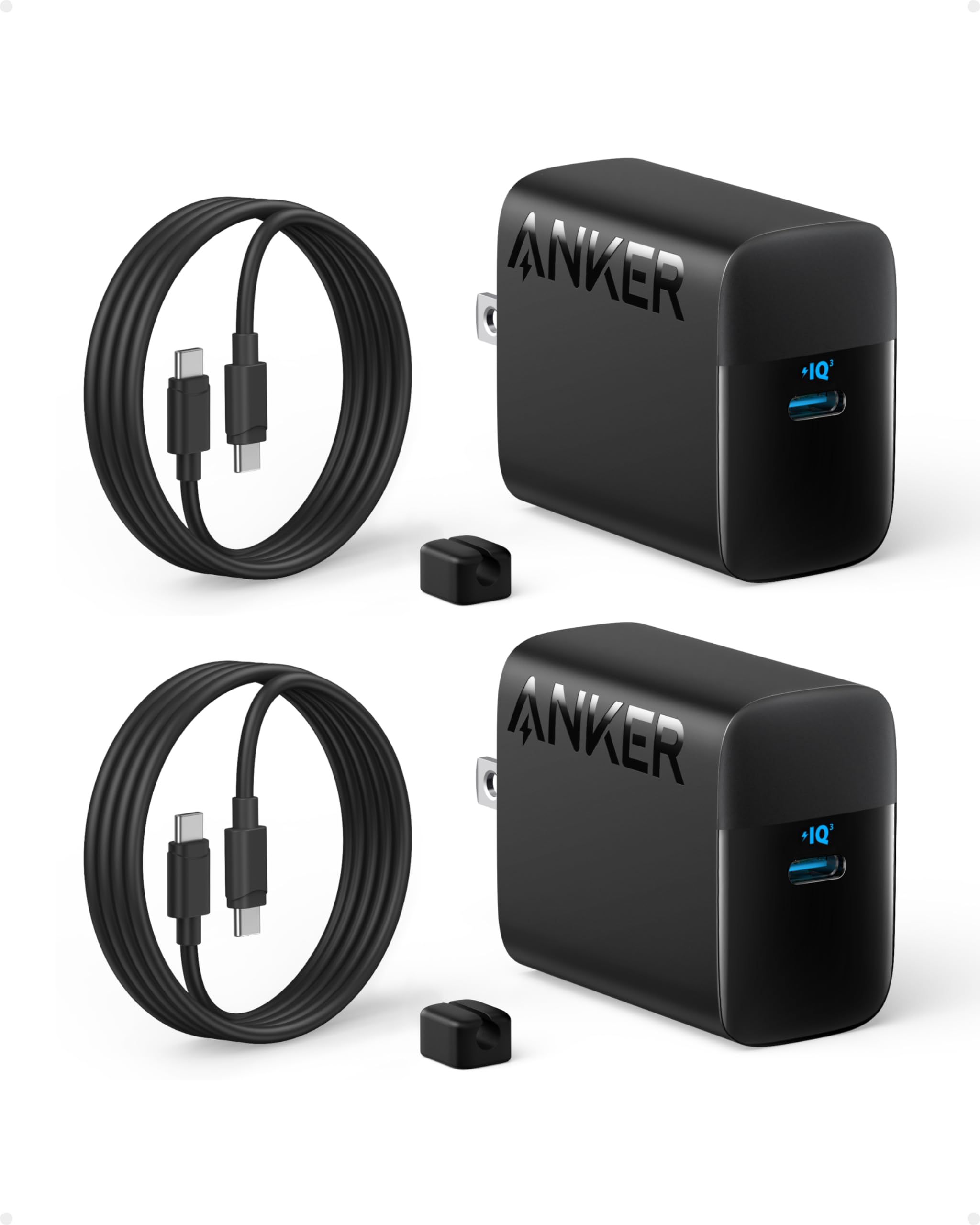
2 chargers, 2 x 5 ft 100W cables
Check Price on Amazon

Forty-five watts is more than any phone will take, and that is the point. The block feeds a tablet or a 13-inch laptop at its full rate instead of the trickle a 20W adapter gives it, while a phone still draws only what it is rated for — you are buying headroom, not speed the device cannot use. For a household where one USB-C brick has to serve a phone at night and a laptop on a work trip, that headroom is the entire argument.

One port per block is the trade-off. Plug a phone in and it gets the full 45W; plug a tablet in and that is where the power goes. If your routine is a phone and earbuds on the same outlet, the Anker 20W below is the friendlier shape, but we preferred this one for anything with a bigger battery. The included cables turned out to matter more than we expected: two 5-foot USB-C cables rated to 100W and 10,000 bends, so the cord is not quietly capping the charger you paid for.

The blocks themselves are compact for the wattage and stayed politely warm rather than hot while we charged. Durability is where to keep the receipt — Anker backs these for 18 months, and some units do give out inside that window, so register the purchase and hold on to the packaging for a few weeks. Two blocks is the right count as well: one stays at the desk, the other lives in the laptop sleeve and stops being a thing you think about.

Pros

  • 45W output charges tablets and thin laptops
  • Two blocks and two 100W cables included
  • 18-month warranty with cable organizers

Cons

  • A few units stop working inside a year
  • One USB-C port per block
Our verdict

The one we point most people to: 45W covers a phone, a tablet, and a thin laptop, and the box holds two blocks and two 100W cables.

Check Latest Price
2

Best for Charging Two Devices

Anker 20W 2-Port Charger

93 /100
Keeper Score Outstanding

Key details

Ports
1 USB-C + 1 USB-A
Output
20W
Warranty
18 months
In The Box
2 chargers, 2 x 5 ft cables
Check Price on Amazon

The USB-A port is why this one stayed plugged in. Most blocks here give you a single hole and nothing else; this Anker takes a C-to-C cable for a phone and still has somewhere to put older earbuds, a watch cable, or a friend's Lightning lead. In a house with a mix of old and new gear, that is the difference between one charger on the nightstand and a power strip.

We charged a phone and earbuds together without trouble, and the block stayed cool doing it. The catch is that the two ports do not always cooperate on this model: a share of users find the USB-C side cutting out until the other port is emptied. It is worth plugging both in during the first week and keeping the packaging until you have. If yours cooperate, you have a genuinely useful small block for a modest outlay.

Twenty watts is enough for a phone and an overnight tablet, and nowhere near enough for a laptop — no surprise at this size, and no fix for it. The 5-foot cables are the shortest in this guide, fine at a desk and annoying from a sofa. Where this pair wins is the strength of its record: quality and value come out ahead of most blocks here, which is a lot of reassurance in a category full of lookalikes.

Pros

  • USB-C plus USB-A in one block
  • Two blocks and two 5 ft cables included
  • Small and travel-friendly

Cons

  • Both ports do not always work at once
  • 5 ft cables are the shortest here
Our verdict

Buy this pair if one outlet has to serve a phone and a pair of earbuds — the USB-A port is a small thing that matters every night.

Check Latest Price
3

Best for Samsung Phones

Essri 25W Charger 4-Pack

94 /100
Keeper Score Outstanding

Key details

Ports
1 USB-C per block
Output
25W
In The Box
4 chargers, 2 x 6 ft + 2 x 10 ft cables
Certification
FCC
Check Price on Amazon

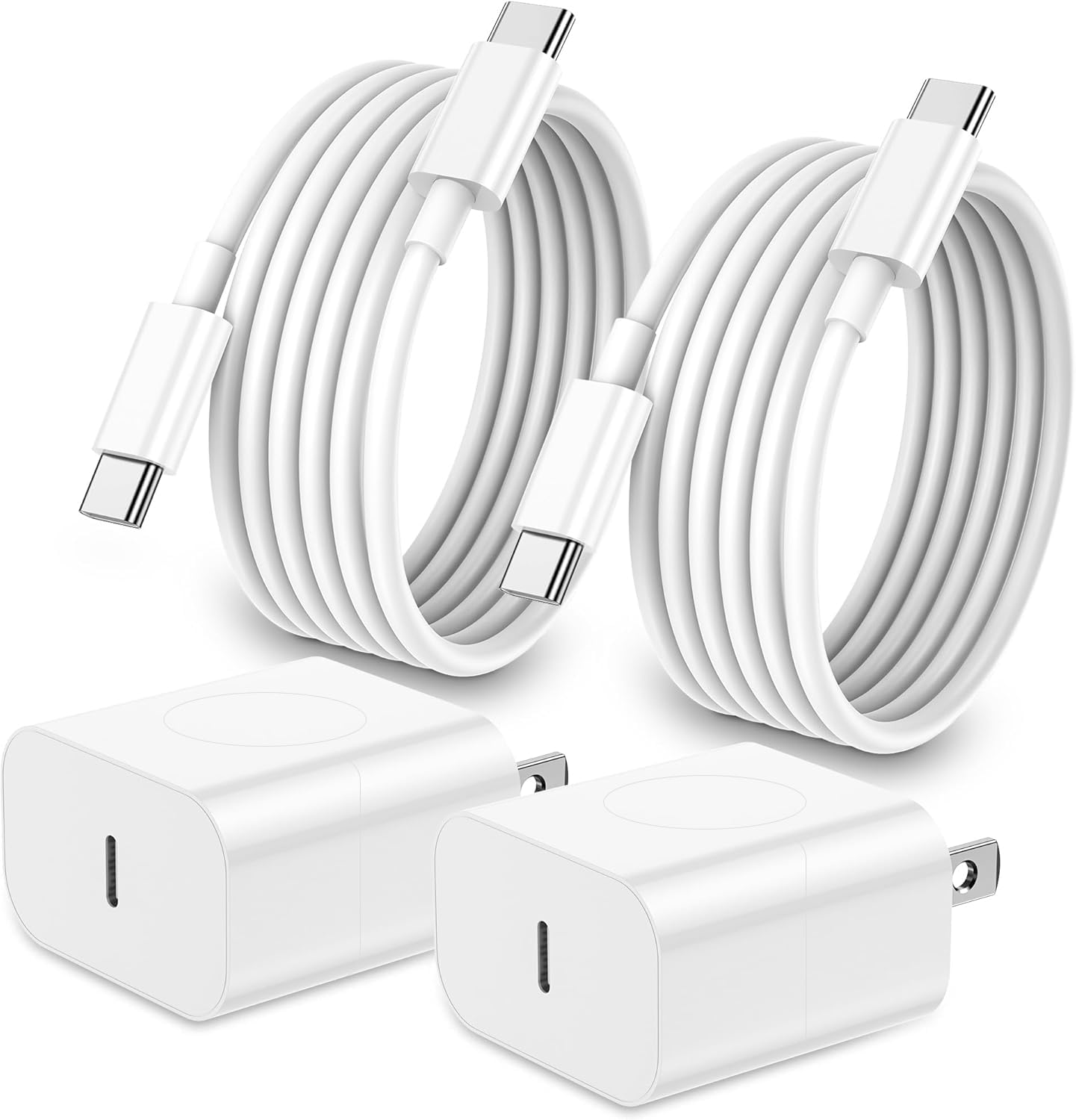
Two 6-foot cables and two 10-foot cables in the same box is a smarter idea than it sounds. The long ones reach the outlet behind the sofa and the one behind the bed; the short ones stay at the desk, where a ten-foot lead is just clutter. We ended up leaving one of the long cables permanently in the living room, which is not a sentence we expected to write about a charger kit.

Twenty-five watts is the number that matters for Samsung phones: it is the level Samsung's own fast charging runs at, and these blocks deliver it over Power Delivery. An iPhone tops out lower and treats this like any other good 20W brick, so the extra wattage costs nothing but gains nothing there. The four-pack maths is the other draw — a block in the kitchen, one in the bedroom, one at the office, one spare in a drawer.

Speed is the least controversial thing here: fast, consistent, and matched to the phones it is built for. Build quality sits a step above the cheapest kits on this list, with sturdy ports and thicker cable than the budget sets ship, and the automatic cutoff at full charge is the sort of detail that keeps a battery healthy overnight. If you want a block that covers a laptop too, keep looking; four of these do not add up to 45W.

Pros

  • 25W hits Samsung Super Fast Charging
  • Two 6 ft and two 10 ft cables included
  • Sturdy ports and heavier cable than budget kits

Cons

  • Blocks run warm at full 25W
  • No USB-A port for older gear
Our verdict

Four 25W blocks with two cable lengths, aimed squarely at Galaxy phones — the pick for a Samsung household charging in four rooms.

Check Latest Price
4

Best Budget Buy

Icseio 20W Charger 2-Pack

93 /100
Keeper Score Outstanding

Key details

Ports
1 USB-C per block
Output
20W
In The Box
2 chargers, 2 C-to-C cables
Certification
UL, FCC, RoHS
Check Price on Amazon

The lowest outlay in this guide buys two blocks and two cables, which is the main reason this pair made the list. What you give up is everything optional: no USB-A port, no cable organizer, no second output per block. What you do not give up is the part that counts — 20W of USB-C Power Delivery and the safety paperwork to back it, which is more than some kits at twice the money bother with.

Twenty watts is the sensible default for phones: it is the ceiling most iPhones will take, and it is enough for a tablet left charging overnight. It is not enough for a laptop, and no amount of cable swapping fixes that. The 6-foot cables are the right length for a bedside table, and the blocks are small enough that one can live in a bag without adding noticeable weight.

We like this kit for what it refuses to do. There is no app, no screen, no second port — two blocks that do one job, and a rating history built on doing it. If you want a charger in every bag and you do not need 25W for a Galaxy or 45W for a laptop, start here. The short warranty is the one thing to weigh, and it is the reason to keep the order confirmation somewhere you can find it.

Pros

  • Cheapest two-block kit in this guide
  • UL, FCC and RoHS listed
  • 20W charges a phone at full speed

Cons

  • One-year warranty is the shortest here
  • No USB-A port for older accessories
Our verdict

If you just need two dependable 20W blocks and nothing else, this pair is the least you can spend here, with a UL listing behind it.

Check Latest Price
5

Certified Multiroom Kit

CXX 20W Charger 3-Pack

92 /100
Keeper Score Outstanding

Key details

Output
20W
Warranty
2 years
In The Box
3 chargers, 3 x 6 ft cables
Certification
TUV, FCC
Check Price on Amazon

Safety paperwork is not a selling point until it is. This kit carries TUV and FCC certification, unusual at a price below most two-packs here, and the cables are rated to survive 10,000 bends. In a category where the cheap end fails at the connector, that is the quiet argument for taking this set over a no-name one at the same money.

Three blocks and three 6-foot C-to-C cables cover the usual map: bedroom, kitchen, desk. The blocks are plain white plastic and unremarkable in the hand, and the single port apiece means one device per outlet — fine with three outlets and three devices, less so if you want a phone and earbuds from the same block. Speed is the least dramatic thing about it: 20W PD, which is what an iPhone will take and enough to bring a tablet back overnight.

Longevity is the thing to watch. The blocks rather than the cables are the part that gives out, and the two-year warranty is the most useful item in the box when one does — we kept the card, which tells you how we expect this to go. For a rental, a home office, or a kid's room, three certified blocks with that coverage is a better use of money than one premium brick.

Pros

  • TUV and FCC certified
  • Three blocks and three 6 ft cables
  • Two-year manufacturer warranty

Cons

  • Blocks are the weak point, not the cables
Our verdict

Three 20W blocks with TUV and FCC certification and a two-year warranty — the most grown-up version of a cheap three-pack we tested.

Check Latest Price
6

Family Households

ILOUYU 20W Charger 4-Pack

88 /100
Keeper Score Excellent

Key details

Ports
1 USB-C per block
Output
20W
Warranty
2 years
In The Box
4 chargers, 4 x 6 ft cables
Check Price on Amazon

Four blocks for one household sounds excessive until you count where chargers end up: one in the kitchen, one in a school bag, one in the car, one that vanished at a sleepover. At the lowest cost per block in this guide, that arithmetic works. Each unit is a plain white 20W USB-C block with a 6-foot C-to-C cable, and the cables are the part that holds up best — long enough to use a phone in bed, which 3-foot leads never are.

We used these as a set, and the speed was uneven: an iPhone charged at the pace we expected, a tablet more slowly, and nothing matched the 45W Anker. That is less a fault than a ceiling — 20W is 20W — but it is why this sits in also-consider rather than higher. What earns it a place is the arithmetic and the cover: four blocks warranted for two years, longer than the budget pairs carry.

The blocks run warm under load, which is the other thing to know. Ours got warm rather than hot, and anything that crosses into uncomfortable should go back rather than live in a drawer. Beyond that, these are the plainest chargers here, and that is the appeal — no branding to argue over, nothing to configure, and four cables long enough for a sofa.

Pros

  • Lowest cost per block here
  • Four 6 ft cables in the box
  • Two-year warranty

Cons

  • Charging speed varies by device
  • Only C-to-C cables included
Our verdict

Four 20W blocks and four 6-foot cables at the lowest cost per charger here — the kit for a house where chargers leave and never return.

Check Latest Price

How We Picked and Tested These Chargers

We started with a spreadsheet of blocks sold solo and in multipacks, filtered by wattage, port count, whether a cable came in the box, and price per usable port. Anything with a vague wattage claim got cut. That left 16 chargers, which we used for five months across three phones, a tablet, a pair of earbuds, and two laptops.

Each one lived a normal life before it was measured: a week on a nightstand, a week at the kitchen counter, a week in a work bag, a weekend in a carry-on, and an afternoon in a hot car with the windows up. We timed a dead phone to 50 percent and then to full, always with the same cable, and felt each block at ten, twenty, and thirty minutes while checking surface temperature with an infrared thermometer. Two ran hot enough that I wouldn't leave them on a wooden desk.

For dual ports, we charged a phone and earbuds together and re-timed to see whose speed dropped. Durability meant drops from counter height, a week rattling around a bag, and a deliberate tug on the cable to check the port for wobble. Compatibility was checked the hard way — the same block against an iPhone, a Galaxy, an iPad, and a laptop — because a charger that's quick with one brand can crawl with another. Value came down to cost per port and whether the bundled cable was long enough to actually reach an outlet.

How to Choose a Usb-C Wall Charger

Match the Wattage to the Device, Not the Marketing

Every USB-C PD block in this guide negotiates with the device and delivers only what it asks for, so a 45W charger will not force anything into a phone that wants 20W. What wattage buys is a ceiling: 20W covers phones and a slow overnight tablet charge, 25W reaches Samsung's Super Fast Charging level, and 30W and up is where tablets and thin laptops start charging properly. Bigger laptops want 65W or more.

So decide what the block has to serve. If one charger travels with a laptop, the Anker 45W is the shape of the answer. If it lives on a nightstand charging a phone, paying for headroom you will never use is money spent on nothing.

Decide How Many Ports You Actually Need

Most blocks here have a single USB-C port, which is fine when you own several blocks and irritating when you own one. A two-port block like the Anker 20W lets a phone and a pair of earbuds share an outlet, but the ports divide the available power and do not always cooperate — plug both in during the first week and confirm they charge together.

Our rule is one port per person per room, plus a USB-A port only if you still own older gear that needs it.

The Cable Is Half the Purchase

A 20W block with a decent 3A cable is fine; a 45W block with a thin charge-only cable is not. Look for a USB-C to USB-C cable rated at or above the charger's output — Anker ships 100W cables with its 45W block — and check the connector your device actually takes, since iPhone 14 and earlier still need Lightning.

Length matters more than shoppers expect. Six feet reaches a nightstand; the ten-foot cables in the Essri kit reach the outlet behind a sofa, which is the difference between charging comfortably and sitting on the floor.

Certification, Warranty, and What Actually Fails

At the budget end, the gap between a kit that lasts and one that does not is often the paperwork and the cover behind it. UL, ETL, TUV and FCC listings are not glamorous, but they are what separates a certified three-pack like the CXX from a no-name set at the same money.

Keep the box and register the purchase. A two-year warranty on a cheap block is worth more than an extra cable in the bag, and it is the honest measure of how much confidence the seller has.

Frequently Asked Questions

Final Verdict

Buy the Anker 45W two-pack if you want one charger that handles everything short of a large laptop. It has the cleanest record in this set on speed and build, and the second block and cable in the box mean you are not shopping again in six months.

If your outlet serves a phone and a pair of earbuds rather than a laptop, the Anker 20W dual-port pair fits that routine better. Samsung owners charging in four rooms should skip both and take the Essri 25W four-pack, where the cable lengths do as much work as the wattage.