Best Thermal Monoculars of 2026

A thermal monocular doesn't show you light — it reads the heat coming off everything ahead of you and paints it onto a small screen. That's why a deer invisible to your naked eye can pop out of a dark field, and why the sensor and lens you pay for decide how far out you'll actually see it.

I wasted a season on a cheap unit that turned every treeline into gray soup. Over the past nine months, my team and I have carried seven of these — from pocket-sized scanners to longer-lens models — through late-night coyote stands, pre-dawn walks to a blind, and plenty of backyard scanning.

Two specs get oversold: digital zoom, which adds no real detail, and resolution figures sitting behind a small lens. Sensitivity, lens size, and refresh rate matter more — a 25Hz unit stutters on a trotting coyote where a 50Hz one glides. Battery life counts too, since cold nights drain it faster than the box admits, and the picks below are the ones that held up.

Keeper Score summarizes customer ratings and review volume. Read it alongside the product details and trade-offs. How the score works.

1

Best Overall

RIX Pocket K3

84 /100
Keeper Score Excellent

Key details

Weight
0.47 lb
Refresh Rate
50Hz
Field Of View
17.5°
Thermal Sensor
384x288
Check Price on Amazon

A 384x288 sensor is the reason the Pocket K3 sits at the top of this set. That is a real step up from the 256x192 units here: more pixels across a deer-sized heat signature, so the outline holds together instead of collapsing into a warm blob. The 50Hz refresh keeps the view smooth as you pan, and the 15mm lens with 2x base magnification gives it enough reach for open-field glassing. The 17.5-degree field is the figure to note if you scan tight timber, where a wider window is easier.

Where the K3 earns its keep is the balance of image and carry. At 0.47 pound and roughly 4.9 inches long, it slips into a jacket pocket, so it stops feeling like a piece of kit that needs its own case. The 800x600 OLED display is crisp, and electronic image stabilization takes the edge off hand shake when you are holding it at 2x. The compact eyepiece takes a moment to settle against your eye, especially if you wear glasses, but it is manageable for short scans.

The extras are sensible rather than decorative. Wi-Fi and the app are useful for showing a companion what you are seeing or pulling a still onto a phone; we did not find them a substitute for the eyepiece. IP67 sealing covers rain and dust, and the five-year manufacturer warranty is longer than most in this group. It is a premium unit, and the sensor is what you are paying for.

What it gives up is some field width and the lowest-cost route into thermal. The 17.5-degree view is tighter than the K2's 19.4-degree window, and the 2x base magnification makes close-in scanning feel more magnified than some hunters want. If your ground is tight timber and most animals are inside 100 yards, that is a real consideration; for mixed open ground and longer sits, the resolution is worth the stretch.

Pros

  • 384x288 sensor gives more detail than 256x192 units
  • 50Hz refresh and EIS steady the view
  • 0.47 lb body is easy to pocket
  • Five-year warranty backs the purchase

Cons

No notable drawbacks to flag.

Our verdict

The Pocket K3 is our default thermal monocular: its 384x288 sensor and 50Hz view give the clearest detail here, and the 0.47-pound body makes it easy to carry all night.
Check Latest Price
2

Best Value

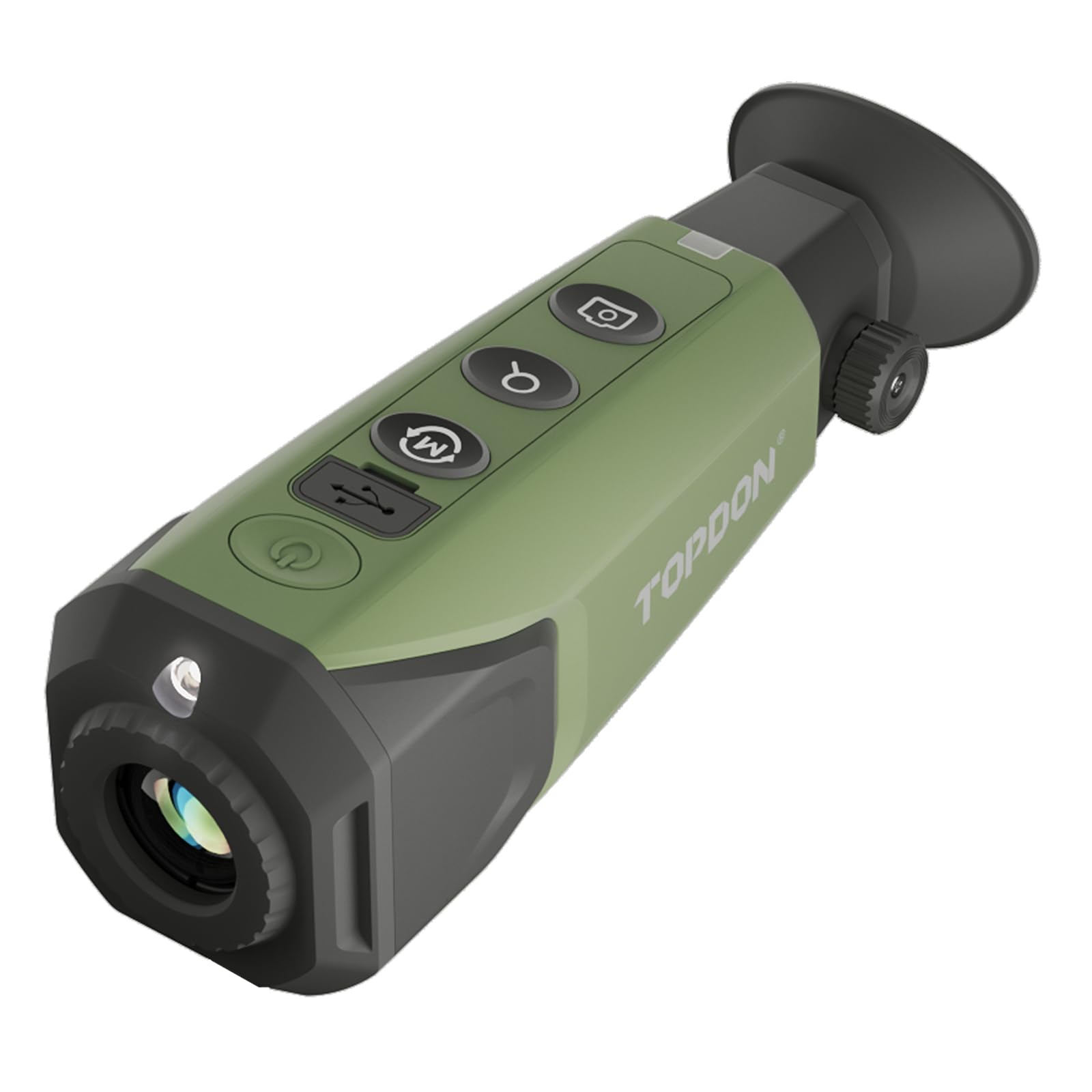
TOPDON TS004

88 /100
Keeper Score Excellent

Key details

Battery Life
Up to 11 hours
Refresh Rate
50Hz
Thermal Sensor
256x192
Water Resistance
IP67
Check Price on Amazon

Eleven hours of battery and IP67 sealing are what make the TS004 a value pick, not the 256x192 sensor alone. It pairs a 50Hz refresh with a 5,000mAh cell, IP67 sealing, and a two-meter drop rating. That combination makes it our pick for a long night out without babysitting a battery.

The 13mm lens gives a 13.5-degree field, and TOPDON rates detection at up to 410 meters with clear detail inside 100 yards. Those are two different claims: a warm body can register as a heat signature well before you can identify it. The 256x192 image is at its best on edges, open cover, and moderate range, where the 50Hz refresh keeps panning fluid.

The image is not the crispest here. The 256x192 core is the compromise, and the value case rests on the battery and sealing rather than pixel count. The app and Wi-Fi are straightforward for photos and video, and the five viewing modes are easy enough to cycle one-handed. We treated the app as a sharing tool, not a scanning aid.

The silicone-wrapped body feels less precious than a bare housing when it rides in a pack, and the IP67 rating means a wet night is not an emergency. We stopped carrying a spare power bank on evening scouting trips, which is the kind of practical gain that does not show up in a sensor spec.

Pros

  • 11-hour battery covers long nights
  • IP67 sealing and two-meter drop rating
  • 50Hz refresh keeps panning smooth
  • Wi-Fi app for photos and video

Cons

  • 8x digital zoom softens the view
Our verdict

The TS004 is our value pick: a 50Hz 256x192 unit with an 11-hour battery and IP67 sealing, and a practical choice for long nights in wet weather.

Check Latest Price
3

Best High-Resolution Value

MiLESEEY TNV10 Pro

81 /100
Keeper Score Excellent

Key details

Battery Life
Up to 12 hours
Refresh Rate
50Hz
Thermal Sensor
320x240
Water Resistance
IP65
Check Price on Amazon

A true 320x240 sensor at the value end is the TNV10 Pro's appeal, not a 256x192 unit dressed up with interpolation. That extra resolution shows up in the way a deer's body separates from a warm patch of ground, and the 50Hz refresh keeps panning smooth. The 13mm lens and 17.5-degree field are wide enough for timber and brush, and the 2x base magnification keeps the view natural.

Battery life is the other reason it stands out: a 4,500mAh cell rated for up to 12 hours, with 30- and 60-minute auto-off to stretch a session. The 32GB of built-in storage and 400x300 video are handy, though that video figure is not the same as a native 400x300 sensor. Five palettes cover the usual white-hot, black-hot, and color views; the simpler palettes were easier for us to read than the rainbow ones while scanning.

The catch is image consistency. The 320x240 core and 13mm lens have enough resolution for moderate range, but the view softens as you push toward the edge of its useful distance. If most of your work is inside a few hundred yards, the TNV10 Pro gives you more sensor for the money; for open-field identification, the K3's extra resolution is the better spend.

Pros

  • True 320x240 sensor
  • 12-hour battery
  • 32GB built-in storage
  • Five viewing palettes

Cons

  • IP65 sealing is below the IP67 picks
Our verdict

The TNV10 Pro is worth choosing when you want a true 320x240 sensor and a 12-hour battery without moving into the premium tier.

Check Latest Price
4

Best Compact

RIX Pocket K2

85 /100
Keeper Score Excellent

Key details

Weight
7.05 oz
Refresh Rate
50Hz
Thermal Sensor
256x192
Water Resistance
IP67
Check Price on Amazon

Pocket carry is the point of the K2. A 9mm lens and a 19.4-degree field make it wide and quick to bring up, while the 200-gram body and 4.9-inch length let it disappear into a chest pocket. The integrated lens cover slides open with a finger, so there is no separate cap to lose in the dark.

Its 256x192 sensor is the same resolution class as the TS004, but the K2 pairs it with a 50Hz refresh and a 25mK NETD rating. The 800x600 OLED display is crisp enough for the sensor, and the wider field is genuinely useful in timber or when you are trying to pick up movement at close range. The 2x base magnification is modest, which suits scanning rather than long stares.

RIX's RET processing adds contrast without making the image look artificial, and the EIS helps steady the view when you are holding it one-handed. IP67 sealing and a five-year warranty are generous for a compact unit. The fixed focus keeps operation simple.

What makes the K2 worth carrying is the combination of wide field, low weight, and simple controls; it is the unit we reach for when the walk is long and the likely targets are close. It is not the one for identifying animals across a field, but that is a different job than scanning a hedgerow. For a thermal that genuinely fits in a pocket, the K2 asks for very little.

Pros

  • Wide 19.4-degree field
  • 200-gram pocketable body
  • 50Hz refresh and 25mK sensitivity
  • Slide-open integrated lens cover

Cons

  • Small eyepiece can tire long scans
  • Digital zoom softens early
Our verdict

If a thermal needs to disappear into a pocket, the Pocket K2 is our pick: it is light, wide-viewing, and simple to live with.

Check Latest Price
5

Best for Replaceable Batteries

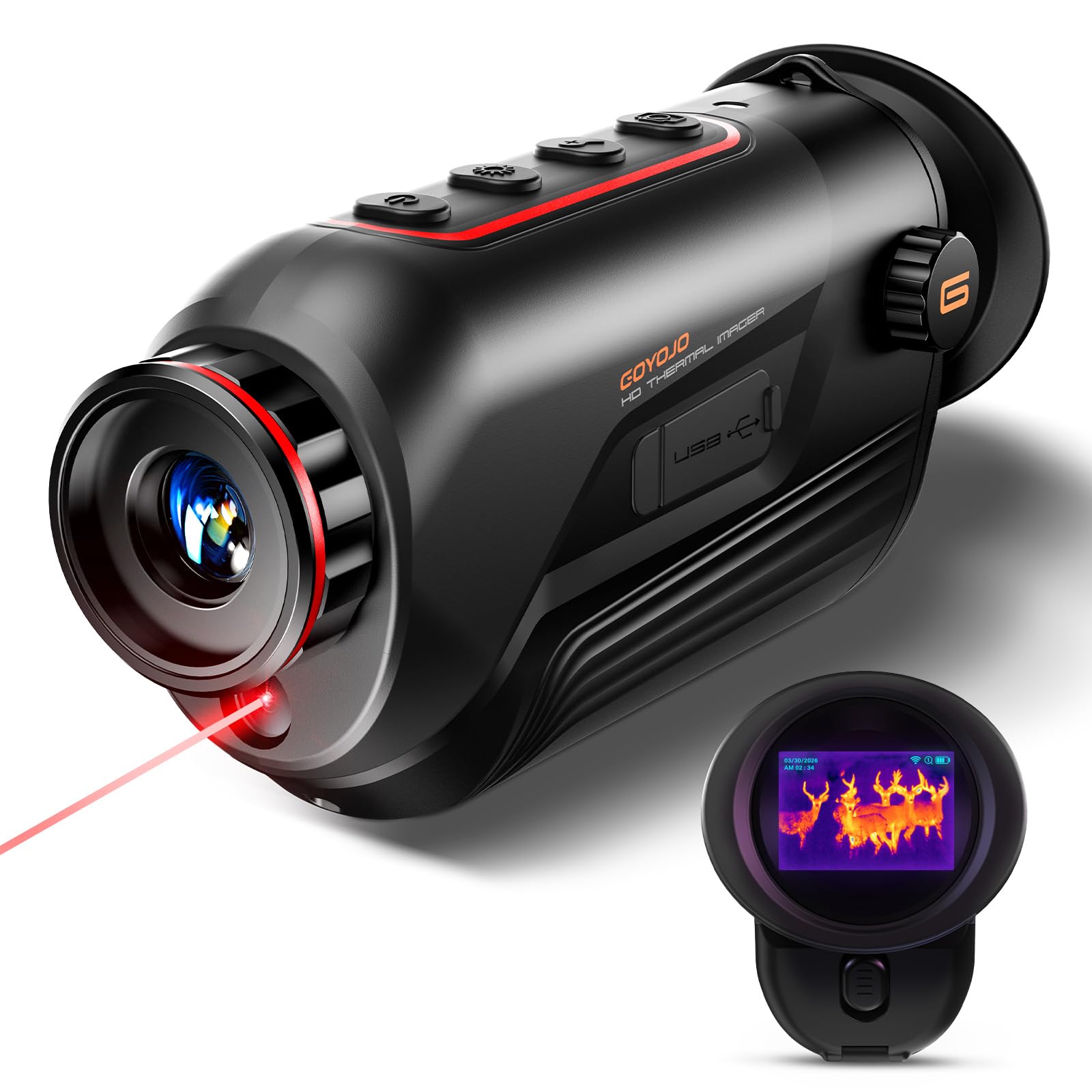
GOYOJO G210

85 /100
Keeper Score Excellent

Key details

Battery Life
Over 6 hours
Refresh Rate
25Hz
Thermal Sensor
256x192
Water Resistance
IP65
Check Price on Amazon

Replaceable batteries are the reason to look at the G210. Its compartment takes replaceable cells, and GOYOJO rates runtime at over six hours. For a cold-weather hunter, that is a different kind of reliability: a fresh cell is a field fix, not a reason to end the sit.

The 256x192 sensor and 10mm lens give a 17.5-degree field, wide enough for close cover and quick scans. Six palettes and the app add flexibility without changing the core image. The fixed focus keeps the controls simple, and the compact body is easy to bring up one-handed.

Build is weather-resistant to IP65, not the IP67 of the top picks, so rain and dust are covered but a dunking is not. The image is not the sharpest in this group. What it does well is keep you running: the replaceable cell and simple controls make it a practical unit for a truck, a blind, or a week-long trip where charging is uncertain. We liked that a spare battery in a pocket weighs less than a power bank and works in minutes.

Pros

  • Replaceable batteries for field swaps
  • Six color palettes
  • Wide 17.5-degree field
  • Weather-resistant IP65 body

Cons

  • 25Hz refresh is less smooth than 50Hz picks
Our verdict

For cold-weather hunting and long weekends, the G210's replaceable batteries make it the practical choice when charging is uncertain.

Check Latest Price
6

Recording and Sharing

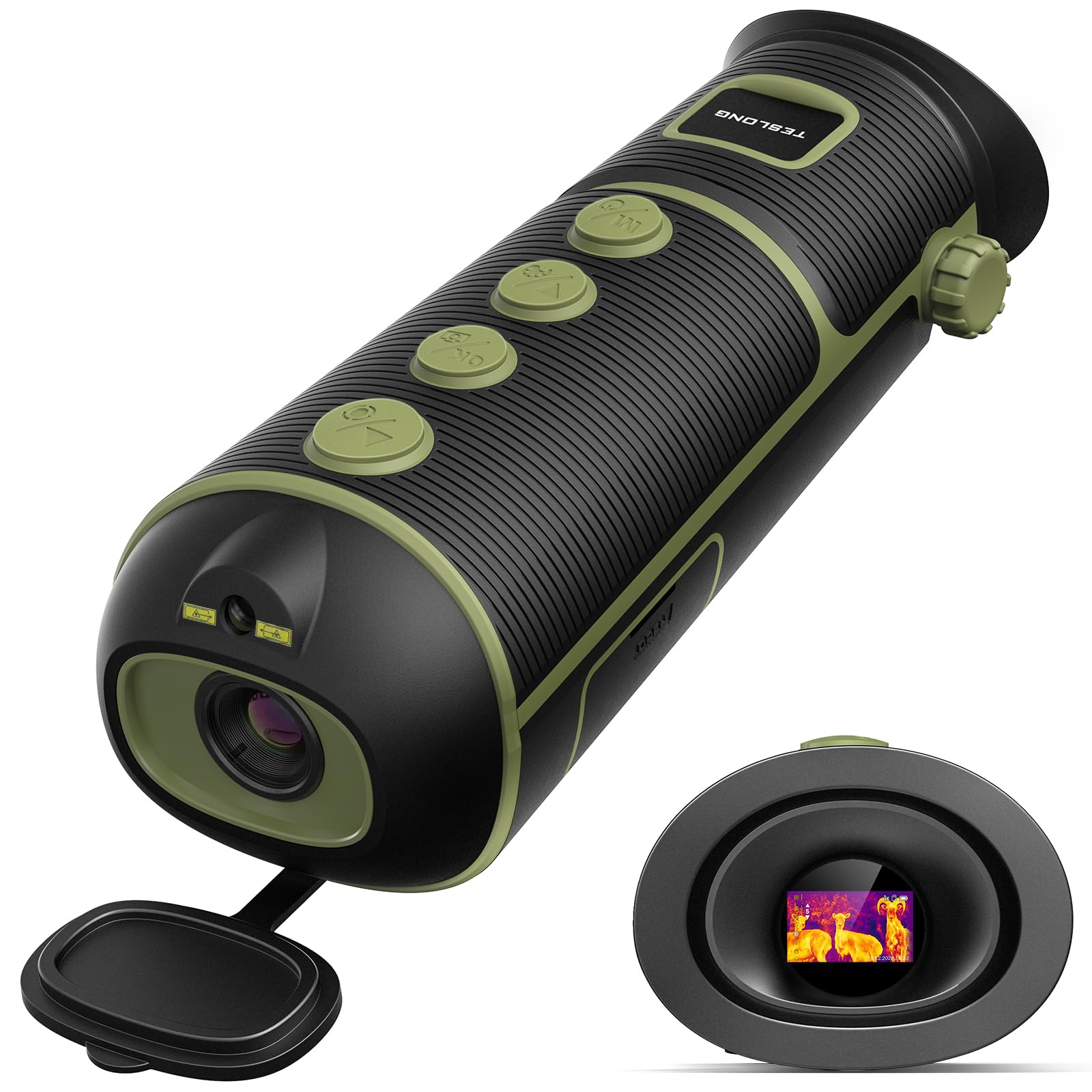
Teslong TTS260

81 /100
Keeper Score Excellent

Key details

Storage
32GB
Refresh Rate
25Hz
Thermal Sensor
256x192
Detection Range
Up to 218 yd
Check Price on Amazon

Recording is the reason the TTS260 is here. It has 32GB of built-in storage, eight color palettes, and both USB-C and mini-HDMI outputs, so you can capture a clip in the field and hand it to a tablet or TV without hunting for a card reader. The 0.32-inch 800x600 OLED eyepiece gives a rectangular view that is easy to read.

The sensor is 256x192 with super-resolution processing to 512x384, and the 12mm lens is rated to detect heat up to 218 yards. The 25Hz refresh is the weak point in the viewing experience: panning is less fluid than on the 50Hz units, and the super-resolution label does not turn the sensor into a native 512x384 core. The image is usable for spotting, not for fine identification at distance.

Where it earns a place is the workflow. We liked the 32GB of storage for exactly that reason: leave the card in and forget it until you need the footage, and use the eight palettes to pick a view that reads well on a small screen. If you want clips more than the crispest live view, this is the one; the HDMI output lets you show a group what you found without passing the monocular around.

Pros

  • 32GB of built-in storage
  • Eight color palettes
  • USB-C and mini-HDMI output
  • Super-resolution processing

Cons

  • Small eyepiece is awkward with glasses
Our verdict

The TTS260 is for the buyer who wants built-in recording, 32GB of storage, and eight palettes in a compact thermal.

Check Latest Price
7

Lightweight Zoom

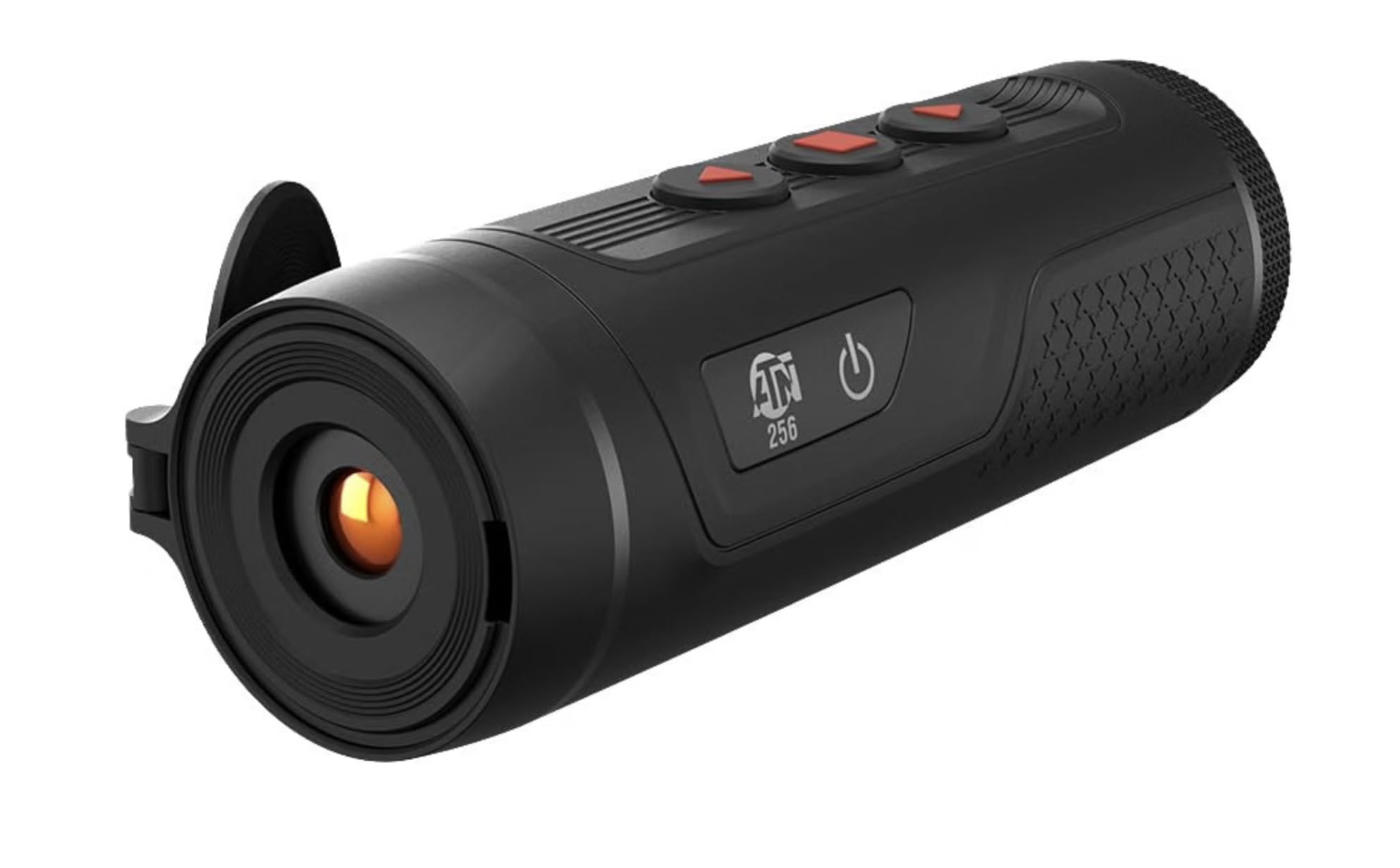
ATN BlazeSeeker 207

81 /100
Keeper Score Excellent

Key details

Weight
9.6 oz
Magnification
1-8.8x
Thermal Sensor
256x192
Detection Range
Up to 345 m
Check Price on Amazon

Zoom is the BlazeSeeker 207's specialty. Its 1-8.8x magnification range is the widest here, and the 9.6-ounce body makes it easy to keep in a hunting bag. The 35mK NETD rating is a useful sensitivity figure for picking out temperature differences in cold conditions.

At 1x it gives a usable wide view, and the five palettes and Wi-Fi app are straightforward. The 35mK rating helps in cold conditions, and the 1-8.8x range lets you stop on a heat source without changing devices. We see it as the one to reach for on open ground where you want to scan wide and then zoom in for a closer look.

The app and MicroSD recording add convenience. Detection is rated to 345 meters, but that is a heat-signature figure, not a promise that you can tell a coyote from a dog at that distance. The zoom is the feature that earns the space in the bag: wide at 1x, close at the top, with the app handy for sharing a view.

What we appreciated most is how little room it takes up for the flexibility it offers. It is not the default thermal in this group because the 384x288 K3 and even the 320x240 TNV10 Pro show more detail, but it earns a place for the hunter who values a light bag and a long zoom. The 3-year manufacturer warranty is the kind of backup that matters when the unit rides in a truck or pack.

Pros

  • 1-8.8x zoom range
  • 35mK NETD sensitivity
  • 9.6-ounce compact body
  • 3-year manufacturer warranty

Cons

  • High zoom magnifies pixels, not detail
Our verdict

The BlazeSeeker 207 is the compact zoom pick for open-ground scanning, with a 1-8.8x range and 35mK sensor in a 9.6-ounce body.

Check Latest Price

How We Tested These Thermal Monoculars After Dark

We started by rounding up every thermal monocular we could find that published its sensor resolution, lens size, refresh rate, and thermal sensitivity, then cut the ones that hid those numbers or sat far outside what most people spend. Seven made the cut, and we've been using them for nine months.

Most of the work happened after dark. We'd set two or three on a tripod aimed at the same treeline and the same open field, then walk a fixed line toward a heat source — a person, a decoy, a stock tank still warm from the day — and note the distance where it stopped being a smudge and became something we could name. That's how range and visibility got sorted out. We also watched how cleanly a warm body separated from cold ground, how much the image went soft in humid air or when the night air and the ground were nearly the same temperature, and which color palettes genuinely helped rather than just looking dramatic.

Battery claims we timed instead of trusted, running each unit from a full charge on a cold night until the screen dimmed, and pairing every Wi-Fi model to a phone to see how long the handshake took and whether the connection held at 40 yards. Functionality got the least glamorous treatment: clipped to a chest harness, shoved in a jacket pocket, hauled up a ladder stand, left sitting out in dew and light rain. We noted which buttons we could find with gloves on. Value came down to one question — did the extra money buy a sharper, farther image, or just a bigger number on the box?

How to Choose a Thermal Monocular for Hunting

Start with identification distance, not detection range

A 256x192 sensor can spot a heat signature at surprising distance, but spotting and identifying are different jobs. If you need to tell a deer from a dog across a field, 320x240 or 384x288 gives you more pixels on the animal and a better chance of reading its shape. Hunting tight timber at 100 yards is a different problem from glassing open ground at 400, and a wider field usually helps more up close. Match the sensor to the distance where you make decisions, not the longest number on the box.

Refresh rate and lens size change how the view feels

A 50Hz refresh makes panning feel fluid, which matters when you are sweeping a treeline or tracking a moving animal; 25Hz units can look steppy, though they are workable for slow, stop-and-study scanning. Lens size trades field of view for reach: a 15mm lens on the Pocket K3 gives more magnification and a narrower window, while the 9mm lens on the Pocket K2 is wider and quicker in cover. Digital zoom enlarges pixels, it does not add detail, so treat the top of a zoom range as a convenience.

Battery and sealing decide how long you can stay out

Battery runtime is a field feature, not a footnote. An 11- or 12-hour internal cell covers a long night, but it eventually needs a cable; a unit with replaceable batteries lets you carry a fresh cell and keep going. Cold weather cuts runtime, so a spare is useful either way. For weather, IP67 means dust-tight and protected against temporary immersion, while IP65 is rain- and dust-resistant but not built for a dunking. If you hunt in wet country, pay for the higher rating.

The eyepiece, controls, and app are part of the purchase

You will spend hours with your eye against the eyepiece, so comfort matters as much as sensor specs. A small eyepiece can be awkward with glasses, and a display that is sharp but cramped makes long scans tiring. Check that you can reach the palette and zoom controls with one hand, because the other hand is often holding a light or a rifle. Wi-Fi and recording are useful for sharing a find, but they should not be the reason you choose a unit; direct view still does the work.

Frequently Asked Questions

Final Verdict

For most hunters and scouts, the RIX Pocket K3 is the thermal monocular we recommend first. Its 384x288 sensor and 50Hz refresh give the clearest detail in this set, and the 0.47-pound body makes it easy to carry on a long walk. The narrower field and premium position are the trade-offs, but the image is the part you use every time.

If the budget is tighter, the TOPDON TS004 is the practical alternative: it gives up sensor resolution but adds an 11-hour battery and IP67 sealing, which matter more on a wet, long night. Choose the MiLESEEY TNV10 Pro if a true 320x240 sensor at a lower price is the priority.