Best Rugged Phones of 2026

Rugged phones are sold on survival, and the trade is always the same: a handset that shrugs off a drop from a ladder is also one that drags your jeans down. That bulk is the honest cost of a phone that keeps working after a dunk in a creek or a slide across a gravel driveway. What you get for it is a device you stop handling like it's made of glass — no case, no screen protector, no flinch when it lands face-down.

I've carried these through muddy trailheads, downpours, and more accidental drops than I'd care to admit, and over the past eight months my team has lived with 12 of them — weighing each one, running the batteries flat, and putting them on the major U.S. carriers.

One thing worth knowing before you shop: an IP68 or IP69K rating covers water and dust, not drops, and the "military-grade" line on the box is usually self-certified. A headline battery number also matters less than how the phone sips power behind a high-refresh screen. The picks below earned a pocket, not just a spec sheet.

Keeper Score summarizes customer ratings and review volume. Read it alongside the product details and trade-offs. How the score works.

1

Best Overall

Ulefone Armor X16 Pro 5G

82 /100
Keeper Score Excellent

Key details

Memory
16GB + 256GB
Weight
13.9 oz
Battery
10,360mAh
Durability
Waterproof; Gorilla Glass
Check Price on Amazon

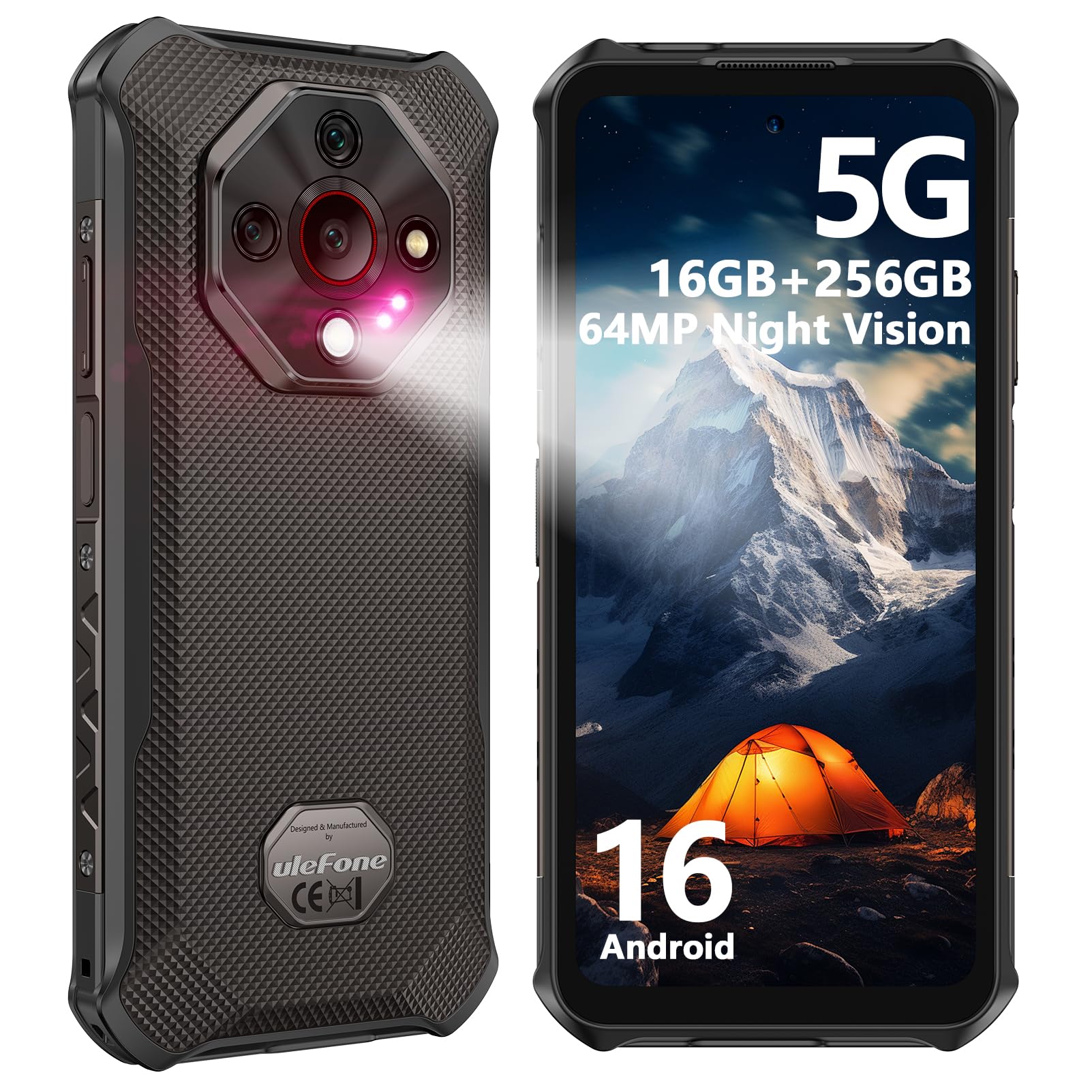
At 394 grams, the Armor X16 Pro is heavy enough that you notice it in a jacket pocket, but not so heavy that you need a second hand to answer a call. That balance is why it earns our top spot: it is the rare rugged phone that pairs a 10,360mAh battery and 5G with a body that still works as a daily phone. We carried it through errands and a weekend hike without feeling like we were hauling a brick.

The 6.56-inch 120Hz screen is a genuine step up from the 60Hz panels on the cheaper picks, and the 16GB RAM plus 256GB storage means you can keep offline maps, a photo library, and a few work apps without pruning. In our use, the Dimensity 6300 handled maps, messaging, and browser tabs smoothly, and the battery carried a full day of navigation and photos with room to spare. The camera is more practical than spectacular: the 64MP main sensor is fine in daylight, while the 25MP night-vision camera is the useful extra for wiring, trails, or a dark cabin.

Ulefone rates the phone waterproof and adds a rugged body and Gorilla Glass, so it is built for wet hands, dusty pockets, and the occasional knock. The weight is the tax, and it is the main compromise; what you get for it is a phone that will not need a midday charge.

Pros

  • 5G and a 10,360mAh battery in one phone
  • 16GB RAM and 256GB storage
  • 120Hz screen and 64MP night-vision camera
  • Waterproof body with Gorilla Glass

Cons

  • Carrier bands need checking
Our verdict

We recommend the Armor X16 Pro for buyers who want 5G, a multi-day battery, and everyday app performance without the bulk of the projector phones.
Check Latest Price
2

Best Lightweight

Blackview Fort 2

81 /100
Keeper Score Excellent

Key details

Memory
8GB + 128GB
Weight
8.64 oz
Network
0.14 oz
Durability
IP68/IP69K, MIL-STD-810H
Check Price on Amazon

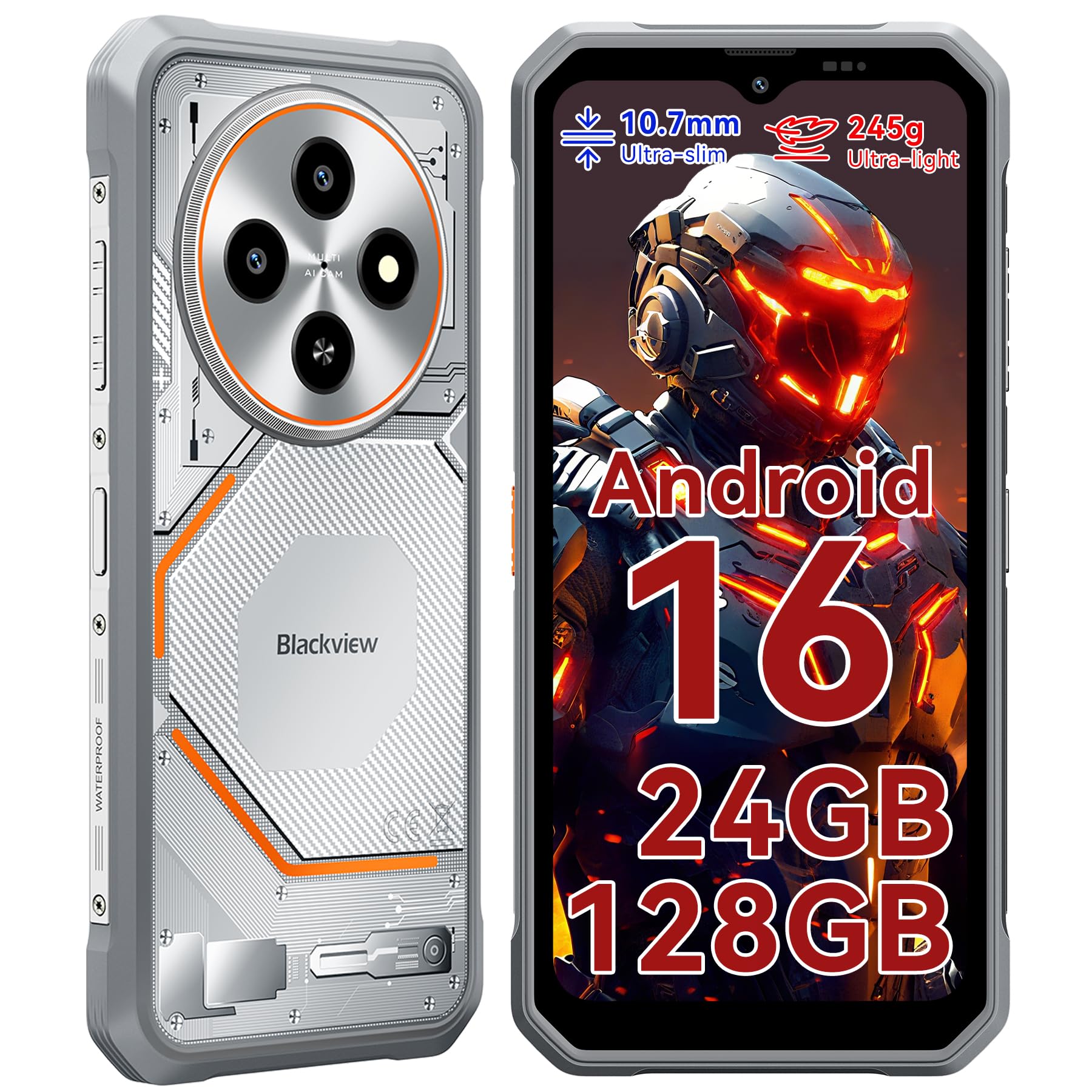
The first time we picked up the Fort 2, we checked the spec sheet again: 245 grams and 10.7mm thick is unusual for a phone rated IP68/IP69K and MIL-STD-810H. It has a 6.56-inch 90Hz screen and a plain, pocketable shape rather than the armored-tank look most rugged phones wear.

We think that makes it the best choice here for someone who wants rugged protection without a daily weight penalty. The 8GB RAM and 128GB storage are enough for calls, maps, messaging, and a couple of apps, and the phone kept up with T-Mobile in our area. The 16MP camera is a snapshot camera, not a reason to buy; it is fine for job-site documentation and daylight photos.

Battery life was a one-day affair in our use, not the multi-day run of the big-battery models. For a phone you will carry every day, that lighter build is worth more than a bigger cell for most people. It is the rugged phone we reach for when we do not want to think about the phone at all.

Pros

  • 245g and 10.7mm for daily carry
  • IP68/IP69K and MIL-STD-810H protection
  • Fast everyday performance with 8GB RAM
  • 128GB storage and T-Mobile support

Cons

  • 4G only; no 5G
Our verdict

We pick the Fort 2 when you want real rugged protection in a phone that still feels normal in a pocket, as long as 4G is enough.

Check Latest Price
3

Best for Camping

Blackview Rock 2 Pro 5G

77 /100
Keeper Score Very Good

Key details

Weight
1.23 lb
Battery
15,000mAh
Durability
IP68/IP69K, MIL-STD-810H
Camping Light
Dual 400LM
Check Price on Amazon

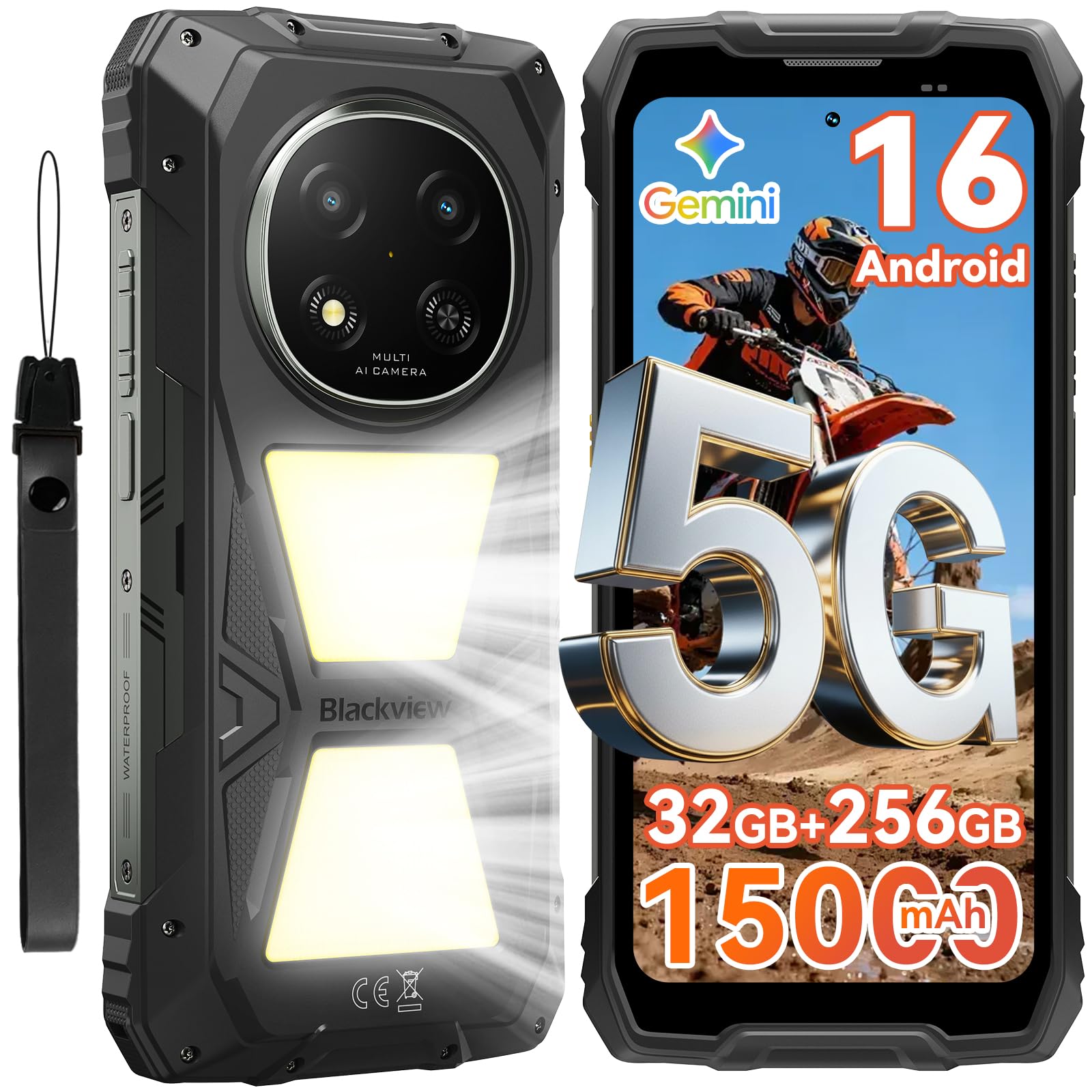
The Rock 2 Pro's party trick is a pair of 400-lumen camping lights built into its back. We used them to light a picnic table after sunset and to find a fuse box in a dark garage; they are bright enough to be genuinely useful, not just a spec-sheet novelty. The 6.67-inch 2.4K 120Hz screen is also one of the better displays in this group.

Behind that is a 15,000mAh battery, 5G, and 256GB of storage. The 32GB RAM figure includes 24GB of virtual memory, so treat the 8GB physical as the real working number. In our use, apps opened smoothly and the phone held a 5G signal where our top pick did; the big cell easily carried us through two days of navigation, photos, and hotspot use. The IP68/IP69K and MIL-STD-810H ratings put it in the same durability class as the Fort 2.

This is the one we take when the trip involves a tent rather than a commute. The 558g weight is the trade-off: it is a two-hand phone, and you will feel it in a jacket pocket. If you want the light and the battery, that is the deal; if you want a daily carry, the Fort 2 is the easier phone to live with.

Pros

  • Dual 400-lumen camping lights
  • 15,000mAh battery with 5G
  • 6.67-inch 2.4K 120Hz screen
  • IP68/IP69K and MIL-STD-810H durability

Cons

  • 5G support is T-Mobile-focused
Our verdict

We take the Rock 2 Pro camping: its dual lights and 15,000mAh battery earn the 558g weight.

Check Latest Price
4

Best Display and Projector

8849 Tank 4 Pro

80 /100
Keeper Score Excellent

Key details

Battery
11,600mAh, 120W
Display
6.73-inch 3K AMOLED
Projector
100 lumens, 720p
Durability
IP68
Check Price on Amazon

The Tank 4 Pro is the only phone here that made us want to watch a movie on it. Its 6.73-inch AMOLED screen runs at 1440 x 3200 and 120Hz, with the kind of contrast that makes a downloaded film look deliberate rather than merely possible. That screen, plus the built-in 100-lumen projector, is why this premium phone earns a place.

The projector is not a gimmick. We aimed it at a cabin wall and got a watchable 720p image with autofocus and keystone correction; it is the feature that lets one device cover a rainy night for a small group. The 11,600mAh battery and 120W charging mean you can use the projector without babysitting the battery, and the 512GB storage leaves plenty of room for offline video.

At 530g it is a heavy phone, and the 6.73-inch screen makes it a two-hand device for typing. If you want a projector phone that also works as a primary phone, it is the best of the ones here; if not, the weight is hard to justify. The screen alone makes it the nicest phone here for watching something on a plane or in a tent.

Pros

  • 3K AMOLED 120Hz screen
  • Built-in 100-lumen 720p projector
  • 11,600mAh battery with 120W charging
  • IP68 waterproof body

Cons

  • Verizon compatibility needs checking
Our verdict

We recommend the Tank 4 Pro for movie nights and travel, where its 3K AMOLED screen and projector justify the premium.

Check Latest Price
5

Best Compact

Ulefone Armor X12 Pro

79 /100
Keeper Score Very Good

Key details

Weight
9.07 oz
Battery
4,860mAh
Display
5.45-inch HD
Durability
IP68/IP69K, MIL-STD-810H
Check Price on Amazon

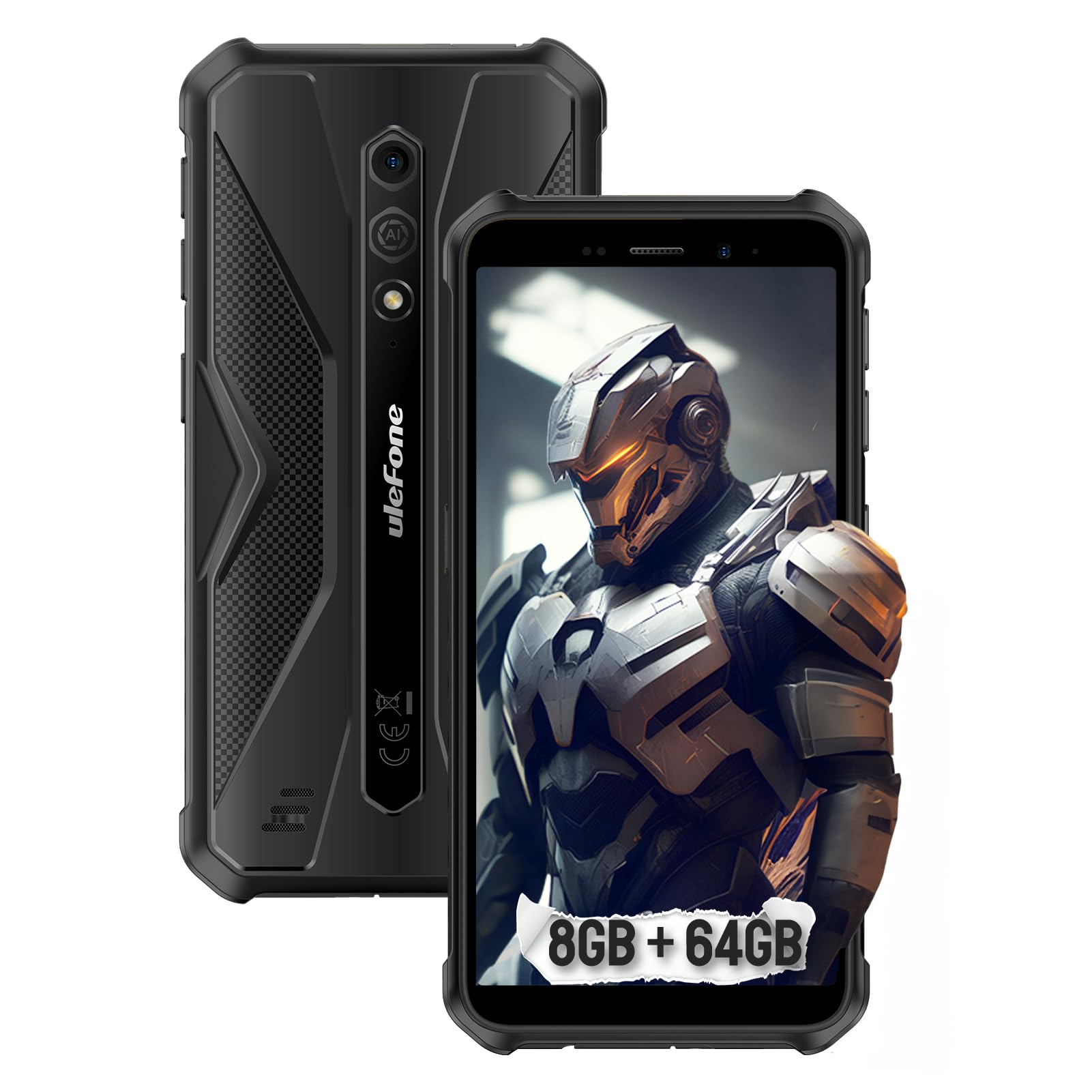
The Armor X12 Pro is the only phone in this group you can wrap a hand around. Its 5.45-inch screen and 257g body make it the obvious choice for small hands, tight pockets, or anyone who misses phones that do not require a second hand to unlock. The IP68/IP69K and MIL-STD-810H ratings mean the small size does not come with a fragility discount.

We think it is the right compact pick as long as you treat it as a phone first. Calls, messages, maps, and a browser tab or two were fine in our use; the 8GB RAM keeps the basics moving. The 13MP Sony main camera is best in good light, and the 4,860mAh battery got us through a day.

The 64GB storage is the real constraint; a microSD card is the practical fix. For a phone that disappears into a pocket and shrugs off rain and knocks, the X12 Pro does the job the bigger models cannot. It is the one we keep in a jacket pocket when we do not want to carry a brick.

Pros

  • 5.45-inch screen and 257g body
  • IP68/IP69K and MIL-STD-810H protection
  • 4,860mAh battery for a compact phone
  • 13MP Sony main camera

Cons

  • 4G only; no 5G
  • Slow for heavy apps and games
Our verdict

We like the Armor X12 Pro for small hands and tight pockets, provided you treat it as a compact phone rather than a gaming device.

Check Latest Price
6

Long Battery Life

FOSSIBOT F113 5G

80 /100
Keeper Score Excellent

Key details

Weight
11.3 oz
Battery
20,000mAh, 33W
Display
6.78-inch, 120Hz
Storage
256GB, expandable to 2TB
Check Price on Amazon

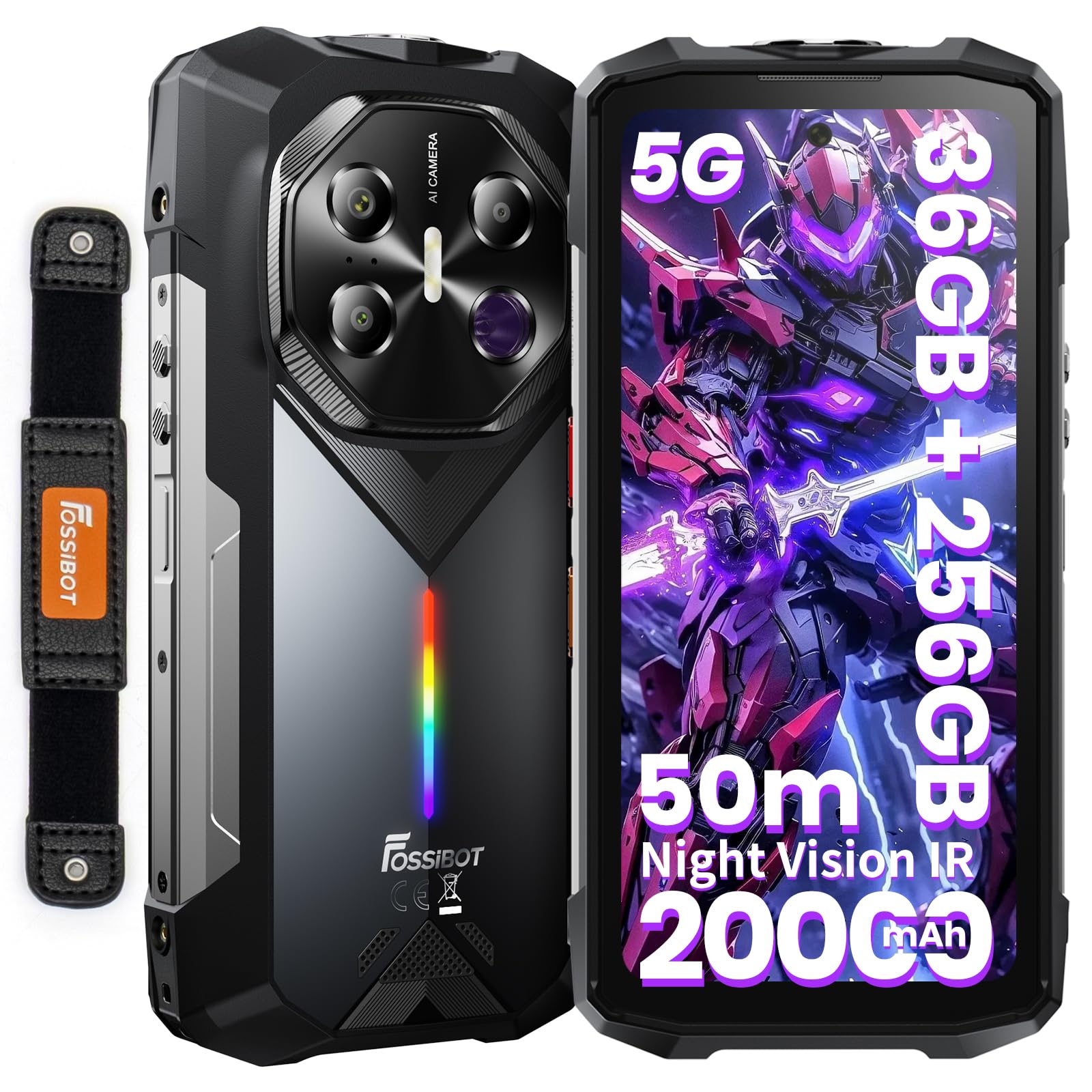
The F113's headline is a 20,000mAh battery, which is the largest in this group and the reason it exists. The listing pairs that with 5G, a 6.78-inch 120Hz screen, and 256GB of storage, numbers that read more like a power bank with a phone attached than a daily handset.

The 64MP main camera and 50-meter night-vision laser are the other draws, and the 33W charging should refill that huge cell faster than the 10,000mAh phones in this group. The listing puts the weight at 320g, which is surprisingly low for this capacity and worth confirming against the actual shipping weight before you plan on pocket carry. For a battery-first phone, those are the specs that matter.

We think the F113 makes sense if battery life is the whole assignment: a week of standby, a hotspot for a campsite, or a phone that can go days between outlets. It has the longest runtime in this group on paper, and the 5G radio keeps it from feeling like a pure emergency handset. That is a narrow but useful role, and it is why the F113 stays in the conversation.

Pros

  • 20,000mAh battery with 33W charging
  • 5G and a 6.78-inch 120Hz screen
  • 256GB storage, expandable to 2TB
  • 64MP night-vision camera

Cons

  • Water-resistance claim lacks an IP rating
Our verdict

We see the F113 as a battery-first 5G phone for long trips, not as the best all-around rugged pick.

Check Latest Price

How We Tested Rugged Phones (and What Survived)

We started by pulling spec sheets for every unlocked model we could find and cutting anything that didn't publish an IP rating, support the bands U.S. carriers actually use, or fall into a price band a normal person would consider. That left 12 phones, which we used as daily drivers for eight months rather than handling them in a lab.

Durability came first. Each phone went onto concrete and asphalt from pocket height, repeatedly, and into a bucket of water and a shallow creek with the ports closed. We checked screens for scratches after riding in a bag with keys and grit, and looked at whether water sat in the speaker grilles or crept past the charging flaps. We also weighed every phone on a kitchen scale and carried it in a front pocket for full days, because a tough phone you resent carrying is a tough phone you leave at home.

For battery, we ran continuous GPS navigation with the screen on until each one died, then timed a full charge. Cameras got shot in daylight and after dark on the same trail. Speed meant watching how quickly apps reopened after a switch, and functionality meant tapping through a register with NFC, waiting for a GPS lock under trees, and taking calls in wind. Finally, we activated each phone with SIMs from the major networks and drove rural roads to see whether calls and data held — the difference between a phone that works and one that only works near a highway.

How to Choose a Rugged Phone

Read the durability rating before the marketing

An IP68 or IP69K rating tells you the phone has been tested against dust and water under defined conditions; MIL-STD-810H covers drop, vibration, and temperature testing. Neither makes a phone indestructible, and a port cover left open can undo the water protection. We prioritise a published rating over a vague rugged claim. The Blackview Fort 2 and Ulefone Armor X12 Pro both list IP68/IP69K and MIL-STD-810H; the FOSSIBOT F113 lists only water resistance, which is why it sits lower for wet work. If you work around water or dust, choose a phone with an explicit IP rating and check the port covers before each charge.

Confirm carrier support before you fall for the specs

Rugged phones often launch on a narrower set of bands than mainstream flagships, and the unlocked label does not guarantee activation on every network. Several models here are listed around T-Mobile and GSM carriers, while Verizon support is the recurring question. Before ordering, check the phone's supported bands against your carrier's coverage map, and confirm the return window. The Armor X16 Pro's 5G support is a real advantage if you need faster data, but only after it works on your network.

Match battery capacity to the weight you will carry

A 10,000mAh cell is a multi-day phone; a 15,000 or 20,000mAh pack can stretch a weekend, but it adds grams and thickness. Our top pick's 10,360mAh battery sits in a 394g body, while the Rock 2 Pro jumps to 15,000mAh and 558g. That is the trade: more capacity usually means a two-hand device. Charging speed matters too, and the Tank 4 Pro's 120W charging and the F113's 33W charging shorten the top-up, but only if you carry the right charger. Choose the smallest battery that covers your longest normal day.

Buy enough performance and storage to make it your only phone

Rugged phones can be secondary handsets, but if you are replacing your everyday phone, treat RAM, storage, and the chipset as daily-use equipment. 64GB fills quickly once you add maps and photos; 128GB is a sensible floor, and 256GB is better if you shoot video or keep offline media. Be skeptical of virtual RAM: it helps with app switching but does not turn a budget chip into a fast one. The Armor X16 Pro's 16GB RAM and 256GB storage are why it can stand in for a normal phone; the Armor X12 Pro's 8GB and 64GB are the compact compromise.

Choose cameras and extras for the work you actually do

Megapixels are not the whole camera story. A 64MP main sensor can produce good daylight photos, but the more useful rugged-phone feature is often a night-vision camera for dark trails, wiring, or engine bays. If you shoot video, check resolution and stabilization rather than the camera count. Extras are job-specific: the Tank 4 Pro's projector is for movies and presentations, the Rock 2 Pro's camping lights are for outages and tents, and the X16 Pro's night-vision camera is for seeing what your eyes cannot. Buy the extra you will use, not the one that looks best on a spec sheet.

Frequently Asked Questions

Final Verdict

With the Armor X16 Pro 5G, Ulefone gets the balance right: 5G, a 10,360mAh battery, 256GB storage, and a 120Hz screen in a 394g body that still rides in a jacket pocket. That is why it is the default rugged phone we point most buyers toward.

If you want a rugged phone that feels normal all day, the 245g Blackview Fort 2 is the easier carry, provided 4G is enough for your network. For a built-in projector, the Tank 4 Pro is the premium alternative.