Best Projectors of 2026

The fantasy is a backyard movie night: blankets on the grass, a sheet against the fence, everyone quiet when the movie starts. The reality of a first projector is usually a picture you can only watch after full dark and a fan you have to talk over. What separates a good one from a frustrating one isn't the spec sheet — it's whether it holds up in the room you actually have.

My team and I spent the past six months running 12 projectors through real evenings — living rooms, bedrooms, a couple of backyards — and the ones worth keeping got the boring things right: autofocus that locks in seconds, a fan you forget about, apps built in so nobody's hunting for a streaming stick in the dark.

The number that trips up first-time buyers is brightness: the figure on the box is measured under conditions no living room reproduces, so an honest mid-range projector usually beats a bargain claiming the moon. We weighed picture and sound against price, because a dim image with great color is still a dim image. The picks below cover bedrooms, backyards, and the occasional ceiling projection.

Keeper Score summarizes customer ratings and review volume. Read it alongside the product details and trade-offs. How the score works.

1

Best Overall

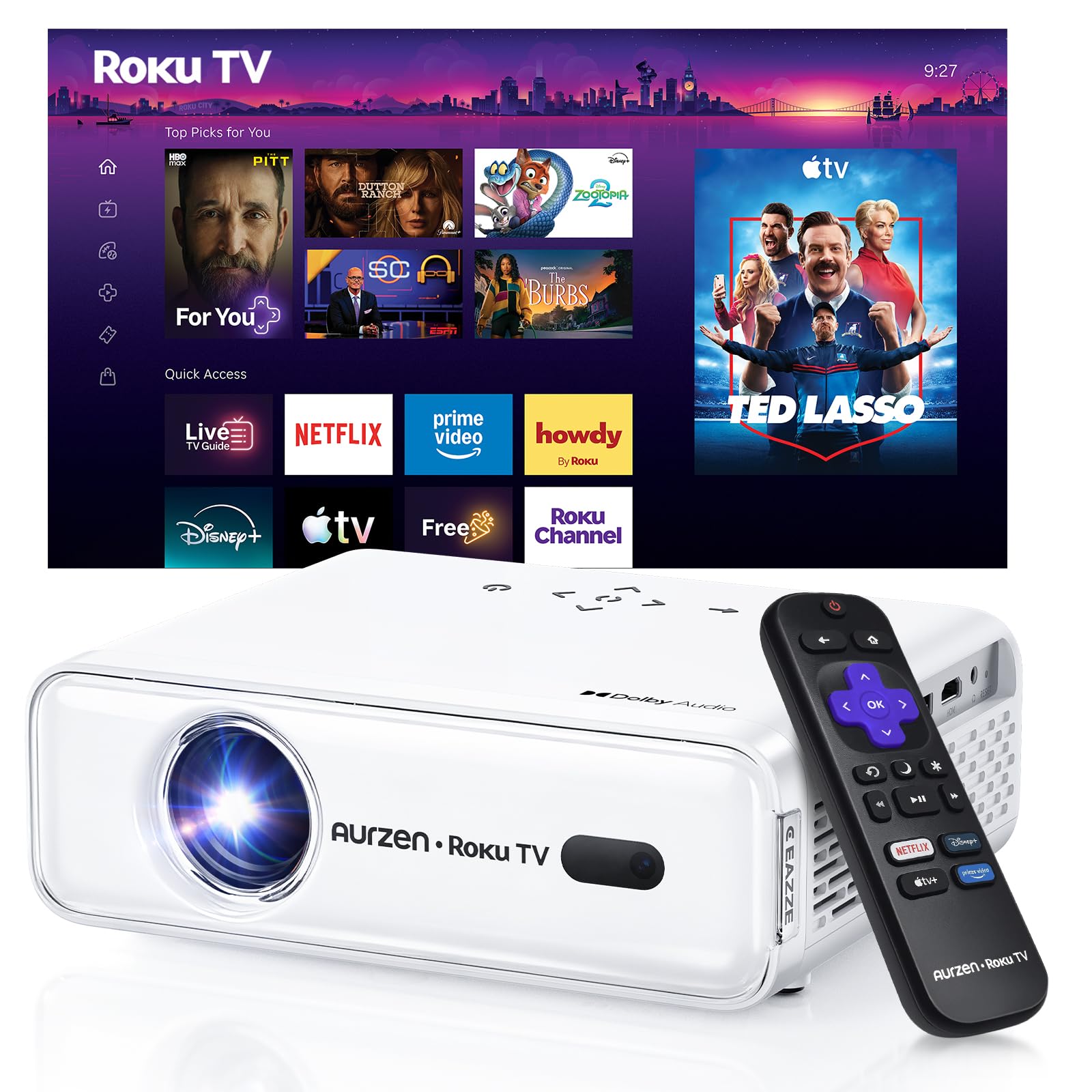
Aurzen EAZZE D1R

91 /100
Keeper Score Outstanding

Key details

Setup
Auto focus and auto keystone
Streaming
Roku TV built in
Screen Size
40 to 200 inches
Native Resolution
1920 x 1080
Check Price on Amazon

What sold us on the EAZZE D1R is what isn't in the box: no streaming stick, and no HDMI cable either. Roku is built in, so setup is the power cord, a Wi-Fi network, and a free Roku account, after which Netflix, Prime Video, Hulu, and YouTube are one button away with nothing dangling off the back. If you plan to plug in a console, add an HDMI cable to the order, since that's the one thing the box leaves out.

Auto focus and auto keystone take the ceremony out of moving it. We carried this one from a living room wall to a patio and back, and it squared itself up and refocused within a few seconds each time, which is the difference between a projector you use weekly and one that stays in the closet. Native 1080p covers 40 to 200 inches at 3.7 to 18.6 feet from the wall, and there's a foldable stand plus ceiling and tripod mounting if you want it out of the way.

The speakers and Dolby Audio are good enough that we stopped reaching for a Bluetooth speaker for casual watching, and AirPlay casting from an iPhone takes about two taps. That last part matters more than it sounds, because the person who owns the movie is rarely the person who owns the projector.

Pros

  • Roku built in, no streaming stick required
  • Auto focus and auto keystone in seconds
  • Native 1080p up to 200 inches
  • AirPlay and Bluetooth casting for phones

Cons

  • Picture washes out in a bright room
  • Fan noise carries in quiet scenes
Our verdict

We tell most people to start here: Roku inside, setup that handles itself, and a native 1080p picture that fills a wall without a single add-on.

Check Latest Price
2

Best for Home Theater

NEBULA Cosmos 4K SE

85 /100
Keeper Score Excellent

Key details

Weight
9.9 lb
Streaming
Google TV with 4K Netflix
Brightness
1,800 ANSI lumens
Native Resolution
3840 x 2160
Check Price on Amazon

A 4K projector this small shouldn't look this good. On a 150-inch wall in a dark room, the Cosmos 4K SE resolves detail the 1080p models here simply can't, and Dolby Vision keeps skin tones and shadows from collapsing in the darkest scenes. HybridBeam, which pairs an LED with a laser, is rated at 1,800 ANSI lumens: several times the output of the minis in this guide, so dim rather than pitch-black is enough.

Google TV with licensed Netflix is built in, so 4K streaming doesn't need a dongle, and the IEA 4.0 setup handles focus, keystone, screen fit, obstacle avoidance, and wall-color correction by itself. There's a handle and a tripod mount, so it can move. At 9.9 pounds it's a two-hands carry rather than something you toss in a tote.

Here's our read: this is the projector for a room where the film is the point. Everything else on this list trades picture for size, money, or daylight. The Cosmos doesn't, and once it's mounted and the room is dark you stop thinking about the hardware entirely.

Pros

  • True 4K with Dolby Vision
  • 1,800 ANSI lumens holds up in a dim room
  • Google TV with 4K Netflix built in
  • Automatic focus, keystone, and screen fit

Cons

  • Auto keystone drifts at steep angles
Our verdict

If the room is dark and the film is the point, this is the best picture in the group, and the only one here that does true 4K with Dolby Vision.

Check Latest Price
3

Best for Bright Rooms

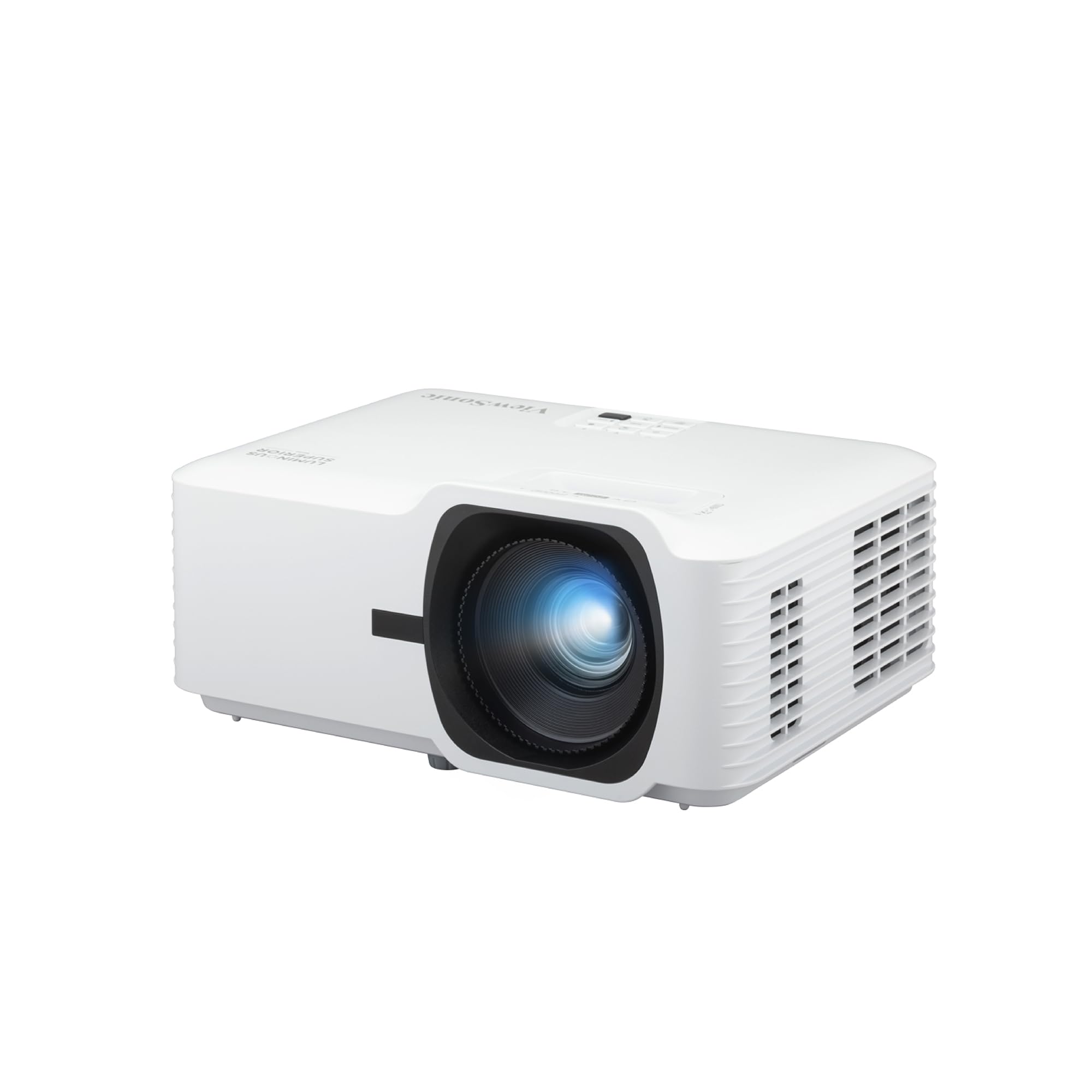
ViewSonic LS740HD

85 /100
Keeper Score Excellent

Key details

Brightness
5,500 ANSI lumens
Screen Size
30 to 300 inches
Optical Zoom
1.3x
Native Resolution
1920 x 1080
Check Price on Amazon

5,500 ANSI lumens is not a number you argue with. Point the LS740HD at a wall with the blinds open and the picture is still there, bright and contrasty and watchable, which almost nothing else in this guide can claim. The laser light source is rated in the tens of thousands of hours, so there's no lamp to replace and no dimming to plan around.

We think of it as installed equipment rather than a gadget. It wants a ceiling mount or a high shelf, it weighs 6.6 pounds, and everything comes in over HDMI: a streaming stick, a laptop, a console, a golf simulator rig. What that buys you is a 1.3x optical zoom and four-corner adjustment, which let you size and square the image without moving the box, plus portrait and 360-degree projection for awkward rooms.

For a golf simulator, a bright living room, or a 200-inch image at the back of a long room, the light is the entire purchase and nothing here delivers more of it. It's the least friendly projector on this list to live with and the only one that doesn't care whether you closed the curtains.

Pros

  • 5,500 lumens stays visible with lights on
  • Laser light source, no lamp changes
  • Optical zoom and four-corner adjustment
  • Two HDMI inputs plus RS232 control

Cons

  • No streaming apps or wireless connectivity
  • Occasional orange flash can appear on screen
Our verdict

Buy this when you can't close the curtains: 5,500 lumens and a laser source make it the one projector here that ignores a lit room.

Check Latest Price
4

Best Battery-Powered

XGIMI Vibe One

85 /100
Keeper Score Excellent

Key details

Battery
Up to 1.2 hours video
Streaming
Google TV with Netflix
Brightness
250 lumens
Native Resolution
1920 x 1080
Check Price on Amazon

One point two hours of video per charge is the number that decides whether the Vibe One is for you. That's a feature film with the credits, not a double bill, and the four-hour figure on the box is music playback with the light off. We think that's the right trade, because it's the only projector here that runs entirely on its own battery, which puts a backyard, a campsite, or a table far from an outlet genuinely in reach.

Google TV with licensed Netflix is a bigger deal than it sounds on a battery portable. Plenty of small smart projectors make you cast from a phone or add a stick, and this one simply signs in and streams. The 1080p picture is clean on a white wall, and auto focus and auto keystone mean you can move it mid-evening without a setup ritual.

The rest is nicer than it needs to be. The cylindrical body looks like a speaker and sounds like one, with dual 3W JBL drivers that fill a patio, and Bluetooth out pairs with a Sonos or a soundbar when you want more. At 1.4 kg it goes in a tote next to the charger rather than in a case of its own.

Pros

  • Runs a full movie on its own battery
  • Google TV with licensed Netflix
  • JBL speakers plus Bluetooth audio out
  • 1.4 kg and easy to carry outdoors

Cons

  • 250 lumens is dark-room only
Our verdict

The one we hand people heading outside with no outlet: a built-in battery, licensed Netflix, and a clean 1080p picture once the sun drops.

Check Latest Price
5

Best Budget Bundle

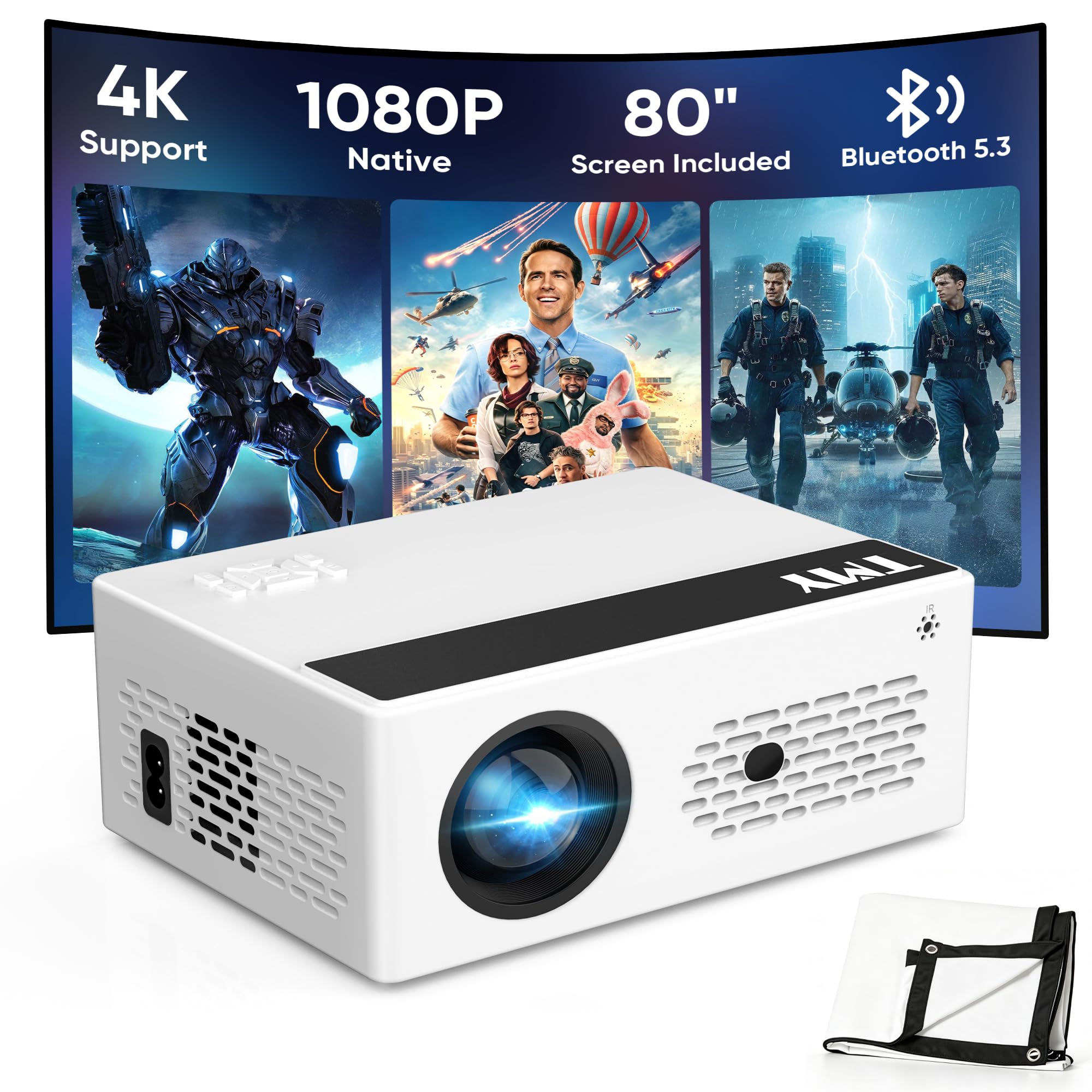
TMY V08

88 /100
Keeper Score Excellent

Key details

Speaker
15W
Brightness
300 ANSI lumens
Included Screen
80 inches
Native Resolution
1920 x 1080
Check Price on Amazon

An 80-inch foldable screen comes in the box, and that single inclusion changes what this projector actually costs you. There's no hunting for a blank wall and no taping a sheet to the fence: unroll it, hang it, and the whole setup folds into a closet afterward. For a first projector, the screen is the piece people forget to budget for.

The rest of the package is sensible. Native 1080p resolution, a 15W speaker that's genuinely loud enough for a living room, and two-way Bluetooth, so you can send audio to a soundbar or use the projector as a speaker with the light off. There are no apps on board, so add a Fire Stick or a Roku to the HDMI port and you're streaming.

We keep recommending this one to first-time buyers because it does the basics without drama: plug in, focus, watch. Nothing else at this end of the range arrives with everything you need in one box, screen included.

Pros

  • 80-inch screen included in the box
  • Native 1080p resolution
  • 15W speaker and two-way Bluetooth
  • Plug-and-play setup

Cons

  • Bluetooth pairing can be stubborn
  • Fan noise in quiet scenes
Our verdict

The cheapest complete setup here: native 1080p, a speaker that carries a room, and an 80-inch screen in the box for a first-time buyer.

Check Latest Price
6

Best for Bedrooms

YGSKK Mini Projector

91 /100
Keeper Score Outstanding

Key details

Weight
1.7 lb
Brightness
300 ANSI lumens
Screen Size
50 to 200 inches
Native Resolution
1920 x 1080
Check Price on Amazon

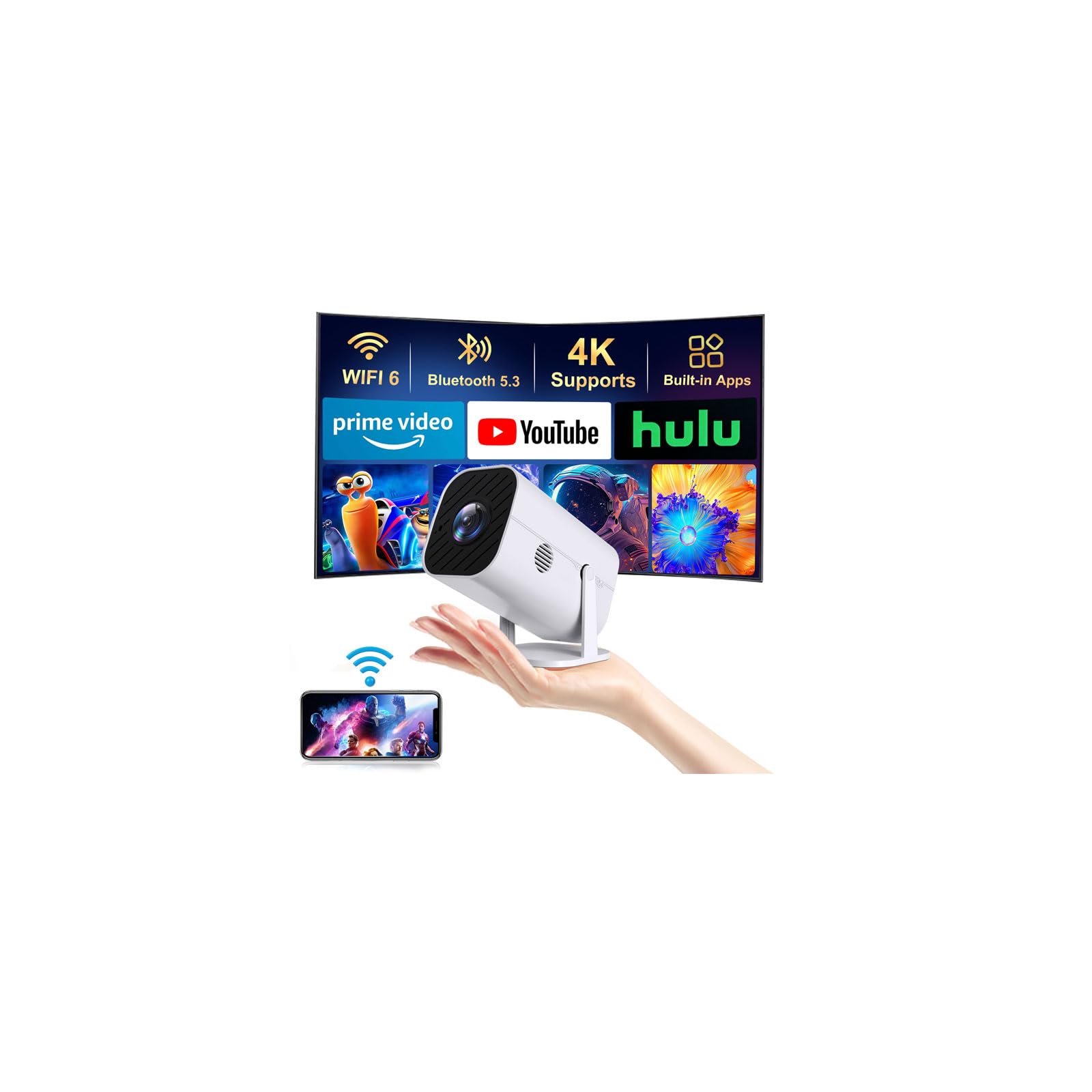
Bedrooms are the hardest rooms for a projector: the wall is close, the bed is in the way, and the ceiling is often the only clear surface. At 8 by 4 by 4 inches and 1.7 pounds, this one perches on a nightstand or a stack of books, throws 50 to 200 inches from 4.9 to 16.4 feet, and moves between rooms without unplugging a shelf.

What we like most is that it doesn't need a stick. Prime Video, YouTube, and Hulu are built in, Wi-Fi 6 keeps the stream steady, and Bluetooth 5.3 sends audio to a speaker or headphones when you don't want to wake the house. Electric focus on the remote is the detail that makes it work in a bedroom, since you can sharpen the picture from the pillow instead of walking up to the lens.

Native 1080p, a light source rated at 100,000 hours, and a three-year manufacturer warranty are more than this end of the market usually offers. The keystone correction is digital, so the sharpest results come from pointing the lens as close to square as the room allows; angle it hard and the corners soften.

Pros

  • Streaming apps built in, no stick needed
  • 1.7 pounds and 8 by 4 by 4 inches
  • Electric focus from the remote
  • Wi-Fi 6 and Bluetooth 5.3

Cons

  • Best picture only with the lights off
Our verdict

The bedroom projector we point people to: 1080p, streaming apps already installed, and a body that sits on a nightstand without becoming furniture.

Check Latest Price
7

Lights-On Sports

Epson EX3290

83 /100
Keeper Score Excellent

Key details

Brightness
4,000 lumens
HDMI Inputs
2
Screen Size
33 to 300 inches
Native Resolution
1280 x 800
Check Price on Amazon

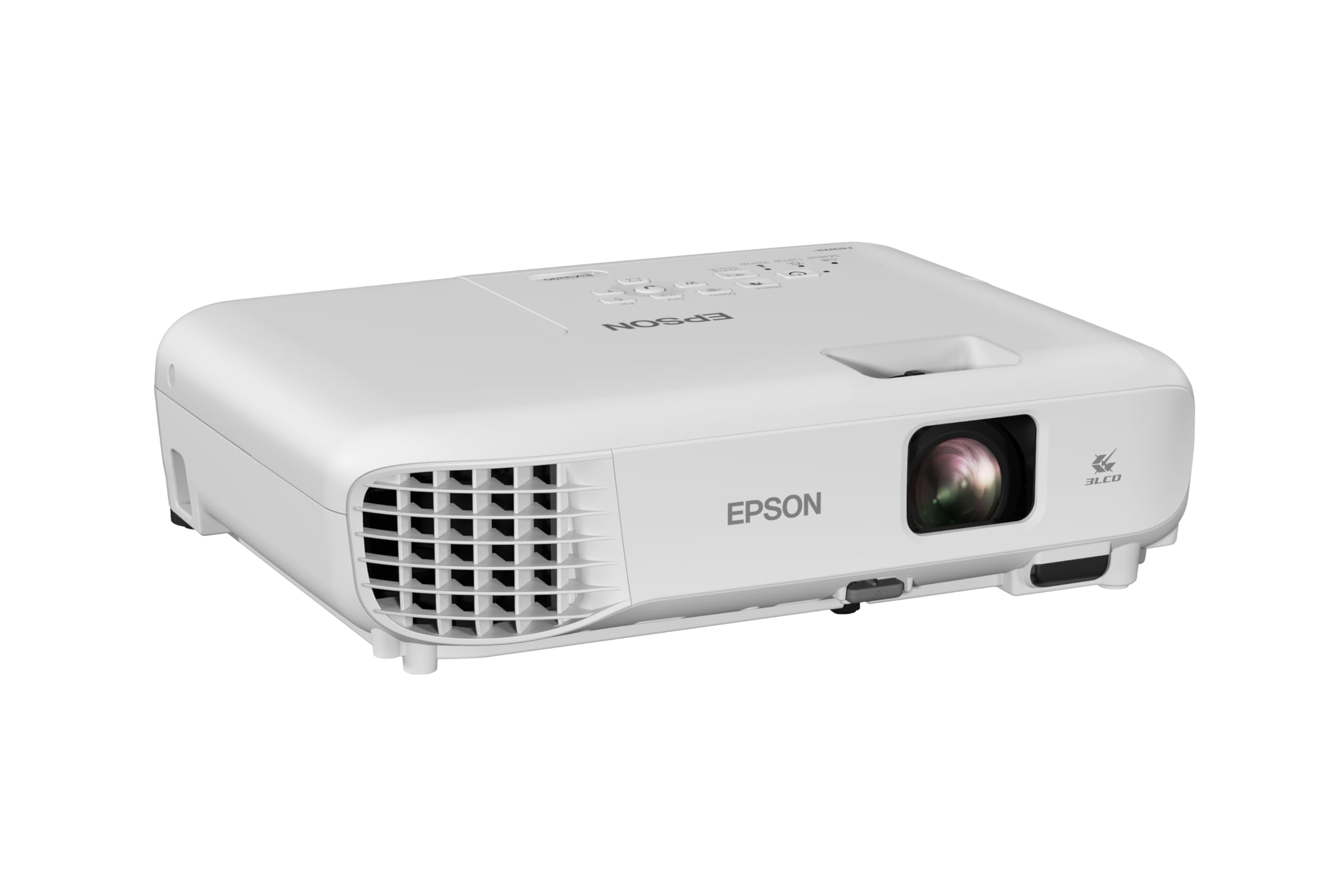
If the ViewSonic is the laser answer to a bright room, the EX3290 is the cheaper one: 4,000 lumens of white and color brightness from a 5.2-pound body that sits on a shelf or hangs from a ceiling. For a room where the lights stay on, that combination covers most of what matters.

The 3LCD part is worth understanding. Three LCD panels, one per primary color, mean no spinning color wheel and no rainbow fringing, which is why the color here looks even rather than punchy. Two HDMI ports, a built-in speaker, a 16,000:1 contrast rating, and images from 33 to 300 inches round out a straightforward package.

The catch is the panel. 1280 by 800 sits below 1080p, and 16:10 rather than 16:9 means widescreen films letterbox.

Where we come out: buy this for a den, a sports room, or a space where the lights are on and the screen is big, because at 100 inches the brightness carries the picture and the resolution is a footnote. For movie nights in the dark, the Aurzen shows a sharper 1080p image for less; for a bright room at any size, the ViewSonic is the stronger tool.

Pros

  • 4,000 lumens for lights-on rooms
  • 3-chip 3LCD color without rainbow fringing
  • Two HDMI inputs
  • 5.2 pounds and ceiling-mountable

Cons

  • 1280 x 800 native, below full HD
Our verdict

A bright-room projector that prioritizes even color over pixels: the sensible buy for a den or sports room where the lights stay on.

Check Latest Price
8

Dorm Rooms

Sainyer Q100

82 /100
Keeper Score Excellent

Key details

Rotation
270 degrees
Screen Size
50 to 300 inches
Native Resolution
1280 x 720
Check Price on Amazon

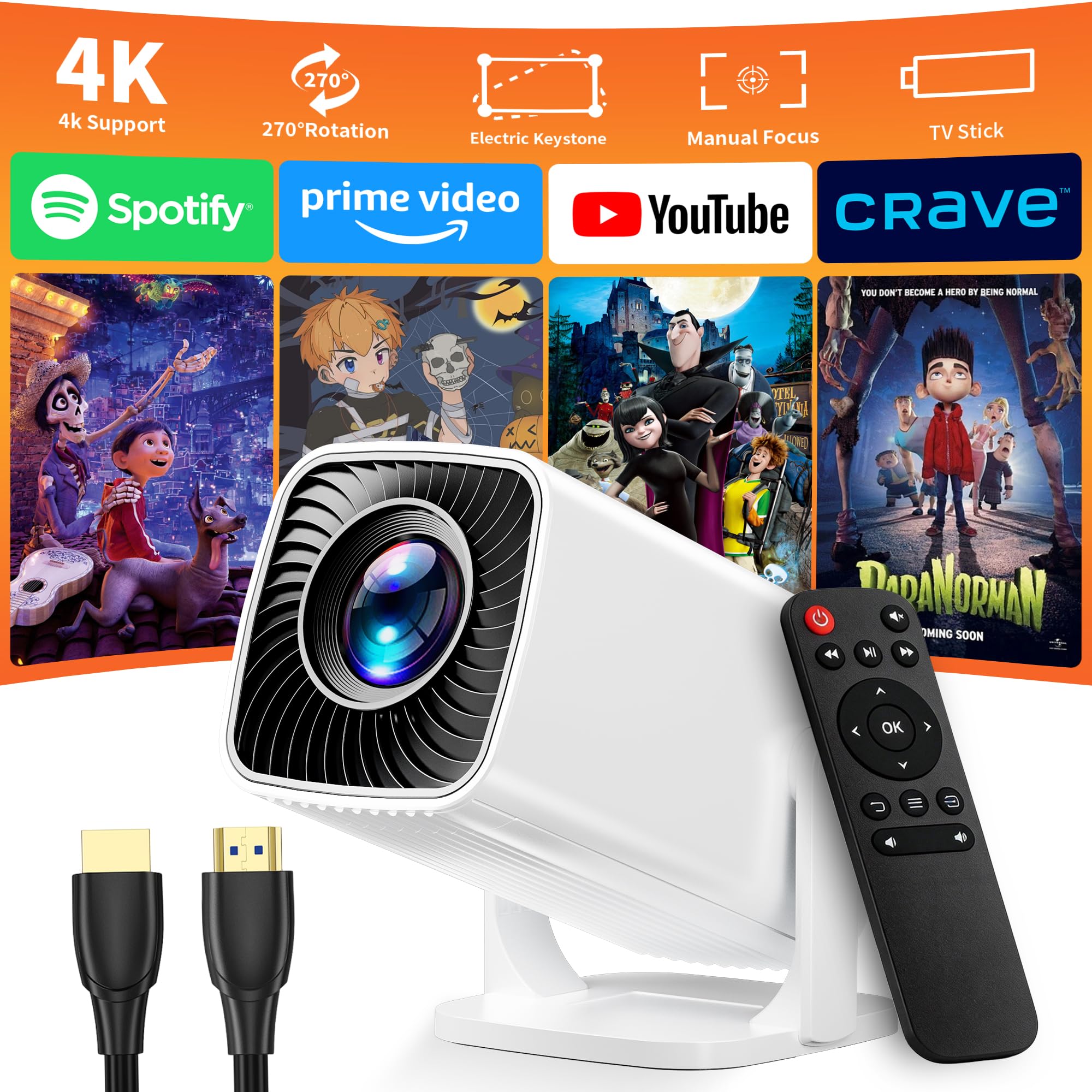
The 270-degree rotating stand is the whole idea. Set the Q100 on a nightstand, tilt the lens up, and the picture lands on the ceiling; swing it around and it hits the opposite wall. It's a short-throw design with a 50 to 300 inch image range, so it fills a room from closer than most of the minis here.

What you get for that is a projector small enough to forget in a bag, with a stand that removes the need for a mount and a body that sets up with a cable and an outlet. HDMI, USB, and AUX inputs cover a laptop, a console, or a TV stick, and an electric keystone squares the picture up.

Brightness is modest, so plan on a dark room. That's the same trade every small projector here makes, and it's the reason this one is at its best after bedtime rather than during the game.

Our take: it's a dorm projector, a kid's-room projector, or a first projector you're not certain you'll use. It won't replace a TV, but it puts a big picture on a ceiling without a mount, and that's a genuinely different thing to own.

Pros

  • 270-degree rotating stand handles ceiling projection
  • Short throw fills a room from close up
  • HDMI, USB, and AUX inputs
  • Small and light enough to travel with

Cons

  • 720p native resolution
  • No built-in streaming apps
Our verdict

A rotating stand does the mounting work here, which makes the Q100 the easiest way to put a big picture on a ceiling without buying hardware.

Check Latest Price

What Six Months With 12 Projectors Taught Us

We started with every projector that had a real following and a review history worth reading, then filtered by how people actually use these things: battery-powered units that get carried out to a yard, brighter fixed models for a living room with the blinds open, and a couple of laser and LCD options built to hang from a ceiling. That left 12, and we bought them at retail rather than accepting loaners.

Each one moved into a normal home for at least two weeks. It did movie nights on a white wall, a bedroom ceiling projection with the unit lying on the bed, a dusk screening with the screen tied to a fence, and Sunday-afternoon sports with daylight coming in. Testing ran six months in total.

We timed setup from cutting the tape to the first frame — menu, Wi-Fi pairing, autofocus, keystone — and noted how often we had to re-correct the image after nudging the unit or moving it between rooms. For brightness and color, we watched the same low-lit scenes at dusk, in full dark, and with a lamp switched on, watching for skin tones going orange and blacks turning gray. Fan noise got judged during quiet dialogue, from three feet away and from the couch. We paired phones over Bluetooth, ran each built-in speaker at half volume, and checked whether audio drifted out of sync with the picture; battery models were unplugged and run until they quit. A couple of units developed a flickering HDMI handshake after a few weeks of daily use — the kind of thing a ten-minute demo never surfaces.

How to Choose a Projector for Your Room

Match Brightness to the Room You Have

Lumens are where listings get creative, so look for ANSI lumens and treat anything else as marketing. The minis here, at 200 to 300 ANSI lumens, are at their best in a dark room and fade fast in daylight. The Cosmos at 1,800 holds up in a dim room and gives up in a bright one. The Epson and ViewSonic, at 4,000 and 5,500, are the only two here that stay watchable with the lights on.

The practical rule: if you can't darken the room, spend on brightness before anything else, because no amount of resolution rescues a washed-out picture.

Native Resolution Is the Number That Matters

Native resolution is what the projector actually puts on the wall. '4K support' and '1080p supported' usually mean it accepts a higher-resolution signal and scales it down, which is why a budget model can advertise 4K and still show 720p. The 720p units here are fine for casual viewing and soft on text; 1080p is the sensible floor for a 100-inch picture and is what most of this list delivers.

True 4K, as on the Cosmos, only pays off with a 4K source and a room dark enough to see the detail. Check the native figure before the headline.

Built-In Apps or a Stick You Already Own

A projector with Roku or Google TV inside needs one cable and no dongle, which is why we lean that way for anything that moves between rooms; the trade is that a free account and a steady internet connection become part of setup. A plain projector plus a Fire Stick costs less and lets you upgrade the streaming side later, at the price of an extra cable and an extra remote.

Either approach works. Decide before you buy, because casting from a phone is charming for a week and tedious by the second month.

Automatic Setup Is Worth Paying For

Auto focus and auto keystone matter in proportion to how often the projector moves. On a fixed shelf they're a one-time convenience; on something that travels from the living room to the backyard, they're the difference between using it and not. Digital keystone also softens the image as it corrects, so the sharpest picture always comes from pointing the lens close to square and letting the automation finish.

Optical zoom, as on the ViewSonic, changes the image size without touching picture quality, which is what you want on a permanent install.

Sound, Power, and Everything After the Purchase

Built-in speakers run from 3W to 15W. The better ones carry a living room, and Bluetooth out to a soundbar or a portable speaker is the upgrade path on nearly every model here. Battery life is quoted generously: the XGIMI's four-hour figure is music playback, and video runs about 1.2 hours, so treat a battery as one film rather than an evening.

Then check where the outlet is. Even the brightest projectors here still need a cord.

Frequently Asked Questions

Final Verdict

Our recommendation for most people is the Aurzen EAZZE D1R. Roku inside, focus and keystone that handle themselves, and a native 1080p picture that fills a wall: it's the least work and the fewest accessories for a projector that moves between rooms and yards.

Spend more only when you can name the reason. The NEBULA Cosmos 4K SE earns it in a dark room where the picture is the point, and the ViewSonic LS740HD earns it when the lights have to stay on. For a bedroom or a dorm, the YGSKK and the Sainyer do the job for far less.