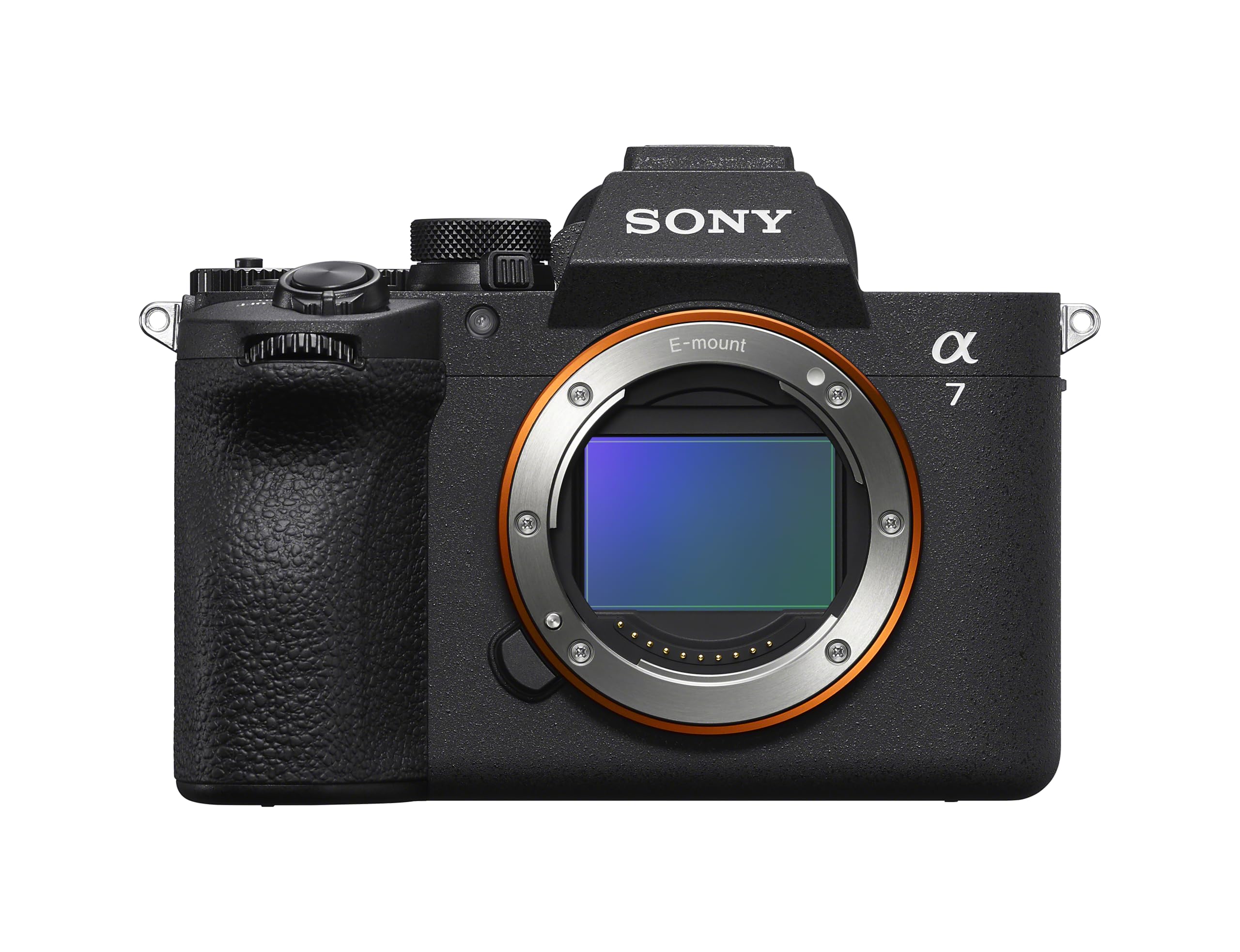
Best Overall

Sony Alpha a7 IV
Key details
- Video
- 4K60 10-bit 4:2:2
- Sensor
- 33MP full-frame CMOS
- Card Slots
- 2 (CFexpress Type A, SD)
- Continuous Shooting
- 10 fps
Thirty-three megapixels is the number that makes the a7 IV the default here. It gives you enough resolution to crop a vertical out of a horizontal frame, print large, and still keep a full-frame sensor's low-light and depth-of-field advantages. At the same midrange price as the Canon R6 Mark II, that extra resolution is the first thing we noticed when comparing files side by side.
What keeps it at the top for us is how little it asks you to give up. The hybrid autofocus with Real-time Eye AF is quick and sticky on people and animals, the 10fps burst is enough for portraits, events, and most action, and 4K60 10-bit recording with S-Cinetone gives video work a clean starting point. Dual card slots—one CFexpress Type A, one SD—are the kind of redundancy a working photographer actually needs.
The menu system is deep enough that we spent time mapping custom buttons before it felt quick; once set up, the grip and control layout are comfortable for long days. We also appreciate that the a7 IV uses the same E-mount lenses as the a7 V, so moving up later does not mean replacing glass. For a broad mix of stills and video, this is the body we hand to most professionals first.
Pros
- 33MP full-frame files leave real cropping room
- Real-time Eye AF is quick and dependable
- 4K60 10-bit video with S-Cinetone
- Dual card slots add working redundancy
Cons
- 10 fps trails the speed-focused picks
For most working photographers, the a7 IV is the best all-rounder here: 33MP files, dependable autofocus, 4K60 video, and dual card slots at a midrange price.