Best POV Cameras of 2026

The best riding footage I've ever shot came from a camera I forgot I was wearing — a thumb-size thing clipped to my jacket collar that recorded the whole descent without a mount, a tripod, or my phone leaving my pocket. That's the promise of a POV camera: it captures what you're actually seeing, hands free, while you get on with the ride. The catch is that shrinking a camera forces trade-offs, and plenty of them hide until the second or third outing.

Over the past six months, my team and I have worn 12 of these cameras on commutes, dog walks, gravel loops, and a couple of wet motorcycle rides. What separated them had little to do with the resolution on the box: it was whether footage stayed steady when the ground didn't, whether they started recording without a fiddle, and whether the battery outlasted the ride. A few inexpensive ones beat models at twice the price. The picks below are the ones we kept reaching for.

Keeper Score summarizes customer ratings and review volume. Read it alongside the product details and trade-offs. How the score works.

1

Best Overall

Sixmou i3

84 /100
Keeper Score Excellent

Key details

Video
4K
Weight
1.25 oz (35.7 g)
Waterproof
131 ft (40 m) with case
Claimed Runtime
150 min
Check Price on Amazon

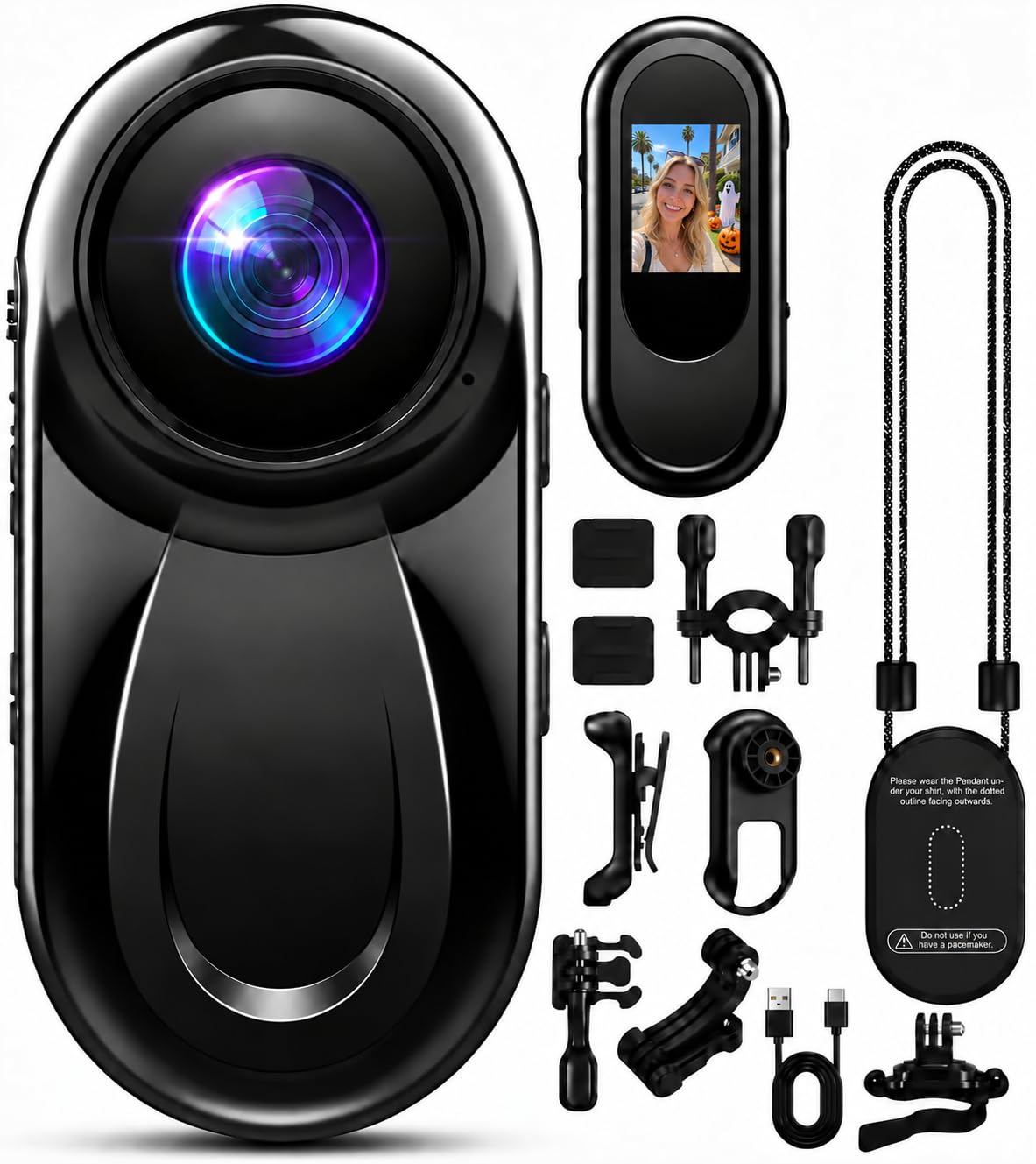
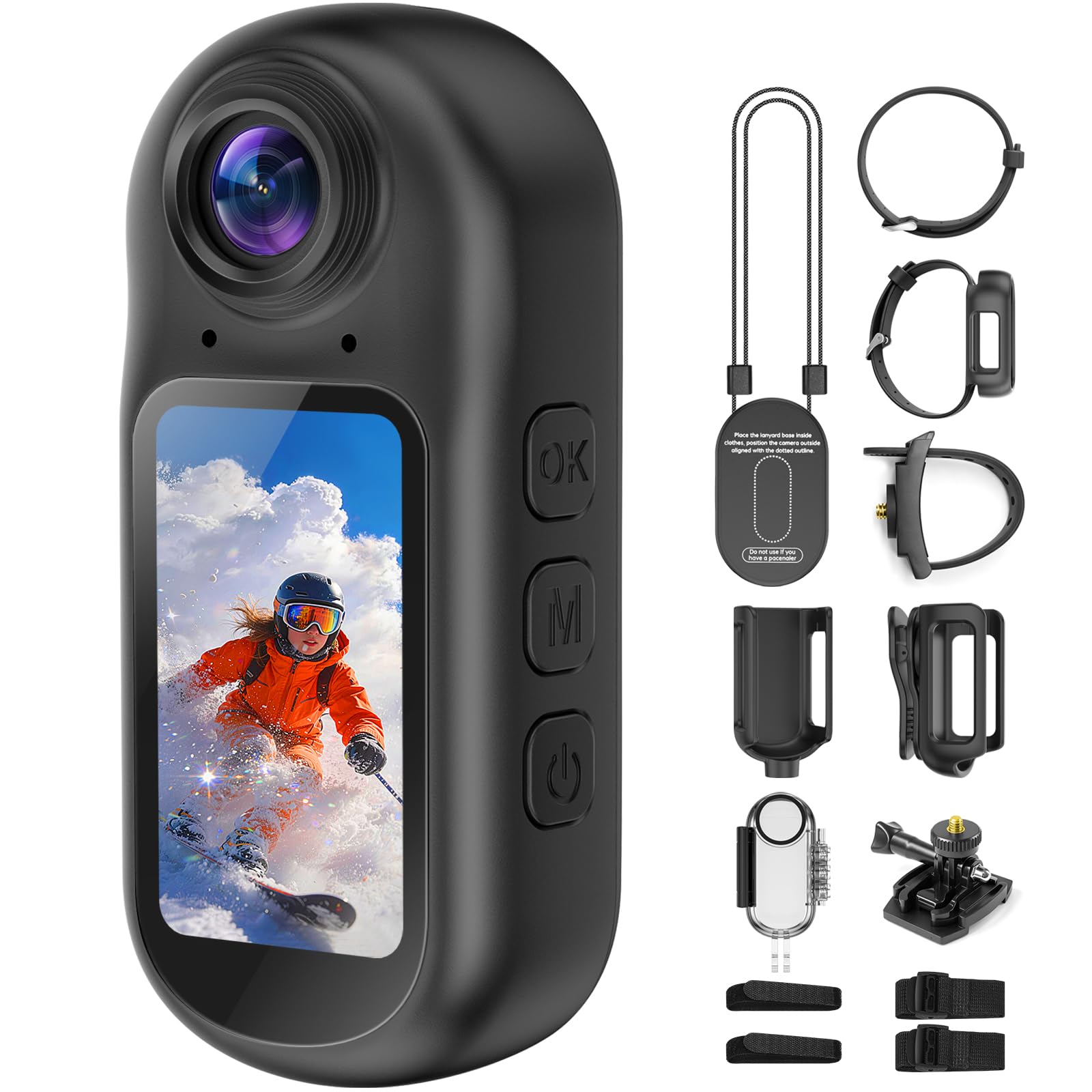
At 1.25 ounces, the i3 is small enough to perch on a cap brim or a jacket collar without dragging it down. Sixmou includes a spring clip, a magnetic pendant, a waterproof case, and a 64GB card, so the camera arrives with several ways to wear it instead of sending you shopping for a mount. The 150-degree lens is wide enough to keep your hands and the scene in frame without much aiming.

We like that flexibility for cycling and walking: the clip handles a quick jacket mount, while the pendant makes the camera less conspicuous than a helmet rig. The waterproof case is the other useful piece, and its 131-foot rating is far beyond what a rainy commute or a splash at the pool requires. The trade-off is that the case is a separate shell, so the camera grows beyond its thumb-size footprint when you need protection.

The 150-minute claimed runtime is generous for this class, and the 4K footage gives you more room to crop than a 1080p clip camera. We treat it as a short-session camera: start recording, glance at the app to confirm the frame, and stop when the moment passes. For family walks, pet clips, and quick rides, that's a simpler routine than carrying a bigger action camera and a pile of mounts.

Pros

  • Complete clip, pendant, case, and card bundle
  • Feathery 1.25-ounce body
  • 4K video with a 150-degree lens
  • 150-minute claimed runtime

Cons

  • Magnetic mount needs metal or the pendant
Our verdict

The i3 is the POV camera we hand to someone who wants hands-free footage without fuss: it's tiny, mounts several ways, and includes the card and case.
Check Latest Price
2

Best Video Quality

Insta360 GO Ultra

86 /100
Keeper Score Excellent

Key details

Video
4K/60fps
Sensor
1/1.28-inch
Weight
1.87 oz
Claimed Runtime
180 min
Check Price on Amazon

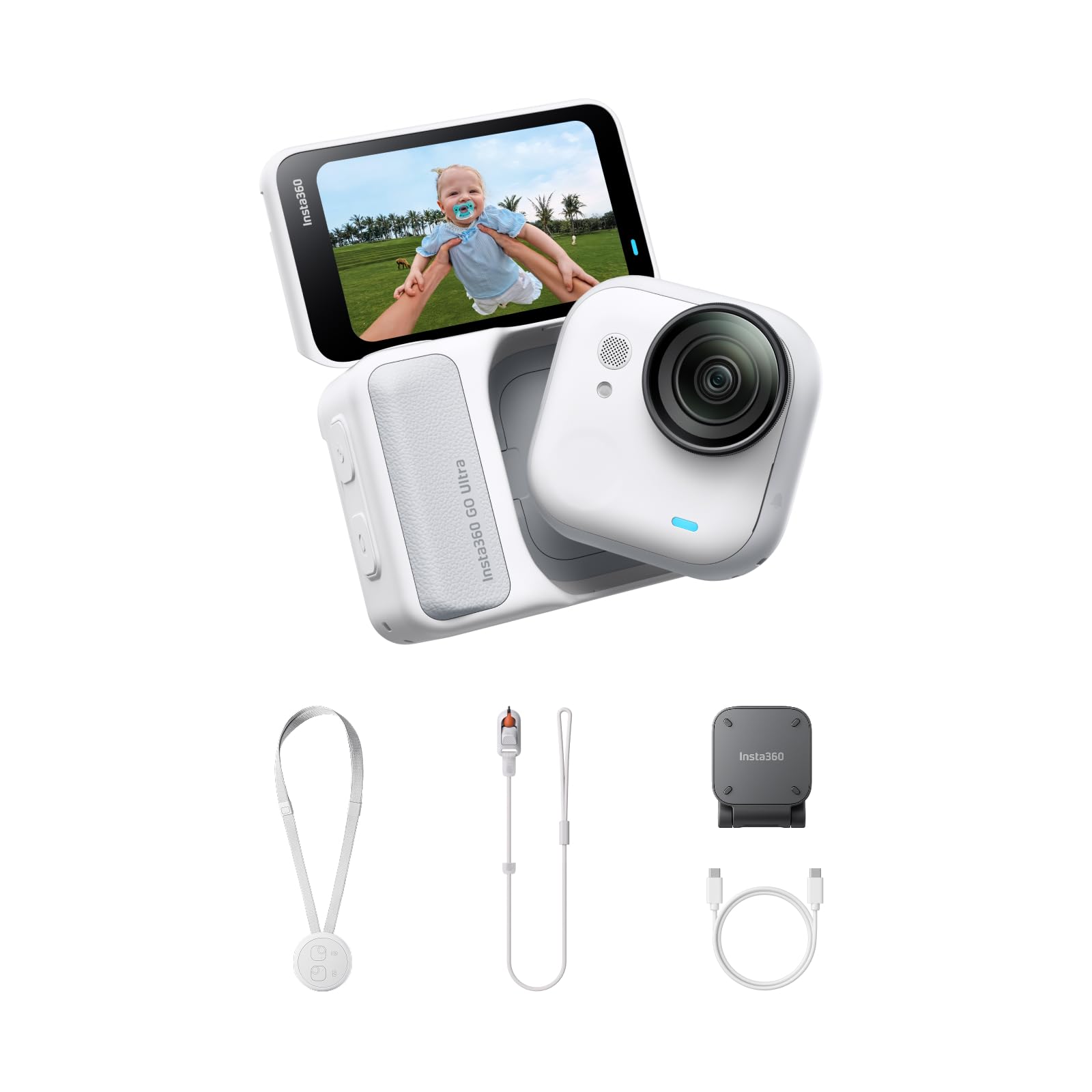
The 1/1.28-inch sensor is the reason the GO Ultra costs more than a basic thumb camera, and it's the first thing we noticed in the footage. It records 4K at up to 60fps with a 156-degree field of view, and the combination gives you cleaner detail in low light plus more room to crop than the small-sensor cams here. Active HDR helps hold onto highlights when you move between shade and sun.

The 53-gram body is the other half of the appeal. It's light enough to clip to a cap or hang from the magnetic pendant, and Insta360's mounting system is more flexible than a fixed helmet shoe when you want to switch angles. We like that the camera doesn't turn a walk into a production: you can start a clip, pocket the camera, and sort the framing later on your phone.

The listed runtime is a best-case figure, and 4K60 will drain it faster, so plan on shorter takes or a top-up between sessions. We treat the GO Ultra as the quality-first option in this group, not the one for an uninterrupted hour-long ride. For the footage you'll actually want to keep, that trade is easier to accept.

Pros

  • Sharp 4K60 with a larger sensor
  • Light 53-gram magnetic body
  • Wide 156-degree field of view
  • 4K Active HDR and low-light mode

Cons

  • Long 4K60 takes can trigger overheating
  • MicroSD card sold separately
Our verdict

We recommend the GO Ultra when image quality and a truly wearable body matter more than long, uninterrupted takes.

Check Latest Price
3

Best With a Screen

Acgiewo AG700

87 /100
Keeper Score Excellent

Key details

Video
4K/30fps
Screen
1.47-inch HD
Weight
1.23 oz
Stabilization
6-axis EIS
Check Price on Amazon

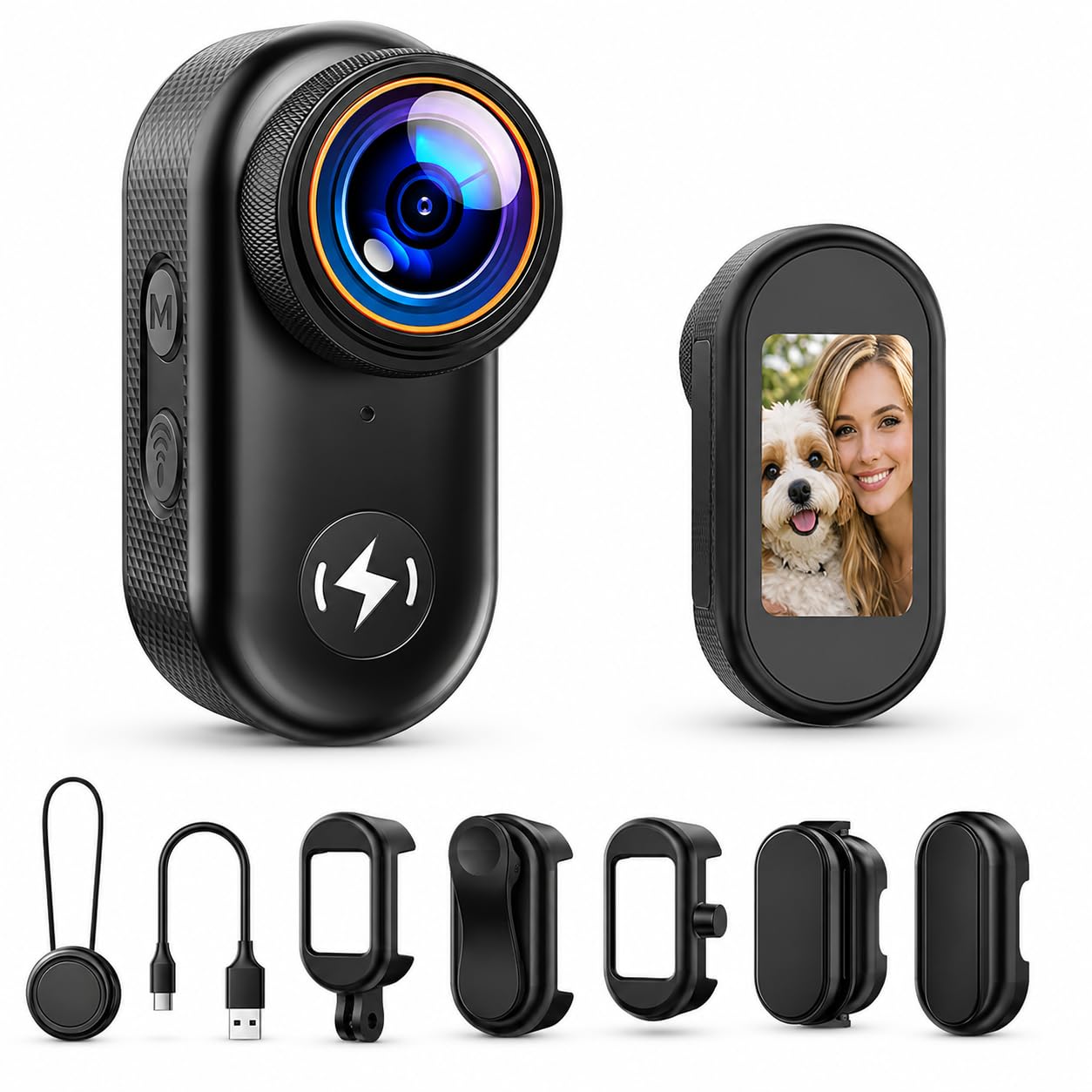
The 1.47-inch screen is the feature that makes the AG700 feel less like a novelty and more like a camera you can use deliberately. You can check the frame before you press record instead of pointing and hoping the app catches up. We like that on a device this small, because most thumb cameras ask you to trust the mount and fix the framing later.

At 35 grams, the AG700 is in the same weight class as the tiny screenless cameras, yet it adds 6-axis electronic stabilization and a 150-minute claimed runtime. For walking and cycling clips, the stabilization is more valuable than a resolution bump because it addresses the shake you can't remove in editing. The 4K/30fps footage and wide lens give you enough detail and context for a POV shot.

Bluetooth pairing is a practical extra when you want to adjust settings without fighting a Wi-Fi-only connection. The screen is small enough that fine focus checks still need a larger display, but for framing a POV angle it's enough. We trust it for quick verification in a way we don't trust a phone app that may lag behind the action.

Pros

  • Built-in 1.47-inch screen for framing
  • 6-axis electronic stabilization
  • 35-gram wearable body
  • 150-minute claimed runtime

Cons

No notable drawbacks to flag.

Our verdict

If you want to see what you're recording, the AG700 is the tiny POV camera we point to: a real screen and stabilization in a body light enough to clip on.

Check Latest Price
4

Best Ultralight Budget Pick

Zakotu MD10 Pro

84 /100
Keeper Score Excellent

Key details

Video
1080p
Weight
0.92 oz
Card Support
Up to 512GB
Claimed Runtime
120 min
Check Price on Amazon

At 26 grams, the MD10 Pro is the lightest camera here, and that changes how often you'll actually wear it. The 360-degree rotating clip lets you angle the lens without remounting the whole camera, while the magnetic lanyard gives you a second way to hang it. For a collar, a cap, or a bike jersey, the low weight is the feature you notice before any spec.

The 1080p ceiling is the compromise. We think that's the right call for a camera built around casual clips: the files are smaller, the processing is simpler, and you're not paying for detail you'll lose when the footage goes to a phone. The 120-degree lens is narrower than the widest POV cameras here, so you need to aim it more deliberately. The 120-minute claimed runtime and recording-while-charging cover a decent outing.

Storage is flexible, with support for cards up to 512GB. The bigger limit is weather: there's no water resistance here, so keep the MD10 Pro for dry days and avoid rain or splashes. Within those boundaries, it's a very easy camera to keep in a pocket and forget about until something worth recording happens.

Pros

  • Lightest body here at 26 grams
  • 360-degree rotating clip
  • 120-minute claimed runtime
  • Accepts cards up to 512GB

Cons

  • No microSD card in the box
Our verdict

For casual clips, what we like about the MD10 Pro is its 26-gram body and simple 1080p files.

Check Latest Price
5

Vertical Social Video

CAMWORLD AC27

77 /100
Keeper Score Very Good

Key details

Video
4K/30fps
Screen
1.47-inch HD
Weight
1.55 oz
Included Storage
64GB card
Check Price on Amazon

Native 9:16 recording is the reason to look at the AC27. It captures vertical video without making you crop a landscape file, which saves a step for TikTok, Reels, or YouTube Shorts. The 4K/30fps mode and 150-degree lens give you a wide, detailed frame, and the included 64GB card means you can start recording without a separate shopping trip.

The 1.47-inch screen is a real convenience on a camera this small; you can check the frame and replay a clip without reaching for your phone. At 44 grams, the AC27 is heavier than the ultralight options here, but it still sits comfortably on a collar or cap. The magnetic case and pendant add mounting choices, and the 2.5-hour claimed runtime covers a long outing.

We like the AC27 most for social clips where you can set the frame, because the screen is the point. It isn't the camera we reach for when the shot has to survive a run or a rough ride, but that's a different job. For the creator who wants a dedicated vertical POV rig without a phone in the frame, the combination makes sense.

Pros

  • Native 9:16 vertical recording
  • 1.47-inch screen for framing
  • 64GB card included
  • 2.5-hour claimed runtime

Cons

  • Not water resistant
Our verdict

We like the AC27 for vertical video: it shoots native 9:16, has a screen for framing, and includes a 64GB card.

Check Latest Price
6

Waterproof 4K Recording

Intepoll TO 3S

79 /100
Keeper Score Very Good

Key details

Video
4K/30fps
Weight
1.27 oz
Waterproof
IPX7, 100 ft (30 m)
Claimed Runtime
90 min
Check Price on Amazon

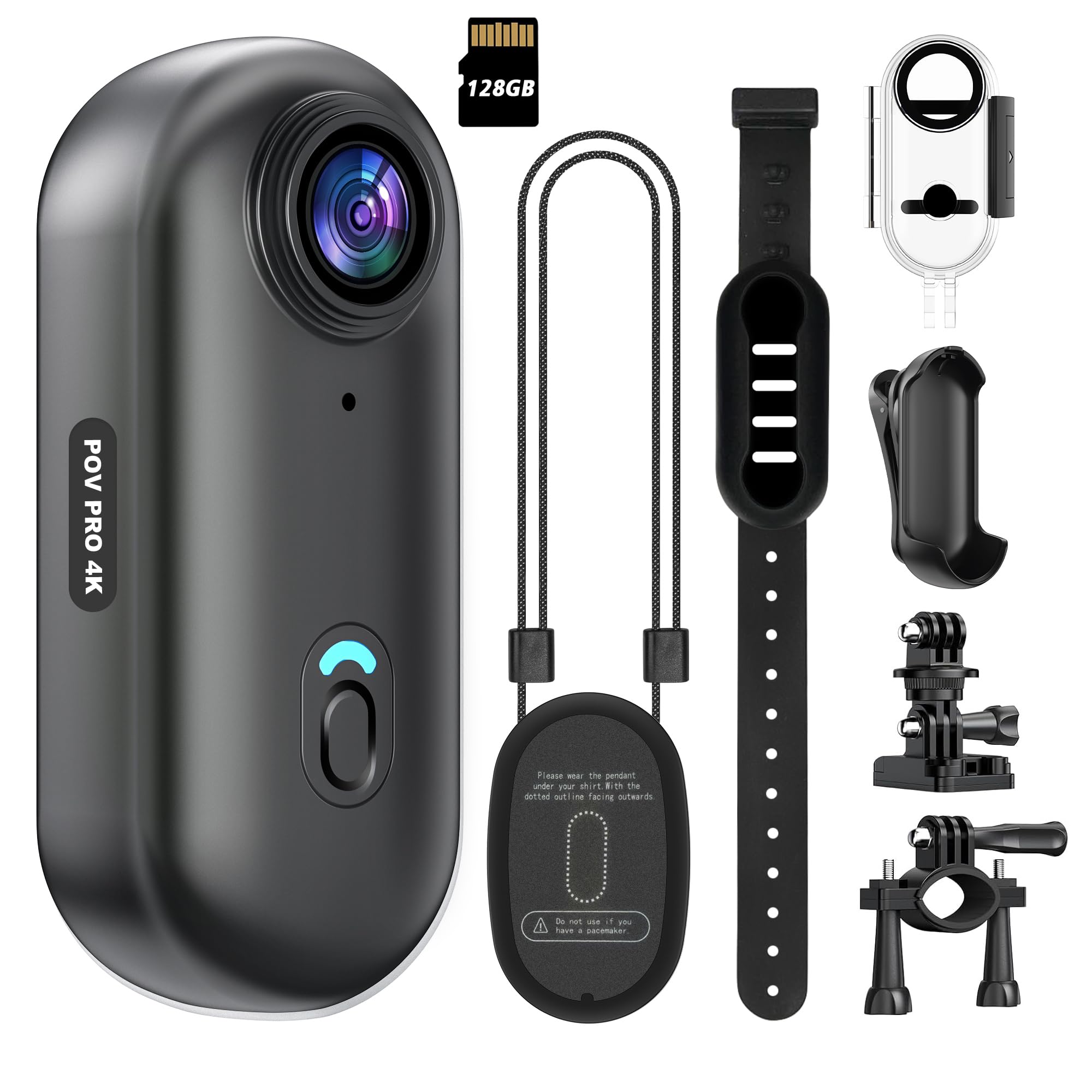
A 128GB card in the box is the first thing that makes the TO 3S feel ready to use, and we appreciate that the waterproof case and magnetic pendant come with it. The camera records 4K at 30fps, and the case is rated to 100 feet, which is far beyond the splashes and shallow dips most people will ask of it. That bundle removes the usual first-order scramble for storage and protection.

At 1.27 ounces, the TO 3S is as easy to wear as the other thumb cameras here. The 120-degree lens is a little tighter than the widest options, so you need to aim it more carefully, but it also keeps the edges of the frame from stretching as much. The magnetic mount and clip cover the usual cap, collar, and metal-surface options, and the single-button operation is simple to learn.

Phone pairing is the fussy part: Wi-Fi transfer can drop, so a card reader is the reliable way to offload a full card. The app is useful for checking the frame, but cables and cards are less frustrating for a full offload. We treat the TO 3S as a wet-weather specialist, and the included card and case are the real advantage. For a rainy ride or a shallow dive, that's a tidy package.

Pros

  • 128GB card in the box
  • IPX7 case rated to 100 feet
  • 4K/30fps recording
  • Magnetic mount and clip included

Cons

  • 90-minute claimed runtime
Our verdict

We recommend the TO 3S as the waterproof bundle for wet-weather riding or snorkeling: 4K, a 128GB card, and a case are in the box.

Check Latest Price

How We Tested POV Cameras

We built the shortlist from spec sheets and owner reviews, then cut anything that advertised 4K with no stabilization, listed no honest battery figure, or looked like the same generic internals in a different shell. That left 12 cameras, ranging from thumb-size clips to slightly larger magnetic wearables, and we wore them for six months.

Every camera came on bike commutes, dog walks, and weekend gravel rides, mounted to a collar, a strap, or a helmet, and we ran the same loop with each one so the footage could be compared side by side. Stabilization got judged on a stretch of washboard gravel — we watched for the jitter that survives the electronics. Video quality was checked in open sun, deep tree shade, and at dusk, where small sensors usually fall apart. Mounts earned a shake test, magnet to collar and clip to jacket, including upside down, to see which ones slid or let go mid-ride.

We timed each camera from full charge to shutdown while it recorded continuously, then noted how warm the body felt after 20 minutes and whether it dimmed, dropped frames, or quit. Ease of use was stopwatch work: how long from pocket to recording, how many presses it took, whether the app paired on the first try and held the connection from across a parking lot. Value came last, weighing what each one actually delivered against what it cost, and reliability settled the rest — any unit that froze, lost a clip, or refused to charge got a second chance and was cut if it repeated.

How to Choose a Pov Camera

Mounting Comes Before Resolution

A POV camera is only as good as its mount. A magnetic pendant disappears under a shirt, a clip needs a collar or pocket, and an action-camera shoe needs a handlebar or chest rig. Check which one matches the clothes and gear you already use before you compare resolution. The most flexible cameras here ship with two or three options, so you can test what feels secure before buying extra hardware. If a mount feels even slightly loose, change it before you record; a camera that shifts changes the whole shot.

4K Is Not the Same as Good Footage

Resolution is the easy number to compare; light gathering and stabilization decide whether the clip is watchable. A larger sensor such as the 1/1.28-inch one in the GO Ultra has more room for detail in dim light than the tiny sensors in budget thumb cameras, while 1080p can still be fine for clips you'll watch on a phone. We put stabilization ahead of an extra resolution step for walking, cycling, or chasing a pet. Look for electronic stabilization and a wide field of view; 150 degrees and up gives you room to crop a level shot later.

Plan for Short Takes, Not All-Day Recording

Tiny bodies have little room to spread heat. Continuous 4K recording is the hardest job you can ask of them, and the runtime figure on the box is a best-case number measured under favorable settings. If you need a camera for a commute or a long ride, think in clips: start recording, stop when the moment passes, and let the camera cool. A camera that supports recording while charging helps, and a larger action pod or a battery top-up between sessions can cover a longer day.

Check Waterproofing and Storage Before You Buy

A waterproof case protects the camera but adds bulk, and the depth rating usually applies with the case fitted, not to the bare camera. If you plan to film rain rides or pool sessions, confirm the rating and how the case affects the buttons and audio. Storage is the other easy miss: some bundles include a card, while the GO Ultra leaves microSD to a separate purchase. Buy a card rated for 4K recording and format it in the camera before your first outing.

Frequently Asked Questions

Final Verdict

For most people, the Sixmou i3 is the POV camera we recommend first. It is light enough to wear without thinking, includes the mounts and card you need, and its 150-minute claimed runtime is generous for a camera this small. If footage quality is the priority and you shoot in short bursts, the Insta360 GO Ultra is the upgrade; if you need to frame each shot, the Acgiewo AG700's screen is the better fit.