Best Nikon Flashes of 2026

The pop-up flash on a Nikon body is a useful emergency tool and a poor way to light a photograph. It flattens faces, throws a hard shadow behind the subject, and announces to the room that it was too dark. A dedicated speedlight fixes all three — but "for Nikon" on the box doesn't guarantee TTL exposure actually lands, or that radio contact survives the walk to the back of the room.

Over the past eight months we've shot with 10 of them, first-party and third-party alike, on Nikon DSLRs and mirrorless bodies. The guide number on the box turned out to be the least useful comparison — it's measured at a zoom setting you'll rarely use and says nothing about recycle time or even coverage. What separated the good ones was how they behaved at 1/8 power late in a long shoot, with a half-drained battery and a ceiling too high to bounce off.

Price matters more than you'd expect: the gap between a basic flash and one with radio and high-speed sync built in has narrowed, so dependable TTL doesn't require the priciest unit. What you pay extra for is stamina. The picks below are the ones that held up.

Keeper Score summarizes customer ratings and review volume. Read it alongside the product details and trade-offs. How the score works.

1

Best Overall

Nikon SB-700

92 /100
Keeper Score Outstanding

Key details

Battery
4 AA
Guide Number
92/28 (m/ft, ISO 100, STANDARD)
Exposure Control
i-TTL, manual, CLS
Wireless Control
CLS commander/remote
Check Price on Amazon

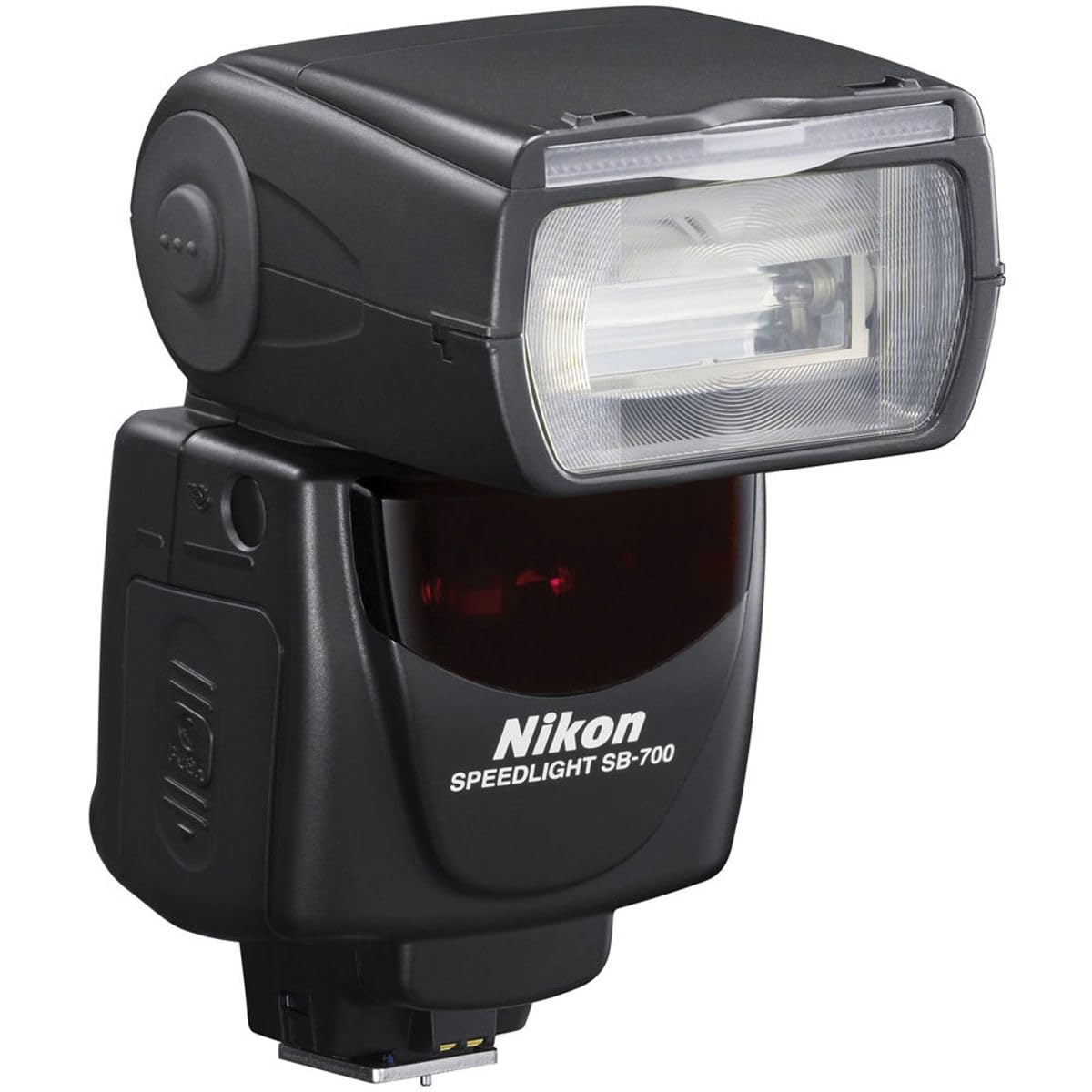
The SB-700 is the flash we recommend when someone wants one Nikon speedlight that simply works on camera. It has native i-TTL metering, a 92/28 guide number, and Nikon's CLS commander mode, so it can trigger compatible off-camera Speedlights without adding a radio trigger. In our testing, that combination made it the easiest flash to hand to someone who wanted better indoor portraits without rebuilding their whole kit. The power is enough for bounce in a normal room; it is not the flash for lighting a large hall at low ISO.

The controls are the part we appreciate most. The SB-700 uses switches and a clear menu rather than a deep touchscreen, and the beam-pattern slider lets you change the light's spread without digging through settings. The head tilts and swivels for bounce, and the whole unit feels balanced on a Nikon body. We also like that it can work as a commander or a remote in a CLS setup, which makes it a useful second light later.

The SB-5000 is the step up if you need radio range and sustained bursts, but it costs much more and asks more of you in the menu. For a first serious Nikon flash, the SB-700 is the one we kept coming back to because it stays out of the way and lets you shoot.

Pros

  • Native i-TTL across Nikon bodies
  • CLS commander for off-camera groups
  • Switch-led controls and beam-pattern slider

Cons

  • No built-in radio control
Our verdict

For most Nikon shooters, the SB-700 is the speedlight to buy first: native i-TTL, CLS commander control, and predictable handling without radio complexity.
Check Latest Price
2

Best Nikon Radio System

Nikon SB-5000

88 /100
Keeper Score Excellent

Key details

Zoom Range
24-200mm (14mm with panel)
Guide Number
113 (ISO 100, 35mm)
Wireless Control
Radio AWL
Continuous Shooting
100 consecutive shots
Check Price on Amazon

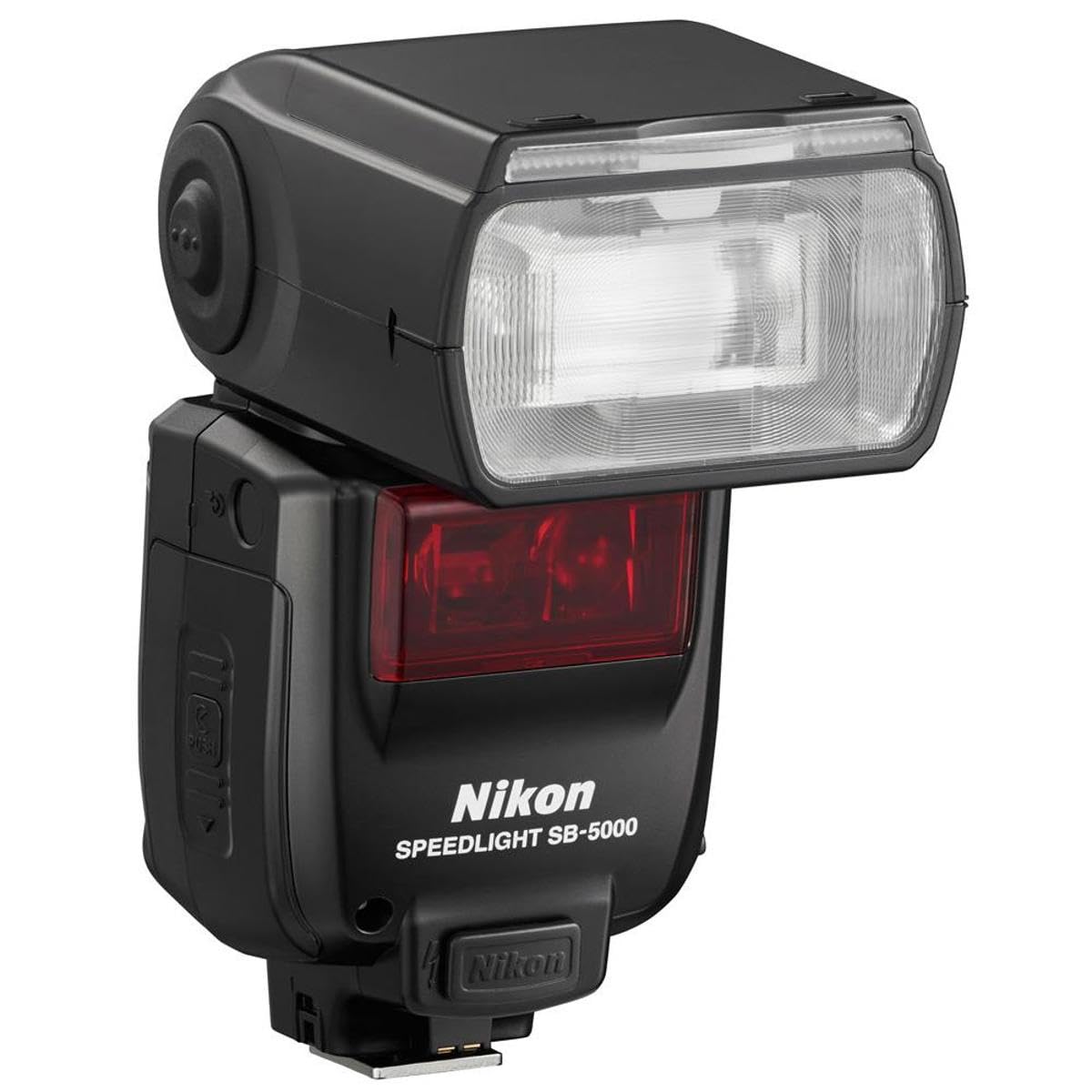
Radio is the reason to step up to the SB-5000. It has Nikon's radio AWL built in, a 113 guide number, and a zoom range that runs from 24-200mm, or 14mm with the pull-out panel. That means you can put it off-camera without adding a receiver and still control groups from the camera. The cooling system is rated for 100 consecutive full-power shots, which is the kind of headroom that matters at a reception or a fast portrait session.

We found the SB-5000 powerful and quick, but it is not as immediately friendly as the SB-700. The menu is denser, and the AF-assist beam is less useful on mirrorless bodies, so low-light focusing still falls to the camera. Neither issue matters much if you are shooting radio off-camera and setting groups deliberately. For a Nikon event shooter already inside the radio AWL system, the control is worth the learning curve.

The SB-5000 earns its place when radio range, group control, and sustained burst shooting are part of the job rather than occasional wants. The SB-700 covers a lot of the same on-camera work, but it cannot match the radio reach or the cooling headroom. It is the flash we point to for weddings and events where waiting for a thermal pause is not an option.

Pros

  • Built-in radio AWL control
  • Cooling for 100 consecutive shots
  • Guide number 113 and 24-200mm zoom
  • Works with Nikon Z and D bodies

Cons

  • Premium price for occasional shooters
Our verdict

The SB-5000 is the Nikon flash for radio-controlled event work, with the cooling and power to keep up when the SB-700's optical control runs out of reach.

Check Latest Price
3

Best Value Round Head

NEEWER Z2PRO-N

88 /100
Keeper Score Excellent

Key details

Battery
7.2V/3000mAh, 600 full-power flashes
Flash Output
76Ws
Wireless Control
2.4G, 4 groups
Compatibility Note
Not compatible with D810
Check Price on Amazon

The Z2PRO-N is the flash we point to when someone wants round-head light without paying Nikon money. Its circular head spreads light more evenly than a rectangular speedlight, with a softer falloff at the edges, and the 76Ws output is enough for portraits, receptions, and indoor bounce. It supports i-TTL, 1/8000s high-speed sync, and 2.4G wireless control, so it can work on camera or as part of a Neewer Q-system setup.

The battery is the feature that makes it easy to live with. The 7.2V/3000mAh pack is rated for 600 full-power flashes and recharges over USB-C, so you are not carrying a pocket full of AAs. The TCM shortcut switches from TTL to manual with one button, which we found useful when the automatic exposure was close but not quite where we wanted it. The dual 2W LED modeling lights are a small touch, but they help you preview shadows before the flash fires.

The catch is system compatibility. The 2.4G control is Neewer's Q system rather than Nikon's radio AWL, so it will not join a Nikon radio setup without Neewer's own trigger. The light itself is the reason we keep it in the bag: round, even, and easy to work with.

Pros

  • 76Ws round-head output
  • 600 full-power flashes per charge
  • TTL, HSS, and 2.4G control

Cons

  • Not compatible with Nikon D810
Our verdict

The Z2PRO-N is the value pick for Nikon shooters who want a 76Ws round-head TTL flash with long battery life and quick recycling.

Check Latest Price
4

Best Compact Option

Godox iT32

92 /100
Keeper Score Outstanding

Key details

Weight
5.96 oz
Guide Number
18
High-speed Sync
1/8000s
Wireless Control
2.4G with X5N trigger
Check Price on Amazon

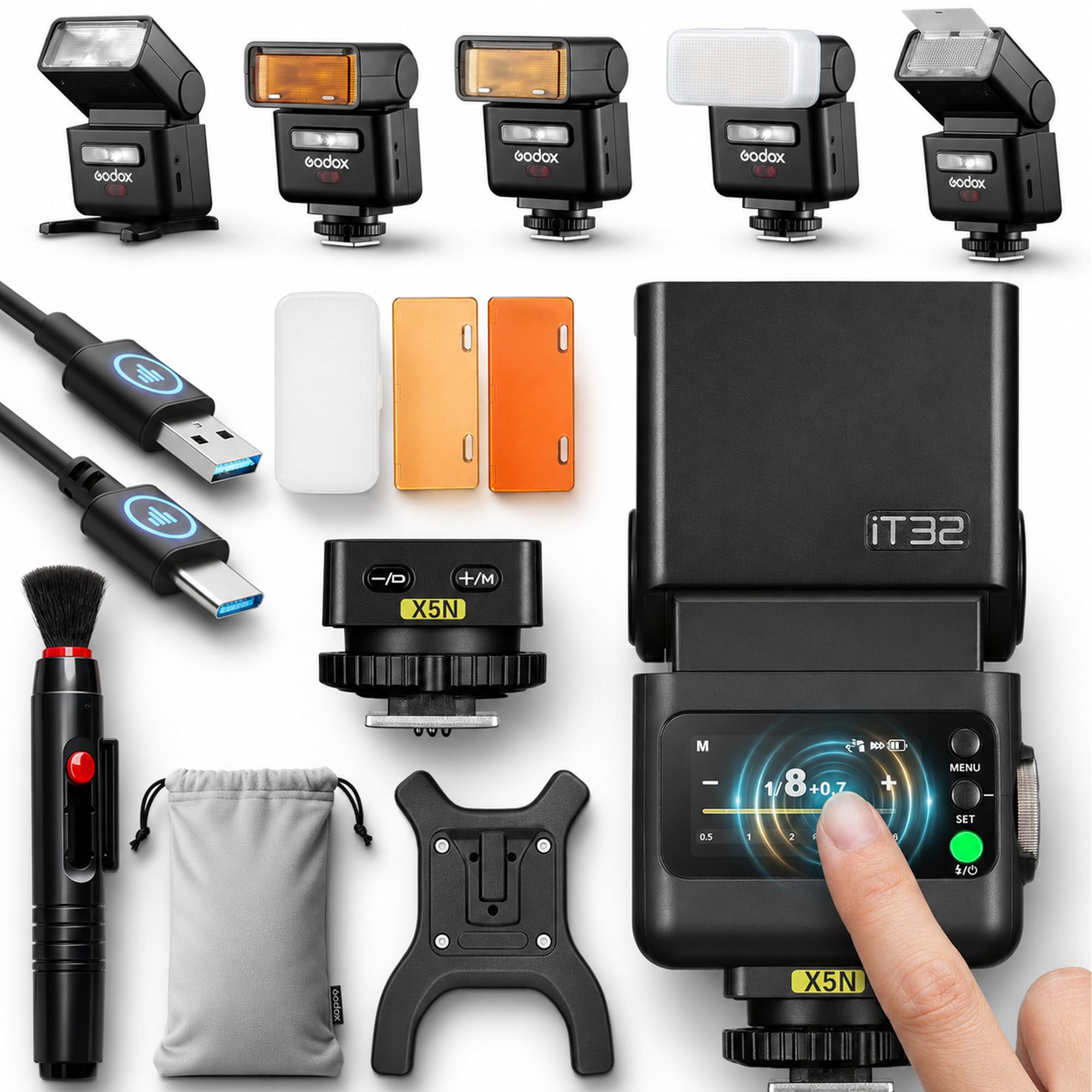
The iT32 is the flash you slip into a jacket pocket and forget about until you need a bit of fill. At 169g, with a GN18 output, it is sized for close work: portraits, indoor snapshots, and travel scenes where a built-in flash looks harsh. It still supports i-TTL and 1/8000s high-speed sync, so it can balance with daylight when you need it. We found it easiest to treat as a second light rather than the only flash in the bag.

The clever part is the X5N trigger. Attach it to the iT32 and you have an on-camera flash; detach it and the X5 switches to wireless transmitter mode. The magnetic interface makes that swap quick, and the same flash body can take different X5 modules for other camera brands. Detach the module, put it on the camera, and the iT32 can fire off-camera through the same 2.4G link. We also like the color touchscreen and the included diffuser and magnetic color filters, which let you warm the light without packing a separate gel kit. What it does better than the bigger picks is travel: it disappears in a bag and doubles as a trigger, so a small off-camera setup takes less space. It is the one that makes a small kit more capable.

Pros

  • Pocketable 169 g body
  • TTL and 1/8000 HSS
  • 2-in-1 X5N trigger and magnetic filters

Cons

  • Low GN18 output for large rooms
Our verdict

The iT32 is the compact flash we recommend for travel and fill light: tiny, TTL-capable, and clever enough to double as a trigger.

Check Latest Price
5

Best Manual Off-Camera

Godox TT600

92 /100
Keeper Score Outstanding

Key details

Battery
4 AA
Guide Number
GN60 (m ISO 100)
Recycle Time
0.1-2.6s
Wireless Control
2.4G X system
Check Price on Amazon

The TT600 is the odd one out in this group: it has no TTL, no camera-menu control, and no automatic exposure. That is the point. You set the power yourself, and in return you get a GN60 output and a built-in Godox 2.4G X system for a very low price. For a first off-camera kit, that combination is hard to beat: a couple of these plus a trigger can build a small multi-light setup without spending Nikon money.

The manual controls are straightforward once you get used to them. You set the power yourself, and the built-in 2.4G system lets you put the TT600 in a group with other Godox lights and adjust it from a compatible trigger. It runs on four AA batteries, which are easy to find but add ongoing cost. The listed 0.1-2.6s recycle time and 230 full-power flashes are not the fastest or longest here, but they are fine for portraits and still-life work where you are not machine-gunning.

The TT600 is at its best as a manual off-camera light, a backup, or a second light in a Godox setup. Changing distance or bounce angle means adjusting power and checking the histogram, which is a slower way to shoot an event. The included H-type bracket and bag make it a usable starter kit without extra purchases, and that is why it stays in our recommendation for anyone learning lighting on a budget.

Pros

  • GN60 output for the money
  • Built-in Godox 2.4G X system
  • Included bracket and bag

Cons

  • No TTL or camera-menu control
Our verdict

The TT600 is the manual flash we recommend for learning off-camera lighting: GN60 output and Godox 2.4G control for very little money, provided you do not need TTL.

Check Latest Price

How We Tested the Nikon Flashes

We started with every speedlight we could confirm supports the camera's TTL metering, then narrowed by price, power source, and whether the unit triggers off-camera on its own or needs a separate radio trigger. Owner reviews pointed us toward the failure modes worth chasing — TTL drift, thermal shutdown mid-event, hot shoes that work loose — and we bought 10 units to shoot with over eight months.

Testing happened where flashes actually get used: a dim living room with a white ceiling, a rented hall too tall to bounce off, a backyard at dusk, and a lot of off-camera setups on stands. Each unit went on the same three bodies, including an older DSLR and a mirrorless camera, where we checked whether the camera recognized it, whether TTL held exposure frame to frame across a burst, and whether high-speed sync fired at the shutter speed we'd set. To judge power honestly, we asked each one to hold f/4 at ISO 400 bounced off a ten-foot ceiling — a fairer comparison than the guide number.

We shot a blank wall at several zoom settings to see how evenly the beam filled the frame, then mixed tungsten with daylight to watch for color shift between power levels. A ten-frame burst at half power measured recycle time; twenty pops in a row showed which units throttled or shut down. We counted head tilt and swivel for bounce angles, and tallied what came in the box — batteries, diffuser, trigger — because a low price that requires a separate trigger isn't low.

How to Choose a Nikon Flash

Match the flash to your Nikon body

Native Nikon Speedlights are the safe route for i-TTL because the camera and flash share the same metering language. Third-party flashes can work just as well, but the compatibility list is the first thing to check. The NEEWER Z2PRO-N, for example, explicitly excludes the Nikon D810, while the SB-700 and SB-5000 are built for Nikon's i-TTL system. If your body is not listed, do not assume TTL will work. Check the list before you buy, especially with older DSLRs and newer Z-series bodies.

Choose optical or radio wireless

Optical systems like Nikon's CLS are built into the SB-700 and cost nothing extra, but they need line of sight and work best indoors. Radio systems such as Nikon AWL in the SB-5000 or the 2.4G systems in Godox and NEEWER flashes cost more but reach farther and do not care about a raised hand or a wall. We prioritize radio if you shoot events or place lights around a room. For a first off-camera setup in a living room, optical can be enough.

Balance guide number, battery, and recycle time

Guide number tells you how much light you have for bounce and distance; it is not a measure of image quality. The SB-700's 92/28 rating is fine for normal rooms, the SB-5000's 113 is better for large spaces, and the iT32's GN18 is a fill-light figure, not a ballroom one. Battery type matters just as much: lithium packs like the Z2PRO-N's 3000mAh cell are convenient for events, while four AA cells in the SB-700 and TT600 are easy to replace. Faster recycle and more full-power pops matter if you shoot quickly.

Decide whether you need TTL

TTL is the feature that lets the flash meter the scene and adjust output automatically, which is why we recommend it for a first flash and for events where the light changes constantly. Manual flashes such as the TT600 cost less and give consistent output for off-camera portraits, but you set power yourself and check the result. If you are building a multi-light kit on a budget, a manual flash can be a smart second or third light. If you want one flash for family gatherings and travel, pay for TTL.

Handling and thermal headroom

A flash you can adjust by feel is worth more than one with a few extra features. The SB-700's switch-led controls and beam-pattern slider are easy to find in a dark room; the SB-5000's menus are deeper but its radio and cooling are built for fast work. If you shoot bursts at full power, cooling matters: the SB-5000 is rated for 100 consecutive full-power shots. For occasional portraits, a simpler flash with clear controls will serve you better than a pro unit you have to menu-dive through.

Frequently Asked Questions

Final Verdict

For most Nikon shooters, the SB-700 is the flash to buy first: native i-TTL, CLS commander control, and controls that make sense in the dark. It is the one we recommend for portraits, family events, and a first off-camera setup. If your work depends on radio range and sustained bursts, the SB-5000 is the better tool. For a round-head TTL flash at a lower price, the Z2PRO-N is the alternative, as long as your Nikon body is on its compatibility list.