Best Nikon DX Lenses of 2026

Every lens on a DX body gets multiplied by 1.5 before it reaches the sensor — a 35mm frames like a 50, a 50 like a short telephoto. That math is a gift at the long end and a chore at the wide end, and it's the biggest reason two photographers with identical cameras end up buying completely different glass. My team has spent the past eight months with a dozen DX lenses, primes, zooms and an ultrawide among them, and the crop factor kept deciding who reached for what.

What separates a lens you love from one you tolerate rarely appears on the spec sheet. It's whether focus snaps onto a kid running at you, whether the corners hold up wide open, and whether you still want to carry it by hour six. Sharpness and low-light performance are what readers ask me about most, and DX is where the genuine bargains in this lineup live.

The picks below run the whole arc, from a wide prime you forget is in your bag to a superzoom that barely leaves the camera. Treat them as answers to specific problems rather than a ranking.

Keeper Score summarizes customer ratings and review volume. Read it alongside the product details and trade-offs. How the score works.

1

Best Overall for DSLR
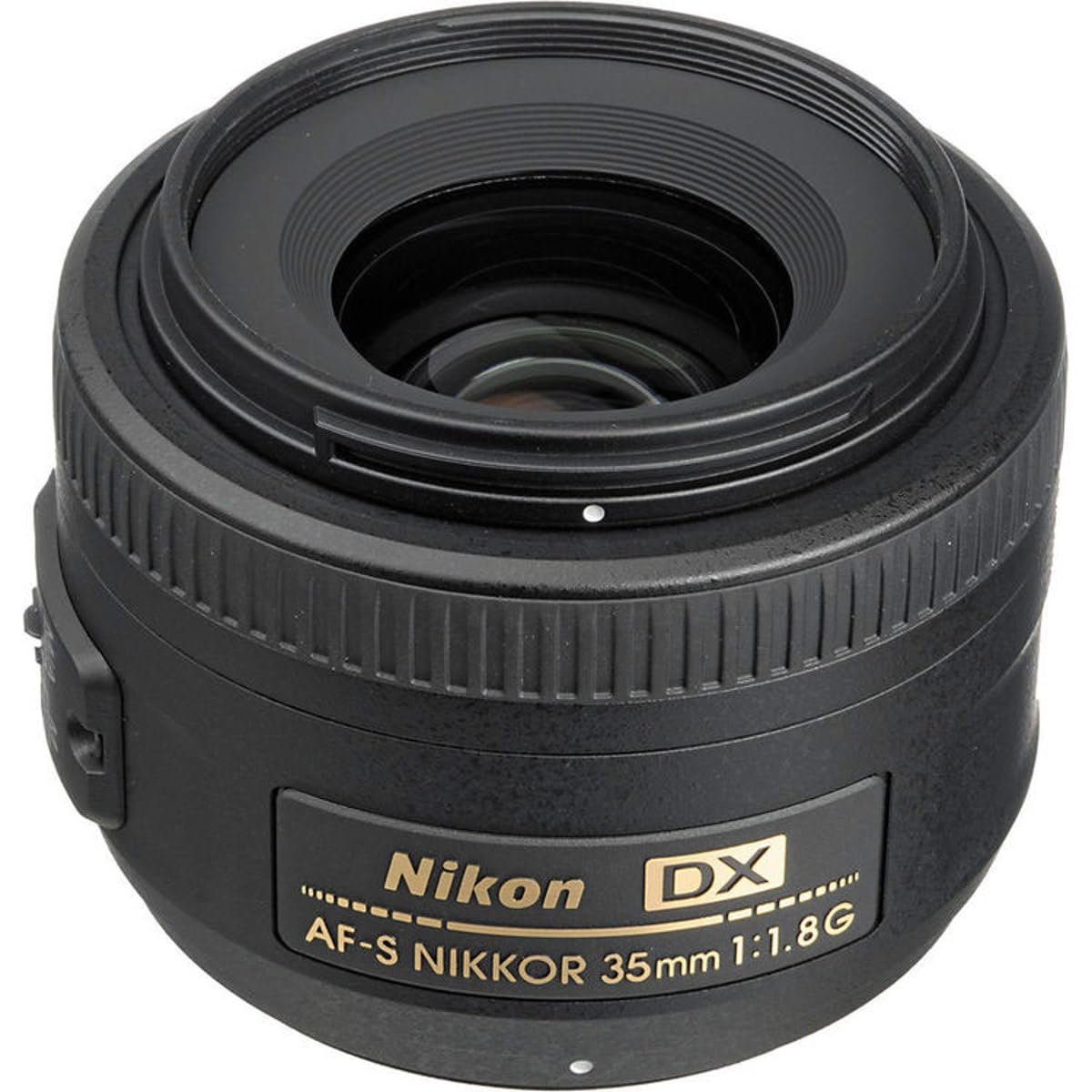
Nikon AF-S DX 35mm f/1.8G

96 /100
Keeper Score Outstanding

Key details

Mount
Nikon F (DX)
Weight
7.04 oz
Focal Length
35mm (52.5mm equivalent)
Max Aperture
f/1.8
Check Price on Amazon

A 35mm lens on a DX body gives you a 52.5mm-equivalent view, close to what your eye sees. That normal perspective is why the 35mm f/1.8G works for street scenes, restaurant tables, and family shots without the exaggerated look of a wide zoom. The f/1.8 aperture is the real draw: it lets in enough light to keep shutter speeds usable indoors and pulls the background softly out of focus when you want a portrait with some air around it.

In our testing, the lens was sharp wide open and only got better stopped down a little. The center is crisp, and the edges hold up well for a lens this small. Bokeh is smooth rather than busy, which matters more than a spec sheet number when you are shooting people against a cluttered room. We also liked the 7.04 oz weight; it disappears on a D3500 or D5600 and does not make the camera front-heavy.

Autofocus is quick and quiet in ordinary light, and manual override is there when you need it. It is not a tracking lens for fast sports; the motor does its best work with static or slow-moving subjects. For low-light portraits, food, and travel details, that trade-off is easy to live with. The 52mm filter thread keeps accessories simple, and the lens focuses close enough for tabletop details without switching to a macro.

The focus ring has enough resistance for manual override, and the lens balances on a small body without making it front-heavy. The included hood is a useful addition, and the lens is easy to pack in a small bag. It is the kind of lens you leave attached because it never feels like a burden.

What settles it for us is how little the lens asks of you. There is no zoom ring to work, no stabilizer switch to remember, and no bag upgrade to justify. It is the lens we leave on the camera when we do not know what the day will bring.

Pros

  • Fast f/1.8 aperture for low light
  • Sharp normal-view images
  • Compact 7.04 oz build
  • Quiet autofocus for everyday subjects

Cons

  • Plastic barrel feels less robust than metal
Our verdict

This compact 35mm is the first lens we recommend to F-mount DX shooters who want sharp, low-light photos without a bigger bag.

Check Latest Price
2

Best All-In-One for DSLR

Nikon AF-S DX 18-140mm f/3.5-5.6G

93 /100
Keeper Score Outstanding

Key details

Mount
Nikon F (DX)
Weight
1.1 lb
Focal Length
18-140mm
Max Aperture
f/3.5-5.6
Check Price on Amazon

The 18-140mm range is the practical answer to the kit-lens question. It starts wide enough for a room or a group and reaches far enough for a school play or a compressed portrait, so you spend less time swapping lenses. We found it the most useful single lens for a DSLR trip: one body, one lens, and no bag full of alternatives. That range is why it earns a place ahead of the more specialized zooms here.

Image quality is consistently sharp, with good color and contrast, and the VR system steadies handheld shots at the long end. The Silent Wave Motor focuses quickly and quietly, and our test copy showed no zoom creep when carried at the side. The 1.1 lb weight balances well on a mid-size body. The 67mm filter thread is common enough that accessories are easy to find.

The 18mm end is wide enough for interiors, and 140mm gets close enough for candid portraits without making the camera conspicuous. If you already have a fast prime, this zoom covers the rest of the day. It is the lens we leave on the camera when we do not want to think about focal length.

Pros

  • Versatile 18-140mm zoom range
  • Sharp, consistent image quality
  • VR steadies handheld shots

Cons

  • Variable aperture limits low-light use
Our verdict

One lens for a Nikon DSLR trip: the 18-140mm covers wide to short telephoto, stays sharp, and steadies handheld shots with VR.

Check Latest Price
3

Best Ultra-Wide for DSLR

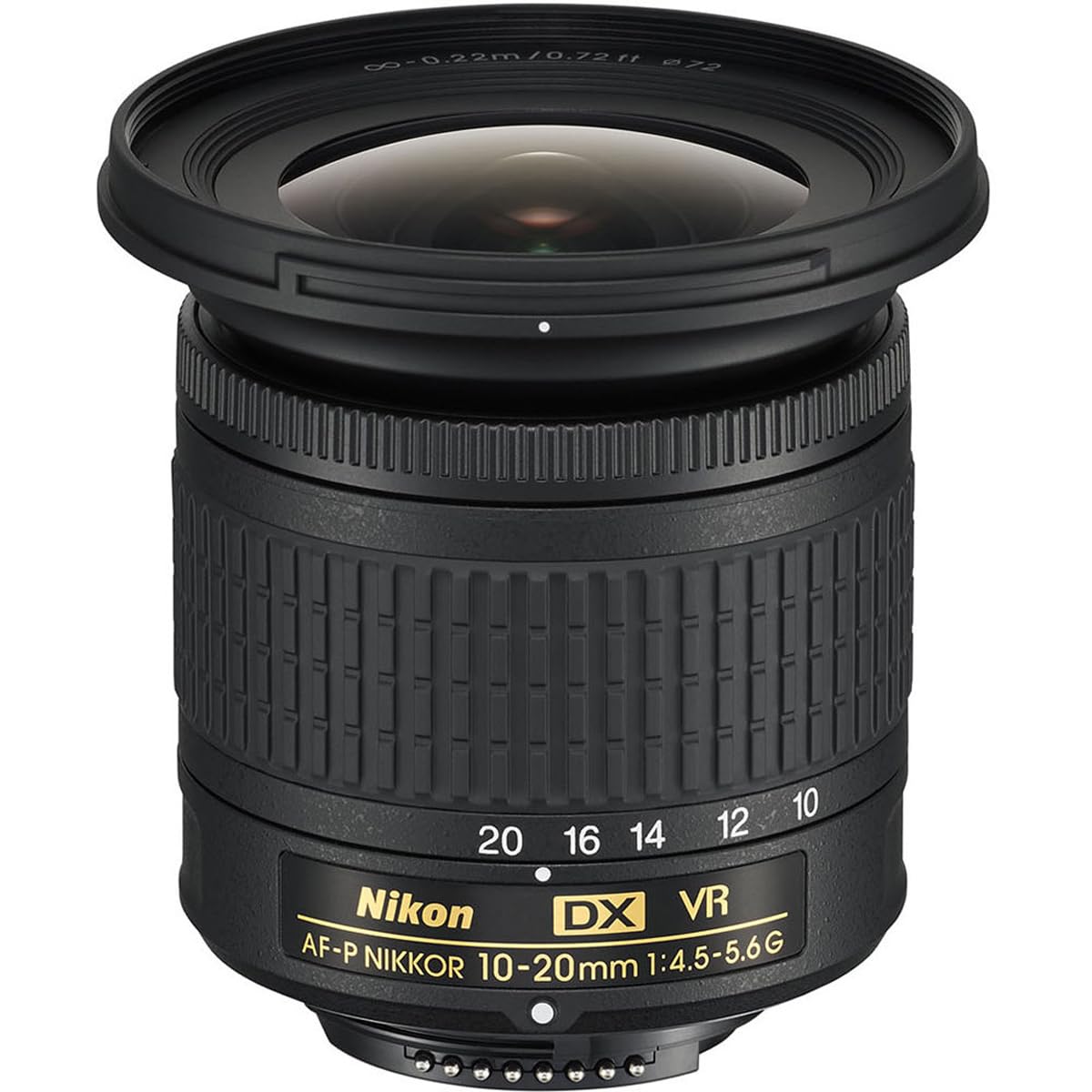
Nikon AF-P DX 10-20mm f/4.5-5.6G VR

92 /100
Keeper Score Outstanding

Key details

Mount
Nikon F (DX)
Weight
8.16 oz
Focal Length
10-20mm
Max Aperture
f/4.5-5.6
Check Price on Amazon

At 10mm, the 10-20mm gives a 109-degree view that makes a small room feel cavernous and a mountain ridge feel endless. The zoom runs to 20mm, so you can tighten a composition without changing lenses. We used it for landscapes, building interiors, and a few crowded street scenes where stepping back was not an option. It is the kind of lens that changes how you see a scene rather than just making it wider.

What we like most is how little it asks you to carry. At 8.16 oz it is light enough to live in the bag, and the VR helps when you are bracing in a dim interior. Sharpness is strong through most of the range, and the color holds up well in flat light. It is not a replacement for a fast prime in low light, but it is the wide-angle we reach for first when the scene is the story.

The AF-P motor is quiet and quick on compatible bodies, but it is the one spec to check before ordering. Some older DSLRs need a firmware update, and some entry models do not support AF-P at all. If your body is on the compatible list, the lens is a light way into ultra-wide shooting. If it is not, choose an AF-S wide zoom or budget for a newer body.

Pros

  • Dramatic 10mm wide end
  • Light 8.16 oz body
  • VR helps handheld interiors

Cons

  • Softness at the widest setting
Our verdict

The 10-20mm is our ultra-wide pick for DSLR landscapes and interiors, as long as your camera body supports AF-P autofocus.

Check Latest Price
4

Best Telephoto for DSLR

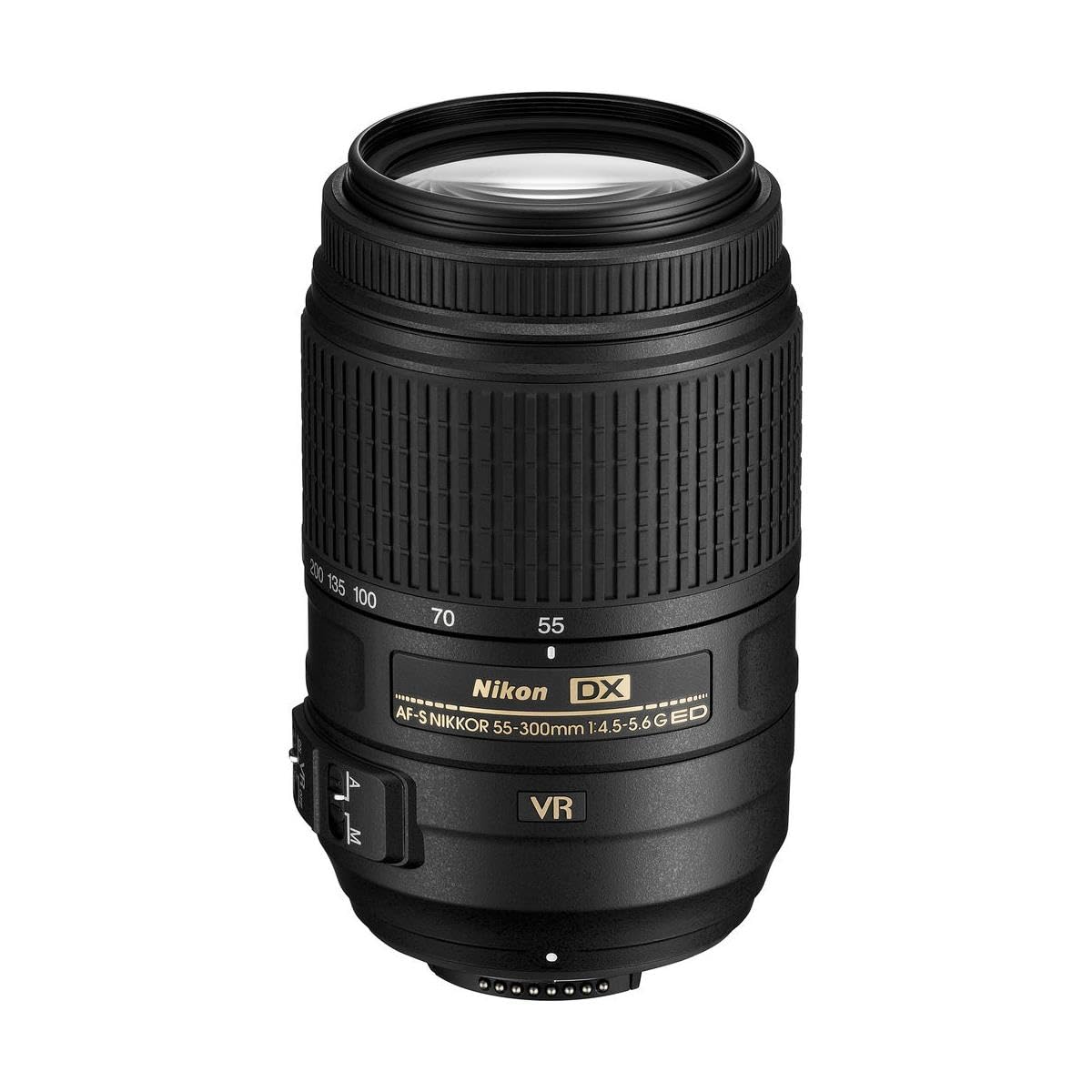
Nikon AF-S DX 55-300mm f/4.5-5.6G VR

93 /100
Keeper Score Outstanding

Key details

Mount
Nikon F (DX)
Weight
1.3 lb
Focal Length
55-300mm
Max Aperture
f/4.5-5.6
Check Price on Amazon

On a DX body, 300mm gives you a 450mm-equivalent view, which is enough to pull a bird out of a hedge or a quarterback out of a crowd. The 55-300mm starts at a useful short telephoto, so it pairs naturally with an 18-55 or 18-140mm instead of duplicating your whole standard range. We carried it for wildlife, school sports, and a few compressed portraits where the background needed to fall away.

The VR II system is the feature that makes the reach usable handheld. At 300mm, the stabilizer gives you a fighting chance in dull light, and the tripod detection mode is a small but useful touch when you switch to a monopod. Images are crisp with pleasing bokeh, and the 1.3 lb weight is manageable for a dedicated telezoom. The 58mm filter thread keeps filters affordable.

The Silent Wave Motor is quiet, and in good light it locks quickly enough for outdoor sports and wildlife. We still reach for this one when we need reach and do not want to carry a heavier telephoto. It is the lens that made us leave the 70-200 at home on a long hike.

Pros

  • 450mm-equivalent reach
  • VR II steadies long shots
  • Crisp images with pleasing bokeh

Cons

  • Focus can hunt at 300mm
Our verdict

For DSLR shooters who need 450mm-equivalent reach, this 55-300mm is the telezoom we recommend, though focus can hunt at 300mm.

Check Latest Price
5

Best All-In-One for Z DX

Nikon NIKKOR Z DX 18-140mm VR

86 /100
Keeper Score Excellent

Key details

Mount
Nikon Z (DX)
Weight
11 oz
Close Focus
7.9 in at 18mm
Focal Length
18-140mm
Check Price on Amazon

The Z mount gave Nikon a chance to redesign the all-purpose zoom, and the 18-140mm is the result: a 7.8x range that starts wide enough for a street scene and ends long enough for a compressed portrait. On a Z 50 or Z fc it feels balanced, and the 11.04 oz weight is light enough to leave on the camera all day. It is the lens we pack when we want one body and one lens for a trip.

What we appreciate most is the consistency. Images are sharp across the frame, the VR is effective, and the stepping motor is quiet enough for video. The customizable control ring is a small but useful touch; we set it to exposure compensation and stopped menu-diving. The 7.9-inch close-focus distance at the wide end makes it easy to shoot a plate of food or a detail without swapping to a macro.

The lens is mostly plastic, so it is a fair-weather walkaround rather than a rough-service tool. If you want a fast prime for low light, the Z 24mm f/1.7 is the better second lens. But for one lens that covers most of a day, this is the one we keep on the camera.

Pros

  • Versatile 18-140mm Z-mount range
  • Sharp, lightweight walkaround
  • VR and quiet AF for video

Cons

  • Premium price for a slow zoom
Our verdict

Z DX shooters who want one lens for travel should start here: the 18-140mm is sharp, light, and stabilized, though it costs more than a basic zoom.

Check Latest Price
6

Best Telephoto for Z DX

Nikon NIKKOR Z DX 50-250mm VR

90 /100
Keeper Score Outstanding

Key details

VR
Up to 5 stops
Mount
Nikon Z (DX)
Weight
14.2 oz
Focal Length
50-250mm
Check Price on Amazon

The 50-250mm gives Z DX cameras a 75-375mm-equivalent reach in a body that weighs 14.24 oz. That is the combination that makes it useful: a Z 50 with this lens feels like a small telephoto rig rather than a DSLR anchor. We carried it for outdoor sports, pets, and a few compressed portraits, and it was easy to keep in the bag alongside a standard zoom.

The built-in VR is rated to 5 stops, and it earns that rating in ordinary handheld use. The lens is sharp, the focus is fast and quiet, and the assignable control ring is a nice touch; we set ours to exposure compensation. The 62mm filter thread is shared with the Z 18-140mm, so polarizers and ND filters can do double duty.

What we like most is how little the lens costs you in weight and space. It is a strong companion to a small Z body, and we recommend it to anyone who bought a Z 50 or Z fc with the 16-50mm kit lens and wants more reach without a second camera bag. The control ring and shared filter thread make it easy to live with.

Pros

  • Long 75-375mm-equivalent reach
  • Light 14.24 oz build
  • Up to 5 stops of VR

Cons

  • No lens hood included
  • Slow f/6.3 at 250mm
Our verdict

The Z 50-250mm is the light, stabilized telephoto we recommend for Z DX bodies, with a slow long end as the trade-off.

Check Latest Price
7

One-Lens Superzoom

Nikon AF-S DX 18-300mm f/3.5-6.3G VR

91 /100
Keeper Score Outstanding

Key details

Mount
Nikon F (DX)
Weight
1.21 lb
Focal Length
18-300mm
Max Aperture
f/3.5-6.3
Check Price on Amazon

A 16.7x zoom is a compromise you can see in the pictures, but it is also the reason you can leave the camera bag at home. The 18-300mm covers wide rooms, family groups, and distant subjects without a lens change, and the VR II system helps at the long end. We treat it as a travel and convenience lens, not a substitute for a dedicated wide or telephoto when image quality is the priority.

The range is genuinely liberating. We carried it on a day trip where changing lenses meant missing a shot, and it handled a landscape, a portrait, and a distant building in the same walk. The 0.48m close-focus distance is useful for details, and the 550g weight is reasonable for a lens with this much reach. The 67mm filter thread matches the 18-140mm, so filters can do double duty.

The lens is at its best in good light and at moderate focal lengths, where the convenience outweighs the specialization of a prime or a dedicated telephoto. If you shoot mostly outdoors and value flexibility, it is a practical choice. It is the lens for the trip where changing lenses means missing the shot.

Pros

  • Enormous 18-300mm range
  • One lens covers wide to telephoto

Cons

  • Soft at the long end
  • AF can be indecisive
Our verdict

This 16.7x superzoom covers wide to distant subjects in one lens, and it earns a place for travelers who accept softer edges and slower focus.

Check Latest Price
8

Wide-Angle Video

Nikon NIKKOR Z DX 12-28mm PZ VR

86 /100
Keeper Score Excellent

Key details

VR
4.5 stops
Mount
Nikon Z (DX)
Weight
7.2 oz
Focal Length
12-28mm
Check Price on Amazon

Power zoom sounds like a video feature until you try to frame a wide shot while walking. The 12-28mm lets you change focal length smoothly with a rocker or the zoom ring, and the 11-speed control goes from a slow creep to a quick pull. At 12mm you get a 99-degree view that swallows a canyon or a small room. At 28mm it is a natural wide-normal, so it stays useful after the hero shot.

The lens is only 7.2 oz, and the 4.5 stops of VR help when you are shooting handheld in dim interiors. Image quality is excellent, with good color and sharpness, and the close-focus distance of 11 inches gives you a semi-macro option for flowers, food, and details. The power zoom is quiet enough for video, and the lens is a natural match for a Z 30 or Z fc.

We liked the power zoom more than we expected. It is not a substitute for a mechanical zoom ring when you want fast, precise framing, but for video and walking shots it is smoother than nudging a barrel. The lens is also a good match for a gimbal or a compact tripod because it stays balanced and does not extend far. The 67mm filter thread is common, so accessories are easy to find.

What keeps it in the also-consider tier is specialization: it is a wide-angle and video lens, not an all-day walkaround. But if you want a wide-angle zoom for landscapes, architecture, and video, it is the most flexible option here. It is the wide lens we pack when the day might include both stills and video.

Pros

  • Ultra-wide 12-28mm range
  • Power zoom with 11 speeds
  • Close focus at 11 inches

Cons

  • Variable aperture limits low light
Our verdict

For wide-angle stills and video on a Z DX body, this 12-28mm power zoom is our pick, provided you can work with its slow aperture.

Check Latest Price
9

Fast Z Prime

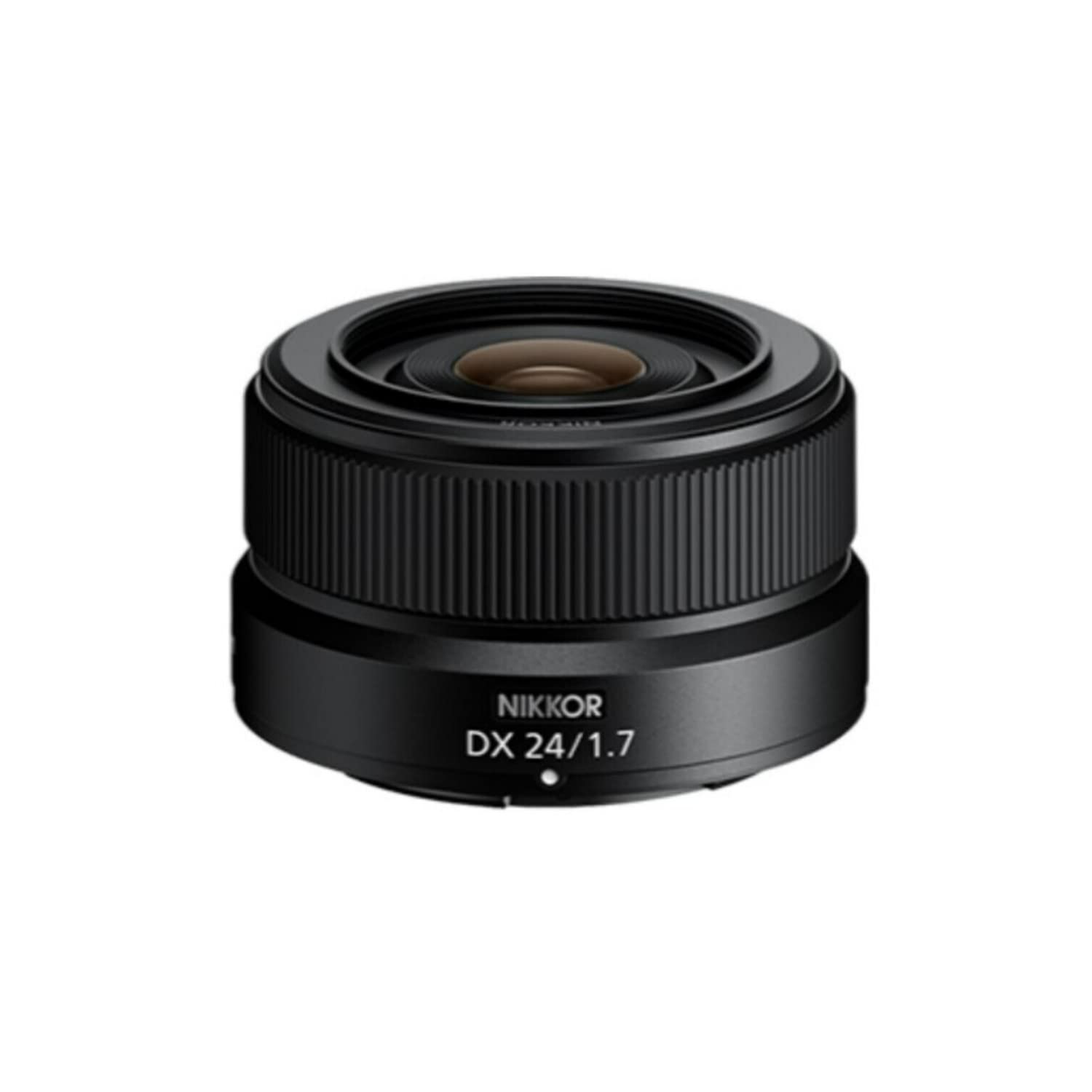
Nikon NIKKOR Z DX 24mm f/1.7

84 /100
Keeper Score Excellent

Key details

Mount
Nikon Z (DX)
Close Focus
4.7 in
Focal Length
24mm
Max Aperture
f/1.7
Check Price on Amazon

The 24mm f/1.7 is the Z DX prime for people who want a small camera to stay small. On a Z fc or Z 50 it feels almost like a pancake, and the 281g weight does not upset the balance. The 24mm view is roughly 36mm equivalent, a wide-normal that works for street scenes, environmental portraits, and tabletop details without the distortion of a true ultra-wide.

The f/1.7 aperture is the point. It lets you shoot indoors without flash and gives you a shallow depth of field for separating a subject from a busy background. The lens is sharp wide open, with better edge performance stopped down a little, and the close-focus distance of 4.7 inches is unusually short for a prime. That close focus makes it a useful detail lens when you do not want to carry a macro.

The dust- and drip-resistant sealing is a nice surprise on a lens this size. It does not make the lens waterproof, but it gives you more confidence in light rain and dusty conditions. The autofocus is fast and quiet in good light, and the manual focus ring is smooth enough for fine adjustments. The 46mm filter thread is small, so filters are compact and easy to pack.

What we like most is the way it turns a small Z body into a carry-everywhere camera. It is not the lens for reach or fast action, but for low-light walkarounds, food, and environmental portraits, it is the prime we reach for. It is the lens that makes the camera feel like a camera again.

Pros

  • Fast f/1.7 aperture
  • Close focus at 4.7 inches
  • Dust- and drip-resistant sealing

Cons

  • No optical VR
Our verdict

This small 24mm f/1.7 is the Z DX prime we recommend for low light and close details, as long as you can live without optical VR.

Check Latest Price

How We Tested These DX Lenses

To build the shortlist, I started with the current DX catalog in both mounts, dropped anything discontinued or hard to buy new, and sorted what remained by focal range and price so the group wouldn't end up as five versions of the same zoom. That left twelve lenses, which we shot with for eight months.

Each one went onto DX bodies — a DSLR and a Z-series camera with the adapter — and got used the way a lens actually gets used: a bag on a hike, a dim living room at dusk, a school gym, a backyard full of running kids. Sharpness took the most scrutiny. I shot the same scene at every aperture from wide open to f/8 and compared center and corner crops side by side at 100 percent, because a lens that's crisp in the middle and soft at the edges is a different purchase than one that isn't.

For low light, I waited for the light to fall and kept shooting handheld, noting the shutter speed and whether image stabilization genuinely bought me a stop or just steadied the viewfinder. Autofocus got the dog test — a dog sprinting straight at the camera — plus a kid on a bike, and I recorded lock speed, whether the lens hunted, and how much motor noise it made in a quiet room. Every lens went on a kitchen scale and then around my neck for a full day. At the end I tallied what came in the box, hood included, since a missing hood is money you spend later.

How to Choose a Nikon Dx Lens

Match the mount to the camera

If you shoot a D3500, D5600, or D7500, you need an F-mount DX lens. If you shoot a Z 30, Z 50, or Z fc, you need a Z-mount DX lens. An F-mount lens can go on a Z body with Nikon's FTZ adapter, but a Z lens cannot go on a DSLR. We treat that as the first checkpoint because the wrong mount makes every other specification irrelevant.

If you own both systems, buy for the body you use most and adapt only when the lens is worth the extra bulk. The mount also decides which autofocus features are available, so check the lens and body together rather than shopping by focal length alone.

Pick a focal range for the shots you miss

A standard zoom is the safest single lens: 18-140mm covers wide rooms, family groups, and a short telephoto without a swap. An 18-300mm goes further for travel and wildlife, but it is a bigger compromise on edge sharpness. If you already have a kit zoom, a 35mm or 24mm prime adds low light and background blur; a 10-20mm or 12-28mm adds dramatic wide views; a 55-300mm or 50-250mm adds reach.

We choose the gap in your bag, not the biggest number on the barrel. If you shoot mostly people indoors, a fast prime will change more than a superzoom. If you shoot landscapes and architecture, the wide end matters more than reach. If you shoot wildlife, save for the telephoto and accept the weight.

Aperture buys light and blur

A fast prime such as the 35mm f/1.8 or Z 24mm f/1.7 lets you shoot indoors without flash and separates a subject from the background. A variable-aperture zoom like an 18-140mm is more versatile in daylight but slows to f/5.6 or f/6.3 at the long end, which matters for indoor events and action.

Stopping a fast prime down one stop often improves edge sharpness, so the wide aperture is not only for blur. Buy the aperture for the light you actually shoot in, not for the one stop you might use on a tripod. If most of your photos are outdoors at f/8, a slower zoom is the better use of weight and money.

Autofocus, VR, and size decide what you carry

Autofocus speed matters most for sports, wildlife, and kids; VR matters most for handheld telephoto and low-light static scenes. A light lens gets carried more, but a 1.3 lb telezoom balances better on a DSLR than on a tiny body. Handle the lens on your camera if you can, or at least compare the weight with the body you own.

Check that the lens hood and caps are included, and confirm the filter size before you order accessories. We prefer a lens that feels balanced and focuses predictably to one with a longer spec sheet. The best lens is the one you actually take out of the bag.

Frequently Asked Questions

Final Verdict

For most F-mount DX shooters, we recommend the 35mm f/1.8G first: it is compact, sharp, and fast enough to make indoor and evening shots possible without flash. If you want one lens for travel, the 18-140mm is the better companion, and Z-mount shooters have a stronger case for the Z 18-140mm or the Z 24mm f/1.7.

The right choice is the one that fills the gap in your bag, not the one with the longest zoom range. Start with the lens that matches your mount, then add the focal length or aperture you keep missing.