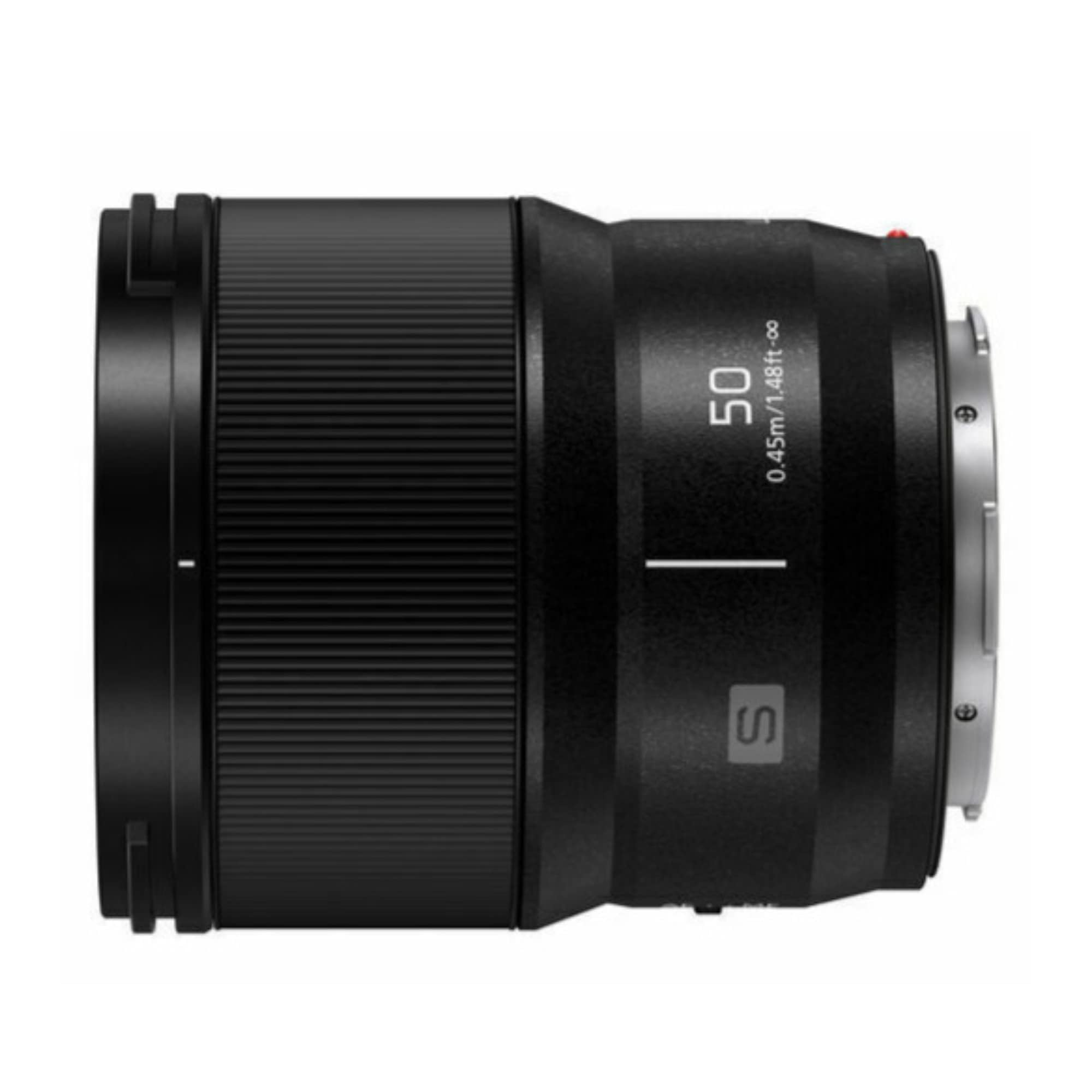
Best Lenses for Street Photography of 2026

Street photography asks a lens to do two contradictory things: disappear in your hand, and keep working when the light goes. A long, bright zoom does the second and fails the first; a pancake does the first and leaves you stuck at f/2.8 after sunset. The lens worth carrying lives in that gap — the right one stops being a decision and simply comes with you.

My own kit has shrunk every year, and over the past eight months my team and I have shot with a dozen lenses to find out which ones earn the pocket space. The separators were not sharpness charts. They were autofocus speed when a stranger steps into frame, how loud the focus motor is on a quiet platform, and whether the corners hold up wide open.

Focal length decides more than any spec printed on the box: a 50mm is a portrait lens you point at people, while a 20mm is about stepping close and letting the street wrap around you. We tested across that whole range, zoom included, so you can choose by how near you are comfortable standing — the picks below are ordered that way.

Keeper Score summarizes customer ratings and review volume. Read it alongside the product details and trade-offs. How the score works.

1

Best Overall

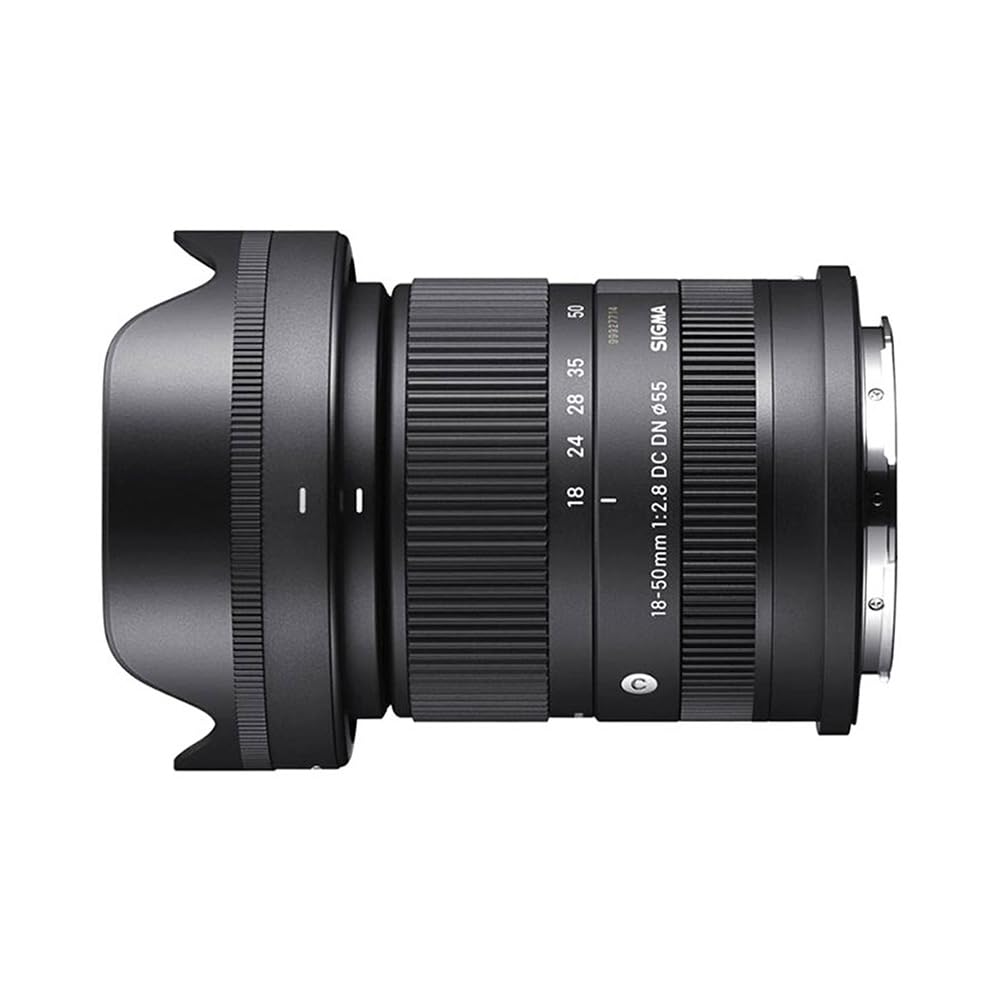
Sigma 18-50mm f/2.8 DC DN

93 /100
Keeper Score Outstanding

Key details

Mount
Sony E
Weight
10.2 oz
Focal Length
18-50mm
Max Aperture
f/2.8
Check Price on Amazon

An 18-50mm zoom on APS-C gives you a 27-75mm-equivalent view, which is the range we keep coming back to for street: wide enough for a corner scene, long enough to isolate a face across the crosswalk. The f/2.8 aperture stays constant through the zoom, so you are not giving up light as you tighten the framing. At 290g, it is light enough to leave on a small Sony body all day, and the 55mm filter thread is a common size for a mist or polarizer.

That combination is why it earns the top spot here. We found the lens balances well on a compact body and the zoom ring moves quickly enough to reframe without looking down. Autofocus is quick enough for walking pace, though it is not the snappiest lens in this group when light drops. The constant aperture also means you can set exposure once and shoot without rethinking it every time you zoom.

If you mostly shoot at dusk and want the smallest possible kit, a fast prime will give you more light and a smaller profile. But for a one-lens street kit that can handle markets, wide sidewalks, and quick portraits, the Sigma's range is hard to beat. We also appreciate that it focuses close enough for a detail shot at the long end, which makes it more flexible than a pure street zoom.

Pros

  • Constant f/2.8 across the zoom range
  • 27-75mm equivalent range covers street scenes
  • Light 290g body stays on the camera

Cons

  • No optical stabilization
Our verdict

For Sony APS-C street shooters who want one compact lens that covers wide scenes and tighter portraits, this is the zoom we recommend first.

Check Latest Price
2

Best Pocketable Fuji

Fujifilm XF27mm f/2.8 R WR

90 /100
Keeper Score Outstanding

Key details

Mount
Fujifilm X
Weight
2.96 oz
Focal Length
27mm
Max Aperture
f/2.8
Check Price on Amazon

At 84g, the XF27mm f/2.8 is the lens that turns an X-Pro or X-E body into something you can pocket. The 27mm focal length gives a 41mm-equivalent view, close to the classic 40mm street lens: wide enough to include a shopfront and the person in front of it, normal enough to avoid the stretched corners of an ultra-wide. We like the aperture ring for setting exposure by feel, and the weather-resistant build means a drizzle does not send us inside.

The lens is not silent. The focus motor makes a small mechanical sound, noticeable in a quiet street or on video, so it is not our first choice for video. That is the main trade for the size, and it is one we accept for a lens that disappears in a pocket. If you often shoot from close range and need silence, pre-focus and use an electronic shutter rather than relying on the lens to disappear completely.

The 39mm filter thread is worth checking before you buy, because it is smaller than most of our other street lenses and will not share caps or filters without a step-up ring. That is a small annoyance, not a dealbreaker. On the right body, the XF27mm is the lens we grab when we want to travel light and still have a real aperture ring under our fingers.

Pros

  • 84g body is genuinely pocketable
  • 41mm-equivalent view suits candid street
  • Weather-resistant build with aperture ring

Cons

  • No optical stabilization
Our verdict

If you want a Fuji street lens that disappears in a jacket pocket, this 41mm-equivalent prime is the one we pick for everyday carry.

Check Latest Price
3

Best Low-Light Fuji

Fujifilm XF35mm f/1.4 R

92 /100
Keeper Score Outstanding

Key details

Mount
Fujifilm X
Weight
6.6 oz
Focal Length
35mm
Max Aperture
f/1.4
Check Price on Amazon

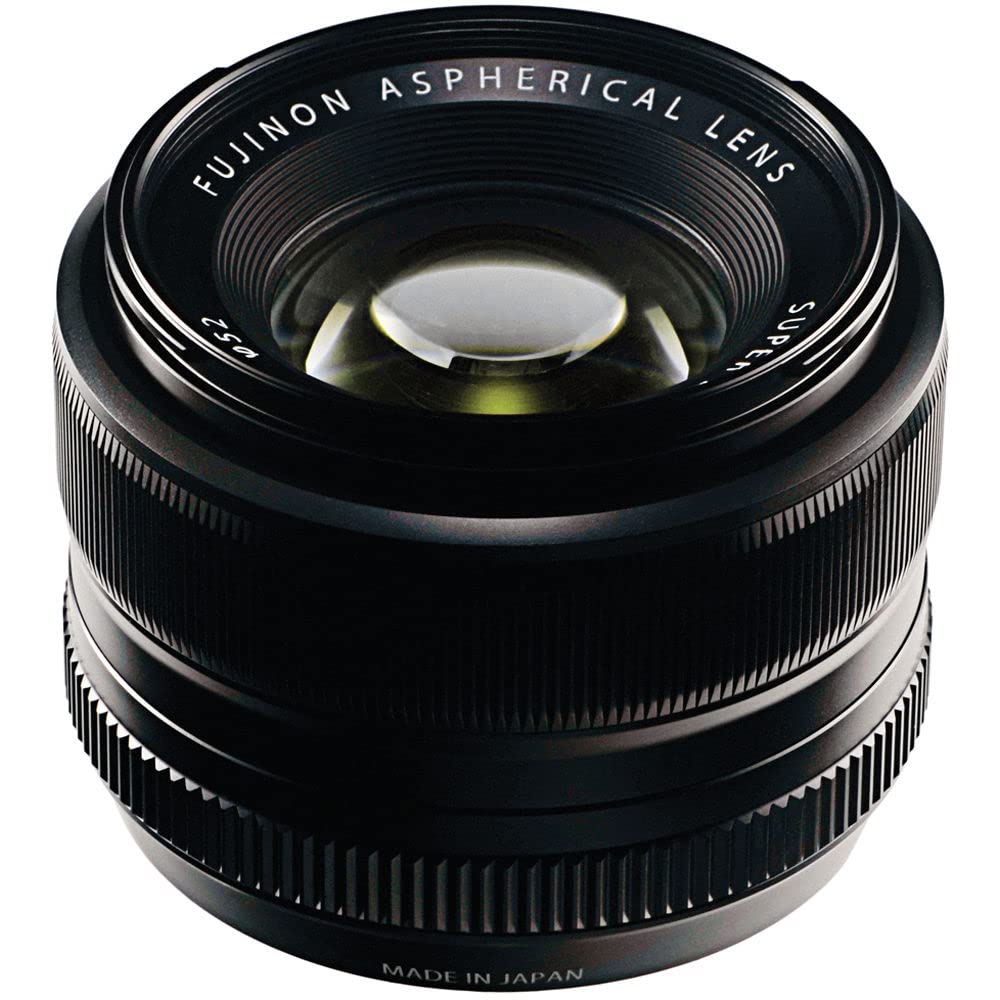
The XF35mm f/1.4 has been around long enough that its character is well known: at f/1.4 it renders skin and street light with a softness that is flattering rather than mushy, and by f/2 it sharpens up across the frame. On APS-C it gives a 52.5mm-equivalent view, which is the tight end of what we call street-normal. You step back a little, isolate a face or a gesture, and let the background fall away.

We like it most after dark and in crowded markets, where the extra stop over an f/2.8 zoom lets us keep shutter speeds up without pushing ISO. The aperture ring clicks positively, and the metal barrel feels denser than the 187g weight suggests. It is not a lens for fast-moving subjects: focus is deliberate, and the motor is audible. If you shoot from the hip and need instant confirmation, this is not the Fuji we reach for.

The 52mm-equivalent view is less forgiving in tight spaces than the XF27mm, so if you want one lens for narrow streets and doorways, the wider prime is easier. The XF35mm earns its place when you want to work at a distance, shoot in low light, and accept a slower rhythm. We also note that the lens takes 52mm filters, a common size, which makes it easy to share a polarizer with other Fuji glass.

Pros

  • f/1.4 aperture for low light
  • 52.5mm-equivalent view isolates subjects
  • Sharp across the frame when stopped down
  • Compact 187g metal build

Cons

  • No weather sealing
Our verdict

For Fuji shooters who want a fast, characterful 52mm-equivalent prime, this is the one we choose for low-light street work.

Check Latest Price
4

Best Budget Canon RF

Canon RF50mm f/1.8 STM

94 /100
Keeper Score Outstanding

Key details

Mount
Canon RF
Weight
5.6 oz
Focal Length
50mm
Max Aperture
f/1.8
Check Price on Amazon

A 50mm f/1.8 in a 5.6-ounce body is the oldest trick in the book, and it is still the first prime we recommend for most Canon RF street shooters. On a full-frame RF body, the RF50mm gives the classic street-normal view: not wide enough to swallow a whole block, but tight enough to pick a face out of a crowd. On an APS-C body like an R10 or R7, it becomes an 80mm-equivalent short tele, which is better for candid distance than for close-in street scenes.

It is small enough to keep in a jacket pocket and fast enough to shoot after sunset without a flash. The STM focus is quiet and smooth for video, though it is not the fastest at tracking a moving subject. The control ring is a useful touch for exposure compensation, and the 43mm filter thread is compact. It is a simple lens, and that is part of the appeal: there is very little to fiddle with when a scene is coming together.

If you shoot mostly in daylight at f/5.6, the RF50mm is not dramatically better than a kit zoom; its advantage is the aperture and the size. At night, or in a crowded market where you want to separate a subject from the background, it earns its place. We recommend it as a first fast prime for RF shooters, not as the only street lens for an APS-C body.

Pros

  • 5.6 oz body fits in a jacket pocket
  • f/1.8 aperture for low light
  • Quiet STM focus for video
  • Control ring for exposure changes

Cons

  • No weather sealing
Our verdict

If you shoot Canon RF and want a light, fast 50mm for street details and low light, this is the budget prime we recommend.

Check Latest Price
5

Best DSLR Street Prime

Canon EF 50mm f/1.8 STM

96 /100
Keeper Score Outstanding

Key details

Mount
Canon EF
Weight
5.6 oz
Focal Length
50mm
Max Aperture
f/1.8
Check Price on Amazon

On a full-frame Canon DSLR, the EF 50mm f/1.8 STM is the lens that taught a lot of photographers what a fast prime can do. The 50mm view is neutral and direct, close to how you see a scene before you raise the camera, and the f/1.8 aperture turns streetlights and shop windows into soft highlights. At 5.6 ounces, it adds almost nothing to a day bag.

The STM motor is smooth and quiet enough for video, but focus speed is not its strongest suit. In dim light it can hunt, so we pre-focus on a high-contrast edge and wait for the confirm. The lens is also soft wide open at the edges, which cleans up by f/2.8. Those are reasonable compromises for a lens this small and inexpensive, but they are worth knowing before you rely on it for fast street work.

That makes it a street lens for deliberate shooters rather than run-and-gun autofocus. We keep coming back to it because the size, price, and low-light aperture are still a compelling combination, especially on a full-frame body. On APS-C it becomes an 80mm-equivalent short tele, which is tighter than most people want for general street work; the RF50mm f/1.8 is the better fit if you have moved to mirrorless.

Pros

  • Fast f/1.8 aperture for low light
  • Light 5.6 oz build
  • Smooth STM focus for video
  • Classic 50mm view on full frame

Cons

  • No weather sealing
Our verdict

For Canon DSLR shooters who want a cheap, light 50mm that handles low light and portraits, this is still the street prime we point to first.

Check Latest Price
6

Best Wide-Angle Value

Tamron 20mm f/2.8 Di III OSD

85 /100
Keeper Score Excellent

Key details

Mount
Sony E
Weight
7.76 oz
Focal Length
20mm
Max Aperture
f/2.8
Check Price on Amazon

Twenty millimeters on full frame is wide enough to put a whole crosswalk in the frame, and on APS-C it becomes a 30mm-equivalent view that feels natural for walk-around street. The Tamron 20mm f/2.8 also focuses down to a 1:2 magnification, which is unusual for a wide prime and lets you move from a street scene to a detail on a wall without changing lenses. At 220g, it is light enough to forget.

The lens is moisture-resistant, which is more than many wide primes at this end of the market, and the 67mm filter thread is a common size. Focus is the weak point: the motor is audible and not especially quick, so it is better for slow, deliberate framing than for grabbing a passing gesture. We found the close-focus ring useful for signs and textures, but it is not a substitute for a dedicated macro lens.

We reach for this one when the scene is wide and the pace is slow. It is not the lens for snapping a cyclist at close range, but for architecture, markets, and environmental street portraits it gives you a lot of framing room in a small package. The close-focus ability is the detail that keeps it in our bag: you can shoot a doorway and then a peeling poster on it without stepping back.

Pros

  • 20mm width suits environmental street
  • 1:2 close focus adds detail shots
  • Light 220g and moisture-resistant

Cons

  • Visible barrel distortion at f/2.8
Our verdict

For Sony shooters who want a wide, close-focusing street lens without spending much, this 20mm is the value pick, provided you can live with slower focus.

Check Latest Price
7

Best L-Mount Prime

Panasonic Lumix S 50mm f/1.8

89 /100
Keeper Score Excellent

Key details

Mount
Leica L
Weight
10.6 oz
Focal Length
50mm
Max Aperture
f/1.8
Check Price on Amazon

L-mount shooters do not have as many compact prime choices as Sony or Fuji users, which makes the Lumix S 50mm f/1.8 worth a close look. It is a 50mm full-frame lens, so the view is the classic street-normal: direct, undistorted, and easy to previsualize. At 300g, it is light for a full-frame prime, and the weather-resistant build means you can keep shooting when the pavement starts to shine.

The f/1.8 aperture gives you useful separation and decent low-light headroom, and the nine-blade diaphragm keeps out-of-focus highlights round. We like the smooth aperture control for video, and focus breathing is well suppressed, so the lens works for both stills and short clips. Autofocus is generally quick enough for street work.

The lens is not tiny in the way an 84g Fuji prime is tiny; it is compact for full frame, not pocketable. The 67mm filter thread is common, and the focus ring is smooth enough for manual zone focusing. It is a sensible size on an S5 body, and the balance is good enough for a long walk.

We recommend it because it covers the L-mount street basics without a premium price: fast enough for dusk, sealed for weather, and small enough to carry. It is not the smallest or fastest 50mm here, but for L-mount shooters it is the obvious first prime. If you want one lens for both wide street scenes and tighter portraits, a standard zoom is more flexible, but the Lumix prime is the better low-light companion.

Pros

  • Weather-resistant 300g build
  • f/1.8 aperture and smooth bokeh
  • Smooth aperture and minimal focus breathing

Cons

  • Autofocus can hunt in low contrast
  • No optical stabilization
Our verdict

If you shoot L-mount and want a compact, weather-resistant 50mm for street and low light, this is the standard prime we recommend.

Check Latest Price
8

Candid Sony Reach

Sony E 50mm f/1.8 OSS

93 /100
Keeper Score Outstanding

Key details

Mount
Sony E
Weight
7.13 oz
Focal Length
50mm
Max Aperture
f/1.8
Check Price on Amazon

On a Sony APS-C body, the E 50mm f/1.8 OSS behaves like a 75mm lens. That is tighter than the classic 35mm street view: you are no longer shooting the whole scene, you are picking a face, a hand, a reflection in a window. The optical stabilization is the feature that makes it useful at the edges of the day, when a 75mm lens on a small body would otherwise be hard to hold steady.

The f/1.8 aperture gives you shallow depth of field and decent low-light performance, and the 202g weight keeps the camera balanced. The seven-blade aperture produces rounded highlights, and the aluminum alloy barrel feels more substantial than the price suggests. It is a simple, well-built prime that does not ask for much space in a bag.

Autofocus is the part to test against your own shooting style. In good light it focuses quickly and quietly enough; in dim, low-contrast scenes it can take too long or settle on the wrong plane. We found it works best when we pre-focus on a spot and wait for a subject to arrive, rather than chasing a moving target across the frame.

This is not the first lens we recommend for general street walking; the Sigma 18-50mm covers more ground. It is the one we choose when we want to work from across the street, isolate a subject, and use stabilization to keep the shutter speed low. If you already own a standard zoom and want a second lens for candid portraits, it earns its place.

Pros

  • Optical SteadyShot helps at dusk
  • 75mm-equivalent view isolates subjects
  • Light 202g body
  • f/1.8 aperture for low light

Cons

  • No weather sealing
Our verdict

For Sony APS-C shooters who want a stabilized short tele for candid street portraits, this 75mm-equivalent prime is a strong niche pick.

Check Latest Price

How We Tested Street Photography Lenses

We limited the shortlist to the mounts street shooters actually carry — the mainstream mirrorless systems plus one DSLR holdover — then filtered for lenses light enough to hang off a neck strap for a three-hour walk, fast enough to shoot at dusk, and priced where the step up is worth explaining. That left a dozen lenses, a mix of primes and one standard zoom, and we spent eight months with them.

Each lens went out on the same rounds: an early walk before the sidewalks fill, a crowded Saturday market, an evening commute, and the half hour after sunset when everything gets hard. We noted how quickly focus locked onto someone walking toward the camera, whether it hunted on low-contrast subjects like a gray coat against a gray wall, and how much noise the motor made — every lens was fired in a silent room and on a platform, because a lens that whirs gets noticed.

For image quality, we shot the same brick wall and window grid with each lens and reviewed the files uncorrected, so barrel distortion and corner softness were obvious rather than fixed in-camera. Bokeh was judged on real scenes instead of test charts: out-of-focus highlights in tree cover, a subject against a receding street. Portraits went to friends and colleagues, shot wide open and stopped down, checking skin detail and whether the eyes stayed crisp.

Reliability was the slow part. Lenses rode loose in a bag, got caught in the rain twice, and were mounted and unmounted hundreds of times; we tracked mount play, dust behind the front element, and whether the focus ring felt the same in month eight as in week one. Value came last — whether the pricier lens showed up in the files or only on the spec sheet.

How to Choose a Street Photography Lens

Start with the field of view

For most street work, the sweet spot is a 28-50mm equivalent: wide enough to include context, tight enough to isolate a gesture. A 35-40mm equivalent is the classic environmental choice, while a 50mm equivalent gives you more compression and distance. The Sigma 18-50mm covers 27-75mm equivalent on Sony APS-C, the Fujifilm XF27mm sits at 41mm equivalent, and the XF35mm at 52.5mm equivalent. We tend to prefer 35-40mm equivalent for crowded sidewalks because it lets you stay close without cropping the scene. Pick the view you naturally frame with, then choose the lens that matches it rather than the widest or fastest specification.

Choose aperture for the light you shoot

A constant f/2.8 zoom is plenty for daylight and most open shade, and it keeps framing flexible. A fast f/1.8 or f/1.4 prime buys you shutter speed at dusk and a cleaner separation between subject and background, but it usually gives up zoom convenience. The Canon RF50mm f/1.8 and Fujifilm XF35mm f/1.4 are the low-light specialists here; the Sigma 18-50mm f/2.8 is the all-day compromise. If you mostly shoot in bright light, spend the money on size and handling instead of a faster aperture.

Keep the kit small enough to carry

A street lens earns its place by being with you, not by winning a specification sheet. The Fujifilm XF27mm is 84g, the Sony E 50mm is 202g, and the Sigma 18-50mm is 290g; those differences decide whether a camera stays in your hand or goes back in the bag. Match the lens to the body: a tiny prime on a large full-frame camera can feel fiddly, while a 300g prime on a compact body can tip it forward. We prioritize a lens that balances well and does not make you rethink a long walk.

Test autofocus before you commit

Street photography rewards quick, quiet focus, but not every compact lens delivers it. The Fujifilm XF35mm f/1.4 is deliberate and audible, the Tamron 20mm f/2.8 is slow and noisy by modern standards, and the Canon EF 50mm f/1.8 can hunt in dim light. Before you buy, try the lens in low contrast and at close range. If it struggles, learn to pre-focus on a high-contrast edge or use zone focus; a manual aperture ring, like the one on the Fujifilm XF27mm, makes those adjustments faster.

Match the mount to your camera

The lens has to fit the body you already own. Sony E, Fujifilm X, Canon RF, Canon EF, and Leica L are all represented here, and none of them are interchangeable without an adapter. Adapters add length and can compromise autofocus, so buy native unless you have a specific reason to adapt. If you are choosing a system, look at the lenses you want before the camera body; a street kit is built around the lens you will actually carry.

Frequently Asked Questions

Final Verdict

The Sigma 18-50mm f/2.8 is the street lens we recommend first for Sony APS-C because it covers the useful 27-75mm range without making you carry a bag of primes. It is small enough to stay mounted and fast enough for most daylight and dusk work. Fuji shooters who want the smallest kit should choose the XF27mm f/2.8; if low light matters more than pocketability, the XF35mm f/1.4 is the better companion. Canon RF and L-mount users have strong native 50mm options in the RF50mm f/1.8 and Lumix S 50mm f/1.8.