Best Laser Rangefinders of 2026

A rangefinder that reads 150 yards when the pin is 162 is worse than no rangefinder at all. I care less about the biggest range number on the box and more about whether it locks onto the same target cleanly, again and again. Good ones make it simple: one button, a clear display, and a reading you trust before you pull a club or raise a bow.

Over eight months, my team and I used 12 rangefinders on the range, around the course, and in the field—early mornings, drizzly afternoons, last light. We compared how quickly each acquired a flag or treeline, how readable the display stayed in sun and shadow, whether the extra modes helped or just added button presses, and what you got for the money. Magnification gets oversold: 7x makes a target look closer, but it also magnifies hand shake, and a steady 6x image beats a jittery higher-power view. Tournament players should check that slope can be switched off; some formats don’t allow it.

The picks below are accurate, clear, and durable. They’re worth carrying.

Keeper Score summarizes customer ratings and review volume. Read it alongside the product details and trade-offs. How the score works.

1

Best Overall

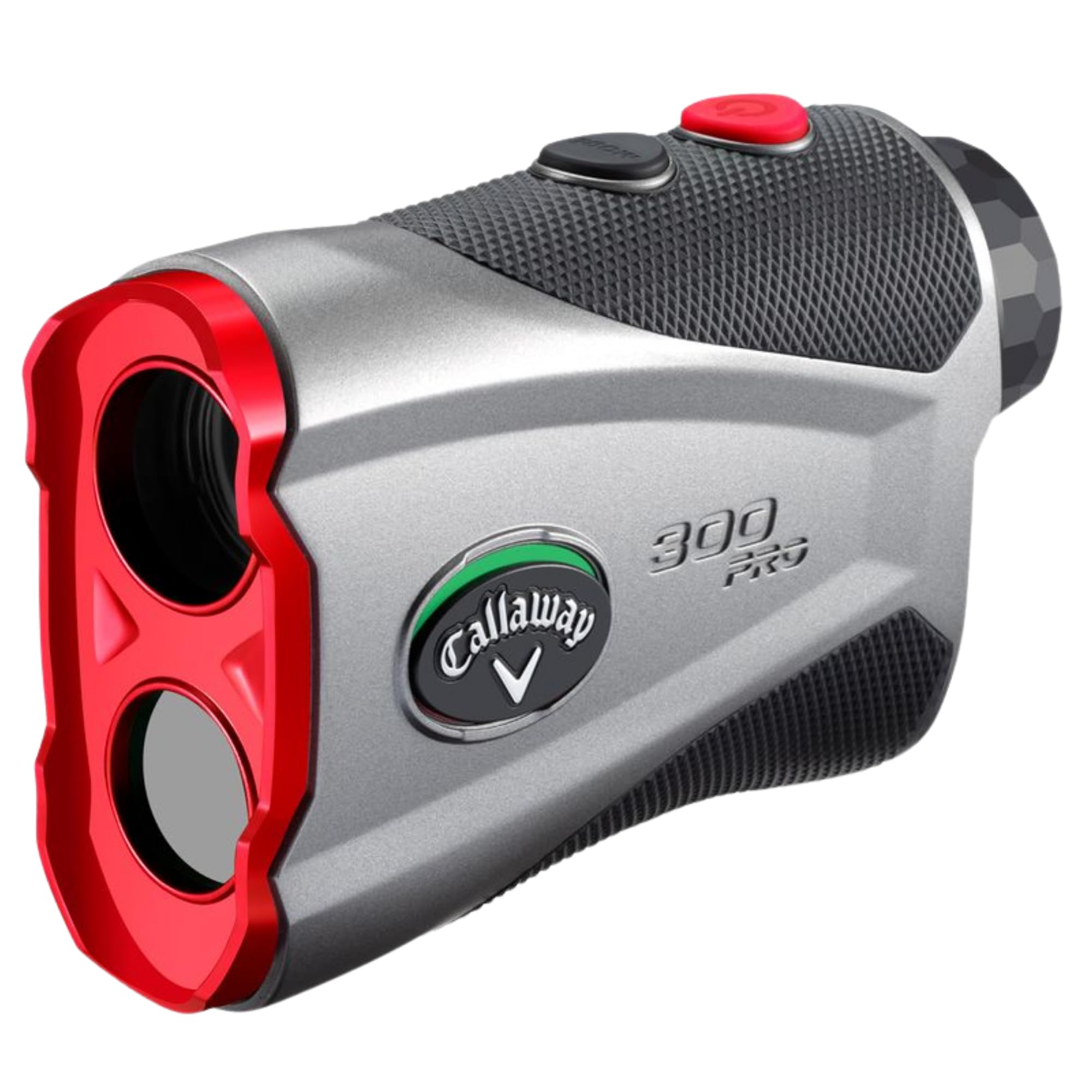
Callaway 300 Pro

93 /100
Keeper Score Outstanding

Key details

Slope
External slope switch
Weight
8 oz
Magnification
6x
Measuring Range
5-1,000 yards
Check Price on Amazon

The Callaway 300 Pro wins this group because it nails the three things a golfer uses on every hole: slope, pin lock, and a magnet that keeps the unit on the cart. The external slope switch is the detail we appreciate most. It lets you turn slope off without digging through a menu, which matters when a club tournament bans slope but still allows distance. The 6x optic and 5- to 1,000-yard range are more than enough for any course, and the pin lock reaches 300 yards with a pulse that confirms the flag rather than a tree behind it.

The readouts come quickly and consistently, and the 1-yard accuracy spec is tight enough for approach shots. The body is compact at 4 by 2.7 by 1.4 inches and 8 ounces, so it sits in the hand without wobble. The magnet is strong enough that we kept it on the cart frame between shots. The molded hard case and carabiner are a nice bonus; the case protects the lens without adding bulk to a bag.

The limitation is weather protection: IPX4 is rain-resistant rather than dunk-proof. For a golfer who plays in ordinary weather, that is easy to live with. If you want the best sealing here, the Bushnell Tour V6 Shift is the step up.

Pros

  • External slope switch is quick to disable
  • Pin lock with pulse confirms the flag
  • Strong magnet holds on the cart
  • Compact 8-ounce body and hard case

Cons

  • Golf-first modes lack ballistic calculations
Our verdict

For most golfers, this is the one we point to: slope, pin lock, and a cart magnet in a compact, accurate package.

Check Latest Price
2

Best for Long-Range Hunting

Vortex Crossfire HD 1400

94 /100
Keeper Score Outstanding

Key details

Display
Red TOLED
Magnification
5x
Range On Game
750 yards
Max Reflective Range
1,400 yards
Check Price on Amazon

The red TOLED display is the first thing we noticed on the Crossfire HD 1400, and it is the reason this one earns a spot for hunters. Red numbers cut through dark timber and low light in a way that black LCD readouts often do not, which matters at first light and last light. The 5x optic is paired with an HD system and XR coatings, so the image stays crisp even when the display is doing the work.

Vortex rates it at 1,400 yards on reflective targets and 750 yards on game, which is the more useful pair of numbers. The three target modes (Normal, First, and Last) let you range through brush or pick out a specific animal, and the unit is waterproof and shockproof. We also appreciate the included harness attachment and soft case; it is easy to keep accessible while walking or sitting in a stand. The unlimited, unconditional warranty is the kind of backup that makes it easier to commit.

This is a hunting-first rangefinder, and the feature set reflects that. For a hunter or shooter who wants a clear read at distance, it is easy to commit to. Golfers have better-matched options in the Callaway and Bushnell.

Pros

  • Red TOLED stays clear in low light
  • 1,400-yard reflective range, 750 on game
  • First and Last modes for brush
  • Unlimited, unconditional lifetime warranty

Cons

  • No slope or flag-lock for golf
  • 5x magnification trails the 6x and 7x picks
Our verdict

Hunters who need a readable number at first and last light should start here; the red TOLED and 1,400-yard reach justify the focus.

Check Latest Price
3

Best Premium Golf Rangefinder

Bushnell Tour V6 Shift

93 /100
Keeper Score Outstanding

Key details

Slope
Slope compensation
Magnification
6x
Measuring Range
5-1,300 yards
Water Resistance
IPX6
Check Price on Amazon

The Tour V6 Shift is the premium golf model in this group, and the extra money goes toward speed and consistency rather than a longer feature list. Bushnell's PinSeeker with visual Jolt gives you a red ring and a vibration when you catch the flag, so you are not guessing whether the number belongs to the pin or the maple behind it. The 6x optic and 1,300-yard range are more than most golfers will ever need, and the slope compensation can be switched off for tournament play.

We were impressed by how quickly it settles on a number. The BITE magnet is strong enough to hold the unit on a cart frame, and the IPX6 rating is the best weather protection in this set. The display is bright and the view is clean, which is what you are paying for. The included case and CR2 battery are ready to go, and the veteran coin is a small extra that does not change the decision.

The V6 Shift is built for the golfer who plays several times a week and wants the fastest, most repeatable pin lock here. If you play once a month, the Callaway 300 Pro covers the same core job.

Pros

  • Fast PinSeeker lock with visual Jolt
  • IPX6 sealing is the best here
  • Strong BITE magnet for cart mounting

Cons

  • Premium price for recreational golfers
Our verdict

If you play several times a week and want the fastest, most repeatable pin lock here, the V6 Shift is worth the premium.

Check Latest Price
4

Best Budget Golf Rangefinder

Acer Golf Rangefinder

93 /100
Keeper Score Outstanding

Key details

Weight
11.2 oz
Battery
USB-C rechargeable
Magnification
6x
Measuring Range
800 yards
Check Price on Amazon

Acer's golf rangefinder is the budget pick we reach for when someone wants slope and flag lock without spending premium money. It has a 6x optic, an 800-yard range, slope compensation, and a flag-lock vibration that confirms the pin. The anti-shake feature is a real help for golfers with unsteady hands; it steadies the image enough that you can hold the number instead of chasing it.

The USB-C rechargeable battery is the other practical win. We like that we do not have to hunt for a CR2 in the bag, and the included magnet lets it sit on a cart between shots. The body fits in a golf bag pocket, and the controls are simple enough to learn in a round. The display is clear in normal light, and the flag lock is quick to confirm.

For golf and ordinary hunting, the Acer covers the essentials better than anything else in this set. It is the one we hand to a friend who wants a first rangefinder without a big commitment.

Pros

  • Slope and flag-lock vibration at a budget price
  • USB-C rechargeable battery
  • Anti-shake steadies the view

Cons

  • 800-yard range limits long-range hunting
  • 11.2-ounce body is heavier than most
Our verdict

Budget-minded golfers get slope, flag lock, and USB-C charging in one capable unit; it is the value play in this set.

Check Latest Price
5

Best Lightweight Hunting Value

TIDEWE Hunting Rangefinder

95 /100
Keeper Score Outstanding

Key details

Weight
5.67 oz
Battery
Rechargeable Li-ion
Magnification
6x
Measuring Range
3-700 yards
Check Price on Amazon

At 5.67 ounces, the TideWe is the rangefinder we tuck into a jacket pocket and forget about until we need it. The camo body, 6x magnification, and 3- to 700-yard range are built for hunting, with straight-line, vertical, horizontal, speed, and scan modes. The 0.46-second read time is quick enough for a moving target, and the rechargeable battery is rated for up to 21,000 measurements.

We appreciate the one-hand operation and the simple mode button. With gloves on, the controls are still usable, which is not true of every compact unit. The carry case has a magnetic clip that makes it easy to hang from a belt or pack, and the IP54 rating covers dust and splashes. For the hunter who wants a light, quiet unit, the package makes sense.

It is a hunting tool first, and golfers should look elsewhere for slope and flag lock. For close- to mid-range days afield, the TideWe is the one that disappears in a pocket and still gives you a clean number.

Pros

  • 5.67-ounce body disappears in a pocket
  • Rechargeable battery rated for 21,000 measurements
  • One-hand controls work with gloves

Cons

  • Unlit display washes out in low light
  • 700-yard maximum is reflective-target range
Our verdict

A 5.67-ounce hunting rangefinder with rechargeable power and simple controls, built for close- to mid-range days afield.

Check Latest Price
6

Best for Ballistic Hunting

Leupold RX-1400i TBR/W

91 /100
Keeper Score Outstanding

Key details

Magnification
5x
Range On Trees
1,200 yards
Ballistic Modes
TBR/W and Flightpath
Max Reflective Range
1,400 yards
Check Price on Amazon

The RX-1400i TBR/W is the rangefinder we point archers and rifle hunters toward when they want ballistic help rather than just a distance. TBR/W calculates True Ballistic Range with wind, and the selectable TOLED display keeps the numbers bright and adjustable. The bow mode with Flightpath is the standout: it shows potential arrow obstructions and gives an angle-compensated range, which is more useful in a treestand than a plain line-of-sight number.

The 5x optic reaches 1,400 yards on reflective targets and 1,200 yards on trees, so it has enough reach for open country and enough clarity for timber. We like the compact aluminum body and the simple button layout; it is easy to set up and easy to read. The display has low, medium, and high brightness settings, which is the right way to handle changing light.

The RX-1400i is built for hunters who want ballistic help, not a golf interface. If you split time between bow and rifle, the mode set is the reason to choose it. Golfers have better-matched options in the Callaway and Bushnell.

Pros

  • TBR/W calculates ballistic range with wind
  • Flightpath bow mode shows arrow obstructions
  • Adjustable TOLED display
  • 1,400-yard reflective and 1,200-yard tree range

Cons

  • 5x magnification trails the 6x and 7x picks
  • No golf slope switch or flag lock
Our verdict

Archers and rifle hunters who want ballistic help should choose this; TBR/W and Flightpath do more than report yards.

Check Latest Price
7

Budget Long Range

AOFAR HX-1200T

92 /100
Keeper Score Outstanding

Key details

Weight
6.38 oz
Angle Display
Angle and horizontal
Magnification
6x
Measuring Range
5-1,200 yards
Check Price on Amazon

AOFAR advertises 1,200 yards on the HX-1200T, and that number needs context. The unit measures 5 to 1,200 yards with 6x magnification, angle and horizontal distance, and separate bow and range modes. It is a lot of capability for a budget hunting rangefinder, and the included CR2 battery, pouch, and lanyard make it ready to use.

The catch is practical range. The 1,200-yard figure applies to reflective targets, and the usable distance on a deer or tree is much shorter. We like the angle and horizontal readouts for treestand shots, and the 6x view is clear in good light. The one-button mode switching is simple enough to learn before a season starts.

For a first hunting rangefinder, the HX-1200T is a sensible buy. It gives you the modes you need without the premium price, and it is light enough to carry all day. If you regularly range animals at longer distances, the Vortex or Leupold is the better tool.

Pros

  • Angle and horizontal distance for treestands
  • Separate bow and range modes
  • Light 181-gram body

Cons

  • Dim display in low light
Our verdict

A budget hunting rangefinder with angle and horizontal readouts, best for shooters who stay inside a few hundred yards.

Check Latest Price
8

Simple Hunting

Bushnell BoneCollector 850

92 /100
Keeper Score Outstanding

Key details

Weight
6.35 oz
Magnification
6x
Measuring Range
350-850 yards
Angle Compensation
ARC
Check Price on Amazon

The BoneCollector 850 is for the hunter who wants one button and a clear read. Bushnell's ARC technology accounts for angled terrain and gives true horizontal distance, and the all-glass optical system is bright for the price. The scan mode updates four times per second, so you can sweep across a field and watch the numbers change.

We like the simple, uncluttered view and the compact body. The 6x magnification and 850-yard reflective range are enough for whitetail woods and most eastern hunting, and the camo finish blends in when you leave it on a rail. The one-button design is easy to use with gloves, which is the point of a hunting rangefinder.

For close- to mid-range hunting, the BoneCollector is a straightforward, dependable tool. It is the one we hand to a hunter who does not want to scroll through menus before a shot.

Pros

  • ARC angle compensation
  • One-button operation
  • Fast 4x-per-second scan

Cons

  • 850-yard reflective max limits open country
Our verdict

The straightforward choice for woods hunters: one-button ARC ranging in a compact, camo body.

Check Latest Price
9

Entry-Level Hunting

AOFAR HX-700N

91 /100
Keeper Score Outstanding

Key details

Modes
Range and speed
Weight
6.35 oz
Magnification
6x
Measuring Range
5-700 yards
Check Price on Amazon

If you are buying your first rangefinder, the AOFAR HX-700N is the least expensive way into the category without going to a no-name unit. It has 6x magnification, a 5- to 700-yard range, and two basic modes: range and speed. The package includes a CR2 battery, carrying pouch, lanyard, carabiner, and cleaning cloth, so there is nothing else to buy.

We found the controls simple and the view clear in good light. The 180-gram body is light enough to carry in a hand or a pack, and the 6x magnification is enough for bowhunting distances. The range mode is quick to acquire, and the speed mode is a bonus for anyone who wants it.

For a beginner who wants to learn on deer at ordinary woods distances, it is a reasonable starter. For serious hunting, the Vortex and Leupold are better.

Pros

  • Low entry price
  • Complete accessory kit included
  • Light 180-gram body

Cons

  • Low-light display is hard to read
  • 700-yard max is reflective-target range
Our verdict

A low-cost first rangefinder for bowhunters and casual shooters, provided you keep expectations inside a few hundred yards.

Check Latest Price

How We Tested Rangefinders for Golf and Hunting

We started with a shortlist of 20 rangefinders sold for golf and hunting, then cut it to 12 after filtering out models with vague ranging claims, no slope-off option for tournament play, or flimsy battery doors. Over eight months, we used each one the way it actually gets used: on the driving range, walking a course, sitting in a cart, and in the field before sunrise and at last light. I ranged the same flag, tree, rock, and target at measured distances from 50 to 600 yards, then repeated each reading ten times to see whether the number held steady or jumped around.

To judge clarity and visibility, I read the display in direct sun, under cloud cover, and against a dark treeline, noting whether the reticle washed out or the numbers stayed crisp. For ease of use, I operated each unit one-handed, with a glove on, and counted the button presses needed to switch between slope, scan, and bow or rifle modes. I also compared 6x and 7x views on the same distant flag, watching how much the image shook when I was breathing hard after a climb.

Functionality got a practical test: did flag lock vibrate clearly, did scan mode keep updating as I swept across a field, did the magnetic mount hold on a cart rail, and did slope readings switch off cleanly. Durability came from daily life—bumped in a cart, carried in a pack, exposed to rain and dust, and dropped from waist height onto grass. Reliability meant the same target read the same way after a battery swap and a week in the bag. At the end, we weighed what each unit included against its price to sort out the ones that were genuinely worth carrying.

How to Choose a Laser Rangefinder

Practical Range Beats the Box Number

A rangefinder's biggest number is usually measured against a reflective target, not a deer or a flag. That is why a 1,200-yard unit can feel limited in the woods and a 700-yard unit can be plenty on a golf course. Look for a separate game or flag rating when one is published, as with the Vortex Crossfire HD 1400's 750-yard game rating, and treat the reflective maximum as a ceiling rather than a promise. If you range animals at longer distances, buy more reach than you think you need; if you mostly range flags, 800 yards is generous.

Slope for Golf, Ballistics for Hunting

Slope compensation adjusts distance for uphill and downhill shots, and it is the feature that separates a golf rangefinder from a hunting one. For tournament play, choose a model with a slope switch you can disable; the Callaway 300 Pro uses an external switch, and the Bushnell Tour V6 Shift is sold as tournament legal. Hunters need a different kind of help: angle-compensated horizontal distance, or a ballistic solver like Leupold's TBR/W. A golf slope mode is not a substitute for a ballistic readout, and a hunting solver is overkill for most flag shots.

The Display Matters More Than Magnification

A 7x view is not automatically better than a 6x view if the number disappears against a dark background. Display type is the more important low-light decision. A red TOLED readout, as on the Vortex and Leupold, stays visible when the scene goes dim; an unlit LCD can wash out at dawn and dusk. If you hunt first and last light, prioritize an illuminated display and adjustable brightness. If you play golf in daylight, clarity and contrast matter more than magnification, and 6x is enough for pin distances.

Weight and Mounting Decide Whether It Comes Along

The rangefinder you carry is the one that helps. A 5.67-ounce model like the TideWe slips into a jacket pocket, while an 11-ounce model like the Acer is better suited to a bag or a cart. For golf, a strong magnet is worth having; it keeps the unit on the cart frame between shots. For hunting, look at the harness and case as part of the system, not accessories. Check the dimensions if pocket carry matters, because compact bodies still vary in thickness.

Power and Weather Sealing

A CR2 battery is replaceable in the field and easy to stash, which is why several hunting models still use one. A USB-C rechargeable battery, as on the Acer and TideWe, saves the cost and fuss of disposable cells but asks you to charge before a trip. Match the sealing to your conditions: IPX4 handles rain, IP54 adds dust protection, and IPX6 survives heavier spray. If you hunt in wet country or play in all weather, pay for the better rating; if the unit lives in a fair-weather bag, it matters less.

Frequently Asked Questions

Final Verdict

For most golfers, the Callaway 300 Pro is the rangefinder we recommend. It covers slope, pin lock, and cart magnet without the bulk or premium of the Bushnell Tour V6 Shift, and its accuracy is consistent enough to trust on approach shots.

If your hunting season matters more than your handicap, the Vortex Crossfire HD 1400 is the better buy: the red TOLED display stays readable at dawn and dusk, and 1,400 yards on reflective targets gives you room in open country.