Best Full-Frame Mirrorless Cameras of 2026

Full-frame mirrorless cameras promise cleaner low-light files, softer background blur, and more room to crop, but the fine print is real: bigger glass, shorter battery life, and autofocus that can lose a fast-moving subject. I have hauled a full-frame body through muddy portrait sessions and crowded street shoots, and the difference between a camera that keeps up and one that fights you rarely shows up in a spec sheet.

Over eight months, our team shot with six full-frame bodies, from high-resolution options to lighter all-rounders. We paid attention to image quality first, then autofocus reliability, speed, battery life, and overall performance after a long day.

One thing I wish more shoppers knew: the body is only half the value equation—lens choice, card speed, and menu logic shape daily use just as much. The picks below are the ones that earned a place in the bag.

Keeper Score summarizes customer ratings and review volume. Read it alongside the product details and trade-offs. How the score works.

1

Best Overall

Canon EOS R6 Mark II

92 /100
Keeper Score Outstanding

Key details

Burst
40 fps electronic
Sensor
24.2MP full frame
Autofocus
Dual Pixel CMOS AF II
Stabilization
5-axis sensor-shift
Check Price on Amazon

Forty frames a second is the headline, and the fine print is worth reading first: the R6 Mark II reaches that burst at about 20 megapixels, not the full 24.2. We still think it is the full-frame camera most people should buy, because everything around the burst is so thoroughly sorted. The DIGIC X processor turns out files that keep their color and detail when the light falls, the shutter runs to 1/8000 second, and flash sync at 1/250 means you can balance a strobe against daylight without fighting the body.

Autofocus is where it pulls ahead of the rest of this group. It picks out heads, faces, and eyes — down to which eye — and its subject detection adds horses, trains, and aircraft to people, animals, and vehicles. In our shooting that showed up as fewer frames where everything was sharp except the face. The 3-inch screen is a 1.62-million-dot articulating touchscreen, so overhead shots and to-camera video are both easy, and the viewfinder's 0.76x magnification is comfortable for a long day.

At 1.3 pounds the body disappears on a strap, which is the part you notice three hours into a walk, and the grip is deep enough that a long lens still balances. Canon's RF mount is younger than Sony's, so the native lens shelf is shorter — not a reason to skip the body, but a reason to plan your first two lenses before you buy it.

The burst is what we keep coming back to. Once you have shot a sprinting dog at 40 fps and found the frame where both front paws are off the ground, 10 fps starts to feel like guessing. That is the whole argument for this camera: it catches the moment and then gets out of the way.

Pros

  • Autofocus that finds heads, eyes, and animals
  • 40 fps electronic burst for fast action
  • 5-axis sensor-shift stabilization
  • 1.3-pound body with articulating touchscreen

Cons

  • 24.2MP trails the 33MP and 45.7MP picks here
Our verdict

The autofocus we trust most in this group, a 40 fps burst, and a body that still feels light at the end of the day — that is why we hand most people this one.

Check Latest Price
2

Best for Photo and Video

Sony Alpha 7 IV

92 /100
Keeper Score Outstanding

Key details

Video
4K 60p 10-bit 4:2:2
Sensor
33MP full frame
Autofocus
759-point hybrid
Card Slots
CFexpress Type A or SD
Check Price on Amazon

Set the a7 IV next to the R6 Mark II and the spec sheet gives it two wins: 33 megapixels instead of 24, and 4K 60p at 10-bit 4:2:2 with full pixel readout. Neither is a vanity number. The extra resolution changes how you frame, because you can shoot a little loose and crop back to the picture you wanted without watching the file come apart — which is exactly what you want for wildlife, events, and anything you cannot re-stage.

The autofocus is the other half of the case. Its 759-point hybrid system with real-time Eye AF held on to subjects through our low-light shooting, and 10 fps with tracking covers most action that is not a dedicated sport. Five-axis stabilization in the body means handheld video and slow shutter speeds do not automatically mean a tripod, and the two slots take CFexpress Type A or SD, so you can run a fast card alongside a cheap one.

Depth is the price of that flexibility. The menu is better organized than earlier Sony bodies but still runs to dozens of pages, and there are enough customization options to spend a weekend on. Thirty-three megapixel files also mean bigger cards and more time at the desk than the 24MP bodies here.

What settles it for us is the crop margin. A subject that will not sit still, a lens that is a touch short, a composition you want to tighten later — the extra pixels are the difference between hoping and knowing. If you never crop, the Canon's faster burst is the better trade. If you crop constantly, this is the one.

Pros

  • 33MP sensor leaves real crop headroom
  • 4K 60p 10-bit 4:2:2 video
  • Dual slots for CFexpress Type A or SD
  • 759-point hybrid AF with real-time Eye AF

Cons

  • Can freeze mid-shoot; pulling the battery clears it
  • Screen tilts but does not face forward
Our verdict

Buy it when stills and video share the same job: 33 megapixels, 10-bit 4K 60p, and two card slots in one body.

Check Latest Price
3

Best Value

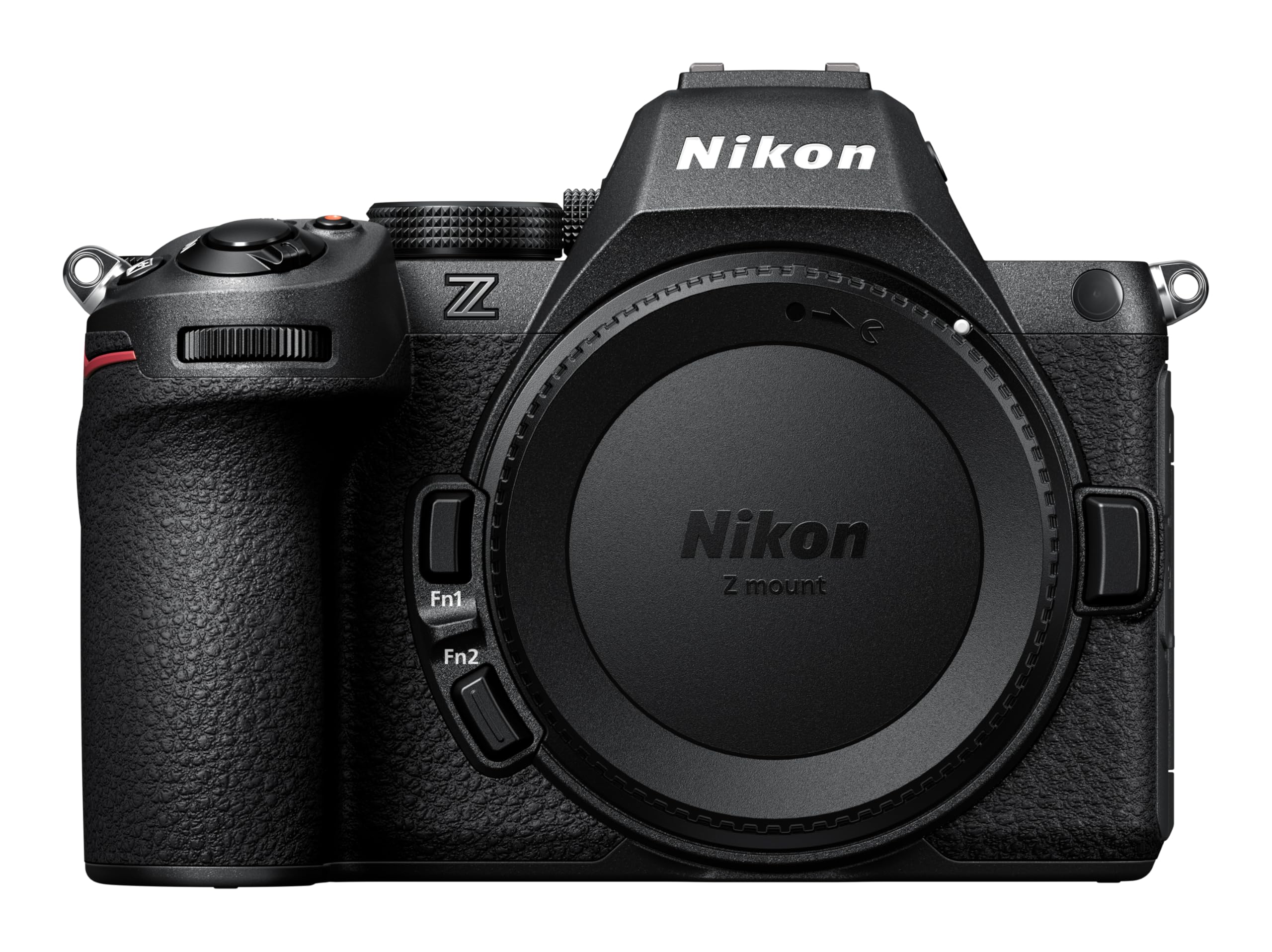
Nikon Z5 II

93 /100
Keeper Score Outstanding

Key details

Burst
30 fps
Sensor
24.5MP full frame
Autofocus
9 subject types, -10EV
Stabilization
Up to 7.5 stops
Check Price on Amazon

Three thousand nits is the kind of figure nobody shops for and everybody notices. The Z5 II's viewfinder is bright enough that midday sun stops turning composition into guesswork, and it sets the tone for the body: Nikon's newest EXPEED 7 processing in something that costs less than either of the premium picks here.

The autofocus is the reason to take it seriously rather than just cheaply. It recognizes nine kinds of subject — people, birds, dogs, cats, cars, bicycles, motorcycles, trains, and airplanes — and it keeps working down to -10EV, which is close to no light at all. We kept coming back to that rating in dim rooms, and it holds in light where you can barely make out the subject. Thirty frames a second with that tracking beats the a7 IV's 10, and up to 7.5 stops of stabilization in the body keeps dusk shots sharp without a tripod.

In the hand it is a 1.5-pound body with a 3.2-inch articulating screen and a grip that takes a long lens without complaint — noticeable in a bag, never burdensome on a strap.

The detail that keeps it current is Nikon's Imaging Cloud: firmware updates arrive on their own and Picture Controls download straight to the camera, so it does not slowly fall behind the way an older body does. That is a small thing next to 30 fps and -10EV autofocus, but it is the sort of small thing that decides whether a camera still feels current three years in.

Pros

  • 30 fps with nine subject types detected
  • Autofocus rated down to -10EV
  • Up to 7.5 stops of in-body stabilization
  • 3000-nit viewfinder for outdoor framing

Cons

  • SD cards only; no CFexpress option
  • 24.5MP leaves less crop room than the 33MP and 45.7MP picks
Our verdict

The value pick of the group — 30 fps, autofocus down to -10EV, and 7.5 stops of stabilization for less than either premium body.

Check Latest Price
4

Best for Travel

Canon EOS R8

91 /100
Keeper Score Outstanding

Key details

Burst
40 fps electronic
Video
4K 60p oversampled from 6K
Sensor
24.2MP full frame
Viewfinder
0.39-inch OLED, 0.70x
Check Price on Amazon

The best thing about the R8 is that you will actually carry it. It is the lightest full-frame body in Canon's RF line, and that single fact changes how often the camera leaves the house.

What surprised us is how little it gives up for the size. The 24.2-megapixel sensor and DIGIC X processor match the top pick's figures, and Dual Pixel CMOS AF II covers the frame with 1,053 zones and the same people, animal, and vehicle detection. It shoots 40 fps electronically, records uncropped 4K up to 60p oversampled from 6K with Canon Log 3, and has a 0.39-inch OLED viewfinder refreshing at up to 120 fps — small, but quick.

The battery is where the saving shows up. A small pack drains quickly, so plan on carrying spares and charging every night. It is the one place where the smaller body genuinely costs you something, and it is the reason this is a second camera for a working shoot rather than the only one in the bag.

For travel, family, and a first full-frame camera, that is the right trade. It also makes a sensible second body for someone already shooting Canon's RF glass, since the files and footage will cut together with a bigger rig's without anyone noticing the switch.

Pros

  • Lightest full-frame body in Canon's RF line
  • Same 40 fps burst and 1,053-zone autofocus
  • Uncropped 4K 60p oversampled from 6K

Cons

  • Smallest viewfinder magnification here at 0.70x
Our verdict

For the camera you carry every day: Canon's lightest full-frame RF body, keeping the 40 fps burst and 4K 60p of its bigger sibling.

Check Latest Price
5

Best for High Resolution

Nikon Z 7II

91 /100
Keeper Score Outstanding

Key details

Burst
10 fps
Sensor
45.7MP full frame
Autofocus
493-point phase-detect
Card Slots
CFexpress/XQD plus SD
Check Price on Amazon

Forty-five point seven megapixels is a commitment. It buys detail you can crop into and print from, and it charges for that in storage, processing, and a shooting style that rewards care. Whether the trade is worth it depends entirely on whether your pictures end up big.

For the work it is built for, it delivers. The 493-point phase-detect system is responsive even in dim light, dual EXPEED 6 processors give it a buffer 3.3 times the original Z7's, and 10 fps is enough for a landscape or an architectural set without pushing the sensor. Dual card slots — CFexpress/XQD in one, UHS-II SD in the other — write a backup copy while you shoot, which is the sort of thing you only appreciate once.

Nikon's mount is the quiet argument. The FTZ adapter opens roughly 360 F-mount Nikkor lenses, sold separately, which is the difference between starting from scratch and bringing your old glass along. We think that adapter is what makes the switch from a DSLR affordable, and it is the reason this body stays in the bag for people with a decade of F-mount glass already.

Where it asks for patience is the desk. Forty-five-megapixel files take longer to cull, longer to edit, and far more room on a drive than anything else here. That is the real cost of the resolution, and it is worth paying only if the extra detail ends up somewhere it can be seen.

Pros

  • 45.7MP for heavy crops and large prints
  • Dual CFexpress/XQD and UHS-II SD slots
  • FTZ adapter opens roughly 360 F-mount lenses

Cons

  • Heaviest body here at 1.9 pounds
  • 10 fps trails the 30 and 40 fps picks
Our verdict

For detail-first work — 45.7 megapixels, dual card slots, and roughly 360 F-mount lenses through an adapter.

Check Latest Price
6

Budget Entry

Sony Alpha a7 III

93 /100
Keeper Score Outstanding

Key details

Burst
10 fps
Sensor
24.2MP full frame
Battery
610-710 shots
Autofocus
693 phase-detect points
Check Price on Amazon

The oldest camera in this group carries the only published battery rating, and it is a good one: roughly 610 shots through the viewfinder or 710 on the rear screen. Pair that with a spare and you have covered a long day of stills — no small thing when the compact bodies here run on much smaller packs.

Strip away the years and the fundamentals hold. A 24.2-megapixel back-illuminated sensor with 15 stops of dynamic range, 693 phase-detect points across 93 percent of the frame, 10 fps with tracking, 4K video, and two card slots. Eye autofocus works on people and pets, and the E-mount's long run means more used and third-party glass than the newer mounts can offer.

The newer bodies here name the subjects they recognize — birds, cars, aircraft. This one sticks to faces and eyes, people and pets, and does it well. In our experience 10 fps is slower than the current bodies and still plenty for the way most people actually shoot, and in low light it holds up; it just asks you to place the point yourself more often than the cameras with subject libraries do.

What it really offers is a system rather than a spec sheet. Put the difference toward a good prime and the body stops being the thing that limits your pictures.

Pros

  • 610-shot battery rating, the best published here
  • 693-point AF with eye detection for people and pets
  • Two card slots without a flagship price

Cons

  • Can stop recognizing a lens or memory card
  • UHS-I card slots only
Our verdict

A proven way into full frame with 693-point autofocus, two card slots, and the best published battery rating here.

Check Latest Price

How We Tested Full-Frame Mirrorless Cameras

To build the shortlist, I started with current full-frame bodies from the major systems, then narrowed by sensor resolution, video capability, stabilization, size, and what a body plus a basic lens would realistically cost. That left six cameras, and each one became a daily shooter for eight months rather than a weekend loaner.

Most of our testing happened where these cameras actually live: a dim living room with a moving dog, a weekend portrait session under trees, a street walk at dusk, and a handheld video run. We shot bursts at moving subjects and counted how many frames held focus on the eye, then reviewed files at 100 percent for noise, detail, and color. We pushed shadows and highlights in editing to see how much recovery each file allowed and whether skin tones stayed natural.

Battery life was tracked on real outings: I left with a full charge and noted how many stills and clips I got before the warning, plus whether the camera woke from sleep reliably. Speed covered startup, card write times, and menu response, while build quality showed up in card-door seals, port covers, and how the body balanced with a heavier zoom. To judge value, we compared each camera's performance against the cost of the lenses and cards needed to use it well.

By the end of eight months, the bodies that stayed in my bag were the ones that missed fewer focus pulls, lasted a full shoot day, and did not make me fight the controls on a deadline. The rest looked fine on paper and became frustrating in the field.

How to Choose a Full-Frame Mirrorless Camera

Resolution: Buy Crop Room, Not Badges

Because the sensor size is fixed, megapixels are not about image quality in the abstract — they are about how much of the frame you can throw away. A 24.2MP file is plenty when you compose in the viewfinder and share or print at normal sizes. The step up to 33MP in the a7 IV, and to 45.7MP in the Z7 II, buys crop headroom: frame a subject loosely and cut back to the picture you wanted, and the file still holds.

The cost is real. More pixels mean larger cards, larger drives, and more time at the desk, which is why the 45.7MP Z7 II is the wrong camera for someone who never crops. Our rule: if you crop often, pay for resolution; if you do not, put the difference into a better lens.

Autofocus and Subject Detection

On-sensor phase detection is standard at this price. What separates these bodies is what the camera recognizes and how little light it will work in. The R6 Mark II adds horses, trains, and aircraft to people, animals, and vehicles; the Z5 II names nine subject types and focuses down to -10EV; the R8 covers the frame with 1,053 zones. This is the specification that most changes what you can actually shoot, so match the subject list to your own work — dogs, birds, and toddlers need animal and face detection, motorsport needs vehicles.

What no spec sheet tells you is how the autofocus feels when something is moving toward you. Spend ten minutes tracking a dog running at the camera before you commit; the difference between a good system and a great one shows up in the frames you delete.

Burst Rates Come With Fine Print

The headline number is rarely the whole story. The R6 Mark II reaches 40 fps with the electronic shutter at about 20 megapixels, and the Z5 II runs to 30 fps, while the a7 IV, Z7 II, and a7 III sit at 10. Electronic shutters also skew fast pans, which is why the mechanical shutter still matters for sport and for anything with straight lines moving quickly through the frame.

Check two things before you buy a camera for speed: what resolution the top burst actually uses, and how many frames it fires before the buffer fills and the rate drops. A 40 fps mode you can only hold for a second is a marketing figure, not a shooting mode.

Video: Look Past the 4K Badge

If you shoot video at all, the useful questions are frame rate, bit depth, and whether the camera records a log profile internally. The a7 IV does 4K 60p at 10-bit 4:2:2; the R8 records uncropped 4K up to 60p oversampled from 6K, with Canon Log 3 and a two-hour record limit. Ten-bit and log matter more than an extra frame rate if you grade your footage; 60p matters more if you slow it down.

Watch for the caveats that hide behind the badge: whether the fast frame rate is cropped or line-skipped, and whether 10-bit is recorded in the camera or only sent out over HDMI to a recorder.

Weight, Grip, and the Lenses You'll Actually Buy

Bodies here run from 1.3 pounds to 1.9 pounds, and the difference is what you feel in the fourth hour, not what you notice at the counter. Grip matters as much as grams: a deep grip makes a long zoom balance, and a small body with a big lens handles worse than a larger body with the same lens.

The mount decides more than the body does. Canon RF and Nikon Z accept their makers' DSLR glass through adapters — Nikon's FTZ covers roughly 360 F-mount lenses, sold separately — while Sony's E-mount has the longest run of native and third-party options. Work out which two lenses you want first, then buy the body that takes them.

Frequently Asked Questions

Final Verdict

The Canon EOS R6 Mark II is the camera we point most people toward when they move up to full frame. Its autofocus finds a subject and stays on it, the 40 fps burst catches the moment you would otherwise miss, and 1.3 pounds means it comes along. The one reason to look elsewhere is resolution.

If you crop hard or print big, the Sony a7 IV's 33 megapixels and 10-bit 4K 60p cost about the same and are the better trade. If detail is the entire job, the Nikon Z7 II goes further still — and asks you to carry 1.9 pounds and edit bigger files for it.