Best Overall

KeyLine 140A Dual Battery Kit
Key details
- Waterproofing
- IP65
- Positive Cable
- 20 ft
- Switching Points
- 13.3 V in / 12.8 V out
- Continuous Rating
- 140 A
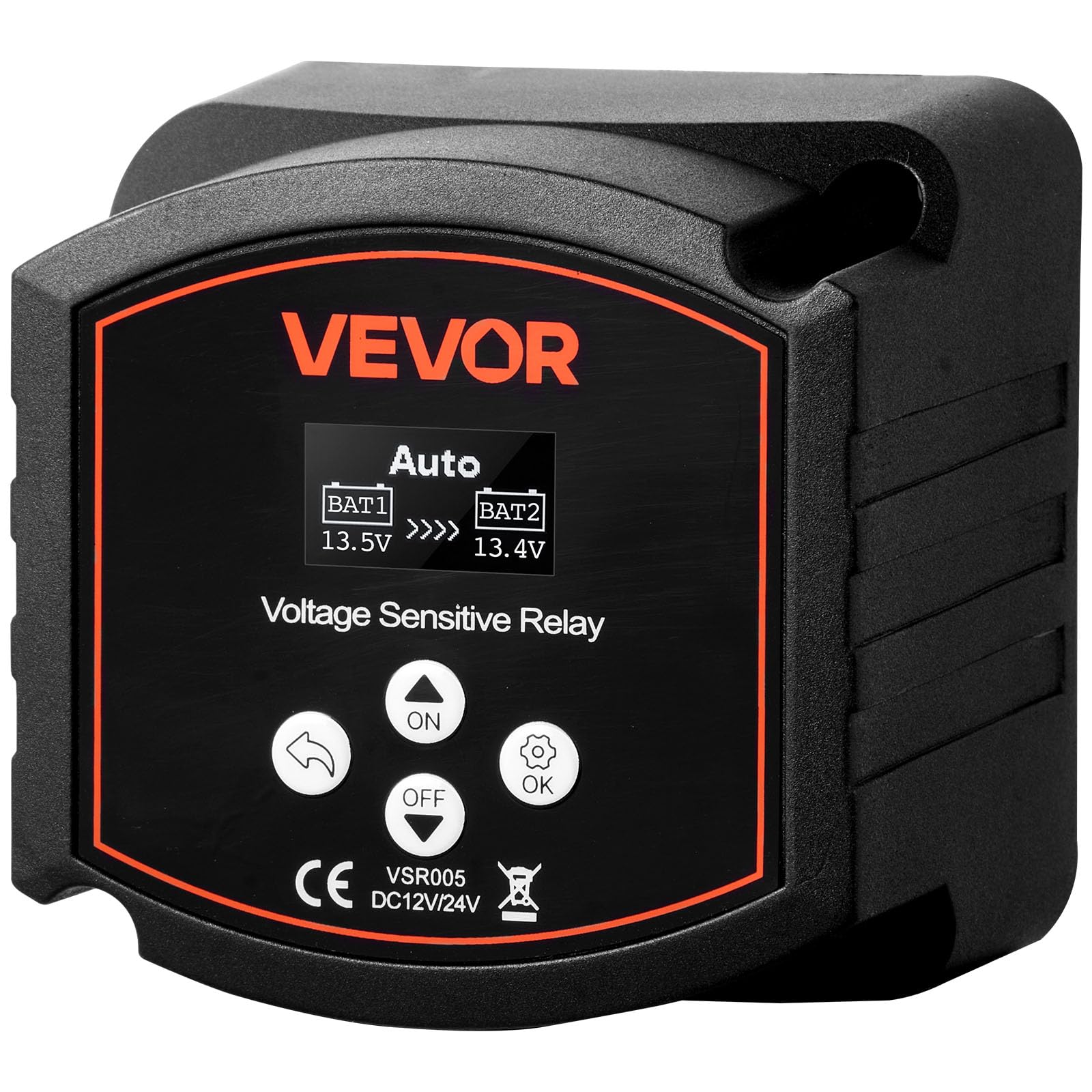
The box is the argument for this one: a 140-amp voltage sensitive relay, 20 feet of red positive cable, lugs, terminals and the hardware to land it all, arriving together. That matters the first time you are under a truck with a half-filled shopping list. For a single auxiliary battery — a fridge, some lights, a trailer winch — nothing else here gets you from unboxing to charging with less running around.
The switching is what earns the spot. The relay joins the two batteries at 13.3 volts, so it waits until the alternator is genuinely charging before sharing, and it separates them again at 12.8. Your accessories can flatten the second battery and the relay has already cut it loose from the one that starts the engine. IP65 sealing handles road spray and the occasional hose-down, and at eight ounces the relay hangs off a bracket without extra bracing.
Plan the install rather than improvising it. The wiring is simple — positive to each battery, ground to ground — but the eyelet lugs want a proper crimping tool, not pliers and optimism. Measure your run before you cut: 20 feet reaches a bed-mounted battery in most pickups, and knowing that saves you a splice.
Two things we noted while living with it. On a vehicle whose charging system tapers early, the relay can hover near its thresholds and cycle more than it should. And the failure to watch for is a unit that quietly stops switching after a few months; the 12-month warranty covers the part, not the tow.
Pros
- Complete kit: cable, lugs, terminals, hardware
- Automatic 13.3 V cut-in, 12.8 V cut-out
- IP65 housing survives engine-bay spray
- Installation goes quickly for a 12-volt kit
Cons
- Positive cable is light for long runs
- Instructions get mixed marks
Our pick for most trucks, vans and UTVs: everything arrives in one box, installation is straightforward, and the 13.3-volt cut-in keeps the starting battery out of the accessory circuit.