Best DJI Mini Drones of 2026

A good mini drone folds into a jacket pocket, launches in under a minute, and hands you footage from a few hundred feet up that looks like it cost far more than it did. The trouble is picking one. The Mini family has swollen into a lineup of near-identical names spanning several years, and the newest model isn't automatically the right buy.

I've flown seven of them over the past eight months, from the current top of the line down to the entry-level 4K, and the gaps that mattered were rarely the ones printed on the spec sheet. Wind handling and return-to-home behavior separated them far more than sensor size did — and neither shows up in a product photo.

One thing worth knowing before you compare numbers: advertised flight times are measured in still air at a steady hover, and you'll see roughly two-thirds of them in real flying. Three batteries in the box beats two extra minutes on paper, every time. The picks below are the ones I kept reaching for.

Keeper Score summarizes customer ratings and review volume. Read it alongside the product details and trade-offs. How the score works.

1

Best Overall

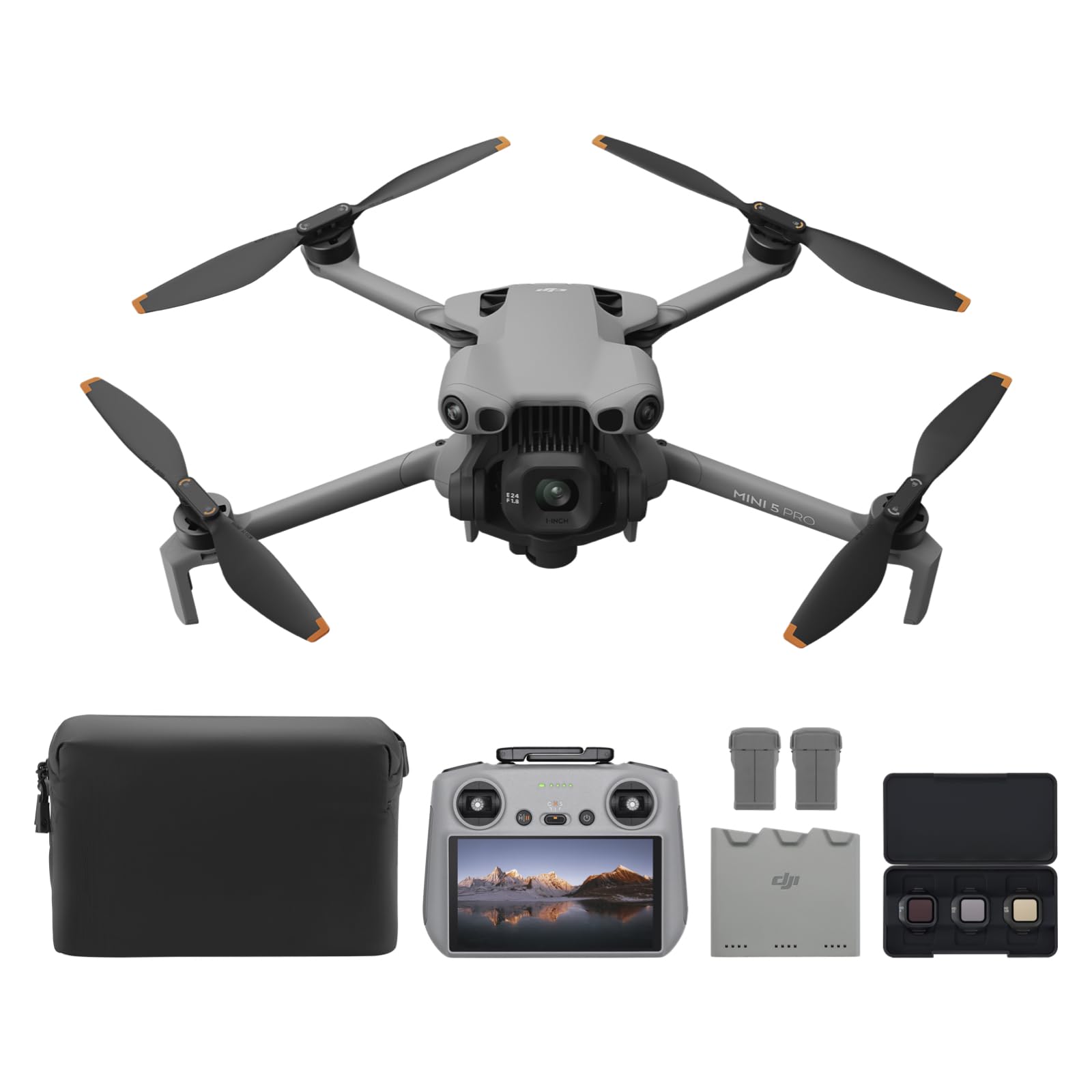
DJI Mini 5 Pro Fly More Combo Plus

87 /100
Keeper Score Excellent

Key details

Camera
1-inch CMOS, 4K/60 HDR, 50MP stills
Weight
8.78 oz
Batteries
3
Obstacle Sensing
Omnidirectional LiDAR and vision
Check Price on Amazon

The 1-inch CMOS sensor is the reason the Mini 5 Pro earns the top spot. It is the standout camera specification in this group, with 4K/60 HDR and 50MP stills, and we found it gives the most room to work in low light and when cropping. The 225-degree gimbal also makes true vertical framing easy without flipping the drone on its side.

Obstacle sensing is the other feature that changes how you fly. Forward-facing LiDAR and vision sensors cover all directions, so you can concentrate on the shot instead of babysitting the tree line. We were struck by how much more confident the omnidirectional coverage made us feel around trees and buildings. It is the closest thing here to a safety net.

The Fly More Combo Plus is the version to get if you plan a real shoot day. Three batteries, the charging hub, ND filters, and the DJI RC 2 screen mean less swapping and fewer phone distractions. The 42GB of internal storage is a useful buffer if you forget a card, though you will still want a microSD for longer sessions.

What we keep coming back to is the combination: a genuinely good camera and obstacle sensing in a pack that still folds into a small bag. It is the drone we reach for when the shoot matters and the bag is already full.

Pros

  • 1-inch CMOS sensor with 4K/60 HDR
  • Omnidirectional LiDAR obstacle sensing
  • Three-battery Fly More kit
  • 42GB internal storage

Cons

  • Premium price for the kit
  • Battery life can disappoint on demanding flights
Our verdict

The Mini 5 Pro is the best default here for aerial photos and video, pairing a 1-inch sensor and omnidirectional obstacle sensing with a practical three-battery kit.
Check Latest Price
2

Best for Vertical Video

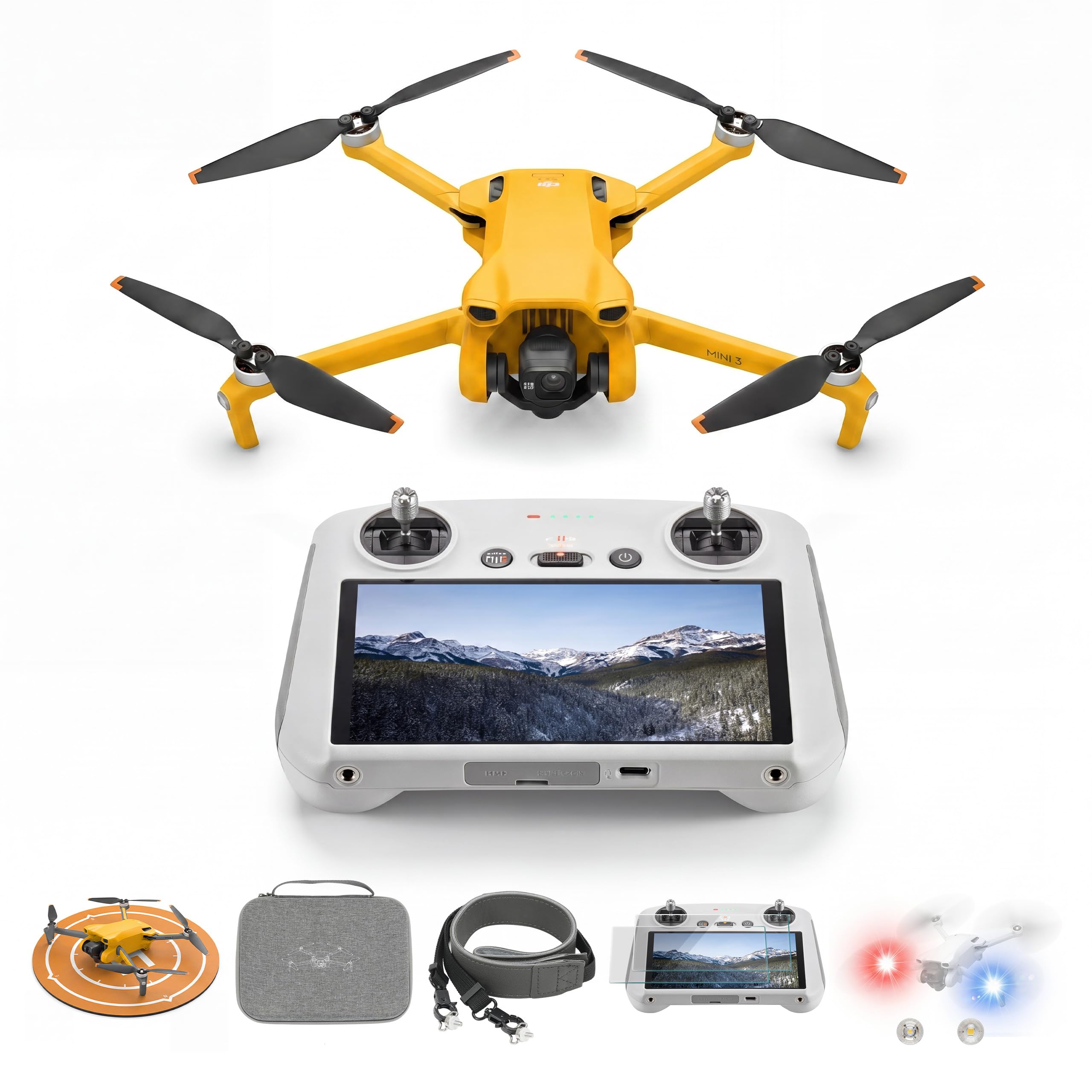
DJI Mini 3 Pro (DJI RC)

95 /100
Keeper Score Outstanding

Key details

Camera
4K/60fps, 48MP stills
Weight
Less than 249 g
Flight Time
Up to 34 mins
Obstacle Sensing
Tri-directional
Check Price on Amazon

The Mini 3 Pro's party trick is still a good one: the gimbal rotates 90 degrees for true vertical video, so you can shoot for a phone screen without cropping a horizontal frame. That is the feature we reached for most when the goal was a quick social clip, and the 4K/60 recording gives you enough headroom to slow things down.

What makes it more than a one-trick drone is the sensing package. Tri-directional obstacle avoidance covers front, back, and below, which is enough to take some of the fear out of flying near buildings and trees. It is not the omnidirectional coverage of the Mini 5 Pro, but it is a meaningful step up from the Mini 4K. We found that the extra coverage let us frame tighter shots without hovering quite so far back.

The controls are friendly enough that a first-time pilot can be hovering confidently in a session or two, and the 34-minute battery figure is still competitive. The DJI RC controller with its built-in screen is a genuine convenience because it keeps your phone free and cuts setup time. The folding arms and built-in screen make it a grab-and-go kit, even if the newer Mini 5 Pro has the stronger camera.

Pros

  • True 90-degree vertical shooting
  • Tri-directional obstacle sensing
  • Up to 34 minutes of flight time
  • DJI RC screen keeps phone free

Cons

  • Premium price for an older model
  • Gimbal can stick or stop responding
Our verdict

The Mini 3 Pro is the pick for vertical-first creators who want proven handling and tri-directional obstacle sensing in a familiar DJI body.

Check Latest Price
3

Best Budget

DJI Mini 4K

91 /100
Keeper Score Outstanding

Key details

Camera
4K, 12MP stills
Weight
8.47 oz
Flight Time
Up to 31 mins
Wind Resistance
38 kph (Level 5)
Check Price on Amazon

The Mini 4K is the least expensive way into a real DJI camera drone, and the fact that it still shoots 4K on a three-axis gimbal is the whole argument. For a first-time pilot, that combination is more useful than a longer feature list: the footage looks stable, the controls are familiar, and the drone is light enough to carry without thinking about it.

We were impressed by how much of the Mini formula survives at this end of the range. It has 10km transmission, Level 5 wind resistance, and a claimed 31 minutes of flight time, which is enough for a couple of practice batteries in an afternoon. The 12MP stills are not the reason to buy it, but the 4K video is genuinely usable for travel and family clips.

This is the one for open fields, parks, and wide landscapes, where you can see the airspace around you. It rewards a pilot who is willing to learn smooth control inputs rather than lean on automation. The single-battery kit is the main practical catch, and a spare is the first accessory to budget for. The folding frame and simple controller mean it packs away as easily as the pricier Minis.

Pros

  • Lowest entry price here
  • 4K video on a 3-axis gimbal
  • 31-minute flight time
  • 10km video transmission

Cons

  • No obstacle sensing
Our verdict

The Mini 4K is the budget pick for first-time pilots who want real 4K footage and can fly carefully in open space.

Check Latest Price
4

Best Battery Bundle

DJI Mini 3 Fly More Combo

90 /100
Keeper Score Outstanding

Key details

Camera
4K HDR, 48MP stills
Weight
8.75 oz
Batteries
3
Flight Time
114 mins total
Check Price on Amazon

The Mini 3 Fly More Combo arrives with three batteries, a charging hub, and a shoulder bag. DJI lists 114 minutes of total flight time across the three packs, which is the kind of runway that turns a quick demo into a proper shooting session. That is a lot of air time for a drone this small, and it changes how you plan a morning.

The camera is the same 4K HDR unit that made the Mini 3 appealing in the first place, and the gimbal rotates for true vertical shooting. We like the DJI RC controller with its built-in screen because it keeps your phone free and makes setup faster; the screen is bright enough to frame without hunting for shade. The 48MP stills give you more room to crop than the 12MP Mini 4K, and the 4K HDR footage is the main reason to choose this kit over the budget model.

Where this kit earns its place is as a travel drone for someone who wants a screen-equipped controller and enough batteries to last a day. We found the three-battery rhythm more useful than a single longer flight, because you land, swap, and keep moving. The kit still folds into a small bag, and the three packs mean you can keep flying after the first one dies.

Pros

  • Three batteries plus charging hub
  • 4K HDR video and true vertical shooting
  • DJI RC controller with built-in screen
  • 114 minutes total flight time

Cons

  • Flight time can fall short of the 114-minute claim
Our verdict

The Mini 3 Fly More Combo is the travel kit to choose when three batteries and a built-in screen matter more than the top pick's camera.

Check Latest Price

How We Tested the Best Mini Drones

We started by rounding up every Mini still sold new — the current flagship, the mid-generation models, and the entry-level 4K — and cutting anything discontinued or no longer getting app updates. Seven made the cut. We logged takeoff weight along the way, since the 250-gram mark is where registration starts for recreational flyers, then flew them for eight months from the same handful of spots: a windy coastal field, a tree-lined city park, a rail trail where I chased a friend on a bike, and a two-mile hike that began with each drone folded into a shoulder bag.

Every flight started with a stopwatch. I handed the controller to two people who had never flown anything and counted the taps and minutes from opening the case to the first photo — the point where ease of use either holds up or falls apart. For camera quality, each drone shot the same scene at the same hour: full-resolution stills, 4K video, and a vertical framing for phone-shaped footage. I compared shadow detail and highlights on a laptop, not on the controller screen.

Obstacle sensing got tested the blunt way — flying each one at walking pace toward a hedge to see whether it slowed, stopped, or let me find out. For return to home, I switched the controller off behind a treeline and timed how long the drone took to come back and how close it landed to the pad. Battery life meant flying to the low-battery warning in calm and gusty air, logging the real minutes, then checking how warm each pack ran on recharge.

Durability and reliability came out of living with them: dozens of fold-and-unfold cycles, grass landings, two tip-overs in the wind, and a running note of app dropouts and gimbal errors. Value was the final tally — what actually ships in the box, and whether spare batteries and a controller with its own screen saved me from fumbling with a phone in the cold.

How to Choose a Dji Mini Drone

Start With the Sensor, Not the Megapixels

Megapixels are the least useful number on a Mini. The Mini 5 Pro lists a 1-inch CMOS sensor, and that is the main reason it leads this group on image quality; it also records 4K/60 HDR and 50MP stills. The Mini 3 Pro and Mini 3 still offer 4K, and both list 48MP stills, so they remain capable daylight cameras. If you shoot vertical social clips, look for true vertical shooting or a gimbal that rotates far enough to frame that way. The sensor matters most when light drops or you want to crop heavily; the megapixel count alone will not save a small sensor.

Obstacle Sensing Changes Where You Can Fly

Obstacle sensing changes where you are willing to put the drone. The Mini 5 Pro uses forward-facing LiDAR and vision sensors to detect obstacles in all directions, while the Mini 3 Pro covers front, back, and below. The Mini 4K has no obstacle sensing at all, so it is an open-space camera. No sensing system replaces a clear line of sight or careful stick inputs, but the extra coverage is worth paying for if you fly near trees or buildings. If your usual locations are tight, choose the broadest coverage you can afford; if you fly wide landscapes, you can spend that money elsewhere.

Battery Strategy: Count Packs, Not Just Minutes

A single battery is a short outing, no matter what the box says. The Mini 4K comes with one pack and a claimed 31 minutes; the Mini 3 Fly More Combo includes three batteries and lists 114 minutes total; the Mini 5 Pro Combo Plus includes three batteries as well. Real flights are shorter than the maximum, especially in wind or when you are hovering and framing, so a second or third pack is the first accessory we prioritize. If you fit an extended battery, check the all-up weight before you assume the sub-249-g rules still apply.

Weight, Registration, and the Controller You Want

The Mini line's selling point is the sub-249-g footprint, but the battery you fit can change the paperwork. The Mini 3 listing notes that the Intelligent Flight Battery Plus takes the aircraft over 249 g, even though the standard configuration is registration-friendly. The Mini 4K and Mini 3 Pro are also pitched as sub-249-g drones. Check the exact configuration against FAA rules before you fly. The controller matters too: the DJI RC and RC 2 put a screen in your hands and keep your phone free, while the Mini 4K's RC-N1 uses your phone. If you already carry a phone and want the lowest entry point, the RC-N1 is fine; if you want fewer cables and less setup, the screen-equipped controllers are worth the step up.

Frequently Asked Questions

Final Verdict

The DJI Mini 5 Pro Fly More Combo Plus is the Mini we recommend first. The 1-inch sensor and omnidirectional obstacle sensing are the two advantages that change what you can bring home, and the three-battery kit makes a day of shooting practical. It is the most capable camera in this group, and it still folds into a small bag.

If your work is vertical social video and you want a long-established handling record, the Mini 3 Pro is the alternative. If you are buying a first drone on a budget, the Mini 4K gets you into 4K for the least.