Best DJI Drones of 2026

A drone sells itself in about thirty seconds: you push the sticks up, the thing climbs, and your whole neighborhood tilts into frame. Then the battery warning chirps, the wind picks up, and you remember you're now responsible for a flying camera. We've spent the past nine months flying eight of them, from palm-sized models that fit in a jacket pocket to larger kits with real obstacle sensing, and the good ones all do the same thing — they turn an ordinary walk into footage you'd actually show someone.

The most useful thing I can tell a first-time buyer is not to skim the battery line. Advertised flight time comes from a hover on a calm day; add wind and a slow cinematic pass and you'll land well before the box promised. It's why so many of these kits ship with three batteries, and why ease of use and camera quality matter far more in practice than the spec sheet suggests.

We weighed performance, reliability, and durability just as heavily, and we handed the controller to friends who'd never flown to see how quickly they got comfortable — and how much fun they were having. Some of these made people grin within a minute. One or two made them nervous. The picks below are the ones that earned a second flight.

Keeper Score summarizes customer ratings and review volume. Read it alongside the product details and trade-offs. How the score works.

1

Best Overall

DJI Mini 3 Fly More Combo

90 /100
Keeper Score Outstanding

Key details

Video
4K HDR
Stills
48 MP
Weight
8.75 oz
Controller
DJI RC with built-in screen
Check Price on Amazon

This is the kit we point most people toward, and it earns that on the two things that usually go wrong with a first serious drone: a controller that drains your phone and a single pack that is spent before you have the shot you wanted. The Mini 3 records 4K HDR video and 48 MP stills, and its gimbal rotates for true vertical framing, which is the format most of us actually post in.

The DJI RC in this combo carries its own screen, so setup is drone on, controller on, fly. No pairing routine with a phone, and no notification sliding across your framing halfway through an orbit. Three batteries come in the box with a two-way charging hub and a shoulder bag, and DJI totals the set at 114 minutes of flight. Real flights run shorter than the 38-minute claim once wind and cool air take their cut, but three packs still let you shoot a location properly instead of rationing clips.

Weight is the quiet selling point. At 248 g the Mini 3 sits beneath the 249 g line DJI sells as exempt from FAA registration and Remote ID for recreational flying, which is why this is the drone that rides in a jacket pocket on a trip rather than staying home. Watch the battery arithmetic, though: the 51-minute Intelligent Flight Battery Plus pushes the aircraft past that weight, so the longest-flight version and the paperwork-free version are not the same purchase.

Where the Mini 5 Pro and Air 3S in this lineup add obstacle sensing and subject tracking, the Mini 3 puts its money into the camera and the kit. If you want an aircraft that brakes for a tree or follows you down a trail, pay up for one of those. If you want travel footage that looks expensive and a bag that is ready to go, this is the one.

Pros

  • Three batteries and a charging hub included
  • Screen-equipped DJI RC, no phone needed
  • 4K HDR video with true vertical shooting
  • 248 g, under the recreational registration line

Cons

  • Flights run shorter than the 38-minute claim
Our verdict

We tell most people to start here: the Mini 3 shoots 4K HDR and vertical video, sits under the registration line, and the combo's screen controller and three batteries remove the usual first-drone friction.

Check Latest Price
2

Best Value

DJI Mini 4K

91 /100
Keeper Score Outstanding

Key details

Video
4K
Weight
8.47 oz
Controller
DJI RC-N1, phone screen
Max Flight Time
31 min
Check Price on Amazon

The Mini 4K is the least expensive way into this group, and nothing about it feels like a concession in the hand: 240 g, folding arms, a three-axis gimbal carrying a 4K camera, and the same Level 5 wind rating DJI gives its pricier Minis. It also returns home and lands on command, which matters more on a first drone than any line on a spec sheet.

As a first aircraft, this is the one we hand over without a briefing. The response is gentle, the assist modes do most of the work while you learn, and the gimbal keeps footage steadier than the money suggests. DJI sells this drone with one, two, or three packs, and we would take the three every time, because swapping batteries on location is the difference between a session and a single flight.

There is no obstacle sensing aboard, so a misjudged gap is entirely yours to judge; fly it in the open until you trust your thumbs, and treat trees as hard edges. That is the honest boundary of a budget drone, and open fields, coastlines, and wide streets are exactly where it shines.

Pros

  • 4K video on a three-axis gimbal
  • Under 249 g with no registration for recreation
  • Level 5 wind resistance and auto return
  • Least expensive drone in this lineup

Cons

  • No obstacle sensing to brake for you
  • Phone-based RC-N1 controller is the display
Our verdict

We hand the Mini 4K to first-timers: stabilized 4K, gentle handling, and sub-250 g freedom for the least money in this lineup.

Check Latest Price
3

Best for Low Light

DJI Mini 5 Pro Fly More Combo Plus

87 /100
Keeper Score Excellent

Key details

Video
4K/60fps HDR
Sensor
1-inch CMOS
Weight
8.78 oz
Internal Storage
42 GB
Check Price on Amazon

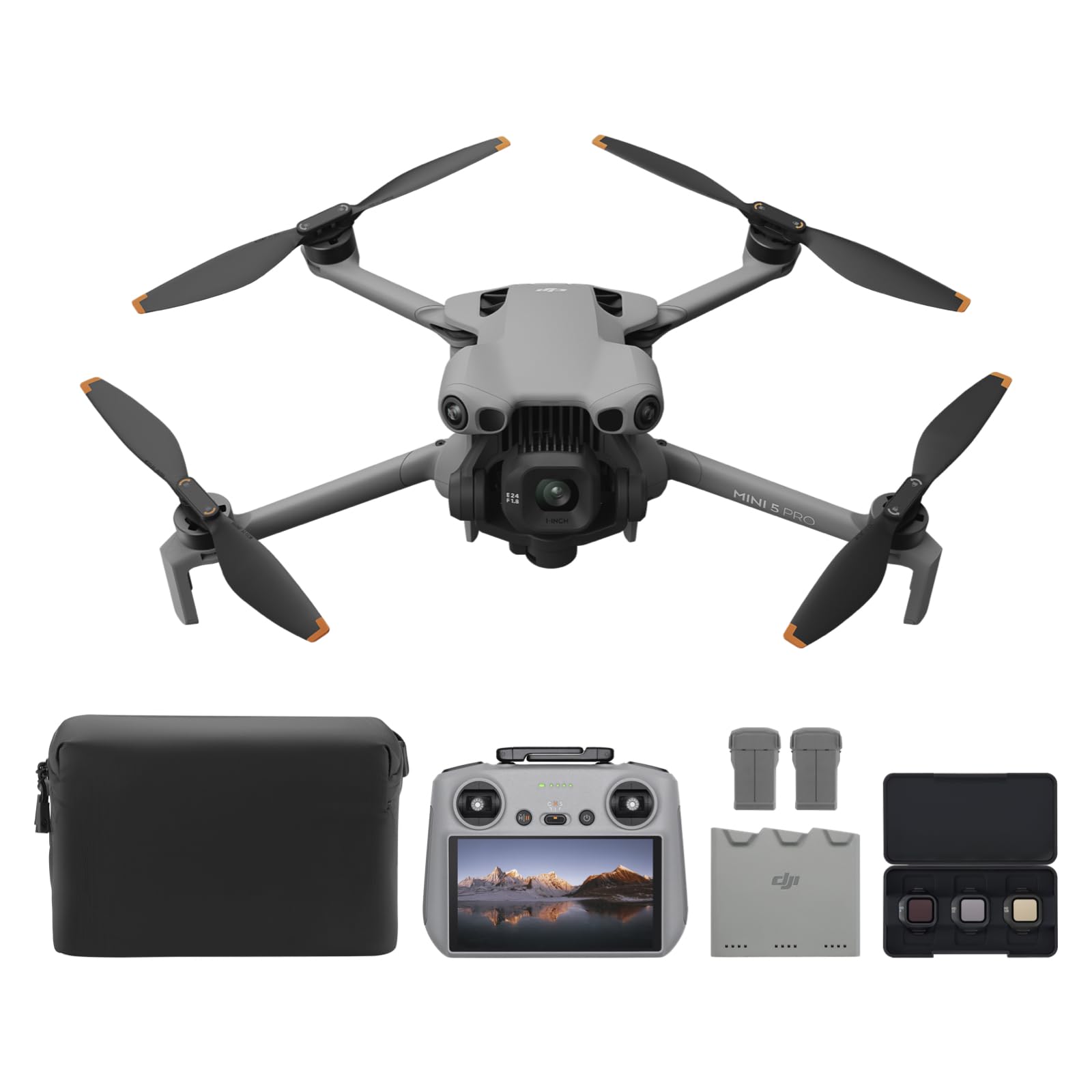
A one-inch sensor in a drone that folds down to palm size is the whole argument for the Mini 5 Pro. That larger chip is what separates dusk footage with clean shadows from the noisy, smeared result smaller sensors produce once the sun drops, and it manages 4K/60fps HDR video and 50 MP stills while doing it.

The rest of the design is unusually generous. The gimbal rolls through 225 degrees, which gets you angles that used to mean flying the aircraft sideways and hoping, and true vertical shooting is there for social edits. We are also fond of the 42 GB of internal storage, because a forgotten card then costs you nothing but time. ActiveTrack 360 degrees holds a subject while you set up the next shot, and the RC 2 puts the screen in your hands.

This is the drone we take when the light is going to be poor. Forward-facing LiDAR and the vision sensors map obstacles after dark as well as in daylight, so night flying stops being a gamble, and the tracking is quick enough to keep up with a bike. Of everything here, it is the most capable aircraft we would still call pocketable.

One thing to confirm before assuming exemption: the aircraft is listed at 249 g, and this combo ships with the larger Plus batteries. Check the all-up weight with the pack you intend to fly, because 250 g is the line that decides whether you register.

Pros

  • 1-inch CMOS holds detail at dusk
  • LiDAR obstacle sensing that works at night
  • 225-degree gimbal roll and true vertical
  • 42 GB internal storage as a card backup

Cons

  • Some kits arrive with batteries that will not hold charge
Our verdict

If your flying happens at dusk or after dark, the Mini 5 Pro earns the step up: a one-inch sensor and LiDAR sensing in a body that still folds into a pocket.

Check Latest Price
4

Best Image Quality

DJI Air 3S Fly More Combo

92 /100
Keeper Score Outstanding

Key details

Video
4K/60fps HDR
Weight
1.6 lb
Cameras
1-inch wide + medium tele
Sensing
LiDAR, omnidirectional
Check Price on Amazon

At 724 g the Air 3S is not a pocket drone, and it sits well over the 250 g line, so registration and Remote ID come with it. Everything that weight buys shows up in the footage. Two cameras ride the gimbal, a one-inch wide and a medium tele, so you can hold a wide establishing shot and then cut to a compressed detail without moving the aircraft. That second lens is the one we reach for most, because it fills the frame with a subject from a distance that does not spook them.

Video is 4K/60fps HDR with up to 14 stops of dynamic range, the sort of figure that pays off at sunrise: cloud texture and shadow detail survive in the same frame instead of one going flat. DJI's panorama mode stitches wide and tele shots in-camera, and 50 MP stills give you room to crop afterward.

Sensing is the other half of the pitch. Forward-facing LiDAR works with the surrounding vision sensors to keep omnidirectional avoidance running at night, and the return-to-home routine picks its own route when GPS is weak. Fly it in gusty coastal air and it holds position, which is what makes slow pans and long exposures possible rather than hopeful.

Our recommendation here is narrow and confident: this is the one for work that has to sit beside footage from a real camera, and the two-lens flexibility is the reason. It is a committed purchase, with a bag, three batteries, ND filters, and a flight plan, rather than something you slip into a jacket. If that commitment sounds like too much, the Mini 5 Pro gets you a one-inch sensor in a fraction of the bulk.

Pros

  • Two cameras, wide plus medium tele
  • LiDAR keeps avoidance working at night
  • 4K/60fps HDR with 14 stops of range
  • Holds position in gusty wind

Cons

  • 724 g, so registration and Remote ID apply
Our verdict

For footage that has to hold up next to a proper camera, the Air 3S is the pick: two lenses, a one-inch sensor, and night-capable LiDAR sensing, at the cost of a heavier bag.

Check Latest Price
5

Best for Hands-Free Shots

DJI Neo 2 Fly More Combo

93 /100
Keeper Score Outstanding

Key details

Video
4K
Weight
5.33 oz
Sensing
Omnidirectional
Controller
DJI RC-N3 included
Check Price on Amazon

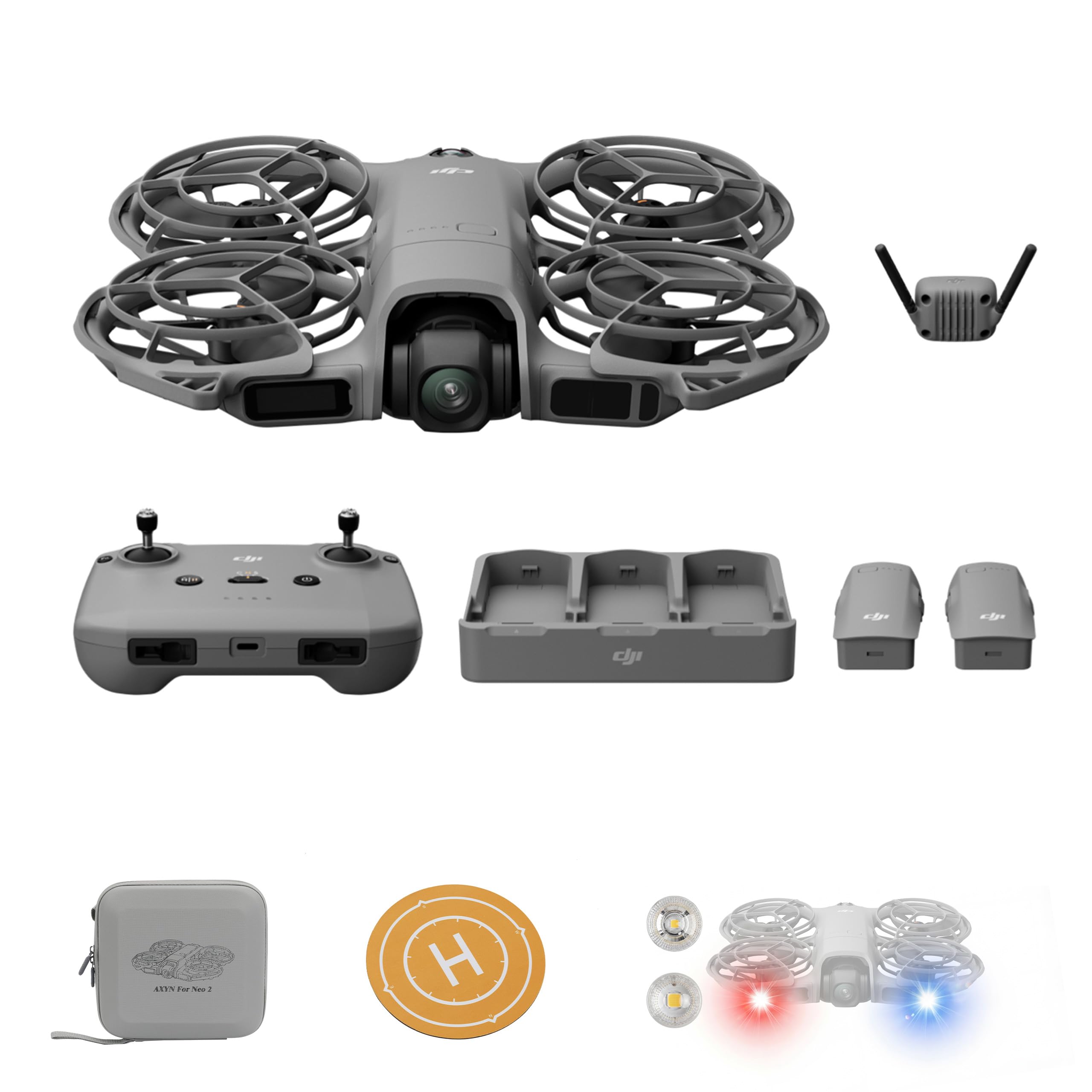
At 151 g the Neo 2 is light enough to launch from an open palm, and that one trick changes how often you actually fly. No landing mat, no flat surface, no setup ritual: press the button, it lifts off your hand, and it comes back to it when you are done. Full-coverage propeller guards are part of the 151 g package, which is why it is the drone here we are most comfortable launching in a small space.

The combo is the version to get. The RC-N3 gives you proper stick flying, and you still have gesture control and the app for the days you want to travel light, which covers both the careful pilot and the person who just wants a clip of themselves on a ridge. ActiveTrack keeps a subject centered, SelfieShot handles the obvious, and the 4K footage holds up on a phone or a laptop screen. The package also throws in a strobe light, a landing pad, and a carrying case.

Two things temper the enthusiasm. Link failures at first setup are the fault worth guarding against, so pair it, fly it, and run a full battery through it inside the return window rather than leaving it boxed until a trip. Flight time is the other uncertainty: some packs come close to the claim and others misbehave, so a second battery is money well spent.

Pros

  • Palm takeoff and landing with no surface
  • Full propeller guards at 151 g
  • RC-N3 controller plus gesture and app control
  • Omnidirectional obstacle sensing

Cons

  • Setup link faults need catching early
  • Flight time varies between battery packs
Our verdict

We reach for the Neo 2 when a shot has to happen fast: palm launch, gesture control, and guarded props in a 151 g body that needs no setup.

Check Latest Price
6

Best for Flying Indoors

DJI Flip Fly More Combo

89 /100
Keeper Score Excellent

Key details

Video
4K/60fps HDR
Sensor
1/1.3-inch CMOS
Weight
Under 249 g
Propeller Guards
Full coverage, carbon fiber
Check Price on Amazon

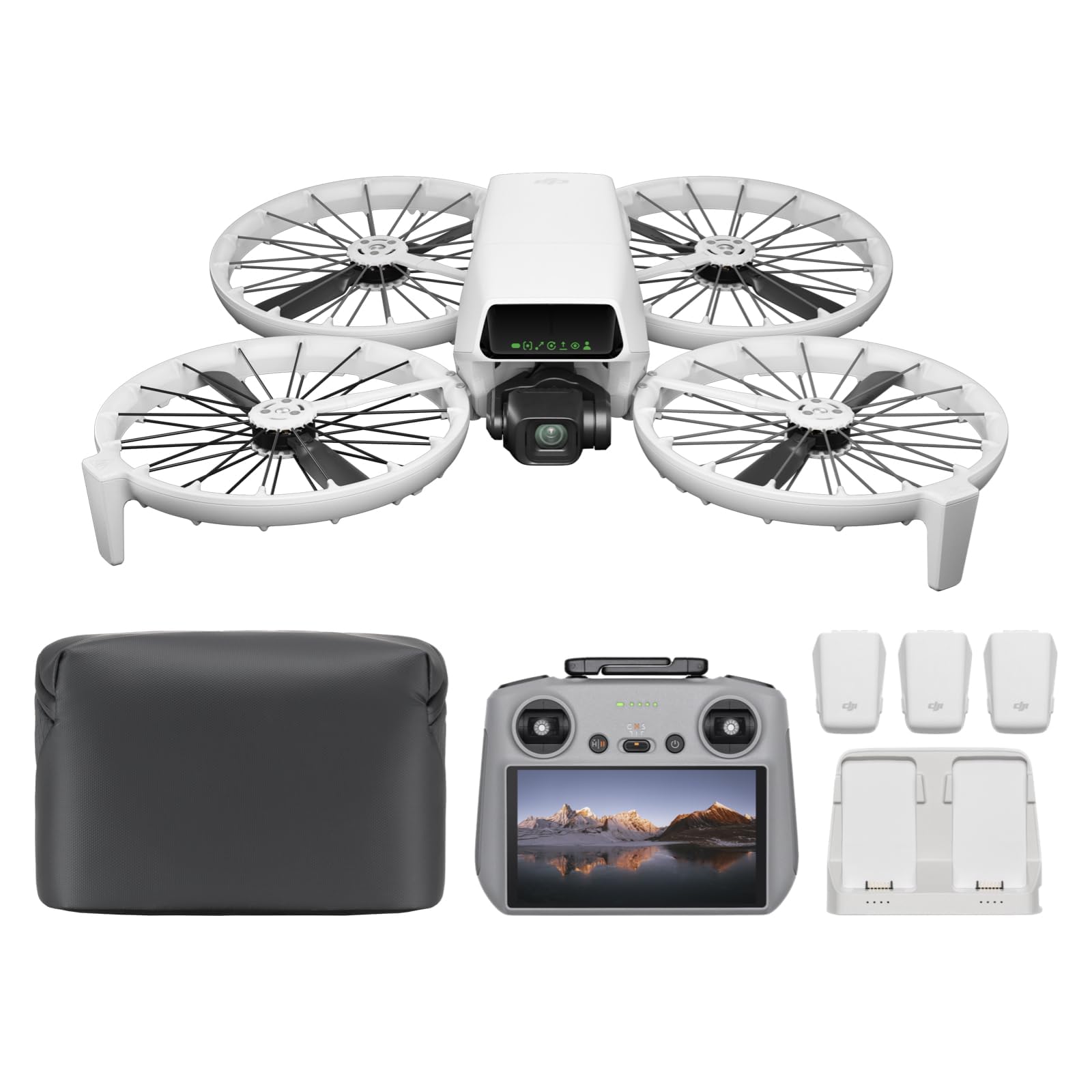
Full-coverage propeller guards made from carbon fiber, on an aircraft that weighs under 249 g: the Flip is built for the flights the Minis make you nervous about. Indoors, in a garden, around a group of people, the props are enclosed, so a brush with a wall is far less likely to end the flight. That single design choice is why it exists alongside drones with better cameras.

The camera is not the compromise you might expect. A 1/1.3-inch CMOS shoots 4K/60fps HDR video and 48 MP stills, subject tracking keeps a person framed while you concentrate on not hitting the ceiling, and the O4 transmission is rated to 13 km. The RC 2 in this combo has its own screen, so a phone never enters the equation.

This is the drone we suggest to people who want to fly at home and around family. The guards, the tracking, and the palm-launch size make it the least intimidating aircraft in this lineup, and the easiest one to recommend to somebody who has been putting off buying a drone because the whole hobby sounds like homework.

One caveat belongs up front: charging faults turn up in these combos, with a hub that will not charge. Run all three batteries through the hub in the first week rather than discovering the problem at a trailhead. And keep expectations straight: if your interest is the cleanest possible footage, the Minis and the Air 3S are the better tools.

Pros

  • Full propeller guards for indoor flying
  • Under 249 g despite the guarded frame
  • 1/1.3-inch CMOS with 4K/60fps HDR
  • RC 2 screen controller in the combo

Cons

  • Some combos arrive with a charger that will not charge
Our verdict

For flying indoors and around people, the Flip is our pick: enclosed carbon-fiber props, subject tracking, and a 1/1.3-inch sensor in a sub-250 g body.

Check Latest Price
7

FPV Flying

DJI Avata 2 Fly More Combo

91 /100
Keeper Score Outstanding

Key details

Video
4K/60fps
Weight
13.3 oz
Flight Time
Up to 23 min
Field Of View
155°
Check Price on Amazon

This is the one drone here where the flying is the point rather than the photograph. Goggles 3 put you inside the aircraft, the RC Motion 3 turns your wrist into the stick, and the result feels less like operating a camera and more like being let into the air. As a way to spend an afternoon, nothing else in this lineup comes close.

It is not a toy, though. The 1/1.3-inch sensor records 4K/60fps through a 155-degree field of view, RockSteady and HorizonSteady keep the footage watchable while you carve around, and flips, rolls, and 180-degree drifts are a button press away with the motion controller instead of a skill you spend a season learning. The built-in propeller guards make a bump against a branch survivable, and the combo's three batteries cover a proper session.

What it will not do is the work of a camera drone. There is no gimbal-smooth cinematic framing here, stills are an afterthought, and at 377 g it crosses the registration line. Goggles also mean you cannot see the airspace around you, so fly with a second person watching or in a place where nothing else is moving. Buy it for the flight and keep a Mini for the photographs.

Pros

  • Goggles give a genuine cockpit view
  • Motion controller makes acro moves easy
  • Built-in propeller guards
  • 4K/60fps through a 155-degree lens

Cons

  • Short flights of 23 minutes at best
Our verdict

If the flight itself is the thrill, the Avata 2 is the one: goggles, motion control, and acro moves almost anyone can pull off in an afternoon.

Check Latest Price

How We Tested the Best Camera Drones

We started by researching the full range of consumer drones on the market, then cut anything that duplicated a size or price tier. Weight, sensor size, price, and whether a kit included spare batteries narrowed the field down to eight units, which we bought and flew ourselves rather than borrowing review samples.

Each drone logged real flights over nine months: a neighborhood park at golden hour, a windy ridge above town, a wooded trail where the drone disappears behind trees, a low indoor pass through a doorway, and a day hike where everything had to fit into one backpack. We counted how many taps it took to get from power-on to lift-off, how often the return-to-home feature kicked in before we wanted it to, and how long we could keep flying before a wind warning forced a landing.

Footage got reviewed on a laptop the same night — noise in the shadows, horizon drift in the gimbal, how the image held up during a slow pan. We timed each battery from full charge to forced landing twice per drone, once hovering and once cruising, because those two numbers are rarely the same. And we didn't baby them: prop strikes in hedges, a couple of clumsy takeoffs, and weeks of being carried around in a bag told us which ones felt solid and which ones we quietly worried about on every flight.

How to Choose a Dji Drone

The 250-gram line comes first

DJI sells the sub-249 g models here, the Mini 4K, Mini 3, and Flip, plus the 151 g Neo 2, as exempt from FAA registration and Remote ID for recreational flying. The 377 g Avata 2 and 724 g Air 3S are not, and once you are registering anyway, weight stops being the deciding factor.

The trap is the battery. The Mini 3 reaches 51 minutes per flight on the Intelligent Flight Battery Plus, but that pack takes it past the 249 g figure DJI advertises for the standard setup. If the exemption is why you picked a Mini, fly the standard pack and treat the long-flight battery as a different aircraft class.

Sensor size decides when you can fly

Resolution is the easy part: 4K is the floor across this lineup, and 4K at 60fps is what separates the newer bodies from the older ones. What actually changes your footage is the chip behind the lens. The 1-inch sensors in the Mini 5 Pro and Air 3S hold color and shadow detail at dusk, when the smaller sensors in the Mini 4K and Mini 3 begin to smear; the Flip and Avata 2 sit between them with 1/1.3-inch sensors.

If nearly all your flying happens in good light, a smaller sensor behind a stabilized gimbal does everything most people need, and the savings go into spare batteries and fast cards instead.

Sensing decides how close you dare fly

Obstacle sensing is what lets you work near a subject without treating every branch as a threat. The Air 3S and Mini 5 Pro add forward-facing LiDAR that keeps functioning after dark, the Neo 2 brings all-direction sensing to a 151 g body, and the Flip leans on its guards and tracking for the same confidence indoors. The budget Minis give you none of it, so if you plan to thread a gap in your first week, spend on sensing rather than megapixels.

Tracking is the other half of that confidence: ActiveTrack on the Mini 5 Pro and Neo 2 keeps a person framed while you concentrate on flying the shot around them.

Buy the kit, not the aircraft

Almost every model here is sold as a bare aircraft and as a Fly More Combo, and the combo is usually the smarter buy: three batteries, a multi-bay charging hub, a bag, and on some kits ND filters. Three packs turn a ten-minute stop into a proper session, which matters more than any single specification once you are standing on a hillside.

The controller counts too. DJI's RC and RC 2 carry built-in screens that keep your phone in your pocket; the RC-N1 and RC-N3 use that phone as the display, which works until the battery or a notification interrupts. The Neo 2 is the one kit that gives you both a real controller and gesture flying.

Frequently Asked Questions

Final Verdict

The DJI Mini 3 Fly More Combo is the drone we recommend to most people, and the reasoning is practical: at 248 g it clears the registration line, it shoots 4K HDR and true vertical video, and it arrives with three batteries and a screen controller so there is nothing left to buy before your first trip. If the budget is tighter, the Mini 4K does the essential job of stabilized 4K for less.

Step up only for a specific reason. The Mini 5 Pro buys you a one-inch sensor and night sensing in a pocketable body; the Air 3S is the one when the footage has to stand beside work from a real camera. Buy for the flying you will actually do.