Best Camera Flashes of 2026

The first time I tilted a flash head toward the ceiling instead of firing it straight at someone's face, my portraits stopped looking like surveillance footage. That swivel is the point of a real speedlight: bounce the light and you can soften it and put shadows where you want them. The trouble is buying one — guide numbers, TTL versus manual, hot-shoe compatibility charts that assume you already know your camera system.

My team and I have spent six months shooting with 12 of them, from a pocket-sized mini to full pro speedlights. Price buys power and recycle speed; weight, battery life, and whether a unit still fires cleanly after a few hundred frames decide whether it actually comes with you.

One thing nobody tells a first-time buyer: guide numbers are measured at a set zoom position, so the biggest number on the box isn't the brightest flash at the length you actually shoot at. Fire a full-power burst on day one, too — flaky units rarely fix themselves. The ones below survived that first burst.

Keeper Score summarizes customer ratings and review volume. Read it alongside the product details and trade-offs. How the score works.

1

Best Overall

Godox iT32

92 /100
Keeper Score Outstanding

Key details

Weight
5.96 oz
Guide Number
18
Flash Control
TTL, 1/8000s HSS
Wireless Trigger
X5C included; 2.4G
Check Price on Amazon

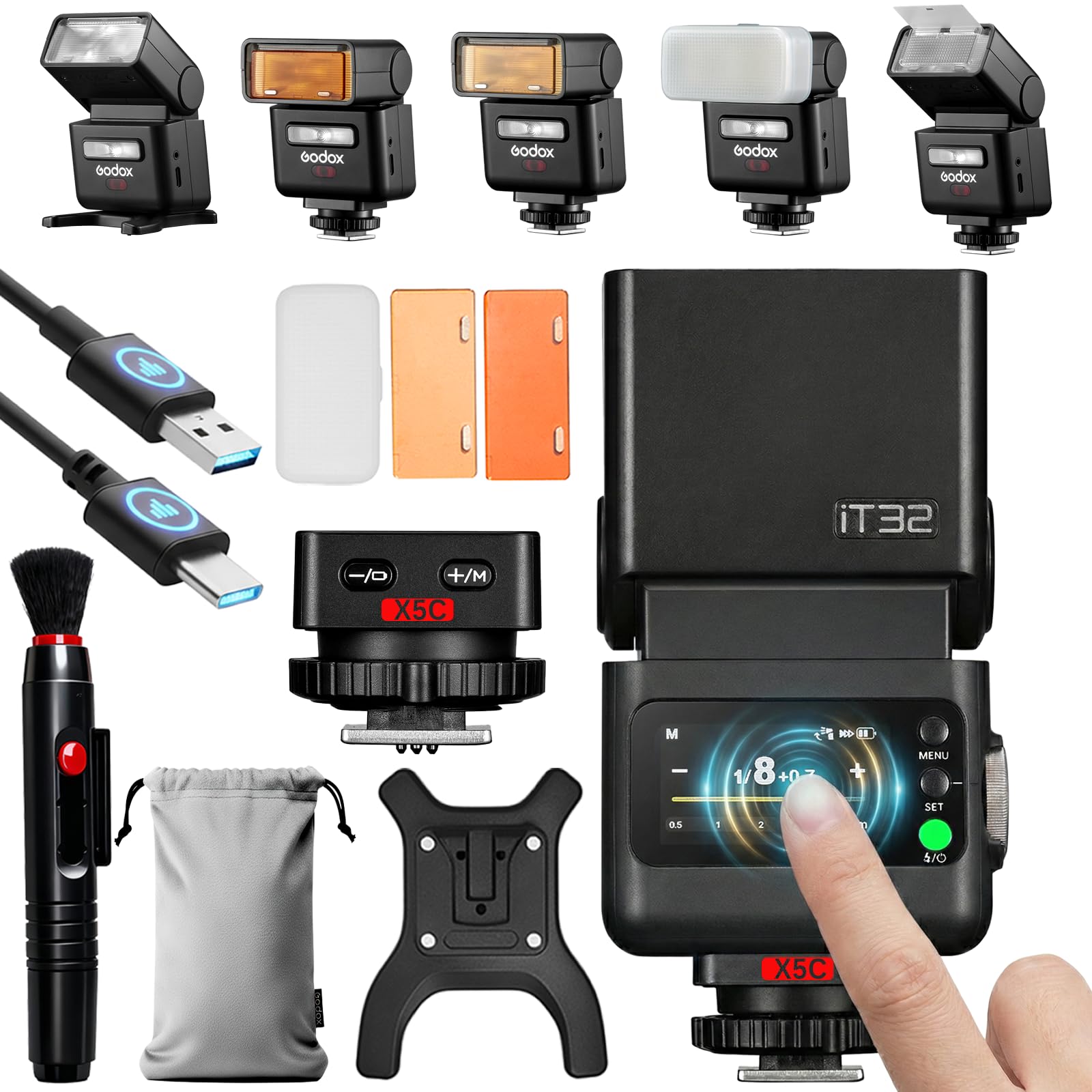
The clever part of the iT32 is the little X5 module between the flash and the hot shoe. Leave it attached and you have a compact on-camera flash; pull the flash off and the module stays behind as a wireless trigger. That one design decision removes the usual second gadget from a small bag, and it is why this is our top pick.

At 169 g, the iT32 is light enough to forget it is on the camera, and the guide number of 18 tells you what that buys: plenty of light for close portraits, receptions, and fill in a normal room, not enough to light a stage from the back row. We like the TTL and 1/8000s HSS combination for fast outdoor fill, and the magnetic mount makes swapping the X5 module for another mount straightforward.

The color touchscreen and physical controls are easier to sort out than the tiny button menus on older budget flashes. The catch is the mount module: the kit includes the Canon X5C, and other camera brands need the matching X5 module, so confirm the right one before ordering. The kit also includes a diffuser and two magnetic color filters, which is a useful start for close portraits.

Pros

  • TTL, HSS, and wireless trigger in one
  • Light 169 g on-camera package
  • Detachable X5 module for off-camera work
  • Color touchscreen and physical controls

Cons

  • Guide number 18 limits large-venue reach
  • Other camera mounts need a separate X5 module
Our verdict

We recommend the iT32 to Canon mirrorless shooters who want TTL, HSS, and a detachable wireless trigger in a flash small enough to leave mounted.
Check Latest Price
2

Best for Nikon DSLRs

Nikon SB-700

92 /100
Keeper Score Outstanding

Key details

Mount
Nikon hot shoe
Guide Number
92/28 (m/ft, ISO 100, STANDARD)
Power Source
4 AA batteries
Flash Control
i-TTL, manual, CLS commander
Check Price on Amazon

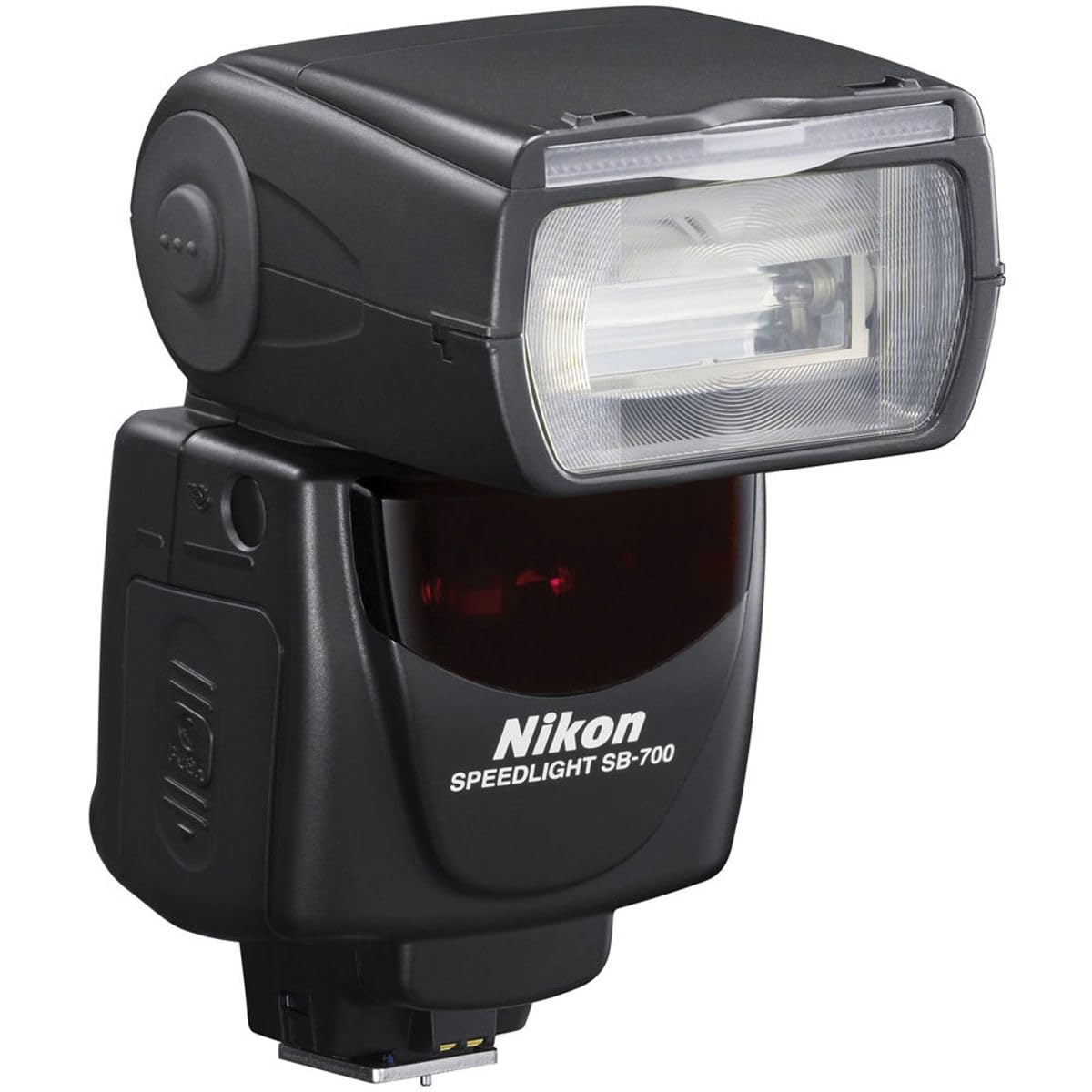
The SB-700 is the oldest design here, and for a Nikon DSLR that is exactly the point. It speaks Nikon's i-TTL language natively, works as a commander in Nikon's Creative Lighting System, and has the kind of straightforward switches and menu logic that make it easy to change modes without looking away from the subject. We trust it because it has been doing this job for a long time—not because it has the newest feature list.

The trade-offs are real. It runs on four AA batteries, so you need a fresh set or good rechargeables before a long session, and its head tilts and swivels for bounce rather than offering a round-head light. The guide number is healthy, the build feels like professional gear, and the controls are quick to learn. For a Nikon user who wants one flash that simply works on camera and can command a small off-camera setup, that consistency is worth the money.

Pros

  • Native i-TTL and CLS commander control
  • Straightforward switches and menu
  • Tilting, swiveling head for bounce
  • Healthy guide number for indoor work

Cons

  • Premium price for an older design
  • No built-in radio wireless control
Our verdict

For Nikon DSLR shooters who want dependable i-TTL and a commander built in, the SB-700 is the low-risk choice on this page.

Check Latest Price
3

Best for Sony

Godox V100 S

90 /100
Keeper Score Outstanding

Key details

Weight
1.51 lb
Light Output
100Ws
Flash Control
TTL, 1/8000s HSS
Full-power Flashes
70 consecutive
Check Price on Amazon

A hundred watt-seconds in a shoe-mount flash is a lot, and the V100 S backs it up with 70 full-power consecutive flashes. That is the kind of reserve that matters at a wedding or a press call, where the flash has to keep up through a burst rather than deliver one perfect frame and then recharge.

The 2.3-inch touchscreen is a genuine improvement over the button-and-dial interfaces on older Godox units; you can see and change power, mode, and wireless settings quickly. The detachable sub-flash adds a second small light source for fill, and global-shutter compatibility with Sony's A9 III is a forward-looking bonus for photographers using that body.

Early failure is a possibility, so buy from a seller with a straightforward return policy and test the flash thoroughly in the first week. For a Sony shooter who needs the extra output and fast recycling, the V100 S earns its place; for everyone else, the smaller iT32 is easier to live with.

Pros

  • 100Ws output and 70 full-power pops
  • Fast recycle through bursts
  • Large touchscreen and detachable sub-flash
  • Global-shutter A9 III compatibility

Cons

  • Sony-only mount
  • Heavy 685 g body
Our verdict

Sony shooters who need event-level output should put the V100 S at the top of their list; it is the most powerful on-camera option here, with a price and weight to match.

Check Latest Price
4

Best Round-Head Value

Neewer Z2PRO-C

88 /100
Keeper Score Excellent

Key details

Mount
Canon TTL shoe
Light Output
76Ws
Recycle Time
1.5 sec
Full-power Flashes
600
Check Price on Amazon

Round-head flashes used to be the expensive exception, and the Z2PRO-C makes one the sensible midrange choice. The round head gives a softer, more even falloff than a rectangular speedlight, which is why it is the one we prefer for portraits and close event work. It also supports TTL, 1/8000s HSS, and a one-touch TCM switch to manual, so it can move from automatic to precise without a menu dig.

The 76Ws output and 1.5-second recycle time are strong for this price tier, and the 600 full-power flashes per charge mean you are not changing batteries in the middle of a reception. We also like the dual two-watt modeling lights: they are not powerful enough to light a room, but they do give you a preview of where the flash is pointed and help with focus in dim venues.

The catch is fit. It is built for Canon's TTL system, so other brands are out, and R-series compatibility varies by body. The R50 needs the AD-E1 adapter sold separately. If you shoot Canon and want a round-head flash without jumping to the flagship price, that adapter is the only extra purchase to plan for.

Pros

  • Round-head light with 76Ws output
  • 600 full-power flashes per charge
  • 1.5-second recycle time
  • Dual modeling lights for dim venues

Cons

  • Canon-only TTL mount
  • 1.3-pound body is heavy on camera
Our verdict

The Z2PRO-C gives Canon shooters round-head light, 76Ws of output, and fast recycling for a midrange price; it is the value pick for portraits and events.

Check Latest Price
5

Best Budget Manual

Photoolex FK300

89 /100
Keeper Score Excellent

Key details

Mount
Universal single-contact
Power Range
1/128 to 1/1
Guide Number
33
Flash Control
Manual, S1/S2
Check Price on Amazon

The FK300 is the cheapest way here to add a real speedlight to a camera bag, and it does not feel like a toy. The metal hot shoe and the universal single-contact mount mean it can sit on Canon, Nikon, Sony, Fujifilm, Olympus, and Pentax bodies without a brand-specific module. For a beginner who is not ready to commit to one system, that flexibility is the whole point.

It is a manual flash, so there is no TTL metering and no HSS. You set power in eight steps from 1/128 to full, fire a test frame, and adjust. The S1 and S2 optical modes let it fire as a slave when another flash triggers it, and the 5600K output is consistent enough for daylight balance. The included color filters, stand, and pouch are useful rather than filler. It is not the flash for fast-moving events or bright-sun fill, but for learning off-camera light on a budget, it earns its place.

Pros

  • Works on almost any single-contact shoe
  • GN33 output with eight power steps
  • Includes filters, stand, and pouch
  • Metal hot shoe at a budget price

Cons

  • Manual only—no TTL or HSS
  • 1/250s sync limit
Our verdict

The FK300 is the flash we hand to a photographer learning manual light: it is inexpensive, works on almost any hot shoe, and includes the filters and stand you need to start.

Check Latest Price
6

Canon R System

Canon Speedlite EL-5

81 /100
Keeper Score Excellent

Key details

Mount
Canon multi-function shoe
Guide Number
58
Power Source
LP-EL lithium-ion
Continuous Flashes
95 at full output
Check Price on Amazon

The EL-5 only makes sense if your Canon R body is on its compatibility list. It uses Canon's multi-function shoe, which gives it a cleaner connection and more camera-side control than a third-party hot-shoe flash, but the fit is not universal across the R range. The R5 is a notable exception: it is not on the supported list, so check your exact model before buying.

Where it fits, the EL-5 is a comfortable flash to use. The joystick and high-definition LCD borrow from Canon's flagship EL-1, the lithium-ion battery avoids AA swaps, and the modeling lamp helps with focus and preview in dim rooms. Canon rates it for about 95 continuous full-output flashes, which is decent for on-camera event work.

The omission of a fan is deliberate—Canon uses that power budget for flash output rather than cooling—but it means the EL-5 is a flash to use in bursts, not a continuous studio light. The battery system is convenient, yet the kit does not include a charger, so factor that into the cost. A unit can arrive nonfunctional, so test it immediately and buy where returns are easy.

Our reservation is not the hardware; it is the fit. The EL-5 is a well-integrated Canon flash for the bodies it supports, with a control layout that feels native to the camera. But at a premium price, with compatibility that stops short of some popular R models and a charger sold separately, it is a purchase for someone who already knows the EL-5 is the right tool for their body—not a blanket recommendation.

Pros

  • Native multi-function shoe control
  • Lithium-ion battery and modeling lamp
  • Joystick and high-definition LCD
  • About 95 full-output flashes

Cons

  • Premium price
  • Not compatible with every EOS R body
  • Charger not included
Our verdict

The EL-5 is the polished first-party choice for supported Canon R bodies, but its high price and uneven model compatibility make it a specialist pick rather than a default.

Check Latest Price
7

Pocket Fill Light

Ulanzi SL03

85 /100
Keeper Score Excellent

Key details

Weight
1.52 oz
Guide Number
8
Power Source
USB-C rechargeable
Color Temperature
6500K
Check Price on Amazon

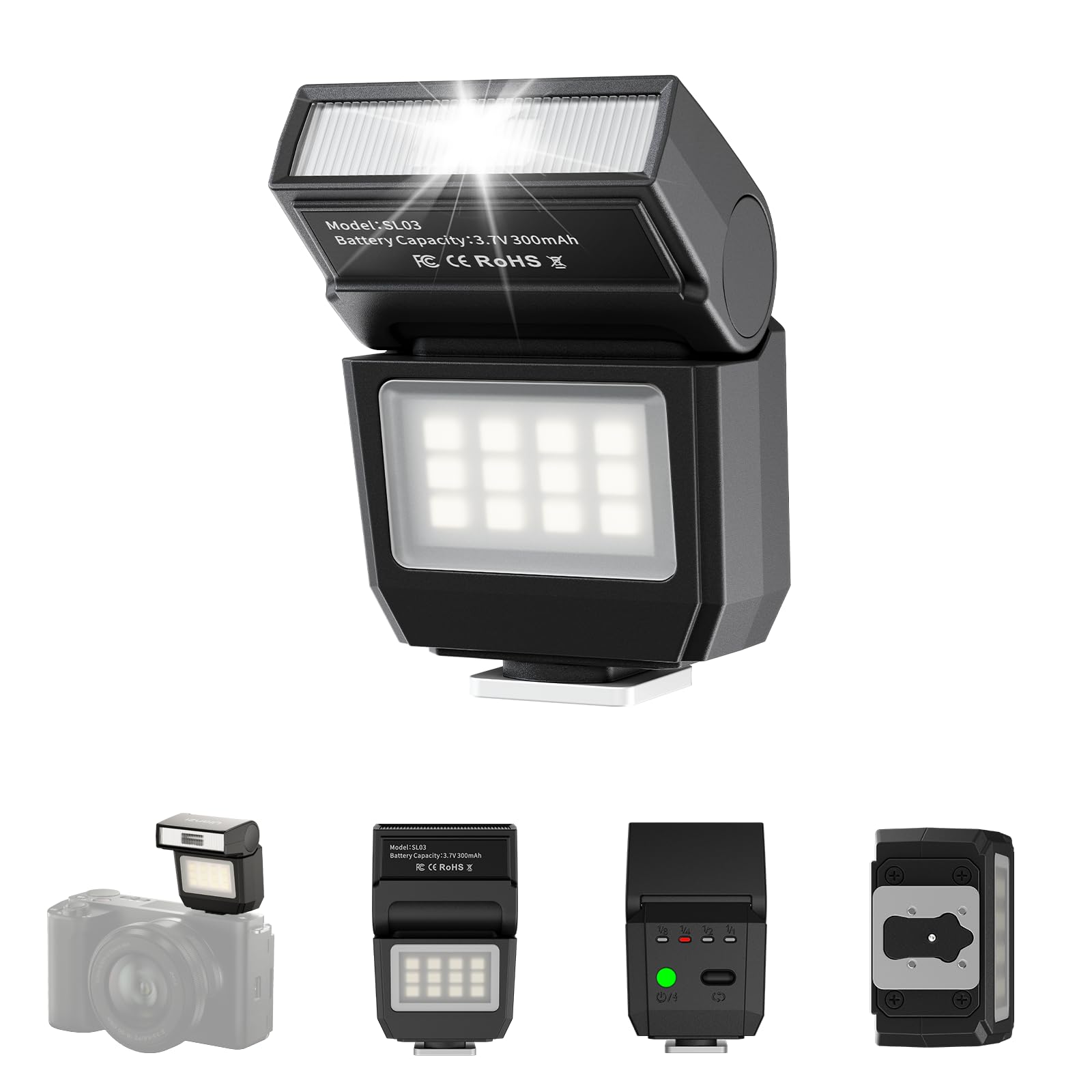
The SL03 is the flash you can forget is in your bag. At 43 g and 2.7 inches tall, it disappears into a pocket, and the USB-C charging means you can top it up from the same cable you carry for your phone. The head tilts through 90 degrees, so you can bounce it off a nearby wall or ceiling instead of firing straight at a face.

The guide number is 8, which is the number that keeps this from being a do-everything flash. It is a fill light for close portraits, product shots, and dim rooms, not a replacement for a full-size speedlight in a dark venue. The 6500K output is cool and consistent, and the high CRI helps when color matters. Compatibility is the other thing to check: the universal single-contact shoe fits many cameras, but Ulanzi lists specific models that do not work, including some popular Sony and Canon bodies.

Battery life is the weak spot. The SL03 uses a small internal cell, and longer sessions can drain it faster than you expect, so treat the USB-C port as a top-up rather than a guarantee. We still like it for what it is: a tiny, inexpensive flash that turns a flat indoor snapshot into something with a little shape. The low output and short runtime are the trade-offs for carrying it at all.

Pros

  • Pocketable 43 g body
  • USB-C rechargeable
  • 90-degree tilting head
  • High CRI 97 output

Cons

  • Guide number 8 is fill-light only
  • Short battery life
  • Some camera models not supported
Our verdict

The SL03 is the flash we keep in a jacket pocket for unexpected fill; it is tiny, USB-C rechargeable, and cheap enough to carry without a second thought.

Check Latest Price

How We Tested 12 Camera Flashes

We started with more than 40 flashes on the market and cut the list to 12 by mount system, price band, and whether the unit genuinely supports TTL and high-speed sync rather than just claiming to. Each one was mounted on the camera bodies it says it works with — dedicated units on their native system, single-contact units on whatever body was closest — and then lived on those cameras for six months.

The core test was a 300-frame run at full power in a dim event hall. We timed how long the ready light took between frames and noted the point where a unit started stretching its recycle time or shut down to cool. Outdoors we shot at 1/4000 in midday sun to see whether high-speed sync held exposure evenly across the frame, and bounced off a ten-foot ceiling to judge how much light survived the trip.

Battery life got its own day: one continuous shoot, firing on every frame, until the pack died or the flash throttled. We weighed each unit on a kitchen scale, then carried it on-camera for a full afternoon to see whether it dragged on the hot shoe. Every flash was checked on arrival for a dead cell, a shoe that didn't seat, or TTL exposure that drifted frame to frame; problems that showed up out of the box never went away.

Finally, we fired each one off-camera with its trigger from 60 feet across a cluttered room, counting misfires, and compared what each tier actually delivers — a round head that fills a modifier more evenly, a head that swivels far enough to bounce off a side wall, a rechargeable pack that saves you a drawer of AAs.

How to Choose a Camera Flash

Start With the Mount and the Metering

A TTL flash reads the camera's metering and quenches the burst when it thinks the exposure is right; a manual flash fires at the power you set. For weddings, events, and any situation where the light changes fast, TTL is the feature that keeps you shooting. For off-camera portraits and learning lighting, manual is cheaper and more predictable. The mount matters just as much: a brand-specific TTL flash only speaks that brand's language, while a single-contact manual flash fits almost any hot shoe but gives up automation.

Think about where you are likely to end up. If you shoot Canon mirrorless and want one small do-it-all flash, the Godox iT32 is the clearest expression of that idea. If you are buying your first manual light to learn with, the Photoolex FK300 costs less and works across systems.

Match Output to the Room

Guide number and watt-seconds describe different things, but both answer the same question: how much light can the flash put out, and how far will it reach? A high guide number helps in large rooms and when you bounce off a ceiling; a low one is fine for close fill. Recycle time and full-power burst count matter just as much at an event, because a powerful flash that slows to a crawl after ten frames is worse than a smaller one that keeps firing.

For a dark reception hall, we prioritize output and recycle time: the Godox V100 S and Neewer Z2PRO-C are built for that work. For a pocket fill light, the Ulanzi SL03's guide number of 8 is a deliberate limit, not a defect.

Battery Chemistry Changes the Workflow

Lithium-ion packs usually give more full-power flashes per charge and recharge in the flash, while AA flashes are easier to feed with disposables or NiMH cells in an emergency. The trade-off is long-term cost and the risk of being caught without a charged proprietary pack. Check the rated full-power count, then carry a spare or a fresh set of batteries for anything longer than a short session.

AA-powered flashes such as the Nikon SB-700 are dependable, but they reward preparation: fresh rechargeables before a shoot, and a spare set in the bag.

Plan for HSS and Off-Camera Control

High-speed sync lets a flash fire in short pulses so you can use a shutter speed faster than the camera's normal sync limit, which is how you balance flash with bright sun. If you shoot outdoors at wide apertures, HSS is worth paying for. For off-camera work, radio triggering is more reliable than optical slave modes because it does not need line of sight.

The Godox iT32's detachable X5 module is a neat version of this idea: the same unit works on camera and as a trigger. The Photoolex FK300 relies on S1/S2 optical modes, which are fine indoors but fussier in sunlight.

Handling and Reliability

A flash sits high on the camera, so weight and the hot-shoe connection matter. A heavy unit can make a small body feel front-heavy and puts more stress on the mount. Check the lock, the balance, and the warranty before you commit. A metal hot shoe is a good sign, but the mount is still the part most likely to take abuse.

The Nikon SB-700 feels like a professional tool and has a long track record; the Canon EL-5 is beautifully integrated but only for supported R bodies. Reliability is not a spec you can read off a box, so buy from a seller with a return window you can live with.

Frequently Asked Questions

Final Verdict

Start with the Godox iT32 if you shoot Canon mirrorless and want one small flash that handles TTL, HSS, and off-camera triggering without a second gadget. Nikon DSLR users should take the SB-700 for its native i-TTL and commander control; Sony shooters who need maximum output should look at the V100 S. The rest of the list is there for a specific job—round-head portraits, manual learning, or pocket fill—so choose the one that matches the work you actually do.