Best Bridge Cameras of 2026

A bridge camera solves a specific frustration: you spot the bird, the goal, the shape across the water, and by the time you've swapped lenses it's gone. One body, one built-in lens that runs from wide angle to serious reach, no bag of glass to carry. The catch is a small sensor and a long lens that has to live somewhere — these cameras are heavier and fussier in low light than a DSLR, but for travel, wildlife, and school sports, nothing else covers this much ground one-handed.

We've spent the past eight months shooting with 10 of them, on hikes, at kids' soccer games, and on trips where one camera had to do everything. The zoom figure is the easiest spec to compare and the least telling: 40x is worthless if the stabilizer can't hold the frame steady at the far end, or if the autofocus gives up the moment your subject moves.

Weight surprised me more than any spec — a camera you leave in the drawer protects nothing. Value didn't track price either; a couple of the cheaper bodies outshot the expensive ones in good light. The picks below are the ones still riding in my bag.

Keeper Score summarizes customer ratings and review volume. Read it alongside the product details and trade-offs. How the score works.

1

Best Overall

Nikon COOLPIX P950

86 /100
Keeper Score Excellent

Key details

Sensor
16MP 1/2.3-inch CMOS
Weight
16 oz
Focal Range
24-2000mm equivalent
Optical Zoom
83x
Check Price on Amazon

The number that matters on the P950 is 2,000mm, but the reason we reach for it is the 16-ounce body attached to that lens. A 2,000mm equivalent reach in a camera you can carry by the strap all day is the whole promise of a bridge camera, and this is the model that delivers it most convincingly.

We think it earns the top spot because it balances that reach with a 16MP sensor, a tilting 3.2-inch screen, and 4K video without asking you to carry a three-pound rig. The 83x zoom starts at 24mm, so you can go from a landscape to a bird on a branch without changing lenses. The electronic viewfinder is the part we appreciate most in bright light: it lets you frame at the long end without guessing at a washed-out rear screen.

At full zoom, the camera rewards good technique: brace your elbows, half-press to confirm the lock, and shoot a short burst rather than one frame. The grip and stabilization give you a real chance handheld, and the bird and moon scene modes are genuinely useful starting points rather than filler.

The P950 is not the camera for indoor sports or shallow-depth-of-field portraits; its small sensor and f/6.5 tele end see to that. But for wildlife, travel, and anyone who wants one lens to cover a huge range, it is the one we recommend first. The 16MP files also leave room to crop, which matters when 2,000mm still is not quite enough.

Pros

  • 83x zoom reaches 2,000mm equivalent
  • Light 16-ounce body for its reach
  • Tilting screen and bright EVF
  • 4K video and RAW stills

Cons

  • Autofocus can lag at full zoom
Our verdict

The best bridge camera for most people: 83x zoom to 2,000mm, 4K video, and a one-pound body that travels easily.

Check Latest Price
2

Best for Maximum Reach

Nikon COOLPIX P1100

83 /100
Keeper Score Excellent

Key details

Sensor
16MP 1/2.3-inch CMOS
Weight
3.1 lb
Focal Range
24-3000mm equivalent
Optical Zoom
125x
Check Price on Amazon

The P1100 exists for one number: 3,000mm. That 125x zoom is the longest reach here, and we think it is worth the extra bulk only if distant wildlife is the reason you are shopping. The camera is 3.1 pounds, which is more than twice the P950, and you feel that at the end of a long walk.

What you get for the weight is a 24-3000mm range, 4K video, RAW files, and a control ring that can handle manual focus or exposure compensation. We appreciated the bird-watching mode on the mode dial because it gives you a sensible starting point instead of making you build a custom setup in the menu. The 3.2-inch tilting screen is useful for low angles, and the grip gives the big lens something to balance against.

Holding 3,000mm steady without support is a chore, so plan on a monopod or bracing against a fence. That is the price of the reach, and we accept it only for a dedicated wildlife trip. If you mostly shoot at 1,000mm or less, the P950 is the easier camera to live with.

Pros

  • 125x zoom to 3,000mm equivalent
  • 4K video and RAW capture
  • Customizable control ring
  • Bird-watching mode on the dial

Cons

  • Focus can slow in low light
  • Power button is fiddly with gloves
Our verdict

For the longest reach in this group, the P1100 goes to 3,000mm and accepts the extra weight that comes with it.

Check Latest Price
3

Best Wide-Angle All-Rounder

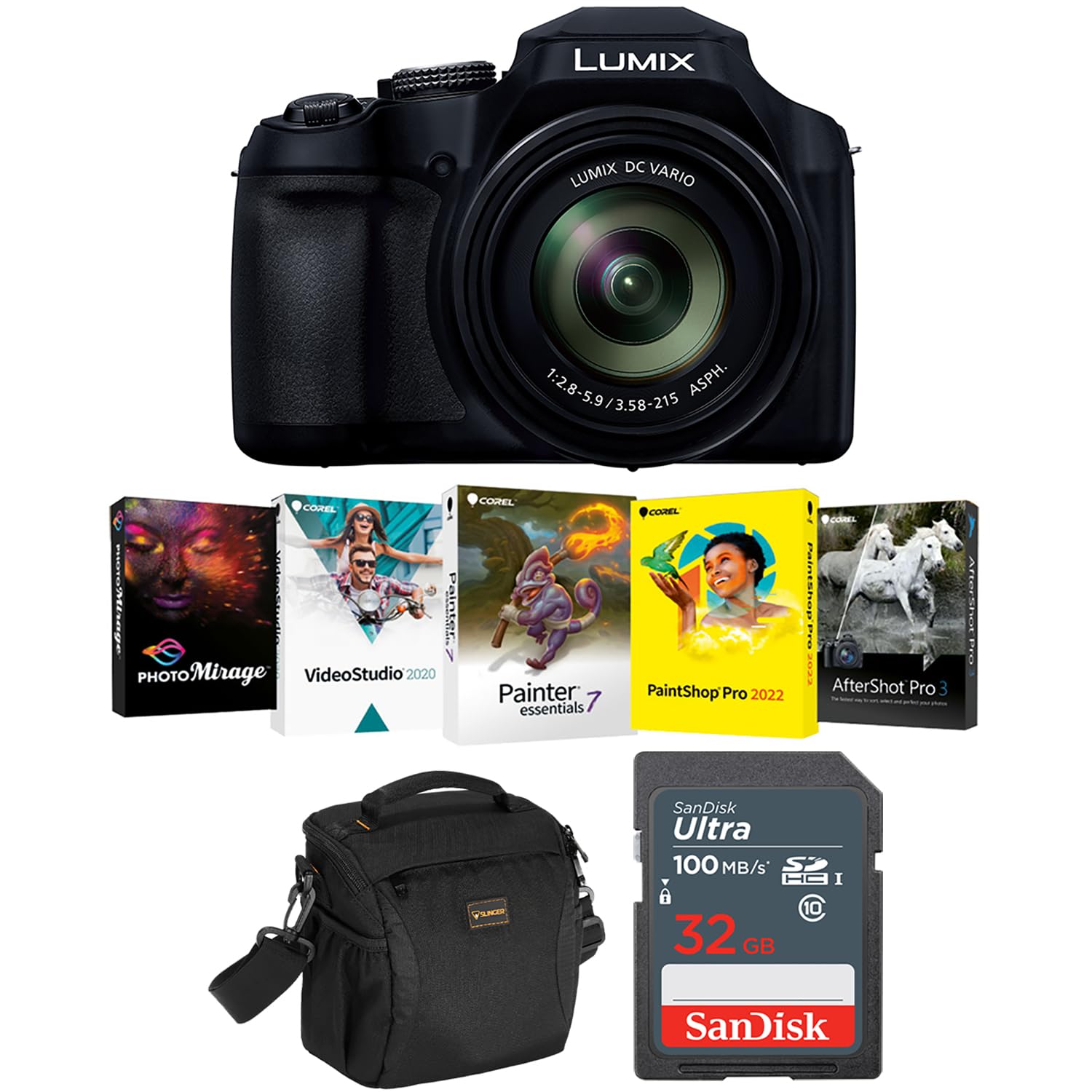
Panasonic LUMIX FZ80D Bundle

87 /100
Keeper Score Excellent

Key details

Video
4K UHD
Sensor
18.1MP 1/2.3-inch MOS
Focal Range
20-1200mm equivalent
Optical Zoom
60x
Check Price on Amazon

A 20mm wide end is the detail that sets the FZ80D apart from most of this group. That is wider than the 24mm start on the Nikons and the Kodaks, and it makes the camera more useful for landscapes, street scenes, and tight interiors before you ever touch the zoom.

The rest of the kit is familiar bridge-camera territory: an 18.1MP sensor, a 60x zoom to 1,200mm, 4K video, and a 2.36m-dot OLED viewfinder. The bundle adds a 32GB SD card, a shoulder bag, and a software kit, which is the kind of thing that lets you shoot the same day instead of ordering accessories separately. We like that the viewfinder is OLED rather than a small rear screen for bright days.

We think this is the best wide-angle all-rounder here because it covers the range most travelers actually use, from a wide street scene to a distant sign, without the weight of the P1100. The 60x zoom is not the longest, and the small sensor still limits low-light shots, but the 20mm start is a real advantage you can see in every wide shot.

The menus take a little getting used to, so give yourself an afternoon before a trip. Once you are past that, the controls are straightforward, and the bundled card and bag mean you can start shooting without a second order. If you want the widest starting point and a ready-to-go kit, this is the Panasonic we point to.

Pros

  • 20mm wide end is wider than most here
  • 60x zoom to 1,200mm equivalent
  • Bundled 32GB card and shoulder bag
  • Bright OLED viewfinder

Cons

  • Autofocus can hunt in low light
Our verdict

The wide-angle pick: a 20mm start, 60x reach, and a bundle that includes the card and bag you need to start shooting.

Check Latest Price
4

Best Budget Superzoom

Kodak PIXPRO AZ425

82 /100
Keeper Score Excellent

Key details

Video
1080p
Sensor
20MP BSI CMOS
Wide End
24mm
Optical Zoom
42x
Check Price on Amazon

The AZ425 is the budget Kodak that does not make you feed it AA batteries. It uses a rechargeable lithium-ion pack, which is a small but meaningful difference if you are comparing the cheap end of this group and do not want to keep a drawer of disposables.

For the money, you get a 42x optical zoom, a 20MP BSI CMOS sensor, a 24mm wide end, and optical stabilization. We think that is the right package for a first bridge camera or a second camera for the glovebox: the controls are simple, the 3-inch screen is easy to read, and the zoom covers school sports, backyard birds, and vacation snapshots. The 20MP files give you some room to crop, though the small sensor means you should not expect miracle low-light shots.

The camera is at its best in daylight, where the stabilization and wide end do most of the work. If you want the lowest-cost way into a long zoom and a rechargeable battery, this is the one we recommend.

Pros

  • 42x zoom with 24mm wide end
  • Rechargeable lithium-ion battery
  • Simple controls for beginners
  • 20MP files leave cropping room

Cons

  • Photo quality can go soft in flat light
  • Not the longest zoom here
Our verdict

A budget bridge with 42x zoom, a 20MP sensor, and a rechargeable battery instead of AA cells.

Check Latest Price
5

Best Lightweight AA Travel Camera

Kodak PIXPRO AZ255

82 /100
Keeper Score Excellent

Key details

Sensor
16MP BSI CMOS
Battery
4 AA batteries
Focal Range
24-600mm equivalent
Optical Zoom
25x
Check Price on Amazon

Four AA batteries are the AZ255's best travel trick. You can buy them at a gas station, a grocery store, or a hotel desk, which is more reassuring than a proprietary pack when you are far from a charger. The trade-off is that AA cells add up, and this camera can go through them quickly if you leave the screen bright and the zoom busy.

The rest of the camera is a light, simple bridge: a 25x zoom from 24-600mm, a 16MP sensor, optical stabilization, and 1080p video. It is small enough to keep in a daypack and simple enough that a beginner can shoot on auto and still get the wide end and a decent zoom. The 3-inch screen is fixed, and the optical viewfinder is basic, but neither gets in the way at this level.

We think this is the right pick for a traveler who wants a real camera without a charger ritual, not for someone chasing the longest reach. For family trips, street scenes, and the kind of shooting where you want a camera you can leave in the car, the AA convenience and light body make more sense than another long lens.

Pros

  • Runs on four AA batteries
  • Light and compact for travel
  • Simple controls and 24mm wide end
  • 1080p video

Cons

  • 25x zoom is the shortest here
Our verdict

A light, easy 25x bridge for travelers who want AA batteries and a camera they can leave in the car.

Check Latest Price
6

Compact Budget Kit

Minolta MN40Z ProShot

79 /100
Keeper Score Very Good

Key details

Video
1080p
Sensor
20MP
Battery
4 AAA batteries
Optical Zoom
40x
Check Price on Amazon

The MN40Z pairs a 40x zoom with a compact body, and that combination is the reason it earns a place here. It puts a 20MP sensor, 1080p video, and a 40x optical zoom into a body that is easy to carry, which is more than some budget bridges manage.

The autofocus can struggle at the long end, which is the main reason to keep your expectations in check. We noticed the 3-inch screen and the simple controls are friendly for a first-time user, and the Wi-Fi app is useful for getting a few shots onto a phone without a card reader. The 40x zoom is genuinely useful in daylight, especially for a camera at this end of the price range.

This is not the bridge camera for someone who needs the most reliable focus or the longest reach. It is for the casual shooter who wants a compact body, a big zoom, and a low entry point. If that sounds like you, the MN40Z is a sensible first step; if not, the Kodak AZ425 is the better budget all-rounder.

Pros

  • 40x zoom in a compact body
  • 20MP stills and 1080p video
  • Simple controls and Wi-Fi sharing

Cons

  • Runs on four AAA batteries
Our verdict

A compact, low-cost bridge with 40x zoom and 20MP stills for casual daylight shooting.

Check Latest Price

What Eight Months With Ten Bridge Cameras Taught Us

We started with every bridge camera we could find from the major manufacturers, then narrowed by zoom range, sensor size, image stabilization, articulating screen, and price — from budget bodies up to the pricier superzooms — and dropped anything discontinued or out of stock. That left 10 cameras, which we bought at retail so nobody could send us a cherry-picked unit.

Testing ran eight months, in the places these cameras actually get used: dawn at a backyard bird feeder, a full Saturday of kids' soccer, two hiking trips, one rainy vacation, and a lot of dim living rooms. We shot the same short list at every stop — a brick wall for detail, backlit branches for contrast, a running dog for autofocus, and a feeder at full zoom, handheld.

At the long end we fired bursts at 1/30 second to see whose stabilization genuinely held the frame and whose produced mush. We timed how long each camera took to lock focus on something moving, counted frames per charge, and noted which models ran on disposables you can buy at a gas station. Every camera was weighed with card and battery and carried on a two-hour walk. We also handed each one to someone who had never used it and timed how long it took them to change ISO, find video mode, and flip the screen forward, then send a file to a phone over Wi-Fi.

Finally, we compared good-light images side by side at full size and in the corners, because that's where a price difference should show — or doesn't. A couple of the cheapest cameras held their own in daylight; the gap only opened at dusk and at maximum zoom.

How to Choose a Bridge Camera

Match the Zoom Range to the Subject

A 40x to 60x zoom is plenty for travel, family events, and backyard birds at close range. If you shoot wildlife across a field or want the moon in the frame, the 83x P950 and 125x P1100 are the two that reach far enough to matter. Look at the wide end too: a 20mm start on the FZ80D makes it more useful in tight streets and interiors than a 24mm start. The trap is digital zoom; it crops and enlarges, so it does not add real detail. We prioritize the optical range and ignore the bigger digital number.

Know What a Small Sensor Can Do

Every camera here uses a 1/2.3-inch sensor, so low-light performance has a ceiling no megapixel count can lift. A 20MP model like the AZ425 gives you more room to crop in daylight, but it will not beat the 16MP P950 indoors just because the number is higher. We look for a lens that stays reasonably bright at the wide end and stabilization that helps at the long end. If most of your shooting is after dusk, a bridge camera is the wrong tool; a larger-sensor compact or mirrorless will serve you better.

Autofocus and Handling Decide the Keepers

At 1,000mm or more, the camera is only as good as its ability to lock focus and stay steady. Contrast-detection systems can hunt on a small bird against a busy background, while hybrid systems tend to be quicker in good light. A viewfinder is not a luxury at the long end; it gives you a third point of contact and a clear view in sun. Weight matters just as much: the P1100's 3.1 pounds is a tripod-or-brace camera for many people, while the P950's 16 ounces is realistic to carry all day.

Plan for Batteries, Cards, and Daily Ownership

A rechargeable lithium-ion pack is the simplest choice for most buyers, and a spare battery is the first accessory to add. AA and AAA models are tempting for travel because the cells are sold everywhere, but they add recurring cost and can drain quickly in a zoom-heavy session. Buy a card that matches the camera's stated SD type, and format it in the camera before the first trip. If you shoot 4K video, start with more storage than you think you need; the FZ80D bundle's 32GB card is a useful start, not a long-term answer for heavy video.

Frequently Asked Questions

Final Verdict

The Nikon COOLPIX P950 is the bridge camera we recommend first. It gives you 83x zoom to 2,000mm, a tilting screen, 4K video, and a body that weighs about a pound, which is the best balance of reach and carryability here. If maximum reach is the whole point, the P1100 goes to 3,000mm and accepts the extra weight. If you want a wider 20mm start and a ready-to-shoot bundle, the FZ80D is the practical alternative.