Best Bird Feeder Cameras of 2026

The best bird in my yard showed up on a Tuesday, and by the time I found the binoculars it was gone. That's the small heartbreak a feeder camera solves: the perch is already being watched, so by the time you open the app there's a clip waiting and a name attached to it.

My team and I have spent the past six months with 11 of these feeders hanging outside, and the first thing I'd tell a friend is that the AI identification is the whole trick — and it usually happens in the cloud. Some feeders include it free, while others charge a monthly plan for ID or video history, so price out a year of that before you compare.

Resolution matters less than you'd think, and a generous solar panel buys you more than a bigger battery once the winter sun thins. Below are the feeders that drew the most birds, kept naming them correctly through rain and squirrels, and that a non-birder could set up alone.

Keeper Score summarizes customer ratings and review volume. Read it alongside the product details and trade-offs. How the score works.

1

Best Overall

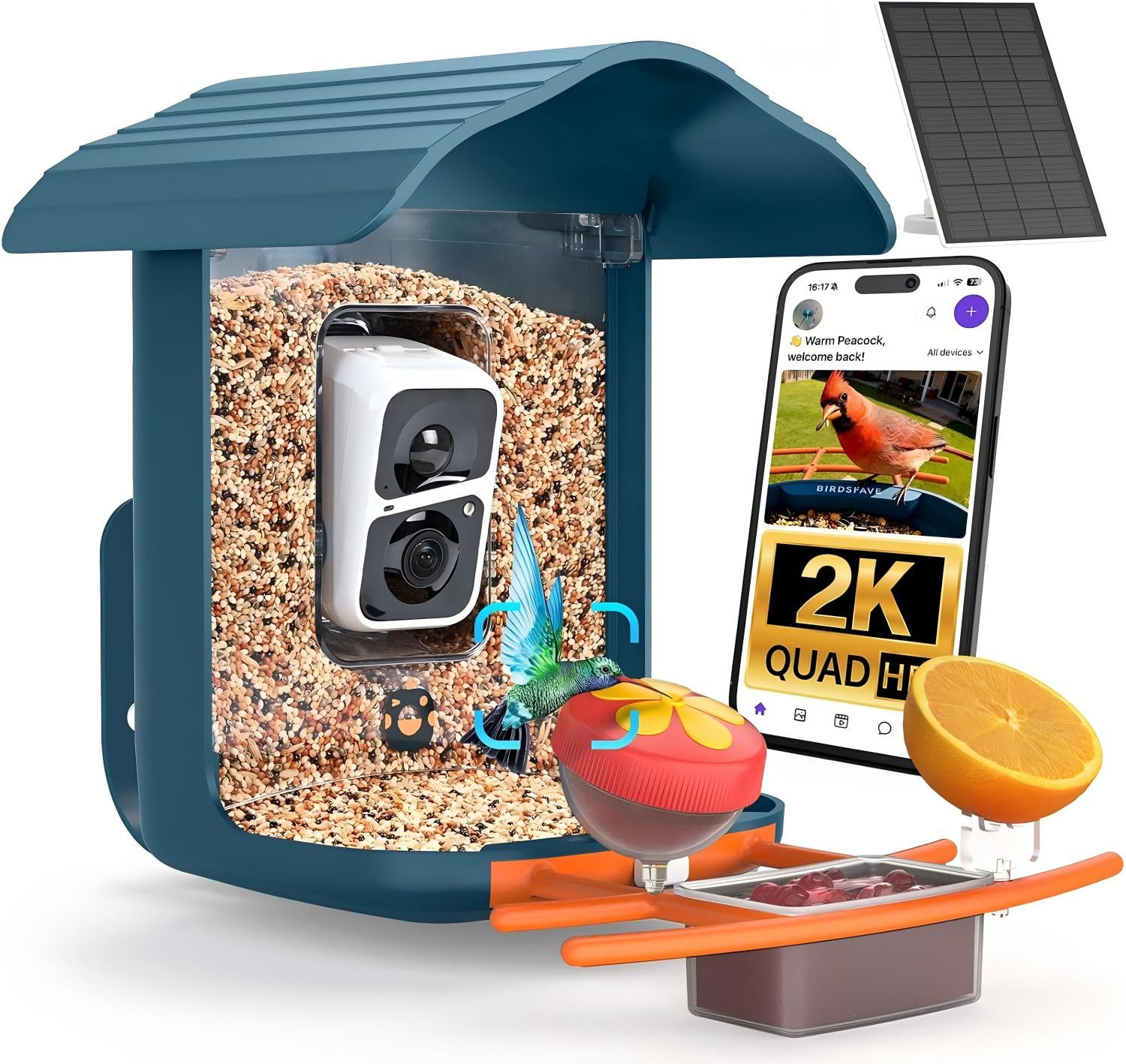
HARYMOR Q8 Smart Bird Feeder

90 /100
Keeper Score Outstanding

Key details

Power
Dual 3W solar panels
Field Of View
120°
Seed Capacity
2 liters
Video Resolution
2K
Check Price on Amazon

The two solar panels are the first thing we look at, because they solve the least romantic part of owning a feeder camera: keeping it charged. One panel is built into the roof, and the second is external, so the feeder can sit where the birds are while the panel reaches for sun. Add the 2-liter hopper, and this is the setup we expect to handle a busy yard with fewer refills and fewer charging interruptions than the single-panel feeders in this group. That combination is why it is our top pick.

The camera is a 2K unit with a 120° lens and motion-triggered arrival alerts. It is not the widest view in this group, but it keeps the bird large enough to see markings, and the alerts arrive while the visit is still happening. The AI species labels are a useful nudge rather than a field-guide answer; we treat them as a prompt to look closer. Recordings can go to a microSD card, which keeps the basic recording setup simple.

Mounting is straightforward with the included tree and wall hardware, and the green housing should blend into a garden better than a white security-camera box. The 2-liter capacity is the practical star: fewer refills, less fuss, more watching. It is not the smallest feeder here, but the dual charging and generous hopper make it the one we reach for first.

Pros

  • Dual solar panels reduce charging chores
  • 2-liter hopper cuts refill frequency
  • 2K view with 120° coverage
  • Card storage up to 128GB

Cons

  • AI identification requires a paid subscription
Our verdict

For most yards, the HARYMOR Q8 is the feeder camera we recommend: dual solar panels and a 2-liter hopper make it easier to keep watching, and the 2K view is sharp enough for everyday birds.
Check Latest Price
2

Best 4K Without a Subscription

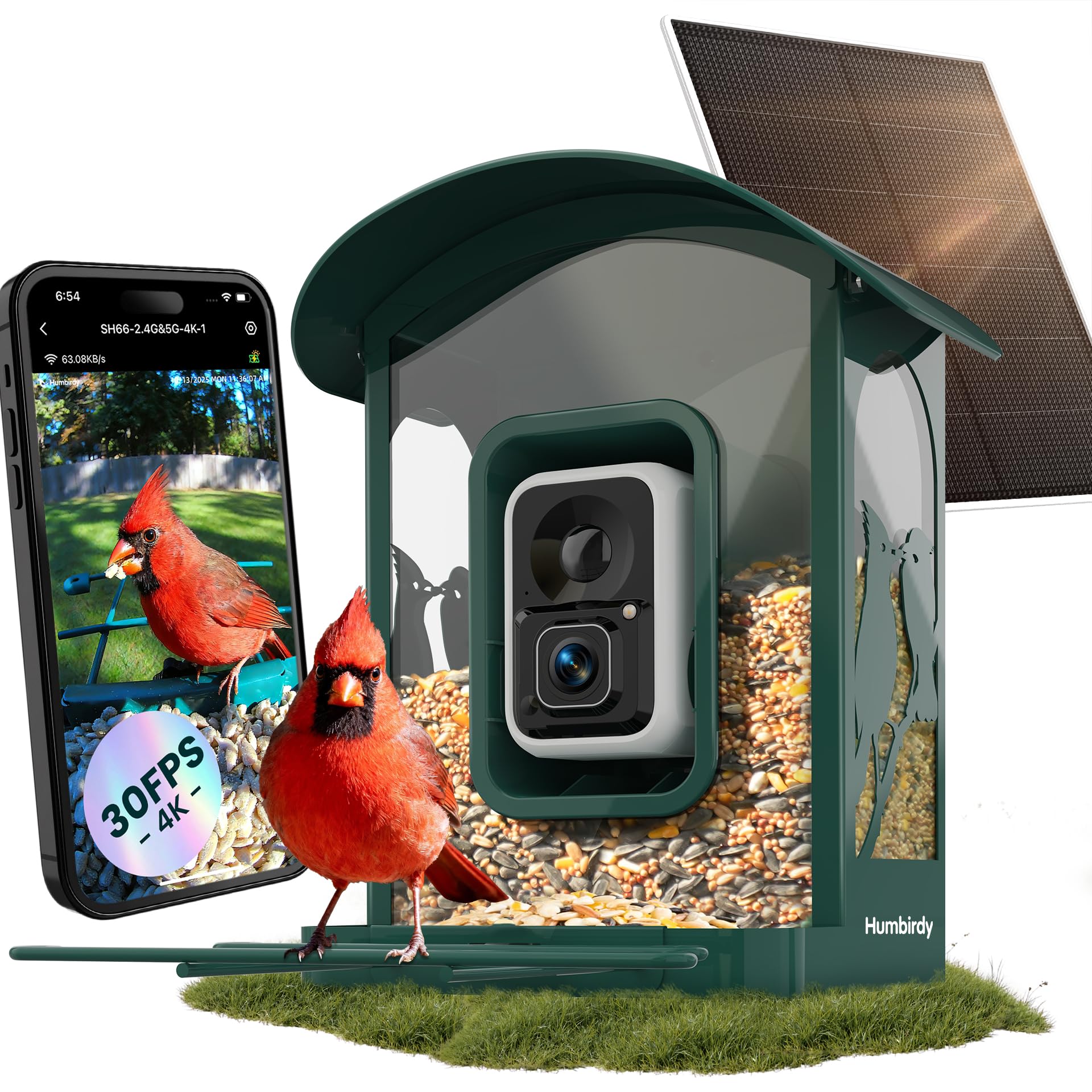
Humbirdy SH66 4K Feeder

89 /100
Keeper Score Excellent

Key details

Power
3W solar panel
Field Of View
169°
Seed Capacity
1.8 liters
Video Resolution
4K at 30fps
Check Price on Amazon

The Humbirdy sits at the premium end of this group and dresses for the part. It pairs true 4K video at 30fps with a 169° lens, lifetime AI identification, and both 2.4GHz and 5GHz Wi-Fi. A metal body, a 3W solar panel, and an included 32GB card round out a package aimed at someone who wants the camera to be the main event, not an add-on to a feeder.

The no-subscription promise is the real selling point for us. Bird identification is often the feature that makes a feeder camera feel smart, and here it is included rather than rented. The removable camera is the detail we appreciate most: you can bring just the camera inside to charge or clean, leaving the feeder mounted and the birds undisturbed. That is a small convenience that quickly becomes a habit.

The 4K sensor is not just a numbers upgrade. It gives you room to crop into a still or make a 1080p slow-motion clip at 120fps, the sort of thing that turns a quick visit into a clip worth sharing. The 169° view can make a bird at the center look small, so we prefer it for whole-feeder context than for portraits. If you want the sharpest record and no monthly AI bill, this is the one.

Pros

  • True 4K at 30fps and 8MP stills
  • Lifetime AI with no subscription
  • Removable camera for charging and cleaning
  • 2.4GHz and 5GHz Wi-Fi support

Cons

  • Bird ID can still miss or misname species
Our verdict

If you want the sharpest video here and don't want to rent bird identification, the Humbirdy is our pick; its removable camera also makes charging and cleaning unusually easy.

Check Latest Price
3

Best for Family Sharing

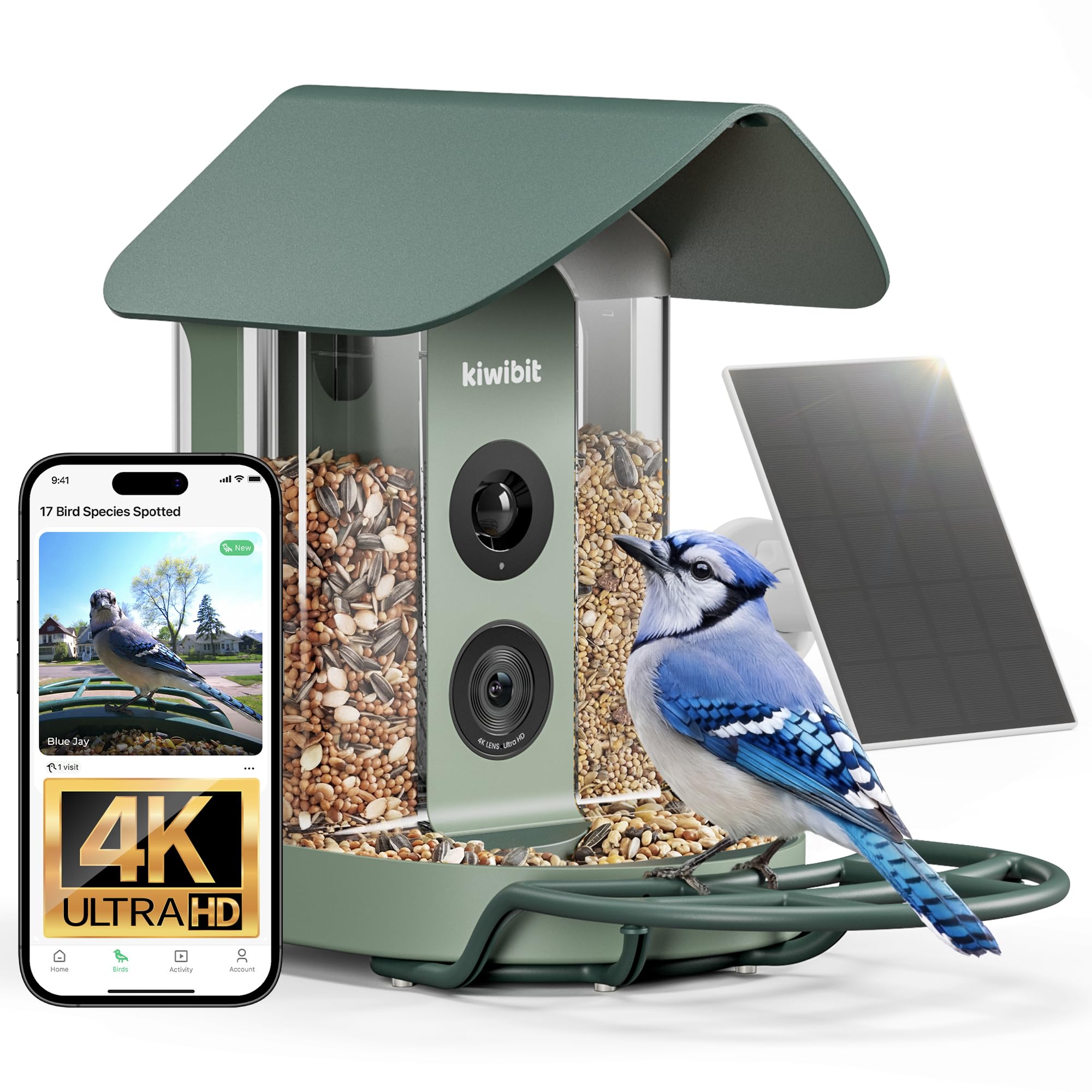
Kiwibit BW511 4K Feeder

88 /100
Keeper Score Excellent

Key details

Field Of View
132°
Seed Capacity
1.5 liters
Battery Capacity
5,200mAh
Video Resolution
4K HDR
Check Price on Amazon

The Kiwibit's 20-person family sharing is the feature that separates it from the rest of this group. Everyone can open the live feed, get alerts, and see the same bird without passing a phone around. That is a real advantage for grandparents, kids, or a household that treats the feeder as shared entertainment. The 4K HDR camera and 132° lens give that group a clear, colorful view.

The sharing is why this one earns a spot: it turns the feeder into a group activity rather than a solo phone habit. The camera is easy to recommend for that use, and the 4K detail gives everyone something worth passing around. If your household watches together, this is a more sociable feeder than the single-viewer picks here.

The 5,200mAh battery and adjustable 3W solar panel are built for placement flexibility. The panel can be aimed separately from the feeder, so you can chase sun without moving the feeding station, which is the right approach for a shady yard. The 132° view keeps the feeder and its approaches in frame without stretching the image as far as the 169° model does.

Pros

  • 4K HDR live view and 8MP photos
  • Up to 20 people share the feed
  • Adjustable external solar panel
  • 5,200mAh rechargeable battery

Cons

  • AI features are only a 30-day trial
  • 1.5-liter hopper needs frequent refills
Our verdict

For a household that wants to watch together, the Kiwibit is our pick: its 4K HDR video and 20-person sharing turn the feeder into a shared family feed.

Check Latest Price
4

Best for Attracting Variety

birdsnap Smart Bird Feeder

87 /100
Keeper Score Excellent

Key details

Field Of View
155°
Seed Capacity
1.8 liters
Included Storage
32GB card
Video Resolution
2K
Check Price on Amazon

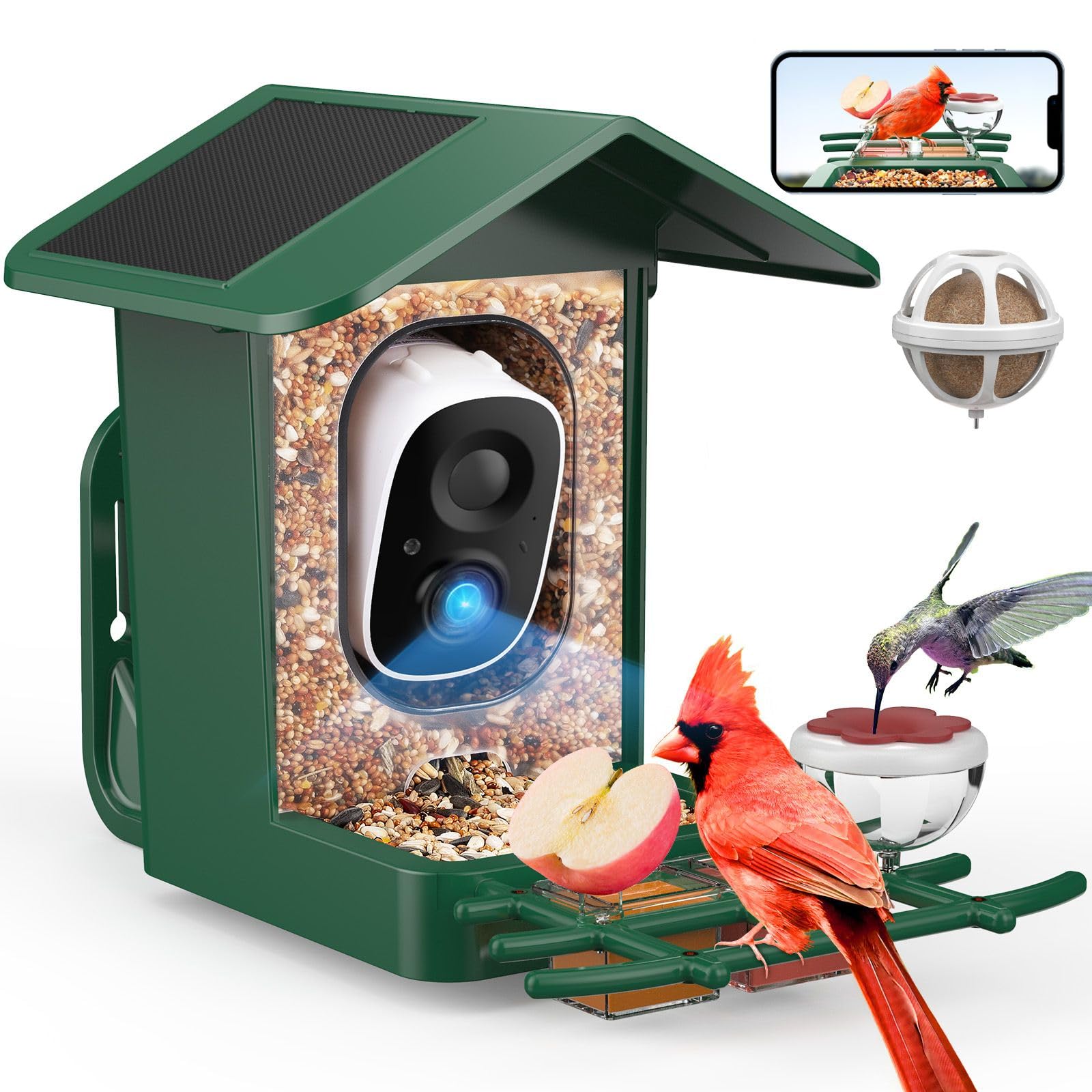
The birdsnap comes with a hummingbird feeder, a jelly box, and a fruit fork, plus a 32GB card in the box. That accessory kit is the most practical thing about it: instead of hoping seed alone pulls in a wider crowd, you can offer nectar, jelly, or fruit and see which visitors respond. We appreciate the flexibility, and the card means you can record locally without turning on cloud storage.

The camera is 2K with a 155° view, so you get a broad look at the feeding station rather than a tight portrait. The free AI identification is a strong value at this end of the group, and the solar panel helps keep it running. The wide view is the other reason we reach for it: you can see birds on the perch and the ones waiting on the branch behind. For a feeder meant to attract a variety, that context is more useful than a prettier close-up.

The 1.8-liter hopper sits between the smallest budget feeders and the 2-liter top pick, and the 2.6-pound body is light enough to move between mounts when you want to try a new spot. It is a feeder for someone who wants to experiment with the menu, not just watch seed disappear.

Pros

  • Fruit, nectar, and jelly attachments
  • 32GB card included
  • Free AI bird recognition
  • 2K video with 155° view

Cons

  • 2.4GHz Wi-Fi only
  • Solar charging can lag in low light
Our verdict

We recommend the birdsnap for anyone who wants to attract fruit- and nectar-loving birds without paying for AI; the included card and 155° view make it a flexible recorder.

Check Latest Price
5

Best for Smart-Home Integration

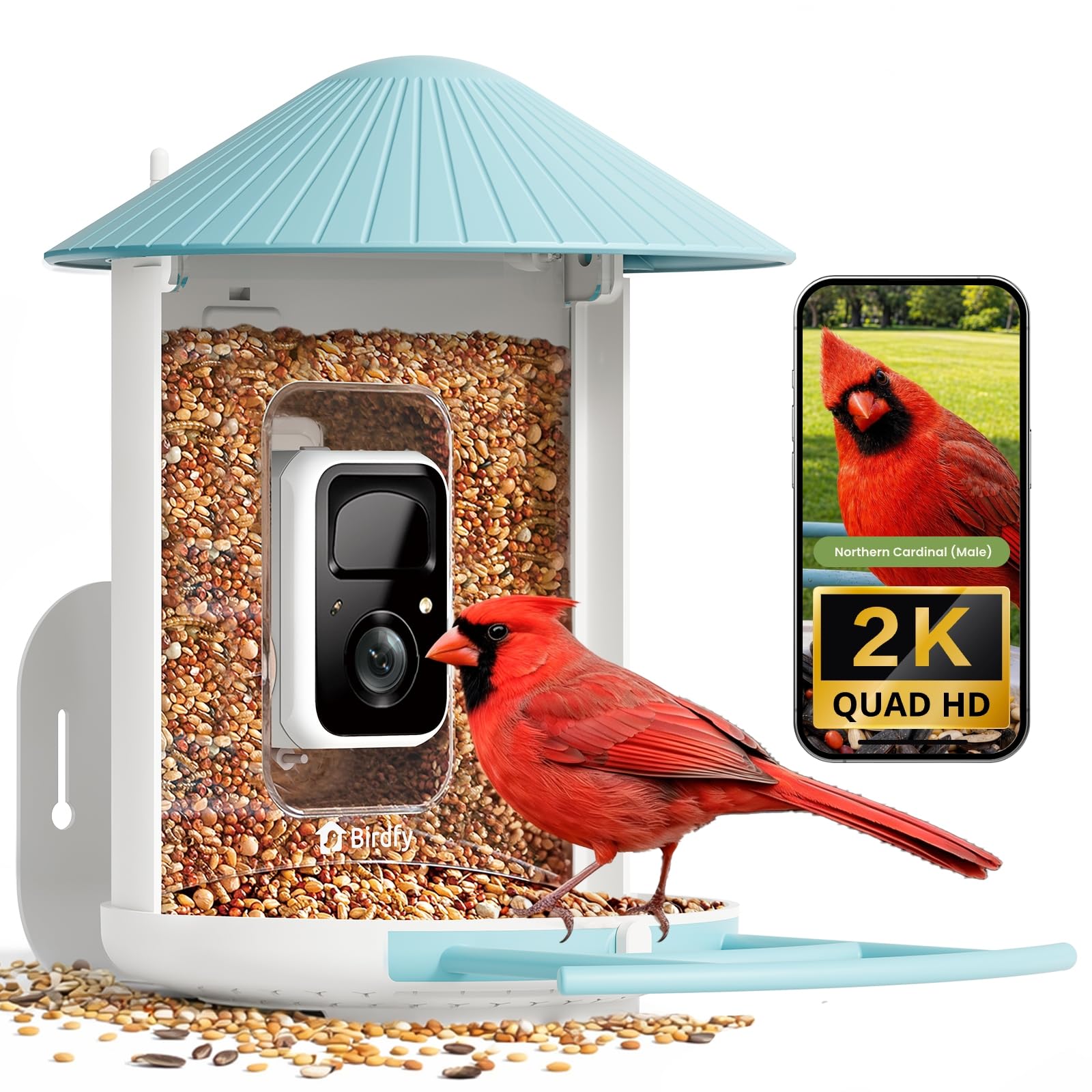
Birdfy N12 Smart Bird Feeder

88 /100
Keeper Score Excellent

Key details

Smart-home
Alexa compatible
Field Of View
155°
Seed Capacity
3.1 lb
Video Resolution
2K
Check Price on Amazon

The Birdfy N12 is built around a 155° view and a 3.1-pound seed capacity, two specs that work well together if your feeder is a busy little stage. The wide lens catches birds on the perch and on the approach, and the larger hopper means the feeder stays stocked through a run of active days. The 2K camera is not the sharpest here, but it is clear enough for live viewing and quick clips.

The app side is where Birdfy earns its place for a connected home. It works with Alexa, so the feeder can fit into a smart-home routine rather than living only on your phone. Motion alerts and live view are the core of the experience, and the mounting kit covers pole, wall, and tree. If you already use Alexa, this is the most natural fit in the group.

Our view is that the Birdfy is best for a household that wants one wide, easy-to-check window into the feeder rather than the sharpest close-up. The shape is simple enough to blend into a garden, and the 155° framing gives you the whole feeding scene instead of a tight crop. It is the one we point to when the phone app matters as much as the camera.

Pros

  • 155° view covers perch and approach
  • Holds 3.1 pounds of seed
  • 2K video with automatic capture
  • Works with Alexa

Cons

  • Battery-only power; no solar panel included
  • AI identification needs a subscription
Our verdict

Birdfy is our pick for a smart-home yard: the 155° view and 3.1-pound hopper suit a busy feeder, and Alexa support makes it easy to bring the feed into your routine.

Check Latest Price
6

Best Budget

Fazoxo B1 Smart Bird Feeder

87 /100
Keeper Score Excellent

Key details

Power
Solar panel
Wi-Fi
2.4GHz only
Seed Capacity
1.3 liters
Video Resolution
FHD
Check Price on Amazon

The Fazoxo B1 is the lowest-cost way into this group, and it arrives with the solar panel and mounting kit you need to get started. That matters for a first feeder camera: there is no separate power accessory to buy and no proprietary mount to solve. It is a complete starter kit rather than a stripped-down box.

The FHD camera is a step below the 2K models here, but it still gives you a useful live view and motion alerts, and the solar panel makes it easier to leave in place. The AI and cloud features start as a one-month trial, so the low purchase price is not the whole cost of ownership. That is the trade-off that comes with the lower entry point: you get the hardware cheaply, then decide whether the smart features are worth paying for.

We see this as a sensible first camera for someone who wants to test the hobby without a big commitment. It is easy to understand, easy to mount, and the solar panel takes one chore off the list. For a feeder you check over coffee, the FHD image is good enough; if you want feather detail for identification, step up to a 2K model.

Pros

  • Complete solar and mounting kit
  • FHD video and motion alerts
  • Straightforward starter setup

Cons

  • Small 1.3-liter hopper
  • 2.4GHz Wi-Fi only
Our verdict

For a first feeder camera on a tight budget, the Fazoxo B1 is our pick: it includes solar power and mounting hardware, and the FHD view is enough to get you watching.

Check Latest Price
7

Night Watching

PeckCam G02 Smart Bird Feeder

86 /100
Keeper Score Excellent

Key details

Power
Dual 2W solar panels
Viewers
Up to 4
Night Vision
Full color
Video Resolution
2K
Check Price on Amazon

The PeckCam G02 pairs dual 2W solar panels with a set of feeding add-ons: suet, honey, fruit, and water. That combination is aimed at people who want to experiment with the menu, not just fill a hopper with seed. The 2K camera and full-color night vision make it a more interesting option for dusk and evening viewing than the basic budget feeders here.

Four people can watch the live feed at once, which is a nice touch if the feeder is a shared family thing or a gift for grandparents. The app sends motion alerts and records clips, and the dual panels are built into the design rather than added as a single roof panel. For a yard with a mix of sun and shade, that gives you more chances to keep the battery topped up.

The 3.5-pound body and 8-inch square footprint give it a bit more presence than the smallest feeders here, so plan the mount accordingly. The camera's fixed focus is better suited to the feeding tray than to distant birds, which is exactly what you want in this category.

Our pick for a yard that wants more than seed, the PeckCam earns its place with the add-ons and the dual panels. It is a strong alternative to the birdsnap if you want full-color night video and more than one viewer, and it costs less than the 4K models while still giving you a 2K image.

Pros

  • Dual 2W solar panels
  • Suet, honey, fruit, and water add-ons
  • Full-color night vision
  • Four people can watch at once

Cons

  • AI identification requires a subscription
  • Solar charging can slow in shade
Our verdict

For a yard that wants suet, fruit, and nectar on the menu, the PeckCam G02 is our pick; dual solar panels and four-person viewing make it a flexible, shareable feeder camera.

Check Latest Price

How We Tested Bird Feeder Cameras

We started with a list of roughly 30 models, then cut anything that lacked a solar panel, anything we couldn't confirm would identify birds without a paid plan, and anything priced well above the rest of the field. Eleven made the cut, and we bought every one at retail.

Each feeder went up the same way. I mounted it, then timed setup solo on my phone from unboxing to the first push alert, noting every point where the app asked for a subscription before it would show live video. Then I watched how long each camera took to reconnect after a router reboot or a Wi-Fi hiccup, including on the far corner of the yard where the signal is weakest.

For image quality I read the clips rather than the spec sheet: could I make out wing bars and eye stripes on a house finch at 20 feet, and what did the night-vision footage of an opossum at 2 a.m. actually look like. Bird traffic we counted weekly, refilling seed on a fixed schedule and noting which perch and tray designs let cardinals land while keeping grackles from camping out. Battery checks happened every morning through a gray winter stretch, with a branch deliberately shading one panel to see how the solar charging held up.

Durability was tested by the weather rather than by us — downpours, a week below freezing, and a squirrel that chewed straight through one mounting bracket. Since so many of these are bought as gifts, I also handed the app to a family member who has never kept a life list and timed how long it took her to reach her first identified bird with no help from me. Finally, we added a year of any required subscription to each sticker price before calling anything a good value.

How to Choose a Bird Feeder Camera

Make Power the First Decision

A feeder camera only earns its place if it keeps running through a cloudy week. Solar models are the easiest to live with, but the panel's placement matters as much as its wattage: a panel fixed on the roof can sit in shade while the feeder is in sun. An external or adjustable panel gives you more options. If you have a shaded yard, a removable camera that you can carry inside to charge is more convenient than hauling the whole feeder down.

Pick a View You'll Actually Watch

Put a 2K camera with a wide lens at the top of your list for most yards. It gives you enough detail to see breast markings and enough coverage to catch a bird landing at the edge of the tray. A 155° or 169° lens covers more of the feeder, but it can make the bird smaller in the frame; a 120° view tightens the image. We think 4K is worth paying for if you zoom into stills or make slow-motion clips, not if you mainly glance at alerts. Check night vision too if you watch at dusk.

Know What the Subscription Buys

Many feeder cameras separate the hardware from the features. Live video and motion alerts usually work without a fee, but species identification, cloud clips, and longer history can sit behind a subscription. Some models bundle lifetime AI, while others include a trial and then charge. Before you choose, decide whether you want the feeder to name birds automatically or simply show you what arrived. If it is the latter, a model with local microSD recording keeps the ongoing cost at zero.

Plan the Mount, Refill, and Wi-Fi

Before you fall for a camera angle, look at the hopper and the mount. A large hopper means fewer trips up a ladder; a top-fill lid and a detachable tray make cleaning less of a chore. Check that the bracket suits a pole, wall, or tree and that you can reach the camera for charging. Wi-Fi is the other practical limit: most feeder cameras connect on 2.4GHz, so check signal at the mounting spot before you commit. A weak link there will cost you more viewing time than a jump from 2K to 4K.

Frequently Asked Questions

Final Verdict

For most yards, the HARYMOR Q8 is the feeder camera we recommend. Its two solar panels and 2-liter hopper make it easier to keep the feeder stocked and powered, and the 2K view covers the whole feeding station without asking you to babysit a charging cable. If you want the sharpest video and lifetime AI without a subscription, choose the Humbirdy; if the budget is tighter, the Fazoxo gets you watching for less.