Best 4K Security Cameras of 2026

A security camera is one of the few things you buy hoping you'll never need it. The irritations arrive long before any break-in does: a phone that buzzes every time a moth drifts past the lens, a 2 a.m. clip too grainy to read, and a subscription that renews every month for the privilege of keeping footage of your own driveway. A good 4K system is supposed to end all three of those problems, and the ones worth buying genuinely do.

I've had cameras bolted to my porch for years, so I know how quickly a mediocre one fades into background noise. Over the past six months my team and I ran eight systems — wired and solar, subscription-free and plan-based — through real weather, real deliveries, and one determined raccoon. The surprise was how little the resolution number settles on its own: a clean color night image often beats a grainy 4K one, so watch how each camera handles the dark rather than the figure on the box. The picks below are the ones that stayed sharp, stayed quiet about nothing, and were honest about what they cost.

Keeper Score summarizes customer ratings and review volume. Read it alongside the product details and trade-offs. How the score works.

1

Best Overall

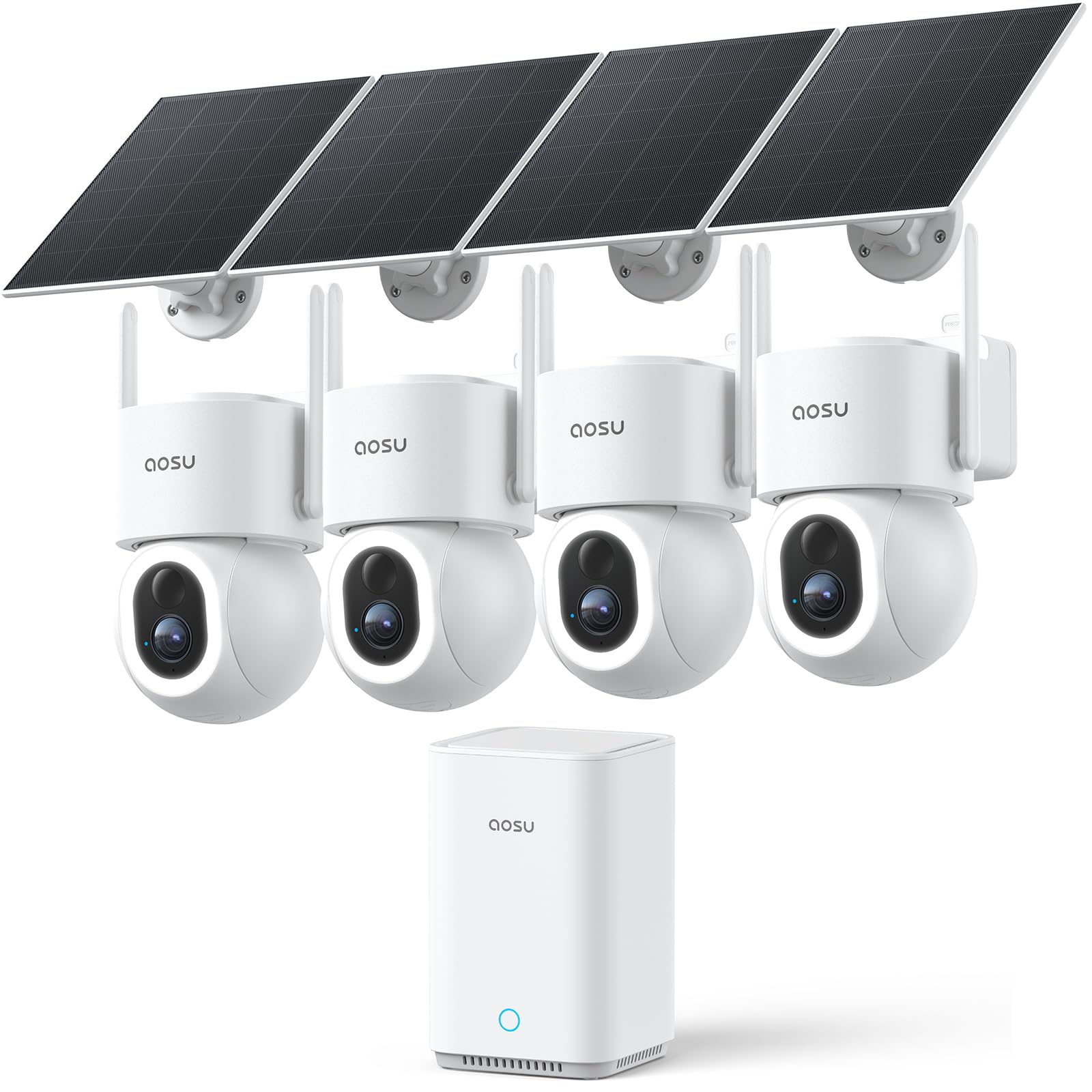
aosu D1 Max 4-Cam Kit

83 /100
Keeper Score Excellent

Key details

Power
Solar + battery
Cameras
4
Night Vision
Full color, 33 ft
Local Storage
32GB included, 1TB max
Check Price on Amazon

The aosuBase is what lifts this kit above the other four-camera sets here. Instead of four separate feeds, it stitches their footage into one continuous timeline, so a car that crosses the driveway and reappears at the side gate reads as a single sequence rather than four clips you line up by hand. Each camera pans, tilts, and follows what moves, which is how four lenses cover ground that would otherwise take six fixed ones.

Add solar panels, a storage ceiling of 1TB, and no monthly fee, and you have the kit we recommend to most people. The specification that matters day to day isn't resolution — every camera here claims 4K — but power and storage: the base ships with a 32GB card and takes up to a terabyte, enough for weeks of clips rather than days, and the panels mean the charging ladder stays in the garage. Setup is a bracket-and-screw job with the positioning stickers in the box, and the cameras join the base over Wi-Fi rather than through a cable run.

Two practical notes. The Wi-Fi link between camera and base is where kits like this fall down, so check the signal at each mounting point before you commit to it. And the first month is when charging and uptime trouble tends to surface, so run all four cameras indoors for a week before anything goes up a ladder.

Pros

  • Four 4K cameras with solar panels, no subscription
  • Base station merges all four feeds into one timeline
  • 1TB of expandable local storage in the base
  • 360° pan, tilt, and auto tracking on every camera

Cons

  • 1TB cap is far below eufy's 16TB HomeBase
  • Color night vision reaches about 33 ft
Our verdict

The 4K kit we point most people to: four solar cameras, a base that links their footage, and no monthly bill. Buy it if you want coverage without an installer.
Check Latest Price
2

Best for Local Storage

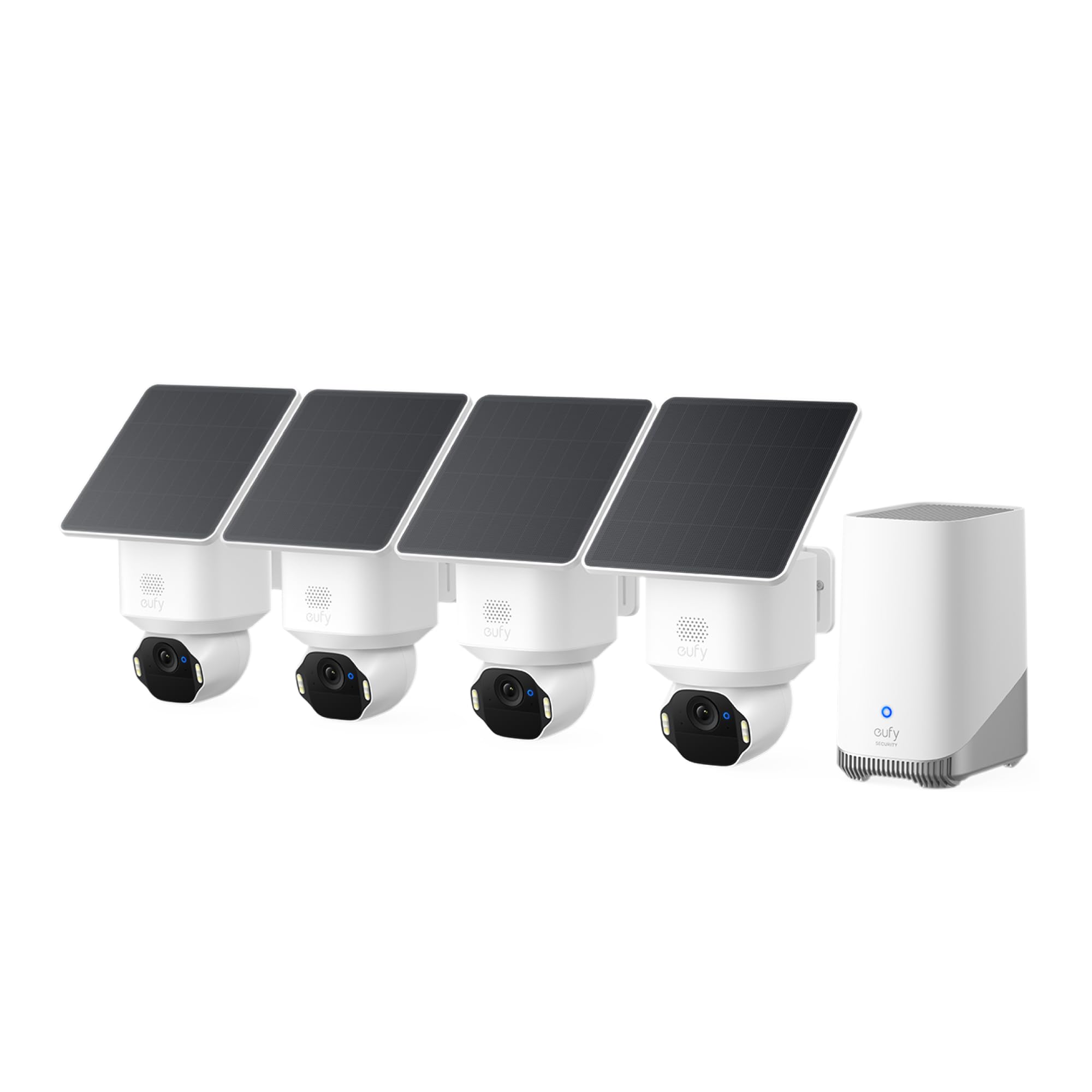
eufy SoloCam E42 4-Cam Kit

84 /100
Keeper Score Excellent

Key details

Power
Solar + battery
Cameras
4 + HomeBase 3
Field Of View
360° pan and tilt
Local Storage
Up to 16TB
Check Price on Amazon

Storage is where this kit wins. The HomeBase 3 in the box takes up to 16TB of local video, more than any other system in this guide by a wide margin, and the facial recognition that puts names to familiar faces runs on that box instead of in a cloud you rent by the month.

The four cameras are pan-and-tilt units with strobe lights and sirens, and eufy quotes plate recognition out to about 33 ft. Two hours of direct sun a day is the charging claim, which is realistic on a south-facing eave and optimistic on a north-facing one — worth checking where the panels will actually sit before you plan the mounting.

What keeps this out of the top spot is the handshake between cameras and HomeBase. Pairing is the step that stalls, and when it does you're troubleshooting a hub instead of watching your yard. Once everything is talking, the picture sits at the top of this group for detail, and the on-box AI means an alert can arrive with a name on it.

It's also the most expensive kit here, and what you're paying for is storage and recognition rather than more cameras. If those are the things you want, the premium is easy to justify; if you mainly want four sharp views of a yard, the cheaper kits in this guide do that job.

Pros

  • 16TB of local storage on the included HomeBase
  • Face recognition runs on the box, no fee
  • Pan, tilt, tracking, strobe, and siren on all four
  • Solar panel included for each camera

Cons

  • HomeBase pairing is where setup stalls
  • Most expensive kit in this set
Our verdict

Pay the premium if storage and recognition matter: 16TB on the included HomeBase and face naming with no fee, as long as the hub pairs cleanly.

Check Latest Price
3

Best Wired System for the Money

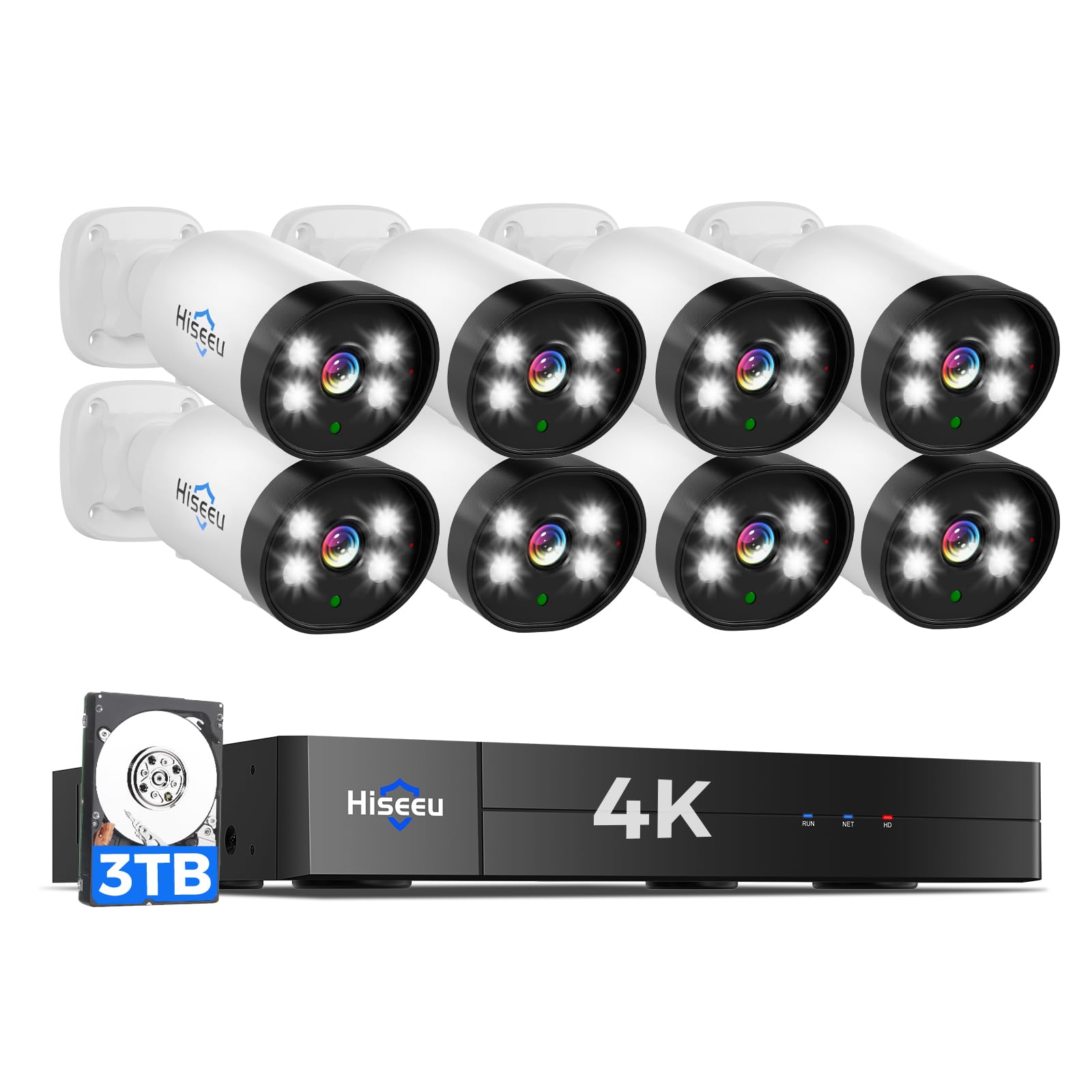
Hiseeu 8-Camera Wired System

82 /100
Keeper Score Excellent

Key details

Cameras
8
Housing
IP67
Storage
3TB HDD
Night Vision
IR, 100 ft
Check Price on Amazon

Eight cameras and a 3TB recorder for less than several four-camera kits here is the entire argument for this system. That's a house plus a garage, a shed, and a side gate without buying a second set, and the drive records continuously, overwriting the oldest footage when it fills.

The wiring is the part to understand before you order. These are analog TVI cameras on BNC cable running back to a DVR, not PoE cameras on network cable — no IP addresses to manage, but a cable from every camera to one box. The housings are rated IP67 and specified from -40°F to 140°F, infrared reaches about 100 ft, and up to four channels can run in color with the spotlight on.

Where it lands for us is simple: this is the system to buy if you can get cable to eight points once and want the most coverage per dollar in this guide. The cameras don't arrive perfect — a kit can turn up with a dead unit — so bench-test all eight before the ladder comes out, then mount the ones that matter most where you want a close look at a single path.

Pros

  • Eight 4K cameras and a 3TB recorder
  • IP67 housings rated from -40°F to 140°F
  • Infrared good for about 100 ft
  • Color night mode on up to four channels

Cons

  • 15 fps capture is the choppiest here
  • Fixed 90° lens covers less than the PTZ kits
Our verdict

Buy this if you can run cable to eight points once: nothing else here covers as much ground for the money, and the recorder keeps rolling without a subscription.

Check Latest Price
4

Best Budget Kit

Hiseeu 4-Camera Wireless Kit

80 /100
Keeper Score Excellent

Key details

Wi-Fi
2.4 and 5 GHz
Cameras
4
Storage
1TB HDD
Channels
16
Check Price on Amazon

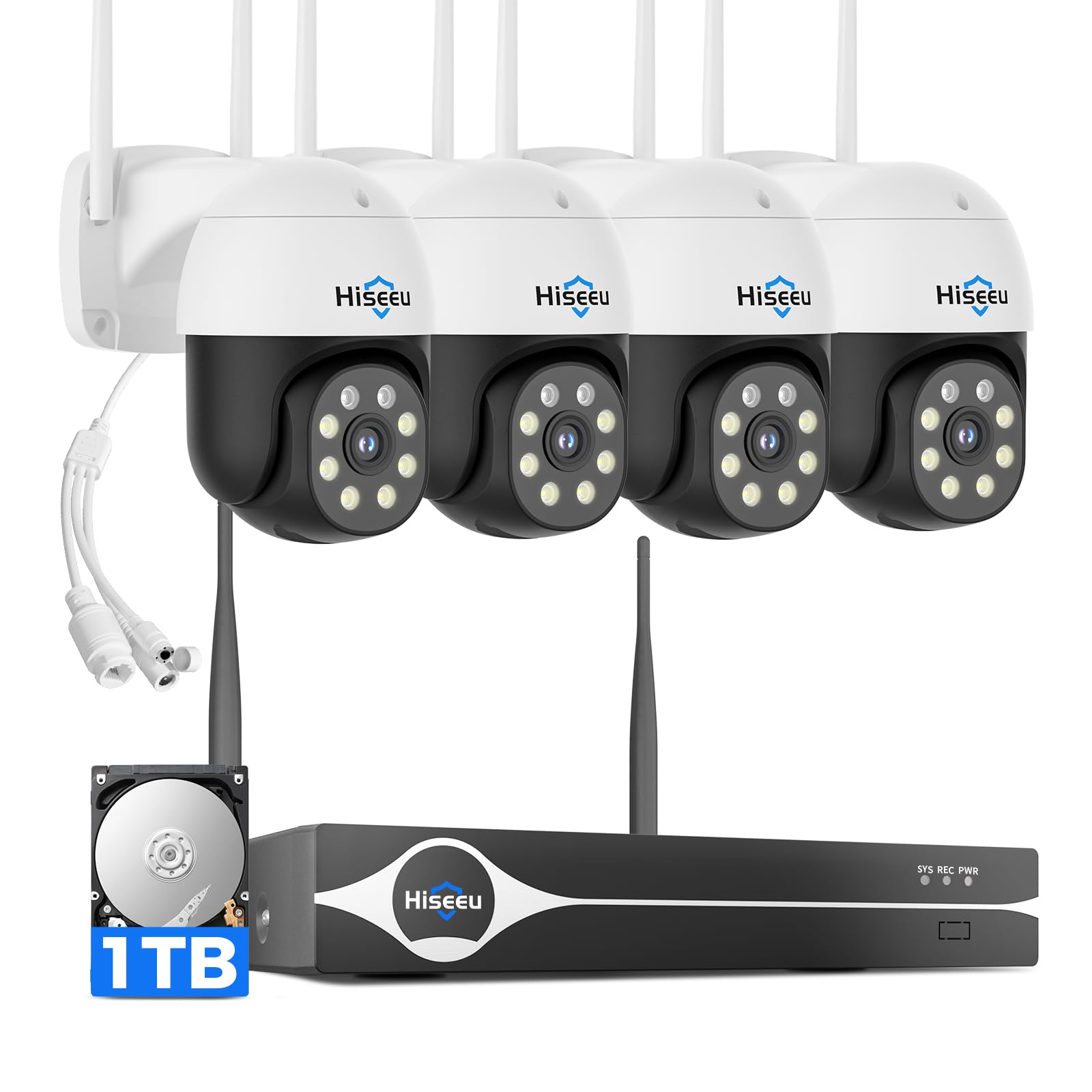
Wireless is the word to read carefully here: the four cameras talk to the recorder over Wi-Fi, but each one still needs a power adapter at the mounting point. That detail decides the house this kit suits. Outlets under the eaves, or a willingness to add them, and it's a fast install; a shed with no power and it isn't the kit you want.

Everything else about the package is the best value in this guide. Four 4K cameras, a 16-channel recorder with a 1TB drive, 355° pan with human tracking, dual-band Wi-Fi, and no subscription, for less than any other four-camera kit here. Sixteen channels is also more headroom than most people will ever use, which means adding a camera later doesn't mean replacing the box.

Recording is continuous rather than clips triggered by motion, and for a system that's wired to power anyway that's the arrangement we prefer — a full timeline with no gaps between alerts. Site the recorder near the router and keep the cameras inside a strong signal; the last twenty feet between camera and box is where Wi-Fi kits go wrong.

Pros

  • Four 4K cameras and a 16-channel recorder
  • 355° pan with human tracking
  • Dual-band 2.4 and 5GHz Wi-Fi
  • Least expensive four-camera kit here

Cons

  • Every camera needs a power outlet
  • 1TB drive holds less history than the wired system's 3TB
Our verdict

The cheapest way here to get four 4K cameras onto one recorder, as long as you have an outlet at each mounting point and strong Wi-Fi at the eaves.

Check Latest Price
5

Best Indoor Kit

Anona 4K Indoor 4-Pack

88 /100
Keeper Score Excellent

Key details

Wi-Fi
Dual-band Wi-Fi 6
Cameras
4
Storage
MicroSD to 512GB
Field Of View
355° pan, 110° tilt
Check Price on Amazon

This is the indoor set, and the one to buy if your 4K list is about watching rooms rather than a yard. Four pan-tilt domes cost less than one of the outdoor cameras here, and that buys 355° pan, 110° tilt, auto tracking, and detection that can tell a person from a pet from a crying baby.

What makes them easy to live with is Wi-Fi 6 on both bands, which keeps four streams from tripping over each other on a busy home network, plus microSD support up to 512GB if you'd rather not pay for cloud storage. Treat the 8x zoom as a way to reframe a shot rather than to read a plate — it's digital, and the detail isn't there.

The limits are physical: nothing here is weatherproof, and each camera wants an outlet within reach of its cable. Inside those limits they're the cheapest 4K look at a hallway, a nursery, a garage, or a rental you can't drill into. Pointed at a door from inside, they're also a better record of who came in than a camera at the end of the path.

Pros

  • Four 4K cameras for less than one outdoor unit
  • 355° pan, 110° tilt, and auto tracking
  • Person, pet, and crying detection
  • Dual-band Wi-Fi 6 and 512GB microSD support

Cons

  • Indoor only, with no weather sealing
  • Each camera needs a nearby outlet
Our verdict

The indoor answer: four pan-tilt 4K cameras for less than one outdoor unit, with pet and cry detection. Skip it if anything needs to live outside.

Check Latest Price
6

Best for Driveways

Ring Floodlight Cam 4K Pro

89 /100
Keeper Score Excellent

Key details

Zoom
10x enhanced zoom
Power
Wired
Video
Retinal 4K
Lighting
2,000 lumens
Check Price on Amazon

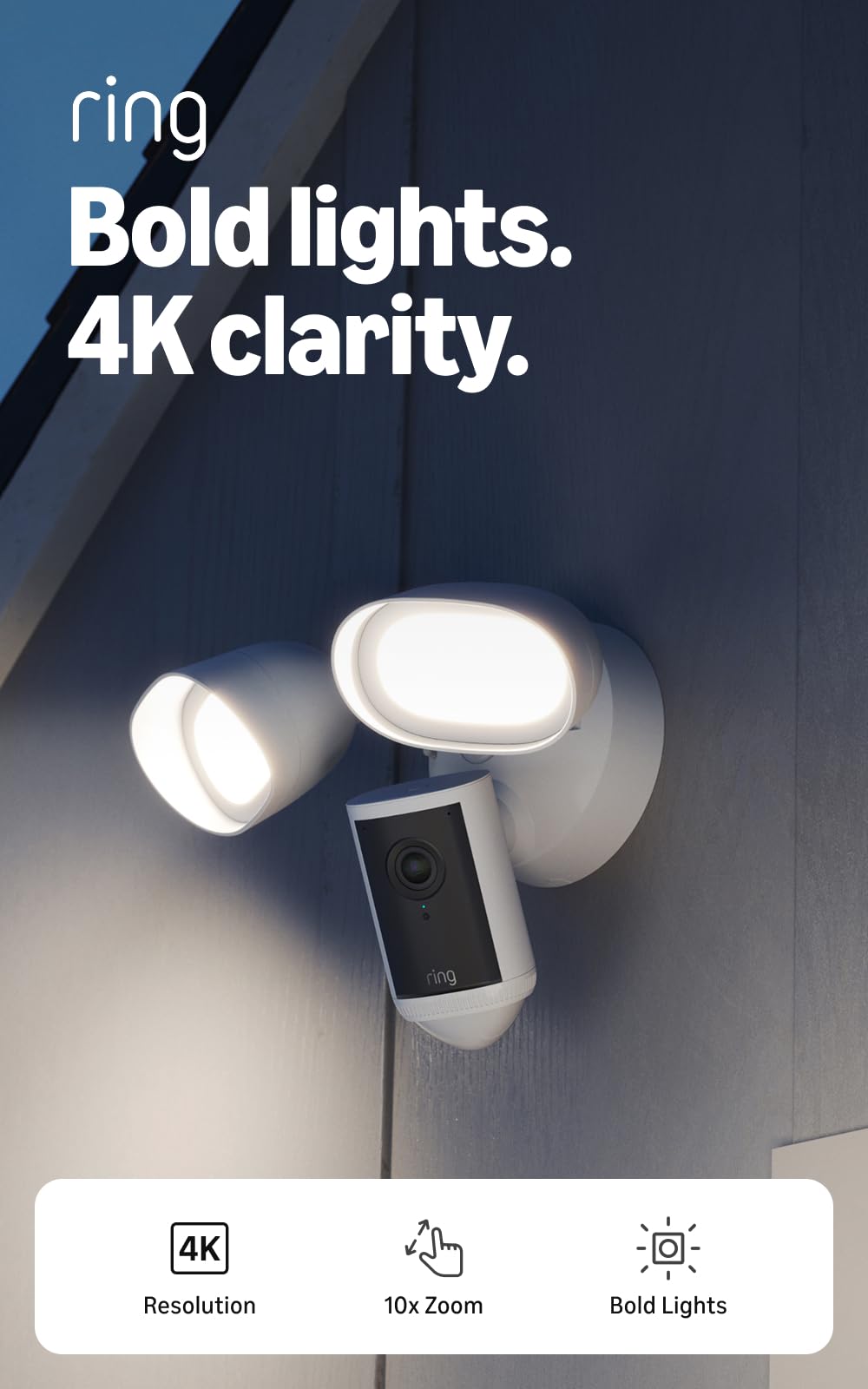
A kit covers four sides of a house; this covers one approach, with light. The 2,000-lumen floodlights do as much security work as the camera does, and the 4K sensor behind them is what most people are actually buying.

The camera is the best single unit in this guide for detail: Retinal 4K, a wide-angle view, 10x enhanced zoom, and full color in near-dark using nothing more than nearby street lighting. 3D motion detection is the other upgrade worth naming, because it pinpoints where on your property movement happened rather than telling you that something, somewhere, moved.

It's wired, so there's no battery to charge and no panel to angle at the sun, but it isn't a screw-in job either — it replaces a light fixture on an existing junction box, or needs an electrician to create one. And one camera watches one angle, so this adds to a kit rather than replacing one unless the driveway is your only concern.

Used where it's meant to be used — over a garage, a back door, a side gate — the combination of bright light and a sharp lens is hard to argue with. That light is also why its night footage beats every battery camera here. Treat it as the piece you add to a system, not the system itself.

Pros

  • 2,000-lumen floodlights with 4K video
  • Wide-angle view with 10x zoom
  • Wired, so no battery to charge
  • Color footage after dark from ambient light

Cons

  • One camera and one angle for the price of a kit
  • Motion alerts need tuning to your yard
Our verdict

For one important approach, this is the sharpest single camera here, and the floodlights make its night footage the best of the bunch. It won't replace a kit.

Check Latest Price
7

Starter Systems

BOTSLAB W510 4-Cam Kit

84 /100
Keeper Score Excellent

Key details

Power
Solar + 10,000mAh battery
Cameras
4
Housing
IP66
Local Storage
32GB base station
Check Price on Amazon

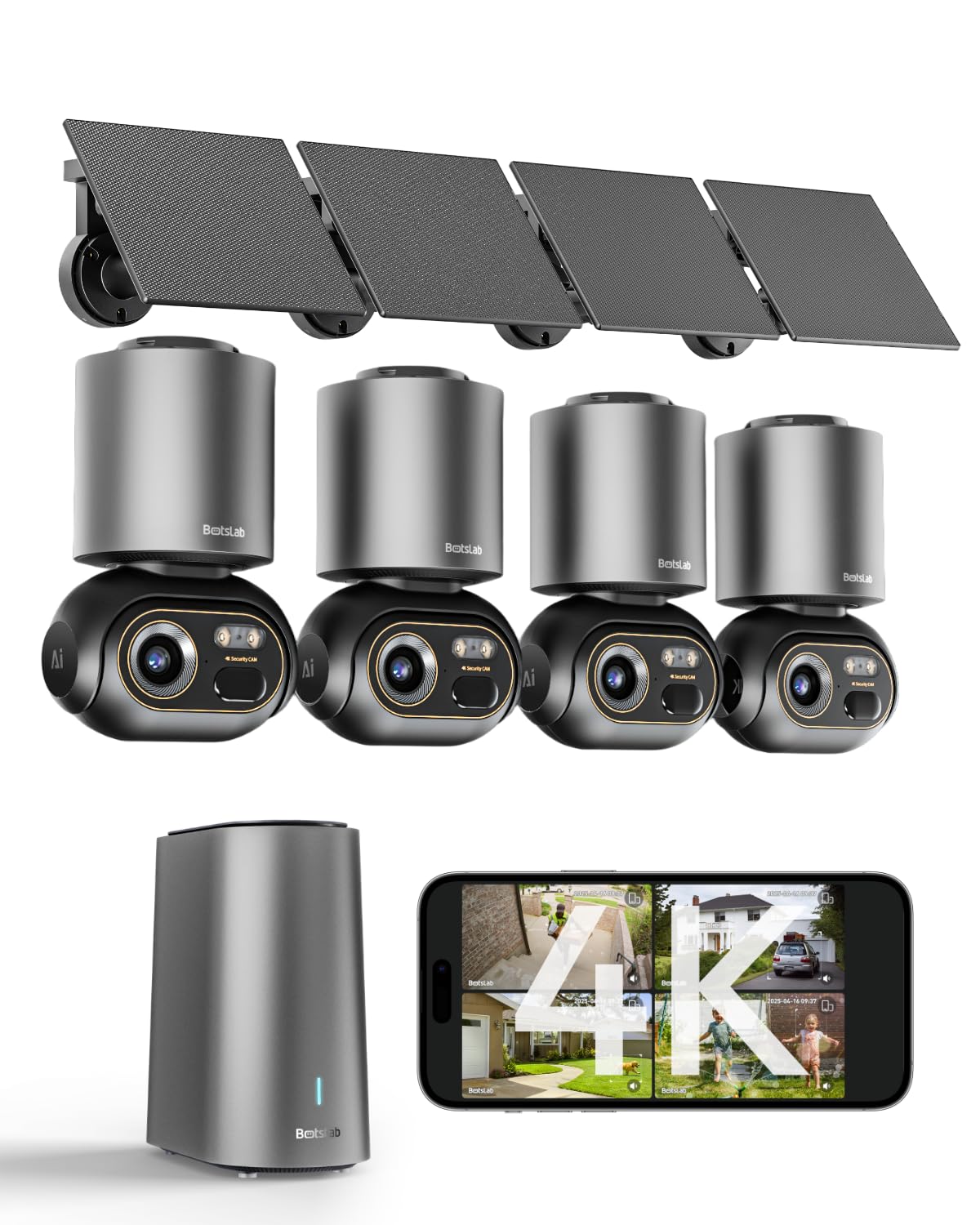
This kit lands at the same money as our top pick with 32GB of local storage instead of a terabyte, and that comparison tells you most of what you need to know. Where it wins is the hardware: four 4K pan-tilt cameras with 10,000mAh batteries, solar panels, IP66 housings, and a base station that links footage across cameras the way the aosu does.

Installation is the part these do best. Everything needed is in the box, the cameras pair to the base without much fuss, and the arrangement is the same fee-free one the other solar kits use: your footage sits on the base station instead of in a subscription cloud.

Two limits decide whether it's your kit. The radio is 2.4GHz only, so it won't use a 5GHz network, and 32GB is the ceiling — there's no bigger card to add, so history runs to days of event clips rather than weeks. On a modest property, with the base near the router and four mounting points that see sun, that's a fair trade for the battery capacity and the build.

Pros

  • Four 4K cameras with 10,000mAh batteries and solar
  • No subscription, footage stays on the base
  • IP66 housings with 360° tracking

Cons

  • 32GB storage, with no way to expand it
  • 2.4GHz Wi-Fi only
Our verdict

A well-built solar 4K kit that trades storage for battery capacity. Worth it on a small property where the base can sit near the router.

Check Latest Price
8

Wide Frontage

Arlo Ultra 3-Cam + SmartHub

78 /100
Keeper Score Very Good

Key details

Video
4K HDR
Cameras
3 + SmartHub
Night Vision
Color, 25 ft
Field Of View
180°
Check Price on Amazon

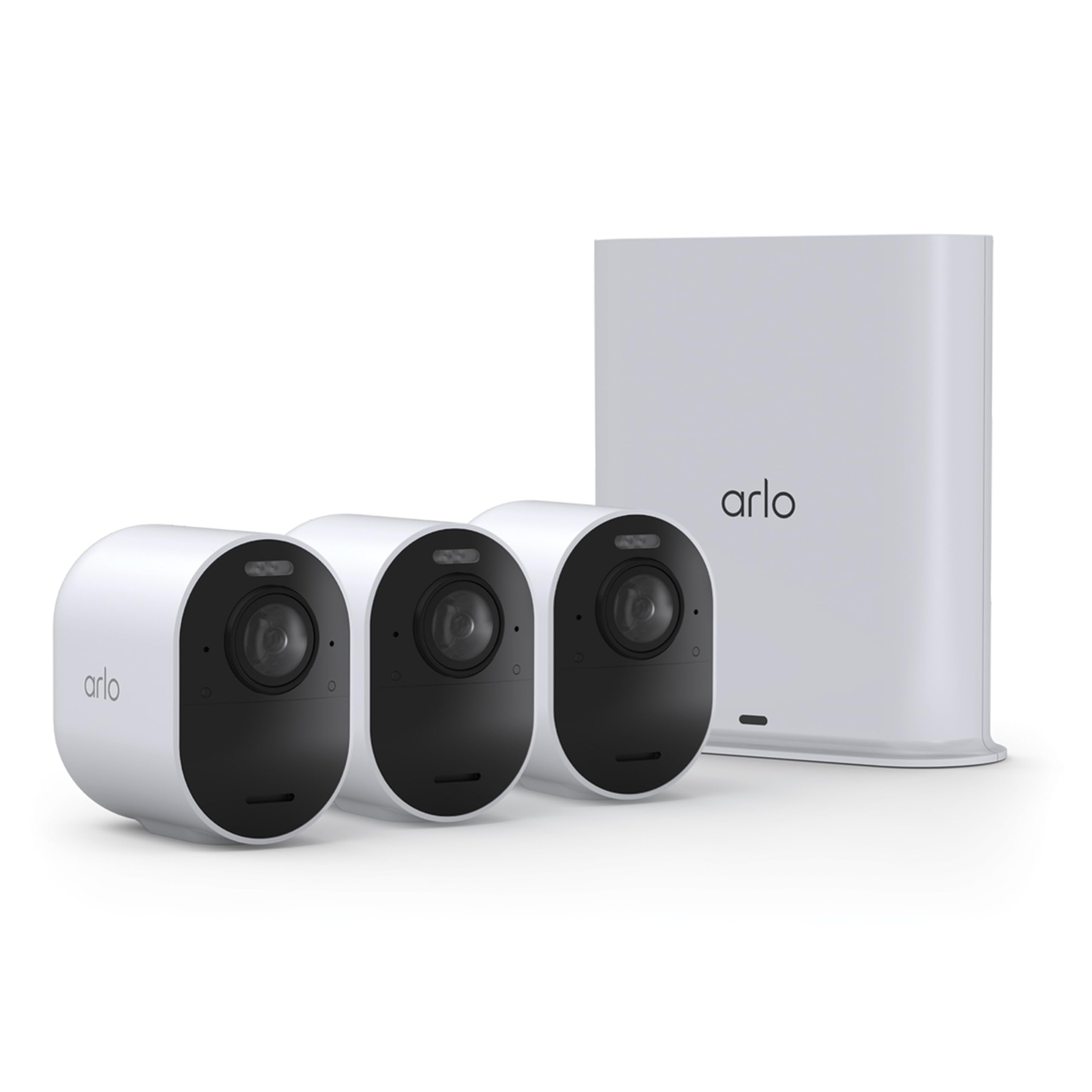
Read the plan before the specifications on this one. The hardware is 4K HDR with a 180° view, but AI detection, event captions, emergency response, and 60 days of video history sit behind an Arlo Secure subscription once the included month is up. Budget for the plan if you want the intelligence, and buy the cameras for the picture.

The picture is the widest here. A 180° lens covers a front yard or a long drive in one frame, which makes this the camera for a broad frontage with only one sensible mounting point. 4K HDR holds detail in the bright and shadowed halves of the same shot, and the built-in light helps after dusk.

The app is where the system earns its keep: modes, routines, and geofencing switch cameras on and off with your daily movements, which is more automation than the fee-free kits offer. Three cameras and a hub go up without an electrician, and the hub is best placed centrally so every lens has a short hop to it.

It's a system for a specific buyer: a wide approach, one or two mounting points, and a taste for app-driven extras. If any of those doesn't describe you, the fee-free kits in this guide are the better purchase.

Pros

  • 180° field of view, the widest here
  • 4K HDR holds detail in mixed light
  • SmartHub and three cameras in one box
  • Automation: modes, routines, geofencing

Cons

  • Night vision reaches about 25 ft
  • Three cameras need periodic recharging
Our verdict

Buy it for the 180° view and the automation, and budget for the plan: it's the pick for a wide frontage with one sensible mounting point.

Check Latest Price

What We Put Every 4K Camera Through

We started with about 40 camera kits — wired DVR bundles, solar wireless four-packs, single floodlights — and cut the list by resolution, storage (local drive versus cloud-only), power source, and what a kit really costs once you add the plan you'd probably want. Eight systems made it to the house.

Each went up in the same three spots: the front porch facing the street, the driveway, and a back gate at the far edge of the property. Setup was timed from box-open to first live feed, done solo with no support chat, and we noted whether the app demanded a credit card before showing us anything. That gate camera doubled as a connectivity test — we logged every dropout across the first month and compared 2.4GHz-only performance against dual-band.

Motion detection got tested the way it actually happens: a person walking straight at the lens, someone crossing at an angle, a package dropped at the door, a car passing, a dog let out after dinner. We counted alerts over a week, including the windy nights when branches and bugs trip everything, tracked how often a person was labeled a person, and watched whether the camera physically followed a subject across the yard. Solar panels sat in partial shade on purpose; we followed recharge cycles through overcast stretches and noted which units fell below 40 percent before the week was out.

After dark we read a package label and a plate at roughly 30 feet, noting whether the image stayed in color, flipped to black-and-white, or blew out under its own floodlight. Then we simply left them running for six months, counting reboots, missed recordings, and clips that wouldn't play, and finished by tallying what each system stored for free, what the plan added, and whether footage survived a Wi-Fi outage.

How to Choose a 4K Security Camera

Start With Power, Not Resolution

Three formats cover almost everything here: wired systems that run a cable from each camera to a recorder, Wi-Fi kits where each camera needs only a power outlet, and solar-battery cameras that need neither. The word to be careful with is wireless — in most listings it describes the video link, not the power, so a 'wireless' camera still wants an outlet or a charged battery. Walk your property and count outlets under the eaves and hours of direct sun on each wall before you fall for a spec sheet. That count, not the megapixels, decides which of these kits fits.

Storage and the Monthly Bill

Where the footage goes determines what you pay after the hardware. A recorder with a hard drive — 1TB to 4TB in the systems here — keeps everything in the house and costs nothing monthly, and a base station with 16TB does the same with far more room. Cloud plans buy off-site backup and smarter alerts, and the Arlo kit shows the trade: its AI detection, event captions, and 60-day history sit behind a subscription after the trial month. Decide which of those you actually want before you compare prices, because a modest camera plus three years of fees is not a modest camera.

Why Two 4K Cameras Don't Look Alike

Every camera here claims 4K, and they don't resolve the same detail. A 180° lens spreads eight megapixels across a much wider scene than a 90° one, so faces are smaller in the frame; a camera recording at 15 fps smears a walking figure more than one at 30 fps. Night vision matters as much as daylight. Infrared reaches about 100 ft on the wired Hiseeu, while the color night modes on the battery cameras are useful out to roughly 25 to 33 ft. Match the range to the distance at which you actually need to identify someone.

How Many Cameras, and Where

Four cameras cover a typical single-family house if you place them at the front door, the driveway, the back door, and one side. Eight suits a bigger lot, a detached garage, or a business entrance, which is where the wired Hiseeu system makes sense. Channel headroom is worth a little money: a 16-channel recorder running four cameras lets you add more later without replacing the box, and that's exactly what the budget Hiseeu kit gives you. One camera in the right place — a floodlight over the driveway — often does more than two in the wrong ones.

What Survives a Winter

Outdoor housings are rated IP65, IP66, or IP67, and the difference is how much dust and water they shrug off — but the rating covers the housing, not the cable entry or the screws. Mount under an eave where you can, seal any exposed connector, and angle solar panels at the sun rather than at the view you want. Cameras that fail outdoors usually fail at the seal, which is why the first month, while returns are still easy, is the time to watch for condensation, dropouts, and cameras that stop charging.

Frequently Asked Questions

Final Verdict

For most homes, the aosu D1 Max is the kit we recommend: four 4K cameras, solar charging, a base station that turns four feeds into one timeline, and no subscription. If you'd rather keep months of footage than weeks, the eufy SoloCam E42's HomeBase is worth the extra money.

And if you can run cable once, the Hiseeu eight-camera system buys more coverage for less than either — the right call for a large lot, a detached garage, or a small business that wants a recorder on site.