Best 360 Cameras for Real Estate of 2026

The hardest room to shoot in any house is the hall bathroom: six feet wide, one window, and a phone lens that turns it into a tunnel. I've watched people back into towel bars trying to fit it all in frame. A 360 camera fixes that in one click — stand in the middle, fire once, choose the angle later. Nothing gets cropped out, because nothing was left out.

Over the past seven months, my team and I have walked eight of these through vacant ranches, staged colonials, and a basement lit by one sad bulb. Resolution gets top billing, but what sells a room is a clean stitch line and even exposure across a bright window and a dark corner at once. That floating-camera trick from listing tours is a stitching decision, not a lens one.

The picks below cover quick turnover walkthroughs, twilight exteriors, tight floor plans, and the occasional wet shoot. None of them replaces a photographer on a flagship listing, but any one gets you a credible tour of your own.

Keeper Score summarizes customer ratings and review volume. Read it alongside the product details and trade-offs. How the score works.

1

Best Overall

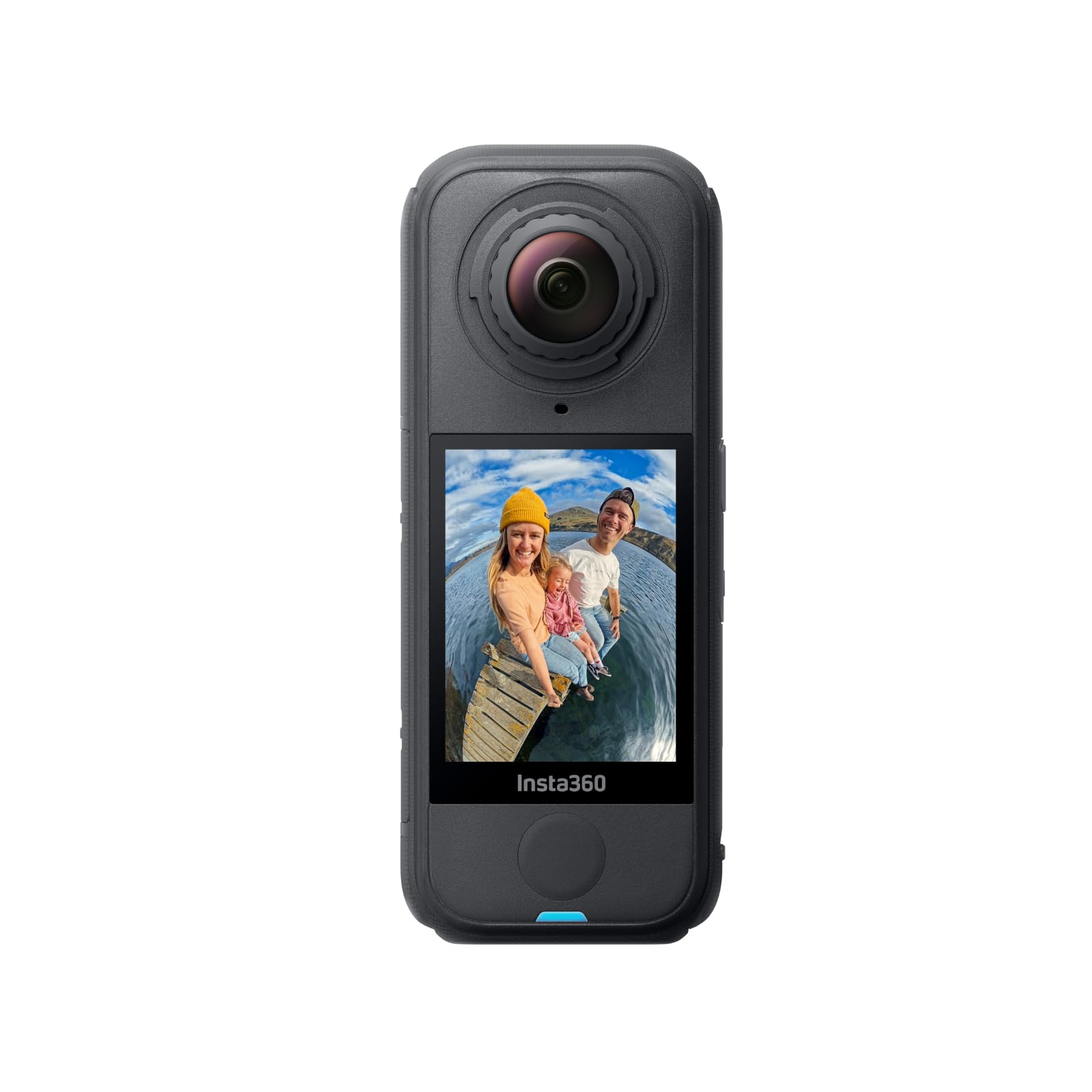
Insta360 X5

92 /100
Keeper Score Outstanding

Key details

Stills
72MP
Battery
208 min
Sensors
Dual 1/1.28"
360 Video
8K/30fps
Check Price on Amazon

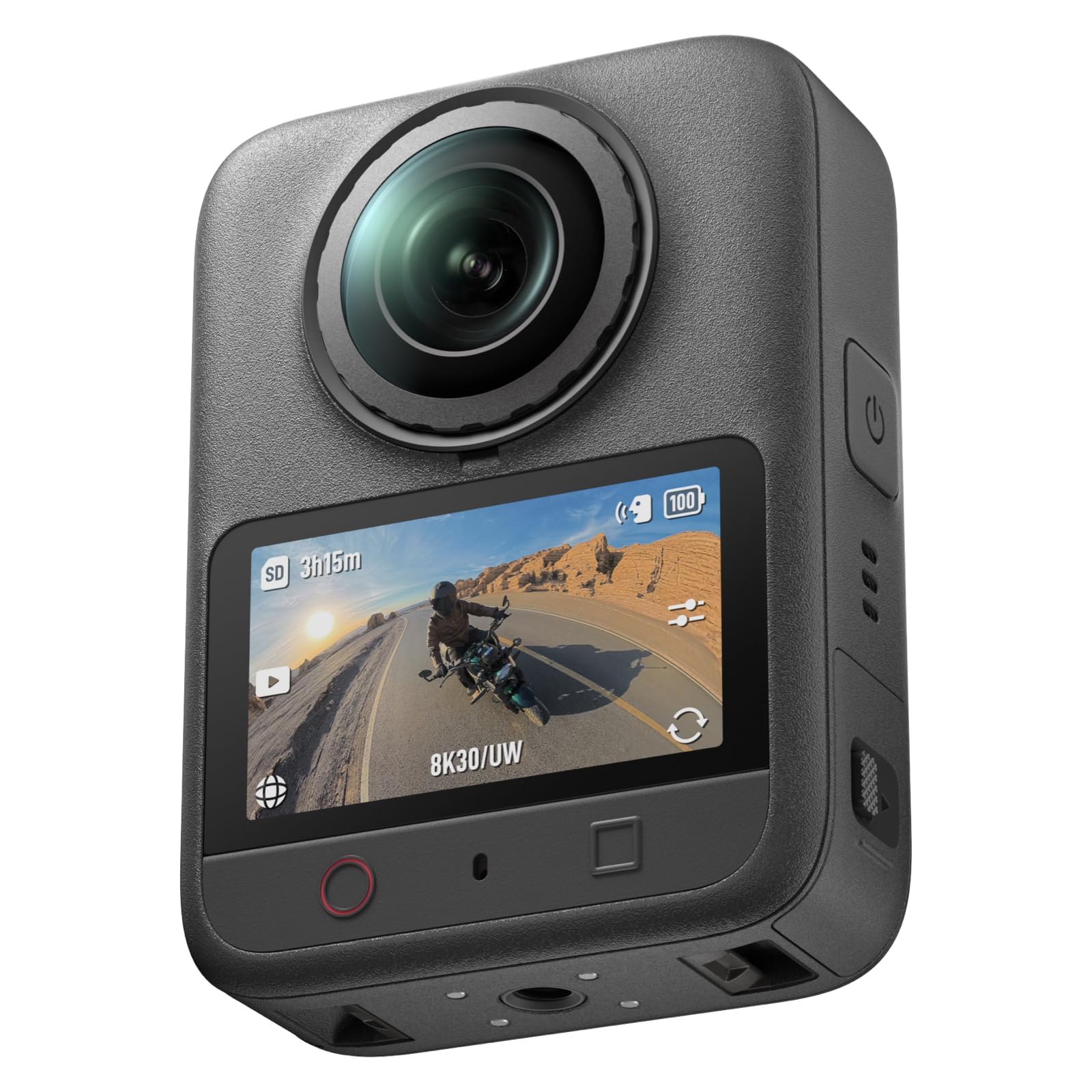
The X5 earned its place the first time we pointed it at a backlit living room. The 8K 360 footage held window detail and interior color better than the 5.7K cameras here, and the dual 1/1.28-inch sensors gave us cleaner shadows without turning the room into mush. For real-estate work, that is the difference between a walkthrough that sells the space and one that looks like a phone tour.

We also appreciated how little fuss the X5 added between rooms. It shoots 72MP stills for detail shots, carries a 208-minute battery rating, and uses replaceable lenses, so a knock in a tight hallway does not automatically end the shoot. The 2.5-inch screen is useful for checking framing, though the real control happens in the app.

The caveat is workflow: the AI-assisted editing that makes the X5 so appealing for action footage still asks you to learn keyframes and reframing if you want polished tour clips. We think that is worth the effort because the camera captures both the wide walkthrough and the stills, but buyers who want a point-and-upload pipeline should look at the simpler stills-first options here.

Pros

  • 8K 360 video with clean interior detail
  • 72MP stills cover wide and detail shots
  • 208-minute battery and replaceable lenses
  • Stabilization and horizon lock simplify walkthroughs

Cons

  • 8K files are heavy to store and edit
Our verdict

We recommend the Insta360 X5 as our top pick for real estate: 8K 360 video, 72MP stills, and the strongest low-light handling in this group.

Check Latest Price
2

Best for Stills

Ricoh Theta Z1

87 /100
Keeper Score Excellent

Key details

Stills
23MP
Battery
60 min
Sensors
Dual 1-inch
360 Video
4K
Check Price on Amazon

The Z1 is the stills specialist. Two 1-inch back-illuminated sensors and a 23MP output give interior panoramas more depth and cleaner shadows than the smaller-sensor cameras in this group, and RAW capture leaves room for exposure fixes after the shoot.

That strength showed up in the rooms real-estate photographers fight with: dark corners, mixed window light, and glossy floors. The Z1 held detail without the smeared look we saw from some 5.7K action cams, and the dual-fisheye editing route is well suited to pro-grade home tours. We did not expect the 4K video to match the 8K models, and it does not.

Battery life is the real tax. The internal battery is rated for about an hour, and it is not swappable, so a full-day listing shoot needs charging breaks or a power plan. If you shoot mostly stills and can work around that, the Z1 earns its place; for video-led walkthroughs, the 8K cameras here are easier to live with.

Pros

  • Dual 1-inch sensors produce detailed 23MP stills
  • RAW capture supports exposure fixes
  • Clean panoramas for high-end home tours

Cons

  • 4K video trails the 8K picks
Our verdict

We recommend the Ricoh Theta Z1 for stills-first property tours: its dual 1-inch sensors produce the most detailed 23MP spherical images here, but 4K video and a fixed battery keep it specialized.

Check Latest Price
3

Best for 8K HDR Video

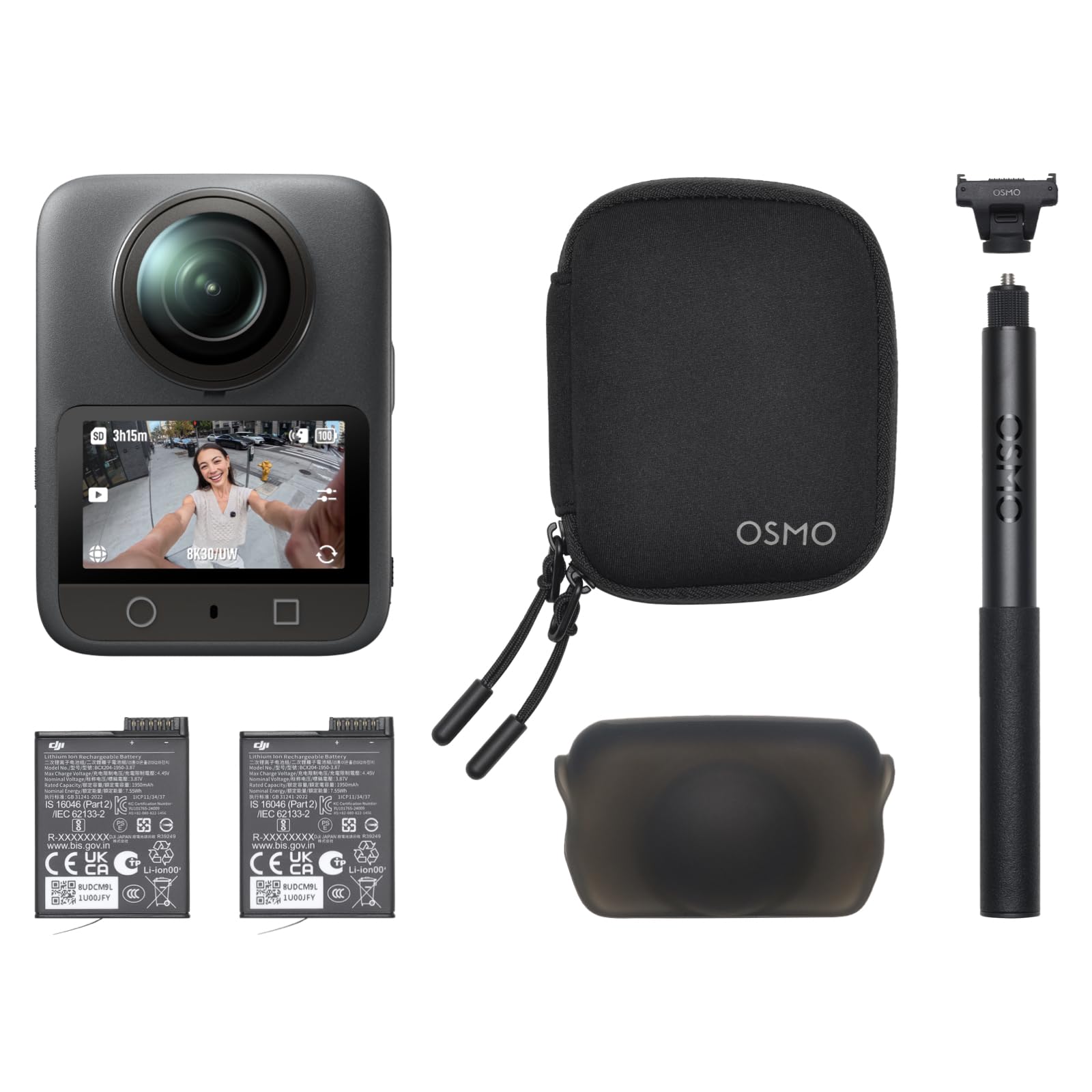
DJI Osmo 360 II

87 /100
Keeper Score Excellent

Key details

Stills
120MP
Battery
130 min
Storage
105GB built-in
360 Video
8K HDR
Check Price on Amazon

The Osmo 360 II opens with the spec that matters most for listing videos: 8K HDR capture from a 1-inch sensor. In a bright, window-heavy room, that headroom makes the footage easier to grade than the 5.7K files from the budget cameras here, and the 120MP stills give you a second deliverable without packing another camera.

The built-in 105GB storage is a genuinely useful convenience for a real-estate shoot. We liked not having to swap cards between rooms, and the 130-minute battery rating covers a typical walkthrough plus detail shots. The magnetic quick-release also makes it easy to move from tripod to handheld when a closet or stairwell needs a tighter angle.

The main trade-off is the 8K workflow: files are heavy, and the edit is steeper for newcomers than the Insta360 app. If your deliverable is mostly stills, the Theta models are simpler. If video is the product, the II's HDR headroom and built-in storage are worth the extra effort.

Pros

  • 8K HDR video from a 1-inch sensor
  • 120MP stills for detailed listing photos
  • 105GB built-in storage
  • 130-minute battery

Cons

  • Premium price
Our verdict

We recommend the DJI Osmo 360 II for premium 8K HDR walkthroughs: its 1-inch sensor, 120MP stills, and 105GB built-in storage make it the strongest 8K HDR package here.

Check Latest Price
4

Best Hybrid

Ricoh Theta X

84 /100
Keeper Score Excellent

Key details

Stills
60MP
Battery
Interchangeable
Storage
46GB internal + SD
360 Video
5.7K/30fps
Check Price on Amazon

Ricoh's Theta X is built for the photographer who wants one camera for both spherical stills and video. The 60MP stills are the headline, and the 5.7K video is enough for a walkthrough that does not need 8K. We also like the 2.25-inch touchscreen, which lets you check a shot without pulling out a phone.

The swappable battery and memory card are the practical details that sold us for full-day shoots. You can carry spare batteries and cards and keep working through a large listing, and the built-in GPS tags images for mapping and Street View-style workflows. That is a more professional setup than the sealed, fixed-battery Theta models.

Image quality is where we hesitate. The X can produce excellent 60MP stills, but bright windows can ghost and stitching can blur when the camera is not perfectly aligned. The body also feels fragile enough that we treated it gently in tight rooms. It is still a strong hybrid, and we recommend it when the shot list includes both stills and video, but not when the Z1's cleaner stills are the priority.

The 5.7K video is a step behind the 8K cameras here, so this is not the pick for a video-first tour. For a photographer who wants GPS, a touchscreen, and replaceable power in a true spherical camera, the Theta X is the more flexible Ricoh.

Pros

  • 60MP stills and 5.7K video in one body
  • Swappable battery and memory
  • Built-in GPS and touchscreen

Cons

  • Stitching can blur near bright windows
  • 5.7K video trails the 8K picks
Our verdict

We recommend the Ricoh Theta X for long listing days that need both 60MP stills and 5.7K video, with the caveat that its stitching is less consistent than the Z1's.

Check Latest Price
5

Best Lightweight

Insta360 X4 Air

91 /100
Keeper Score Outstanding

Key details

Lenses
Replaceable
Stills
29MP
Weight
5.82 oz
360 Video
8K/30fps
Check Price on Amazon

At 165g, the X4 Air is the lightest 8K 360 camera here. That matters in real estate more than it sounds: you can carry it up a ladder, hold it into a pantry, or slide it past a stair rail without the rig feeling like a production.

We liked the 8K/30fps capture and the replaceable lenses, which take some of the fear out of working around doorframes and furniture. The camera is not water resistant, so this is an indoor tool rather than a weatherproof action cam, and the 29MP stills are not in the same class as the 60MP or 120MP options. For video-led listings, neither limitation hurt.

The app and reframing workflow are typical Insta360: powerful, but not instant. Battery life is mixed, and the smaller battery means a full day needs spares. If you want the smallest 8K camera for walkthroughs and do not need the X5's low-light edge, the X4 Air is the easier one to keep in the bag.

Pros

  • 165g body is easy to place in tight rooms
  • 8K 360 video with replaceable lenses
  • Packs small for travel between listings

Cons

  • Not water resistant
  • 29MP stills trail the stills-first picks
Our verdict

We recommend the Insta360 X4 Air for tight rooms and travel days: it puts 8K 360 video in a 165g body with replaceable lenses, though its 29MP stills trail the stills-first picks.

Check Latest Price
6

Best Value 8K

DJI Osmo 360

86 /100
Keeper Score Excellent

Key details

Stills
120MP
Weight
6.46 oz
Sensors
1-inch
360 Video
8K/30fps
Check Price on Amazon

The Osmo 360 is the older, less expensive route into DJI's 1-inch 360 system. It still shoots 8K 360 video and 120MP stills, and the Essential Combo includes the invisible selfie stick that makes third-person walkthrough angles possible.

For a budget-conscious videographer, that is a lot of capability. We liked the magnetic quick-release and the 1-inch sensor's low-light headroom, and the 183g body is easy to mount on a tripod. The stills are detailed enough for listing photos, though the 120MP figure is more of a marketing headline than a reason to choose it over the Theta Z1 for stills.

Reliability is the caveat. Some units lock up at random, and the edit can be frustrating when a long walkthrough exceeds what the desktop app handles smoothly. Neither issue is guaranteed, but they are the kind of thing to test on a short shoot before a client listing.

The original also costs less than the II, which makes it the better buy if you want DJI's 8K look without the premium. We prefer the X5 and the II for paid work because their workflows are more settled; the original is the value pick for personal projects and shorter listings.

Pros

  • 1-inch sensor with 8K video
  • 120MP stills
  • Invisible selfie stick included
  • Lower cost than the II

Cons

  • Can lock up at random
  • Long clips strain the desktop edit
Our verdict

We recommend the original DJI Osmo 360 as the value route to 1-inch 8K capture and 120MP stills, with the caveat that occasional lockups make it a second choice for client work.

Check Latest Price
7

Best Budget

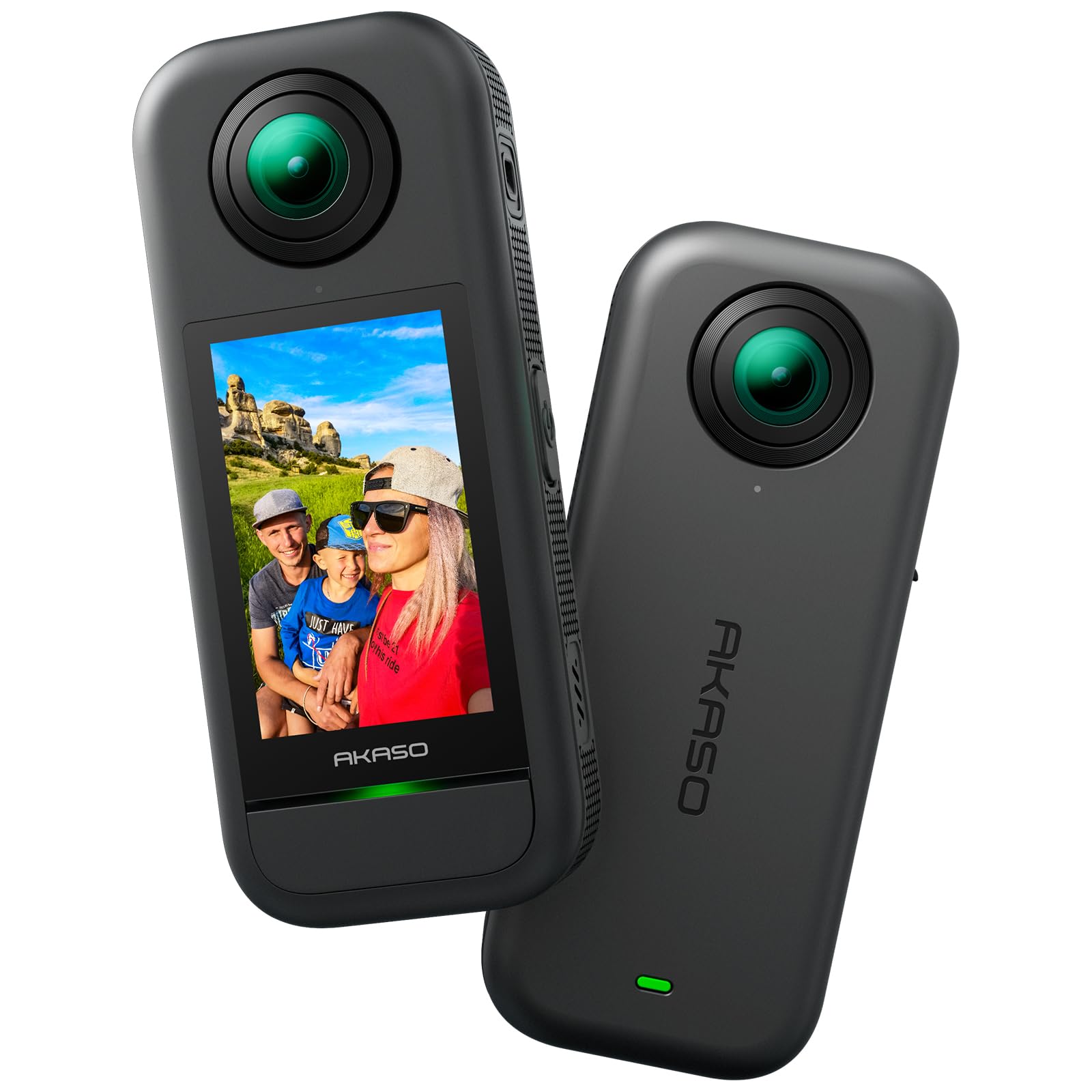
AKASO 360

86 /100
Keeper Score Excellent

Key details

Stills
72MP
Battery
2 hours
Sensors
Dual 1/2-inch 48MP
360 Video
5.7K
Check Price on Amazon

The AKASO 360 is the budget door into spherical capture. It shoots 5.7K 360 video and 72MP stills from dual 1/2-inch sensors, and the standard combo includes two batteries. For a small rental listing or a first virtual tour, that is enough resolution to show a room without spending like a production house.

We liked how quickly it gets out of the way. The touchscreen and app are straightforward for beginners, and the included batteries help offset the short per-battery runtime. In daylight, the footage is clear enough for a listing teaser; in dim rooms, detail softens and noise creeps in, so it rewards a tripod and as much light as you can bring.

The limits are real. Battery life is short enough that a full listing needs both batteries plus a charging plan, and the app connection can be fussy. We recommend it for budget tours and simple stills, not for high-end listings where low-light quality and a smooth workflow decide the job.

Pros

  • 5.7K video and 72MP stills
  • Two batteries included
  • Simple app and touchscreen
  • Budget-friendly entry point

Cons

  • Low light softens detail
  • App connection can be fussy
Our verdict

We recommend the AKASO 360 for simple, budget-minded listing tours: 5.7K video and 72MP stills cover the basics, as long as you shoot in good light and carry the spare battery.

Check Latest Price
8

Built-In Storage

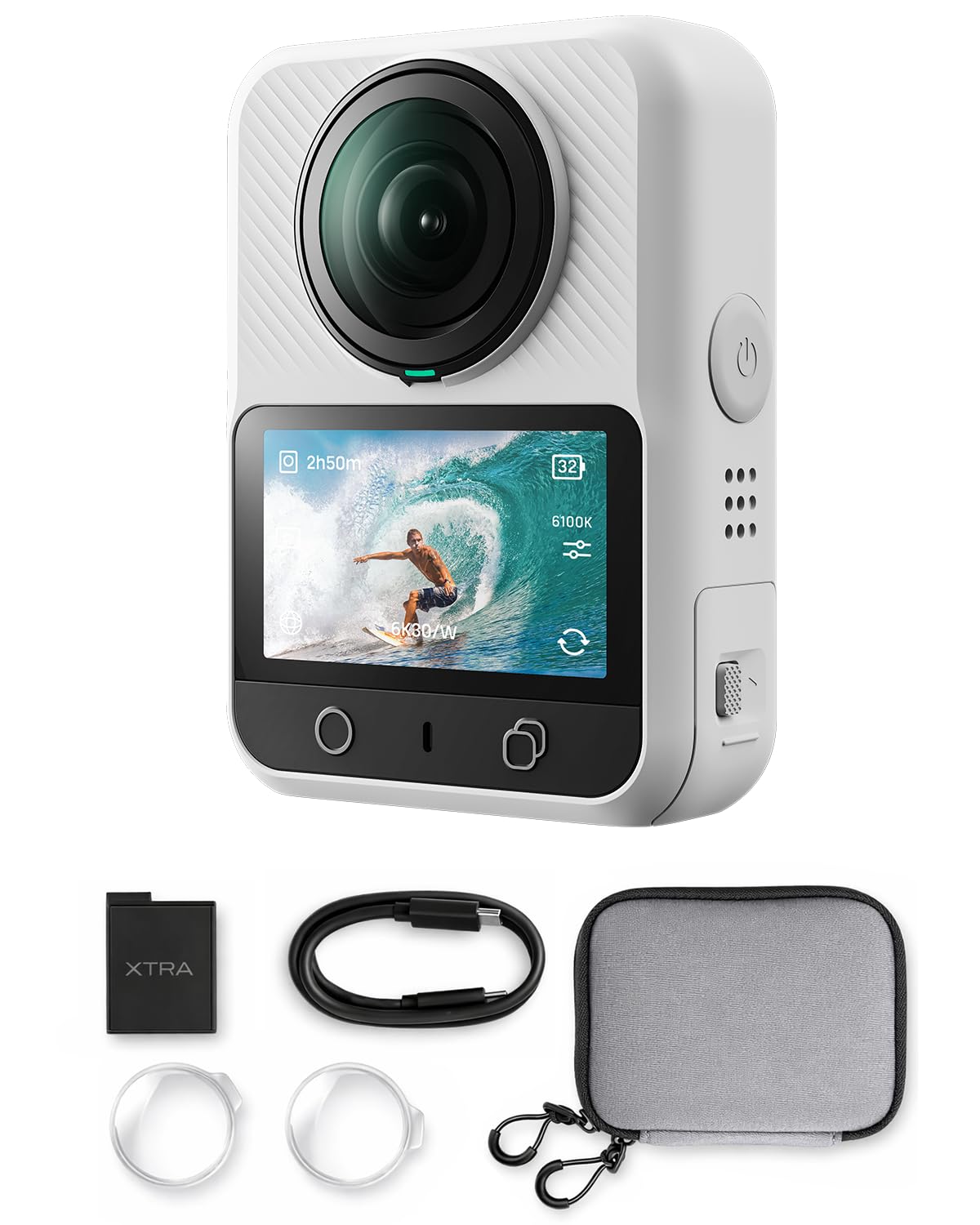
Xtra 360

84 /100
Keeper Score Excellent

Key details

Sensor
1-inch equivalent
Stills
100MP
Storage
105GB built-in
360 Video
8K
Check Price on Amazon

The Xtra 360's pitch is simple: 8K 360 video, 100MP panoramas, and 105GB of built-in storage, so you do not need to carry a card. For a real-estate shoot where you move between rooms quickly, that last point is more useful than it sounds.

We liked the idea of not swapping cards mid-shoot, and the 1-inch sensor equivalent gives it more low-light headroom than the budget 5.7K cameras here. The footage we saw was clear in good light, and the camera is small enough to tuck into a bag with a tripod.

The concern is reliability. The camera can fail to power back on, and the battery can die after a short service life, which is not what you want on a paid listing. The app and editing workflow also need more polish. It is a promising specification sheet, but not the camera we trust for a client-facing tour.

We treat the Xtra as a backup or experiment: the built-in storage and high-resolution stills are genuinely useful, but the X5, Osmo 360 II, and Theta models have more consistent workflows. For a first real-estate camera, put the money toward one of those.

Pros

  • 105GB built-in storage
  • 8K video and 100MP stills
  • Small body with 1-inch-equivalent sensor

Cons

  • Can fail to power back on
  • Battery can fail early
Our verdict

We recommend the Xtra 360 for experimental or backup use: 8K video, 100MP stills, and 105GB built-in storage are useful, but its reliability is not yet proven enough for client-facing tours.

Check Latest Price

How We Tested the Best 360 Cameras for Real Estate

We started with roughly 30 cameras marketed as 360 shooters and filtered hard. Each had to capture a full sphere in one press, produce a still big enough to crop for a listing photo, and let us reframe on a phone without opening a laptop. That cut the field to eight, which we ran for seven months.

Each one shot the same two properties — a 900-square-foot vacant bungalow and a staged three-bedroom — on the same afternoon and again after dusk. We walked an identical twenty-step route through the hall bathroom, a closet, and a basement stairwell, then reframed the same clip in each app and timed the export. We noted where the stitch seam landed near a doorway and whether a bright window blew out while the corner behind the sofa went black.

Battery life we measured by recording from full charge until the camera shut down, then timing a spare swap. App connectivity got tested where it actually fails — the back corner of a basement, the far end of a yard — and we logged every dropped preview mid-walk. Cameras claiming weather sealing came outside in a drizzle and were wiped down before packing. For value, we counted what shipped in the box, since a body that needs a stick and a second battery to finish a tour isn't the bargain its price suggests.

Over the months we also just carried them: pocketed between showings, tossed in a glovebox, handed to a client to check a closet light. Two overheated on a sunny driveway, and one app forgot a paired phone nearly every week.

How to Choose a 360 Camera for Real Estate

Start with the deliverable: stills or video

If your tour is photo-led, still resolution and sensor size matter more than video specs. The Ricoh Theta Z1's dual 1-inch sensors and 23MP stills produce the cleanest panoramas here, while the Theta X and Insta360 X5 push to 60MP and 72MP for more cropping room. For video-led walkthroughs, 5.7K is enough for a simple listing clip; 8K is the better choice when you want to reframe a flat 4K video out of the sphere. We start by asking what the client will actually publish.

Low light and window contrast

Interiors are a dynamic-range test: bright windows on one side, dark corners on the other. A 1-inch sensor gives you more room to hold both, which is why the Theta Z1, Osmo 360 II, and X5 handle dim rooms more gracefully than the 1/2-inch budget cameras. RAW or HDR capture helps, but it cannot create detail that was never recorded. If you shoot twilight exteriors or dark rentals, prioritize sensor size and a clean HDR workflow; for bright daytime listings, a 5.7K budget camera can be enough.

Workflow matters as much as the lens

A real-estate camera has to move from tripod to client-ready tour without eating the day. Check the app for remote shutter, exposure control, and transfer, then check the desktop editor for stitching and reframing. The Insta360 and DJI apps are powerful but have a learning curve; Ricoh's stills-first route is simpler for panoramas. We test the export path before a shoot because a camera that adds an hour of editing is not saving time, even if its footage looks better.

Plan power and storage around the listing

Battery ratings here range from about an hour to more than three, and fixed batteries are the bigger constraint. The Theta Z1's cell is not swappable, while the Theta X and X5 accept spares. For a full-day listing, carry at least one spare battery and enough cards for 8K files. If you choose a built-in-storage model like the Osmo 360 II, plan the offload before the next property.

Mounting and lens protection in tight rooms

Check the mount before you buy: DJI lists a 1/4-inch thread on the Osmo 360, while some action-style bodies rely on a quick-release adapter. In tight rooms, a small tripod and a remote shutter are more useful than a long selfie stick. Replaceable lenses are worth paying for if you work around doorframes and furniture; the X5 and X4 Air both let you swap damaged lenses instead of replacing the camera.

Frequently Asked Questions

Final Verdict

Start with the Insta360 X5 for most real-estate work. It is the best default here because it handles both 8K video and 72MP stills, keeps interior shadows cleaner, and has enough battery for a full walkthrough. The Ricoh Theta Z1 is the better buy if your deliverable is mostly high-end stills, and the DJI Osmo 360 II is the pick for premium 8K HDR video. Choose the X5 unless your workflow clearly points to one of those specialties.