Best Sony Cameras of 2026

The sensor inside a camera decides almost everything else about it: how it copes with a dim room, how much of your bag it eats, and how far your budget has to stretch. Sony's lineup splits three ways — full-frame, APS-C, and a pocketable compact — so the format comes before the model. Get that right and the rest of the shopping gets much shorter.

I've shot with eight of them over the past seven months, and the spread showed up less in image quality than in stamina. Every camera here produces clean files and grabs focus fast; what separated them was battery life on a long day, whether the body ran warm after a run of 4K clips, and how much of the menu I could work without the manual. Megapixels sell cameras, but autofocus that holds in bad light decides whether you come home with the shot.

The picks below cover full-frame bodies, travel-friendly APS-C kits, and a compact that disappears into a coat pocket, each earning its spot on a different job. Whatever you shoot, one of them fits.

Keeper Score summarizes customer ratings and review volume. Read it alongside the product details and trade-offs. How the score works.

1

Best Overall

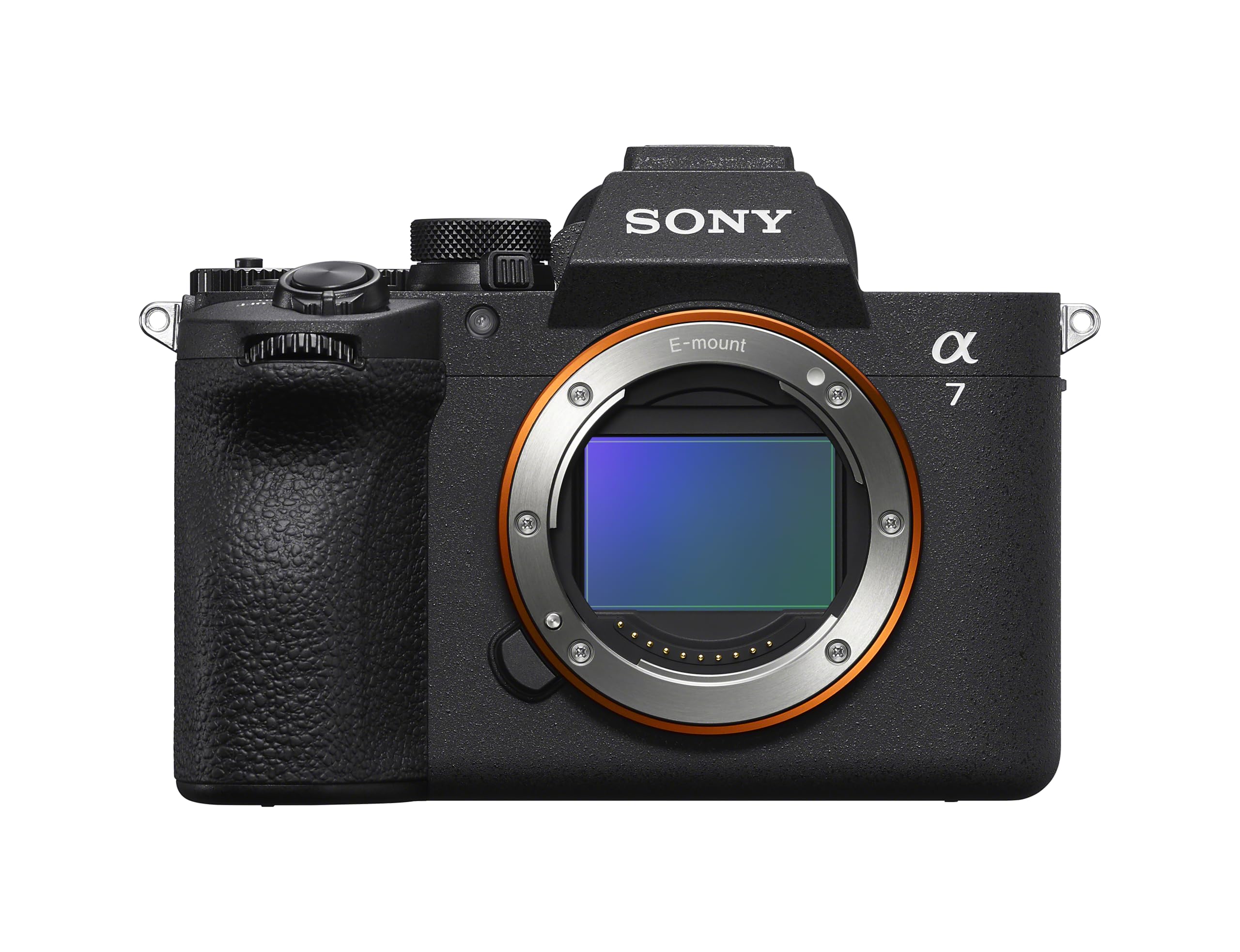
Sony Alpha a7 IV

92 /100
Keeper Score Outstanding

Key details

Video
4K 60p 10-bit
Sensor
33MP full-frame
Weight
2.18 lb
Autofocus
759-point hybrid AF
Check Price on Amazon

The a7 IV is the Sony we point most people toward because it covers the most ground without a specialist's price. A 33MP full-frame sensor gives you detailed files with room to crop, the 759-point autofocus system tracks eyes and faces reliably, and 4K60 10-bit video with full pixel readout is enough for interviews, events, and travel. We especially like the 7K oversampling in 4K30: it gives footage a clean, detailed look without asking you to carry a second camera.

The body is built for long lenses. The deep grip balances a zoom, the dual card slots let you back up stills or separate photos and video, and the tilting screen is practical for low-angle stills. The 0.99 kg body is heavier than the APS-C picks, but that weight comes with a full-frame sensor and a bigger grip; for handheld video, the 5-axis stabilization helps.

What keeps the a7 IV at the top is the lack of obvious compromise for a normal hybrid shoot: 33MP for stills, 10-bit 4K for video, dual slots for backup, and an autofocus system that does not need constant babysitting. The a7 V is the step up for 30 fps and AI subject recognition; for most buyers, the a7 IV is the one that leaves the most budget for lenses.

Pros

  • 33MP full-frame files with cropping room
  • 4K60 10-bit video with full pixel readout
  • 759-point autofocus with Eye AF
  • Dual card slots and a deep grip

Cons

  • Video tops out at 4K60
Our verdict

Our default full-frame pick, the a7 IV pairs 33MP stills with 4K60 video and dependable Eye AF, and it asks less than the a7 V.
Check Latest Price
2

Best for Speed and AI Autofocus

Sony Alpha a7 V

89 /100
Keeper Score Excellent

Key details

Burst
30 fps
Sensor
33MP full-frame stacked
Autofocus
AI subject recognition
Stabilization
7.5-stop IBIS
Check Price on Amazon

The a7 V pairs a partially stacked 33MP full-frame sensor with the BIONZ XR2 processor, and the result is a camera built around speed: 30 fps with autofocus and auto exposure tracking, AI recognition for people, animals, birds, vehicles, and insects, and a 7.5-stop stabilization rating at the center. The sensor readout is about 4.5 times faster than the a7 IV's, which matters for rolling shutter and for tracking fast subjects.

We think that speed is worth the premium only if you will use it. For a wedding or event shooter, the a7 V's subject recognition and 30 fps bursts make it easier to catch the decisive frame; for a landscape or portrait photographer, the a7 IV does the same core job for less. The 33MP files are not a resolution jump over the a7 IV, so the upgrade is about hit rate and response, not detail.

The handling is familiar Sony full-frame: a 3.2-inch articulating screen, 759 autofocus points, dual card slots, and a 1.4-pound body. We appreciate that Sony kept the body compact rather than turning it into a speed brick, and the 7.5-stop stabilization makes handheld shots easier with non-stabilized lenses. The a7 V is the speed specialist, and it earns its place when the shot depends on timing.

Pros

  • 30 fps with AF/AE tracking
  • AI recognition for people, animals, and vehicles
  • 7.5-stop IBIS for handheld work

Cons

  • 30 fps bursts fill cards quickly
Our verdict

We choose the a7 V when 30 fps bursts and AI subject recognition matter more than saving money; the extra speed is real, but it is not our default for everyone.

Check Latest Price
3

Best for High-Resolution Stills

Sony Alpha a7R V

87 /100
Keeper Score Excellent

Key details

Video
8K 24p/25p and 4K 60p (50p)
Sensor
61MP full-frame
Weight
16 oz
Autofocus
693-point AI AF
Check Price on Amazon

The 61MP full-frame sensor is the point of the a7R V. It gives you room to crop a vertical portrait out of a horizontal frame or pull a distant subject closer without changing lenses, and the files hold detail in highlights and shadows that the lower-resolution bodies cannot match. For studio, landscape, and architecture work, that resolution is not a luxury; it is the reason to choose this body.

The AI processing unit is the other half of the story. Real-time Recognition AF tracks people, animals, birds, and vehicles with a precision that feels more deliberate than the a7 IV's already strong system. We also like that Sony kept the 8K 24p and 4K60 video modes; this is a high-resolution stills camera that can shoot professional video without a second body.

The tilting screen, 693-point AF, dual card slots, and 16-ounce body make it a usable field camera, not just a studio instrument. It is a camera that rewards a deliberate workflow: compose, check focus, and give the files room to breathe. That makes it feel more like a medium-format companion than a speed camera.

We think the a7R V is the easiest of these cameras to justify for a specialist and the hardest to justify for a generalist. If you mostly share images online, the a7 IV is the more sensible spend; if you print large or crop hard, the a7R V earns its place.

Pros

  • 61MP full-frame files with deep cropping room
  • AI subject tracking for people, animals, and vehicles
  • 8K 24p and 4K60 video
  • Tilting screen and dual card slots

Cons

  • 10 fps burst is modest for action
  • Large 61MP files need fast cards and storage
Our verdict

For cropping, printing, or detailed studio work, we take the a7R V's 61MP files and AI tracking over the generalists; it is a specialist's tool.

Check Latest Price
4

Best Value Full-Frame

Sony Alpha a7 III

93 /100
Keeper Score Outstanding

Key details

Video
4K UHD
Sensor
24.2MP full-frame
Battery
610 shots (viewfinder)
Autofocus
693-point hybrid AF
Check Price on Amazon

The a7 III is the elder statesman of this group, and that is exactly why it still earns a place. A 24.2MP full-frame sensor, 693-point hybrid AF, 10 fps shooting, and dual card slots cover the fundamentals, and the current price makes it the least expensive way into full-frame Sony here. We recommend it to someone who wants full-frame depth of field and low-light headroom without paying for the latest AI processing.

Its autofocus is still quick and accurate for eye detection on people and pets, and the 24MP files are forgiving to edit. The body is heavier than the APS-C options, but the grip and controls are built for long lenses. We like the dual slots for backup, and the 610-shot viewfinder rating is a useful baseline for a day of stills.

The a7 III is not the camera for the most tenacious subject tracking. The a7 IV adds newer autofocus and video tools, and the a6700 adds AI recognition in a smaller body. If you shoot mostly stills, travel, or family events and want full-frame character, the a7 III is the value pick; if video frame rates are central, spend elsewhere.

Pros

  • 24.2MP full-frame files with strong low-light ability
  • 693-point hybrid AF with Eye AF
  • Dual card slots and a 610-shot battery rating

Cons

  • Battery life can fall short
Our verdict

We see the a7 III as the value full-frame pick for stills-first buyers who want low-light depth and dual card slots without newer video features.

Check Latest Price
5

Best APS-C Hybrid

Sony Alpha a6700

89 /100
Keeper Score Excellent

Key details

Video
4K 120p
Sensor
26MP APS-C
Weight
14.5 oz
Autofocus
759-point AI AF
Check Price on Amazon

The a6700 is the small body that does the most video work in this set. It combines a 26MP APS-C sensor with 4K60 6K-oversampled recording, 4K120 slow motion, AI subject recognition, and 5-axis stabilization. For a creator who wants one compact camera for talking-head video, travel, and stills, that is a compelling mix.

We think the a6700 is the right choice when you want full-frame-style autofocus without full-frame weight. The 759-point system locks onto eyes and faces quickly, and the AI processor recognizes animals and birds as well. The 4K120 mode is a real advantage over the a7 IV and a7 III for slow motion, and the articulating screen makes self-recording easy.

The trade-off is the smaller sensor. You get less low-light latitude than the full-frame picks, and the files show it sooner when you push ISO. If you shoot available-light events or need the cleanest high-ISO files, the a7 IV is the better tool.

Pros

  • 26MP APS-C sensor with 4K60 6K oversampling
  • 4K120 slow motion
  • AI subject recognition and 759-point AF
  • Compact body with 5-axis stabilization

Cons

  • Less cropping latitude than full-frame picks
Our verdict

We point creators to the a6700 when they want 4K120, AI autofocus, and stabilization without full-frame weight.

Check Latest Price
6

Best Budget Mirrorless Kit

Sony Alpha a6400

91 /100
Keeper Score Outstanding

Key details

Burst
11 fps
Video
4K 2160p
Weight
1.1 lb
Autofocus
425 phase-detection points
Check Price on Amazon

The a6400 is the budget kit that still feels like a serious camera. It pairs an APS-C body with a 16-50mm power zoom, 425 phase-detection points, 11 fps shooting, and 4K video. For a first-time buyer, that is a lot of camera for the money, and the E-mount leaves room to add lenses later.

The autofocus is the reason to choose it over a cheaper DSLR: Real-time Eye AF and subject tracking make portraits and self-recorded video noticeably easier. The tilting screen is fine for stills and low-angle shots, though it does not flip fully to the side for vlogging. The 16-50mm lens is compact and useful for travel, and it keeps the kit easy to carry.

We think the a6400 is best treated as a stills-first starter camera with good video rather than a dedicated vlogger. The a6700 is the upgrade for 4K120 and AI autofocus; the a6400 is the one to buy when the budget is tight and the lens mount matters more than the latest processing.

Pros

  • 16-50mm kit lens keeps the entry cost low
  • 425-point phase-detect AF with Eye AF
  • 11 fps and 4K video

Cons

  • No in-body stabilization
Our verdict

We like the a6400 as a budget starter kit: it gives stills-first buyers Eye AF, 4K video, and an interchangeable lens mount without full-frame cost.

Check Latest Price
7

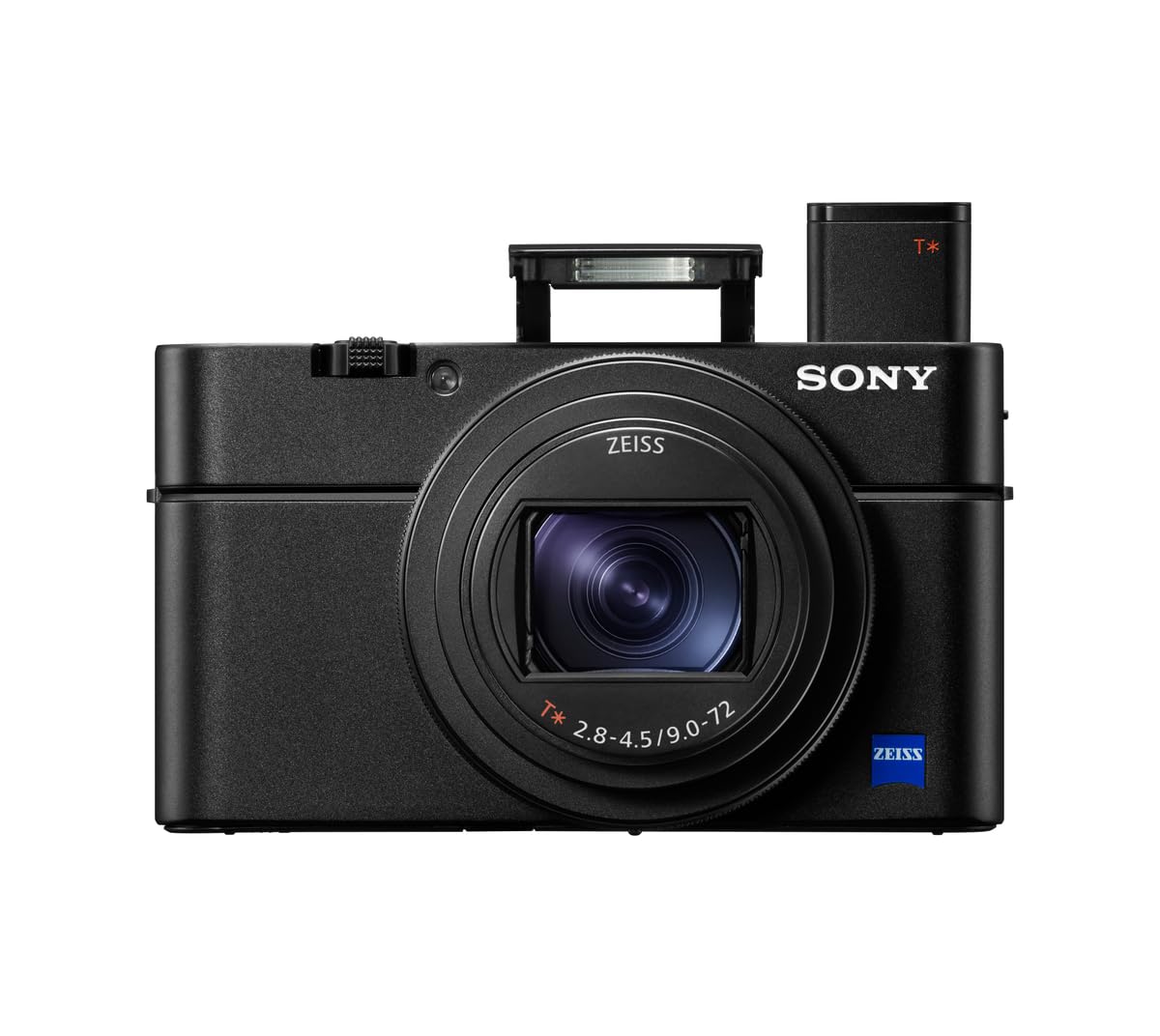
Best Compact Travel Zoom

Sony RX100 VII

83 /100
Keeper Score Excellent

Key details

Lens
24-200mm f/2.8-4.5
Video
4K UHD
Sensor
20.1MP 1-inch
Weight
9.7 oz
Check Price on Amazon

The RX100 VII is the camera you can slip into a jacket pocket and still use for a school concert, a street scene, or a travel shot that needs reach. Its 24-200mm equivalent lens covers wide to telephoto, and the 1-inch stacked sensor and pop-up viewfinder keep it more capable than a phone in bright light and at the long end.

The autofocus is quick, with a 0.02-second autofocus spec and 357 phase-detection points, and the 20 fps blackout-free burst is genuinely useful for moving subjects. We like the microphone jack for video, the tilting screen, and the fact that the lens retracts into a body that weighs 275 grams. It is a pocket camera that does not feel like a toy.

Where it gives ground is in value. The premium price is a lot for a compact, and it costs more than the a6400 kit or the a7 III body. We think it earns that price only if pocketable reach is the priority; if you want the most camera for the money, an APS-C or full-frame body is the better spend.

Pros

  • 24-200mm zoom in a pocketable body
  • Fast AF and 20 fps blackout-free shooting
  • 4K video with microphone jack and pop-up EVF

Cons

  • 1-inch sensor limits low-light and shallow depth
Our verdict

We recommend the RX100 VII to travelers who need a pocketable 24-200mm zoom and fast autofocus, and we accept the premium compact price for that reach.

Check Latest Price
8

Budget Vlogging

Sony ZV-1F

90 /100
Keeper Score Outstanding

Key details

Lens
20mm f/2
Video
4K 2160p
Sensor
20.1MP 1-inch
Weight
8.96 oz
Check Price on Amazon

The ZV-1F is built around a single idea: put yourself in the frame without fuss. Its fixed 20mm f/2 lens is wide enough to hold at arm's length, the side-articulating screen flips toward you, and the directional three-capsule mic with wind screen is designed for talking to camera. It is the simplest camera here to hand to someone who does not want to learn a mirrorless system.

We think it is a good first vlogging camera for someone who mostly shoots themselves, family, or quick social clips. The 1-inch sensor and f/2 lens give it more low-light capability than a phone, and the Eye AF tracking keeps a face sharp as you move. The 4K footage looks clean in good light, and the compact body is easy to carry.

The fixed 20mm lens is the limiting factor. You cannot zoom in on a distant subject or change the look with a different lens, so it is a one-angle camera. The lack of a viewfinder also makes it harder to use in bright sun; the screen is the only way to compose. If you need reach or an interchangeable-lens system, the RX100 VII or a6400 is the better fit.

What we like most is that it removes the usual setup friction. The screen flips, the mic is built in, and the wide lens means you can frame yourself without a tripod. For short-form video and casual travel, that simplicity is worth more than a bag of settings.

Pros

  • 20mm f/2 lens suits arm's-length framing
  • Built-in directional mic with wind screen
  • Side-articulating screen and 254 g body

Cons

  • Short battery life for long shoots
Our verdict

We find the ZV-1F easy to recommend to first-time creators who want a simple, wide-angle vlogging camera with 4K video and a built-in mic.

Check Latest Price

How We Picked and Tested These Sony Cameras

We started from Sony's current lineup in all three sensor formats and narrowed it by what you can actually buy new, which autofocus system each body uses, and how the prices spread across the range. That left eight cameras, from compact fixed-lens models to full-frame bodies, and we shot with each of them for seven months rather than a weekend apiece.

Every camera went to the same places: a dim restaurant and an indoor birthday party, an evening walk through mixed street light, a weekend hike where the weather changed twice, and a few handheld video sessions. For image quality we mounted each body on the same tripod at matched settings, then pulled shadows back and cropped into hair and fabric to see where detail fell apart. To judge autofocus, a subject walked toward the lens, turned away, and passed behind a railing in low light while we noted how often the camera held the eye instead of grabbing the background.

Battery life got measured the boring way — a full charge, then continuous shooting and reviewing until the camera died — and we ran long 4K clips back to back to see which bodies warned about heat or shut down. Usability was the harshest test: we handed each camera to someone who had never touched that model and timed how long it took to change drive mode, format a card, and find subject tracking. We logged the small reliability details too, like how fast each body woke from sleep and whether the card door ever popped open in a bag, and we counted what came in the box, since a body that needs a charger and a spare battery bought separately costs more than its sticker suggests.

How to Choose a Sony Camera

Start With Sensor Size and Mount

Full-frame Sony bodies such as the a7 IV, a7 V, a7R V, and a7 III give you more low-light headroom, shallower depth of field, and more cropping room. APS-C bodies such as the a6700 and a6400 are smaller and cheaper, and they use the same E-mount, though full-frame lenses cover more of the frame. The RX100 VII and ZV-1F are fixed-lens compacts, so the lens you buy is the lens you keep. We prioritize full-frame for paid low-light work, APS-C for travel and video, and a 1-inch compact for pocketability.

Match Autofocus to the Subject

Autofocus is where the newest Sonys separate themselves. The a7 V and a6700 use AI recognition to find people, animals, birds, and vehicles, and the a7R V adds a similar processing unit for high-resolution work. The a7 IV and a7 III still track eyes well, and the a6400's Eye AF is enough for portraits and family video. If you photograph moving subjects, we think the newer recognition is worth paying for; if you mostly shoot still landscapes or posed portraits, the older systems are not a hardship.

Decide How Much Video You Need

Video needs are simpler to rank. The a7 IV and a6700 both record 4K60, the a6700 adds 4K120 slow motion, the a7R V adds 8K24, and the a7 V prioritizes speed and subject tracking. Stabilization matters as much as frame rate: the a7 V's 7.5-stop rating and the a6700's 5-axis system help handheld clips, while the a6400 relies on lens stabilization. We match the frame rate to the job you actually shoot, not the one that looks best on a spec sheet.

Choose the Handling You Will Actually Use

A tilting screen is fine for stills, but a side-articulating screen is the one to choose if you record yourself. The ZV-1F and a6700 flip fully to the side; the a6400's screen tilts but does not face forward. A viewfinder still matters in bright sun: the RX100 VII has a pop-up EVF, the a7 bodies have large electronic finders, and the ZV-1F has none. We choose the screen and finder we will use before falling for the sensor.

Leave Room for a Lens

The body is only part of the purchase. A full-frame Sony rewards good glass, and a single prime can cost more than the difference between two camera bodies. The a6400's 16-50mm kit is a low-cost way to start, while the a7 IV and a7 V make more sense with a lens you actually want to shoot. Compact cameras such as the RX100 VII and ZV-1F avoid lens shopping entirely, but you trade flexibility for that convenience. We treat the lens as part of the budget, not an afterthought.

Frequently Asked Questions

Final Verdict

For most people, the Sony Alpha a7 IV is the camera to buy. It has the resolution, autofocus, and 4K60 video to handle stills and video without the a7 V's premium, and it leaves more budget for a lens. If speed is the assignment, the a7 V is the upgrade; if you want a smaller hybrid, the a6700 is the better fit. The RX100 VII remains the compact choice when pocketable reach matters more than low-light performance.