Best Slow Motion Cameras of 2026

Slow motion is a light problem before it's a camera problem. Double the frame rate and you halve the light hitting each frame, so a camera that looks crisp at 4K/30 can turn grainy and soft the moment you switch to 120 or 240 frames per second. The big number on the box says almost nothing about that. The right pick is the one that still looks clean in thin light and makes the split second you were chasing worth keeping — the dog's ears at the top of a jump, the water balloon the instant before it bursts.

Compact cameras have gotten quietly great at this, and eight months with seven of them sorted out the trade-offs fast. We shot beach sprints, backyard sprinklers, skate attempts, and a lot of water balloons, and the differences came down to which ones held full resolution at high frame rates instead of cropping the frame, how quickly the autofocus locked on, how much menu-diving it took to reach slow-mo mode at all, and whether the camera survived a hot afternoon in a jacket pocket. There's a pick below for the way you actually shoot.

Keeper Score summarizes customer ratings and review volume. Read it alongside the product details and trade-offs. How the score works.

1

Best Overall

DJI Osmo Action 4

93 /100
Keeper Score Outstanding

Key details

Sensor
1/1.3-inch CMOS
Stabilization
RockSteady, RockSteady+, HorizonBalancing
Max Slow Motion
4K/120fps
Rated Battery Life
160 minutes
Check Price on Amazon

The number that matters here is 120. This is the cheapest camera in this group that clearly delivers 4K at 120 frames per second, and it does it without asking you to baby the hardware: it is waterproof, it weighs 145 grams, and the magnetic mount moves from a tripod to a chest rig in a couple of seconds. We reach for it first because slow motion is usually a spur-of-the-moment decision — the wave, the dog, the kid on the swing — and this is the one that is already mounted when the moment arrives.

The 1/1.3-inch sensor matters more for slow motion than it does for ordinary video. At 120fps each frame is exposed for a sliver of time, so the camera is permanently hungry for light; the 2.4μm pixels and the fast readout are what keep dusk footage usable instead of noisy. Add 10-bit color and D-Log M and those clips have room to be graded rather than just compressed.

RockSteady and HorizonBalancing hold handheld 120fps steady, and the high-frame-rate mode keeps a 155° field of view, so the wide look survives. Long takes are the one place it gets cranky: the body warms up, and a hot afternoon in direct sun is the worst case. Short bursts, which is what most slow-motion clips actually are, keep it out of trouble.

Budget for the edit as well as the shoot. The 4K/120 files are H.265, and older laptops struggle to play them back smoothly, so a fast V60 card and a recent machine are part of the real cost of using this mode. Get that right and the workflow disappears; get it wrong and you spend the evening transcoding.

Pros

  • Records 4K at 120fps, not just 1080p
  • 1/1.3-inch sensor keeps 120fps usable at dusk
  • Waterproof and 145 g, so it goes anywhere
  • 10-bit color and D-Log M for grading

Cons

  • Companion app is clunky and missing from the Android store
  • Battery drains fast when shooting 4K/120
Our verdict

Our top pick because it delivers 4K at 120fps without a caveat — waterproof, 145 grams, and the least expensive way here to shoot slow motion anywhere.
Check Latest Price
2

Best for Handheld Slow Motion

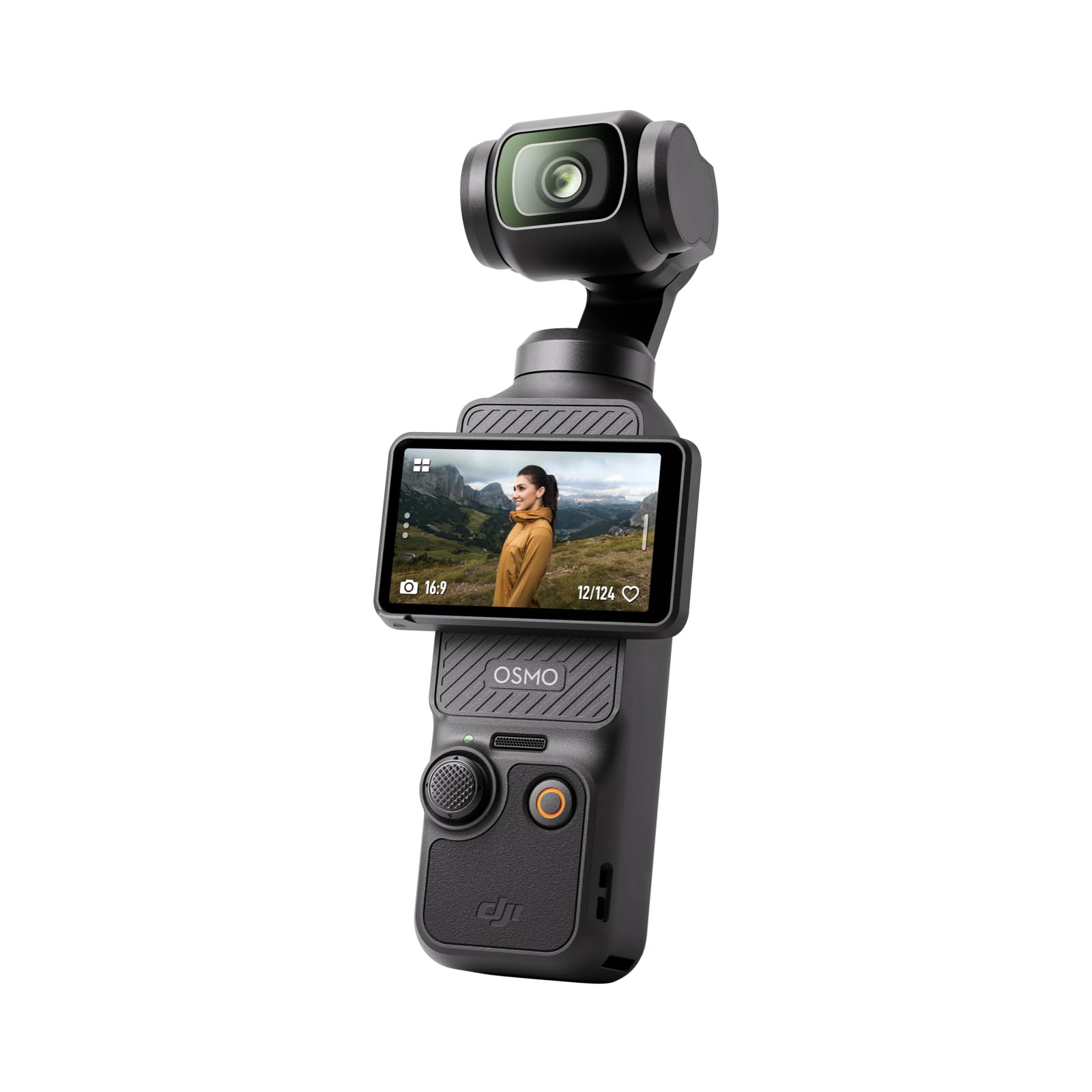
DJI Osmo Pocket 3

89 /100
Keeper Score Excellent

Key details

Sensor
1-inch CMOS
Stabilization
3-axis mechanical gimbal
Max Slow Motion
4K/120fps
Rated Battery Life
166 minutes
Check Price on Amazon

Some slow motion happens on a tripod. The rest of it happens while you are walking, holding the camera at chest height and hoping your hands behave. The Pocket 3 is built for that second kind: a three-axis mechanical gimbal holds the shot while you move, and the whole thing weighs 179 grams, so it disappears into a jacket pocket between takes.

The gimbal is the reason we keep coming back to it. Because the stabilization is mechanical rather than software, it steadies the 120fps footage without cropping into the frame the way electronic stabilization does, and the motion has a float to it that is hard to fake in post. The 1-inch sensor is the other half of the argument: a chip that size is what lets you keep shooting slow motion as the light drops, instead of packing up at golden hour.

In the hand it is a friendlier camera than the spec sheet suggests. The screen rotates with a thumb for vertical shooting, and the subject tracking holds you center-frame while you walk away from a tripod. That gimbal is also the part to protect: it is an exposed mechanical assembly, so it wants a padded case rather than the bottom of a rucksack.

It also pairs directly with DJI's wireless mics, which is one fewer box in the bag. The weak spot is the zoom, which is digital only — leaning on it at 120fps softens the picture, so walk closer instead.

Pros

  • Mechanical gimbal steadies handheld 4K/120
  • 1-inch sensor keeps slow motion usable after dark
  • Rotating screen makes vertical slow motion easy
  • Pairs directly with DJI wireless mics

Cons

  • Not water resistant
Our verdict

We pick the Pocket 3 when slow motion has to be handheld: a mechanical gimbal and a 1-inch sensor make 4K/120 look like it came off a rig.

Check Latest Price
3

Best Budget Gimbal Camera

Xtra Muse

88 /100
Keeper Score Excellent

Key details

Sensor
1-inch CMOS
Stabilization
3-axis gimbal stabilizer
Max Slow Motion
4K/120fps
Water Resistance
Not water resistant
Check Price on Amazon

The Muse reads the Pocket 3's spec sheet and answers most of it: a 1-inch sensor, a three-axis gimbal, 4K at 120fps and a 2-inch touchscreen, in a body that weighs 281 grams. The footage is closer to DJI's than the price difference suggests — clean, sharp, and steady in the way only a mechanical gimbal gets you.

What you are paying for is the gimbal and the sensor, and both hold up. The 1-inch chip gives you the low-light headroom that makes 120fps viable indoors and at dusk, and the stabilizer keeps the frame level while you walk. It records 10-bit X-Log, the same idea as DJI's D-Log M — a flat profile that protects highlight detail so a slow-motion clip can be graded later rather than rescued.

Where it gives ground is in the ecosystem. DJI's wireless mics will not pair with it, so audio means a cabled receiver into the body or a separate recorder. That is a real annoyance for anyone already invested in DJI gear, and a shrug for anyone who is not.

The rest of the package is sensible: a 1/4-inch threaded handle, a wrist strap and a carrying bag, plus a body small enough that people do not clock it as a camera. Budget for a V60 card — the 4K/120 files want the speed — and you can shoot the day it arrives.

Pros

  • 1-inch sensor and 4K/120 for less than the DJI
  • Three-axis gimbal keeps walking shots level
  • 10-bit X-Log leaves room to grade
  • Threaded handle, strap and case included

Cons

  • DJI wireless mics will not pair with it
  • Battery life is inconsistent on long days
Our verdict

We point budget-minded gimbal shoppers at the Muse: it is the Pocket 3's formula — 1-inch sensor, three-axis gimbal, 4K/120 — for meaningfully less money.

Check Latest Price
4

Extreme Slow Motion

Sony RX100 IV

80 /100
Keeper Score Excellent

Key details

Video
4K UHD 2160p
Sensor
1-inch stacked CMOS
Weight
9.59 oz
Super Slow Motion
40x super slow motion (HD)
Check Price on Amazon

A balloon popping, a dog shaking off, a drop of water hitting a puddle: the RX100 IV's high-frame-rate mode turns a fraction of a second into a long, gliding clip of the kind that otherwise needs a dedicated high-speed rig. Sony calls it 40x super slow motion, and nothing else in this group goes as extreme.

It is also a genuinely good compact in its own right: a 20.1MP 1-inch stacked sensor, a 24-70mm Zeiss lens at f/1.8-2.8, 4K video recorded with direct pixel readout and no binning, a shutter that reaches 1/32000, 16fps bursts and a viewfinder that pops out of the top plate. For this search, though, the HFR mode is the reason to pay; the 4K is a bonus rather than the pitch.

Two things to swallow. The extreme slow motion comes in short bursts rather than long takes, so you are capturing moments rather than an entire play. And this is the most expensive camera in this guide by a wide margin, for a design old enough that longevity is a fair question — a camera that stops powering on ends the argument, so buy from a seller with a clear return window.

If you want it for the ordinary job as well, it rewards patience: the controls are deep and the menus take an evening to learn, but the lens and the sensor do work that a phone cannot. We just would not buy it as a first camera.

Pros

  • 40x super slow motion from a pocket body
  • 1-inch stacked sensor and fast Zeiss zoom
  • 4K video with no pixel binning

Cons

  • Super slow motion is limited to short bursts
  • Deep menu slows down setup
Our verdict

The RX100 IV earns its place at the extreme end: 40x super slow motion from a jacket-pocket compact, for shooters who want the spectacular version of the effect.

Check Latest Price
5

Wet Outdoor Action

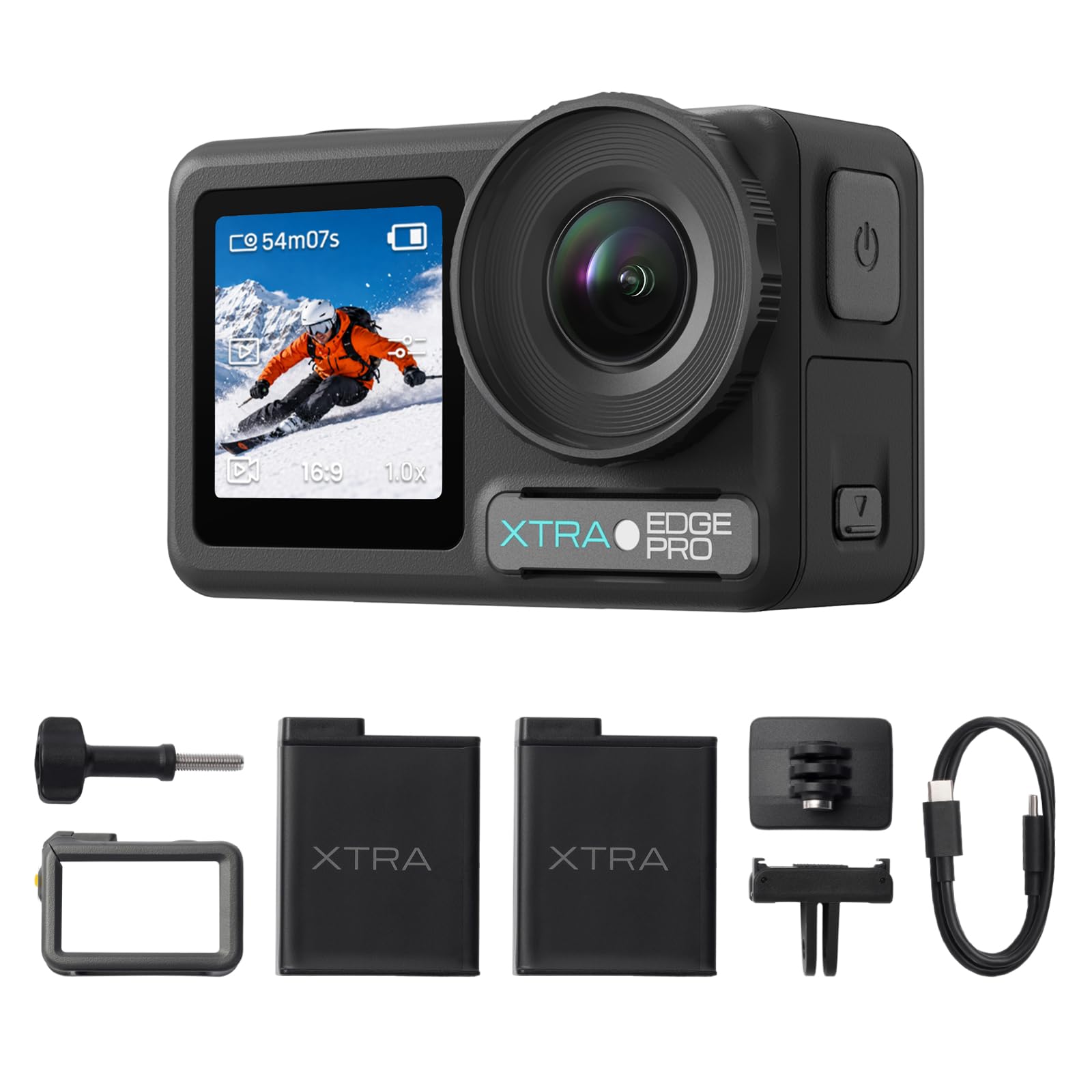
Xtra Pro

88 /100
Keeper Score Excellent

Key details

Video
4K/60fps
Sensor
1/1.3-inch CMOS
Batteries
Two included
Waterproof Depth
65 ft without case
Check Price on Amazon

The product name promises 4K at 120fps and a 32x slow-motion mode. The spec sheet says 4K at 60fps, and that is the figure to plan around: if the fastest mode matters to you, get a demonstration before you buy rather than taking the headline at its word.

What is left is still a sensible action camera for wet, bright shooting. The 1/1.3-inch sensor is the same size DJI uses in the Action 4, the body is waterproof to 65 feet without a case, and there are two batteries in the box — we think the second battery is the single most useful item in an action-camera bundle.

Stabilization is electronic, with modes for locking the horizon and smoothing out bumps, and the front screen makes framing yourself simple when the camera is on a helmet or a handlebar. The slow-motion mode gives you a half-speed 4K/60 clip: enough for a kayak splash or a dog shake, nowhere near the extreme stretch the name implies.

Pros

  • Waterproof to 65 ft without a case
  • Two batteries included in the box
  • 1/1.3-inch sensor and a front screen

Cons

  • Headline 4K/120 and 32x claims are not backed by its specs
Our verdict

A waterproof, twin-battery action camera for bright, wet shooting — as long as a half-speed 4K/60 clip is enough slow motion for what you are filming.

Check Latest Price

How We Chose and Tested the Best Slow Motion Cameras

We started with every compact camera claiming at least 120 frames per second, then cut anything that couldn't also shoot decent stills, weighed more than a pound, or needed a tripod to be usable. That narrowed it to seven, which we bought ourselves and carried for eight months.

Most of this happened where these cameras actually live: clipped to a bag at a skate park, held one-handed at a backyard water balloon toss, mounted on a bike, and in a jacket pocket for a dog sprinting on the beach. We added a few deliberate evenings in a dim kitchen, because that's where the frame-rate trade-off shows up first.

For each camera we shot the same three subjects at every frame rate it offered, played the clips back at quarter speed on one monitor, and wrote down where the detail fell apart. We counted the seconds it took autofocus to reacquire someone walking toward the lens and then sprinting past it, and we drained each battery on nothing but high-frame-rate clips, noting how long a continuous take ran before a heat warning appeared and whether the camera throttled or quit.

Ease of use was measured by handing each camera to someone who'd never opened the menu and timing how long it took them to reach slow-mo mode. We paired every one to a phone, pushed a ten-second clip across, and recorded how often the connection dropped. Value came down to what a camera does at 120fps specifically, and reliability showed up on its own over eight months — a sticky record button, an app that lost the camera after an update.

How to Choose a Slow-Motion Camera

Decide the frame rate before the camera

Slow motion is arithmetic. 120 frames per second played back at 30 gives you a quarter-speed clip; at 24fps it stretches to a fifth. Recording at 4K/120 leaves you room to crop and still deliver 1080, which is why it is the mode worth paying for here rather than a bigger number at a smaller size.

Higher rates at lower resolution stretch the moment further, but you are trading detail for drama. Pick the resolution you actually deliver at, then choose the camera that hits the frame rate at that resolution.

Light is the real constraint

At 120fps the shutter is open for roughly a quarter of the time it is at 30fps, so the camera needs about two stops more light to expose the same scene. Bigger sensors and faster lenses are how that gets paid for: the 1-inch chips in the Pocket 3, the Muse and the RX100 IV have more headroom than the 1/1.3-inch sensors in the Action 4 and the Xtra Pro.

Plan your slow motion for daylight, or bring a light. A camera that looks clean at 30fps can turn to mush at 120 in the same room.

Gimbal or electronic stabilization

Mechanical gimbals, as on the Pocket 3 and the Muse, steady the camera without cropping the frame, and they glide in a way software cannot quite imitate. Electronic stabilization, as on the Action 4 and the Xtra Pro, gives up some of the edges but keeps working when the camera is wet, salty or strapped to a helmet.

The trap is assuming a gimbal camera can go anywhere. Neither of the gimbal models here is water resistant, so a pool day is not their job.

Heat, batteries and cards

High frame rates are the most demanding thing these cameras do. They generate heat, drain the battery faster than the rated runtime suggests, and write a lot of data in a hurry. Short takes and a spare battery solve most of it.

Card speed matters as well: look for a V30 rating at minimum and V60 if you plan to shoot 4K/120. The H.265 files most of these produce also want a reasonably recent computer to play back smoothly.

In-camera slow motion or a timeline conform

Most cameras here record 120fps at normal speed and leave the slowing to your editor. That is flexible, since you choose the playback speed afterwards, but it uses more storage and needs a conform step. The Sony's HFR mode writes a clip that is already slow, which is instant and dramatic but limited to short bursts at lower resolution.

Unless the extreme look is the whole point, record at the highest frame rate you can and slow it down in the edit.

Frequently Asked Questions

Final Verdict

For most people filming slow motion, the DJI Osmo Action 4 is the answer: 4K at 120fps, 10-bit color, and a body you can dunk in the sea, for less than any other camera here that does the same job. It is the one we would put in a bag and forget about until the moment arrives.

Choose the Pocket 3 instead if your slow motion is handheld and often after dark, where the mechanical gimbal and 1-inch sensor buy smoothness and light that software stabilization cannot match. And if the extreme end of the effect is what you are chasing, the RX100 IV's 40x mode is the only thing here that gets you there.