Best Portable Projectors of 2026

I've never met a projector that didn't promise a movie theater. What separates them is how they hold up once the lights aren't fully off: brightness quietly decides everything, and a dim projector with a beautiful menu is still a dim projector. The other catch is that "1080p supported" on a box often just means it will accept a 1080p signal and shrink it down, so look for the word native if a sharp picture matters to you.

What a good portable projector does fix is the setup. No screen to hang, no mount to drill — a blank wall, an outlet, and you're watching. My team and I have spent six months living with 12 of them, from palm-sized cubes with streaming apps built in to slightly bigger boxes with their own speakers. The ones that made the list got the boring things right: honest brightness, autofocus that locks in a second, sound you don't have to apologize for, and a fan you can't hear over dialogue.

Keeper Score summarizes customer ratings and review volume. Read it alongside the product details and trade-offs. How the score works.

1

Best Overall

YGSKK Mini Projector

91 /100
Keeper Score Outstanding

Key details

Weight
1.7 lb
Streaming
Built-in apps
Brightness
300 ANSI lumens
Native Resolution
1920 x 1080
Check Price on Amazon

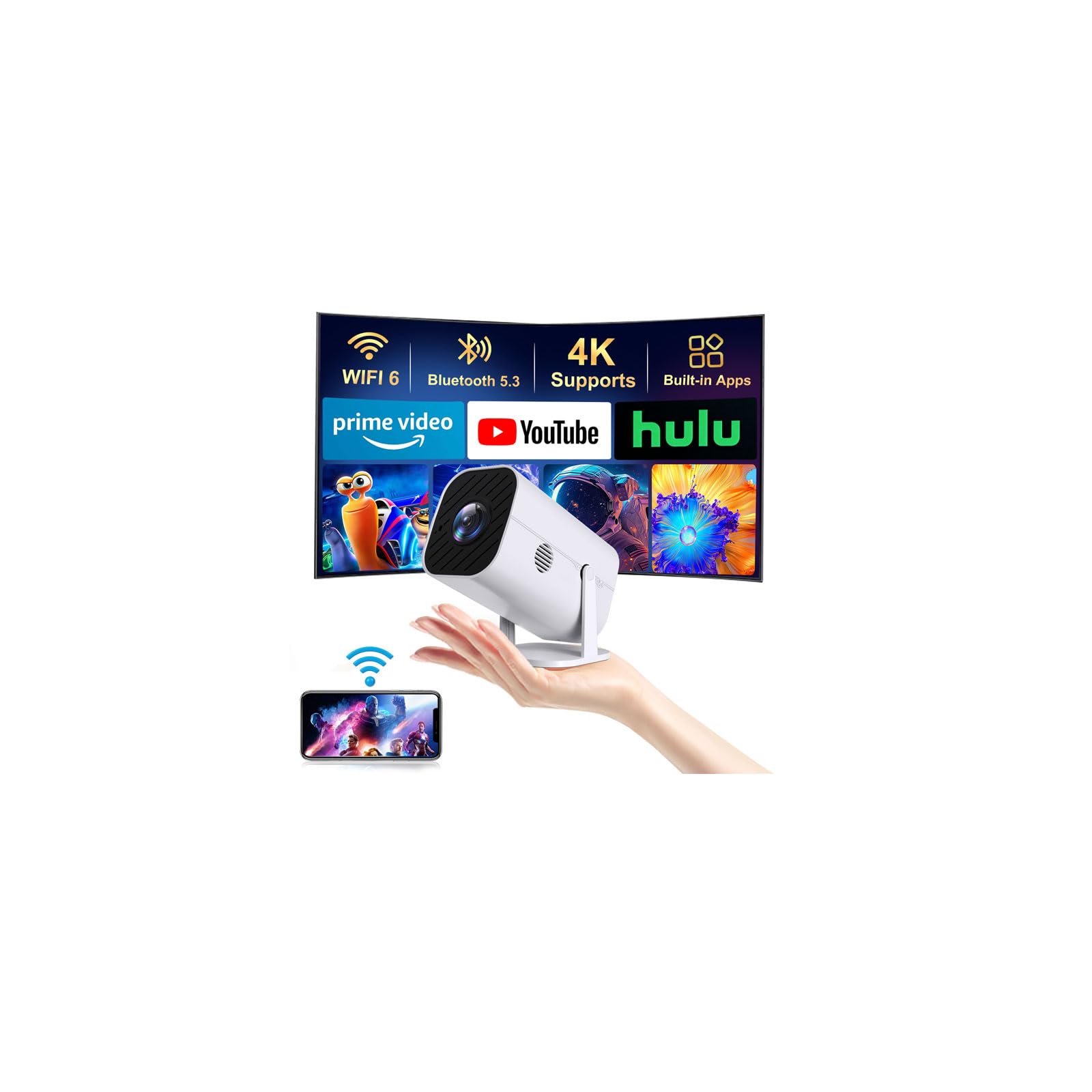
Native 1080p, streaming apps already installed, and 1.7 pounds is the combination that keeps this one at the top of our list. There's no stick to buy, no adapter to lose, and no second remote: connect to Wi-Fi once, sign in, and Prime Video or YouTube sits on the home screen next to everything else. For a first portable projector, that removes the two things that usually get in the way — an empty HDMI port and a device to plug into it.

It's also the easiest of the group to live with. At 8 inches long and 4 inches wide it sits on a nightstand without being moved for dinner, and the electric focus is adjusted from the remote rather than a wheel you crouch over. The throw range covers an ordinary bedroom: 4.9 feet for a 50-inch picture, out to 16.4 feet for a 200-inch wall if you have one.

Three hundred ANSI lumens is the honest limit. In a dark room the 1080p panel looks crisp and the color holds; with a lamp on it flattens out, which is true of nearly everything in this group. The onboard speaker is fine for two people on a sofa and thin for a yard full of guests — Bluetooth 5.3 pairs with a portable speaker in a few seconds, and that's the first upgrade to make.

Wi-Fi 6 keeps the streaming steady, and the three-year manufacturer warranty is the longest coverage here, which counts for something on a small box with a fan and a power supply inside it.

Pros

  • Native 1080p, not just 4K input support
  • Built-in apps, so no streaming stick
  • 1.7 pounds and 8 inches long
  • Electric focus from the remote

Cons

  • Speaker suits a small room only
  • Needs an outlet, with no battery
Our verdict

If you want one small projector to keep around the house for movie nights, this is the one we point people to: native 1080p, apps already inside, and light enough to move.

Check Latest Price
2

Best Cordless

NEBULA Capsule 3 Laser

88 /100
Keeper Score Excellent

Key details

Weight
2 lb
Battery
2.5 hours
Brightness
300 ANSI lumens
Native Resolution
1920 x 1080
Check Price on Amazon

Start with the price, because it is the whole question. This costs several times what the budget picks here do, and what the money buys is a battery, a laser light source, and a body the size of a soda can. Whether that's worth it comes down to one thing: have you ever wanted a projector somewhere without a power outlet?

We think the trade is fair for the right buyer. A 2.5-hour battery covers a full movie without a cable, the 1080p laser image holds its color, and at 2 pounds with a tripod mount it drops into a tote bag next to the drinks. Google TV with licensed Netflix means no stick and no dongle, and the 8W Dolby speaker is good enough that you won't spend the first ten minutes hunting for a Bluetooth speaker.

Compare the numbers honestly and the premium buys convenience rather than a brighter picture. It's rated at 300 ANSI lumens — the same figure as our top pick, at many times the cost — so a dark room is still the requirement and a sunny patio still isn't happening. The laser engine's payoff is color, focus that snaps in on its own, and a 30,000-hour light-source rating.

Around the edges it's thoughtful. USB-C power delivery means a power bank can top it up mid-movie, auto keystone sorts out a lopsided picnic table, and the tripod mount is standard, so any inexpensive stand works.

Pros

  • Runs 2.5 hours on battery
  • 1080p laser engine at 300 ANSI lumens
  • 2 pounds with a soda-can footprint
  • Google TV with licensed Netflix

Cons

  • Tops out at a 120-inch image
  • Some streaming apps missing from its Google TV build
Our verdict

The only projector here that runs on its own battery, and the one to take where there's no outlet — you're paying a real premium for that freedom.

Check Latest Price
3

Best for Backyard Nights

Aurzen Roku TV D1R

91 /100
Keeper Score Outstanding

Key details

Weight
4.63 lb
Maximum Image
200 inches
Smart Platform
Roku TV built in
Native Resolution
1920 x 1080
Check Price on Amazon

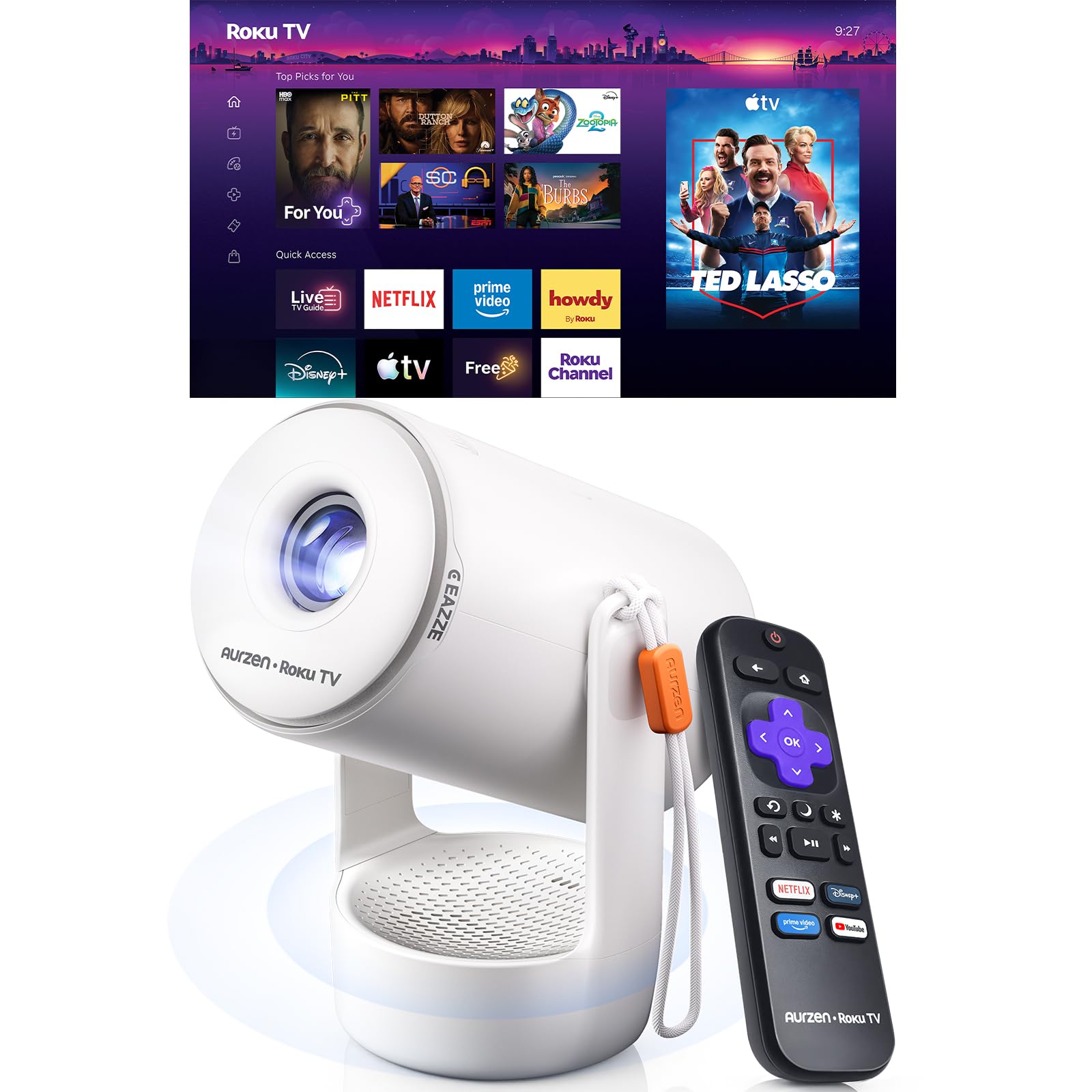
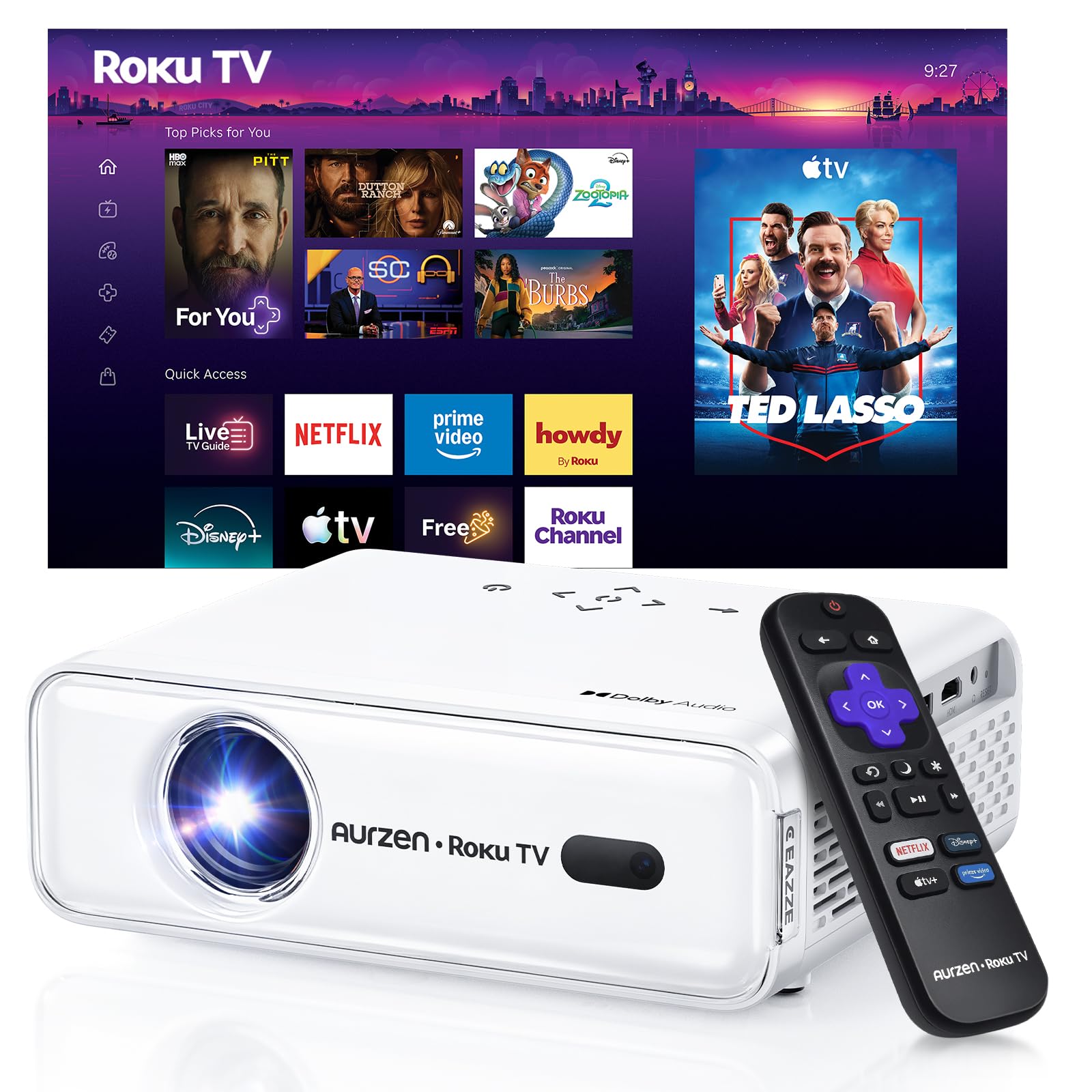
No stick, no dongle, no second remote. The Roku home screen comes up the moment this thing is on Wi-Fi, and everything you already watch is a tile away. Roku is the interface most people know without being taught, and building it in removes the step where projector night usually stalls — somebody hunting for the streaming stick in a drawer.

That's why we rate it the best of this group for a yard or a patio. Auto focus and auto keystone do the alignment while you're standing in the dark holding a drink, the 40-to-200-inch range means a fence, a garage door, or a hung sheet all work, and the Dolby speakers carry further than the size of the box suggests.

In a dark yard the 1080p picture is clean and the colors are warm rather than washed out, and AirPlay handles an iPhone without an adapter. One practical note: there's no HDMI cable in the box, so buy one if a console or a laptop is part of the plan — the streaming side needs nothing.

The 2.1 kg body is the other thing to picture honestly. It's a two-hand carry out to the yard rather than something you drop in a backpack, and that's the trade for a 200-inch image and speakers you can hear across a patio.

Pros

  • Roku TV built in, no stick needed
  • Auto focus and auto keystone do the setup
  • 40 to 200 inches of image
  • Apple AirPlay and iOS casting onboard

Cons

  • Fan is audible in quiet scenes
  • A Roku account is required before first use
Our verdict

A 1080p Roku TV in a 2.1 kg body: plug it in, sign in, and every app you already use is on the home screen. Our pick for backyard nights.

Check Latest Price
4

Best Sound

soundcore Nebula P1i

82 /100
Keeper Score Excellent

Key details

Speakers
20W Dolby Audio
Brightness
380 ANSI lumens
Dimensions
8 x 7.2 x 8.9 inches
Native Resolution
1920 x 1080
Check Price on Amazon

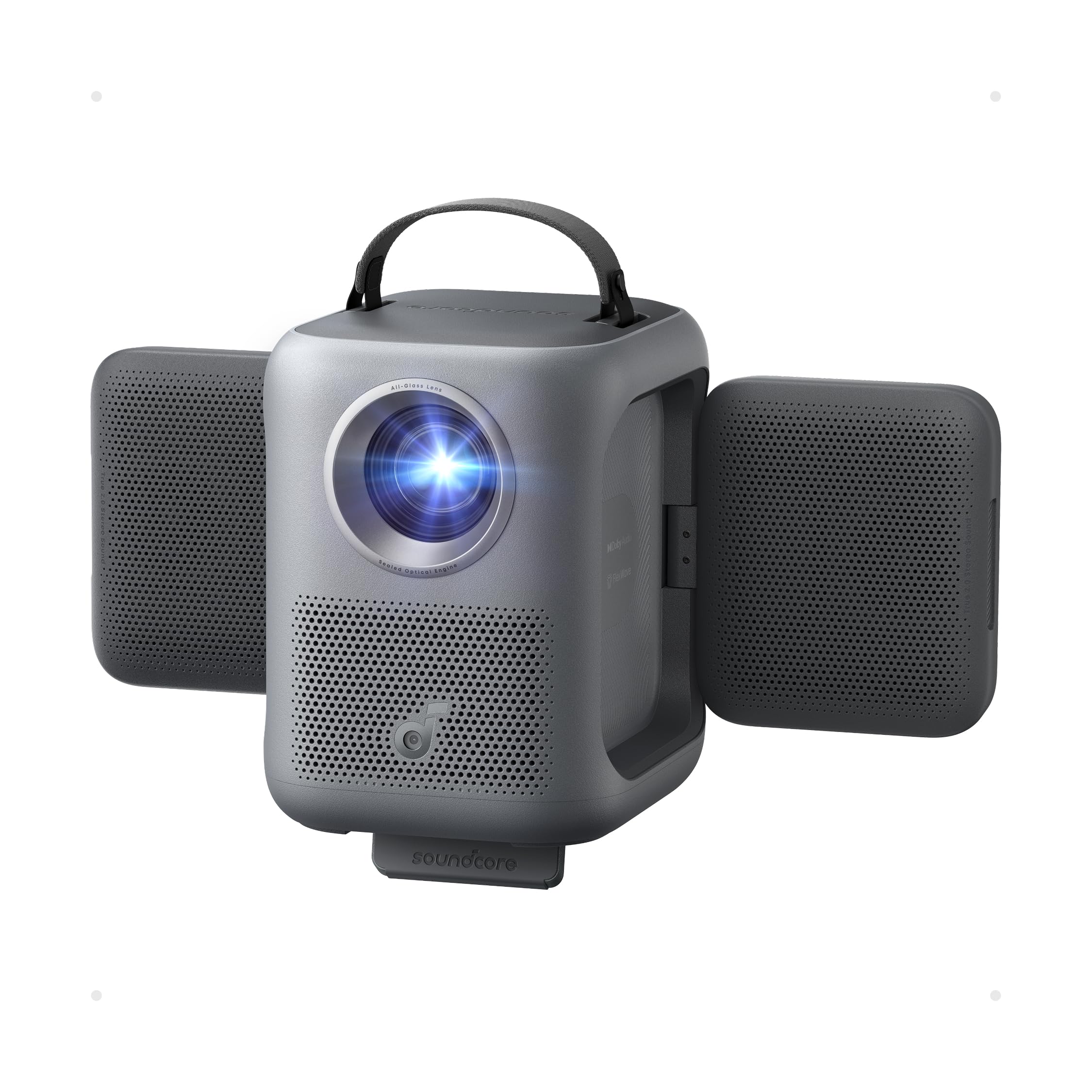
The speakers rotate. Push the 20W Dolby pair 90 degrees sideways or 200 degrees up and the sound follows wherever you've aimed the picture, including the ceiling. It reads as a gimmick on the spec sheet and stops reading that way the first time the audio arrives from the same place as the image.

The rest of the package is built for a living room rather than a backpack. At 380 ANSI lumens it's the brightest projector here and the only one with TÜV certification attached to the number, and the all-glass lens sits in a sealed optical engine, so dust doesn't settle on the element the way it can in open designs. HDR10 is supported, and setup runs itself: autofocus, auto keystone, obstacle avoidance, and screen fit all happen without input.

What we appreciate most is that nothing here asks you to compromise on sound to get a small projector. Google TV covers Netflix, YouTube, and Prime Video with no stick, and the 20W speakers mean a patio doesn't need a separate Bluetooth speaker unless you're hosting more than a dozen people.

Portability is where it gives ground. At 8 by 7.2 by 8.9 inches it's a boxier object than the pocket models, there's no battery, and it wants an outlet plus a Google account before it does anything. Around the house that's a fair trade. For a tent, take the Capsule.

Pros

  • 380 ANSI lumens, the brightest here
  • 20W Dolby speakers that rotate toward you
  • Glass lens in a sealed optical engine
  • Autofocus and auto keystone handle setup

Cons

  • No battery, so it needs an outlet
  • Boxier than the pocket-sized picks
Our verdict

The brightest picture in this group and the only one whose speakers are worth building a night around — a plug-in projector for a room you use often.

Check Latest Price
5

Best Bundle

TMY V08 Projector

88 /100
Keeper Score Excellent

Key details

Speaker
15W
Included
80-inch foldable screen
Brightness
300 ANSI lumens
Native Resolution
1920 x 1080
Check Price on Amazon

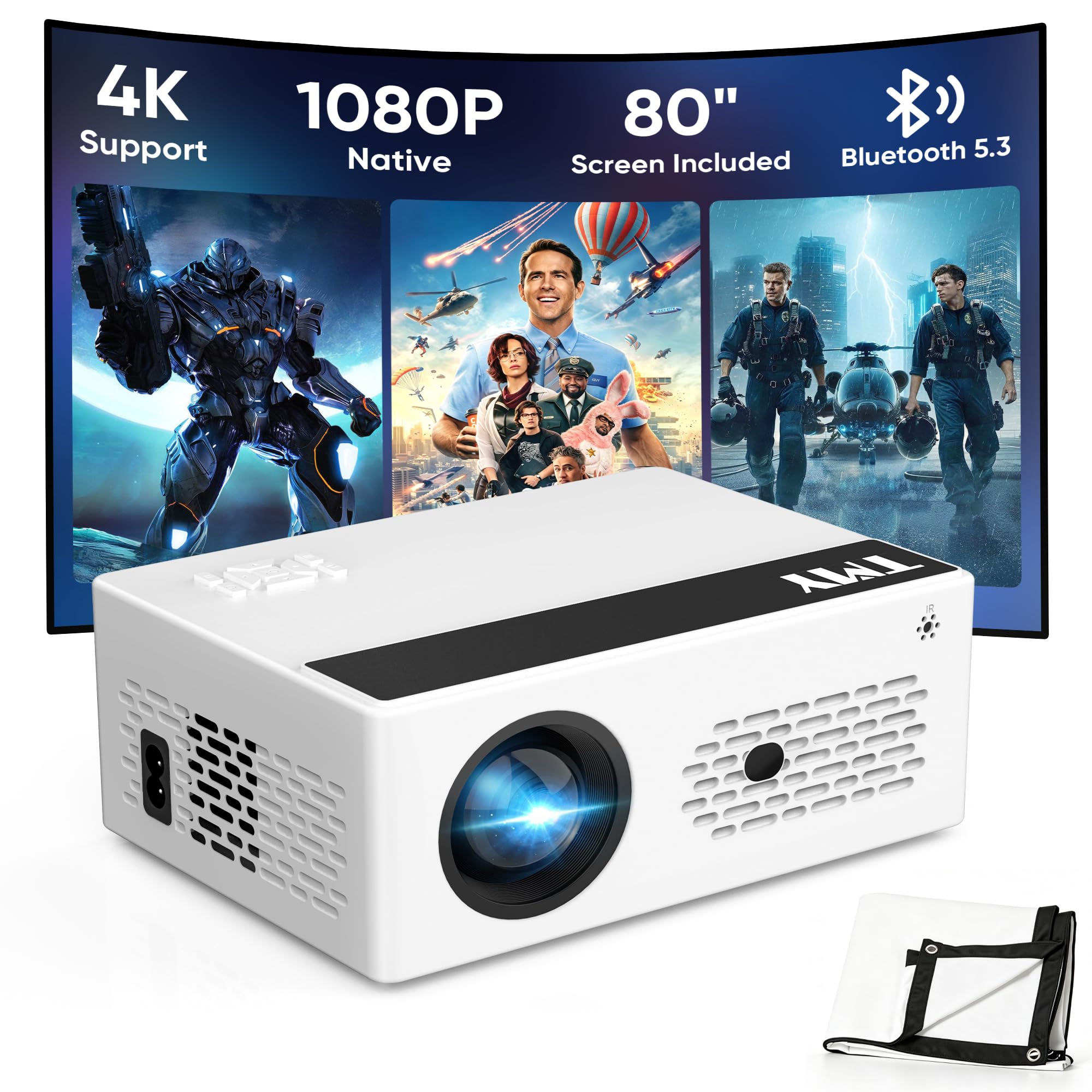
A foldable 80-inch screen ships in the box, and that single detail makes this the easiest recommendation for a first outdoor setup. Nobody wants to discover on the afternoon of the party that a beige wall is the weak link; here the screen, an HDMI cable, and a cleaning kit arrive together, and what sits underneath is a genuine native 1080p projector with 300 ANSI lumens.

The two-way Bluetooth is more useful than it sounds. Pair it with a soundbar for movie night, or leave the screen dark and use the projector itself as a Bluetooth speaker for music. HDMI and USB in the back cover consoles, laptops, and any streaming stick you already own, the 15W speaker is loud enough for a small yard, and the three-year manufacturer warranty matches the longest coverage here.

The reason it isn't our top pick is simple: there's no smart platform inside. Add a Fire TV Stick or a Roku and you have the same streaming experience as the picks above, but you've also added a device, a remote, and one more thing to lose. If you already own a stick — and most people do — that objection disappears, and the included screen is what tips the value our way.

Pros

  • 80-inch foldable screen included
  • Native 1080p at a budget price
  • Two-way Bluetooth works as a speaker too
  • Three-year manufacturer warranty

Cons

  • No smart platform
  • Bluetooth pairing can be unreliable
Our verdict

Buy it for the box: a foldable 80-inch screen and a native 1080p projector, at a price that undercuts most of this group.

Check Latest Price
6

Best Budget

HAPPRUN H1 Projector

88 /100
Keeper Score Excellent

Key details

Weight
2.87 lb
Streaming
Requires a TV stick
Brightness
300 ANSI lumens
Native Resolution
1920 x 1080
Check Price on Amazon

Native 1920 x 1080 for less than any other 1080p projector in this group is the headline, and it's the reason the H1 stays on the list despite a few rough edges. The panel does the work that matters: in a dark room the picture is genuinely sharp, and its 300 ANSI lumens is the same rating our top pick carries.

What the money doesn't buy is a smart platform. There are no apps inside — you plug a Fire TV Stick or a Chromecast into the HDMI port, and a phone needs an adapter rather than casting on its own. If you already own a stick this is a non-issue; if you don't, add one to the total before deciding the H1 is the cheaper route.

The rest is a mix. Setup is genuinely plug-and-play, the included HDMI cable saves a trip, and the 24-month warranty is longer than most. Against that, the fan is loud enough to notice in quiet scenes, and Bluetooth 5.3 is audio-only — it pairs with speakers and headphones, but it won't cast video from your phone.

We keep recommending it because the core job, a big, sharp, inexpensive picture after dark, is done properly, and everything missing can be added with a stick. Buy it if the budget is the hard limit and the room has a door you can close.

Pros

  • Native 1080p at the lowest price here
  • Sharp picture in a dark room
  • 24-month warranty
  • Plug-and-play over HDMI

Cons

  • No built-in apps
  • Fan is loud in quiet scenes
Our verdict

The cheapest native 1080p projector here, and a sharp one in a dark room — as long as you're happy to feed it from a streaming stick.

Check Latest Price
7

Dorms and Bedrooms

Aurzen Roku TV E1R

87 /100
Keeper Score Excellent

Key details

Stand
180° rotating
Weight
15.5 oz
Brightness
160 lm
Native Resolution
1280 x 720
Check Price on Amazon

The number to start with is 160 lumens, because it defines what this projector is for. Any light in the room and the picture goes flat; in a properly dark bedroom it looks far better than its size suggests. What you get for that trade is a 0.44 kg body with a strap built in and a 180-degree rotating stand, so it points at a ceiling without a tripod or a stack of books.

Roku is built in, which is the reason to pick this over a cheaper no-name mini: no stick hanging off the back, no second remote, and the same interface as the television in the living room. The 1280 x 720 panel is the other honest limit — a 60-inch picture in a dark room reads fine, small text doesn't — and AirPlay handles an iPhone without an adapter.

We think it earns a place for one specific buyer: someone who wants a second screen for a bedroom or a dorm and will use it after dark, where ceiling projection and a tiny footprint matter more than resolution. The 3x-larger sound chamber gives it more body than the size suggests, and the cleaning kit in the box is the kind of small inclusion that shows somebody thought about how it gets used.

Plan around the rest. The picture maxes out at 120 inches, so this is a personal screen rather than a backyard one, and the body takes up less shelf space than any dock speaker. Neither limit matters much at 11 p.m. in a dorm room, which is exactly where it belongs.

Pros

  • Roku built in, no stick needed
  • 0.44 kg with a built-in strap
  • 180-degree rotating stand for ceilings
  • AirPlay works with an iPhone directly

Cons

  • Fan is audible in a quiet room
  • Tops out at a 120-inch image
Our verdict

Small enough to carry in one hand and dim enough to need a dark room — a bedroom and dorm projector with Roku built in.

Check Latest Price
8

Bedside and Ceiling

Philoent Mini Projector

89 /100
Keeper Score Excellent

Key details

Weight
13.6 oz
Brightness
200 ANSI lumens
Throw Ratio
0.8:1
Native Resolution
1280 x 720
Check Price on Amazon

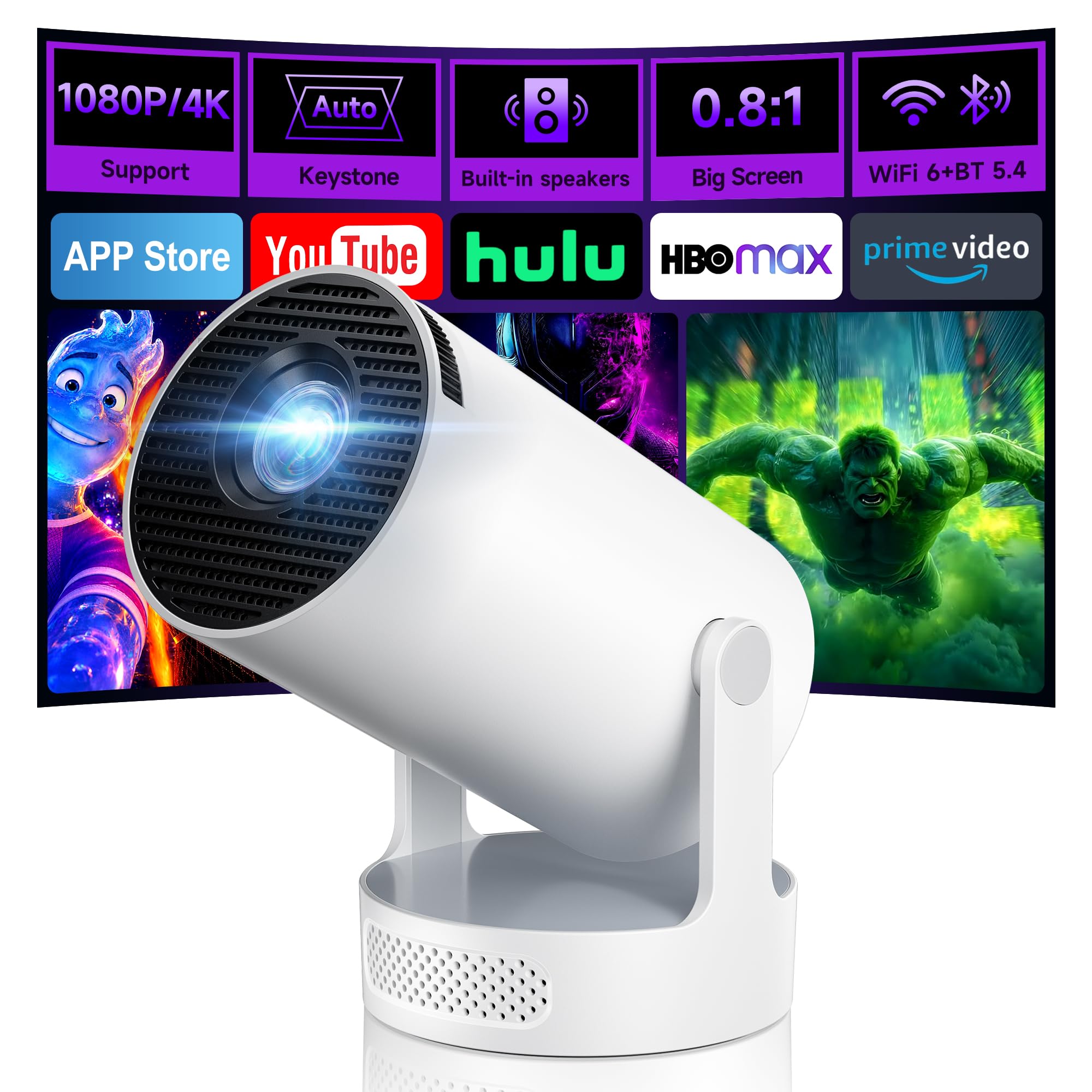
Twenty-five decibels is roughly the noise of a quiet room, and it's the figure we cared about most here. Paired with a 0.8:1 short throw, it means the projector can sit a couple of feet from the wall, angle up at the ceiling, and run through a movie without a fan competing with the dialogue.

The rest of the design points the same way. The body rotates 180 degrees, autofocus is backed by a manual slider for fine-tuning, keystone corrects itself, and Wi-Fi 6 with Bluetooth 5.4 handles streaming and headphones. At 13.6 ounces it's the lightest pick here, and the apps live inside, so there's no stick adding bulk at the back.

The one thing to manage is consistency. Some units arrive not working, which is a return-window problem rather than a reason to avoid the model: open it early, run it for several hours, and keep the box until you're satisfied. The two-year manufacturer warranty is longer than most here.

Put it this way: for a 60-inch picture on a bedroom wall, a 720p panel and an 86-inch ceiling cost you nothing you'll notice. It's the pick for a small, dark, close-range room, and the one we hand to someone setting up a studio apartment.

Pros

  • Runs at roughly 25 dB
  • 0.8:1 short throw fills a wall up close
  • Autofocus plus a manual focus slider
  • 13.6 ounces, the lightest here

Cons

  • 720p panel is soft on fine detail
  • Maxes out at an 86-inch image
Our verdict

The quietest projector here and the easiest to live with in a small bedroom — a 720p short-throw pick, as long as you buy it somewhere with an easy return.

Check Latest Price

How We Tested Portable Projectors in Real Rooms

To build the shortlist, we started with what shoppers actually compare: native resolution rather than supported resolution, whether the streaming apps were built in or needed a streaming stick, claimed brightness, Bluetooth pairing, and price. We read through owner reviews for the complaints specs don't cover — fans that whine, autofocus that hunts — then narrowed to 12 projectors and spent six months using them.

Testing looked like real life, not a lab bench. Each projector went into a bedroom aimed at the ceiling for late-night episodes, onto a living-room wall on a weekend afternoon with the blinds open, and onto a hung white sheet in a backyard at dusk. We timed every setup from bag to first frame, then deliberately nudged each unit to see whether autofocus and auto keystone corrected themselves or needed a hand. To judge brightness honestly, we played the same dark scene at three times of day and noted the exact moment shadow detail disappeared.

Sound and noise got equal attention. We ran a quiet dialogue scene at normal volume and listened for fan whine between lines, then paired each projector to a Bluetooth speaker and watched for lip-sync drift. Finally, we used the built-in apps the way a first-timer would — signing in, searching, switching between services — and weighed what each projector cost against what it actually delivered.

How to Choose a Portable Projector

Resolution: native versus supported

Look for the word native. A projector advertising 4K or 1080p support is telling you what it can accept through HDMI, not what it puts on the wall — a 1280 x 720 panel fed a 4K signal is still a 720p picture. In this group the native 1080p models (our top pick, the HAPPRUN H1, the Aurzen D1R) are visibly sharper on text and fine detail than the 720p picks, the Aurzen E1R and the Philoent.

The decision comes down to screen size and content. At 60 inches in a dark bedroom, 720p is perfectly watchable; push past 100 inches or watch a lot of subtitled films and the extra resolution earns its money. Where two projectors are otherwise close, take the native 1080p one.

Brightness, and being honest about your room

Everything here sits between 160 and 380 ANSI lumens, which is dim-room territory across the board. ANSI lumens are the number to compare; the big figures in some listings describe the light source rather than the delivered image and don't travel between brands.

Plan around the light you actually live with. A bedroom with blackout curtains is easy. A living room with an uncovered window is not, and no projector this size fixes that. If evening viewing is the plan, 300 lumens goes a long way; if daytime sport is the point, put the money into a television instead.

Built-in streaming or a plug-in stick

Three approaches show up in this set: Roku TV built in on both Aurzens, Google TV on the Nebulas, and a set of built-in apps with no major platform behind them on our top pick and the Philoent. All three mean no dongle. The other route — the HAPPRUN H1 and the TMY — is an HDMI port and whatever stick you already own.

Built-in is tidier, and it's what we prefer for a projector that moves around the house, because there's one remote and one thing to plug in. A stick has the advantage of being replaceable: when apps outgrow the platform, you swap a cheap device rather than the projector.

Weight, battery, and what portable actually means

These run from 0.44 kg to 2.1 kg, and that spread matters more than the word portable in a listing. Under a pound goes in a tote bag alongside a laptop; two kilos is a two-hand carry out to the yard. Check the dimensions as well — the Capsule is the size of a soda can, while the soundcore P1i stands nearly nine inches tall.

Only one pick here has a battery, and that's the real dividing line: everything else needs an outlet at the far end of an extension cord. If your viewing spot has power, a corded model buys more brightness for the money. If it doesn't, the battery is the whole decision.

Throw distance is the other half of placement. A short-throw model like the Philoent fills a wall from a couple of feet away, while most of the others want five to fifteen feet of room behind them — worth measuring before you commit to a shelf.

Sound, Bluetooth, and the cheapest upgrade

The onboard speaker is the most common weak spot in this category, and the ones here range from fine-for-a-bedroom to the 20W Dolby pair in the soundcore P1i. None of them fills a yard, and the difference between a good and a bad one is how quickly it turns harsh when you push the volume.

Pairing an external speaker is the best money you'll spend on outdoor use. Just confirm the projector sends audio out over Bluetooth rather than only receiving it: on several of these, Bluetooth is audio-only and won't cast video from a phone, which is what Wi-Fi casting is for.

Frequently Asked Questions

Final Verdict

For most people the YGSKK is the right first portable projector: native 1080p, apps already inside so there's no stick to buy, and 1.7 pounds that moves from the bedroom to the kitchen without a second thought.

Spend more only for a specific reason — the soundcore P1i if the room has some light and you want real speakers, the NEBULA Capsule 3 Laser if you need to run without an outlet, the Aurzen D1R if backyard nights are the whole point. On a strict budget, the HAPPRUN H1 plus a streaming stick gets you the same 1080p panel.