Best Polaroid Cameras of 2026

An instant camera charges you for every mistake. Film runs a dollar or more a shot, and a backlit face or a blown-out sky becomes a gray rectangle you paid for. The cameras that earn their shelf space make the good frame easy: point, press, and a minute later you're handing someone a photo worth keeping.

I've shot with these on and off for years, and my team just spent eight months running 12 of them through birthday dinners, backyard cookouts, and a couple of weekend trips where the whole point was coming home with something physical. The film format mattered more than anything printed on the box — it sets your cost per shot, how easy the camera is to feed, and how big the print ends up in your hand.

Several of the newer models pair with a phone app for double exposures and a remote shutter, which is genuinely fun but adds a step between you and the print. The ones I kept reaching for were simple, with a lens that handles indoor light, color that comes back reasonably true, a body I didn't mind leaving out on a shelf, and a box that didn't sting when I opened it. Here's what held up.

Keeper Score summarizes customer ratings and review volume. Read it alongside the product details and trade-offs. How the score works.

1

Best Overall

Fujifilm Instax Mini 41 Bundle

89 /100
Keeper Score Excellent

Key details

Exposure
Automatic
Film Format
Instax Mini
Included Film
40 sheets
Selfie Feature
Mirror and close-up mode
Check Price on Amazon

The 40-sheet bundle is what makes the Mini 41 the easy default: you can open the box, load a pack, and shoot without ordering film separately. We also like that the automatic exposure handles the flash and shutter for you. The selfie mirror and close-up mode are useful, not decorative; they let you frame a two-person shot without guessing.

In use, the camera feels simple in the way an instant camera should. Frame through the optical viewfinder, press the shutter, and the print ejects. The vintage black body has a retro look without feeling like a toy, and the compact shape fits a small bag. The larger question is the print format: Instax Mini prints are small, so this is not the camera for a big group shot you want to pin on a wall. For everyday candids, that trade-off is the point.

Picture quality is the caveat. The Mini 41 is at its best in decent light, and indoor shots can still come out dark or soft if you are too far from your subject. We found the automatic exposure did most of the work, but it will not rescue a dim room. The bundle is still the one we reach for when we want a camera that a guest or a kid can use without a tutorial. For daylight and well-lit rooms, it is the camera we pack; for a dark restaurant, the Flip's flash is the better tool.

Pros

  • Includes 40 sheets and a case
  • Automatic exposure simplifies shooting
  • Selfie mirror and close-up mode

Cons

  • No manual exposure controls
Our verdict

Our pick for most first-time buyers is the Mini 41 bundle: automatic exposure, a selfie mirror, and 40 sheets make it a complete kit.
Check Latest Price
2

Best Full-Size Polaroid

Polaroid Flip

80 /100
Keeper Score Excellent

Key details

Autofocus
Sonar
Film Format
Polaroid i-Type and 600
Lens System
4-lens hyperfocal
Connectivity
Bluetooth app
Check Price on Amazon

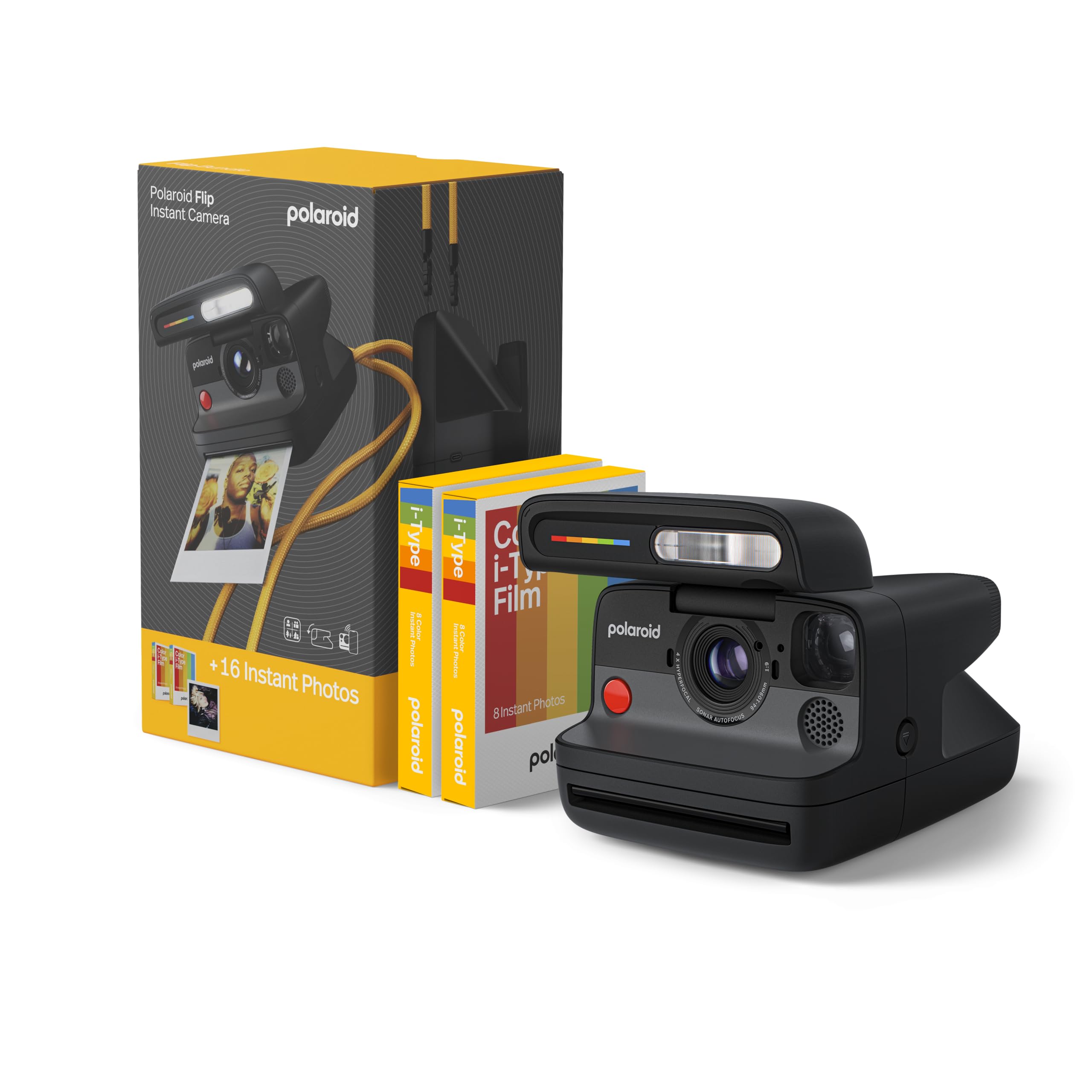
The Flip's four-lens system is the most interesting piece of hardware in this group. It selects among four focal sweet spots, and the sonar autofocus measures distance with sound rather than light, so it can focus in situations where a contrast-based system hunts. We noticed the scene-analysis LEDs in the viewfinder warning about over- or underexposure before you press the shutter, which is a useful nudge for a format that punishes guessing.

The result is a Polaroid that feels more deliberate than the point-and-shoot models. The full-size print is the draw: it has the classic large-format presence that Instax Mini cannot match, and the built-in flash is the most powerful in the Polaroid lineup, which makes indoor gatherings more usable. We were also impressed by the viewfinder's scene analysis; it turns a guess about exposure into a quick check before you commit film. The app adds remote control and extra scene tools, but the camera's main appeal is the focus system.

The caveat is the cost and the film count. This is the most expensive camera here, and its bundle includes 16 prints, while the Mini 41 bundle includes 40. If you want the Polaroid look and the best chance of a sharp full-size print, those trade-offs are easier to accept; if you want cheap, casual snaps, the Mini 41 is the more sensible buy.

Pros

  • Four-lens sonar autofocus
  • Powerful built-in flash
  • Full-size Polaroid prints
  • Scene-analysis viewfinder alerts

Cons

  • Heavy and bulky for a pocket
Our verdict

Choose the Flip if you want a full-size Polaroid print and the most focusing technology in this set; we think it earns the premium.

Check Latest Price
3

Best Budget

Fujifilm Instax Mini 9

90 /100
Keeper Score Outstanding

Key details

Battery
2 AA
Exposure
Automatic with LED guide
Image Size
2.4 x 1.8 inches
Film Format
Instax Mini
Check Price on Amazon

The Mini 9 is the oldest camera in this group, and that is the first thing to understand about it. Instead of hiding every exposure decision, it lights up an LED next to the aperture you should choose, so you turn a dial before you shoot. That sounds fussy, but we found it teaches you something about the light in the room; after a few frames, the dial becomes a quick check rather than a hurdle. At its price, it is the cheapest way to start shooting Instax Mini prints.

The rest is classic Instax Mini: a light body, a selfie mirror, a close-up lens adapter for macro shots, and a high-key mode that brightens portraits. We like the high-key mode more than we expected; it softens skin and gives a bright, friendly look that suits the small print size. The camera runs on two AA batteries, so there is no charging cable to remember, though you need to keep spares on hand. The macro adapter is a nice extra for flowers and tabletop details, even if it is easy to leave at home.

Picture quality is where the low price shows. The Mini 9 can produce charming prints in good light, but the viewfinder is small and the older exposure system is less forgiving than the Mini 41's. We still think it earns a place for a kid, a craft table, or anyone who wants to try instant film without spending much. Just budget for film, because the camera is only the entry fee.

Pros

  • Lowest-cost camera here
  • High-key mode flatters portraits
  • Runs on easy-to-find AA batteries
  • Macro adapter for close-ups

Cons

  • Indoor shots need flash and close range
Our verdict

The Mini 9 is our budget pick: the lowest-cost way into Instax Mini here, as long as you accept an older, more manual exposure dial.

Check Latest Price
4

App-Based Control

Polaroid Now+ 3rd Gen

85 /100
Keeper Score Excellent

Key details

Exposure
Manual, aperture priority
Film Format
Polaroid i-Type and 600
Max Shutter
1/1000 sec
Connectivity
Bluetooth app
Check Price on Amazon

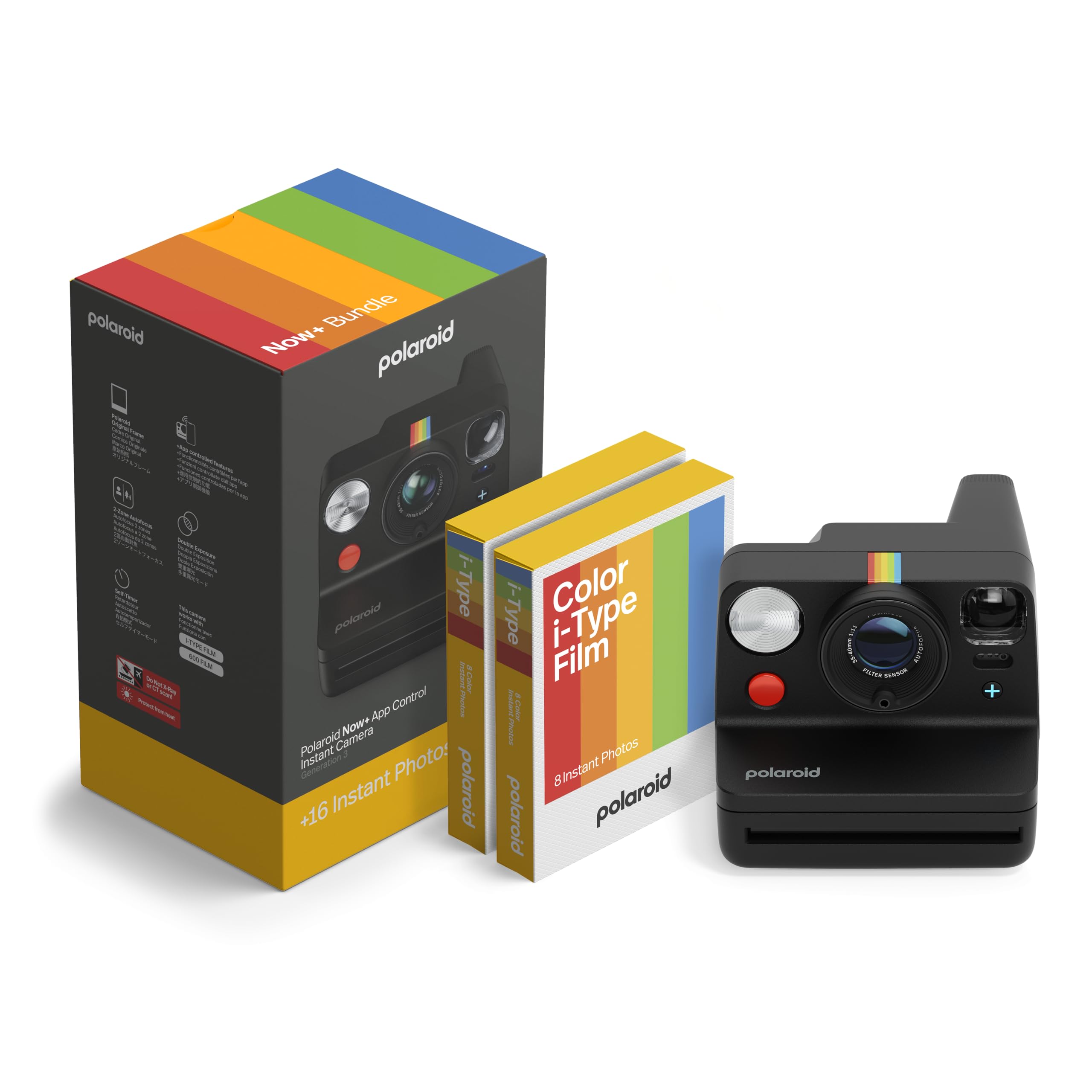
The Now+ is the Polaroid for someone who cannot leave the settings alone. Out of the box it is a familiar point-and-shoot, but the Bluetooth app unlocks manual mode, aperture priority, remote shutter, and double-exposure tools. That is a lot of control for an instant camera, and it makes the Now+ the most flexible full-size Polaroid in this group.

We appreciate that the app does not turn the camera into a phone accessory; the optical viewfinder and physical shutter are still the main event, and the USB-C battery avoids a drawer full of AAs. The trade-off is fiddliness. Manual mode asks you to think about exposure before every shot, which is the opposite of why many people buy an instant camera. The 1/1000-second maximum shutter speed gives you more room in bright light than the other Polaroids here, and the i-Type/600 compatibility means you are not locked into one film stock.

Our reservation is the learning curve. The creative controls add more ways to get a bad exposure, and the app is one more thing to manage. If you want the simplest route to a good full-size print, the Flip's autofocus and scene analysis are easier to trust. If you never open the app, the extra control buys you little, and the Flip is the easier way to spend the same full-size film budget.

Pros

  • Manual and aperture-priority modes
  • USB-C rechargeable battery
  • Works with i-Type and 600 film
  • 1/1000 sec maximum shutter

Cons

  • Only 16 prints included
Our verdict

We like the Now+ for photographers who want app-based manual control in a full-size Polaroid; it is not the one for a no-fuss shooter.

Check Latest Price

How We Tested the Best Instant Cameras

We started by pulling every current model from the major instant-camera makers, then cut the list to 12 based on whether film was easy to buy and afford, whether the camera fit in a jacket pocket or needed a tote, and whether it was a current model and not a collector's item. Bundles got counted as one camera, with their extras noted so we could compare them against buying film and a case separately.

Testing ran eight months, in the places these cameras actually live: kitchen tables at birthday dinners, the patio during cookouts, a few long weekends away, and a lot of ordinary weeknights. Each camera went out with a fresh pack of film, and we logged every frame — how many came back usable, which ones clipped a bright sky to white or turned skin orange under the flash, and how close you had to stand for the flash to reach.

We timed how long it took to get from a sealed box to a first shot, then handed each camera to someone who had never used one and watched whether they found the shutter and the flash without coaching. Every model shot the same setup — one person standing against a bright window — so we could compare exposure and color side by side. The app-connected models got the pairing test: connect to a phone, fire the remote shutter, try a double exposure, and count the taps.

Finally we emptied each box onto a table. A bundle with film, a case, and an album got weighed against its price versus a bare camera plus film bought separately, and we carried each one loose in a tote for a week to see whether the finish scuffed or the lens cover stayed shut. Film cost per shot went into the same ledger, because the camera is the cheap part.

How to Choose an Instant Camera

Start With the Film Format

Instax Mini and Polaroid i-Type/600 are not interchangeable, and the camera name can be misleading. Polaroid gets used as a shorthand for any instant camera, but a Fujifilm Instax Mini model takes only Instax Mini film, while the Polaroid Flip and Now+ take i-Type or 600 film. Choose the format before the body: Instax Mini gives you the small, wallet-like print that suits party favors and scrapbooks, while full-size Polaroid film gives you the larger, softer print that people associate with the classic look. Check the film name on the box, not the camera's styling.

Expect a Learning Curve in Low Light

Instant film is not a low-light format, and no camera here changes that. Automatic exposure and flash do the heavy lifting: the Mini 41 and Mini 9 handle the basics for you, while the Flip adds scene analysis and a more powerful flash. We still get the best results near a window or with the flash on, and we fill the frame rather than shooting a small figure across a dim room. If most of your photos happen indoors at night, plan on using flash and getting closer instead of expecting a digital-camera-style result.

Choose Simple or Hands-On

The Mini 41 and Mini 9 are cameras you can hand to a friend without a tutorial. The Mini 41 is the more automatic of the two; the Mini 9 asks you to turn an aperture dial to the setting its LED recommends, which is a small ritual rather than a burden. The Now+ goes the other way, using the Polaroid app to unlock manual mode, aperture priority, and remote controls. We reach for the simple cameras when the point is the gathering, and for the Now+ when we want to experiment. The Flip sits in between, with advanced autofocus but a mostly point-and-shoot experience.

Count the Film in the Bundle

The camera is the entry fee; film is the ongoing cost. Bundles vary a lot: the Mini 41 includes 40 sheets, the Flip and Now+ each include 16, and the Mini 9 is sold as a body with batteries and a close-up lens but no film. Compare the number of sheets and the accessories, not just the camera body. A bundle with a case and enough film for a first outing can be the better value even when the body costs more. Buy film at the same time as the camera so you are not stuck with a new camera and nothing to shoot.

Weigh Size, Weight, and Power

The Mini 9 is the lightest of these four, and the Mini 41 is close enough to carry in a small bag. The Flip is the heaviest, at 0.73 kg, which suits a planned shoot more than a pocket. Battery arrangements differ too: the Mini 9 runs on two AA batteries, while the Mini 41 and Now+ use built-in USB-C rechargeable batteries. If you already carry a power bank for your phone, the rechargeable models are easier to live with; if you like the security of replaceable batteries, the Mini 9 has the simpler answer.

Frequently Asked Questions

Final Verdict

For most people, the Fujifilm Instax Mini 41 bundle is the instant camera we recommend. It is the easiest of these to hand to anyone, it includes 40 sheets and a case, and its automatic exposure keeps the process simple. The smaller Instax Mini print is the trade-off; if you want the classic large Polaroid, the Flip is the better choice.

Buy the Mini 9 if the budget is the deciding factor and you do not mind a more manual aperture dial. The Now+ earns its place for a photographer who wants app-based manual control, but it is not the camera for someone who wants to point and shoot. Start with the film format and the amount of control you actually want, and the choice becomes clear.