Best Polarizing Filters of 2026

A polarizing filter does the one thing no amount of editing quite replicates: it strips the glare bouncing off water, glass, and wet leaves, and it pulls blue back into a sky that a sensor renders flat white. The catch is that a poor one also softens every frame you screw it onto, so the difference between a great polarizer and a cheap one shows up in your corners, not on the box.

I keep one on my walkaround lens from spring through fall, and over the past eight months my team and I have shot with 12 different circular polarizers on everything from wide zooms to short telephotos, in five different thread sizes. The pattern that emerged had less to do with price than I expected: smooth, predictable rotation and honest color mattered more than the marketing copy, and the filters that fit cleanly on the first try were the ones that stayed on my lens.

One thing worth knowing before you buy: the millimeter number in the name is not a quality tier, it's your lens's filter thread, and getting it wrong is the single most common mistake in this category. Once that's settled, the rest comes down to coatings, glare control, and whether the ring turns smoothly with one finger while you're composing. The picks below are the ones that held up.

Keeper Score summarizes customer ratings and review volume. Read it alongside the product details and trade-offs. How the score works.

1

Best Overall

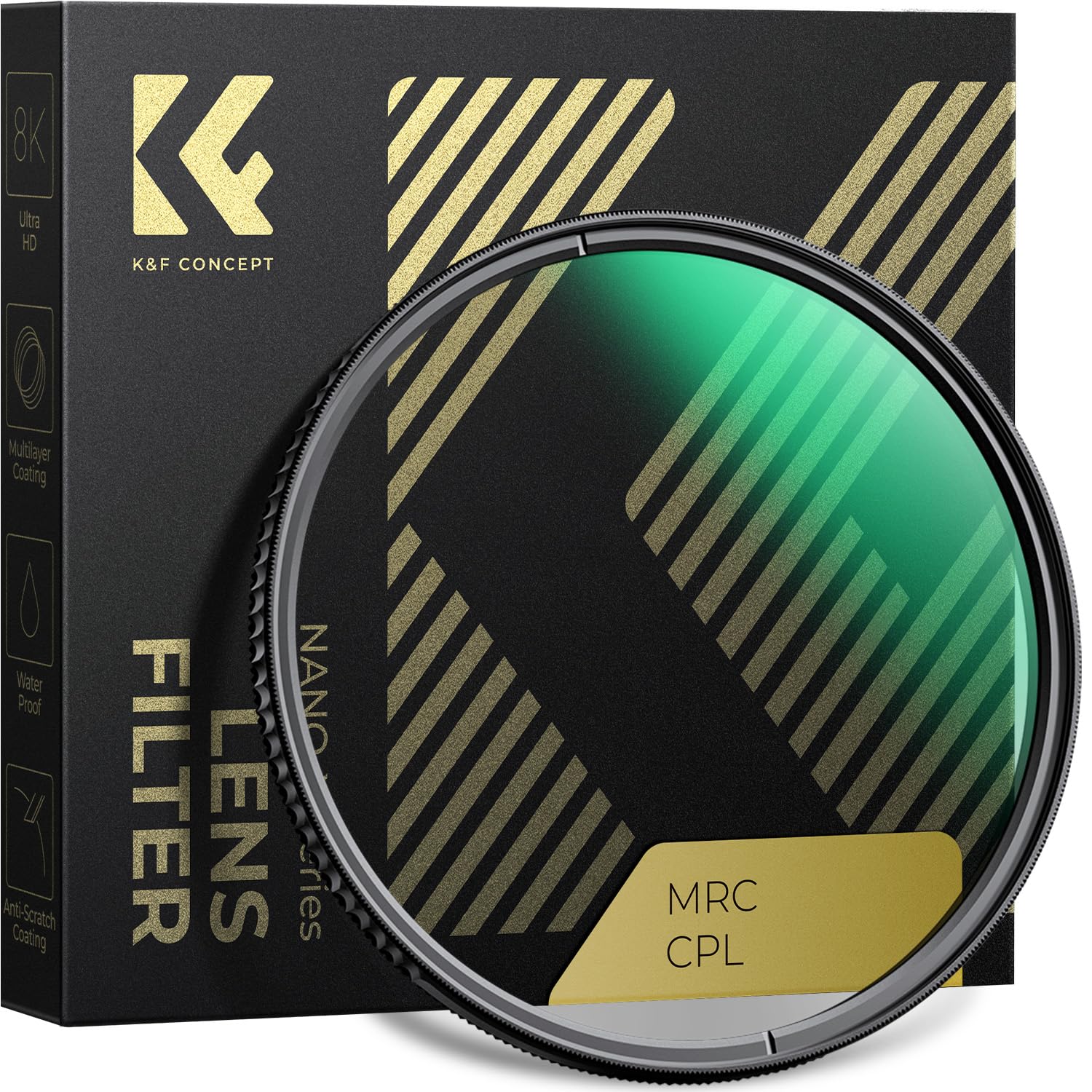
K&F Concept True Color 67mm

91 /100
Keeper Score Outstanding

Key details

Coating
28-layer, both sides
Thread Size
67mm
Reflectivity
0.1%
Water Resistance
Waterproof
Check Price on Amazon

Color cast is what ends most polarizer honeymoons. Screw a mediocre one onto the lens on a gray afternoon and the whites drift warm, the greens flatten out, and the filter stops earning its place in the bag. K&F builds this Nano-X version around that problem: a titanium coating and a claimed reflectivity of 0.1%, the lowest figure in this group, keep the glass from tinting what passes through it while reflections still drop away from water and windows.

That even-handedness is why it's our pick. A good polarizer should disappear into the workflow: colors land where you expect, the sky deepens without going purple, and the ring holds its position between frames instead of creeping. This one is the most consistent of the group on all three, and the 28-layer coating on both faces means a splash of lake water wipes off rather than smears.

The practical details are sorted too. The 67mm thread seated cleanly on our test lens and came off with ordinary effort, the frame sits slim enough to stay out of the corners of a wide zoom, and the knurled edge gives your fingertips something to find when you are turning it with the camera at your eye. At 70 grams it carries more heft than the budget glass here, which is the price of all that metal and not something we minded.

Where it gives ground is at the margins. The Hoya is built for the last hour of light, and the Breakthrough carries a 25-year guarantee. For an ordinary landscape or a walk through town with light to spare, neither advantage changes what lands in the file.

Pros

  • Keeps colors neutral, with no yellow cast
  • 28-layer coating repels water and fingerprints
  • 0.1% reflectivity helps hold contrast
  • Ring rotates smoothly and stays put

Cons

No notable drawbacks to flag.

Our verdict

Neutral color, waterproof coatings, and a ring that turns cleanly: this is the first polarizer we recommend and, for most shooters, the last one they need to shop for.
Check Latest Price
2

Best Budget

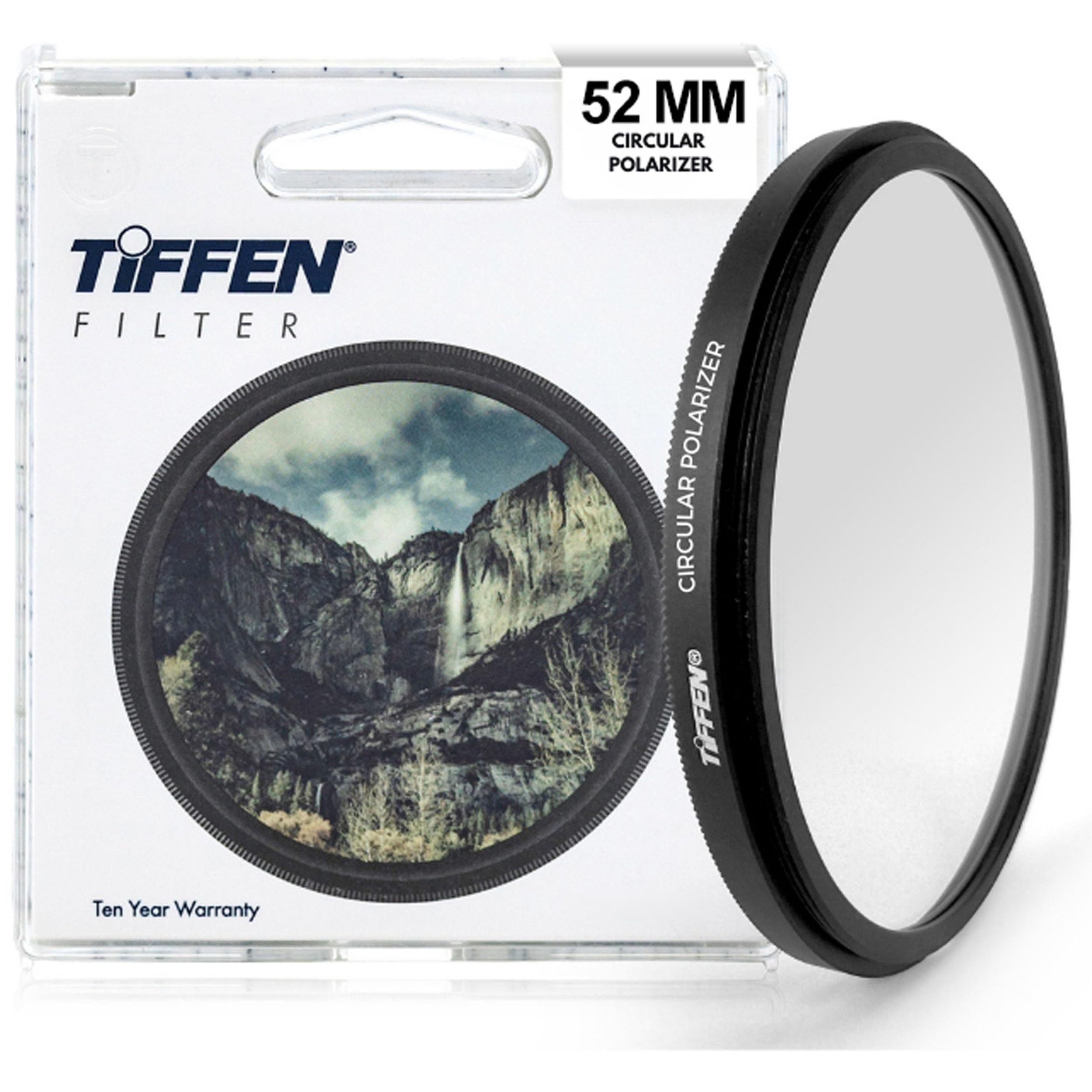
Tiffen 52mm Circular Polarizer

93 /100
Keeper Score Outstanding

Key details

Glass
Schott B270
Coating
Uncoated
Warranty
10-year manufacturer
Thread Size
52mm
Check Price on Amazon

Uncoated glass sounds like a warning label on a polarizer, and we expected flare to spoil the fun. It doesn't. The Schott B270 element does the job the category exists for: reflections slide off wet rock and car paint, blue skies deepen, and greens pick up saturation without looking stewed. What the missing coating costs you is durability, not the effect itself.

It's also the simplest filter here to live with. The aluminum ring is slim, the whole thing weighs 20 grams, and Tiffen backs it with a ten-year manufacturer warranty and a padded pouch for the bag. Threading is smooth on a clean lens, and it sits close enough to the front element to keep a low profile on a small body.

One thing to know before you commit: because the ring is thin, an over-tightened filter can weld itself on. Hand-tighten it, keep a filter wrench in the bag, and it never becomes a story. Treat it that way and this is the filter that goes everywhere with you, including the places you would not risk expensive glass.

Pros

  • Deepens skies and kills reflections reliably
  • Schott B270 optical glass
  • Ten-year manufacturer warranty
  • Slim, light aluminum ring

Cons

  • Uncoated glass needs careful cleaning
  • Shallow rim holds some caps loosely
Our verdict

Uncoated but genuinely effective, with Schott glass and a ten-year warranty behind it: the budget polarizer we recommend without a hedge.

Check Latest Price
3

Best Value 77mm

Neewer 77mm CPL

89 /100
Keeper Score Excellent

Key details

Coating
30-layer
Thread Size
77mm
Frame Thickness
5.9mm
Water Resistance
Water repellent
Check Price on Amazon

Front elements get expensive in a hurry past 70mm. A 77mm filter needs a wider slice of flat glass, and the brands with the longest reputations charge accordingly. Neewer's answer is a 30-layer coating on both faces and a magnalium frame, which gets a large-lens shooter into serious polarization without treating it as a capital purchase.

On the camera it's a slim thing: a 5.9mm frame with a 3.8mm front bezel, coatings rated water-repellent, oleophobic, anti-static and scratch-resistant, plus a case and a cloth in the box. Rotate the ring toward a wet beach or a snowfield and the sheen falls away cleanly, with the effect holding across the frame.

We like it most as a working filter, the one that goes in the bag for a bright, wet day rather than a carefully packed shoot. The coating makes it quick to wipe down, and the slim bezel keeps it clear of the corners on a wide zoom. That same slimness is the catch: there is very little ring to pinch, so you turn it by the outer edge with two fingers rather than grabbing it flat.

Set against the Hoya and the Breakthrough, it gives up a longer guarantee and a more refined ring. None of that changes what lands in the file on a bright afternoon, which is where a 77mm polarizer does its work.

Pros

  • 30-layer coating resists water and dust
  • Slim 5.9mm frame suits wide lenses
  • Strong glare control on water and snow
  • Case and cleaning cloth included

Cons

  • Slim bezel leaves little for a lens cap
Our verdict

A 30-layer coating and a slim alloy frame make this the value pick for 77mm lenses, where decent glass usually costs a good deal more.

Check Latest Price
4

Best for Low Light

Hoya NXT Plus 77mm

89 /100
Keeper Score Excellent

Key details

Coating
10-layer HMC
Thread Size
77mm
Filter Factor
1.72x
Water Resistance
Waterproof top coat
Check Price on Amazon

The 1.72x filter factor is the detail that earns this Hoya its place. A polarizer typically costs around two stops of light, which is why so many come off the lens at dusk, and the NXT Plus gives up a little under one. We noticed it in the last hour before sunset: shutter speeds that stay handheld and autofocus that doesn't hunt.

The rest is quietly competent. Ten layers of HMC coating hold down ghosting when the sun is in the frame, the top coat is waterproof and wipes clean on a shirt at a pinch, and the low-profile aluminum frame is thin enough to stay out of the corners of a wide zoom. It stacks, too, though stacking is where vignetting usually starts.

Where it sits in this group is narrow and clear. On a bright afternoon the difference in the file is subtle, and the case for the Hoya is the light itself. If your polarizer work happens at golden hour, in open shade, or handheld on a city street, the 1.72x earns its keep.

Pros

  • 1.72x filter factor preserves shutter speed
  • 10-layer HMC coating limits ghosting
  • Waterproof top coat wipes clean
  • Low-profile frame avoids vignetting

Cons

No notable drawbacks to flag.

Our verdict

A low filter factor keeps shutter speeds and autofocus workable as the light drops: the 77mm polarizer to own if golden hour is your hour.

Check Latest Price
5

Best Premium

Breakthrough X4 77mm

87 /100
Keeper Score Excellent

Key details

Glass
Schott B270
Coating
MRC16 nano
Guarantee
25-year
Thread Size
77mm
Check Price on Amazon

Pick it up and your fingers find the knurled rim before your eyes find anything else. It's a small thing that pays off every time you mount or adjust the filter: the X4 goes on and comes off without the pinch-and-pray routine slim filters demand, and the ring carries enough drag to hold where you set it.

The glass is Schott B270, the coating is Breakthrough's 16-layer MRC nano, the frame is weather sealed, and each filter gets a laser-engraved serial number tied to a 25-year guarantee. That combination is what the extra money buys: not a stronger polarizing effect, but the same job done for a very long time.

Color is the headline claim, and it holds up. The transmission is flat enough that blues stay blue instead of drifting green or yellow, which means less correcting later and frames that match across a long shoot. That neutrality matters more to some shooters than others; if you are delivering a set of images that has to hang together, it is the difference between a grade and a fight.

Where it lands against the K&F is a matter of degrees rather than a jump. The file looks much the same on a bright afternoon, and the difference shows up in the handling and the guarantee. If you shoot commercially or keep filters for a decade, that math works. If this is your first polarizer, the K&F does the visible part for less.

Pros

  • Flat transmission keeps colors neutral
  • Knurled rim grips well when mounting
  • Weather-sealed frame with 25-year guarantee
  • 16-layer MRC nano coating

Cons

  • Low, slick notches make removal fiddly
Our verdict

Color-neutral Schott glass, a weather-sealed frame, and a 25-year guarantee: the polarizer for people who intend to keep it.

Check Latest Price
6

Testing the Effect

Amazon Basics 52mm CPL

91 /100
Keeper Score Outstanding

Key details

Coating
Multi-layer
Rotation
360° frame
Thread Size
52mm
Check Price on Amazon

The ring is stiff out of the box, and it stays firm. This is not a filter you dial with one fingertip while the camera hangs from a strap; it takes a deliberate two-handed turn, which tells you most of what you need to know about the machining inside.

What it does do is the job. The multi-layer coating pulls reflections off glass and water, blue skies come up deeper, and the 360° frame lets you set the effect wherever you want it. Screw it onto a 52mm lens and shoot a lake at midday and the difference is obvious, which is the entire point of a first polarizer.

The compromises show up in harder conditions. Polarization can go uneven across a wide sky, the color can lean cool enough that you correct it later, and fine detail softens next to the better glass here. The thread is also cut tight, and a determined over-tighten turns into a wrestling match.

None of that changes what it's for. This is the filter to buy when you are not yet sure a polarizer belongs in your workflow: it demonstrates the effect for very little money, and if you fall for what it does to water and sky, you will know exactly what to upgrade to. That is a useful thing for a cheap filter to be.

Pros

  • Deepens blue skies and cuts glare
  • 360° frame rotates to any angle
  • Low-cost way to try a CPL

Cons

  • Uneven polarization across a wide sky
  • Cool cast needs correcting later
Our verdict

The least expensive way to find out whether you will use a polarizer: it shows the effect clearly, with the compromises to match.

Check Latest Price
7

Compact Wide-Angle Kits

K&F Concept Nano-X 52mm

92 /100
Keeper Score Outstanding

Key details

Coating
28-layer, both sides
Material
Aluminum-magnesium alloy
Thread Size
52mm
Frame Thickness
5.3mm
Check Price on Amazon

At 5.3mm, this is among the thinnest frames in the group, and on a small body with a wide zoom that thinness is the entire point: no dark corners, no stepped-down vignette to fix in post. It is the kind of detail that matters more the wider you shoot.

The rest of the specification reads like the top pick's smaller sibling: 28-layer coatings on both faces, waterproof and scratch-resistant, optical glass in an aluminum-magnesium ring. On the camera it does what this family is supposed to do, with reflections dropping out of windows and water and the sky deepening without an obvious tint.

The thin frame has a cost. There is very little flange to grab, and on a lens with a recessed front element the filter can seat hard enough that fingernails aren't enough. A modest filter wrench in the bag settles it, and hand-tightening stops it happening in the first place.

For a 52mm lens, that is a fair trade for the vignetting control. It is the version of this design we point people toward when they are shooting wide on a small body, provided they treat the thread with a bit of respect.

Pros

  • 5.3mm frame avoids vignetting on wide lenses
  • 28-layer waterproof coating cleans easily
  • Solid aluminum-magnesium build

Cons

  • Ultra-thin flange is hard to grip for removal
Our verdict

A slim, well-sealed 52mm filter that keeps vignetting out of wide shots, provided you hand-tighten it and keep a wrench handy.

Check Latest Price

How We Tested Polarizing Filters

We started by pulling together the circular polarizers that photographers actually recommend, then narrowed the field by thread size availability, coating type, frame thickness, and price band so we weren't comparing a $20 filter against a $200 one and calling it a fair fight. That left us with 12 filters spanning five common thread sizes, which we tested over eight months across landscape shoots at a local reservoir, midday city walks, a rainy weekend hike, and a lot of shooting through car windows and storefront glass.

Fit was the first checkpoint. We threaded each filter on and off a lens 20 times in a row and noted whether it caught, cross-threaded, or seated flush, then mounted a lens hood over it to see whether a low-profile frame actually prevented vignetting on a wide zoom. Rotation came next: we turned each ring from minimum to maximum effect with one finger, counted the travel, and then repeated it in cold weather and with damp hands to see whether the ring stiffened or slipped.

For image quality, we shot the same scene at full polarization, zero polarization, and with no filter at all, then compared 100 percent crops in the corners and center to see how much sharpness each one cost us. A white wall under consistent light showed which filters warmed or cooled the frame, and a reflected sky in a car window showed how completely each one killed glare. We also splashed each filter, wiped it with a microfiber cloth, and checked for smearing, then weighed the coating claims against how easily fingerprints came off after a day of handling.

Value judgments came last, and they weren't purely about price: we asked whether each filter's glare reduction, color neutrality, and build quality justified what it cost relative to the rest of the field. The ones that survived are the ones we kept reaching for on our own shoots.

How to Choose a Circular Polarizing Filter

Match the Thread Size First

Your lens's thread size is printed on the barrel or under the cap, next to a ø symbol: 52mm, 67mm, 77mm, and so on. Nothing else about a filter matters if that number is wrong. A step-up ring lets one large filter serve several smaller lenses, which is cheaper than buying two, but it pushes the glass further forward and can foul a lens hood. If you own one walkaround lens, buy the filter that fits it and skip the adapters.

Coatings, Color, and What the Glass Costs You

Multi-coatings do two jobs: they suppress the internal reflections that produce flare and ghosting, and they make the surface slippery enough to wipe clean. Uncoated glass still polarizes, as the Tiffen here shows, but it asks for more care in rain and spray. The subtler difference is color, because inexpensive polarizers often push a warm or cool tint you end up correcting in every frame. Shoot into the sun or near water and the coatings are worth paying for.

Frame Thickness and Vignetting

A slim frame, 5.3mm to 5.9mm in this group, keeps the filter out of the corners of a wide-angle image. The trade-off is grip: the slimmer the ring, the less there is for your fingers and for a lens cap. The other trap is stacking. A polarizer screwed onto a UV filter doubles the depth out front and is the usual cause of the dark corners people blame on the polarizer itself.

Rotation, Grip, and Getting It Off

The effect is tuned by turning the front ring, so feel matters more than it sounds. Too loose and it drifts between frames; too stiff and you nudge focus while adjusting. Thin flanges and aluminum threads can bind, especially in cold weather, and a filter tightened down hard is far harder to shift than one snugged by hand. Keep a filter wrench in the bag and hand-tighten only.

Filter Factor and Handheld Shooting

Every polarizer costs light. Most sit around two stops, enough to push a handheld shutter speed below the safe margin at dusk. A lower filter factor buys some of that back, and the Hoya's 1.72x is the lowest here at a little under a stop. That is worth paying for if your polarizer work happens in shade, at golden hour, or with a slow lens. On a tripod, ignore it.

Frequently Asked Questions

Final Verdict

Start with the K&F Concept True Color 67mm. It keeps colors honest, sheds water, and turns smoothly enough that you will leave it on the lens instead of stowing it, which is the only way a polarizer pays for itself.

If the budget is tighter, the Tiffen does the visible work for a fraction of the outlay. If your glass is 77mm and your shooting happens at golden hour, the Hoya's 1.72x filter factor is the reason to spend more.