Best Overall
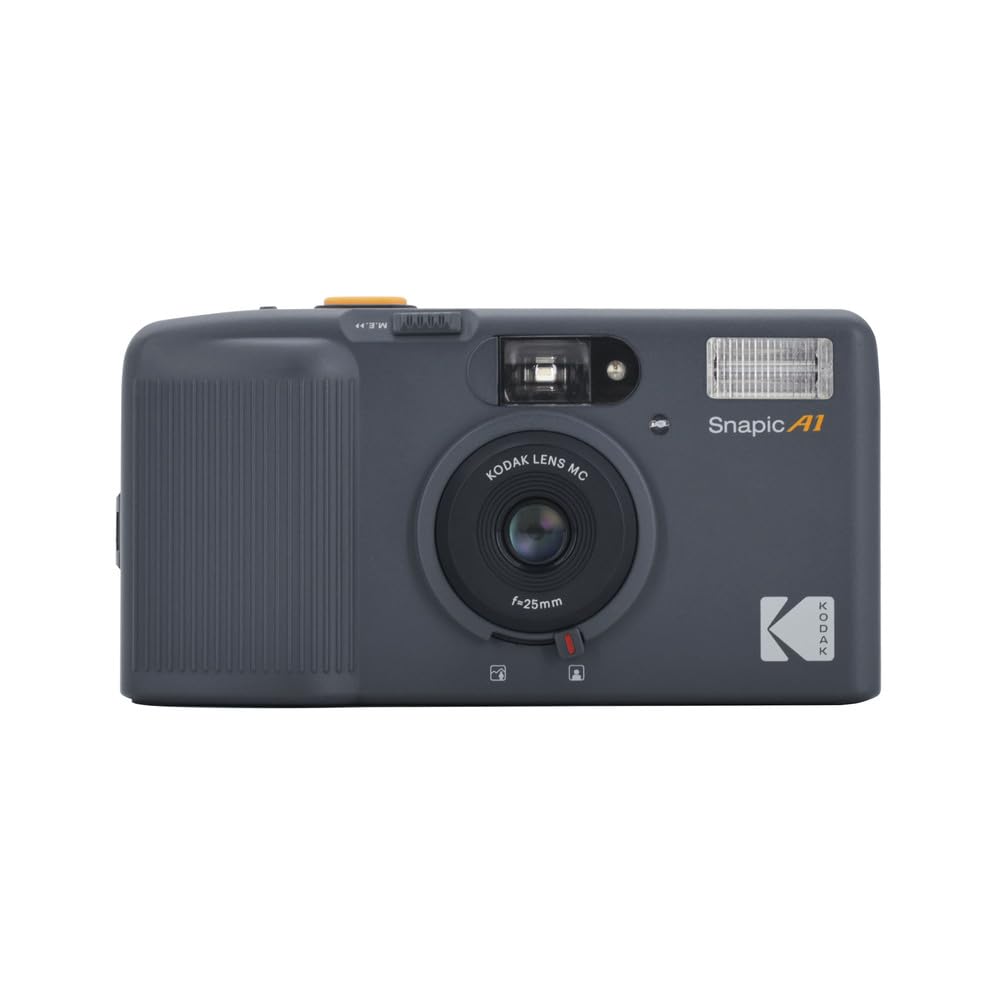
Kodak Snapic A1
Key details
- Lens
- 3-element glass
- Focus
- 2-zone
- Weight
- 4.13 oz
- Film Format
- 35mm full-frame
Most inexpensive film point-and-shoots are a plastic lens in a plastic shell, and the pictures come back looking like it. The Snapic A1 is the one we consider the safest first film camera here: a three-element glass lens, a two-zone focus switch, and an automatic flash with red-eye reduction, in a body 4.65 inches wide that weighs 117 grams.
The focus switch is the detail that earns its place. It gives you two positions — close, and everything from a few feet out to the horizon — so a portrait across a dinner table and a street scene two blocks long are both genuinely in focus instead of both hoping. The flash works the same way: it reads the light and fires with red-eye reduction when it's needed, so there's no switch to remember at a party. A multiple exposure mode layers two scenes onto a single frame, a more playful extra than we expected on a camera this simple.
Daylight is where it shines. The automatic exposure handles a bright street or a flat overcast afternoon without any input, so load a 400-speed film and shoot; that hands-off behavior is the whole reason to choose this over a used body of unknown history. The trade is control — no exposure dial, no way to override the meter when the light gets strange — and for snapshots we don't miss it. At 117 grams it disappears into a coat pocket, though the plastic shell doesn't feel like it wants to be dropped on pavement.
Pros
- Three-element glass lens for sharper frames
- Two focus zones instead of fixed focus
- Automatic flash with red-eye reduction
- Pocketable at 117 grams
Cons
- Film and AAA battery sold separately
For anyone who wants sharp snapshots without learning exposure, the Snapic A1's glass lens, two focus zones, and auto flash do the work, and the one-year warranty beats gambling on a used camera.
