Best Photo Adhesives of 2026

A photo that slips off the page is annoying; a glue stick that bleeds through the only print of your grandmother is a small tragedy. Photo adhesive is supposed to keep prints flat, corners tight, and pages looking finished—without yellowing, wrinkling, or letting go once the album is closed. I have made enough scrapbook messes to be picky, so over the past four months my team and I tested 16 photo adhesives, from tape rollers to glue sticks to mounting squares and corners.

Format matters as much as formula: a tape runner is quick for long rows, a glue stick covers big flat areas, repositionable squares let you nudge a photo before committing, and corners finish an album. Acid-free and photo-safe labels are worth checking—they are the difference between a page that ages cleanly and one that stains or yellows—and quantity matters, since a roller that quits mid-album is no bargain. The picks below stayed stuck, stayed flat, and kept my photos looking like photos.

Keeper Score summarizes customer ratings and review volume. Read it alongside the product details and trade-offs. How the score works.

1

Best Overall

Scotch 6061 Tape Runner

91 /100
Keeper Score Outstanding

Key details

Pack Size
6 rollers
Photo-safe
Acid-free and photo-safe
Adhesive Type
Permanent double-sided
Tape Width And Length
0.27 in x 26 ft per roller
Check Price on Amazon

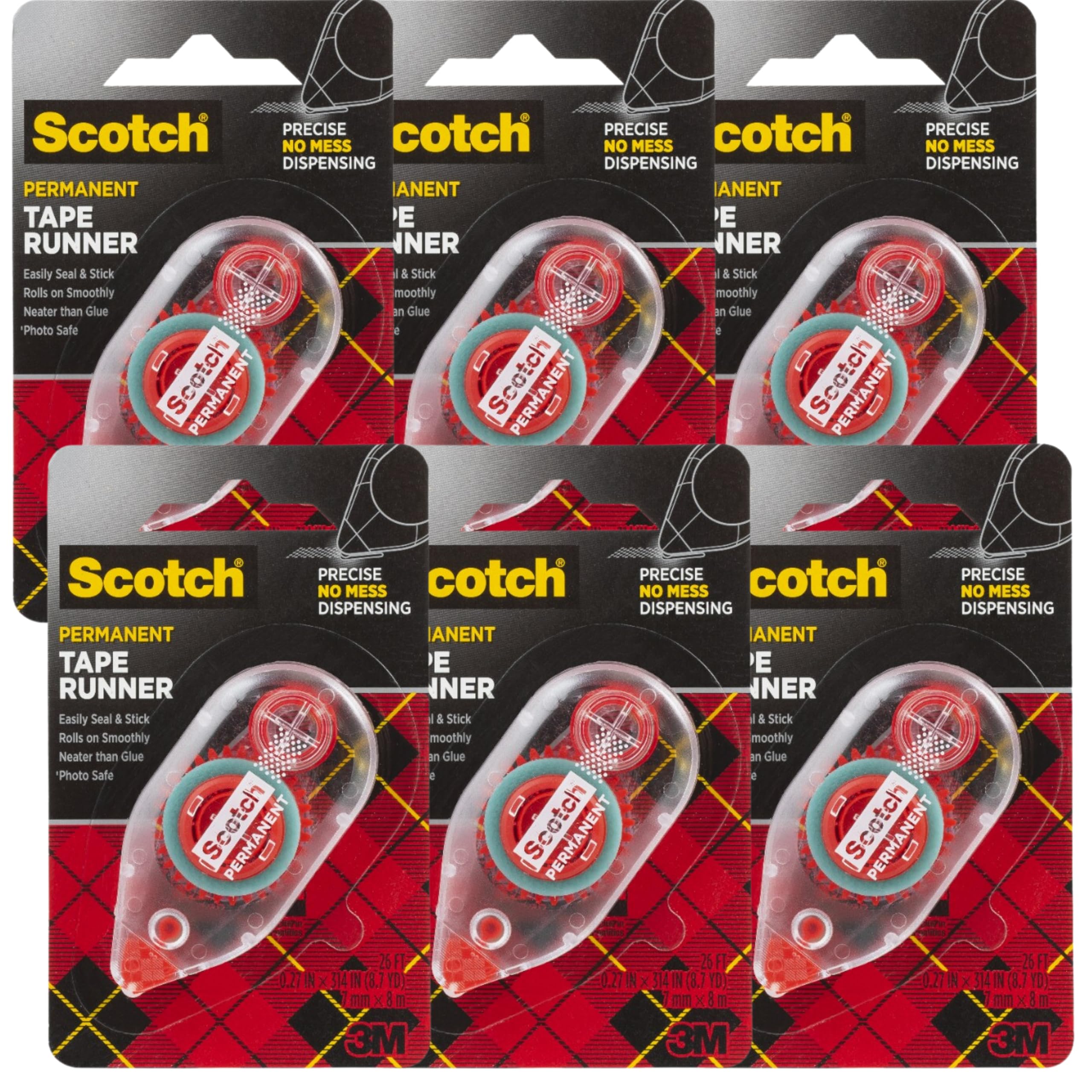
The case for the Scotch 6061 starts with a simple question: how much adhesive belongs between a photo and the page? This runner lays down a narrow strip of permanent, double-sided tape, so the bond stays hidden and the print sits flat. There's no glue to dry, no damp paper to warp, and no bottle to clog. For everyday album pages and scrapbook layouts, that combination is hard to beat.

That's why it's our top pick. The 0.27-inch tape is narrow enough to follow the edge of a 4 x 6 print without a visible ridge, and the six rollers give you 26 feet each, so you're not swapping dispensers in the middle of a project. The adhesive is acid-free and photo-safe, which is the baseline for anything touching a photograph. We also appreciate the compact dispenser: it fits in a craft bag and advances with one hand, leaving the other free to hold the photo square.

The narrow width is the main practical catch. A larger print needs several passes, and the tape line can look busy if you rush it. We dry-fit the photo first and run strips along the long edges, then press the print flat. For standard album pages, the convenience is worth the extra few seconds. If you're covering a full paper back, a glue stick is faster.

Pros

  • Permanent acid-free bond
  • No drying time or glue mess
  • Six 26-foot rollers
  • Compact one-hand dispenser

Cons

  • Permanent bond is difficult to undo
Our verdict

We recommend the Scotch 6061 for everyday photo mounting: the acid-free double-sided tape is permanent, mess-free, and needs no drying time, and six rollers keep a full album moving.
Check Latest Price
2

Best for High-Volume Crafting

MARCADORUS Glue Tape Roller

90 /100
Keeper Score Outstanding

Key details

Pack Size
4 rollers
Photo-safe
Acid-free and archival-safe
Adhesive Type
Permanent double-sided
Tape Width And Length
0.31 in x 52 ft per roller
Check Price on Amazon

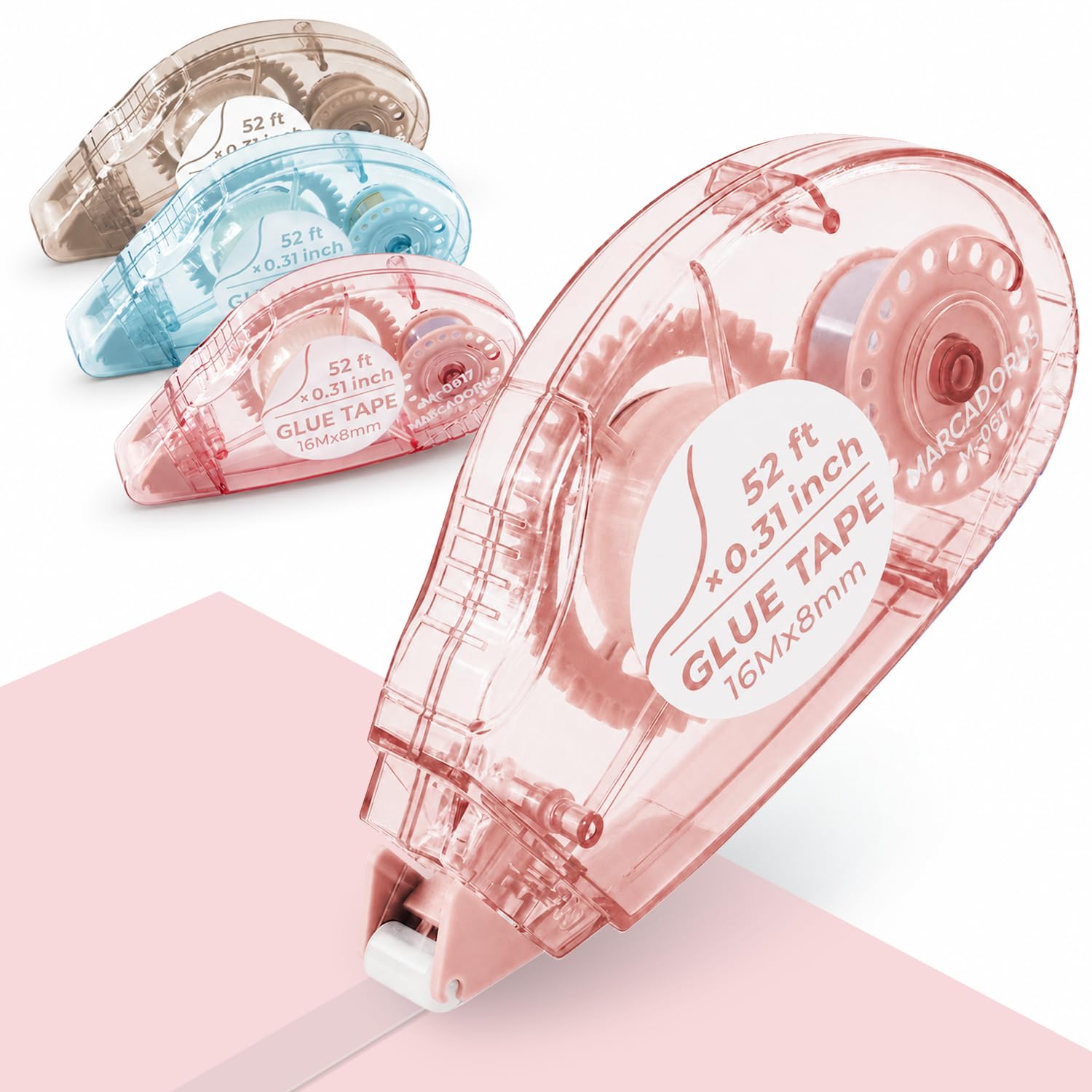
Most tape runners in this guide carry 26 feet of adhesive; the MARCADORUS puts 52 feet on each roller. That extra length is the reason to notice it. A four-pack gives you 208 feet total, which is enough for a serious album or a classroom project without stopping to reload. The tape is 0.31 inches wide, acid-free, and described as archival-safe, so it fits the photo-safe brief. For high-volume scrapbookers, that combination makes it the most practical runner here.

We recommend it for long projects, with one caveat: the adhesive doesn't grip every paper with the same authority. On smooth cardstock and photo paper it held well; on heavier or textured paper, use more strips and press longer. That's a manageable trade for a runner with this much tape. The permanent bond is strong enough for flat photos and journaling, but a heavy embellishment needs extra adhesive.

The dispenser itself is light and comfortable, and the clear housing lets you see how much tape is left. We like the protective cap for tossing it in a bag. If you want the longest supply here, this is the value pick. If you want the smoothest feed, the Scotch runner is the safer default.

Pros

  • 52 feet per roller, 208 feet total
  • Acid-free and archival-safe
  • Lightweight clear dispenser

Cons

  • Tape can break or bunch mid-roll
Our verdict

We reach for the MARCADORUS four-pack when a long album is on the table; its 208 total feet is the longest supply here, though the feed can be fussy.

Check Latest Price
3

Best for Broad Paper Coverage

Scotch Photo-Safe Glue Stick

93 /100
Keeper Score Outstanding

Key details

Format
1.41 oz glue stick
Cleanup
Soap and water
Pack Size
4 sticks
Photo-safe
Acid-free and photo-safe
Check Price on Amazon

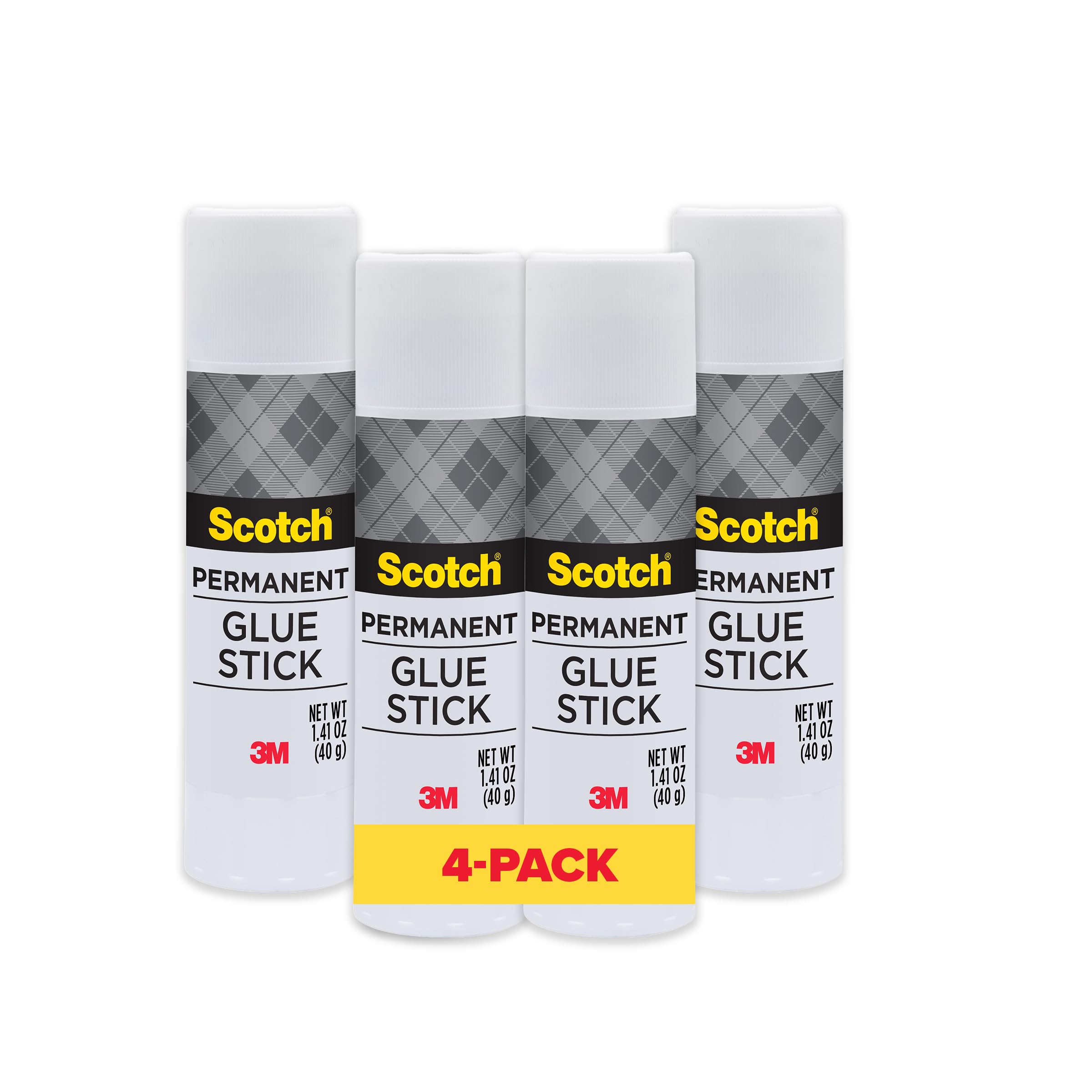
A glue stick is the right tool when the job is coverage rather than precision. If you're pasting a large paper backing, a collage piece, or a full-page photo, a runner leaves gaps and takes several passes; the Scotch glue stick lets you sweep adhesive across the whole surface in seconds. The 1.41-ounce sticks are acid-free and photo-safe, and they clean up with soap and water.

We like the control it gives on paper crafts. The glue goes on white and dries clear, and with a thin coat it doesn't wrinkle paper the way a wet liquid adhesive can. It also gives you a short window to adjust a piece before the bond sets, which is useful for collage. The four-pack is a sensible size for a classroom or a busy scrapbook table.

The finish is the reason we keep it in the drawer. A glue stick lays a flat, even film that disappears under paper, and it doesn't leave the raised line a tape runner can make. It is slower than tape on a stack of small prints, so we save it for the jobs where coverage matters. That pace is the price of an even film, and it is a fair one for collage and paper layers. If you already work with paper crafts and want one photo-safe adhesive for broad coverage, this is the one we reach for.

Pros

  • Acid-free and photo-safe
  • Covers large paper backs quickly
  • Dries clear with easy cleanup

Cons

  • Can curl thin photos if over-applied
  • Not precise for small photos
Our verdict

Our choice for large paper backs and collage is the Scotch glue stick: it's acid-free, photo-safe, and covers quickly, with a thin coat that dries clear.

Check Latest Price
4

Best for Repositionable Placement

3L Repositionable Mounting Squares

93 /100
Keeper Score Outstanding

Key details

Size
1/2 inch
Count
1,000 squares
Photo-safe
Acid-free and archive-safe
Adhesive Type
Repositionable double-sided
Check Price on Amazon

The moment a photo goes down crooked is the moment you appreciate a repositionable adhesive. The Scrapbook Adhesives by 3L mounting squares are double-sided, acid-free, and archive-safe, and they let you lift and nudge a print for the first five minutes. That's a small window, but it's enough to straighten a border or center a photo on a page.

We keep these for layouts where placement is fiddly. The 1/2-inch squares are easy to peel from the dispenser, and 1,000 of them go a long way. They add less bulk than a tape runner, which matters in a thick album, and they don't leave a wet glue line. On smooth paper, four squares hold a 4 x 6 print flat. The dispenser's pull-tab design is one of those small details that makes a repetitive job less annoying.

The catch is that repositionable doesn't mean removable forever. After the first few minutes, the bond settles, and lifting a photo can still stress the paper. For a scrapbooker who wants a second chance at straight, these are worth the trade. For a permanent, low-profile bond, the Scotch runner is quicker.

Pros

  • Repositionable for the first five minutes
  • 1,000 acid-free 1/2-inch squares
  • Low bulk in albums
  • Easy peel-and-place dispenser

Cons

  • Small size requires several per larger print
  • Hold is lighter than permanent tape
Our verdict

We keep the 3L squares for pages where a photo needs a second chance; they're acid-free, low-bulk, and repositionable for the first five minutes.

Check Latest Price
5

Corner Mounting

Pulaisen Photo Corners

95 /100
Keeper Score Outstanding

Key details

Size
0.8 x 0.8 inch
Color
Black
Count
360 corners
Photo-safe
Acid-free
Check Price on Amazon

The Pulaisen photo corners are the pick here when you want the adhesive to stay off the print. They slip over each corner and stick to the album page, leaving the photo itself free of tape or glue. In black, they give a page a vintage, almost archival look. The pack includes 360 corners, each 0.8 by 0.8 inch, and they're acid-free.

We reach for them when the album design matters as much as the hold. They're easy to peel from the sheet and reposition right after placement, which helps when you're centering a print. They also let you mount a photo without flattening it into the page, so the print keeps a little dimension. For a memory book or a display album, that small lift is part of the charm.

The limitation is holding power. The adhesive is not as aggressive as tape, and on slick or coated album paper a corner can lift, especially if the photo is heavy. We press each corner firmly and avoid using them on oversized prints. For standard 4 x 6 and 5 x 7 photos in a flat album, they do the job and look good doing it.

Pros

  • Keeps adhesive off the photo face
  • Acid-free with a vintage look
  • 360 corners per pack
  • Easy to reposition after placement

Cons

  • Paper corners can tear during placement
Our verdict

We use the Pulaisen corners when the album design should show; they keep adhesive off the print, though the hold is lighter than tape.

Check Latest Price

How We Tested Photo Adhesives

We built the shortlist by focusing on the formats people actually use for photos—rollers, glue sticks, mounting squares, and corners—and prioritizing anything labeled acid-free or photo-safe. Then we compared pack counts and cost per use, because a low sticker price means little if a roller runs dry after one album. Over four months, we tested 16 of them.

Testing happened at my dining table and a craft desk, with wedding albums, vacation prints, journal pages, school projects, and card fronts spread out for a few weekends at a time. We stuck glossy and matte prints to copy paper, cardstock, and album pages, then checked after an hour, a week, and a month for curling, peeling, and bleed-through. To get at durability, sample pages sat in a warm car and on a sunny windowsill so I could see whether the adhesive yellowed or left a stain.

I used each one the way a person actually does: one hand on a roller while the other held the photo, a glue stick on a large background, peel-and-stick squares when I wanted to shift a print before pressing down. We noted jams, uneven coverage, gummy edges, and whether corners lifted cleanly when I deliberately pulled them up. We counted how many prints each pack secured and compared cost per photo, and we looked at the finish—whether tape showed at the edge of a print, whether glue wrinkled thin paper, whether squares left a visible shadow under a photo.

How to Choose a Photo-Safe Adhesive

Start with photo safety

Any adhesive that touches a photograph should be labeled acid-free and photo-safe. That matters because ordinary tape and glue can yellow, stain, or turn brittle over time, and the damage may not show up for years. A tape runner or glue stick contacts the back of the print; photo corners hold the edges and keep adhesive off the image entirely. If you're mounting a print you care about, check the label before you peel the backing. For a temporary display, the risk is lower, but residue can still be a problem.

Match the format to the placement

A double-sided tape runner is the fastest choice for flat, permanent mounting: it lays down a hidden strip and needs no drying time. Repositionable squares are better when you want to nudge a photo into place, while a glue stick covers a large paper back in a few strokes. Photo corners are the exception that keeps adhesive away from the print. We choose a runner for album pages, squares for layouts where centering is fussy, and corners when the look of the page matters. The format should follow the mistake you're most likely to make.

Decide between permanent and repositionable

Permanent adhesive is the default for albums that will be stored and handled. It holds flat and resists lifting, but a crooked photo is hard to rescue. Repositionable squares give you a short window—often about five minutes—to adjust before the bond settles. That window is useful for centering, not for repeated removal. If you expect to change a page later, use photo corners or a removable mounting product rather than a permanent runner. We treat permanent tape as a one-shot tool and dry-fit the print first.

Buy for the project, not the pack

Tape runners are sold by length, and the difference matters over a full album. A 26-foot roller is fine for a few layouts; a 52-foot roller is better for a long project or a classroom. Adhesive squares are sold by count, but a 1/2-inch square covers less area than a strip of tape, so a large print may take several. Glue sticks are measured by weight and go further on paper backs than on small photo corners. Buy for the number of prints you plan to mount, not the number of pieces in the pack.

Test on the paper you're using

Paper varies more than the adhesive label suggests. Glossy photo paper, textured cardstock, and thin copy paper each hold differently, and a glue stick that works on one can curl another. Before mounting a finished print, test the adhesive on a scrap of the same paper and press firmly for a few seconds. If the paper curls, use less glue or switch to tape. If the tape lifts, burnish it with a bone folder or the back of a spoon. A small test saves a ruined print.

Frequently Asked Questions

Final Verdict

For most photo mounting, the Scotch 6061 tape runner is the one we reach for. It lays down a permanent, acid-free bond without glue mess or drying time, and the six-roller pack keeps a full album moving. The narrow tape takes a few passes on larger prints, but that's a fair trade for a clean edge on standard photos. If you need to adjust placement, choose the 3L repositionable squares; for broad paper coverage, the Scotch glue stick is the better tool. Those are the two cases where we switch.