Best Microphone Pop Filters of 2026

If your recordings make listeners flinch on every P and B, a pop filter is the cheapest fix in the chain. It sits between your mouth and the mic capsule and breaks up the burst of air that turns a clean vocal into a low thump—without muffling consonants. I keep one on my desk mic and one in my travel bag, and a flimsy screen reveals itself in a single take.

Over three months, I tested 14 pop filters—foam covers, layered mesh screens, and isolation balls—on a USB desk mic, a handheld dynamic mic, and a studio condenser. Fit and stability mattered as much as material: a screen that sags into your lip or slips off a handheld is worse than no filter. I also stopped assuming multi-packs were a bargain, because loose foam and torn rims just multiply the problem. The picks below tamed plosives and wind noise without dulling the voice.

Keeper Score summarizes customer ratings and review volume. Read it alongside the product details and trade-offs. How the score works.

1

Best Overall

Aokeo Professional Pop Filter

91 /100
Keeper Score Outstanding

Key details

Fits
Most mic stands and booms
Weight
6.4 oz
Mounting
Clamp with 360° gooseneck
Filter Layers
Dual-layer mesh screen
Check Price on Amazon

A pop filter earns its keep when a hard P stops sounding like a small explosion, and the Aokeo dual-layer screen is the one we reach for first on a stand or boom arm. It does not care whether the mic is a Blue Yeti, a Shure handheld, or a large condenser: the clamp grabs a tubular stand or boom, and the 360-degree gooseneck puts the screen where you need it. That flexibility is why it is our top pick.

The first mesh layer catches the air blast; the gap behind it gives the pressure somewhere to go before the second layer finishes the job. In practice, that is what makes the difference between a screen that merely sits in front of the mic and one that meaningfully softens B and P sounds. The screen is large enough to cover a normal close-miking position without making you feel boxed in.

The clamp is the part that needs a little care. It tightens onto a tubular stand or boom, and on a soft desk a cloth underneath keeps the hard edges from leaving a mark. The dual-layer screen itself is light enough to position without fighting the arm, and the swivel mount makes it easy to move out of the way when you are not recording.

For a first pop filter, this is the least fussy way to cover a range of mics and stands. If your mic is a Blue Yeti and you never use a boom, the slip-on foam cover is simpler; if you need to keep the desk clear, the on-mic shield is neater. But for most podcasters and streamers with a stand, this Aokeo is the one we leave set up.

Pros

  • Dual-layer screen softens hard P and B blasts
  • Clamp fits most mic stands and boom arms
  • Large screen covers a close-miking position

Cons

  • Gooseneck can drift when bumped
Our verdict

We recommend this dual-layer clamp-on screen as the default pop filter for most stand or boom setups, thanks to its broad fit and effective plosive control.

Check Latest Price
2

Best for Blue Yeti

VOCALBEAT Yeti Foam Windscreen

95 /100
Keeper Score Outstanding

Key details

Weight
0.32 oz
Mic Fit
Up to 2.5 inches
Material
Foam
Compatibility
Blue Yeti and Yeti Pro
Check Price on Amazon

If your mic is a Blue Yeti, you can skip the clamp, the boom, and the desk real estate: this foam cover slides straight over the capsule. The opening stretches over the Yeti and Yeti Pro, and the listed fit goes up to 2.5 inches across, so it also suits other large round heads. It is the simplest way to put something between your breath and the capsule.

What we like most is how little it changes the setup. The foam is thick enough to take the edge off P and B sounds and breath noise, but it does not turn the mic into a muffled pillow. It also keeps saliva and dust off the grille, which matters if the mic lives on a desk and gets used daily. For a Yeti user who records at close range, it is a very easy recommendation.

The fit is the limit: it is made for large round capsules, so a slim handheld or a rectangular USB mic will not get the same snug seal. On a Yeti it stays put; on a smaller mic, check the 2.5-inch ceiling before ordering. The foam itself is soft and thick, and it does not leave the capsule feeling buried.

Pros

  • Tailored slip-on fit for Blue Yeti
  • Softens breath and P-pops
  • Protects the capsule from saliva and dust

Cons

  • Foam can tear when stretched
Our verdict

For Blue Yeti users, this is the simplest plosive fix: a thick slip-on cover that softens breath noise without a stand or clamp.

Check Latest Price
3

Best for Live Handhelds

Mudder 5-Pack Foam Mic Covers

93 /100
Keeper Score Outstanding

Key details

Fits
Standard handheld mics
Opening
1.4 inches
Pack Size
5 covers
Cover Size
2.9 x 2.5 inches
Check Price on Amazon

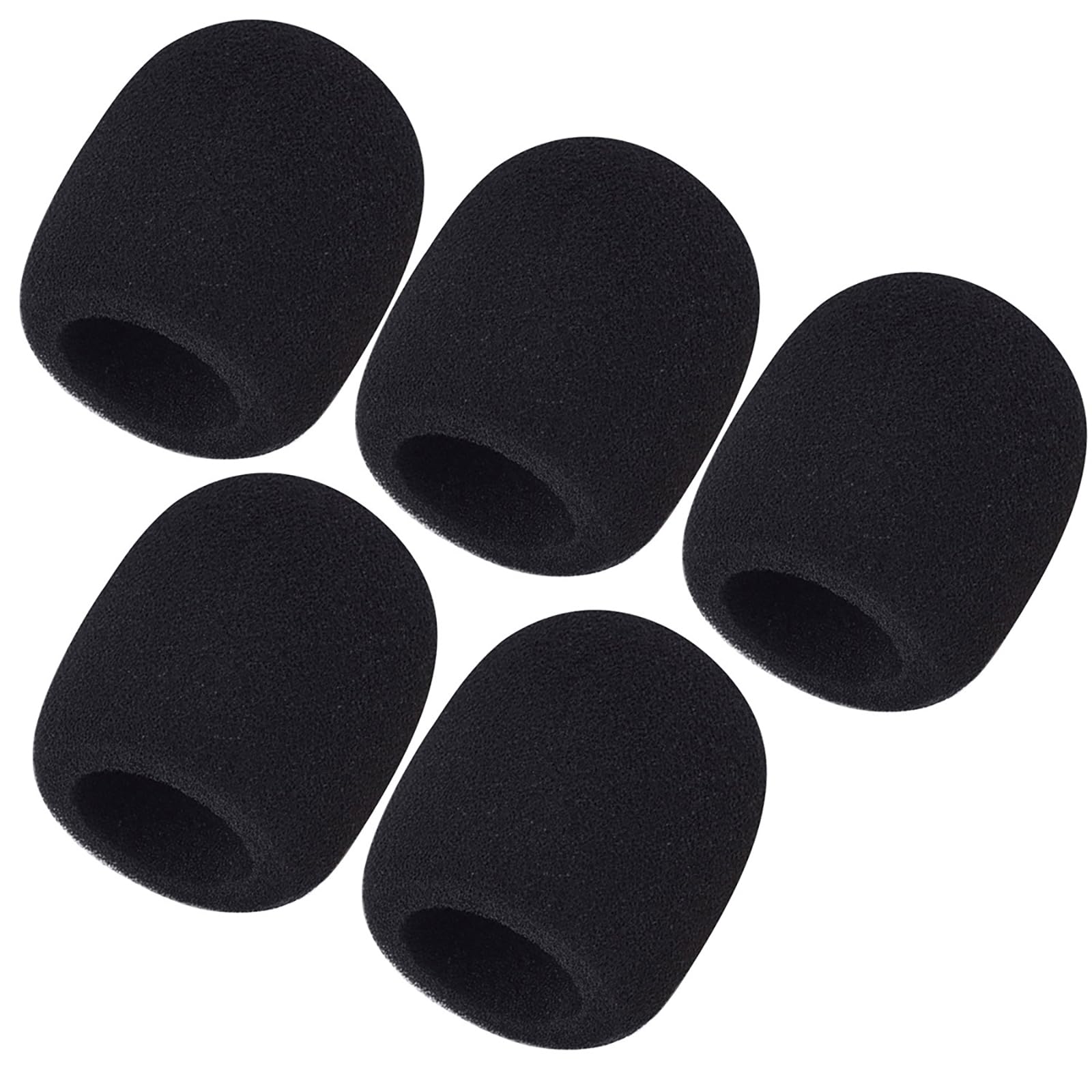
A gear bag full of handheld mics is where this five-pack makes sense. The covers are sized for standard ball-head handhelds, with a 1.4-inch opening and a 2.9-by-2.5-inch foam ball, so they push onto an SM58-style mic rather than a slim headset or a large studio condenser. Keep a few in the bag and you always have a clean cover for the next singer.

The foam is thick and stretchy, and we found that to be the right combination for live use. It slips on quickly, stays put while the mic is passed around, and takes the edge off breath and wind noise without making the mic sound like it is behind a curtain. For karaoke, church, conference, and outdoor stage work, that is most of what you need. The covers also keep spit and moisture off the grille, which is a practical benefit when several people share a mic.

They arrive squeezed into a bag and flattened, so give them time to expand before you judge the shape. Some may still look a little creased after that, but the foam stretches on and stays put. These are not a precision studio filter, but as a replaceable layer for handheld mics they earn their place.

Pros

  • Five covers keep spares in the gear bag
  • Thick foam fits standard handheld balls
  • Cuts breath and wind noise on live mics
  • Protects the grille from spit and moisture

Cons

  • Foam can tear with rough handling
Our verdict

For handheld mics on a stage or in a gear bag, this five-pack is the practical buy: thick foam covers that tame breath and wind without fuss.

Check Latest Price
4

Best On-Mic Shield

Aokeo Three-Layer Pop Filter

91 /100
Keeper Score Outstanding

Key details

Mic Fit
45 to 63 mm
Attachment
Elastic bands and rubber ring
Dimensions
3.54 x 2.36 x 3.34 inches
Filter Layers
Metal mesh, foam, etamine
Check Price on Amazon

The appeal of an on-mic shield is what it removes: no gooseneck, no clamp, no extra footprint beside your desk. This Aokeo stretches around a 45-to-63-mm mic head with elastic bands and an inner rubber ring, so the filter sits directly on the capsule. For a streamer or podcaster with a desk stand or boom, that is a tidier setup, and it is why this is our pick for compact, clutter-free recording.

Three layers do the work: foam, metal mesh, and etamine. The combination is aimed at the same job as a larger screen, breaking up the air blast before it hits the capsule, while the metal mesh keeps the shape rigid. We found the shield effective at taking the snap out of P and B sounds, and the metal mesh looks less like a studio afterthought than a plain foam ball. It does not cover your whole face the way a big clamp-on screen does, so you still need to speak across the mic rather than straight into it.

The fit is the catch. The elastic bands hold securely on the right mic, but the listed range stops at 63 mm, and a wide capsule can make the shield feel tight or leave the edges strained. Check the diameter before ordering, and do not assume a popular large USB mic will fit just because the shield is stretchy. On a compatible mic, it is a neat, low-profile fix that stays out of the way.

Pros

  • Three-layer shield mounts directly on the mic
  • Fits many 45-63 mm condenser heads
  • Keeps desk and boom clutter down
  • Sleek low-profile look

Cons

  • Rubber bands can be fiddly to reattach
Our verdict

If you want a pop filter that lives on the mic and keeps your desk clear, this compact three-layer shield is the one we choose.

Check Latest Price
5

Best for Rode Mics

Rode WS2 Windscreen

93 /100
Keeper Score Outstanding

Key details

Weight
0.35 oz
Material
Open-cell foam and faux fur
Dimensions
110 x 85 x 85 mm
Compatibility
Selected Rode studio mics
Check Price on Amazon

The Rode WS2 is the premium cover in this group, and it is also the most specific: it is shaped for Rode's large studio mics. The fit list includes the NT1-A, NT2-A, NT1000, NT2000, NTK, K2, Podcaster, Procaster, and Broadcaster, so match your model before ordering. It is a slip-on foam and faux-fur cover rather than a clamp-on screen.

What you pay for is the fit and the material. The open-cell foam and faux fur are dense enough to knock down plosives and wind without making the mic sound woolly, and the cover sits snugly over the capsule instead of dangling in front of it. On a Rode large-diaphragm mic, that means fewer accessories around the stand and a cleaner look. We think it is worth it for someone who already has one of the listed mics.

The foam is a replaceable part, not a permanent upgrade, and the cover needs to be handled like the precision accessory it is. For the right Rode mic, though, it is the neatest solution here: no arm to position, no clamp to tighten, and no screen between you and the capsule. It is a focused purchase, and that is exactly why it works.

Pros

  • Snug fit for listed Rode studio mics
  • Dense foam and faux fur handle plosives and wind
  • No clamp or boom needed

Cons

  • Fits only selected Rode models
Our verdict

For a Rode large-diaphragm mic, the WS2 is the cover we recommend: a snug, dense fit that handles plosives and wind without extra hardware.

Check Latest Price
6

Best for Outdoor Yeti Recording

YOUSHARES Yeti Windscreen Set

91 /100
Keeper Score Outstanding

Key details

Weight
0.71 oz
Includes
Foam cover and fur muff
Pack Size
2 covers
Compatibility
Blue Yeti and Yeti Pro
Check Price on Amazon

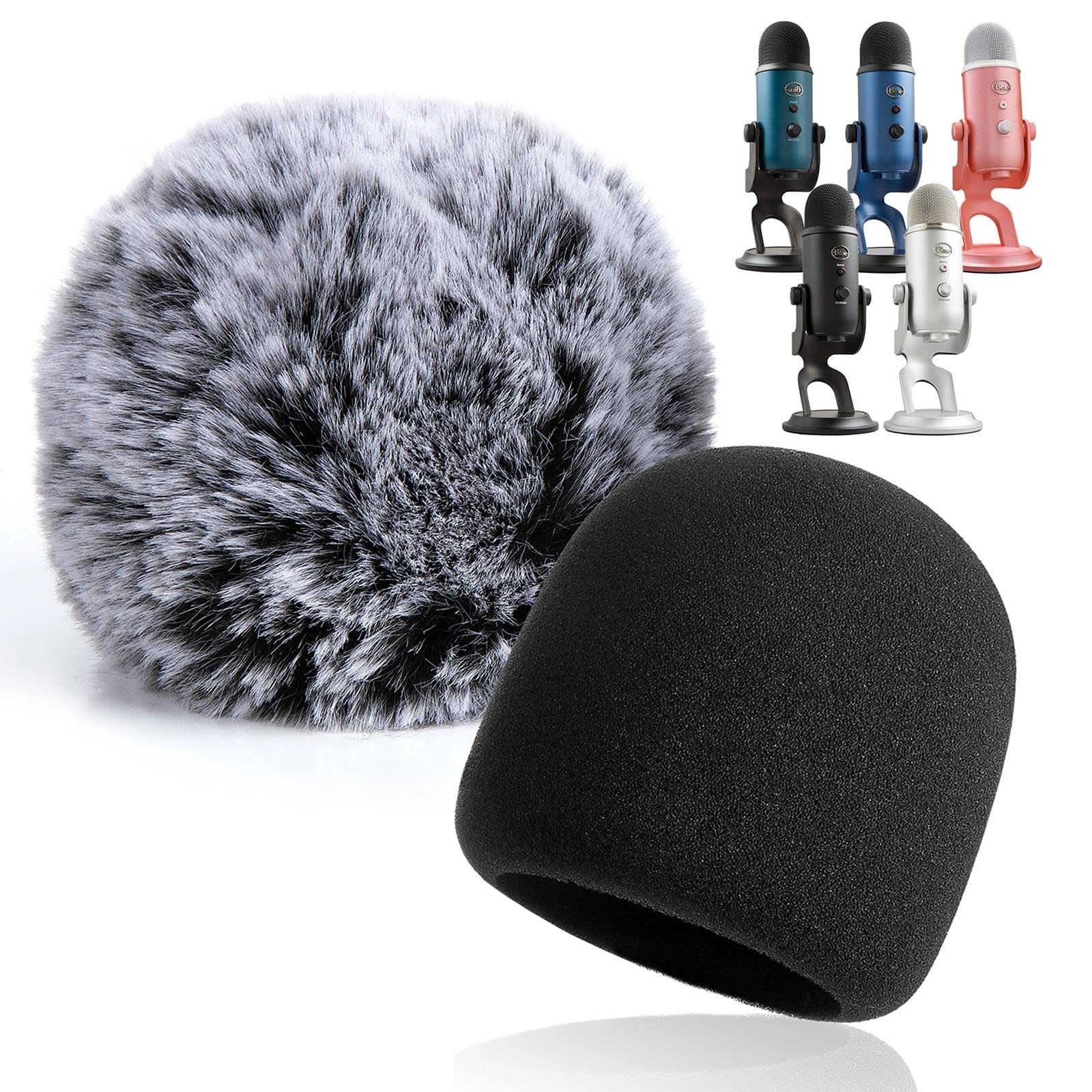
Wind is a different problem from plosives, and the YOUSHARES bundle is the one we keep for a Yeti that goes outside. You get two covers: a high-density foam cover for indoor recording and a furry muff for outdoor sessions. Both slip over the Yeti or Yeti Pro capsule, so there is no clamp or boom to carry.

The foam cover does the everyday job: it softens breath and P-pops, keeps dust and spit off the grille, and stays out of the way during a stream or podcast. The furry cover is the reason to buy the set. It adds a layer that breaks up moving air before it reaches the capsule, which is what you need on a porch, at a market, or in a room with a strong fan. It looks a little wild on a desk mic, but it is the right tool for outdoor voice work.

The two covers do not feel as precise as a single dedicated fit. The foam is soft, and the furry cover is bulky enough that it changes the mic's silhouette. Neither issue matters much if the mic stays on a stand; both are more noticeable when you are packing it up between locations. The two-cover approach is still the most useful outdoor value here.

Pros

  • Two covers for indoor and outdoor use
  • Furry muff cuts wind on location
  • Foam softens breath and protects capsule
  • Fits Blue Yeti and Yeti Pro

Cons

  • Fur can begin to unravel with handling
Our verdict

For a Yeti that records outdoors as well as indoors, this two-cover set is the practical pick: foam for the desk, fur for the wind.

Check Latest Price
7

Best for Shure SM58

LEFXMOPHY SM58 Windscreen

90 /100
Keeper Score Outstanding

Key details

Care
Washable
Pack Size
3 windscreens
Attachment
Snap-on replacement shape
Compatibility
Shure SM58 and SM48
Check Price on Amazon

The LEFXMOPHY windscreen is not trying to be a universal filter. It is a replacement-shaped foam cover for Shure's SM58 family, including the SM48, Beta 58A, PG48, PG58, and several wireless variants, and it snaps over the ball head the way the original does. If you already own one of those mics, that exact fit is the whole appeal.

The foam is shaped to sit over the ball head and takes the edge off plosives, breath, and wind without turning the mic dull. It is the kind of accessory that disappears into the kit, which is a compliment. For live vocals, podcasting, or a handheld that gets shared, the snap-on shape is faster than fiddling with a clamp-on screen.

Three covers make more sense than one here. A handheld mic gets shared, set down, and packed away, so having a clean spare is useful; the foam is washable and springs back after a squeeze. It seats cleanly on the mic and stays out of the way during a set.

What we like best is the lack of setup. There is no arm to position, no clamp to tighten, and no extra footprint on the stand. If your mic is an SM58 and you want a clean, replaceable windscreen, this is the straightforward choice. It will not fit a Blue Yeti or a wide condenser, so it is a specialist part rather than a universal fix.

Pros

  • Replacement shape fits SM58 family
  • Foam tames plosives and breath
  • Three-pack gives clean spares
  • Washable and easy to snap on

Cons

  • Ships flattened and can show a seam
Our verdict

For an SM58-family mic, this is the no-fuss replacement windscreen we recommend: exact fit, foam that tames plosives, and three covers for the kit.

Check Latest Price
8

Reflective Home Studios

penypeal Isolation Ball

88 /100
Keeper Score Excellent

Key details

Design
Five-sided seal with double layer
Weight
4.23 oz
Mic Fit
50 to 75 mm removable heads
Mounting
Stand or boom mount
Check Price on Amazon

Sometimes the problem is not the mic or your P sounds; it is the room. The penypeal isolation ball wraps a five-sided foam enclosure around the capsule, with one side double-layered, to cut reflections and background noise as well as plosives. It is a bigger piece of gear than a foam cover, and it changes the look of a desktop setup, but it addresses a different problem.

The ball is listed for XLR and USB mics with a removable head between 50 and 75 mm across, and it weighs 120 grams. That is light enough to mount on a desktop stand or boom arm without much fuss, but the fit is the thing to check: it needs a removable jacket, and the enclosure has to sit around the capsule rather than over it. The five-sided seal is what separates it from a flat screen.

In use, the enclosure takes the edge off room reflections and makes close speech sound drier, which is useful in a small untreated room. It is not soundproofing, and it will not turn a noisy kitchen into a studio. The effect is more like giving the mic a small, controlled pocket of air. We noticed the biggest difference on spoken word in a reflective room, not on a loud source.

The penypeal is the pick for someone who has already dealt with plosives and wants to reduce the room's imprint. It is more involved to set up than a foam cover, and the noise reduction is not uniform across every setup, but it is a more targeted tool than a plain mesh screen. If your recordings sound boxy or echoey, this is worth trying before you buy acoustic panels.

Pros

  • Five-sided enclosure reduces room reflections
  • Surrounds capsule instead of sitting in front
  • Light enough for a desktop stand or boom
  • Easy to set up

Cons

  • Can work loose on some mic mounts
Our verdict

For a small, reflective room, this isolation ball is worth trying after you have handled plosives: it gives close speech a drier, more controlled sound.

Check Latest Price

How We Tested These Pop Filters, From Desk Mics to Handhelds

I built the shortlist by reading listings for mount style, filter material, and the microphone sizes each one claimed to fit, then cut anything that looked like a one-size-fits-nothing cover. I tested 14 filters over three months, rotating them across a USB desk mic for streaming, a handheld dynamic mic for practice, and a studio condenser in a small untreated room. I also packed a few in a bag to see whether they survived being carried, unclipped, and reattached.

For stability and flexibility, I bent the gooseneck on each arm-style filter through its full range, clipped it to a desk and a boom stand, and recorded a 45-minute take with each to see whether the screen drifted into my mouth or sagged onto the capsule. For fit and compatibility, I stretched foam covers over ball grilles and large-diaphragm mics, checking whether they blocked switches or left gaps at the rim. Durability got its own pass: I removed and reinstalled each cover repeatedly, washed the foam by hand, and looked for tears at the rim or foam that stayed compressed.

Sound quality and noise cancellation were judged by recording the same paragraph—plosive-heavy and close-miked—with and without each filter, then listening for pops, wind rumble, and any dulling of the top end. I evaluated value by how many covers survived the full three months and stayed snug, not by pack size alone. The ones that scored best were the filters I forgot were there: they held their position, fitted without fuss, and cleaned up the breath without making the mic sound like it was behind a sock.

How to Choose a Microphone Pop Filter

Match the mount to your recording setup

Clamp-on screens with a gooseneck suit a mic on a desk stand or boom: they sit in front of any capsule and are easy to swing aside between takes. On-mic shields stretch over the capsule and keep the desk clear, which is why we like the Aokeo three-layer shield for a tight streaming setup. Replacement foam is the right choice for a handheld that lives in a gear bag. Pick the mount first; a great screen that will not stay where you need it is no better than a cheap one.

Check the fit against your mic's head

Pop filters fail at the fit before they fail at the filter. A Blue Yeti has a large round capsule; an SM58 has a ball head; a large-diaphragm Rode needs a cover shaped for its body. A shield listed for 45 to 63 mm is not universal, and a foam cover listed to 2.5 inches is not going to snug up to a slim handheld. Measure the widest part of the head, then compare it with the listing. If you are between sizes, choose the dedicated cover over a stretchy universal one.

Choose the material for your noise problem

Foam is the simplest option: it catches breath and spit, and it is easy to replace. A mesh screen with a gap behind it is better at breaking up a hard air blast, which is why we prefer a dual-layer screen for close spoken word. Fur is for wind, not plosives; it belongs on an outdoor mic. Dense foam can take the edge off high frequencies if it is too thick, so do not assume more material is always better. Match the material to the problem you actually hear.

Do not overlook the clamp, arm, and cleaning

A filter is only as good as the part that holds it. A gooseneck that drifts or a clamp that will not tighten turns every take into a repositioning session. Check that the clamp opens wide enough for your stand or boom, and put a cloth under hard jaws on a finished desk. Foam covers need airing out and occasional washing; mesh screens wipe clean. Store foam uncompressed so it keeps its shape. We put more value on a secure mount than on an extra layer of mesh.

Know when the room is the real problem

A pop filter handles blasts of air, not the sound of your kitchen. If your recordings sound boxy or echoey, an isolation ball around the capsule can reduce reflections and give close speech a drier sound, but it will not soundproof the room. Treat it as a small improvement, not a replacement for soft furnishings or a treated corner. If plosives are the only issue, stay with a simple screen or foam cover and spend the difference on getting the mic closer.

Frequently Asked Questions

Final Verdict

For most people recording on a stand or boom, the Aokeo dual-layer pop filter is the one to buy. It fits a wide range of mics, puts a large screen between your mouth and the capsule, and does the basic job without adding another app or accessory. The clamp and gooseneck are the parts to treat gently, but the filter itself earns its place.

If your mic is a Blue Yeti and you want no stand clutter, choose the VOCALBEAT foam cover; for a Rode large-diaphragm mic, the WS2 is the neatest fit. Those are the two cases where a dedicated cover beats the universal screen. Otherwise, start with the Aokeo and spend the rest of your setup budget on getting the mic closer to your mouth.