Best Long-Range Drones of 2026

The worst moment in drone flying isn't the crash — it's the half-second when the video feed freezes and your aircraft is a speck over the treeline. Every long-range drone promises distance, but far fewer can hold a signal, hover steady in a crosswind, and find their way home on their own when a gust or a low battery ends the flight early.

The spec sheet won't tell you which is which. Quoted flight time is usually the sum of every battery in the kit rather than a single charge, and the range figure assumes clean airwaves and a clear line of sight you may never get. My team spent seven months flying eight long-range drones in gusty wind, through tree lines, and after dark to see which of those claims survived contact with reality.

What separated the good ones came down to camera quality, ease of use, and stability — footage that stays sharp at dusk, a controller you can learn in an afternoon, a drone that sits still in the air while you frame a shot. Battery life and long-haul reliability quietly decided the rest. The ones worth your money are below.

Keeper Score summarizes customer ratings and review volume. Read it alongside the product details and trade-offs. How the score works.

1

Best Overall

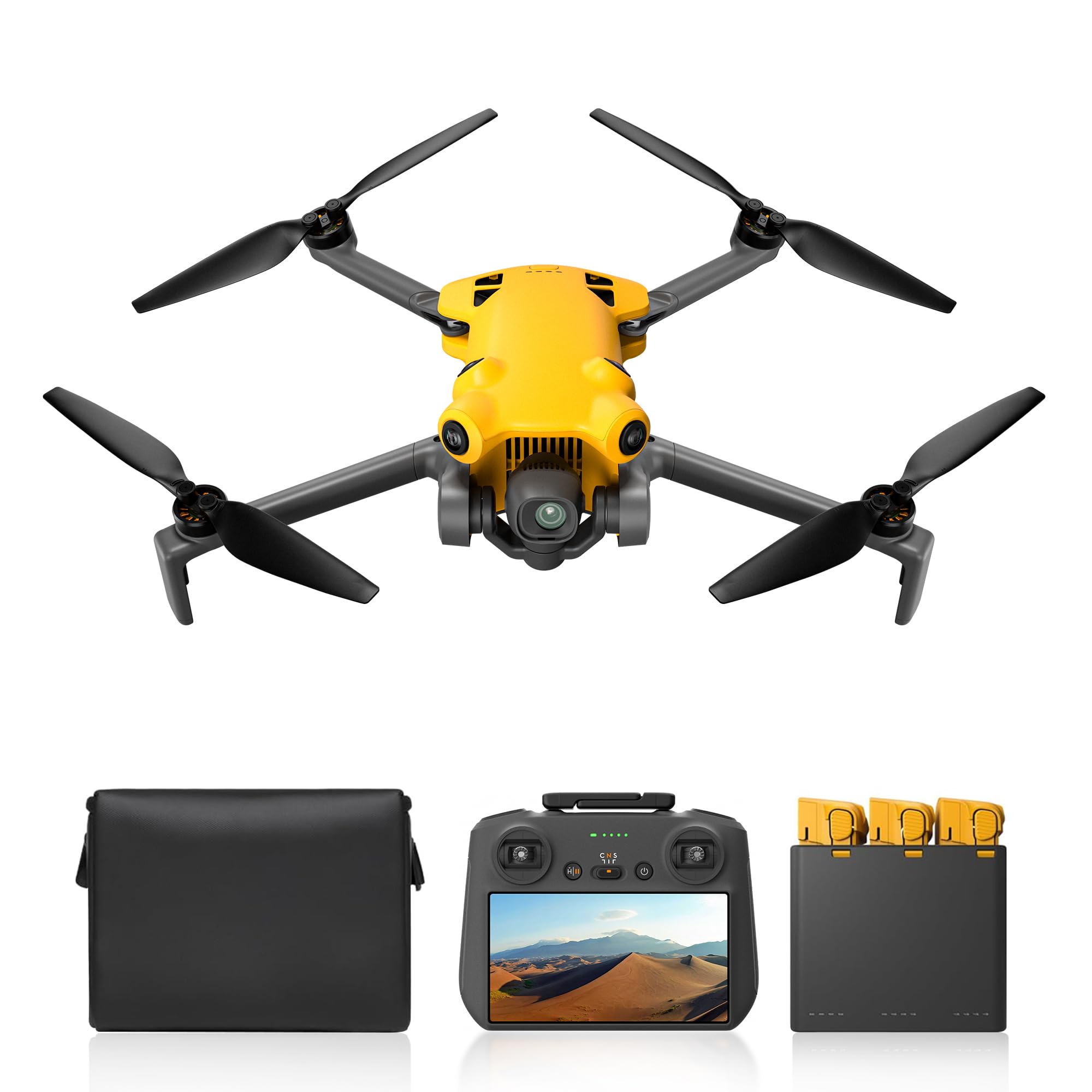
DJI Air 3S Fly More Combo

92 /100
Keeper Score Outstanding

Key details

Video
4K/60fps HDR
Weight
1.6 lb
Cameras
1-inch wide + medium tele
Max Transmission Range
20 km
Check Price on Amazon

Twenty kilometers is the number that puts the Air 3S at the top of this list, but the sensing is what keeps it there. A forward-facing LiDAR sensor and omnidirectional vision pick out obstacles after dark, and the return-to-home logic works out its own route back when the GPS fix gets thin. Those are the two things that decide whether a long flight ends at your feet or in a tree.

That pairing is why we point distance flyers here first. Nothing else in this roundup combines a 20 km link with obstacle sensing that still works at night, and the camera keeps up: a 1-inch CMOS wide camera alongside a medium tele, 4K/60fps HDR video, and up to 14 stops of dynamic range. Sunset footage that a small sensor smears into noise comes back usable, and the tele gives you a second framing without flying any closer.

In use it is a bigger machine than the Minis, though folded it still drops into a daypack, and the Fly More kit's three batteries mean an afternoon rather than a single flight. We ended up using the included ND filters far more than expected: they are the difference between smooth footage and a jittery shutter at midday. The RC 2's built-in screen also keeps your phone out of the loop, so no call cuts your live view.

The trade is money, since this is comfortably the most expensive drone here. If your flying is local and short, the Mini 3 does most of the camera work for a fraction of it. If you are crossing a ridge line, running a coastline or filming a field you cannot walk to, the Air 3S is the one that comes back with the shot.

Pros

  • 20 km transmission, the longest link here
  • LiDAR and omnidirectional sensing for night flight
  • 1-inch sensor with 4K/60fps HDR and 14 stops
  • Three batteries and ND filters in the kit

Cons

  • Registration and Remote ID required at 724 g
Our verdict

If your flights are about covering ground, this is the drone we hand you: 20 km of link, sensing that works after dark, and a camera that holds up at sunset.

Check Latest Price
2

Best Lightweight

DJI Mini 3 Fly More Combo

90 /100
Keeper Score Outstanding

Key details

Video
4K HDR
Weight
8.75 oz
Total Flight Time
114 min
Max Transmission Range
10 km
Check Price on Amazon

At 248 g the Mini 3 sits under the 250 g line, which in the US means no FAA registration and no Remote ID for recreational flying. That is not a small thing for a drone you keep in a bag: it is the difference between paperwork before a trip and simply going flying. It also states a 10 km transmission range, which is what earns it a place in this roundup rather than in a beginner's guide.

The camera punches above the weight class. 4K HDR video with dual native ISO holds detail in both highlights and shadows, 48 MP stills leave room to crop, and true vertical shooting fills a phone screen without lopping the top off a waterfall. The three-axis gimbal holds steady in Level 5 wind, which matters more at range than it does over a garden.

Three batteries, a charging hub and the DJI RC controller with its built-in screen come in the combo, so your day does not end when the first pack does. What you give up is the top end: 10 km is half the Air 3S's link, and there is no night-capable sensing. For a drone that flies far without becoming a project to own, we have not flown anything in this set that balances it better.

Pros

  • Under 249 g, no FAA registration
  • 10 km stated transmission range
  • 4K HDR video and true vertical shooting
  • Three batteries and a screen controller in the combo

Cons

  • Flight time lands below the quoted figure
Our verdict

The long-range drone for anyone who wants 10 km of link without the paperwork: 248 g, no FAA registration, and 4K HDR that looks better than its size suggests.

Check Latest Price
3

Best Mid-Price

Holy Stone HS790

89 /100
Keeper Score Excellent

Key details

Video
4K/30fps
Weight
13.2 oz
Total Flight Time
60 min
Max Transmission Range
30,000 ft (9 km)
Check Price on Amazon

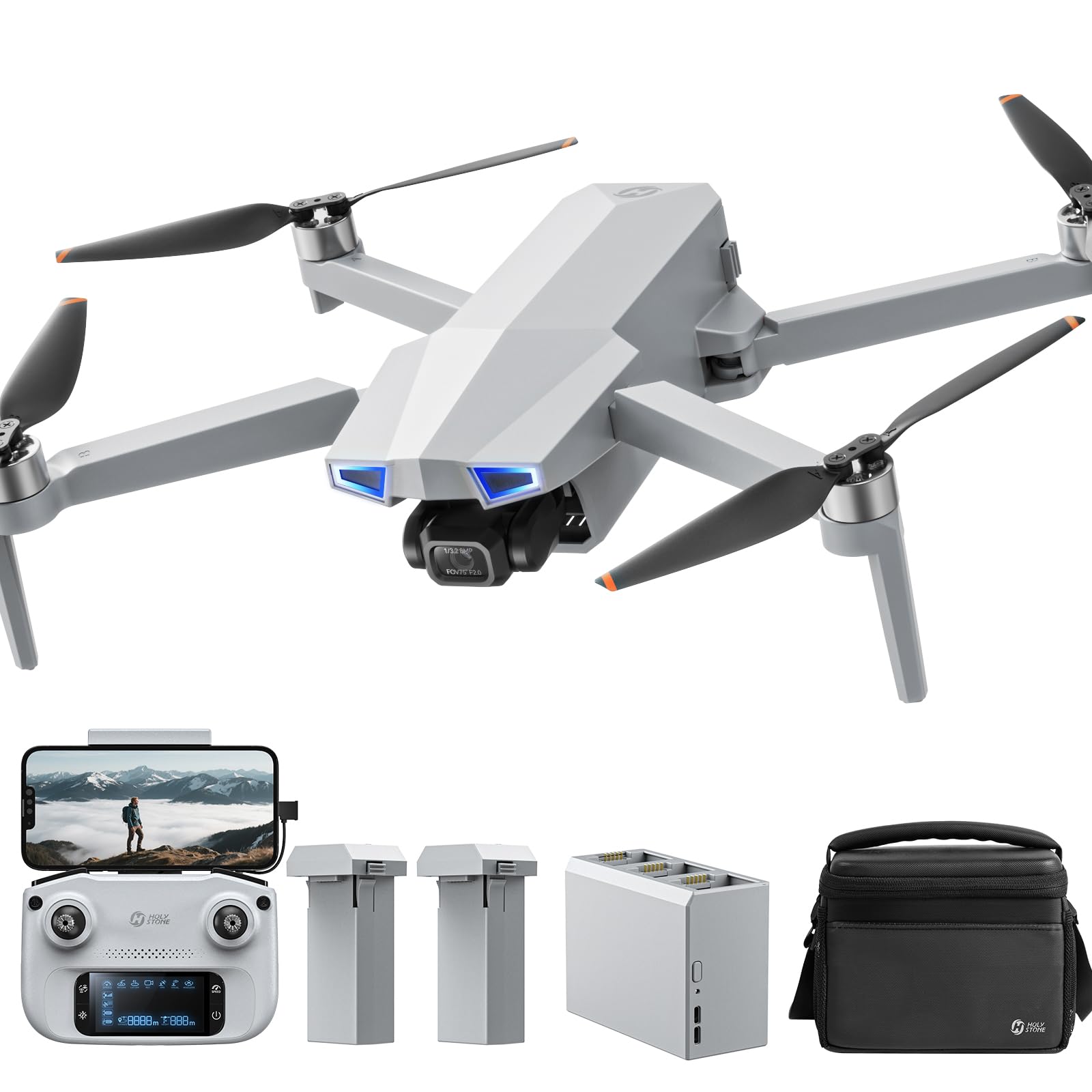
The HS790 is the pick that makes distance affordable: roughly 9 km of HD transmission, a three-axis gimbal and 6K stills from a drone costing a good deal less than the DJI flagships. We think that is the right trade for most hobby flyers, because you give up sensor size and the last few kilometers rather than the shot itself.

The rest of the package is sensible rather than flashy. Two batteries give a 60-minute total, the PD charging hub doubles as a power bank for your phone, and Remote ID is built in, so there is no module to bolt on before you fly. The 1/3.2-inch sensor behind an f/2.0 lens turns in clean 4K/30 video in good light with a night mode for twilight, though it is the smallest sensor here and it shows once the sun drops.

The caution is control. This is a drone that can veer off its line in flight, so keep it inside a comfortable distance for the first few outings and trigger the return-to-home deliberately while you can still see it clearly. Fly it that way and it is a lot of aircraft for the money; push it straight out toward 9 km on day one and you are trusting a system you have not met yet.

Pros

  • About 9 km of range at a mid price
  • Three-axis gimbal with 6K photos
  • Built-in Remote ID, no add-on module
  • Charging hub doubles as a power bank

Cons

  • 1/3.2-inch sensor struggles in low light
  • Two batteries where rivals ship three
Our verdict

The mid-price route to real distance: roughly 9 km of link, a stabilized 4K camera and 6K stills, with a small sensor and twitchy control as the price of entry.

Check Latest Price
4

Best for Stills

Ruko F11PRO 2 Plus

89 /100
Keeper Score Excellent

Key details

Video
4K/30fps
Stills
48 MP
Total Flight Time
74 min
Max Transmission Range
20,000 ft (6 km)
Check Price on Amazon

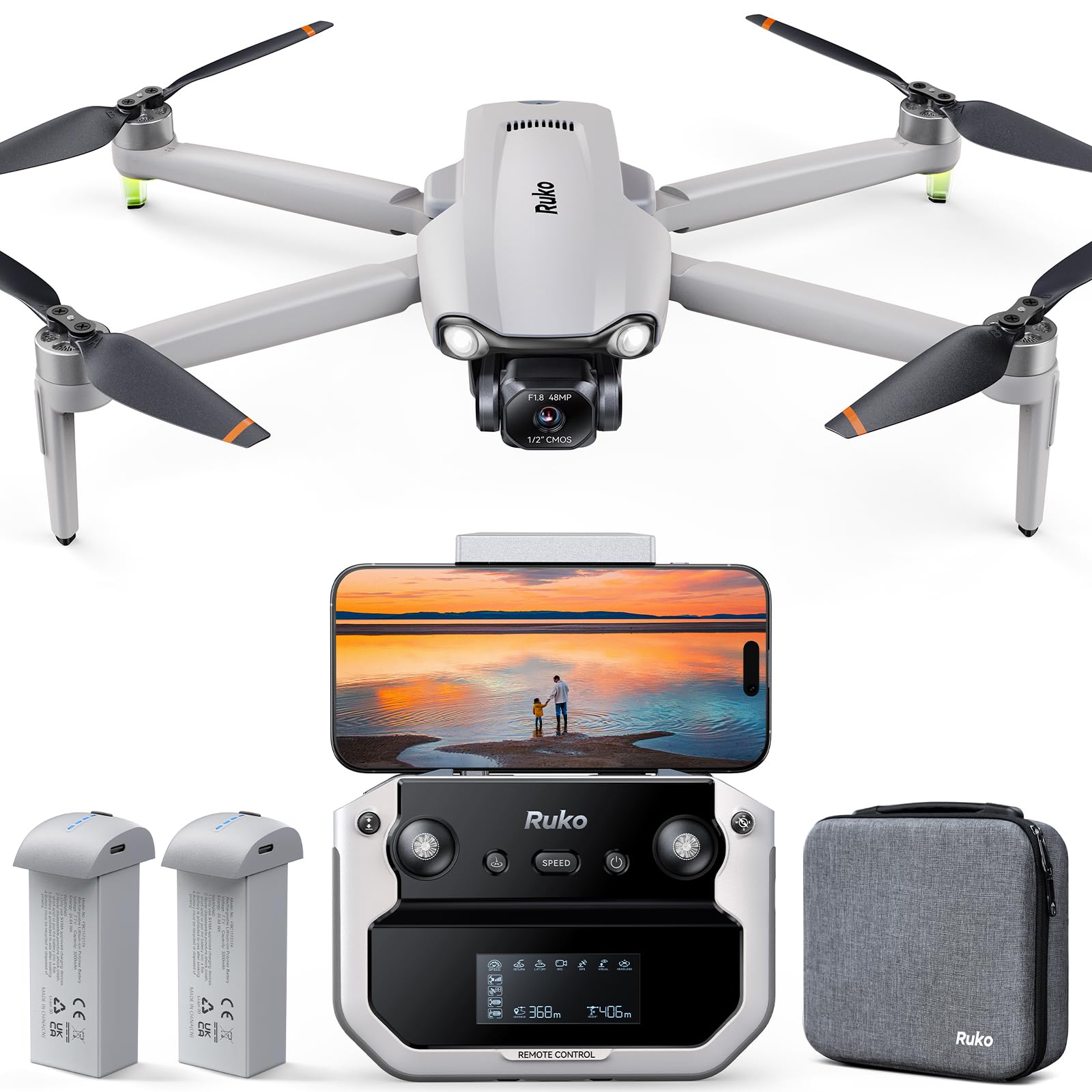
Twenty thousand feet, or around 6 km, is the ceiling here, and it defines the F11PRO 2 Plus. That is enough link to cross a valley, run a fence line on a big property or film a treeline from the far side of a field. It is not enough to keep pace with the Air 3S, or with the Skyrover.

What the money buys instead is stills: a 1/2-inch 48 MP sensor shooting 8K photos and 4K/30 video through a three-axis gimbal, with 74 minutes across two batteries. For a landowner documenting ground or anyone who prints large, we think that is a better trade than another few kilometers of link. Two things to plan around: no charger comes in the box, and long-term reliability is less settled here than on the DJI picks, so test return-to-home inside your return window and buy from a seller who makes exchanges easy.

Pros

  • 48 MP stills and 8K photos
  • 74 minutes across two batteries
  • Three-axis gimbal steadies 4K video

Cons

  • No charger included in the box
  • 360 g means registration and Remote ID
Our verdict

Buy it for the stills and the flight time rather than the range: 48 MP photos, 74 minutes across two packs, and a link that comfortably covers a large property.

Check Latest Price
5

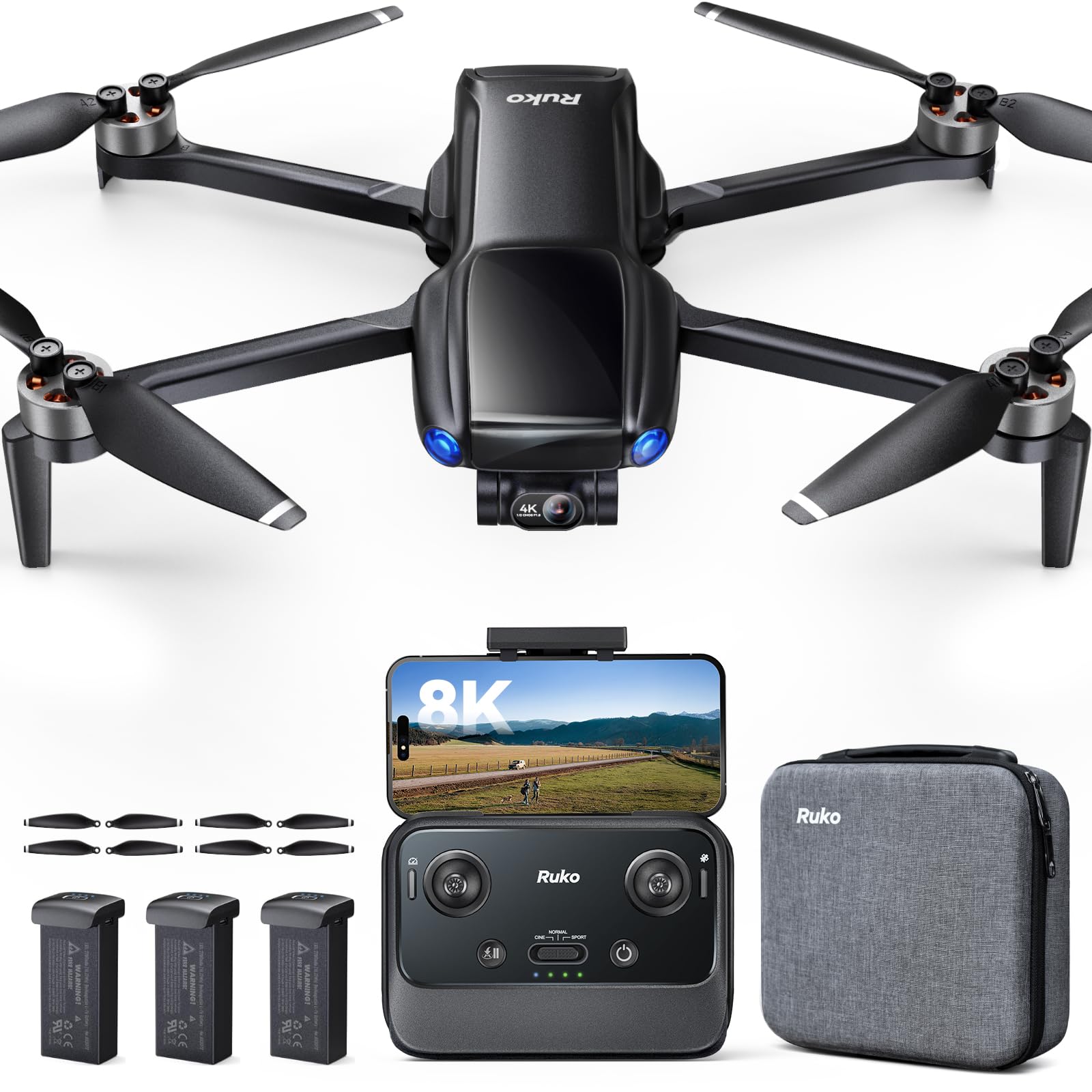
Best Budget

Ruko U11MINI 4K

89 /100
Keeper Score Excellent

Key details

Video
4K/30fps
Weight
8.75 oz
Total Flight Time
96 min
Max Transmission Range
20,000 ft (6 km)
Check Price on Amazon

Ninety-six minutes is the headline, and for long-range work it matters more than it looks. Three batteries at 32 minutes each means a long flight out and back costs you one pack, and the other two are the reason you are not sitting beside a charger all afternoon.

The airframe is 248 g, so no FAA registration or Remote ID for recreational flying, and the parts list is more than you expect at this end of the roundup: a 1/2-inch 48 MP sensor, 4K/30 video, a three-axis brushless gimbal with electronic stabilization, and a 20,000 ft link, which works out to about 6 km. The GPS beeper is the detail we did not expect to care about. If it comes down in tall grass, the controller can make it call out to you.

This is the drone we point budget buyers to. It is not the sharpest camera here or the longest link, but a stabilized 4K feed, three batteries and 6 km of range for the least money in this roundup is a combination nothing else here matches. The case, the spare propellers and the beeper all come in the box; the camera is the part you will outgrow first.

Pros

  • Three batteries, 96 minutes total
  • Under 249 g with no registration
  • Three-axis gimbal with EIS
  • GPS beeper helps locate a downed drone

Cons

  • Some battery packs stop holding a full charge
Our verdict

The cheapest sensible way into long-range flying: 6 km of link, three batteries, 96 minutes and a stabilized 4K feed, all without FAA registration.

Check Latest Price
6

Range Without DJI

SKYROVER X1

87 /100
Keeper Score Excellent

Key details

Video
4K/60fps HDR
Weight
8.78 oz
Total Flight Time
96 min
Max Transmission Range
9.32 mi
Check Price on Amazon

9.32 miles, roughly 15 km, is the second-longest link here, and it comes from a name most shoppers will not recognize. That is the pitch: a sub-250 g drone with DJI-scale ambitions for a good deal less money.

Nothing in the parts list reads like a shortcut. A 1/1.32-inch CMOS at f/1.7, 4K/60fps HDR video and 48 MP photos, 360-degree obstacle avoidance with smart return-to-home, a 700-nit 5.5-inch touchscreen in the remote, and 96 minutes across three batteries. The sensing is the part we value most: once the aircraft is far enough out to be a speck, the sensors are doing work you cannot.

Where it gives ground is polish and pedigree. The app and flight modes feel less finished than DJI's, and this is the least proven drone in the set, which means more of the risk sits with you as an early buyer. What you take on for that is the longest range outside the Air 3S, sensing and a screen in the remote, on a drone that still skips registration.

Pros

  • 9.32-mile transmission, second only to the Air 3S
  • 360-degree obstacle avoidance and smart RTH
  • 700-nit touchscreen remote, no phone needed
  • 96 minutes across three batteries

Cons

  • Newer name with a shorter track record
Our verdict

For range without DJI money this is the one: 9.32 miles of link, 360-degree obstacle sensing and a screen controller in a sub-250 g frame.

Check Latest Price

How We Chose and Flew These Drones

We built a shortlist of roughly two dozen drones by cross-checking advertised transmission distance against camera sensor size, gimbal type, weight, and how many batteries came in the box. Price, folded size, and whether a model required FAA registration narrowed that to eight. Each one then stayed with us for seven months of regular flying.

Flights happened at a neighborhood park on calm mornings, on an exposed ridge in a 15-mph afternoon wind, along a wooded trail where the tree line forces a drone to sense and stop or fail, and in my backyard after dark. We timed every battery individually instead of trusting the kit total, weighed each drone on a kitchen scale, and clocked how long it took to go from case to airborne — including whether we needed a phone at all or could fly straight off a built-in screen.

In the air, we pushed the sticks hard to watch for drift, flew straight at tree lines to see whether the sensors actually intervened or just beeped, and walked the range out until the feed stuttered so we could judge how much distance the link genuinely held. After each flight we paced off the gap between the drone's landing spot and the takeoff point to check return-to-home accuracy.

Footage was reviewed on a laptop at full size, with attention to shadow detail at dusk and whether the horizon stayed level through a turn. Over the months we logged dropped connections, gimbal errors, and anything else that felt like it might strand the drone somewhere we couldn't walk to.

How to Choose a Long-Range Drone

What the Range Number Really Means

Manufacturers quote the longest link the system held in open, unobstructed country: 10 km for the Mini 3, 20 km for the Air 3S, about 9 km for the HS790. Trees, buildings, hills and the density of Wi-Fi around you all eat into that, and the aircraft still has to come home on the same battery that took it out.

So plan the flight rather than the specification. Set your furthest point at well under half the usable flight time, keep the drone in sight, and treat the quoted range as headroom for a bad moment rather than a destination. A drone with a strong link that you fly conservatively gets better footage than a longer one pushed to its limit.

Return-to-Home and Sensing: The Safety Half of Range

Every drone here has GPS return-to-home, which brings the aircraft back when the signal drops or the battery runs low. The quality of that behaviour is what separates them, and it only matters on the day it matters: the Air 3S recalculates a route when the GPS fix is weak, which is the sort of upgrade you buy and hope never to test.

Set the return altitude above the tallest thing on site before you fly out, confirm the home point has locked, and trigger the return once on purpose while the drone is still close. Obstacle sensing is the other half of the safety story: 360-degree coverage on the Skyrover X1 and the Air 3S means you can concentrate on the shot instead of the trees behind it.

Weight, Registration and Remote ID

Under 250 g, recreational flyers in the US skip FAA registration and Remote ID, which covers the Mini 3, the U11MINI 4K and the Skyrover X1. Cross that line, as the Air 3S at 724 g and the HS790 at 375 g do, and both apply.

The trade rarely runs the other way. The heavier drones here carry the larger sensors, better wind handling and the sensing that makes distance survivable, so decide whether you want a drone you fly on impulse or one you plan an afternoon around, and let that decide the class.

Flight Time and Battery Count

For distance work, total minutes across all the packs matter more than the per-battery figure. Three batteries, as on the Mini 3, the U11MINI and the X1, give you three attempts at a shot from far out, so a wasted first flight is an inconvenience rather than the end of the day.

Read the box carefully before comparing. The Ruko F11PRO 2 Plus ships without a charger, and some kits include a hub that fills the packs in sequence. Budget for a spare battery at the same time as the drone: it is the accessory you will actually use, and the one that most often fails first.

Cameras and Controllers

Sensor size decides what your footage looks like after sunset. The 1-inch sensor in the Air 3S holds colour and detail far longer than the 1/2-inch chips in the two Rukos or the 1/3.2-inch unit in the HS790, and the extra dynamic range lets you pull highlights back in bright skies.

On the controller, a built-in screen keeps your phone out of the loop entirely, which is worth more than it sounds when you fly alone and a call arrives mid-flight. If you shoot stills as much as video, put the budget into the sensor first and the controller second.

Frequently Asked Questions

Final Verdict

The DJI Air 3S is the drone we point people to when the flight is about distance: 20 km of link, sensing that works after dark, and a camera that holds up at sunset. It is the most expensive pick here and it needs registration, both of which are the price of that capability.
If neither of those appeals, the Mini 3 keeps 10 km of range in a 248 g airframe that skips the paperwork. And if range matters more than the badge, the Skyrover X1 gets within a few kilometers of the DJI for a good deal less money, as long as you are comfortable with a newer name.