Best Lens Cleaning Cloths of 2026

The fastest way to ruin a good pair of glasses isn't dropping them — it's wiping them on your shirt. A paper towel or a hem drags grit across a coated lens, and a few months of that leaves a haze of fine scratches you can't polish out. That's the entire job of a lens cloth, and it's why the cheap ones and the good ones behave so differently. My team and I spent three months living with 16 of them, stuffed in pockets, glove boxes, camera bags, and desk drawers.

Here's what nobody tells you: microfiber cleans by trapping, not scrubbing. The fibers lift oil and dust off the surface and hold onto them, so a cloth full of grit or stiffened by the wrong detergent starts acting like sandpaper. We graded these on real smudges from fingers and sunscreen, whether they shed lint or streaked a phone screen, how they held up in the wash, and what each one actually costs per cloth once you divide by pack size. The picks below run from bulk bundles you can scatter everywhere to a few worth keeping folded in a case.

Keeper Score summarizes customer ratings and review volume. Read it alongside the product details and trade-offs. How the score works.

1

Best Overall

MagicFiber 30-Pack Microfiber Cloths

95 /100
Keeper Score Outstanding

Key details

Colors
Black and grey
Pack Count
30
Individually Wrapped
Yes, in individual polybags
Check Price on Amazon

The problem is rarely owning no lens cloth. It is that the one you own is in the other jacket, or has been riding around in a pocket with your keys since Tuesday. Thirty of them, each sealed in its own polybag, fixes that in the most boringly effective way: there is always one that has not been unfolded yet, and an unused cloth is the only one worth trusting against a coated lens.

As a cleaning tool this is the pick we point most people to. The weave has enough grab to lift skin oil off a lens in a couple of passes instead of pushing a film of it around, and it works dry, so there is no spray to forget. Fingerprints come off glasses and phone screens without the faint haze a worn-out cloth leaves behind. Size is the honest limitation: these are cut for glasses, phones, and smaller camera lenses, so if your usual job is a big front element or a laptop display, go oversized.

Thirty also works as a stash strategy. One in the camera bag, one in the car, one at the desk, a couple in rotation for washing, and you stop rationing the good one. The individual wrapping is what keeps that first wipe clean and lint-free, though it does leave you with a small pile of plastic sleeves. If that bothers you, a smaller pack does nearly the same job with less waste.

Pros

  • Each cloth sealed, so it starts grit-free
  • Clears fingerprints and face oil when used dry
  • No streaks or lint on glasses and screens
  • Thirty cloths cover every bag and drawer

Cons

  • A plastic sleeve with every cloth
Our verdict

Buy this one if you want a clean, grit-free cloth within reach in every room and bag — the cloths clear glasses and screens dry, without streaks, and thirty means you never save one for best.

Check Latest Price
2

Best for Face Oil

Koala Japanese Microfiber Cloths (12-Pack)

95 /100
Keeper Score Outstanding

Key details

Material
Japanese microfiber
Washable
Yes
Cloth Size
6 x 7 in
Pack Count
12
Check Price on Amazon

You can feel where the money went before you clean anything with it. These are the most expensive cloths per cloth in this group, and the fabric explains why: denser and heavier than the thin, faintly shiny squares that come free with a pair of glasses, with a nap closer to suede than silk. It does not skate across the lens, which is exactly the point.

A cloth that drags a little lifts oil instead of smearing it, and these clear face oil and fingerprints off glasses with no fluid at all. That matters most on the pair you wear all day, where the film is skin oil rather than dust, the kind of smudge a thin cloth pushes from one side of the lens to the other. Twelve come in the pack, each in a sleeve so it does not get mashed up in a purse or a camera bag.

Washing is where the heavier weave earns its keep. These are made to go through the laundry repeatedly and keep their grip rather than going slick the way thinner cloths do. We found the texture takes some getting used to if you are coming from the shiny optician freebies: it feels more like a polishing cloth than a glass cloth, and on a touchscreen it is more drag than you need.

Twelve is enough for two in rotation at home and one in a case, which is the right way to buy them. This is the cloth for the pair you care about, not the one you hand out to everyone in the house; if you want a cloth in every bag and drawer, a cheaper dozen goes further.

Pros

  • Dense, grippy weave lifts face oil
  • Cleans well without any spray
  • Holds up to repeated washing
  • Each cloth comes in a protective sleeve

Cons

  • Highest cost per cloth here
Our verdict

Our pick for glasses you wipe ten times a day: the dense Japanese microfiber lifts skin oil with no spray and keeps its grip through the wash.

Check Latest Price
3

Best Value

Eco-Fused Microfiber Cloths (12-Pack)

95 /100
Keeper Score Outstanding

Key details

Care
Hand wash only
Pack Count
12
Cloth Sizes
6 x 7 in and 5.5 x 3.2 in
Check Price on Amazon

The cheapest way here to end up with a dozen cloths that actually work. Ten of them are 6 by 7 inches, the size that covers a glasses lens with cloth left to hold, and two are smaller pocket squares. On glasses and a phone screen they lift fingerprints and leave nothing behind, and the fabric stays soft instead of stiffening up after washing, which is more than we can say for the freebies from the optician.

The catch is care. The product details specify hand washing even though the bullets allow a machine cycle, so a machine wash is a risk rather than a feature. The two small cloths are the other thing to know: handy in a shirt pocket, too small for anything beyond a phone. Neither changes the arithmetic — ten full-size cloths this soft make this the best value in the group.

Pros

  • Twelve cloths, ten at full size
  • Stays soft after washing
  • Cleans glasses and screens without streaks
  • Lowest pack price here

Cons

  • Hand wash only, no machine shortcut
  • Two of the twelve are pocket-size
Our verdict

The best value here: a dozen soft cloths that clean glasses and screens without streaks, provided you are willing to wash them by hand.

Check Latest Price
4

Best for Big Screens

Elite Tech Gear 12 x 12 Cloths (4-Pack)

95 /100
Keeper Score Outstanding

Key details

Fabric
80% polyester, 20% polyamide
Cloth Size
12 x 12 in
Pack Count
4
Individually Wrapped
Yes
Check Price on Amazon

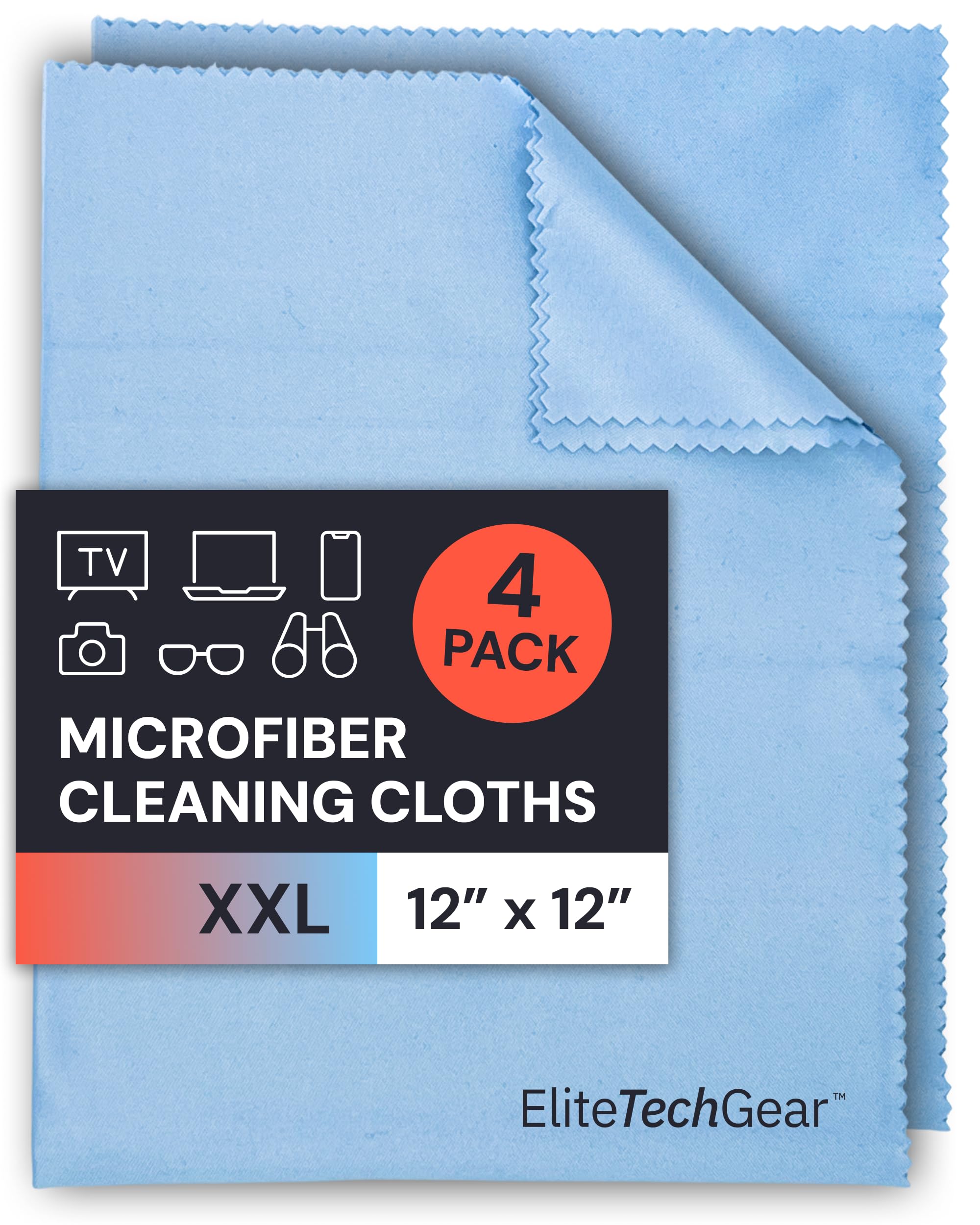
Twelve inches square is a different tool from the little squares that live in a glasses case. One of these covers a laptop screen or a tablet in a single pass, and it is the cloth we reach for on a monitor, a television, or the back of a camera body. Four come in the pack, each individually packaged, in a blue polyester-polyamide weave that is hand washable and dries fast.

On glasses they are more cloth than you need, which is not a fault once you fold one into quarters: eight fresh surfaces before it needs a wash, which is how we use them at a desk. The weight and the finished edge are what sell it, since this does not bunch up or slide off a screen the way a thin cloth does. Four is enough for a desk, a camera bag, and a living-room shelf, and no more.

Pros

  • Covers a monitor or tablet in one pass
  • Eight usable surfaces when folded
  • Dries quickly between uses
  • Individually packaged

Cons

  • Only four cloths per pack
Our verdict

The pick for monitors, tablets, and camera bodies: a 12-inch square that clears a big screen in one pass, with four in the pack for the desk and the bag.

Check Latest Price
5

Best Bulk Pack

SmoTecQ Microfiber Cloths (32-Pack)

95 /100
Keeper Score Outstanding

Key details

Warranty
12 months
Cloth Size
7 in
Pack Count
32 (24 black, 8 grey)
Individually Wrapped
Yes
Check Price on Amazon

Thirty-two cloths, each in a slim transparent pouch, solves a specific problem: the cloth that is never where you left it. One slides into a wallet, one lives in the glovebox, one stays in the camera bag, and you stop noticing when one disappears. They are seven-inch squares in black and grey, sealed individually so the first wipe is always a clean one.

Where they give ground is the finish. Streak-free results come up less consistently than with the denser cloths here, and the ones that smear tend to do it on an oily lens that needed a second pass anyway. We keep a heavier cloth for the lenses we care about and treat these as the ones you can afford to lose, and on that basis the pack makes sense.

Pros

  • Thirty-two wrapped cloths go everywhere
  • Slim pouch fits a wallet or glovebox
  • A clean first wipe every time
  • Lowest cost per cloth in this group

Cons

  • Loses cleaning power after a few machine washes
Our verdict

Thirty-two individually wrapped cloths for the wallet, the car, and the camera bag — the ones to buy if you lose track of cleaning cloths and want a clean one always within reach.

Check Latest Price
6

Buffing Coated Lenses

Eco-Fused Double-Sided Cloths (5-Pack)

93 /100
Keeper Score Outstanding

Key details

Care
Machine wash
Sides
Microfiber and suede
Cloth Size
6.6 x 6.2 in
Pack Count
5
Check Price on Amazon

Most lens cloths give you one surface. These give you two: a black microfiber face and a blue suede one, on a 6.6 by 6.2 inch square, five to a pack, machine washable.

The microfiber side does the lifting — fingerprints, face oil, the film that builds on a phone screen. Flip it over and the suede face buffs, which is the step that takes off the last haze on a coated lens and the reason these do more than their size suggests. The suede is also the gentler of the two, which is what you want on plastic sunglass lenses.

The two-step routine turned out to be more useful than we expected, and the machine-wash care is easier than the hand-wash-only packs here. Quantity and consistency hold it back: five cloths disappear quickly in a house, and streak-free cleaning is the least even part of the picture. Buy them as polishing cloths for good glasses, not as the household supply.

Pros

  • Two faces for lifting and buffing
  • Machine washable
  • Gentler suede side for plastic lenses

Cons

  • Only five cloths per pack
  • Costs more per cloth than the dozen-packs
Our verdict

A two-sided cloth that lifts oil on one face and buffs it clear on the other — worth it for coated glasses and plastic sunglass lenses, not as your only pack.

Check Latest Price
7

Coated Prescription Lenses

Crizal Microfiber Eyeglass Cloths (4-Pack)

94 /100
Keeper Score Outstanding

Key details

Made By
Essilor
Material
Fine microfiber
Pack Count
4
Designed For
Advanced anti-reflective coatings
Check Price on Amazon

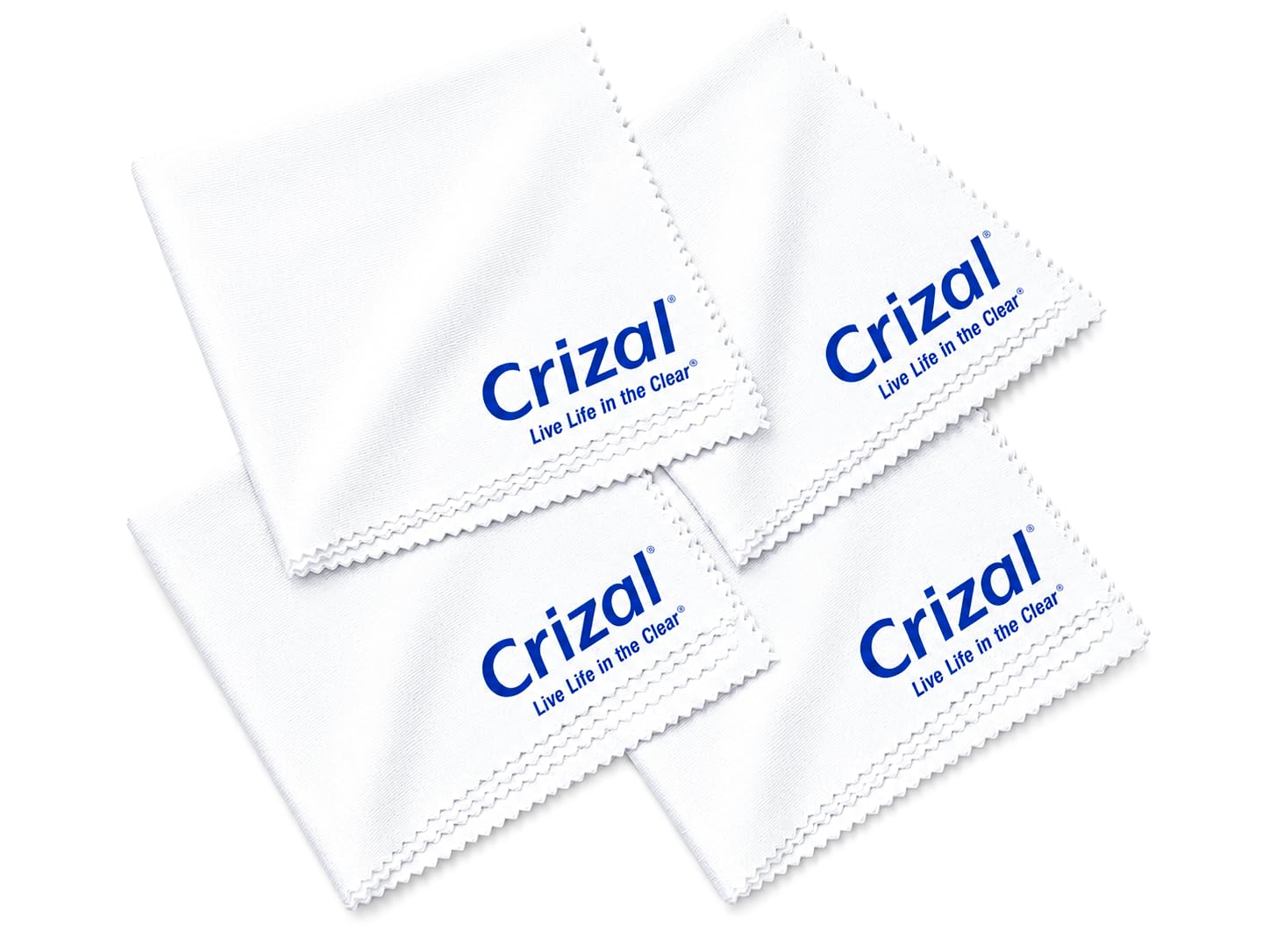
Crizal is a lens-coating name before it is a cloth name, and these are sold on exactly that: a microfiber made by Essilor and designed and tested for advanced anti-reflective coatings. If your prescription lenses carry a premium AR layer, that is the claim you are paying for.

What surprised us is the cloth itself. It is soft and a little heavier than a standard square, roughly hand-sized, with a smooth face rather than the brushed nap of the Koala cloths. On a coated lens it buffs to clear glass with very little pressure, and it does it without spray when the smudge is fresh.

Thickness is where these cloths divide: some arrive substantial and soft, others thin and slick. If you are buying for coating safety rather than hand feel, that matters less, but it is the reason to open the pack before you tuck one into a case.

For prescription lenses with a premium anti-reflective coating, spending cloth money on a cloth the coating maker stands behind is a reasonable trade, and four will cover a glasses case, a desk, and a car. If your lenses are ordinary, or you clean screens as often as glasses, the dozen-packs here do more work for less.

Pros

  • Designed and tested for AR coatings
  • Soft, heavier-than-average hand feel
  • Buffs coated lenses clear with light pressure

Cons

  • Four cloths at a premium price
  • Thickness varies between cloths
Our verdict

Worth the premium if your prescription lenses carry a good anti-reflective coating: a soft, hand-sized cloth from a coating maker, four to a pack for the case, desk, and car.

Check Latest Price
8

Gifts and Glasses

TreVee Kitty Cat Cloths (10-Pack)

96 /100
Keeper Score Outstanding

Key details

Design
Cat prints, five colors
Cloth Size
6 x 3 in
Pack Count
10
Individually Wrapped
Yes
Check Price on Amazon

Ten cloths, five colors, and a cat in glasses printed on each one. If you are buying lens cloths as a small gift, or you want the ones in your house to be findable, this is the pack that does it: each comes individually wrapped, so they work as stocking stuffers without any extra effort.

The size is the thing to be clear about: six by three inches, which makes this a glasses-and-phone cloth and nothing more. It cleans a lens well — fingerprints and face oil come off without streaks, and the print does not stiffen the fabric, which was our first worry. For a camera lens or a tablet, reach for something bigger.

These belong in the kitchen drawer, the car, and a gift bag, with a bigger cloth kept for anything with a lens hood. At this size ten of them go a long way, and being easy to spot is worth more than it sounds in a house where cloths migrate.

Pros

  • Prints do not stiffen the fabric
  • Ten individually wrapped cloths
  • Easy to spot in a bag or drawer
  • Cleans glasses without streaks

Cons

  • Six by three inches is glasses-only
Our verdict

Charming and genuinely useful for glasses and phones — ten individually wrapped cloths that clean without streaks, best bought as gifts or as the cloths you will actually find.

Check Latest Price

How We Tested the Best Lens Cleaning Cloths

We started by gathering every cloth we could find that claimed optical-safe fibers, then filtered the field by fiber density, edge finishing, size, pack count, and price per cloth. Cost per cloth earned its own column early, since some packs sell you four wipes for what others charge for thirty. That narrowing left us with 16 cloths spread across the price range, from thin bulk bundles to plush cloths sold in small counts.

Testing ran for three months, in the places these cloths actually live: the kitchen counter where the glasses come off at night, the desk drawer beside a laptop, a jacket pocket, a camera bag, a glove box. Every cloth got a morning pass on smudged eyeglasses, an afternoon pass on a phone screen, and weekend duty on sunglasses slick with sunscreen and on a television panel.

For the scratch question, we let lenses get genuinely dusty, wiped them with each cloth, and checked under a bright light for new micro-marring. We noted whether a pass left lint or a smear behind, whether a smudge lifted in one swipe or took three, and whether the cloth gripped the glass or skated across it.

Size and value got their own notes: whether a cloth folded into a clean quadrant or was too small to do more than push oil around, and what it worked out to per cloth once the pack was divided out. Then each one went through repeated machine washes with no fabric softener, and we watched for frayed edges, pilling, and cloths that quietly stopped absorbing.

How to Choose Lens Cleaning Cloths

Size Is Most of the Job

A lens cloth has to do two things at once: cover the surface and leave you somewhere to hold it. A 6 by 7 inch square is the sweet spot for glasses and phone screens, enough to wrap a finger and work in circles without touching the lens twice in the same spot. The 12-inch squares here exist for monitors, tablets, and camera bodies, while a 5.5 by 3 inch cloth is a pocket cloth for a phone and little else. Watch the word compact in these listings, because it usually means pocket-sized rather than do-everything.

Weave and Thickness: How Oil Actually Comes Off

Microfiber cleans by grabbing oil and holding it, so a good cloth feels slightly resistant against a clean lens rather than slick. Dense, heavy cloths like the Koala and Crizal picks lift face oil without spray; the thin, faintly shiny squares push it into a film you then chase around the lens. Denser is not automatically better for every job, since a thick cloth is more drag on a touchscreen and holds onto whatever it picks up, but if your current cloth smears instead of clearing, the weave is why.

How Many You Need, and How They Are Packed

Count the places a cloth needs to live: bag, car, desk, bedside, camera case. Ten to twelve covers a household; thirty is for people who lose them. Individual wrapping keeps the first wipe clean and grit-free, which matters most for cloths that travel loose, and it costs you a plastic sleeve per cloth. Compare cost per cloth rather than pack price — the thirty-pack and the thirty-two-pack here sit at very different costs per cloth despite the similar counts.

Eyeglasses vs Camera Lenses

One cloth rarely does both jobs well. Glasses want a 6-inch square you can fold and keep in a case; a camera wants a larger cloth for the front element and a second, smaller one for filters and the eyepiece. Multicoated front elements show a bad wipe more than eyeglass lenses do, so give them their own cloth and keep it in the bag rather than a hip pocket. Two cloths in the camera bag, one for glass and one for everything else, is the habit that keeps both usable.

Frequently Asked Questions

Final Verdict

Buy the MagicFiber thirty-pack if you want the decision over with: a clean, individually wrapped cloth in every bag and drawer, and enough of them to stop rationing. If your glasses need wiping a dozen times a day, the Koala cloths are the better tool — denser, grippier, and worth the higher cost per cloth.

And if a monitor or tablet is the main target, the 12-inch Elite Tech Gear squares clear a big screen in one pass.