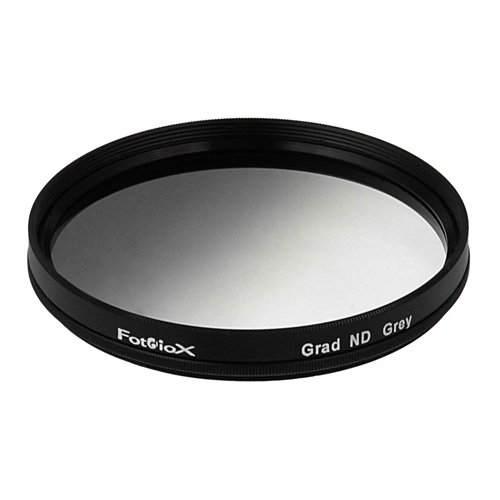
Best Graduated ND Filters of 2026

A graduated ND filter fixes the oldest problem in landscape photography: the sky runs two or three stops brighter than the ground beneath it, and no sensor holds both at once. Line the filter's darker half over the bright half of the scene and the exposure balances in camera, which means you come home with a foreground you can lift without noise instead of a white hole where the clouds were.

The choice that actually matters isn't the logo on the ring, it's the transition. A soft grad fades in gradually and suits ridgelines and treelines; a hard grad cuts in fast and belongs on a flat sea horizon, where a soft edge just leaves the water looking muddy. Buy for the horizons you really shoot, not the ones in the brochure. I've spent the past six months with 11 of these — screw-in and square, soft and hard — on the same stretch of coastline and a few ridge overlooks, and the differences in color and handling showed up within a frame or two.

One thing nobody mentions before your first purchase: a screw-in grad only rotates, so the transition lands wherever your horizon happens to fall, while a square system lets you slide it up or down. If you compose loosely and crop later, that slack is worth the extra bulk in the bag. Here are the ones that earned their place.

Keeper Score summarizes customer ratings and review volume. Read it alongside the product details and trade-offs. How the score works.

1

Best Overall

K&F Concept Soft GND8

90 /100
Keeper Score Outstanding

Key details

Density
3 stops (GND8)
Coatings
28 multi-layer
Transition
Soft
Filter Thread
72mm
Check Price on Amazon

A soft-edged grad is the safer default for most of the scenes you'll actually photograph — tree lines, ridgelines, a rocky coast — because a hard transition draws a line you can see whenever the horizon isn't clean. That's the main reason this K&F is our top pick: three stops of density spread across a wide, gentle transition, so an overbright sky comes down without a visible band across the middle of the frame.

The glass backs the choice up. AGC optical glass under 28 layers of coating, with reflectivity stated at 1.25 percent, is more coating than we expect at this level, and it's the kind of stack that keeps flare and ghosting in check when the sun sits just outside the frame. It's also waterproof and scratch-resistant, which matters on a coast: spray and drizzle wipe off with a cloth instead of smearing into the surface.

The frame deserves a sentence of its own. CNC-machined aviation aluminum with a knurled, non-slip edge sounds like a detail until you're wearing gloves on a cold morning or your fingers are wet. The 3.3mm rim is slim enough to be a sensible match for a wide zoom rather than something that crowds the corners.

Two things to plan for. The density covers the top half of the frame, so you rotate the filter to aim it and compose around a transition that stays at the centre — if the bright patch sits in a corner, that's a crop. And it's a 72mm thread, so smaller lenses need a step-up ring; one ring on a smaller lens is how most people run a single grad across a kit.

Pros

  • Forgiving soft transition for broken horizons
  • 28-layer coating, reflectivity stated at 1.25%
  • Slim knurled aluminum frame is easy to grip

Cons

No notable drawbacks to flag.

Our verdict

Our pick for most landscape shooters: a soft three-stop grad that's forgiving about where you place the line, with coatings that shrug off spray and wipe clean.

Check Latest Price
2

Best Premium Glass

Urth Soft GND8 Plus

83 /100
Keeper Score Excellent

Key details

Glass
SCHOTT B270, 20-layer coating
Density
3 stops (ND8)
Transition
Soft
Filter Thread
67mm
Check Price on Amazon

German SCHOTT B270 glass under 20 layers of CoraNano coating is the short version of what you're paying for here, and it's the reason this Urth sits above the cheaper soft grads in this guide rather than beside them.

The working specification matches our top pick: three stops, a soft transition, and an ultra-slim rim that keeps the filter out of the corners of a wide shot. The 67mm thread is the common size on standard zooms, which is part of why this one makes sense as a long-term buy rather than a one-trip purchase.

We think it's the one to buy if you shoot into the light. Low reflectivity earns its keep when the sun is close to the edge of the frame, and that's the situation that separates well-coated glass from plain glass — a veil of flare across a shot is hard to fix afterwards, whatever you shoot in. The lifetime guarantee is unusual at this level, and it's the other half of the argument: you're buying the glass once.

What you give up is money and a little flexibility. It's the pricier of our two soft-grad picks, and the transition stays where every screw-in's does, across the centre of the frame, so you compose around it. If you're still working out whether grads suit your shooting, start cheaper; if you already know, this is the version to keep.

Pros

  • SCHOTT B270 glass with 20-layer coating
  • Lifetime guarantee on the filter
  • Ultra-slim rim limits vignetting on wide lenses

Cons

  • Costs more than the other soft grad here
Our verdict

Worth the premium if you want one soft grad to keep for years: SCHOTT glass, a 20-layer coating, and a lifetime guarantee standing behind it.

Check Latest Price
3

Best Hard-Edge Grad

Urth Hard GND8 Plus

77 /100
Keeper Score Very Good

Key details

Glass
SCHOTT B270, 20-layer coating
Density
3 stops (ND8)
Transition
Hard
Filter Thread
55mm
Check Price on Amazon

Only one filter in this group draws a hard line, and the line is the whole point. Where a soft grad spreads its density over a wide band, this one goes from clear to three stops of grey over a short distance — right for a sea horizon, a flat prairie, or a mountain silhouette against clean sky, wrong for anything with trees poking into the bright area.

We like it because it doesn't hedge. Put the transition on a waterline and the horizon stays crisp while the sky above comes down three stops, a look a soft grad can't give you without darkening the top of the foreground at the same time. It shares the SCHOTT B270 glass and 20-layer coating with the 67mm soft version, so neutrality and clean-up are the same, for considerably less.

The catch is the 55mm thread, which limits it to smaller-diameter lenses — fine for a compact kit, less so if you shoot a 77mm zoom. A hard grad is also unforgiving about placement: where the horizon in your scene is broken, the transition shows as a visible step. Think of it as the second filter for days with a clean edge, not the only one in the bag.

Pros

  • Hard edge suits clean sea and plain horizons
  • Same premium glass as the pricier soft version
  • Three stops in a compact 55mm filter

Cons

  • Hard transition shows over broken horizons
  • 55mm thread fits a narrow range of lenses
Our verdict

The specialist pick: a hard-edge three-stop grad for sea horizons and flat plains, in the same premium glass as its soft sibling for a lot less.

Check Latest Price
4

Best Square-Holder System

Cokin P Series GND Kit

84 /100
Keeper Score Excellent

Key details

System
P Series holder
Grad Filters
GND4 and GND8
Solid Filter
ND4 (2 stops)
Adapter Rings
52, 55, 58, 62mm
Check Price on Amazon

Every screw-in grad on this page puts the transition across the middle of the frame and leaves you to compose around it. The Cokin holder doesn't. The filter slides up and down in its slot and rotates, so you put the line on the actual horizon and lock it there — that single difference is why we kept this kit in the guide despite the bulk.

In the box: a P-series holder, a two-stop GND4, a three-stop GND8, a two-stop solid ND4, and adapter rings in 52, 55, 58 and 62mm. The solid ND is a bonus for long exposures rather than the reason to buy, but it means one holder covers slow-shutter work as well as bright skies, which is more than any single screw-in here can say.

Practical notes from using it. No coating is listed and the holder is plastic, so the filter surfaces want careful handling — a scratch you'd shrug off on coated glass will show here. Setup is slower too: the holder has to be mounted on the adapter ring before you shoot, which is a more deliberate start to a session than a quick twist.

Check your thread size before you order. The included rings stop at 62mm, so a 67, 72 or 77mm lens needs another adapter ring before any of this works. Cokin also rates the P-series holder for lenses of roughly 24mm and longer on full frame; go wider and the holder itself can intrude on the corners, which defeats the whole exercise.

Pros

  • Grad line slides and rotates freely
  • Two grads plus a solid ND included
  • Four adapter rings cover 52 to 62mm lenses

Cons

  • Holder adds bulk and setup time
  • Included adapter rings stop at 62mm
Our verdict

If you want to slide the transition exactly where a scene needs it, this holder kit is the one to get: two grads, a solid ND, and rings for four lens sizes.

Check Latest Price
5

Compact Lenses

Tiffen Color Grad ND

87 /100
Keeper Score Excellent

Key details

Coating
None
Density
2 stops (0.6)
Filter Thread
49mm
Water Resistance
Not water resistant
Check Price on Amazon

Half clear, half grey, 0.6 density — two stops — with a gradually blended transition and a 49mm thread. That's the whole proposition, and the small diameter tells you who it's for: compact zooms, kit lenses and small primes rather than the wide zooms most landscape kits are built around.

Two stops is a sensible amount for keeping a bright midday sky from clipping while the foreground stays where you metered it, and the optical glass and clean threads mean it mounts without fuss. Tiffen also pitches it for black-and-white work, where a neutral grey grad does the same job with no colour to argue about.

Where it runs out is at the edges of the day. Two stops is a modest pull, so late in the evening, with the sky far brighter than the land, you can run out of grad before you run out of contrast — the density simply isn't there to hold a sunset. That's a limit of the strength rather than a fault: for bright morning and midday light it does exactly what you'd want from it.

At two ounces on the spec sheet, it's also the kind of filter that ends up in the bag on trips where you're travelling light — small enough to live on a compact zoom, light enough not to think about.

Pros

  • Two stops of grad at a budget outlay
  • Optical glass with clean, easy threads
  • Light 2-ounce body suits small kits

Cons

  • Uncoated glass can flare with the sun in frame
Our verdict

A dependable, inexpensive two-stop grad for compact lenses, and a sensible first filter if your skies are mostly bright rather than dramatic.

Check Latest Price
6

Subtle Skies

Fotodiox Graduated ND

76 /100
Keeper Score Very Good

Key details

Ring
Anodized aluminum
Coating
Multi-coated
Density
1 stop (2x)
Filter Thread
77mm
Check Price on Amazon

Seventy-seven millimetres is the widest thread on this page, so this is the one that fits a pro zoom without a step ring. Density is listed as a 2x filter factor — a single stop — which makes it a gentle grad rather than a heavy one.

We think of it as the experimenter's filter. One stop evens out a sky that's only slightly hotter than the land, or takes the edge off bright overcast without the scene looking worked on; it won't rescue a blown midday sky over deep shadow, and it isn't trying to. Multi-coated optical glass in a hardened, anodized aluminum ring is respectable at this level, and the ring turns smoothly enough to set the angle you want and leave it.

The practical case for it is simple: this is the least expensive way here to find out whether a graduated ND suits how you shoot, and if it does, the 77mm thread is a useful size to build around — a step-down ring covers your smaller lenses from there. If you already know you want a strong pull on a bright coastline at noon, put the money toward a three-stop instead.

Pros

  • Widest 77mm thread in this group
  • Multi-coated optical glass in an aluminum ring
  • One stop is easy to place subtly

Cons

  • One stop is mild for harsh midday scenes
Our verdict

A low-cost way to find out whether a graduated ND suits your shooting, with one-stop density, coated glass and the widest thread in this group.

Check Latest Price

How We Tested These Graduated ND Filters

We built the shortlist from around 30 candidates and cut it by thread-size coverage, whether the maker publishes a transition width, and whether the same line is offered in both soft and hard edges. That left 11 filters spanning 49mm to 77mm, screw-in and square, which we shot across six months.

Every filter got the same three scenes: a sunrise over open water with a dead-flat horizon, a ridge line with trees breaking the sky, and a bright overcast afternoon where the grad has to work gently. I shot a base frame with no filter, then each filter from the same tripod position at the same exposure, and compared histograms and raw files afterward — specifically whether neutral areas stayed neutral or drifted warm or cool, and whether the transition edge drew a visible band across open sky.

Handling got its own pass. On a cold morning I timed how long each took to fit and pull with gloves on, whether it cross-threaded going back on, and whether it bound up when stacked with a polarizer. For the square kits I counted the steps from bag to shooting — holder, adapter ring, filter — and checked whether the grad line could slide as well as rotate. On a wide lens, we looked for vignetting in the corners.

Value came last: what a filter costs against how many lenses it actually fits, and whether the coating shed fingerprints or smeared them around. The ones that stayed in the bag did all of it without fuss.

How to Choose a Graduated Nd Filter

Match the transition to the horizon

A soft grad spreads its density over a wide band, which is why it suits ridgelines, tree lines and any skyline that isn't a straight edge. A hard grad changes over a short distance and gives you a crisp, deliberate line — ideal on a sea horizon, obvious and ugly over a ragged one.

If you only own one, make it soft. Our top pick is a soft three-stop for exactly that reason. Buy hard once you know the scenes you shoot have a clean edge, as the Urth 55mm does for a waterline.

How many stops you actually need

Two stops handles a sky that's moderately brighter than the land. Three stops is the everyday workhorse for a bright sky over a shadowed foreground, and one stop is a nudge for subtle contrast rather than a rescue. Past three you're in solid-ND territory, where the grad line starts to dominate the picture.

Density is only half the story: a two-stop grad with a wide, gentle transition is often easier to place than a three-stop with an abrupt one, which is why soft and strong is the combination most landscape shooters settle on.

Screw-in or square holder

A screw-in circular grad is small, quick and comparatively cheap, but the transition sits fixed across the centre of the frame. You rotate the filter to change the angle of the line, not its height, so a bright patch in the upper corner means recomposing or cropping.

A square holder lets you slide the grad line up and down and rotate it freely, at the cost of bulk, setup time and two hands. Choose the holder if you keep meeting horizons that don't land in the middle of your frame; choose screw-in if you want a filter that lives in a jacket pocket.

Sizing, step-up rings and stuck filters

Buy for your largest lens and use step-up rings on the rest, so one filter covers a whole kit. Check the ring listing before you assume: the Cokin kit here includes 52 to 62mm adapters, so a 72mm or 77mm lens needs another ring before any of it works.

The trap is over-tightening. A thin filter ring binds against the lens thread, especially after a cold morning or a temperature change, and a filter stuck on a lens is a genuinely miserable problem. Snug it, don't crank it, and keep a filter wrench or a broad rubber band in the bag for the day it does bind.

Coatings, glass and colour neutrality

Multi-layer coatings are the difference between a clean frame and a veil of flare when the sun sits near the edge of the shot, and they make cleaning easier — sea spray wipes off instead of smearing. A filter with no coating at all is fine in flat, controlled light and awkward in anything else.

Colour neutrality is harder to judge from a listing. Makers who state their glass, such as SCHOTT B270 or AGC optical glass, are giving you something to check; a grad that tints the sky is worse than no filter at all.

Frequently Asked Questions

Final Verdict

The K&F Concept soft GND8 is the one we recommend to most people: a forgiving three-stop transition, glass that wipes clean after a soaking, and a slim frame that won't crowd a wide lens. If your horizons are clean and straight, the Urth 55mm hard grad draws a sharper line for considerably less money.

And if you need the transition to move with the scene rather than the other way around, no screw-in will do it — the Cokin holder is the one to buy.