Best Drones Under 250g of 2026

Two hundred and fifty grams is the number that built this category. Stay under it and a drone you fly on a Saturday morning skips the registration paperwork heavier models come with; cross it and the same flight arrives with a form attached. Over the past seven months my team has flown eight sub-250g drones — through gusty afternoons, over backyards, and around more trees than I care to admit.

The spec sheet won't tell you which ones those are. Quoted flight times assume still air, and a 4K badge says nothing about whether the gimbal holds a horizon through a slow pan. What matters is how a drone handles a gust, whether auto return lands it somewhere you'd pick, and whether it still folds flat after a season in a backpack.

We weighed value the way a buyer does: batteries in the box, whether the controller needs your phone clipped to it, how long it takes to get airborne without the manual. Some of these are for footage, some for keeping in the car — the picks below split along that line.

Keeper Score summarizes customer ratings and review volume. Read it alongside the product details and trade-offs. How the score works.

1

Best Overall

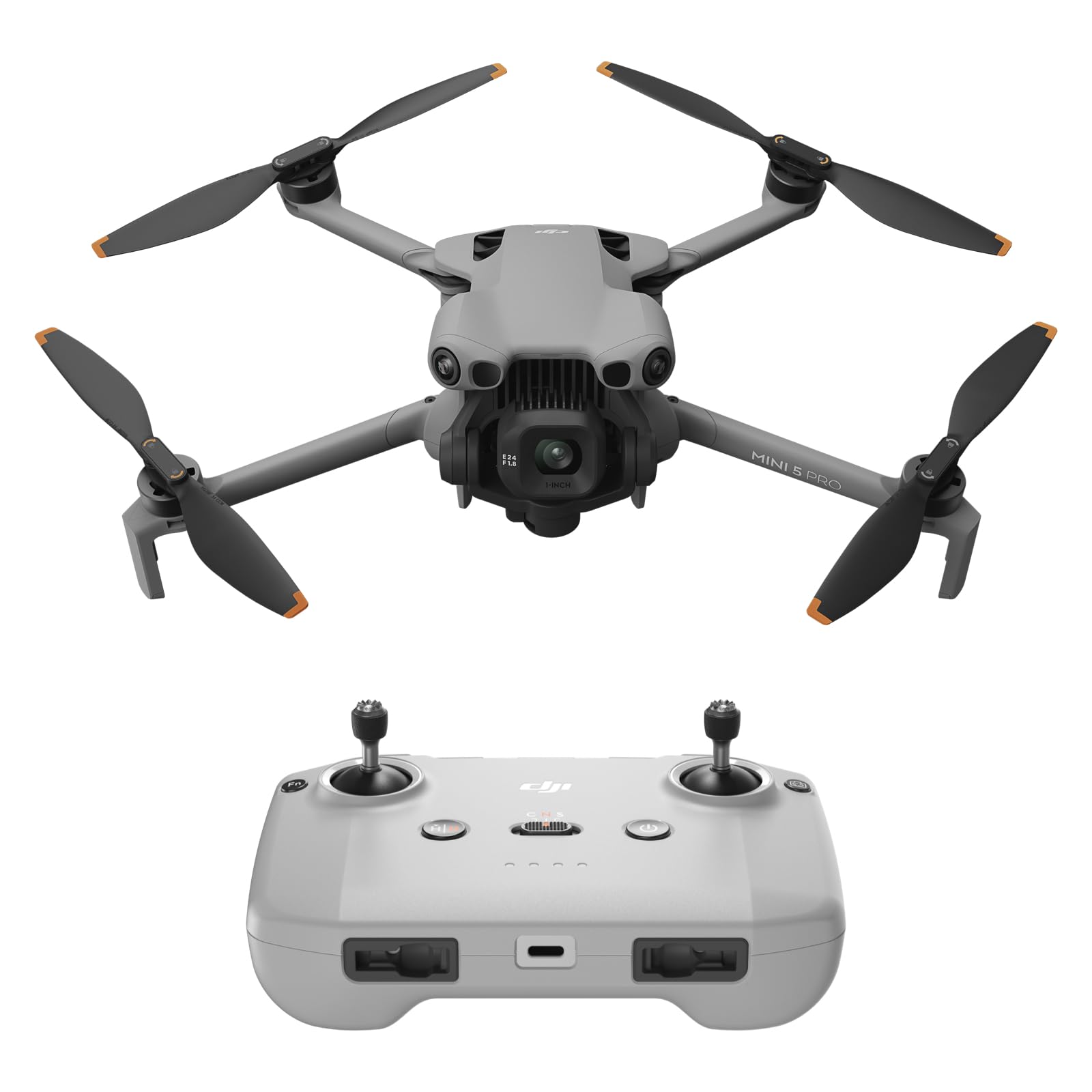
DJI Mini 5 Pro

88 /100
Keeper Score Excellent

Key details

Video
4K/60fps HDR
Camera
1-inch CMOS, 50 MP
Takeoff Weight
8.78 oz
Obstacle Sensing
LiDAR and vision sensors
Check Price on Amazon

Put a 1-inch CMOS sensor in a drone that still clears the 250g line and you have the reason the Mini 5 Pro leads this group. It records 4K/60fps HDR video and 50MP stills, and the gimbal's 225° roll lets you frame vertical shots without turning the aircraft sideways. We paid attention to the 249g takeoff figure, because one gram of margin is not much: a heavier battery or a bolted-on accessory can move you out of the recreational exemption.

That camera is not the only thing that separates it. Omnidirectional obstacle sensing, including forward LiDAR, and ActiveTrack 360° make it the most forgiving drone here to fly near trees, buildings, or a moving subject. We think that combination is what makes it the best overall pick rather than just the best-equipped one. The 20km transmission range is far beyond what most people need for line-of-sight flying, but it is reassuring when the signal gets busy.

The RC-N3 controller uses your phone as the screen, while the 42GB of internal storage means you can fly before you remember a memory card. For stills and video that need to hold up beyond a phone screen, this is the one we reach for.

Pros

  • 1-inch sensor for stronger low-light stills
  • Omnidirectional obstacle sensing
  • 20 km transmission range
  • 42 GB internal storage

Cons

  • Only one battery in the box
  • Premium price for the set
Our verdict

We recommend it when image quality and obstacle sensing matter more than a long battery kit; it is the most complete camera drone under 250g here.

Check Latest Price
2

Best for First Camera Drone

DJI Mini 4K

88 /100
Keeper Score Excellent

Key details

Video
4K UHD
Batteries
2, 62 min total
Stabilization
3-axis gimbal
Takeoff Weight
8.68 oz
Check Price on Amazon

The Mini 4K is the practical answer for anyone who wants a real camera drone without paying for the top pick's sensor. It flies at 246g, records 4K, and hangs the camera on a 3-axis gimbal, which is the part that matters when the wind picks up. We think that combination is the right first camera drone for most people, especially with two batteries in the box.

What we appreciate most is the restraint. The 10km transmission is more than enough for the line-of-sight flying most people actually do, and the 38kph wind rating gives it a margin on breezy afternoons. The 3-axis gimbal keeps the horizon steady in a way that electronic stabilization cannot match, so your footage looks calmer without extra work in editing. For travel, it folds down to a package that disappears in a daypack.

The battery is the honest weak point. The 31-minute figure is a best case, and our flights came in shorter, which is why the two-battery kit matters more than the headline total. That is the trade-off for a drone this light and this affordable. If you want the simplest possible first camera drone and don't need the Mini 5 Pro's low-light sensor, this is the one we recommend.

Pros

  • 3-axis gimbal steadies 4K video
  • Two batteries in the combo
  • 10 km transmission

Cons

  • Phone-based controller
Our verdict

We point first-time camera pilots here: the 3-axis gimbal and two-battery kit make 4K aerial video easy without the top pick's learning curve.

Check Latest Price
3

Best Screen-Controller Value

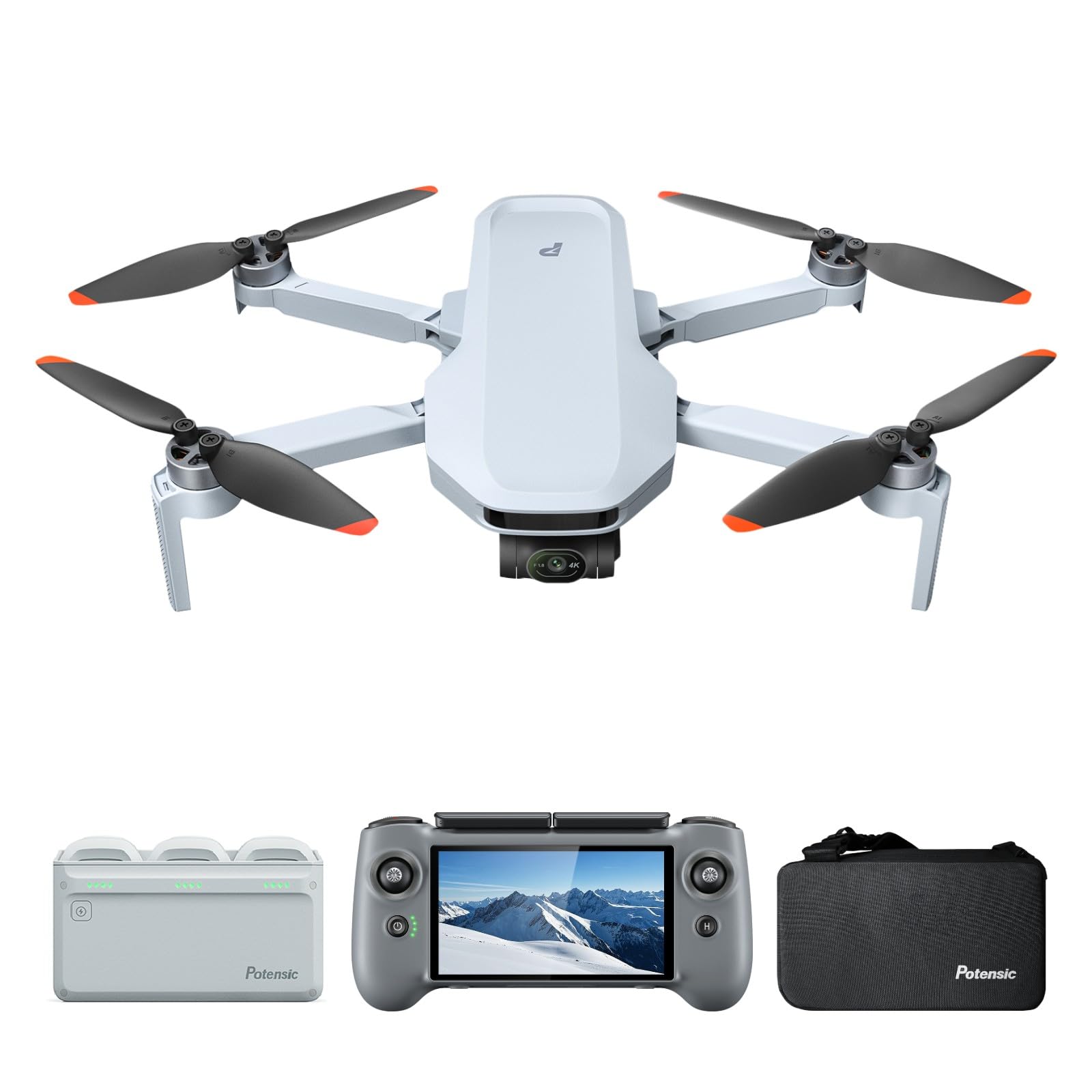
Potensic Atom 2

90 /100
Keeper Score Outstanding

Key details

Camera
1/2-inch Sony CMOS, 48 MP
Batteries
3, 96 min total
Controller
5.5-inch 1080p touchscreen
Takeoff Weight
8.64 oz
Check Price on Amazon

The Atom 2's party trick is the controller: a 5.5-inch 1080p touchscreen at 700 nits, so you can frame and review without clamping a phone into a holder. That sounds like a small convenience until you have flown with a phone that dims in sunlight or runs out of battery. The drone itself weighs 245g and carries a 1/2-inch Sony CMOS sensor, 48MP stills, and 4K/30fps HDR video on a 3-axis gimbal.

The AI tracking and vertical shooting are genuinely useful for solo shooting, and the 10km transmission gives you headroom. The three-battery kit is the other big draw: 96 minutes of total flight time turns a short session into an afternoon. We also like that the controller feels like a dedicated tool rather than a phone accessory, because that is the difference between packing the drone and leaving it at home.

We think the Atom 2 is the value pick for travel because it bundles the screen, the batteries, and a capable camera in one case. The case itself is well organized, and the three-battery rotation means you are never far from a fresh pack. For travel footage and stills, it is the kit we reach for when we want a screen without paying top-tier money.

Pros

  • 5.5-inch screen controller
  • Three batteries for 96 minutes total
  • 1/2-inch Sony CMOS with 48 MP stills

Cons

  • No obstacle avoidance
  • 4K video tops out at 30fps
Our verdict

We choose the Atom 2 when you want a screen controller and three batteries without paying top-tier money; it is the travel value here.

Check Latest Price
4

Best Budget

Potensic Atom SE

89 /100
Keeper Score Excellent

Key details

Camera
4K EIS, 12 MP
Batteries
2, 62 min total
Transmission
4 km
Takeoff Weight
Under 249 g
Check Price on Amazon

The Atom SE is the lowest-cost way here to get a GPS drone with a 4K camera and return-to-home. It weighs under 249g, folds down, and comes with two batteries for a 62-minute total. The camera uses electronic stabilization rather than a mechanical gimbal, so it is not the pick for smooth cinematic video in wind.

For a first GPS drone, the feature set is sensible: auto return, beginner mode, and brushless motors. We like that it does not pretend to be a cinematic tool. The 4K footage is crisp in calm conditions, and the GPS hold makes it much easier to manage than a toy-grade drone. The 16m/s top speed is modest, but that suits the beginner buyer.

The battery is the weak point. The 62-minute total is two 31-minute batteries, and our flights came in shorter, so the second battery is not a bonus—it is the usable part of the kit. That is the trade-off for a drone at this end of the market. For the money, it is still the budget pick we recommend.

Pros

  • GPS return-to-home at a budget price
  • Two batteries for 62 minutes total
  • Light under-249g folding body

Cons

  • 4 km transmission range
Our verdict

For a tight budget, we recommend the Atom SE: GPS return-to-home and a 4K camera for less, with the understanding that electronic stabilization is not a gimbal.

Check Latest Price
5

Short Budget Flights

Holy Stone HS360S

86 /100
Keeper Score Excellent

Key details

Camera
4K UHD, 8 MP
Flight Time
20 min
Transmission
10,000 ft
Takeoff Weight
7.51 oz
Check Price on Amazon

The HS360S is the budget GPS option: 213g, a 4K camera, GPS return-to-home, and follow-me. It folds into a small package and is light enough to carry without a dedicated bag. The 1/3-inch GalaxyCore sensor is the hardware behind the camera, and the specs are otherwise focused on the basics.

We think it earns a place for a first-time pilot who wants GPS safety without spending much. The beginner mode and one-key return are the features that matter, and the 10,000 ft control range is more than enough for the kind of flying this drone encourages. The 4K camera is easy to live with for social clips, and the follow-me mode is a nice extra at this end of the market.

We don't choose it for a travel day where footage is the point, but for a first GPS drone it does the basics without asking much. It is the one here we hand to a beginner who wants to learn GPS return-to-home before spending more. That is a narrow job, and it does it well.

Pros

  • GPS return-to-home for a budget price
  • Light 213g body

Cons

  • 20-minute flight time is short
  • 8 MP stills limit cropping
Our verdict

We see the HS360S as a cheap GPS trainer for short flights, not a travel camera drone; its low price is the reason to consider it.

Check Latest Price
6

Kids and Backyard

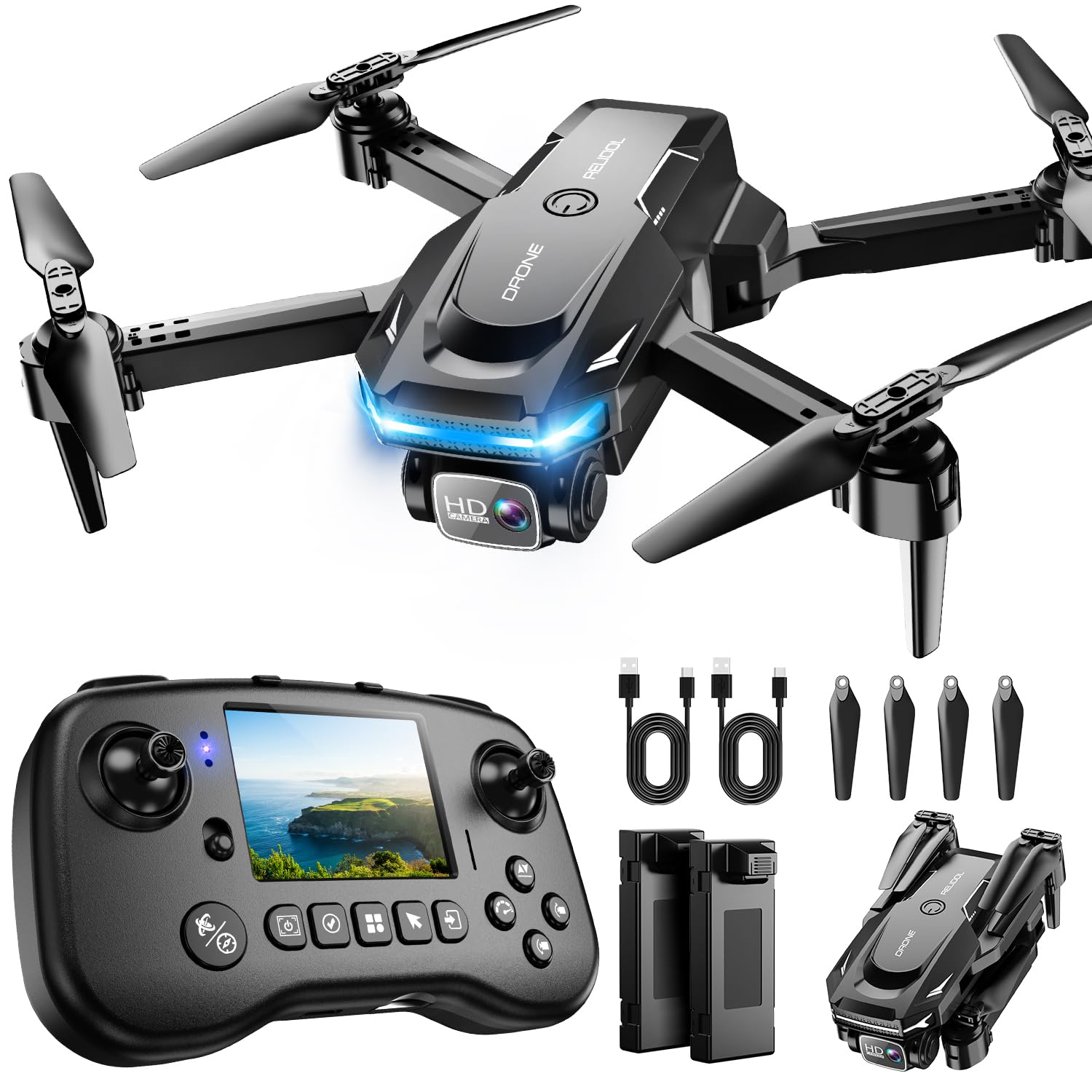
RELIDOL PK01

85 /100
Keeper Score Excellent

Key details

Camera
1080p
Controller
Built-in screen
Flight Time
25 min with 2 batteries
Takeoff Weight
4.06 oz
Check Price on Amazon

The PK01 is the one to choose when the pilot is a kid and the backyard is the runway. It weighs 4.06 oz, folds up, and puts a live view on a screen built into the controller, so no phone is needed. The one-key start and emergency stop are the right features for a first-time flyer, and the two batteries give you a second session without waiting.

We like the built-in screen more than we expected: it removes the phone handoff that makes cheap drones feel fussy. The camera is fine for close-range clips, and the gesture controls and 3D flips add some fun without complicating the basics. It is not a drone for aerial photography; think of it as a backyard toy with a screen.

If you want a serious camera drone, skip it. If you want a first flying toy that is easy to hand to a child with supervision, the PK01 is the one here we point to. The screen is the detail that makes it feel less like a toy and more like a starter kit.

Pros

  • Built-in screen controller
  • Two batteries for about 25 minutes total

Cons

  • 30 m control range keeps it close
Our verdict

We hand the PK01 to a child or a first-time flyer who wants a built-in screen and simple controls; it is a backyard toy, not an aerial camera.

Check Latest Price

How We Tested Sub-250g Drones

We started with every consumer drone whose listing promised under 249 grams, dropped anything without GPS return or a stabilized camera, and ordered a spread of eight that covered the price range without repeating the same formula. Then we flew them for seven months.

They went where these drones actually live: a neighborhood park at golden hour, an open field on a breezy afternoon, a tree-lined backyard where satellite lock comes and goes, and a stretch of coastline with nothing to hit but water. Nothing was flown indoors.

Ease of use was measured by the clock. I timed each drone from case open to a steady hover, solo, using only the on-screen prompts, and counted the steps it took to bring it back down. Camera quality was judged on one repeated shot — a shaded treeline against a bright sky — reviewed afterward for blown highlights, jitter in slow pans, and how quickly the gimbal settled after a turn. For flight performance, we hovered each drone at roughly 30 meters on gusty days and watched how far it drifted before the GPS corrected it.

Battery life got the stopwatch too, full charge to auto-land, compared against the claim, plus charge time and whether a combo kit's spares genuinely covered a morning out. For durability, we folded and unfolded the arms dozens of times, carried them loose in a backpack, and let one take a branch strike. A kitchen scale settled the weight question — with prop guards and a battery fitted, a couple of these sit closer to the line than the box suggests.

How to Choose a Drone under 250G

Protect the Weight Margin

In the U.S., flying recreationally under 250g can keep you out of FAA registration and Remote ID, but that exemption depends on the takeoff weight you actually fly. The DJI Mini 5 Pro sits at 249g, which leaves almost no room for a heavier battery or a bolted-on accessory. If you plan to swap batteries or add lights, check the all-up weight before you buy. A drone that is already at the ceiling is a poor candidate for tinkering.

Choose a Gimbal Before You Chase Resolution

4K is table stakes here; steady footage is not. A 3-axis mechanical gimbal, as on the DJI Mini 4K and Potensic Atom 2, keeps the horizon level when the drone pitches or yaws. Electronic stabilization can look fine in calm air, but it has less headroom in wind and usually crops the frame. For travel video, we put gimbal quality ahead of a higher frame rate. For stills, sensor size matters more: the Mini 5 Pro's 1-inch chip is the low-light pick, while the 1/2-inch and 1/3-inch cameras are better in good light.

Treat Flight Time as Battery Math

Advertised totals are usually the sum of several batteries, not one long flight. The DJI Mini 4K and Potensic Atom SE both quote 62 minutes from two batteries, which means roughly half that per pack; the Atom 2 and its three batteries claim 96 minutes. Real sessions are shorter, especially in wind or when you are shooting in 4K. We prefer two or three batteries to one bigger pack, because changing a battery is faster than waiting for a charge. Budget for spares from the start.

Match Range to How You Fly

Long-range claims sell drones, but most recreational flying stays within visual line of sight. A 4km link, as on the Atom SE, is enough for the kind of close work a beginner should be doing; 10km to 20km gives more headroom in interference but does not make beyond-line-of-sight flying legal or wise. We treat the published range as a ceiling and keep the drone in sight. If you fly near buildings or trees, signal stability matters more than the maximum number.

Safety Features Are Worth Paying For

Obstacle sensing and return-to-home are the two features that change how confident a new pilot feels. The Mini 5 Pro's omnidirectional sensing is the strongest here, while the Atom 2 and Mini 4K ask you to fly more carefully. Return-to-home is not a substitute for a pre-flight check, but it is a useful backstop when the signal drops or the battery gets low. For a child or a first-time flyer, start with a short-range model and open space.

Frequently Asked Questions

Final Verdict

Buy the DJI Mini 5 Pro if the footage matters most. Its 1-inch sensor, 4K/60 HDR video, and omnidirectional obstacle sensing make it the most capable sub-250g camera drone in this group, and the 42GB internal storage is a genuinely useful travel detail. The trade-off is a single-battery kit and a premium price.

If you are buying a first camera drone, the DJI Mini 4K is the easier recommendation. If the budget is tight, the Potensic Atom SE gets you GPS and a 4K camera for less, with the understanding that its electronic stabilization is not a gimbal.