Best Digital Cameras of 2026

Your phone already takes a decent photo, so a dedicated camera has to earn its place in your bag. What it buys you is reach, control, and low-light headroom—the ability to zoom across a soccer field, shoot a birthday party without blowing out faces, and bring home footage that doesn't look like it was shot through a smudged window. Over the past six months, I've shot with 12 cameras, from pocket-size point-and-shoots to bridge models and a vlogging kit, and the differences showed up fast.

The spec sheet won't tell you the whole story. Megapixels are the easiest number to market and the least useful one to shop by; sensor size, lens range, stabilization, and video specs matter more once the light drops. I also learned to check whether a camera actually fits in a jacket pocket, whether the battery survives a day of mixed stills and video, whether autofocus holds a moving subject instead of hunting, and whether the controls make sense without a manual. The ones that earned a spot are the ones I kept reaching for.

Keeper Score summarizes customer ratings and review volume. Read it alongside the product details and trade-offs. How the score works.

1

Best Overall

Canon EOS Rebel T7

95 /100
Keeper Score Outstanding

Key details

Video
1080p full HD
Sensor
24.1MP APS-C CMOS
Autofocus
9-point AF
Lens Mount
Canon EF, 18-55mm kit lens
Check Price on Amazon

The 24.1-megapixel APS-C sensor in the Rebel T7 is roughly ten times the light-gathering area of the 1/2.3-inch chips in most compacts here, and that single number is why we name it the best digital camera in this group for stills. Detail holds indoors where a point-and-shoot smears it, the bundled 18-55mm lens covers wide scenes through portraits, and because the lens comes off, this is the one camera here that can grow with you instead of capping out in a year.

The optical viewfinder is the part we ended up valuing most. It shows about 95% of the frame, it stays readable in sun where a rear screen turns into a mirror, and it doesn't drain the battery the way a display does. Shooting through it, the 9-point autofocus with a cross-type center point locks quickly and predictably, fast enough for kids and pets if not for a track meet at three frames per second.

It is, however, a bag camera. Add the kit lens and it takes real space, so it's the one pick here that won't ride in a jacket pocket. The Wi-Fi is the fussiest feature on the body: the app works, but pairing takes patience, and we treat wireless transfer as a bonus rather than a workflow.

What you get for the carry is the most complete learning tool in the group: a mode dial that starts in auto and ends in full manual, exposure controls that respond the way a camera should, and Canon's EF mount with decades of lenses behind it. We start beginners on the kit lens and add a cheap 50mm prime once the exposure triangle clicks.

Pros

  • Best image quality in this group
  • Interchangeable lenses let it grow with you
  • Optical viewfinder stays usable in bright sun
  • Full manual controls for learning exposure

Cons

  • Video stops at 1080p
  • Live-view and movie autofocus is slow
Our verdict

For stills, nothing here beats the Rebel T7, and it's the camera we tell beginners to buy when they want to learn photography rather than just own a camera.

Check Latest Price
2

Best Budget Compact

Kodak PIXPRO FZ55

89 /100
Keeper Score Excellent

Key details

Zoom
5x optical (28-140mm)
Video
1080p
Sensor
16MP 1/2.3-inch CMOS
Weight
3.7 oz
Check Price on Amazon

At 3.7 ounces it disappears into a jacket pocket, and that changes behavior more than any specification does: this is a camera you bring because bringing it costs nothing. The 5x optical zoom runs from a 28mm wide angle to 140mm, the 2.7-inch screen is bright enough to frame with outdoors, and the built-in flash does real work at parties.

We think it's the best budget compact here for anyone chasing the early-2000s digicam look without paying collector money. The 16MP files come out contrasty and a touch punchy straight from the camera, the sort of photo that goes into a group chat without editing, and 5x of optical zoom gets you closer than cropping a phone frame ever will.

The sensor is a small 1/2.3-inch chip, so anything shot indoors without flash goes grainy quickly, and the stabilization is digital, which smooths the preview more than it rescues a dim shot. Reliability is the caveat worth knowing: some units quit in the first few months, so we buy this one from a seller with an easy return and register the warranty the day it lands.

Charging happens inside the camera over USB in around two hours with the supplied adapter, and there's no separate charger in the box. That's fine for a weekend and mildly annoying if you shoot daily. It takes Class 10 SD cards up to 512GB, which is more room than a 16MP camera will ever need.

Pros

  • Pocketable at 3.7 ounces
  • 5x optical zoom, 28-140mm equivalent
  • Least expensive camera we recommend

Cons

  • Small sensor gets grainy indoors
  • Digital rather than optical stabilization
Our verdict

The FZ55 is our budget pick because it's the one you'll actually carry: small, inexpensive, and capable enough for everyday snapshots.

Check Latest Price
3

Best for Video

DJI Osmo Pocket 3

89 /100
Keeper Score Excellent

Key details

Video
4K at up to 120fps
Sensor
1-inch CMOS
Weight
6.31 oz
Stabilization
3-axis mechanical gimbal
Check Price on Amazon

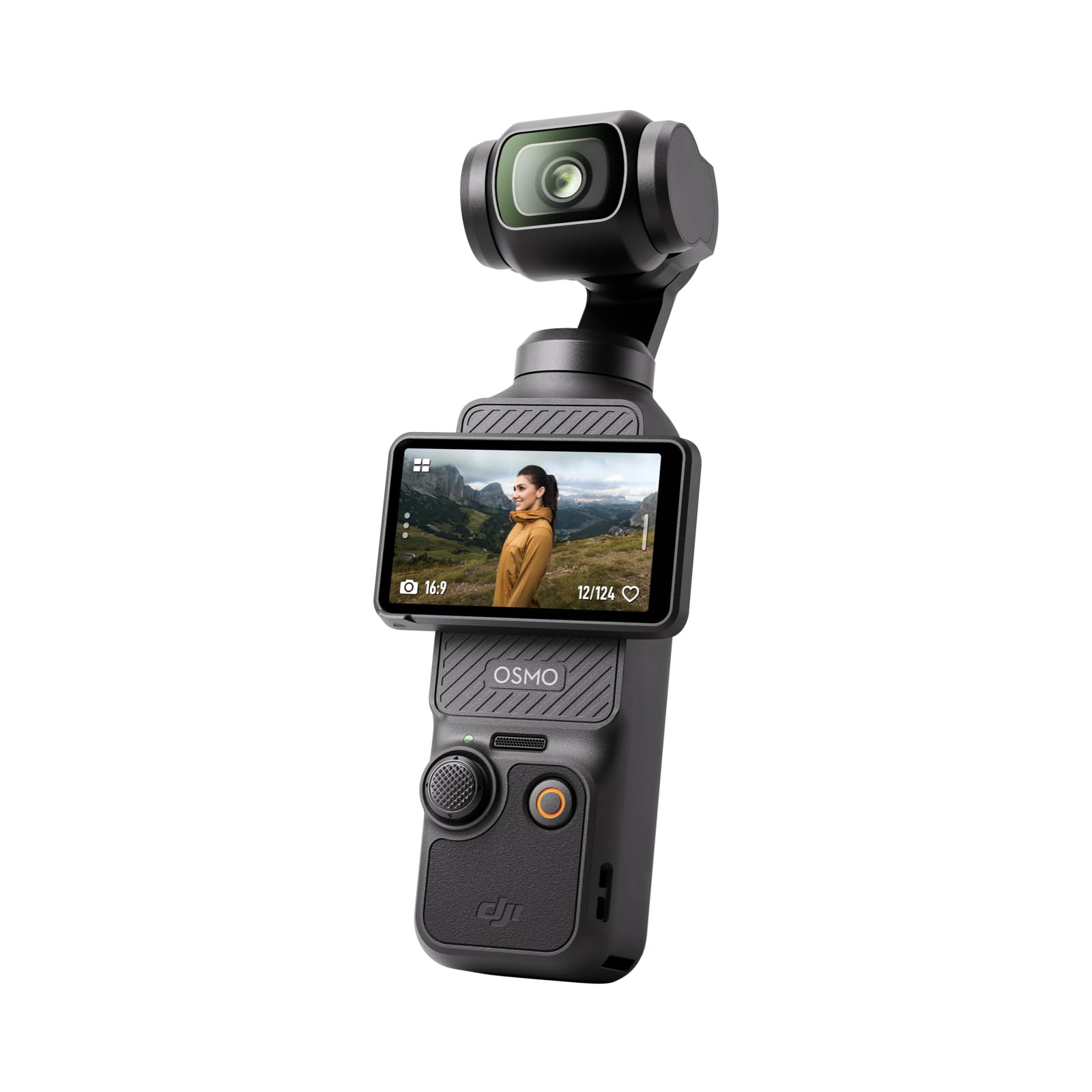
A motorized three-axis gimbal is the reason this camera exists. Phone stabilization crops the frame and corrects after the fact; the Pocket 3 physically holds the sensor steady, so walking footage comes out smooth instead of wobbly-but-rescued, and the horizon stays level through a turn.

The 1-inch CMOS sensor is the largest in any compact here, and it shows at night: 4K at up to 120 frames per second, with color that holds up on a lit street. The 2-inch screen rotates between horizontal and vertical, which sounds like a gimmick until you're shooting for a vertical feed and can actually frame it. ActiveTrack keeps a moving subject centered without a second person, and the whole unit is 179 grams.

Where it earns its place is as a one-job camera. If the reason you're shopping is video for the internet, this is the pick, and nothing else here makes handheld footage look this composed. It is not a stills camera: 9.4 megapixels and no optical zoom mean most of your photos will still come from your phone.

Battery is rated at 166 minutes of recording, which in practice covers a morning of on-and-off shooting. The gimbal is a mechanism, so it wants the included cover and a pocket of its own rather than the bottom of a bag, and a gimbal that stops stabilizing is the failure to watch for on any camera of this type, which is why we buy it new with a warranty rather than secondhand.

Pros

  • Three-axis gimbal gives genuinely smooth footage
  • 1-inch sensor holds up in low light
  • Rotating screen switches to vertical
  • 179 grams, fits a sweater pocket

Cons

  • Stills max out at 9.4 megapixels
  • No optical zoom
Our verdict

We recommend the Osmo Pocket 3 when video is the point: it's the steadiest, most capable video tool here, and the stills are an afterthought.

Check Latest Price
4

Best Budget Superzoom

Kodak PIXPRO AZ528

83 /100
Keeper Score Excellent

Key details

Zoom
52x optical, 24mm wide end
Burst
6 fps
Sensor
16MP BSI CMOS
Stabilization
Optical
Check Price on Amazon

Fifty-two times optical zoom starting at a 24mm wide angle is reach nothing else here can match. Point it at a bird feeder across the yard or a stage from the back row and the AZ528 fills the frame with something recognizable, with optical stabilization keeping the long end usable in your hands rather than fused to a tripod. That reach is the whole reason we keep it on this list.

It handles like a small DSLR: a 1.1-pound body, a real grip, an electronic viewfinder for bright afternoons and a 3-inch screen for everything else. Six frames per second of burst helps when the subject won't sit still, and Wi-Fi pushes pictures to your phone without a cable or a card reader.

The 16MP sensor is the same small size as the pocket Kodak's, so the long end wants daylight. Zoomed all the way in, fine detail goes soft and colors flatten. That's the trade for 52x in a body this light, and it's why we call this a daylight camera rather than an all-rounder.

Pros

  • 52x optical zoom from a 24mm wide end
  • Optical stabilization for handheld telephoto
  • Viewfinder and 6fps burst for moving subjects
  • Wi-Fi transfer to a phone

Cons

  • Autofocus hunts on close subjects
  • Video maxes out at 1080p
Our verdict

For wildlife, sport, or a stage from the back row, the AZ528 gives you more reach for the money than anything else we recommend.

Check Latest Price
5

Best Superzoom

Panasonic Lumix FZ80D

83 /100
Keeper Score Excellent

Key details

Zoom
60x optical (20-1200mm)
Video
4K
Sensor
18.1MP MOS
Viewfinder
0.74x, 2,360K dots
Check Price on Amazon

The first hour with the FZ80D is a scavenger hunt through menus. Panasonic has packed a serious amount of control in here, 4K Photo modes, Post Focus, manual focus aids, custom function buttons, and almost none of it announces itself. Put in the time and it's the more capable of the two superzooms on this list; skip the manual and you'll shoot in auto and never find the good parts.

Stay with it and the range is remarkable: 20mm at the wide end for landscapes, 60x optical zoom at the other, with POWER O.I.S. doing real work when you're at full reach. The viewfinder is the clearest advantage over the Kodak, a 0.74x equivalent, 2,360K-dot panel that stays readable in sunlight and makes long-lens framing practical rather than hopeful. For anyone who'll learn it, this is the superzoom we prefer.

4K Photo is the feature we use most: it records a burst and lets you pull a still out afterwards, a clever end-run around a camera that can't track fast action. Post Focus does something similar for depth of field after the shot. The limit is light, because the small sensor gets noisy as the sun drops and detail softens at full zoom.

Pros

  • 60x optical zoom, 20mm at the wide end
  • Bright 2,360K-dot viewfinder
  • 4K Photo pulls stills from bursts
  • Deep manual control if you want it

Cons

  • Menus take real study to learn
  • Weakest reliability record of the superzooms here
Our verdict

If you'll spend an evening with the manual, the FZ80D is the superzoom we choose: 20mm to 1200mm, a viewfinder that works in sunlight, and 4K when you want it.

Check Latest Price
6

Best Premium Compact

Canon PowerShot G7 X Mark III

82 /100
Keeper Score Excellent

Key details

Zoom
4.2x optical
Video
4K UHD, uncropped
Screen
3-inch flip-up touchscreen
Sensor
20.1MP 1-inch CMOS
Check Price on Amazon

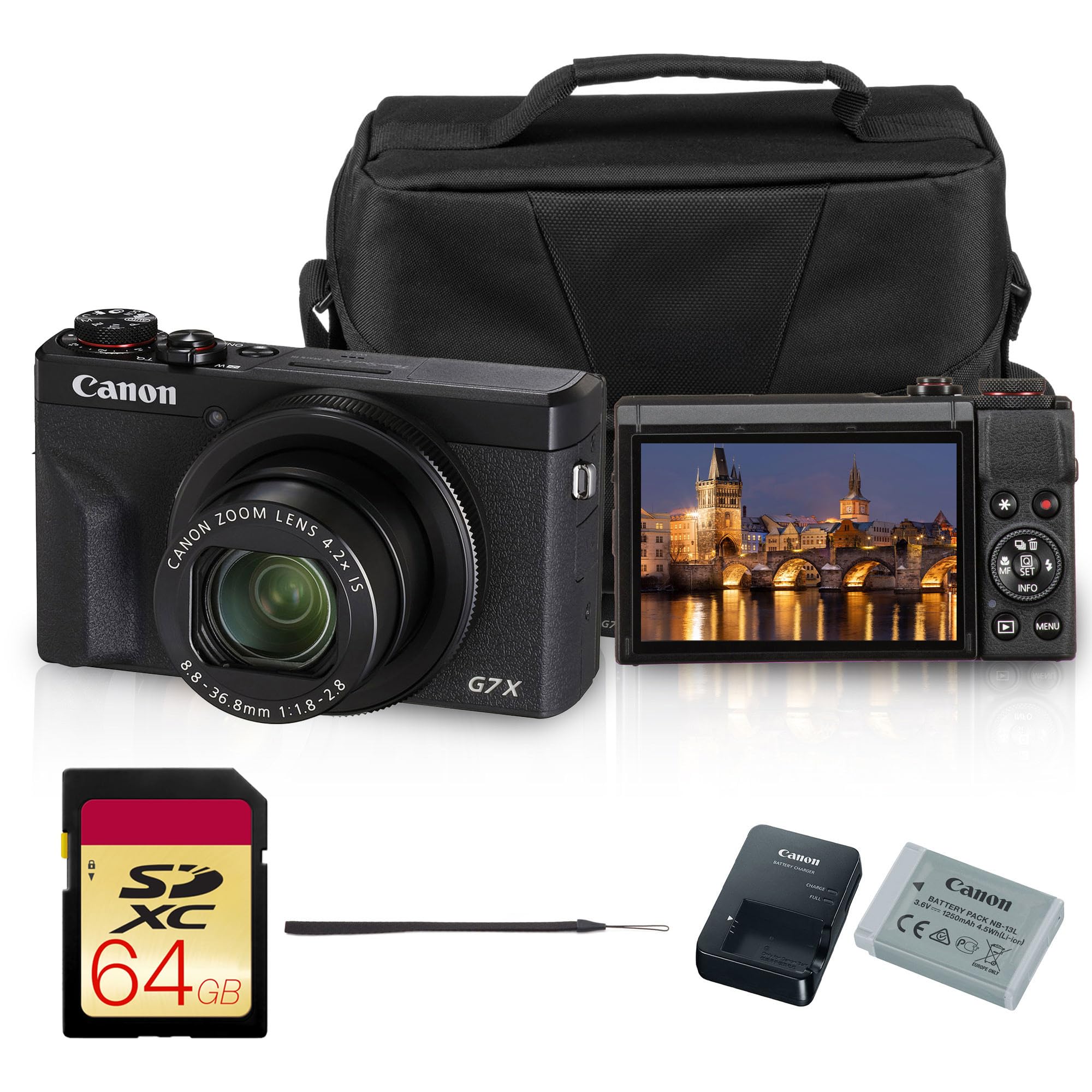
This is the most expensive camera on the list, and the bundle explains part of it: a 64GB card and a shoulder bag ship in the box with the body. What you're really paying for is the only 1-inch sensor among the compacts here, paired with a bright lens. That's the combination that lets a pocket camera shoot indoors without flash and still look like a photograph rather than a phone snap.

The 4.2x optical zoom is a travel range, not a wildlife one. Video is 4K with no crop, the screen flips up for selfies and vlogging, and there's a microphone input, a detail that matters more than any spec once you start recording outdoors. Autofocus is quick enough for kids and pets, and the body is small enough for a coat pocket.

We recommend it to one buyer in particular: someone who travels, photographs people and streets more than landscapes, wants files that look close to DSLR quality without carrying lenses, and will actually use the 4K. If that's you, this is the compact that makes leaving the phone at home feel reasonable. If you need reach or you're working to a budget, the Kodak superzoom or the Rebel T7 does more for less.

Battery life is the practical catch. The listed figure is about an hour, so treat it as a two-battery camera and charge both the night before a trip. That's a nuisance rather than a dealbreaker, but it's the detail that decides whether a day out ends with a dead camera at four in the afternoon.

Pros

  • 1-inch sensor with a bright lens
  • Uncropped 4K and a flip-up screen
  • Microphone input for cleaner audio
  • Bundle includes a 64GB card and bag

Cons

  • 4.2x zoom limits reach
  • Premium price for a compact
Our verdict

For the traveler who wants the best pocketable image quality we found, the G7 X Mark III earns its premium, so long as you add a second battery.

Check Latest Price
7

First-Time Buyers

Duluvulu 4K Digital Camera

84 /100
Keeper Score Excellent

Key details

Video
4K (2160p)
Screen
3-inch 180° flip
Sensor
1/3-inch CMOS
In The Box
32GB card, two batteries, bag
Check Price on Amazon

Everything you need to take a picture is in the box: the camera, a 32GB card, two rechargeable batteries, a USB adapter, a strap, a lens cap and a soft bag. For a first camera bought on impulse, that completeness isn't a small thing, because there's no second order to place before the thing will work.

What it isn't is a large-sensor camera. The chip is a 1/3-inch CMOS, tiny even by compact standards, and the 48MP stills come from interpolation, so the number on the box buys bigger files rather than more detail. The lens is fixed, with 16x digital zoom that crops into the frame and softens as it goes.

At normal distances in decent light it does what its buyers want: clear snapshots, 4K clips, and a 3-inch screen that flips up 180 degrees so you can see yourself while you record. It doubles as a webcam over USB, which most cameras here don't, and it's light enough to vanish into a purse.

We buy it for a teenager, a first camera, or a video-first user who wants a flip screen and doesn't care about shallow depth of field. We don't buy it to photograph a concert, a sunset, or anything at a distance, because that's where the small sensor and digital zoom show their limits. Judged as a starter camera rather than a photographic tool, it earns its place.

Pros

  • Card, two batteries and bag included
  • 180° flip screen for selfies and vlogs
  • Doubles as a USB webcam
  • Light enough for a purse or pocket

Cons

  • Fixed lens with digital zoom only
  • 1/3-inch sensor limits low-light shots
Our verdict

For a beginner who wants everything in one box, the Duluvulu is the easiest camera we can hand over, just don't expect big-sensor photos from it.

Check Latest Price
8

Budget Vlogging

VJIANGER 4K Vlogging Camera

81 /100
Keeper Score Excellent

Key details

Zoom
18x digital
Video
4K
Sensor
1/2.5-inch CMOS
Connectivity
Wi-Fi
Check Price on Amazon

Built-in Wi-Fi is what makes the VJIANGER make sense: shoot on the camera, send the file to a phone, post it, and the camera goes back in the bag. Add the 3-inch screen that flips up for self-recording and you have a cheap, self-contained setup for short-form video.

Behind that sits a 1/2.5-inch CMOS sensor, a little larger than the cheapest compacts here but still small, shooting 4K video and 64MP stills that lean heavily on interpolation. Zoom is 18x digital, so it's a crop rather than reach. Manual exposure is there if you want to learn it, and the menus are simple enough that a teenager will work them out without the manual.

In good light the 4K footage looks better than the price suggests, and the two batteries in the box cover an afternoon without a charger. Low light is where it comes apart: grain, softness, and colors that drift.

This is a camera for someone who wants the ritual of a separate device and a screen to vlog into, not for someone chasing image quality. We pick it for a teen's first video setup or as a second camera that can get knocked around in a backpack. Consistency is the catch, since it's the patchier of our two budget picks, so buy it where returns are easy.

Pros

  • Wi-Fi transfer straight to a phone
  • Two batteries and a bag included
  • 4K video at a budget price
  • Flip screen for self-recording

Cons

  • Digital zoom only
  • Less consistent than our other budget pick
Our verdict

When a flip screen and easy phone sharing matter more than sensor size, we think the VJIANGER is a fun, inexpensive way into video.

Check Latest Price

How We Chose and Tested These Cameras

We started by pulling current models from the major camera makers, then filtered the list by sensor size, zoom range, video specs, and whether the controls made sense for someone stepping up from a phone. That left us with 12 cameras, which we shot with for six months. I carried them on weekend trips, to a kid's soccer game, into a dimly lit birthday dinner, and on several rainy walks; my team also ran each one through a week of everyday carry, including commutes and backyard video.

For image quality, we shot the same scenes at low and high ISO and compared the files on a calibrated laptop, looking at shadow detail, color, and noise rather than trusting the back screen. We recorded handheld walking clips to judge video quality and stabilization, flipped out any selfie screen to check the hinge, and had someone walk toward and across the frame to see whether autofocus stuck or hunted. We also shot the same scene at wide and full telephoto to see how much detail survived at the long end.

Ease of use got its own test: two people who usually shoot in auto picked up each camera and tried to change exposure, find playback, and pair it with a phone over Wi-Fi without help. Battery life was tracked across a full day of mixed stills and clips, and we noted how many bars were left and how long a recharge took. We slid each camera into a jacket pocket and a small crossbody bag to check compact size, carried them without cases to see how they held up, and compared what came in the box—cards, batteries, bags—against what each one cost. Reliability meant repeated power cycles, full cards, and dropped Wi-Fi connections, not just a clean first day.

How to Choose a Digital Camera

Sensor size decides more than the megapixel count

Two cameras can both claim 48 megapixels and produce wildly different photos, because the number is only half the story: the size of the chip behind it decides how much light each pixel collects. The 1/2.3-inch and 1/3-inch sensors in the budget compacts here are fine at noon and grainy by dinner, while the 1-inch sensor in the Canon G7 X Mark III and the APS-C sensor in the Rebel T7 hold color and detail indoors.

Our rule is simple. If most of your photos happen inside or after dark, pay for sensor size and ignore the megapixel badge. If you shoot mostly daylight snapshots and want something tiny, a small sensor is a fair trade for the size.

Decide what you'll carry before you fall for a specification

This group runs from 3.7 ounces to a pound of DSLR body before a lens goes on. A pocket camera like the FZ55 comes along on ordinary days and catches the things a bag camera misses; a DSLR or a bridge camera gets planned for, packed and protected.

Be honest about which person you are. A great camera left at home because it's a hassle is worth less than a small one in your jacket. If it doesn't fit the pocket you actually intend to use, treat it as a bag camera from day one and buy a strap with it.

Choose optical zoom, and know what reach costs

Optical zoom moves glass; digital zoom crops the frame and calls it magnification. The difference is obvious the moment you open the file. For travel, 5x from a wide angle covers most scenes; for birds, sport and school stages you want the 52x to 60x of a bridge camera.

Reach is paid for in light and size. The long end of a superzoom needs daylight and steady hands, and optical stabilization is what makes handheld telephoto shots possible at all. Decide the longest thing you photograph before you start comparing numbers.

Match the viewfinder and the screen to how you shoot

A viewfinder isn't a luxury if you shoot outdoors or at long zoom. It stays readable when a rear screen turns into a mirror, and holding the camera to your eye steadies a long lens. Most compacts here go without one, which is fine for snapshots and frustrating at 40x.

The other screen question is direction. A flip-up screen, as on the G7 X Mark III and the budget vlog cameras, is what lets you frame yourself. If you plan to record yourself, that hinge matters more than any other feature on this page.

Sort out power before your first trip

Rechargeable lithium-ion packs are the norm, and several cameras here charge over USB inside the body. Convenient, but it means a single battery equals downtime while it tops up, so buy a spare at the same time as the camera.

AA-powered models trade that hassle for cheap, available cells, though alkalines run down quickly in a camera and rechargeables are the better answer. Whichever you choose, charge everything the night before and carry the cable.

Frequently Asked Questions

Final Verdict

The Rebel T7 is the camera we buy with our own money when stills matter most: a 24.1MP APS-C sensor, a viewfinder that works in daylight, and lenses to add for years. If video is the point instead, the Osmo Pocket 3 is the better tool in every way that counts.

And if the camera only comes along when it fits a pocket, the FZ55 at 3.7 ounces will get carried, which beats a better camera sitting in a drawer.