Best Cameras for Street Photography of 2026

The day I stopped carrying a camera bag was the day I started taking pictures again. A body and two lenses on a shoulder strap turns you into a person people notice, and on a crowded sidewalk that's the whole game. A small camera that hangs at your side and comes up to your eye in half a second fixes that.

We've spent the past six months shooting with eight cameras, from fixed-lens compacts that slip into a jacket to small mirrorless bodies you can change glass on. The lesson that kept repeating: megapixels are the last thing that matters on the street. Autofocus that grabs a face in a crowd before the moment closes, and a battery that lasts an afternoon, are what decide whether you come home with the shot.

Some of these fold a screen flat against the body and vanish into a coat pocket; others need their own small bag. What they share is that you'll actually want to carry them.

Keeper Score summarizes customer ratings and review volume. Read it alongside the product details and trade-offs. How the score works.

1

Best Overall

Sony Alpha a6400

91 /100
Keeper Score Outstanding

Key details

Sensor
APS-C CMOS
Kit Lens
16-50mm (24-75mm equivalent)
Autofocus
425 phase-detection points
Continuous Shooting
11 fps
Check Price on Amazon

The moment that sold us on the a6400 was a person stepping off a curb into a crosswalk. We had the camera at chest height, the screen tilted, and the focus box stayed with the face as the person turned. The 425 phase-detection points and real-time tracking are the reason this is our top pick: street photography is mostly a timing problem, and the a6400 gives you a better chance of catching the moment before it passes.

The body is small enough to hang at your side without announcing itself, and the tilting screen lets you compose from the waist rather than holding the camera to your eye. We also appreciate the built-in EVF when the sun makes the screen hard to read. The 16-50mm kit lens covers a useful 24-75mm equivalent range, but its f/3.5-5.6 aperture is the weak link in shade and after sunset. If you shoot a lot of evening street scenes, add a bright 23mm or 35mm-equivalent prime and treat the kit lens as your daylight option.

Autofocus is not the only thing that matters, but it is the one that separates the a6400 from the rest of this group. The 11 fps burst helps when a scene develops quickly, and the E-mount gives you room to grow into better lenses. The stabilization listed for this camera is optical, so low-light handheld shots depend on the lens you mount. That is a fair trade for the compact size, but it is worth knowing before you buy.

Pros

  • Fast 425-point phase-detect autofocus
  • Compact APS-C body with tilting screen
  • 11 fps burst for quick sequences
  • E-mount lens upgrade path

Cons

  • Stabilization depends on the mounted lens
Our verdict

We recommend the a6400 to anyone who wants fast, reliable autofocus in a small APS-C body and is willing to add a brighter lens for low light.
Check Latest Price
2

Best Pocketable

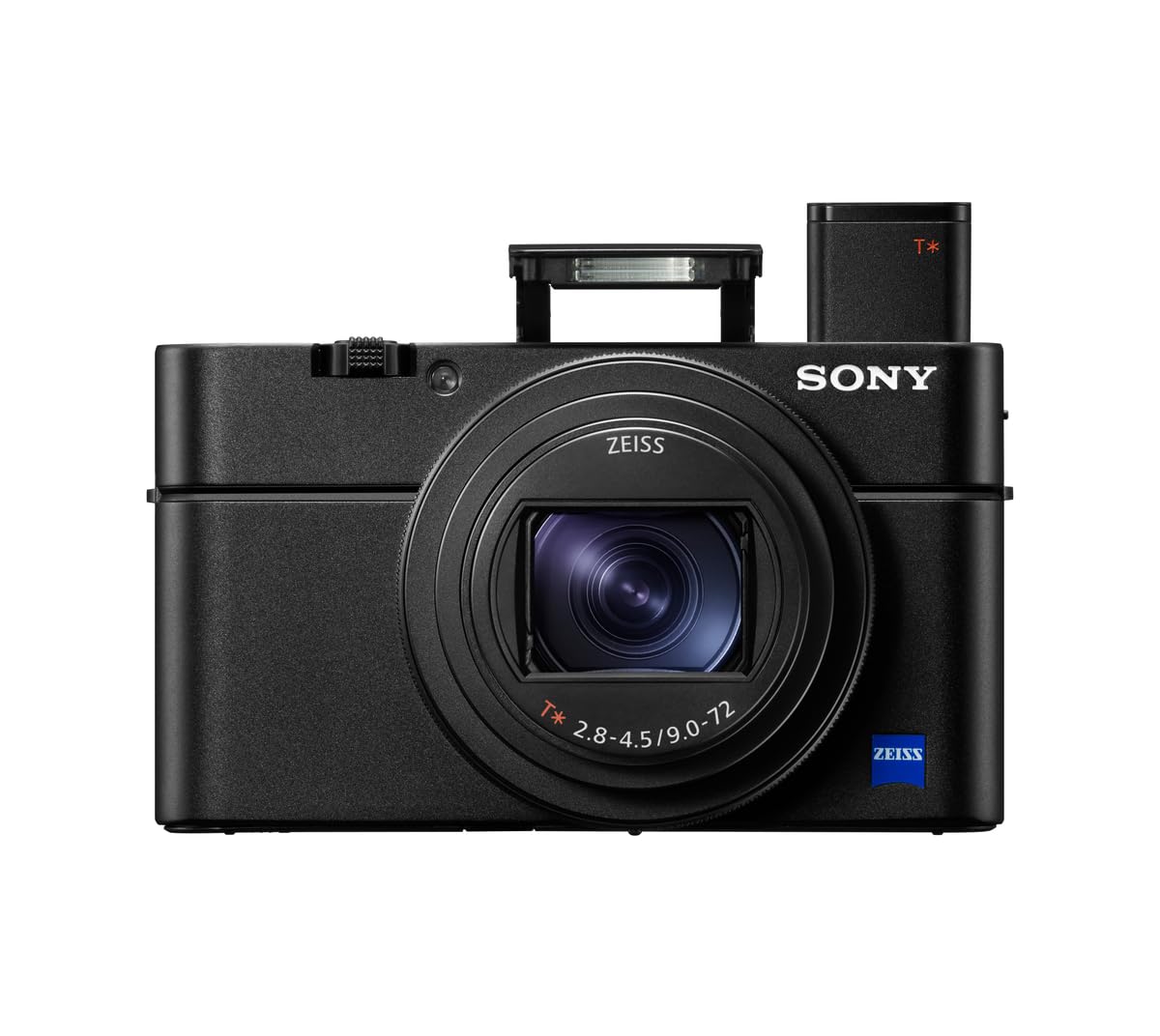
Sony RX100 VII

83 /100
Keeper Score Excellent

Key details

Lens
24-200mm f/2.8-4.5
Sensor
1-inch stacked CMOS
Weight
9.7 oz
Autofocus
357 phase-detection points
Check Price on Amazon

A jacket pocket is the real test for a street camera, and the RX100 VII is the one here that passes it. It slid into a jacket pocket without a bulge, and the 24-200mm equivalent zoom gave us reach that a phone cannot match. The pop-up EVF is a small piece of engineering we appreciated in bright sun, and the tilting screen makes waist-level shooting feel natural.

The autofocus is the other half of the story. Sony lists a 0.02-second focus time, and the 357 phase-detection points cover enough of the frame that we could point the camera at a subject off-center and still get a quick lock. The 20 fps blackout-free burst is more than most street shooters need, but it is useful when a scene has several possible keepers. This is the camera we reach for when we want to travel light and still have a zoom.

The trade-off is the sensor and the price. A 1-inch sensor is smaller than the APS-C chips in the a6400 and R50, so files get noisier in dim light, and the lens narrows to f/4.5 at the long end. The RX100 VII is also the most expensive camera in this group, which is a lot to pay for a pocket camera. We think the size and zoom justify it for a travel-light street shooter, but not for someone who mostly shoots at night.

Pros

  • Fits in a jacket pocket
  • 24-200mm equivalent zoom range
  • Fast 357-point phase-detect autofocus
  • 20 fps blackout-free shooting

Cons

  • Premium price for a 1-inch sensor
  • Aperture narrows to f/4.5 at 200mm
Our verdict

For a camera that genuinely disappears into a pocket while still offering a 24-200mm zoom, this is the one we carry.

Check Latest Price
3

Best for Beginners

Canon EOS R50

90 /100
Keeper Score Outstanding

Key details

Sensor
24.2MP APS-C CMOS
Kit Lens
18-45mm f/4.5-6.3
Autofocus
651 AF zones
Continuous Shooting
15 fps electronic
Check Price on Amazon

The R50 is the easiest camera here to hand to a beginner, but the kit lens is the compromise. The 18-45mm f/4.5-6.3 is slow enough that shade and evening scenes push the ISO up quickly, and the body is so small that the lens feels like the largest part of the setup. We ended up treating the kit lens as a daylight lens and reaching for a brighter prime when the light dropped.

What the R50 gets right is the autofocus. Dual Pixel CMOS AF II covers the frame with 651 zones, and the subject detection picks out people and eyes without much fuss. We found it reliable when shooting from the waist with the screen flipped out, and the 15 fps electronic burst is quick enough for a sequence of expressions. The articulating screen is great for low angles, though it makes the camera wider and more noticeable when it is open.

The controls are friendly without feeling stripped down, and the 24.2MP APS-C sensor gives you room to crop. The RF mount gives you a clear upgrade path if you stay with Canon. That is a lot of flexibility for a camera this small.

Pros

  • Reliable Dual Pixel autofocus with subject detection
  • Beginner-friendly controls
  • Articulating screen for low angles

Cons

  • Articulating screen is conspicuous when open
Our verdict

The R50 is our pick for a beginner who wants dependable autofocus and easy controls without a steep learning curve.

Check Latest Price
4

Telephoto Street Candids

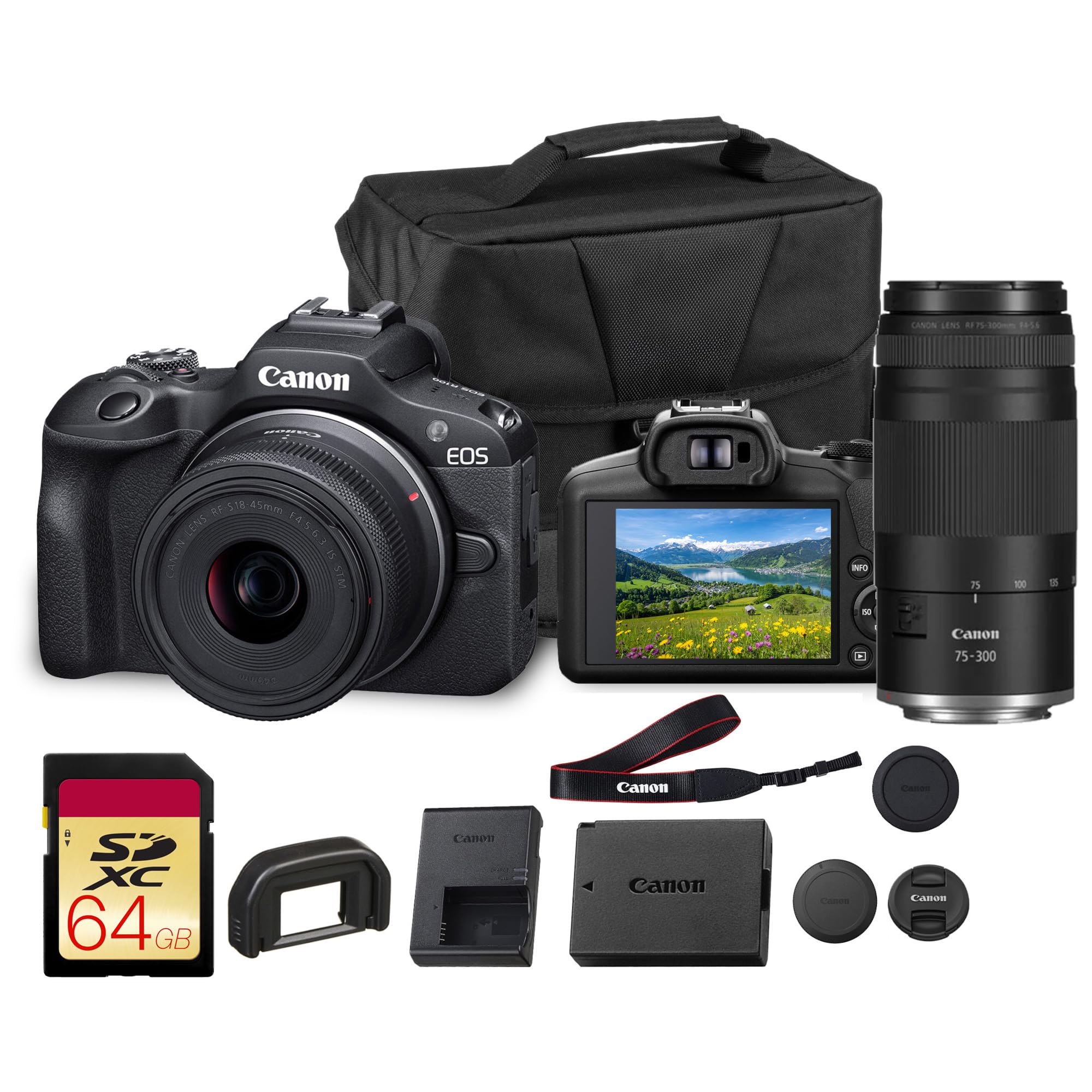
Canon EOS R100 Bundle

88 /100
Keeper Score Excellent

Key details

Screen
3-inch fixed
Sensor
24.2MP APS-C CMOS
Autofocus
121-point Dual Pixel AF
Lenses Included
18-45mm and 75-300mm
Check Price on Amazon

The second lens is the reason this bundle exists. Canon pairs the R100 body with an 18-45mm everyday zoom and a 75-300mm telephoto, plus a 64GB card and a camera bag. That long lens gives you a compressed view across the street, which can be useful when you want to isolate a face or a gesture without stepping into the scene. The trade-off is size and aperture: the 75-300mm is slow at f/4-5.6 and makes the kit more noticeable than a compact.

That second lens is what makes the bundle worth considering. The R100 body has a 24.2MP APS-C sensor and Dual Pixel autofocus, and the 121-point system is accurate for still subjects. We found the autofocus less responsive than the R50's when a subject was moving toward us, and the fixed 3-inch screen is the bigger compromise for street work: you cannot tilt it up for waist-level framing. If you shoot from the chest or the eye, that matters less.

The R100 is not the first camera we reach for in dim light, and the 75-300mm lens is not a discreet street lens. But the bundle covers a lot of ground for a beginner who wants one purchase with two lenses, and the 64GB card and bag mean you can start shooting without another shopping trip. We see it as a value-minded second Canon, not the main recommendation.

Pros

  • Two lenses cover wide to 300mm
  • 24.2MP APS-C sensor
  • Dual Pixel autofocus
  • Includes 64GB card and camera bag

Cons

  • Fixed screen limits waist-level framing
  • 75-300mm lens is slow for dim light
Our verdict

Choose the R100 bundle when you want two lenses and a low-cost way into Canon mirrorless, and you can live with a fixed screen.

Check Latest Price

How We Tested the Best Cameras for Street Photography

We started by gathering every camera a street shooter might plausibly buy, from fixed-lens compacts to entry-level mirrorless bodies sold alone or bundled with one or two lenses. Then we cut anything that needed a dedicated bag to carry comfortably, anything that took more than a couple of seconds to wake up, and anything priced well outside what most people spend on a first serious camera. That left eight.

Three of us shot with them over six months: on morning commutes, at Saturday farmers markets, on evening walks, and through a few trips. We handed each camera to friends who had never used it to see how far the menus got them without help, and we swapped cameras between us so no single person's habits decided the results. We walked toward crowds and let the autofocus find people coming at us, then counted how many frames were actually in focus. We shot the same backlit corner and the same dim bar at high ISO to see whose files held together.

Every camera stayed switched on until the battery died; we noted how many hours and how many frames that took. We compared what came in each box, whether the bundled lens was worth using, and how the body felt in one hand after an hour of walking. The screens that folded flat against the body turned out to matter more than we expected, both for staying inconspicuous and for getting the thing into a pocket.

How to Choose a Street Photography Camera

Start With How Invisible You Want to Be

Street photography rewards a camera you stop thinking about. A true pocket compact like the RX100 VII disappears into a jacket and lets you shoot one-handed; a small mirrorless like the a6400 or R50 gives you better low-light flexibility and a screen you can tilt, but the lens makes it a bag camera rather than a pocket camera. The trap is the word compact: a body can be small and still become conspicuous once a zoom lens is mounted. Choose pocket if discretion is the priority, and choose mirrorless if you want to change lenses.

Autofocus Is Your Timing

Candid street work is mostly a timing problem. Phase-detection or hybrid autofocus with subject detection gives you a better chance of catching a face as someone turns; contrast-only systems can hunt in low-contrast light. The a6400's 425 phase-detection points and the R50's 651 AF zones are the kind of coverage that lets you compose off-center and still get a lock. Set continuous autofocus and eye detection, then practice shooting while walking so the camera is already working before the moment arrives.

Choose the Lens Before the Body

A fixed 24-200mm zoom is the most convenient street setup because you never change lenses. A 16-50mm or 18-45mm kit lens is smaller, but its f/3.5-5.6 or f/4.5-6.3 aperture is slow in shade and evening. If you shoot mostly daylight, the kit lens is fine; if you shoot at dusk, add a bright 23mm or 35mm-equivalent prime. The R100 bundle takes a different route with a 75-300mm telephoto, which is useful for compressed candids but too slow and long for dim, close work.

Handling and Shutter Noise Matter

A tilting or articulating screen lets you frame from the waist, which is less threatening than holding a camera to your eye. An EVF helps in bright sun, but it also puts the camera at your face. Check for a silent shutter mode if you shoot in quiet spaces, and listen to the shutter in a store before you commit. If you shoot from the hip, prioritize a tilting screen; if you shoot in sun, prioritize an EVF. The R50's articulating screen is great for low angles, though it makes the camera wider when open; the R100's fixed screen is the opposite compromise.

Frequently Asked Questions

Final Verdict

The Sony a6400 is the street camera we recommend first. Its 425-point phase-detection autofocus is the difference between catching a glance and missing it, and the compact APS-C body keeps the camera close without making it a production. Add a bright prime for evening work and it covers almost everything.

If pocketability matters more than lens flexibility, the RX100 VII is the one to carry; its 24-200mm range covers almost any street scene. The R50 is the easier start for a beginner, while the R100 bundle makes sense when you want a second telephoto lens in the box.