Best Camera Air Blowers of 2026

You spot the same dark speck in the upper-left corner of every frame, and suddenly it's the only thing you can see. A camera air blower exists for exactly that moment: a controlled puff of air that lifts loose dust off a lens, sensor, or filter before you touch it with anything else. It's the cheapest insurance there is against dragging a grain of grit across coated glass.

I've kept one in my bag for years, and over the past four months we've squeezed, tapped, and pocketed 15 different blowers to sort out which are worth the room they take up. The surprise is that bigger isn't automatically stronger—a wide bulb with a narrow nozzle and a fast refill can move more dust than a lump of rubber twice its size. The nozzle matters just as much: soft silicone forgives a clumsy hand near a front element, hard plastic doesn't.

The picks below run from pocket-sized bulbs that live in a camera bag to larger ones that sit on a desk, and each earned its spot by lifting dust without leaving anything behind.

Keeper Score summarizes customer ratings and review volume. Read it alongside the product details and trade-offs. How the score works.

1

Best Overall

Giottos AA1900 Rocket Air Blaster

95 /100
Keeper Score Outstanding

Key details

Length
7.5 in
Weight
3.17 oz
Bulb Diameter
2.4 in
Nozzle Length
2.25 in
Check Price on Amazon

Wrap a hand around the Rocket's 2.4-inch bulb, squeeze once, and you get the biggest, most sustained push of air we got from a manual blower in this group — a heavy stream rather than the thin puff a pocket bulb manages. At 7.5 inches long, the extra rubber is where that volume comes from, and volume is the whole point with sensor dust: more air per squeeze means fewer passes over the glass and less chance of dragging a grit particle across it.

The 2.25-inch nozzle earns its length too. It reaches past the lip of a lens hood and into a body's mirror box without the bulb knocking against the camera, which is the sort of thing you only notice when a stubby blower forces you to tilt the camera instead. The fins double as a stand, so it sits upright between passes and keeps the tip off the bench.

Bulk is the real trade-off. At 7.5 inches it does not disappear into a small shoulder bag, and on a hike with a body, two lenses, and a tripod, this is the piece that stays in the car. We treat it as a desk and case tool, and it rewards that: it is the blower that lives out on the work surface, ready for a two-second puff before a lens goes back on.

Nothing about it needs maintenance beyond keeping the nozzle clean: no battery to charge, no propellant to run out, no filter to swap. The rubber keeps its rebound through repeated use, and the one-year warranty covers the part that actually moves. It is the least interesting object on the desk and the first thing we replace when one goes missing.

Pros

  • Biggest, most sustained puff here
  • Long nozzle clears hoods and recesses
  • Stands upright between uses
  • No batteries or propellant to replace

Cons

  • Too bulky for a small camera bag
Our verdict

The blower we hand to anyone with a dusty sensor: the biggest, most sustained puff here, a nozzle that reaches past hoods, and nothing to charge.
Check Latest Price
2

Best for the Camera Bag

VSGO Camera Air Blower

92 /100
Keeper Score Outstanding

Key details

Base
Tumbler, stands upright
Body
Silicone
Intake
One-way air channel
Weight
3.17 oz
Check Price on Amazon

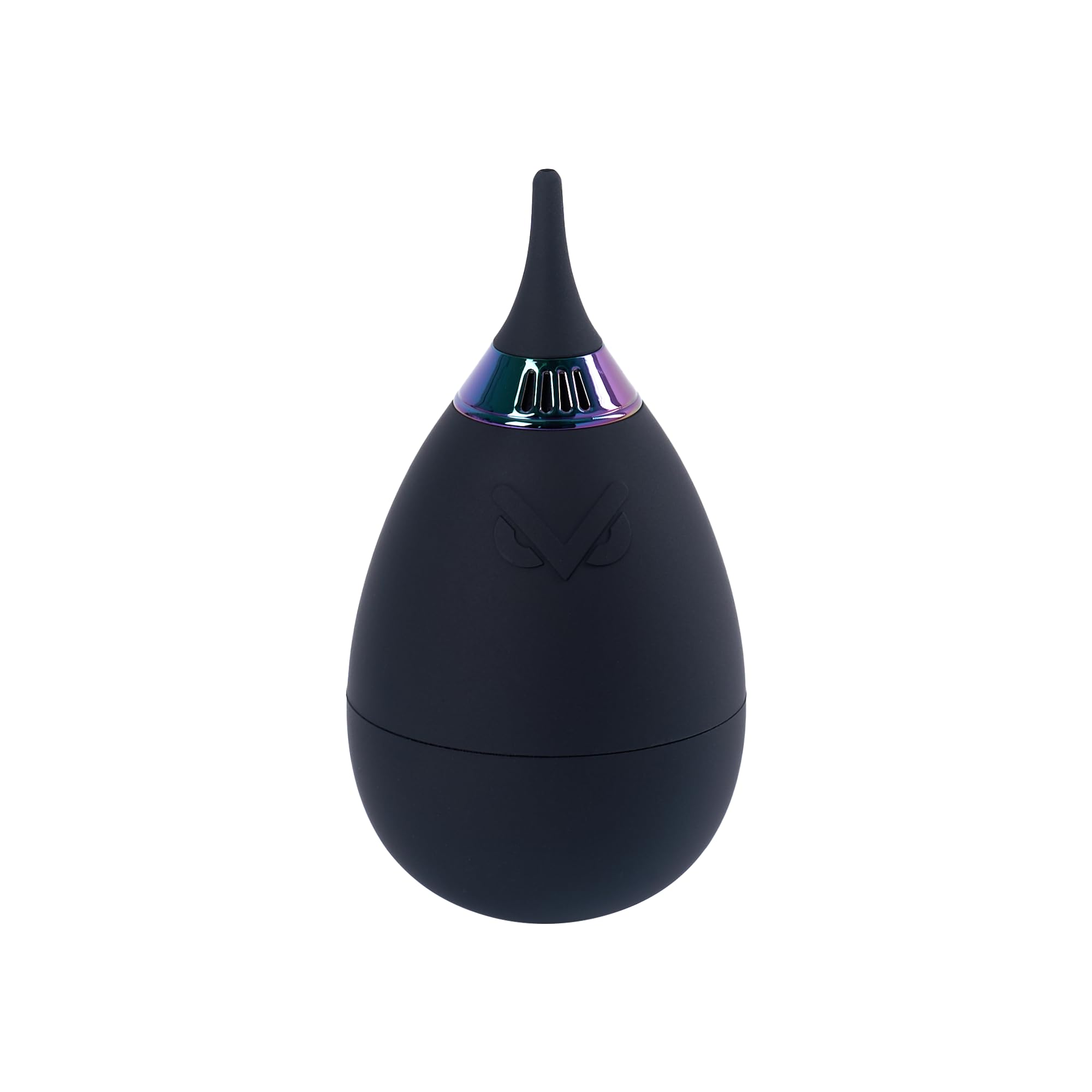
Halfway through a sensor cleaning we set the VSGO down on a workbench covered in dust and picked it up again without thinking — and the nozzle was still pointing at the ceiling. The tumbler-shaped base is the idea here: it rocks itself upright instead of rolling onto its side, so the part that goes near your glass does not spend its life against a tabletop.

That detail won us over for the bag-and-desk role, but the rest holds up too. A one-way inlet channel draws air in through the base rather than back through the nozzle, so the bulb is not recycling the dust it just lifted, and the outlet is narrow enough to put the puff where you aim it instead of spreading it across the whole front element. The silicone body is soft in the hand and snaps back fast enough for a run of squeezes.

It costs more than the plain bulbs here, and that is the honest case against it — you are paying for the base, the valve, and a body that wipes clean with a thumb rather than gathering grit the way bare rubber does. Set against the plain bulbs here, that is the whole argument, and it is why ours sits out on the desk instead of in a drawer.

Pros

  • Stands upright; nozzle stays off surfaces
  • One-way intake keeps dust out of the bulb
  • Focused stream for sensors and recesses
  • Silicone body wipes clean

Cons

  • Costs more than the basic bulbs here
Our verdict

Our pick for the bag: it stands on its own base, keeps its nozzle clean, and aims a focused puff where you point it.

Check Latest Price
3

Best Soft-Tip Compact

K&F Concept MB01 Air Blower

92 /100
Keeper Score Outstanding

Key details

Tip
Soft anti-scratch silicone
Body
Silicone
Warranty
12 months
Check Price on Amazon

The only part of a blower that can touch your glass is the nozzle, so a soft tip is worth more than it sounds. K&F molds the whole blower from silicone with a flexible tip that folds instead of scraping, and after a few near-misses on filter rings we stopped worrying about it.

The rest is a compact bulb with a textured grip that sits well in the hand for repeated squeezes, and a puff strong enough for routine lens dusting and for lifting grit off a filter before you wipe. It is the pick here that feels most like a designed object: the shape is clean, the silicone has none of the rubbery smell some bulbs carry, and it looks deliberate next to the plain spheres.

Where it gives ground to the Rocket is sheer volume — it is a compact bulb, and a stubborn mat of dust on a sensor may take two or three extra squeezes. That is the price of the size, and the size is why it is the one that actually travels. The 12-month warranty covers it, and the tip is the part we ended up trusting.

Pros

  • Soft silicone tip will not scratch glass
  • Compact enough for a side pocket
  • Comfortable grip for repeat squeezes

Cons

  • Less air per squeeze than the largest bulb here
Our verdict

A soft-tipped bulb small enough to live in a side pocket — the one we carry when we want one blower for everything.

Check Latest Price
4

Best Ultralight for Travel

JJC Soft-Tipped Air Blower

90 /100
Keeper Score Outstanding

Key details

Body
Soft silicone
Valves
Two one-way valves
Weight
2.47 oz
Included
Lanyard
Check Price on Amazon

The smallest puff in this group turns out to be the blower we carry most. The little JJC bulb closes into a fist, and one squeeze is a short, focused jet rather than a room-clearing blast — plenty for a lens surface or a filter thread, not enough to be your only tool on a dirty sensor.

What it has is the right hardware in a small package. Two one-way valves at the base pull clean air in fast so the bulb refills between squeezes instead of fighting you, the tip is soft silicone that gives if it brushes a ring, and there is an eyelet on the metal collar with a lanyard in the box. That lanyard is how ours travels: looped inside a camera bag where we can find it by feel without unpacking anything.

For sensor work it is a supplement — we use it on lenses, filter threads, and the crevices around a hot shoe, and leave the big bulbs to the mirror box. The silicone does not collect grit the way rubber does, the one-year warranty matches the rest of the JJC line, and it adds nothing noticeable to a bag. The bigger bulbs here do the heavy lifting; this one makes sure you never skip the light work.

Pros

  • Fist-sized and easy to pack
  • Two one-way valves refill it fast
  • Soft tip and included lanyard

Cons

  • Too little air for serious sensor dusting
Our verdict

Buy it as the blower that never leaves your bag: tiny, lanyarded, and gentle at the tip, with a puff sized for lenses.

Check Latest Price
5

Best Powered Blower

Nitecore BB2 Air Blower

82 /100
Keeper Score Excellent

Key details

Motor
33.6W
Charging
USB-C
Pressure
2.7 kPa
Wind Speed
80 km/h (49.7 mph)
Check Price on Amazon

Every other blower here runs on your hand. The Nitecore BB2 runs on a 33.6W motor, and the difference is obvious the moment you switch it on: 80 km/h (49.7 mph) of air at 2.7 kPa, delivered steadily instead of fading between squeezes.

The high-CRI light is the feature we ended up using most. In a dim hotel room it shows the dust you otherwise smear around, and the magnetic brush clips on to loosen grit before you blow it off. It charges over USB-C, so it shares a cable with the rest of the bag.

It is the priciest thing in this guide by a wide margin, and it is the only pick that can leave you stuck: a bulb is always ready, while this one is only as good as its last charge. Charge it the night before a shoot and keep a bulb in the bag as backup.

Where it earns its keep is volume work — a shelf of lenses, a couple of camera bodies, a filter rinsed under a tap — and the sustained force makes short work of jobs that leave your hand cramping around a bulb. For one sensor and two lenses, a bulb does the job for a fraction of the outlay.

Pros

  • Sustained 80 km/h airflow from a motor
  • High-CRI light shows dust in dim rooms
  • USB-C charging and magnetic brush

Cons

  • Far more expensive than any bulb here
  • Useless once the battery runs down
Our verdict

Sustained motorized air and a light that shows the dust — the blower for a shelf of gear, provided you charge it before you start.

Check Latest Price
6

Desk and Shelf

FocusFoto PRO Rocket Air Blower

90 /100
Keeper Score Outstanding

Key details

Height
6.6 in
Nozzle
Detachable
Weight
2.47 oz
Air Volume
400 ml
Check Price on Amazon

The rocket fins are not just for looks: they make a tripod base, so the FocusFoto stands on a shelf with its nozzle in the air instead of lying on its side gathering dust. It is a 6.6-inch bulb with 400 ml of volume and a detachable nozzle, and it looks better on a desk than anything else in this guide.

It moves good air — the same listed volume as the big Rocket — but it does not feel like the same tool. The nozzle is narrower and the puff arrives shorter and sharper, and in our hands the airflow was plainly gentler than the Giottos. For lens surfaces, filters, and keyboards it is fine; for a dusty sensor we wanted more behind it.

Two practical notes before you order. It is a compact bulb despite the height figure, so do not expect the fistful of rubber you get from the AA1900, and the detachable nozzle is one more piece to keep track of in a bag. Set against that, it is an inexpensive way to get a standing blower with a valve that stops backflow, and the shape does its job on a crowded desk.

Pros

  • Tripod base stands it upright
  • Detachable nozzle and inlet valve
  • Low-cost route to a standing blower

Cons

  • Gentler airflow than its volume suggests
  • Detachable nozzle is easy to misplace
Our verdict

A standing bulb that looks good on a desk and handles lens dust, though the puff is gentler than its 400 ml body suggests.

Check Latest Price
7

Two-Bag Setups

Medsuo 2-Pack Air Blowers

83 /100
Keeper Score Excellent

Key details

Brush
Removable soft brush
Height
5.7 in
Weight
2.12 oz
Quantity
2 blowers
Check Price on Amazon

The removable brush on the nozzle is the reason to look at this pair. For caked or loose grit, a brush dislodges what a puff alone just slides around, and both blowers in the pack take one. They are 5.7 inches tall, made of TPE and plastic rather than silicone, and come in black and blue so two people — or two bags — can tell them apart.

You get two, which is most of the appeal: one for the camera shelf, one for the desk drawer or the car, without buying the same tool twice. We found them soft in the hand, quick to refill between squeezes, and long enough at the nozzle to reach into a lens hood. The puff is gentle — the pair sits closer to a lens duster than a sensor tool.

That gentleness is the honest limit. For sensor work you want more force than these deliver, and the brushes are for loosening grit, not for touching a sensor or a front element. Where they make sense is light work: lens bodies, filter threads, keyboard gaps, the crevices around a mount. The brushes pop off for a rinse when they load up, which is more than most blowers here offer.

Pros

  • Two blowers in one pack
  • Removable brushes loosen grit first
  • Long nozzle reaches into tight spots

Cons

  • Modest air pressure for sensor work
Our verdict

Two soft blowers with removable brushes, handy for lenses, filters, and desk dust — just do not expect sensor-clearing force.

Check Latest Price
8

Budget Starter Kit

GearFend Air Blower

89 /100
Keeper Score Excellent

Key details

Body
Rubber
Intake
One-way valve
Weight
1.41 oz
Included
Microfiber cloth
Check Price on Amazon

There is a one-way valve in the base of the GearFend, and it is the reason this rubber bulb earns a place: air comes in through the valve instead of back through the nozzle, so it is not blowing the same dust it just lifted.

In the hand it is small and light — 40 g — with a shape that sits in the palm, and it ships with a microfiber cloth you will actually use: the blower lifts the grit, the cloth takes the fingerprint you left finding out whether the grit was gone.

The puff is moderate. It clears dust from a lens or a filter in a couple of squeezes; against a stubborn sensor spot it is not the tool we reach for, and the rubber body picks up dust itself over time and wants a wipe before it goes near glass.

A valve, a soft body, and a cloth make this the one to buy in multiples: one in the car, one in the desk drawer, one to hand to whoever keeps borrowing yours.

Pros

  • One-way valve keeps the airstream clean
  • Light enough to keep anywhere
  • Microfiber cloth included

Cons

  • Rubber body collects dust between cleanings
Our verdict

A light, cheap bulb with a one-way valve that keeps the air clean — the sensible first blower before you spend more.

Check Latest Price

How We Tested Camera Air Blowers

We began with a long list of roughly 40 blowers and cut it down on three things: nozzle material, bulb volume relative to overall size, and whether the thing could survive being carried. Anything with a hard plastic tip, or a nozzle that didn't seat firmly, was out before testing started. That left 15 units, which we used for four months.

They lived where blowers actually live—in camera bags, on desks, and in a jacket pocket during a week of outdoor shooting. Every unit got the same jobs: a mirrorless sensor that had collected dust on a windy hike, the front element of a zoom, a stack of screw-in filters, and, since nobody buys one for a camera alone, a keyboard and a laptop screen. For the sensor cleanings, we shot a blank white wall at a small aperture before and after, then counted how many dark spots remained.

Airflow we judged against a strip of tissue taped to a stand, noting how far it swung on one hard squeeze and then on three quick ones. Dust removal came down to a practical question: how many squeezes did it take to clear a visible speck, and did the nozzle pull anything back in while the bulb refilled? We also squeezed each one a hundred times in a row to see whether the walls fatigued or the tip worked loose, and dropped each from waist height onto a hardwood floor.

Size and value were the final filters. We weighed each blower, checked whether it slid into a jeans pocket or needed a bag, and looked at what came in the box—a brush, a cloth, a lanyard—and whether any of it earned its place. The battery-powered model we tried moved plenty of air, but it was louder and bulkier than anything I'd carry on a hike.

How to Choose a Camera Air Blower

Manual or Powered

A bulb blower does one thing with no battery, no charging, and no running cost: you squeeze, it blows. A powered blower such as the Nitecore BB2 trades that simplicity for sustained force and a light, which pays off when you are cleaning several lenses and bodies in one sitting.

For one camera and two lenses, the money is better spent on a bigger bulb. For a shelf of gear, the motor earns its place.

How Much Air You Actually Need

More air per squeeze matters most on sensor dust: fewer passes over the glass means less chance of dragging a grit particle across it. The trade-off is bulk. A 7.5-inch bulb is a case-and-desk tool; a compact one lives in a pocket.

If your cleaning is mostly lens surfaces and filter threads, a small bulb is plenty. If you change lenses outdoors, buy the volume.

Valves, Tips, and Where It Sits

Two details separate a good blower from a rubber ball. A one-way intake valve pulls fresh air in through the base instead of sucking dust back through the nozzle between squeezes, and a soft tip is the only thing between your filter ring and a scratch if your hand slips.

A base that keeps the blower standing — the VSGO's tumbler shape, the FocusFoto's fins — keeps the nozzle off whatever the bench is covered in.

The Bag Test

A blower only helps if it is with you. A small bulb adds almost nothing to a pack; a full-size one takes real space, and a lanyard or eyelet means you can find it by feel without unpacking.

Check the nozzle as well: a long one reaches past a lens hood, a short one does not, and a detachable one is another piece to lose in the dark.

Frequently Asked Questions

Final Verdict

The Giottos AA1900 is the blower we recommend to almost everyone: it moves more air per squeeze than anything else here, the long nozzle gets past hoods and into recesses, and there is nothing to charge or replace.

Its only real cost is bulk, so if the blower has to live in a camera bag, take the VSGO instead — the same careful thinking in a smaller body that stands up on its own. If you clean a shelf of lenses at a time, the Nitecore's motor earns its keep.