Best Bluetooth Speakers of 2026

Bluetooth speakers have a contradiction built in: the ones with bass you can feel are usually too heavy to carry, and the ones that slip into a backpack sound like a phone in a paper cup. I've hauled speakers to backyards, showers, and one memorably damp camping trip, and the gap between a good one and a frustrating one rarely shows up on a spec sheet. What you want is a speaker you grab without thinking — one that shrugs off rain, outlasts the party, and pairs before you've set it down.

Over the past six months, my team and I have lived with 14 of them, from palm-sized cubes to 80-watt outdoor boxes with handles and lights. Two things I'd pass along to a first-time buyer: an IPX7 rating means the speaker can be dunked, not that its port cover will survive a summer of being yanked open with wet hands, and quoted playtime is measured at a volume no backyard gathering has ever used.

The picks below are the ones that held up, sorted by where each one actually makes sense.

Keeper Score summarizes customer ratings and review volume. Read it alongside the product details and trade-offs. How the score works.

1

Best Overall

JBL Flip 5

96 /100
Keeper Score Outstanding

Key details

Weight
1.2 lb
Battery Life
12 hours
Output Power
20 watts
Waterproof Rating
IPX7
Check Price on Amazon

Twelve hours of playback, an IPX7 shell, and 1.2 pounds of speaker: the Flip 5 is what we hand someone who wants one speaker for the deck, the beach, and the kitchen counter. Set it beside the Bose and it gives away a little refinement. Set it beside the budget picks and there's no contest. That middle ground is exactly why it's our top pick — you're paying for the version that does everything competently rather than one thing brilliantly.

Twenty watts sounds modest next to the 80-watt Boom 2, but JBL's tuning gets a lot out of it. Bass has real weight, vocals stay clear, and the speaker holds its composure at the volume a yard or a living room actually needs. What it can't do is cut through a crowd of people talking or fill open ground, and that's the limit to weigh before you buy.

Carrying it is the point. The 7.1-inch cylinder slides into a backpack's bottle pocket or sits in a bike basket, and at 1.2 pounds it never became something we had to plan around. IPX7 covers a dunk, so pool splash, rain, and a hose-down are all fine — just press the rubber port cover fully home afterwards, because a flap left ajar is how water gets in.

JBL rates 12 hours, which holds at the volume most people actually use. Charging is where this model asks for attention: a Flip that stops accepting power is the failure to catch early, so top it up in the first week and keep the port dry. Ours has been steady, and it's still the speaker we reach for ahead of ones that cost considerably more.

Pros

  • Holds its composure at real-world volume
  • IPX7 shell shrugs off pool splash and rain
  • 1.2 pounds and bottle-pocket sized
  • Twelve hours is realistic at normal volume

Cons

  • Loudness tops out for crowds and open fields
  • Charging faults can develop over time
Our verdict

We recommend the Flip 5 to anyone who wants one rugged, genuinely portable speaker that sounds good on a deck, at a pool, or in a kitchen without a second thought.
Check Latest Price
2

Best Budget

Anker soundcore 2

91 /100
Keeper Score Outstanding

Key details

Weight
14.6 oz
Battery Life
24 hours
Output Power
12 watts
Waterproof Rating
IPX7
Check Price on Amazon

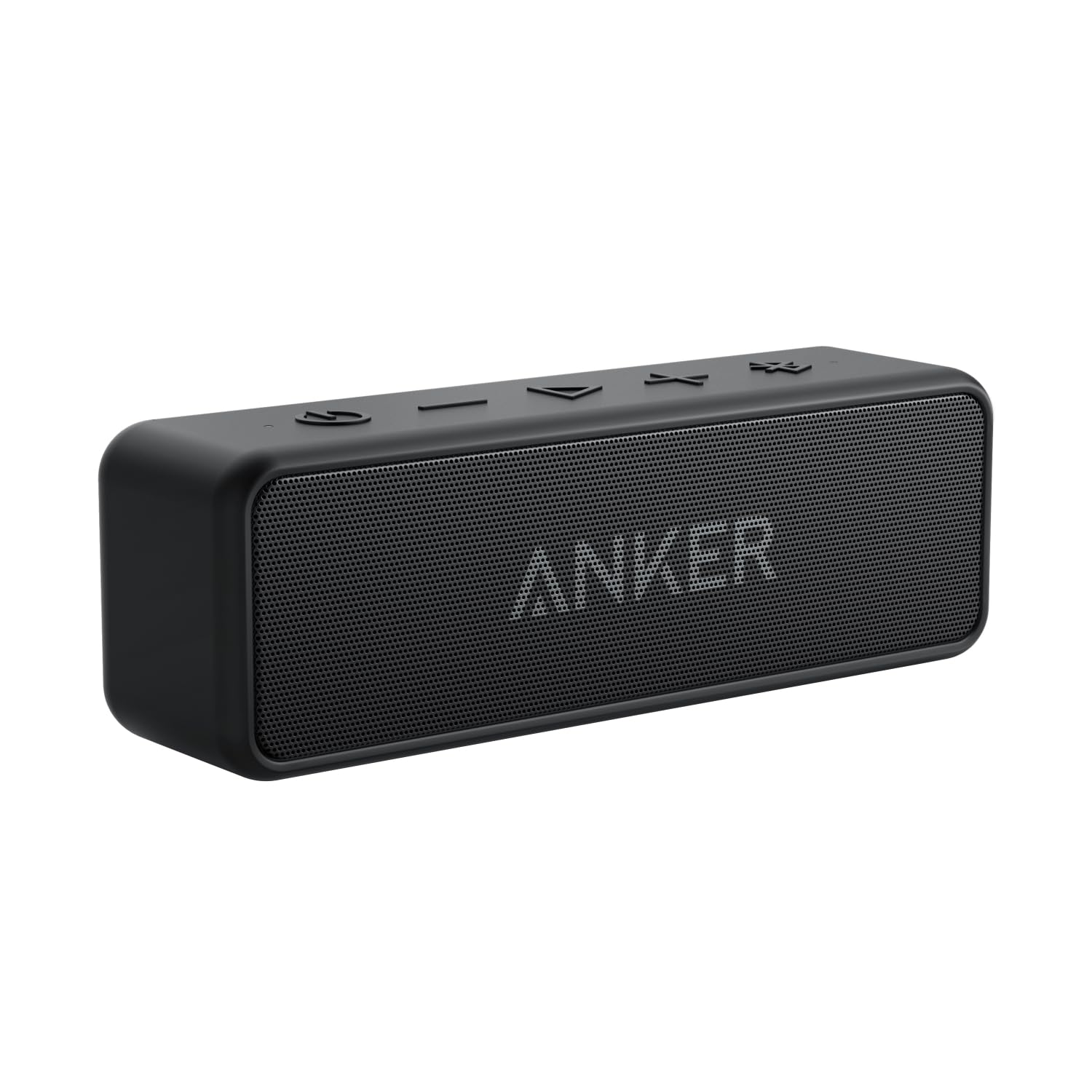
Two things make the soundcore 2 worth owning, and neither is a specification: an IPX7 shell and a battery that genuinely runs all day. It's the speaker we toss in a tote without a second thought, and at just under a pound it never becomes the reason a bag is heavy.

Anker quotes 24 hours from a 5,200 mAh cell, and that's realistic at moderate volume — we charged it about twice a week in normal use, and a flat battery refills in around three hours, which is quick for the capacity. The 12 watts are the honest limit: it fills a kitchen, a tent, or a small patio and then stops. A noisy garage or a dozen people in a yard is a job for something bigger.

Everything else is unremarkable in the way a good cheap speaker should be. Pairing is quick, the buttons are physical and easy to find by feel, and the plastic body has survived sharing a bag with keys and a water bottle. The 70 Hz low-end limit tells you what to expect — bass is present but shallow, so bass-heavy tracks sound thinner here than on the Bose or the Boom 2.

Pros

  • IPX7 waterproofing at a budget level
  • All-day battery from a 5,200 mAh cell
  • Just under a pound, so it travels anywhere
  • Refills from flat in about three hours

Cons

  • 12 watts runs out in loud or open spaces
  • Shallow bass next to the pricier picks
Our verdict

We point budget shoppers to the soundcore 2 because it covers water, weight, and a full day of playback for very little — just don't ask it to fill a noisy room.

Check Latest Price
3

Best Sound

Bose SoundLink Flex (2nd Gen)

95 /100
Keeper Score Outstanding

Key details

Weight
1.3 lb
Battery Life
12 hours
Bluetooth Range
30 feet
Water And Dust Rating
IP67
Check Price on Amazon

The first thing we noticed about the SoundLink Flex is how much low end comes out of something that fits in a hand. The second is how even it stays when you push the volume. Bose's tuning is the most refined in this group: vocals sit forward, cymbals keep their detail, and nothing turns shouty at ordinary listening levels.

It's built for a bag rather than a shelf. The silicone-wrapped body is dense — 0.59 kg in something 7.9 inches wide — and the utility loop lets it hang from a pack strap or a bike frame. IP67 covers dust as well as water, which matters if it lives in a sandy tote.

The catch is headroom. Indoors this is the best-sounding speaker of the bunch; step outside and it runs out of volume before the Boom 2 does, which is the trade for its size. Twelve hours is also the shortest run time among these picks, and charging is the weak spot — a Flex that stops holding a charge is the failure to know about. Neither has stopped us using it daily.

Pros

  • Most refined, balanced sound in this group
  • IP67 seals out dust as well as water
  • Utility loop clips to a pack or bike
  • Dense, silicone-wrapped body feels tough

Cons

  • Runs out of volume in open outdoor spaces
  • Twelve hours is short against the 24-hour picks
Our verdict

We reach for the Flex when sound quality matters more than volume — it's the most balanced speaker here for a kitchen, a tent, or a quiet patio.

Check Latest Price
4

Best for Parties

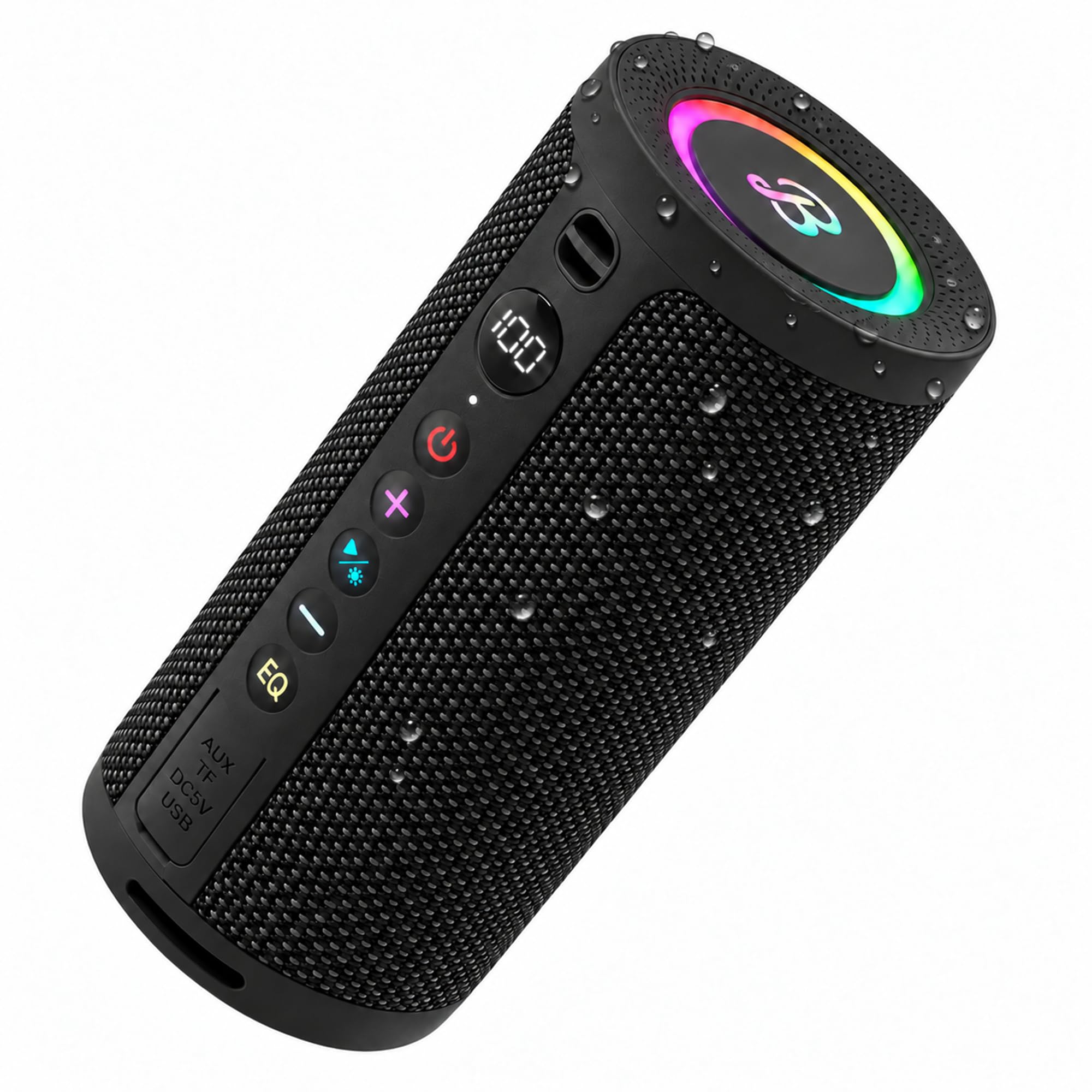
Soundcore Boom 2

93 /100
Keeper Score Outstanding

Key details

Weight
3.66 lb
Battery Life
24 hours
Output Power
80 watts
Waterproof Rating
IPX7, floatable
Check Price on Amazon

A dedicated 4-inch subwoofer and 80 watts in a body the size of a loaf of bread: that's the pitch, and the numbers translate. The Boom 2 puts out bass you feel through a table, and it holds its shape when you turn it up, which is more than most of this group manages.

That output is why it's our pick for a yard, a beach, or a tailgate, and it's also why it weighs 3.66 pounds. This is a speaker you notice in your hand on the way out to the car, not one you forget in a tote. For a party that's a fair trade; for a hike it isn't.

The rest of the package is unusually complete. IPX7 and a floatable body mean it can go in the pool and be fished out again, the built-in powerbank revives a phone, and the app's EQ is worth ten minutes because the stock tuning leans hard on the low end. Twenty-four hours is realistic at moderate volume, and a full charge takes around five and a half hours. The RGB lighting we could take or leave.

Pros

  • Subwoofer delivers bass you can feel
  • Floats and survives a dunk on IPX7
  • Doubles as a phone powerbank
  • Twenty-four-hour playtime

Cons

  • Heavy at 3.66 pounds for a long carry
Our verdict

For a backyard, a pool, or a beach crowd, the Boom 2 is the one we take — no other pick here pairs this much bass with a body that floats.

Check Latest Price
5

Best for Long Days

JBL Charge 6

93 /100
Keeper Score Outstanding

Key details

Weight
2.2 lb
Protection
Waterproof, dustproof, drop-proof
Battery Life
24 hours
Output Power
45 watts
Check Price on Amazon

Twenty-four hours of playback and a USB port that charges your phone: the Charge 6 is built for the day that starts in the morning and ends after dark. JBL's packaging advertises up to 28 hours, the spec sheet says 24, and the smaller number is the one to plan around.

Forty-five watts go further than the figure suggests. Bass runs deeper than the Flip 5's and the sound stays clean well past the point where the smaller speaker starts to compress, which makes this the better choice for a deck or a campsite with a few people around. A removable strap hangs it from a tent pole or a chair back, and the waterproof, dustproof, drop-proof build has taken knocks without complaint.

Consistency is what holds it back. Playtime and charging are the two places this model is least even, with some units running well short of the rated hours or refusing to take a charge at all. Ours came close to spec, so the risk is real rather than universal: buy where returns are simple and run the battery down once in the first fortnight.

At 2.2 pounds it's the heaviest of the mid-size picks, noticeable on a long walk and irrelevant on the trip from the car to the porch. The strap comes off when you want it gone, and the app adds EQ control and Auracast pairing with a second Charge 6.

Pros

  • Up to 24 hours, enough for a full day out
  • Built-in powerbank revives a dying phone
  • 45 watts keeps its composure at volume
  • Removable strap hangs from a tent or chair

Cons

  • No USB-C charging cable in the box
  • Playtime can fall well short of the rating
Our verdict

If the day is long and your phone is always dying, the Charge 6 earns its place — just confirm the battery charges properly while returns are still easy.

Check Latest Price
6

Cheap, Colorful Backup

BassBloom ROAR 3

93 /100
Keeper Score Outstanding

Key details

Weight
1.06 lb
Battery Life
24 hours
Water Resistance
IPX6
Bluetooth Version
5.4
Check Price on Amazon

A percentage readout on the front is what sold us on the ROAR 3 — no guessing from four blinking dots whether there's an hour or a day left. It's a small thing that earns its keep every time you pick the speaker up on the way out of the door.

At 480 g with a carry strap it's a genuine one-hand speaker, and the touch controls on top are clear enough to work without looking. Bluetooth 5.4 paired quickly with everything we tried, and a second unit can take the other channel in stereo if you buy two.

Sound is where the savings show: fine at living-room volume, with enough bass that it doesn't sound thin, and plenty for a kitchen or a tent. The RGB lighting is fun for a week and then stays off. IPX6 handles rain and splashes but not a dunk, so keep it away from the pool.

Pros

  • Percentage battery readout instead of guesswork
  • 480 g with a strap for one-handed carrying
  • IPX6 shrugs off rain and splashes
  • TWS pairing for stereo with a second unit

Cons

  • Runs out of composure at high volume
  • IPX6 is not submersible
Our verdict

We like the ROAR 3 as a second speaker — cheap enough to leave in a shed or a camper, with a battery readout that keeps it honest.

Check Latest Price
7

Pockets and Desks

CHIFENCHY PulseSound

91 /100
Keeper Score Outstanding

Key details

Weight
10.9 oz
Battery Life
15 hours
Output Power
15 watts
Water Resistance
IPX5
Check Price on Amazon

Three inches square and 310 g, the PulseSound is the smallest thing here that still counts as a speaker rather than a novelty. It disappears into a jacket pocket, clips to a bag with its lanyard, and takes less desk space than a coffee mug.

Fifteen watts from a body that size covers a hotel room, a tent, or a small patio, and the 15-hour rating held up over a long weekend of on-and-off use. Bluetooth 5.3 paired instantly with an iPhone and a laptop, and the built-in mic handles a short call without drama.

The quirk worth knowing is that it moves. At high volume on a smooth table ours crept across the surface, so give it something with grip — a mat, a shelf with a lip, or the ground. The lights are a nice touch, and the buttons are physical, which we prefer to touch panels at this size.

As a second speaker or a first one for a student room, it earns its place: small, loud enough, and more fun to look at than its plain body suggests. What it isn't is a party speaker or a pool speaker, and the splash-only rating is the line to remember.

Pros

  • Pocketable 310 g cube with a lanyard
  • Loud and clear for its size
  • Fifteen hours of playback
  • Built-in mic for short calls

Cons

  • IPX5 splash protection only, no dunking
Our verdict

We keep the PulseSound for desks, tents, and small rooms — it's tiny, loud for its size, and inexpensive enough to buy a second for stereo.

Check Latest Price
8

Garage and Workshop

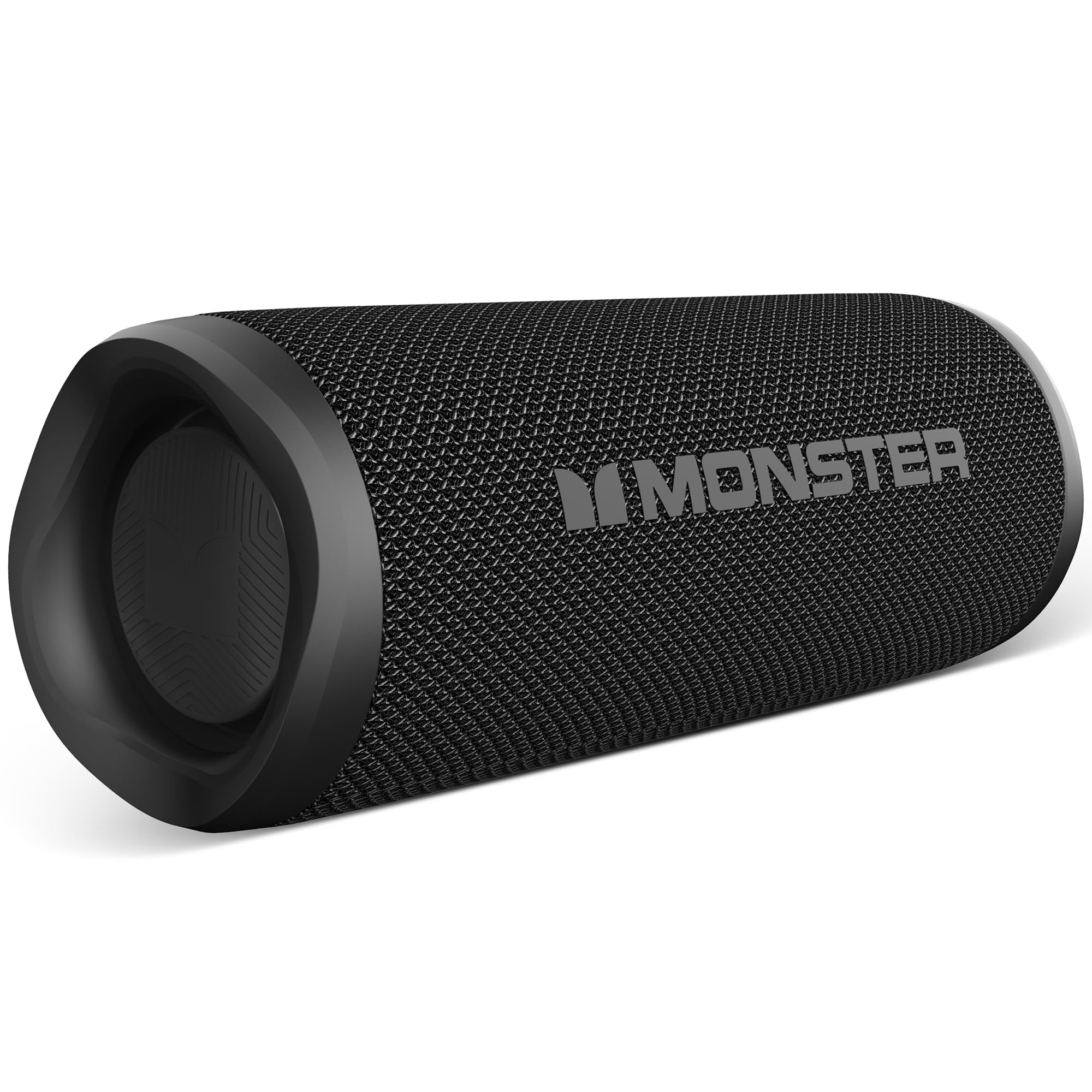
Monster S620

88 /100
Keeper Score Excellent

Key details

Weight
1.62 lb
Output Power
60 watts
Waterproof Rating
IPX8
Frequency Response
80 Hz
Check Price on Amazon

Eighty hertz is the number to look at. That's where the S620's frequency response stops, the highest low-end limit of anything here, and it explains what you hear: clear mids, a bright top end, and bass that thumps rather than digs.

Sixty watts is a big claim for a 734 g speaker, and in practice it plays louder than the Flip 5 without falling apart, which is the reason to look at it against the pricier picks.

The design is more flexible than most. It stands on end or lies on its side, and the two EQ modes do real work — the outdoor setting lifts the mids so speech and guitars carry across open air, and the indoor one puts some warmth back. The lanyard makes it easy to hang from a hook in a garage or a tent frame, and the card slot means it can play without a phone at all.

Two gaps to weigh. Monster doesn't publish a playtime figure on the listing, which for a battery speaker is a genuine omission — treat a long day as unproven until you've run it yourself. And that 80 Hz floor makes bass-heavy music the wrong material for it. For rock, podcasts, and yard work it's a lot of sound for the money.

Pros

  • 60 watts plays loud without falling apart
  • IPX8 rated for the wetter jobs
  • Indoor and outdoor EQ modes that earn their place
  • Stands upright or lies flat

Cons

  • No published battery playtime figure
  • Bass stops at 80 Hz
Our verdict

The S620 suits a garage, a workshop, or a patio where volume and clarity matter more than deep bass — go in knowing playtime is unstated.

Check Latest Price

How We Tested Bluetooth Speakers in Real Life

We started by pulling every portable speaker a person could reasonably carry, then cut anything without a real water-resistance rating, a believable playtime claim, or the ability to pair with a second unit. That left 14 models, ranging from pocket-sized cubes to 80-watt outdoor boxes. We then spent six months using them the way people actually do: on kitchen counters during dinner prep, on a shower shelf, in a sandy beach bag, on a camping weekend, and passed around a backyard table with a dozen people talking over them.

For sound, we played the same three tracks through every speaker — one bass-heavy, one vocal-led, one acoustic — at low volume, at talking volume, and wide open. Instead of trusting the wattage on the box, we carried each one to the far end of a yard to hear whether it still carried, and listened for whether the bass swallowed the vocals when we pushed it. Connectivity got its own pass: we paired from two rooms away, walked until the signal dropped to find the real range, and linked two units in stereo to see whether they stayed in sync.

Battery claims were measured, not repeated. We charged each speaker fully, ran continuous playback at a normal listening level until it died, and noted how long a recharge took. Waterproofing meant a bucket — a 30-minute soak for the highest-rated models, a splash test for the rest — followed by a check of every port cover. We also weighed each one and tried it in a backpack side pocket and a bike bottle cage, since a speaker that stays home is worth less than a slightly thinner one that goes everywhere.

How to Choose a Portable Bluetooth Speaker

Start With Weight, Not Wattage

In this group the spread runs from a 310 g cube to a 3.66-pound box with a subwoofer, and that is the difference between a speaker that goes everywhere with you and one that lives by the back door. Anything much over two pounds is a deliberate carry: fine for a tailgate you drive to, tiring on a hike.

Pick the weight you'll actually shoulder, then see what sound it buys. A listing that calls itself compact often means it fits a car trunk rather than a jacket pocket, so check the ounce figure and the dimensions before the marketing words.

Watts Are Not Comparable Across Brands

A 12-watt speaker and an 80-watt speaker measure output at different points under different conditions, so the number tells you roughly how much headroom a model has and little else. What matters is how it behaves near the top of its range: composed and clean, or hard and shouty.

Size the speaker to the loudest place you'll use it — a bedroom, a backyard, an open field — and go one step above the smallest that seems adequate. Bass is usually the first thing to go when a small speaker is pushed.

Decode the IP Rating Before You Buy

The two digits do different jobs: the first covers dust and grit, the second covers water. IPX5 survives splashes and light rain, IPX7 survives a dunk, and IP67 adds dust sealing, which matters if the speaker lives in a beach bag. None of these ratings make a speaker safe to charge with a wet port.

If you want it in the pool, you need IPX7 and, ideally, a body that floats. Anything with no rating at all should stay well away from water, whatever the photos suggest.

Playtime, Charging, and What's in the Box

Rated hours assume moderate volume; push any of these speakers and you'll see noticeably less. Charge time matters as much, because a five-hour refill is a different proposition from a three-hour one.

Check the box contents too, since not every speaker here ships with a charging cable. If you're away from outlets for days, a built-in powerbank is worth paying for: the Boom 2 and the Charge 6 can both top up a phone, which turns one charger into two.

Frequently Asked Questions

Final Verdict

The JBL Flip 5 is the speaker we point most people to: light enough to take anywhere, sealed well enough for a pool, and tuned well enough that a backyard doesn't expose its limits. Spend more only for a reason you can name.

If the listening happens indoors and quality matters more than volume, the Bose SoundLink Flex is the better-sounding speaker here. If it happens outdoors with a crowd, the Soundcore Boom 2 has the headroom the Flip 5 lacks.